저작자표시-비영리-변경금지 2.0 대한민국 이용자는 아래의 조건을 따르는 경우에 한하여 자유롭게
l 이 저작물을 복제, 배포, 전송, 전시, 공연 및 방송할 수 있습니다. 다음과 같은 조건을 따라야 합니다:
l 귀하는, 이 저작물의 재이용이나 배포의 경우, 이 저작물에 적용된 이용허락조건 을 명확하게 나타내어야 합니다.
l 저작권자로부터 별도의 허가를 받으면 이러한 조건들은 적용되지 않습니다.
저작권법에 따른 이용자의 권리는 위의 내용에 의하여 영향을 받지 않습니다. 이것은 이용허락규약(Legal Code)을 이해하기 쉽게 요약한 것입니다.
Disclaimer
저작자표시. 귀하는 원저작자를 표시하여야 합니다.
비영리. 귀하는 이 저작물을 영리 목적으로 이용할 수 없습니다.
변경금지. 귀하는 이 저작물을 개작, 변형 또는 가공할 수 없습니다.
교육학석사 학위논문
Parnassia palustris Population Differences in Three Korean Habitat Types
세 서식지 유형에 따른 국내 물매화 개체군의 차이
2016 년 2 월
서울대학교 대학원 과학교육과 생물전공
정 태 실
Abstract
Parnassia palustris Population Differences in Three Korean Habitat Types
Tae Sil Jeong Major in Biology Education Dept. of Science Education The Graduate School Seoul National University
Parnassia palustris is an herbaceous perennial with a circumpolar distribution and has three habitat types in Korea based on a landscape ecological perspective: calcareous and low altitude (CL), mountainous stream (MS), gneiss and high altitude area (GH). To find the best habitat type for P.
palustris population maintenance, I surveyed vegetation and environmental properties in the three habitat types. This habitat classification is in line with classifications based on soil physico-chemical properties and species composition. All three habitat types had moist soil with low nitrogen nutrient content. CL had shallow soil depth, a temperate climate and calcareous soil with a high pH. MS had a thin soil layer with high Ca2+ content, a high pH and heavy disturbance. GH had low temperature and a deep soil layer with low pH. Neighboring species in GH were strong competitors compared to neighboring species observed in CL and MS. Population development in MS
This manuscript was submitted to Landscape and Ecological Engineering.
was higher than CL and GH. Reproductive traits were also higher in MS than CL and GH. As a result, the MS habitat is regarded as the best habitat for P.
palustris of the three habitat types. I suggest maintaining P. palustris habitats with a sufficient water supply and weak competition to sustain the population successfully. This may further restore the MS habitat to expand the distribution range of this species. Our study also provides knowledge to conserve and restore the MS habitat for the vulnerable calcicole or early successional species, like P. palustris.
Keywords Calcicole species · Grass of Parnassus · pH · Soil depth
Student Number: 2014-20966
CONTENTS
Abstract ---i
Contents --- v
1. Introduction --- 1
2. Materials and methods --- 3
2.1 Study species --- 3
2.2 Study site --- 3
2.3 Field survey --- 7
2.4 Analysis of soil physico-chemical properties --- 8
2.5 Statistical analysis --- 9
3. Results --- 9
3.1 Environmental properties of the habitat types --- 9
3.2 Habitat types according to environmental variables and species composition --- 12
3.3 Comparison of P. palustris populations among habitat types ---15
4. Discussion --- 17
4.1 Comparison of climate and hydrological conditions among the habitat types --- 17
4.2 Comparison of species composition and environmental properties in the three habitat types --- 18
4.3 Comparison on reproductive traits of P. palustris among the habitat types --- 21
5. Conclusion --- 22
Acknowledgements --- 23
Reference --- 24
Appendix --- 31
국문 초록--- 34
<Contents of tables>
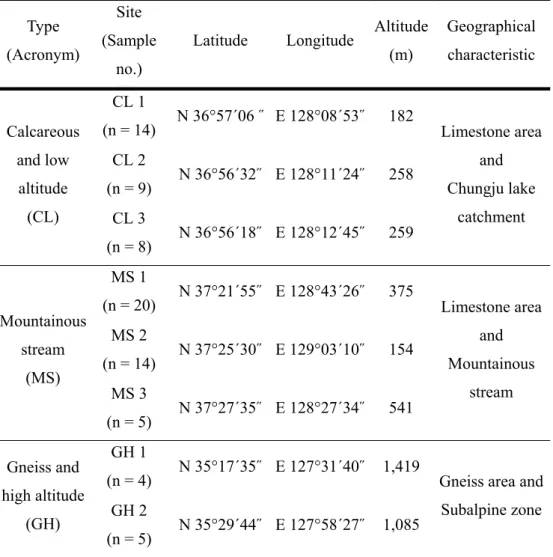
Table 1 Information about study sites. Sites are classified into three types according to latitude, altitude and geographical characteristics ---- 5
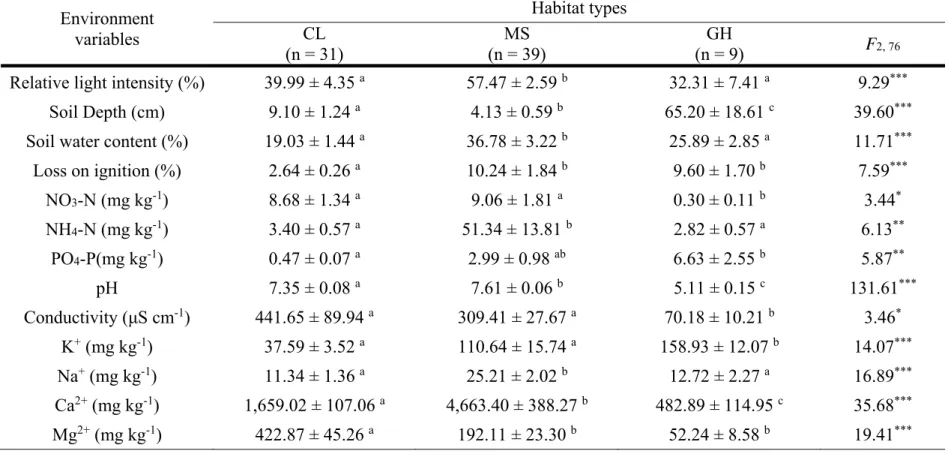
Table 2 One way ANOVA results for environmental properties of the habitat types (mean ± SE). Letters on the table indicate a significant difference at the 5% level, based on the Games-Howell test (* p <
0.05, ** p < 0.01, *** p < 0.001) --- 11
Table 3 The correlation coefficient matrix between environment variables and axis --- 14
<Contents of Figures>
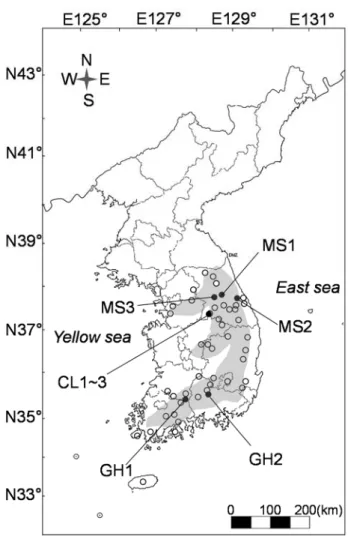
Figure 1 Study sites (filled circles) and distribution of P. palustris populations in South Korea based on the plant specimen database offered by Korea National Arboretum (empty circles). Shaded area on the map expresses the major mountain ranges in South Korea --- 4
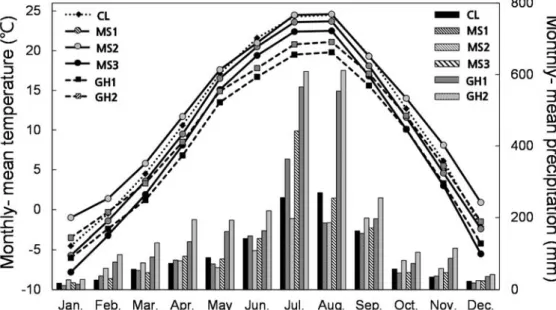
Figure 2 Monthly mean temperature and precipitation of study sites during 2009 ~ 2014 (Annual report of automatic weather station data). Lines indicate monthly mean temperature and bars indicate the monthly mean precipitation. Diamond shapes and solid bars indicate CL, circles and stripe bars indicate MS, and squares and dotted bars indicate GH --- 6
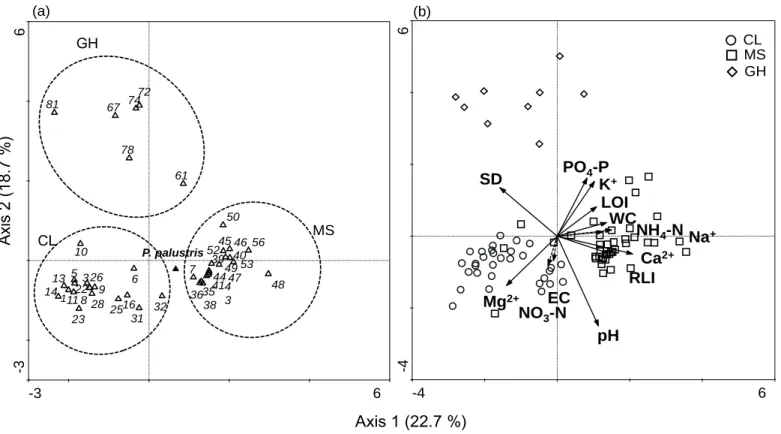
Figure 3 DCCA results of P. palustris and accompanying species. The importance value at species weight range over 1% (a) and distribution of samples according to environmental variables (species name for each number are described in Appendix) (b). In fig 4b, arrows with solid lines have a strong correlation with axis.
Arrows with dashed lines have weak correlation with axis --- 13
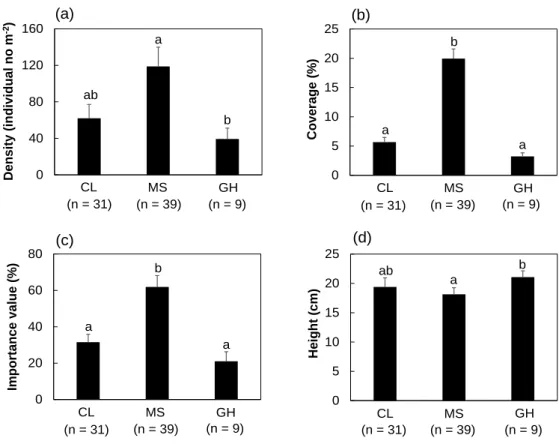
Figure 4 The population development status of P. palustris in three types of habitats. (a) density, (b) coverage, (c) importance value, (d) height of P. palustris. Letters on the graph mean significant difference at the 5% level, based on the Games-Howell test. Bars indicate the standard error --- 15
Figure 5 Reproductive traits of P. palustris in the three types of habitat. (a) flower number per individual, (b) fruit diameter, (c) one seed mass (d) and seed number per fruit. Letters on the graph mean significant difference at the 5% level based on the Games-Howell test. Bars indicate the standard error --- 16
<Contents of Appendix>
Appendix DCCA diagram species list. Scientific names are based on Flora of Korea Editorial Committee (2007). Absent number is unidentified species --- 31
1. Introduction
One plant species has diverse habitats with different environments, though they have intrinsic ecological and physiological properties. This means many plant species have capability to adapt to heterogeneous environment (Barbour et al. 1980). Even within the same species, environmental responses present variously in different habitats. Conversely, different responses are shown in the same habitat according to some species (Macel et al. 2007; Stanton-Geddes et al. 2012). This means that the effects of habitat environment can play important roles of selective pressure for ecological traits and evolutional processes of certain species like population structure, local and regional abundance and genetic diversity (Ribera et al.
2001). Thus, it is important to build knowledge concerning environmental characteristics and habitat type for understanding the population persistence strategy and predicting the population dynamics of interested species (Marten et al. 2006).
Studies concerning diverse environments where a single species occurs are especially needed to conserve significant species. For example, Buse et al. (2015) stated that current concepts of nature conservation are based on both species and habitat types. They also found that different extinction trends in different habitat types for climate change, which leads to the extinction of habitat specific species. Fandohan et al. (2010) discovered the regeneration response and population structure of Tamarindus indica was different depending on habitat type, leading differences in vulnerable status.
They also discovered an optimum habitat type for the persistence of T. indica population.
Though the widest circumpolar distribution range of the world in genus Parnassia and occurring in diverse habitat types, Parnassia palustris L. is becoming extinct. This plant has a different extinction rate according to habitat types, like marsh, dune and hillside. The extinction rate is the highest in the marsh habitat (Bonnin et al. 2002). Habitat types of P. palustris can be
distinguished as wet dune-slacks, base-rich fen and limestone hillsides in northern Europe (Bonnin et al. 2002). P. palustris inhabits naturally fragmented sites at the southern end of the distribution range and plants adapt to population isolation (Bossuyt 2007). In addition, this species suffers from habitat anthropogenic fragmentation in some northern European regions (Bonnin et al. 2002). P. palustris has been regarded as threatened or rare species in Netherlands, northern France, Luxembourg, Belgium, Inner Mongolia, Michigan and Wisconsin state in U.S. (Penskar and Higman 2000;
Roem and Berendse 2000; Bonnin et al. 2002; Colling 2005; Liu et al. 2007).
In addition, the International Union for Conservation of Nature (IUCN) red list of threatened species report the current population trend of this species is decreasing (Lansdown 2014).
To conserve P. palustris, many genetic diversity and cytogenetic characteristics studies have been conducted (e.g., Bonnin et al. 2002; Borgen and Hultgård 2003; Bossuyt 2007; Funamoto and Kondo 2012). Despite importance of habitat characteristics to protect this species, previous studies concerning this species did not address habitat environment properties in detail. Accordingly, additional study is needed to discover a suitable site for P. palustris (Penskar and Higman 2000). Comparing P. palustris populations among habitat types can be helpful to find suitable habitats. In addition, the study of P. palustris’ ecological characteristics may support the conservation of other endangered Parnassia species like P. kotzebuei (Panjabi and Anderson 2007).
Therefore, this study aims to find the best habitat to maintain the P.
palustris population by comparing three habitat types in Korea in respect to population development status, reproductive traits and environmental properties. I studied the habitat type for P. palustris in terms of climate and soil characteristics. It is because that climate and soil characteristics are the most important environment factors to determine population distribution, development and maintenance (Woodward 1987; Macel et al. 2007; Stanton-
Geddes et al. 2012; Buse et al. 2015). Our research questions are as follows:
(1) Do any environmental differences exist among the habitat types? What are important factors to classify the habitat types of P. palustris in Korea? (2) Are there differences in development and reproductive traits of P. palustris populations among habitat types? (3) What is the relationship between environmental factors and P. palustris population differences?
2. Materials and methods
2.1 Study species
Parnassia palustris L. (Saxifragaceae) is perennial early successional species and is observed in a wet environment. This species is known to have the widest circumpolar distribution range of the genus Parnassia that occurs in North America, Europe, Asia and in other high latitude areas (Korta 1972; Simmons 2004). The Parnassia genus comprises about 70 species (Ding et al. 2005), most of them in China (Simmons 2004).
Only two species of this genus (P. palustris and P. alpicola) are present in South Korea (Korea National Arboretum 2014).
2.2 Study site
According to distribution map of P. palustris based on the plant specimen database (Korea National Arboretum 2014, Fig. 1), P. palustris distribution overlaps with a major mountain range in South Korea.
Considering the landscape ecological perspective, well-known sites of P.
palustris habitats were selected and classified into three habitat types:
calcareous and low altitude (CL), mountainous stream (MS), gneiss and high altitude area (GH). The selected sites were: Jecheon (CL1~3), Jeongseon (MS1), Samcheok (MS2) and Pyeongchang (MS3), Sancheong (GH1) and Hapcheon (GH2) (Table 1). The sites that belonged to the CL type ranged from 182 to 259 m in altitude and were located at 36°N latitude. The sites in
the MS type are located close to a small stream and at 37°N latitude, but had wide altitude range (154 ~ 541 m). The sites in the GH type are at over 1,000 m altitude in southern region of Korea (35°N). CL and MS type were located in a large scale limestone strata (Kang 1992) known as biogeographically important sites (Nam et al. 2012). The GH type is situated on the gneiss area (Kang 2015).
Fig. 1 Study sites (filled circles) and distribution of P. palustris populations in South Korea based on Plant specimen database offered by Korea National Arboretum (empty circles). Shaded area on the map expresses range of the major mountains in South Korea
Table 1 Information about study sites. Sites are classified into three types according to latitude, altitude and geographical characteristics
Type (Acronym)
Site (Sample
no.)
Latitude Longitude Altitude (m)
Geographical characteristic
Calcareous and low altitude
(CL)
CL 1
(n = 14) N 36°57´06 ˝ E 128°08´53˝ 182
Limestone area and Chungju lake
catchment CL 2
(n = 9) N 36°56´32˝ E 128°11´24˝ 258 CL 3
(n = 8) N 36°56´18˝ E 128°12´45˝ 259
Mountainous stream
(MS)
MS 1
(n = 20) N 37°21´55˝ E 128°43´26˝ 375
Limestone area and Mountainous
stream MS 2
(n = 14) N 37°25´30˝ E 129°03´10˝ 154 MS 3
(n = 5) N 37°27´35˝ E 128°27´34˝ 541 Gneiss and
high altitude (GH)
GH 1
(n = 4) N 35°17´35˝ E 127°31´40˝ 1,419
Gneiss area and Subalpine zone GH 2
(n = 5) N 35°29´44˝ E 127°58´27˝ 1,085
Monthly mean temperature and precipitation during 2009 ~ 2014 were surveyed considering of P. palustris lifespan (Royal horticultural society 2015). Climate data was based on the closest automatic weather station data (provided by Korea meteorogical admnistration 2009 ~ 2014) from study sites and was compared between habitat types (Fig. 2). CL and MS showed lower precipitation and higher temperature relative to GH at growing (May ~ July) and flowering seasons (August ~ October). CL and MS had a similar climate for both monthly mean temperature and precipitation.
Fig. 2 Monthly mean temperature and precipitation of study sites during 2009
~ 2014 (Annual report of automatic weather station data). Lines indicate monthly mean temperature and bars indicate monthly mean precipitation.
Diamond shape and solid bars indicate CL, circles and stripe bars indicate MS, squares and dotted bars indicate GH
Different hydrological conditions were observed among habitat types.
CL was in catchment of Chungju lake, 2 ~ 4 km away from the lake. MS was headwater at valley. P. palustis were distributed from the active channel to the narrow floodplain in terms of riparian structure (Naiman et al. 2010).
Therefore soil water in MS was mainly derived from surface water and overland flow from hillslopes. GH showed relatively higher precipitation than CL and MS. GH1 was in catchment of Hapcheon lake. Although there was no lake or stream in GH2 as in other sites, GH2 has a high groundwater level and lower evaporation rate compared to precipitation (Yang 2008).
2.3 Field survey
To collect quantitative data concerning P. palustris population development and community structure, field surveys were conducted during the flowering season (September ~ October 2014). The season is most proper time to survey this species in Korea (Penskar and Higman 2000). Quadrats where P. palustris grows were established in each site based on the modified Braun–Blanquet plant sociological method (Mueller-Dombois and Ellenberg 2003; Kim et al. 2004; Shin et al. 2013). Quadrat size was different depending on height and density of P. palustris. 0.5 × 0.5 m2 quadrats and 1 × 1 m2 quadrats were established with moderate density or low density, respectively (Barbour et al. 1980). 0.2 × 0.2 m2 quadrats were established where P.
palustris seedlings occurred densely. The number of quadrats varied among the sites depending on population size (Table 1). Thirty one quadrats were established in CL, thirty nine in MS, and nine in GH. Density (individual number m-2), coverage (%) and height (cm) of every species in a quadrat were investigated.
Based on these data, relative density (RD, %), relative coverage (RC, %), importance value (I.V, %), and frequency for every species in each site were calculated. I.V was calculated as follows (Barbour et al. 1980, Kim et al. 2004):
I.V (%) = Relative density (%) + Relative coverage (%)
To compare traits related to reproductive success among habitat types, the number of P. palustris flowers in each quadrat was counted and the number of flower per individual was calculated. During fructifying season (October ~ November 2014), fruits were collected randomly at each site and fruit diameter measured (mm). The number of seeds per fruit and air-dried seed mass per fruit (mg) were also measured. The number of seeds was counted by using Image J software (U. S. National Institutes of Health,
Bethesda, MD). One seed mass (mg) was calculated by dividing total air-dried seed mass per fruit by the number of seeds per fruit.
Environmental properties of each habitat type were investigated.
First, relative light intensity (RLI, %) was calculated as a proportion of light intensity (μmol m-2 sec-1) measured at similar position to P. palustris height for light intensity at open atmosphere (Lee and Cho 2000). Soil depth (SD, cm) was calculated as a mean of depth measured at the four edges and center of the quadrat by driving 1.5 m stainless steel rod into the soil (Lee and Cho 2000; Martorell and Martínez-López 2014). Soil samples were collected at the depth of P. palustris root (about 0 ~ 5 cm depth) per each quadrat. Samples were sealed tightly using plastic bags to prevent the loss of moisture.
Thereafter, the soil samples were moved to the laboratory and physico- chemical properties analyzed.
2.4 Analysis of soil physico-chemical properties
As soon as soil samples reached the laboratory, samples were passed through a 2 mm sieve. Soil water content (WC, %) was measured by drying at 105℃ for over 48 hours (Kim et al. 2004). Organic matter content (%) was measured based on the loss on ignition (LOI) method (Boyle 2004). After soil samples were extracted by 2 M KCl (Kim et al. 2004), content of NO3-N and NH4-N (mg kg-1) were measured according to hydrazine (Kamphake et al.
1967) and indophenol methods (Murphy and Riley 1962), respectively.
Likewise, after soil samples were extracted using Bray No.1 solution (Bray and Kurtz 1945), content of PO4-P (mg kg-1) was measured according to the ascorbic acid reduction method (Solorzano 1969). Cations (K+, Na+, Ca2+ and Mg2+) were extracted by 1 M ammonium acetate (NH4OAc). Cation content (mg kg-1) was measured using an atomic absorption spectrometer (Varian, Model AA240FS). Finally, pH and conductivity (μS cm-1) were measured after mixing dried soil and deionized water at a mass ratio of 1:5 and filtering solution by filter paper.
2.5 Statistical analysis
To compare the environmental properties and P. palustris’ population status among the habitat types, analysis of variance and Games-Howell tests as post-hoc tests were conducted. The Spearman correlation test was used to detect significant correlations between the variables. Detrended canonical correspondence analysis (DCCA) was performed under Hill’s scaling by 2nd order polynomial and 1% species weight range (Lepš and Šmilauer 2003) to verify whether habitat types can be classified by soil physico-chemical properties and community structure. I used SPSS 20.0 software (SPSS, Inc., Chicago, IL, USA) for analysis of variance, the Spearman correlation test and CANOCO for Windows version 4.5 (Microcomputer Power, Ithaca) for DCCA.
3. Results
3.1 Environmental properties of the habitat types
Every surveyed environmental factor showed statistically significant differences among habitat types (Table 2). MS had the highest relative light intensity (RLI) than other habitat types. There was also a statistically significant difference in RLI between CL and GH. GH significantly showed the deepest soil depth compared to other habitat types. The soil layer in MS was shallow and hardly developed compared to CL and GH. Many P. palustris plants in MS grew on a moss mat on or between rocks without a soil layer.
Soil layer in CL was less developed, but deeper than MS, significantly. Soil water content and LOI were the highest in MS than other habitat types. CL had lower soil water content and LOI relative to other habitat types, significantly. There was a significant positive correlation between the LOI and soil water content in this study (ρ = 0.81, p < 0.0001).
Soil nutrient content also showed significant difference among the habitat types. NO3-N content was significantly different and the lowest in GH compared to CL and MS, which were not significantly different from each other. On the contrary, PO4-P content was significantly different and the highest in GH compared to CL and MS. NH4-N content was also significantly different and the highest in MS compared to CL and GH. Further there was a positive correlation with soil water content (ρ = 0.74, p < 0.0001).
Acidity (pH) in MS and CL was significantly higher than in GH. This result corresponded with bed rock in each habitat, which was limestone landform in MS and CL, and gneiss in GH. In addition, this result was connected with Ca2+ content in soil because strong positive correlation was also presented between pH and Ca2+ content in this study (ρ = 0.75, p <
0.0001). This result corresponded to that of the limestone area, which has soil with high pH and Ca2+ content (Kang 1992, Nam et al. 2012). Ca2+ content was the highest in MS and in CL was over three times higher than GH.
Likewise, content of other cations were significantly different among the habitats, but Ca2+ content was much higher than other cations in every habitat type. Mg2+ content, which is a known component in limestone soil, was highest in CL compared to MS, significantly. Ca2+ and Mg2+ content were the lowest in GH, significantly. K+ content was the highestin GH and showed a significant difference when compared to the other two habitats. Na+ content in MSwas significantly higher than the other habitat types and there was no significant difference between CL and GH. Conductivity (EC) was significantly lower in GH compared to CL and MS.
Table 2 One way ANOVA results for environmental properties of the habitat types (mean ± SE). Letters on the table indicate a significant difference at the 5% level, based on the Games-Howell test (* p < 0.05, ** p < 0.01, *** p < 0.001)
Environment variables
Habitat types CL
(n = 31)
MS (n = 39)
GH
(n = 9) F2, 76
Relative light intensity (%) 39.99 ± 4.35 a 57.47 ± 2.59 b 32.31 ± 7.41 a 9.29***
Soil Depth (cm) 9.10 ± 1.24 a 4.13 ± 0.59 b 65.20 ± 18.61 c 39.60***
Soil water content (%) 19.03 ± 1.44 a 36.78 ± 3.22 b 25.89 ± 2.85 a 11.71***
Loss on ignition (%) 2.64 ± 0.26 a 10.24 ± 1.84 b 9.60 ± 1.70 b 7.59***
NO3-N (mg kg-1) 8.68 ± 1.34 a 9.06 ± 1.81 a 0.30 ± 0.11 b 3.44* NH4-N (mg kg-1) 3.40 ± 0.57 a 51.34 ± 13.81 b 2.82 ± 0.57 a 6.13**
PO4-P(mg kg-1) 0.47 ± 0.07 a 2.99 ± 0.98 ab 6.63 ± 2.55 b 5.87**
pH 7.35 ± 0.08 a 7.61 ± 0.06 b 5.11 ± 0.15 c 131.61***
Conductivity (μS cm-1) 441.65 ± 89.94 a 309.41 ± 27.67 a 70.18 ± 10.21 b 3.46* K+ (mg kg-1) 37.59 ± 3.52 a 110.64 ± 15.74 a 158.93 ± 12.07 b 14.07***
Na+ (mg kg-1) 11.34 ± 1.36 a 25.21 ± 2.02 b 12.72 ± 2.27 a 16.89***
Ca2+ (mg kg-1) 1,659.02 ± 107.06 a 4,663.40 ± 388.27 b 482.89 ± 114.95 c 35.68***
Mg2+ (mg kg-1) 422.87 ± 45.26 a 192.11 ± 23.30 b 52.24 ± 8.58 b 19.41***
3.2 Habitat types according to environmental variables and species composition
I observed cohabitating species in P. palustris quadrats: 32 species in CL, 42 in MS and 22 in GH. The major accompanying species in CL were Miscanthus sinensis (frequency of 71%) and Scabiosa tschiliensis (frequency of 55%). The major accompanying species in MS were Astilbe rubra (frequency of 51%). The major accompanying species in GH were Dendranthema zawadskii var. latilobum (frequency of 78%), Arundinella hirta (frequency of 78%) and Rhododendron yedoense f. poukhanense (frequency of 56%).
Most of the accompanying species were shrub seedlings, grass and forb in CL and MS, however, shrubs with a relatively large cover and tall grass were observed in GH. The mean heights of accompanying species were 21.55 ± 8.92 cm, 15.93 ± 8.93 cm, 32.79 ± 17.14 cm in CL, MS and GH, respectively. The mean height of the accompanying species in MS were significantly less than in the other habitat types (F = 12.29, p < 0.0001).
DCCA based on the I.V of every species and all environmental variables was performed (Fig. 3a, b). Species with marginal I.V were removed at the 1% level of species weight range. Fist axis accounted for 22.7%
(eigenvalue 0.66) and the correlation score was 0.94 for species-environment relations. Second axis accounted for 18.7% (eigenvalue 0.547) and the correlation score was 0.92 for species-environment relations. P. palustris showed a close distance with species observed in MS (Fig. 3a). The species observed in GH had relatively far distance with P. palustris. As a result, each habitat types were distinguished by species composition and environmental variables. Based on the correlation result between environmental variables and axis, important environmental variables to distinguish habitat type were found (Table 3). The variables except NO3-N, NH4-N and EC showed a strong correlation to both axis 1 and 2. In particular, SD, pH and Ca2+ were distinct variables to distinguish habitat types (|r| ≥ 0.6).
Fig. 3 DCCA results of P. palustris and accompany species importance value at specie weight range over 1% (a) and distribution of samples according to environmental variables (species name for each number are described in Appendix) (b). In fig 4b, arrows with solid line have strong correlation with axis and arrows with dash line have weak correlation with axis
-3 6
-36
1
53 6 7
8 9 10
11 13 14
16 22 23 25
26 28
31 32
3635 38
39 40 414
3 44
45 46
47 48
49 50 52
53 56 61
67 7472
78 81
(a)
CL MS
GH
Axis 2 (18.7 %)
P. palustris
MS CL
GH
-4 6
-46
WC LOI
NO3-N
NH4-N PO4-P
pH EC
K+
Ca2+
Mg2+
RLI SD
Na+ (b)
Axis 1 (22.7 %)
Table 3 The correlation coefficient matrix between environment variables and axis
RLI SD WC LOI NO3-N NH4-N PO4-P pH EC K+ Na+ Ca2+ Mg2+
Axis 1 0.54 -0.60 0.52 0.41 -0.04 0.48 0.31 0.43 -0.10 0.39 0.57 0.79 -0.53
Axis 2 -0.16 0.45 0.12 0.27 -0.23 0.04 0.53 -0.82 -0.27 0.50 0.06 -0.16 -0.45
3.3 Comparison of P. palustris populations among habitat types
The traits related to population development status were significantly different among habitat types (Fig. 4). Density, coverage and I.V of P.palustris at MS were over two times higher than other habitat types, indicating that MS may have better conditions for population maintenance compared to CL and GH. However, the height of P. palustris was the lowest in MS compared to the other habitat types (Fig. 4d). In addition, height showed a significantly negative correlation with density (ρ = -0.428, p <
0.0001) and I.V (ρ = -0.245, p < 0.0001).
Fig. 4 Population development status of P. palustris in three types of habitats.
(a) density, (b) coverage, (c) importance value, (d) height of P. palustris.
Letters on the graph mean significant difference at the 5% level based on Games-Howell test. Bars indicate standard error
0 40 80 120 160
LH MS HL
ab
a
b
Density (individual no m-2) (a)
(n = 31) (n = 39) (n = 9)
0 5 10 15 20 25
LH MS HL
a
b
Coverage (%) a
(b)
(n = 31) (n = 39) (n = 9)
Importance value (%)
0 20 40 60 80
LH MS HL
a
b
a
(c)
(n = 31) (n = 39) (n = 9)
0 5 10 15 20 25
LH MS HL
ab a
b
Height (cm)
(d)
(n = 31) (n = 39) (n = 9)
CL MS GH CL MS GH
CL MS GH CL MS GH
The traits related to reproductive success were significantly different among the habitat types except for in the number of seeds (Fig. 5). The flower number per individual plant was higher in MS compared to other habitat types (F = 5.13, p < 0.01, Fig. 5a). Fruit diameter was similar between CL and MS, but was significantly lower in GH compared to other habitat types (F = 15.99, p <0.0001, Fig. 5b). One seed mass showed a significant difference between MS and GH (F = 4.34, p < 0.05, Fig. 5c). However, the number of seeds per fruit was not different among the habitats (p = 0.27, Fig. 5d).
Fig. 5 Reproductive traits of P. palustris in three types of habitat. (a) flower number per individual, (b) fruit diameter, (c) one seed mass, (d) seed number per fruit. Letters on the graph mean significant difference at the 5% level based on Games-Howell test. Bars indicate standard error
One seed mass (mg)
0.000 0.005 0.010 0.015 0.020
LH MS HL
ab a
b
(n = 35) (n = 52) (n = 40)
(c)
Seed number per fruit
0 400 800 1200 1600
LH MS HL
(n = 35) (n = 52) (n = 40)
(d)
0 1 2 3 4 5 6
LH MS HL
a a
b
(n = 48) (n = 212) (n = 137)
Fruit diameter (mm)
(b)
0 1 2 3
LH MS HL
a
b
a
Flower no. per individual
(a)
(n = 31) (n = 39) (n = 9)
CL MS GH CL MS GH
CL MS GH CL MS GH
4. Discussion
4.1 Comparison of climate and hydrological conditions among the habitat types
CL and MS had 20 ~ 50% lower precipitation compared to GH (Fig.
2). In addition, CL and MS located on limestone, which can be sensitive to aridity because limestone soil has high drainage ability (Kim et al. 1990).
Therefore, soil in MS and CL were prone to be arid compared to GH. However, aridity duration is expected to be short because CL is located on the Chungju lake catchment 2 ~ 4 km away from the lake and MS located close to a stream.
GH also had moist soil conditions because GH had higher precipitation and little loss of moisture due to a low evaporation rate (Yang 2008). Evaporation is a determinant in hydrological conditions at the alpine region (Herbert 1981).
It has been also reported that evaporation rates decrease as the altitude increases (Vardavas and Fountoulakis 1996; Lee et al. 2012). Although soil water content was significantly different (Table 2), the three habitat types are expected to have a sufficiently moist soil environment in common, more than the average ca. 20% soil water content.
Temperature in CL and MS was ~5 higher than in GH during growing and flowering season. According to Sandvik and Eide (2009), when air temperature was increases, productivity of P. palustris was increases. The increased products were invested in somatic traits to maintain individual survival longer. Therefore the higher temperature in CL and MS may maintain P. palustris populations better than GH, which has a lower temperature (Figs.
2 and 4).
4.2 Comparison of species composition and environmental properties in the three habitat types
A variety of soil physico-chemical properties may be important factors that determine the species distribution and affect interspecies interactions (Reynolds et al. 1997; Fransen et al. 2001; Rajakaruna and Boyd 2008). I verified that each habitat type has a different species composition, which was distinguished by environmental properties (Fig. 3). CL included calcicolous species, such as Scabiosa tschiliensis (symbol no. 1) and Patrinia rupestris (no. 25). MS included species known as occurring in wet environments, such as Mukdenia rossii (no. 35), Carex gifuensis (no. 36), Astilbe rubra (no. 39), Salix koreensis (no. 40) and Phragmites japonica (no.
48). In particular, Scabiosa tschiliensis, Mukdenia rossii, Spiraea chinensis (no. 8) and Carex gifuensis, occurring in CL and MS are known as phytogeographically important northern species (Lee et al. 2013). These species have a relatively close distance with P. palustris on the DCCA diagram and may have similar responses to environmental factors (Fig. 3a).
GH includes shrubs and tall grasses, like Rhododendron yedoense for.
poukhanense and Arundinella hirta. Species with tall height and a relatively large coverage may result in competition with P. palustris.
The one-way ANOVA results showed that all environment variables were significantly different among the habitat types (Table 2). This result indicates that the growth range of P. palustirs may be quite wide. Based on the DCCA result, I verified that habitat types could be distinguished by environment variables as well as geographical characteristics. The habitat types could be classified by specific variables with high correlation to two axis on DCCA diagram as follows: CL has high pH, high Mg2+ content and a shallow soil layer, MS has high pH, high Ca2+ content and a shallow soil layer and GH has low pH, low Ca2+ content and a deep soil layer (Fig. 3b, Table 3).
The differences in environment properties among the habitat types may be related to differences in the P. palustris population. I found out MS
had better conditions for the P. palustris population and GH had the lowest developed population (Figs. 4). P. palustris is likely to favor a habitat with a thin soil layer. A shallow soil environment is a harsh and stressful environment to many plant species due to restriction of water and nutrient availability (Oosting and Anderson 1937; Martorell et al. 2015). In addition, as soil depth deepens, strong competitor domination occurs. Some species have developed an escape strategy from these kinds of environments (Martorell and Martínez-López 2014). Other pioneer successional species are observed only in unfavorable thin soil layers as a consequence of competition exclusion (Sharitz and McCormick 1973; Gurevitch 1986). Especially, disturbances caused by erosion and flooding frequently occur in riparian, like MS. Therefore, those sites are suitable for weak species favoring bare soil conditions (Nakamura et al. 2000). P. palustris is also an early successional species with weak competitiveness (Bonnin et al. 2002) and demands high light intensity and moisture. Accordingly, I suggest that habitat types, like MS, are suitable for P. palustris to obtain sufficient light and water as well as to avoid competition with neighboring species.
P. palustris habitats consist of calcareous wetlands, limestone regions, base-rich fen and occasionally Sphagnum bogs (Wentworth and Gornall 1996;
Penskar and Higman 2000; Hájek et al. 2006). Previously studied regions, except Sphagnum bog, are generally neutral-alkaline environments. The P.
palustris population in this study developed better in MS and CL habitats with alkaline environments compared to GH with an acid environment (Fig. 4).
According to Roem and Berendse (2000), P. palustris occurs more frequently in a >pH 7 environment and high acidity may be a threat for some endangered species, including P. palustris. Therefore, low pH may limit development of the P. palustris population.
Because CL and MS are situated in the limestone region, soil Ca2+
content and pH was high (Table 2). Growth and establishment responses to soil calcium content vary in species (Jefferies and Willis 1964). Some
calcicole plants are known to have a high calcium tolerance and are able to inhabit basic soil. On the contrary, calcifuge species grow in acid soil and their growth is restricted in basic soils (Marrs and Bannister 1978; Ingrouille 2012). Grootjan et al. (1991) reference that P. palustris belong to the calcicole class. Generally, calcifuge species are a strong competitor and are known to show high growth rate, so they can dominate acid soil environments (Ingrouille 2012). Therefore, MS and CL, with high Ca2+ contents in alkaline soil, may be suitable for P. palustris. One of the major neighboring species in CL was Miscanthus sinensis, which is calcifuge species and is known to show low growth performance in limestone areas (Kwak et al. 1994). I expect intensive competition to occur in CL compared to MS. Nevertheless, environments with high pH and Ca2+ in CL may help P. palustris avoid competition with strong calcifuge species.
In the same vein, GH had an acidic soil environment with relatively low Ca2+ content and was dominated by tall grass and shrubs like Calamagrostis epigeios, Arundinella hirta and Rhododendron yedoense for.
poukhanense. Therefore, P. palustris growing in GH may suffer from competition, leading to restriction of population development. Additional studies are needed to determine how P. palustris can maintain a population despite unfavorable environments, like low pH, low Ca2+ content and strong competition.
Although NO3-N and NH4-N were significantly different among the habitat types, the average differences were not likely meaningful for classifying an optimal habitat type for P. palustris (Fig. 3b, Table 3). In addition, all three habitat types had a low available nitrogen content in common. Inorganic nitrogen content in the three habitat types were approximately 300 times lower than in other forested regions in Korea (Mun 1991; Mun and Choung 1996) and over five times lower than limestone regions where Euonymus alatus, a known calcicole, inhabits (Han et al. 2013).
In addition, Willems (1982) reported that the cause of P. palustris habitat decrease was increased nutrient availability due to fertilizing.
Moreover, according to Roem and Berendse (2000), the increase of N:P and N:K ratios threaten some endangered species, including P. palustris in heathlands and grasslands. As a result, these studies and our results indicate that P. palustris is likely to thrive in poor-nitrogen environments and that available nitrogen content may affect the distribution of P. palustris.
PO4-P content was highest in the GH habitat. This result may relate to population maintenance in GH as an unfavorable environment because P.
palustris is a relatively strong competitor for phosphorus (Roem and Berendse 2000).
4.3 Comparison on reproductive traits of P. palustris among the habitat types
Seed number per fruit was not significantly different among the habitat types (Fig. 5d). However, seed mass and flower number per individual were the highest in MS (Fig. 5a). The flower number per individual in CL was lower than in MS, but seed mass and fruit diameter were similar to MS. All measured reproductive traits in GH showed the lowest values compared to the other habitat types except seed number per fruit. This result indicates that reproductive responses of P. palustris represent variously depending on habitat types. Since seed mass is positively related to seedling performance for some species (Stanton 1984; Lönnberg and Eriksson 2013) and seedling recruitment is known to affect population dynamics (Walck et al. 2011), a difference of seed mass among habitat types may relate to the population development status of P. palustris.
The correlation between flower number, reproductive efficiency and individual survival is likely to vary depending on species (Wyatt 1982;
Nishikawa and Kudo 1995). In the case of P. palustris, produced resource was
invested first to individual survival rather than reproduction like fruit number and seed mass. This strategy can be advantageous to reproduce continually by increasing survival probability (Sandvik and Eide 2009). Reproductive investment, like flower number and seed quality, may be better in MS than in other habitat types. Thus, environments like MS are expected to be a suitable site to produce sufficient energy resources for both individual survival and reproduction, compared to other habitat types. Though reproductive traits were worse in GH compared to MS and CL, P. palustris height in GH was the highest (Fig. 4d). This response may occur to escape shadows made by the tall grass and shrubs. Thus, in environments with low RLI and high competition, like GH, investment in height growth may be more important than reproduction. This may be more advantageous for perennial P. palustris to maintain a population, though population size will be small.
5. Conclusion
The three habitat types had moist soil environments in common due to hydrological characteristics. In addition, the habitat types were classified by climate, geographical property, soil physico-chemical properties and species composition. P. palustris populations differed in population development status and reproductive traits among habitat types. Our results suggest that the MS habitat type is the most suitable habitat for P. palustris compared to the other habitat types studied because heavy disturbance, thin soil layers and high Ca2+ content may help P. palustris avoid competition.
Although populations in CL and GH were less developed than MS, P. palustris is likely to have strategies to maintain their population in these habitat types. P. palustris is expected to avoid competition with strong calcifuges in CL with low disturbance because of calcareous and high pH soil.
P. palustris is likely to maintain its population by investing in individual survival, rather than reproduction in GH, which is speculated to have strong competition due to low pH and tall grasses and shrubs.
I conclude that environments with sufficient water supplies and weak competition are needed for P. palustris population to be successful.
Habitats with these properties need to be constructed for the conservation of this species. Our study also provides data that contributes to the conservation and restoration of habitats for vulnerable calcicole or early successional species like P. palustris. Studies are needed to find the cause of population trait differences in habitat types in light of physiology and molecular ecology. These studies can help discover direct principles concerning P. palustris population maintenance.
References
Barbour MG, Burk JH, Pitts WD (1980) Terrestrial plant ecology.
Benjamin/Cummings
Bonnin I, Colas B, Bacles C, Holl AC, Hendoux F, Destine B, Viard F (2002) Population structure of an endangered species living in contrasted habitats: Parnassia palustris (Saxifragaceae). Mol Ecol 11:979-990 Borgen L, Hultgård UM (2003) Parnassia palustris: a genetically diverse
species in Scandinavia. Bot J Linn Soc 142:347-372
Bossuyt B (2007) Genetic rescue in an isolated metapopulation of a naturally fragmented plant species, Parnassia palustris. Conserv Biol 21:832-841
Boyle J (2004) A comparison of two methods for estimating the organic matter content of sediments. J Paleolimnol 31:125-127
Bray RH, Kurtz LT (1945) Determination of total, organic and available forms of phosphorous in soil. Soil Sci 59:39-45
Buse J, Boch S, Hilgers J, Griebeler EM (2015) Conservation of threatened habitat types under future climate change–Lessons from plant- distribution models and current extinction trends in southern Germany. J Nat Conserv 27:18-25
Colling G (2005) Red list of the vascular plants of Luxembourg. Ferrantia 42:1–77
Ding W, Wang H, Li DZ, Lu JM (2005) Cytological studies of 14 Chinese species of Parnassia L. (Parnassiaceae) and its phylogenetic implications. Caryologia 58:201-211
Fandohan AB, Assogbadjo AE, Glele Kakaï RL, Sinsin B, Van Damme P (2010) Impact of habitat type on the conservation status of tamarind (Tamarindus indica L.) populations in the W National Park of Benin.
Fruits 65:11-19
Flora of Korea Editorial Committee (2007) The genera of vascular plants of Korea. Academy Publishing Co. Seoul
Fransen B, de Kroon H, Berendse F (2001) Soil nutrient heterogeneity alters competition between two perennial grass species. Ecology 82:2534- 2546
Funamoto T, Kondo K (2012) Karyomorphological studies in some species of Parnassia L. (Saxifragaceae.s.l.) in East Asia and intraspecific polyploidy of P. palustris L. J Bot 2012:1-10
Grootjans A, Hartog P, Fresco L, Esselink H (1991) Succession and fluctuation in a wet dune slack in relation to hydrological changes.
J Veg Sci 2:545-554
Gurevitch J (1986) Competition and the local distribution of the grass Stipa neomexicana. Ecology: 46-57
Hájek M, Horsák M, Hájková P, Dítě D (2006) Habitat diversity of central European fens in relation to environmental gradients and an effort to standardize fen terminology in ecological studies. Perspect Plant Ecol 8:97-114
Han JH, Ahn CG, Lee KY, Park YW, Ku CD, Shin CS (2013) Crown density change and soil characteristic of Euonymus alatus in Chung-Buk. J Korean for soc, proceedings volume 2013:85-87 (in Korean)
Herbert L (1981) Is evaporation an important component in high alpine hydrology? Nordic Hydrology 12:217-224
Ingrouille M (2012) Historical ecology of the British flora. Springer Science
& Business Media
Jefferies R, Willis A (1964) Studies on the calcicole-calcifuge habit: II. The Influence of calcium on the growth and establishment of four species in soil and sand cultures. J Ecol: 691-707
Kamphake LJ, Hannah SA, Cohen JM (1967) Automated analysis for nitrate by hydrazine reduction. Water Res 1:205-216
Kang TG (2015) Gneiss and landform processes in South Korea. J Korean Geo Assoc 22:43-54 (in Korean)
Kang Y (1992) Study of the pedogenesis red soils and karst geomorphology
in the Paleozoic limestone area in Korea: Examples of the region of Youngweol, Pyeongchang and Samcheog. J Korean Earth Sci Soc 13:156-175 (in Korean)
Kim JG, Park JH, Choi BJ, Sim JH, Kwon GJ, Lee BA, Lee YW, Ju EJ (2004) Method in ecology. Bomoondang, Seoul (in Korean)
Kim JH, Mun HT, Kwak YS (1990) Community structure and soil properties of the Pinus densiflora forests in limestone areas. Korean J Ecol 13:285-295 (in Korean)
Korea meteorological administration (2009) Annual report of automatic weather station data. Available: www.kma.go.kr/. Accessed 23 Aug 2015
Korea meteorological administration (2010) Annual report of automatic weather station data. Available: www.kma.go.kr/. Accessed 23 Aug 2015
Korea meteorological administration (2011) Annual report of automatic weather station data. Available: www.kma.go.kr/. Accessed 23 Aug 2015
Korea meteorological administration (2012) Annual report of automatic weather station data. Available: www.kma.go.kr/. Accessed 23 Aug 2015
Korea meteorological administration (2013) Annual report of automatic weather station data. Available: www.kma.go.kr/. Accessed 23 Aug 2015
Korea meteorological administration (2014) Annual report of automatic weather station data. Available: www.kma.go.kr/. Accessed 23 Aug 2015
Korea National Arboretum (2014) Distribution map of plant species based on Plant specimen database. Available: http://www.nature.go.kr/.
Accessed 23 Aug 2015
Korta J (1972) Anatomical analysis of Parnassia palustris L. Acta Biol
Cracov Bot 15:31-37
Kwak YS, Chin KJ, Min KS, Kim JH, Choung YS (1994) Comparison of the structure of grassland communities and the performance of calcicoles and calcifuges on the limestone and the Granite Areas.
The Korean J Ecol 17:105-112 (in Korean)
Lansdown RV (2014) Parnassia palustris. The IUCN red list of threatened species 2014: e.T164421A42399385. Available: http://dx.doi.org/
10.2305/IUCN.UK.2014-.RLTS.T164421A42399385.en. Accessed 07 Oct 2015
Lee BY, Yang SK, Kwon KH, Kim JB (2012) The effect of evapotranspiration by altitude and observation of lysimeter. J Env Sci Int 21:749-755 (in Korean)
Lee DH, Jin DP, Lee JH, Choi IS, Choi BH (2013) Floristic study of Mt.
Namdeogyu. Korean J Plant Tax 43:69-79 (in Korean)
Lee KS, Cho DS (2000) Relationships between the spatial distribution of vegetation and microenvironment in a temperate hardwood forest in Mt. Jumbong biosphere reserve area, Korea. Korean J Ecol 23:241- 253 (in Korean)
Lepš J, Šmilauer P (2003) Multivariate analysis of ecological data using CANOCO. Cambridge University Press
Liu Z, Li X, Yan Q, Wu J (2007) Species richness and vegetation pattern in interdune lowlands of an active dune field in Inner Mongolia, China.
Biol Conserv 140:29-39
Lönnberg K, Eriksson O (2013) Relationships between intra‐specific variation in seed size and recruitment in four species in two contrasting habitats. Plant Biol 15:601-606
Macel M, Lawson CS, Mortimer SR, Smilauerova M, Bischoff A, Crémieux L, Doležal Jí, Edwards A R, Lanta V, Bezemer TM (2007) Climate vs. soil factors in local adaptation of two common plant species.
Ecology 88:424-433
Marrs R, Bannister P (1978) Response of several members of the Ericaceae to soils of contrasting pH and base-status. J Ecol 66:829-834
Marten A, Braendle M, Brandl R (2006) Habitat type predicts genetic population differentiation in freshwater invertebrates. Mol Ecol 15:2643-2651
Martorell C, Martínez‐López M (2014) Informed dispersal in plants:
Heterosperma pinnatum (Asteraceae) adjusts its dispersal mode to escape from competition and water stress. Oikos 123:225-231 Martorell C, Almanza‐Celis CA, Pérez‐García EA, Sánchez‐Ken JG (2015)
Co‐existence in a species‐rich grassland: competition, facilitation and niche structure over a soil depth gradient. J Veg Sci 26:674-685 Mueller-Dombois D, Ellenberg H (2003) Aims and methods of vegetation of
ecology. Blackburn Press, New York
Mun HT (1991) Nitrogen mineralization and dynamics in the forest soil.
Korean J Ecol 14:317-325
Mun HT, Choung YS (1996) Effects of forest fire on soil nutrients in pine forests in Kosong Kangwon Province. Korean J Ecol 19:375-383 (in Korean)
Murphy J, Riley JP (1962) A modified single solution method for the determination of phosphate in natural waters. Anal Chem Acta 27:31-36
Naiman RJ, Decamps H, McClain ME (2010) Riparia: ecology, conservation, and management of streamside communities. Elsevier Academic Press
Nakamura F, Swanson FJ, Wondzell SM (2000) Disturbance regimes of stream and riparian systems – a disturbance-cascade perspective.
Hydrol Process 14:2849-2860
Nam GH, Kim JH, Kim YC, Kim JS, Lee BY (2012) Floristic study of county Pyeong-chang andYeong-wol including limestone regions (Prov.
Gangwon-do) from Korea. Korean J Environ Ecol 26:11-38 (in
Korean)
Nishikawa Y, Kudo G (1995) Relationship between flower number and reproductive success of a spring ephemeral herb, Anemone flaccida (Ranunculaceae). Plant Spec Biol 10:111-118
Oosting HJ, Anderson LE (1937) The Vegetation of a Barefaced Cliff in Western North Carolina. Ecology 18:280-292
Panjabi SS, Anderson DG (2007) Parnassia kotzebuei Chamisso ex Sprengel (Kotzebue's grass-of-Parnassus): a technical conservation assessment. USDA Forest Service, Rocky Mountain Region.
Penskar MR, Higman PJ (2000) Special plant abstract for Parnassia palustris (marsh Grass-of Parnassus). Michigan Natural Features Inventory, Lansing, Michigan
Rajakaruna N, Boyd RS (2008) The edaphic factor. In: Jorgensen SE, Fath B (ed.) Encyclopedia of ecology Vol. 2, Elsevier, Oxford: pp 1201- 1207
Reynolds GH, Hungate BA, Chapin III F, D'Antonio CM (1997) Soil heterogeneity and plant competition in annual grassland. Ecology 78:2076-2090
Ribera I, Barraclough T, Vogler A (2001) The effect of habitat type on speciation rates and range movements in aquatic beetles: inferences from species‐level phylogenies. Mol Ecol 10:721-735
Roem W, Berendse F (2000) Soil acidity and nutrient supply ratio as possible factors determining changes in plant species diversity in grassland and heathland communities. Biol Conserv 92:151-161
Royal horticultural society (2015) Parnassia palustris, grass of Parnassus.
Available: https://www.rhs.org.uk/Plants/12327Grass-of-Parnassus / Details. Accessed 8 Oct 2015
Sandvik SM, Eide W (2009) Costs of reproduction in circumpolar Parnassia palustris L. in light of global warming. Plant Ecol 205:1-11
Sharitz RR, and McCormick JF (1973) Population dynamics of two
competing annual plant species. Ecology:723-740
Shin CJ, Nam JM, Kim JG (2013) Comparison of environmental characteristics at Cicuta virosa habitats, an endangered species in South Korea. J Ecol Environ 36:19-29
Simmons MP (2004) Parnassiaceae. In: Kubitzki K (ed.) Flowering Plants·
Dicotyledons. Springer, Berlin Heidelberg, New York: pp 291-296 Solorzano L (1969) Determination of ammonia in natural waters by the
phenolhypochlorite method. Limnol Oceanogr 14:799-801
Stanton-Geddes J, Shaw RG, Tiffin P (2012) Interactions between soil habitat and geographic range location affect plant fitness. PLoS ONE 7:
e36015. DOI 10.1371/journal.pone.0036015
Stanton ML (1984) Seed variation in wild radish: effect of seed size on components of seedling and adult fitness. Ecology 65:1105-1112 Vardavas IM, Fountoulakis A (1996) Estimation of lake evaporation from
standard meteorological measurements: application to four Australian lakes in different climatic regions. Ecol Model 84:139- 150
Walck JL, Hidayati SN, Dixon KW, Thompson KEN, Poschlod P (2011) Climate change and plant regeneration from seed. Global Change Biol 17:2145-2161
Wentworth J, Gornall R (1996) Cytogenetic evidence for autopolyploidy in Parnassia palustris. New Phytol 134:641-648
Willems J (1982) Parnassia palustris L. in Zuid-Limburg. Gorteria 11:99-106 (In Dutch)
Woodward I (1987) Climate and plant distribution. Cambridge University Press, Cambridge
Wyatt R (1982) Inflorescence architecture: how flower number, arrangement, and phenology affect pollination and fruit-set. Am J Bot 69:585-594 Yang H (2008) The hydrological roles and properties of Wangdeungjae
wetland in Jirisan. J Korean Geo Assoc 15:77-85 (In Korean)
Appendix DCCA diagram species list. Scientific names are based on Flora of Korea Editorial Committee (2007).Absent number is unidentified species
Symbol Species Habitat type
1 Scabiosa tschiliensis CL1, CL2
2 Swertia pseudochinensis CL1
3 Miscanthus sinensis CL1, CL2, CL3
4 Iris rossii CL1
5 Carex lanceolata CL1, CL2, MS3
6 Amorpha fruticosa CL1, MS1
7 Thalictrum aquilegifolium var. sibiricum CL1, MS1, MS2, MS3
8 Spiraea chinensis. CL1, CL2, CL3
9 Eragrostis ferruginea CL1, CL3
10 Carex humilis var. nana CL1, MS3, GH2
11 Leibnitzia anandria CL1, CL2
12 Euphorbia pekinensis CL1
13 Juniperus rigida CL1, CL2
14 Sanguisorba officinalis CL1, CL2, GH2
15 Buxus koreana CL1
16 Isodon inflexus CL1, CL2, CL3, MS2, GH2
17 Aristolochia contorta CL1
19 Zanthoxylum schinifolium CL1, CL2, CL3, MS2
20 Aster scaber CL1, CL2
21 Angelica cartilagino-marginata var. distans CL2
22 Fraxinus rhynchophylla CL2
23 Prunus serrulata var. spontanea CL2
25 Patrinia rupestris CL2, CL3
26 Conyza canadensis CL2, MS3
27 Setaria viridis CL2
28 Arthraxon hispidus CL2, MS3
31 Pueraria lobata CL3
32 Oenothera biennis CL3, MS1, MS2