저작자표시-비영리-변경금지 2.0 대한민국 이용자는 아래의 조건을 따르는 경우에 한하여 자유롭게
l 이 저작물을 복제, 배포, 전송, 전시, 공연 및 방송할 수 있습니다. 다음과 같은 조건을 따라야 합니다:
l 귀하는, 이 저작물의 재이용이나 배포의 경우, 이 저작물에 적용된 이용허락조건 을 명확하게 나타내어야 합니다.
l 저작권자로부터 별도의 허가를 받으면 이러한 조건들은 적용되지 않습니다.
저작권법에 따른 이용자의 권리는 위의 내용에 의하여 영향을 받지 않습니다. 이것은 이용허락규약(Legal Code)을 이해하기 쉽게 요약한 것입니다.
Disclaimer
저작자표시. 귀하는 원저작자를 표시하여야 합니다.
비영리. 귀하는 이 저작물을 영리 목적으로 이용할 수 없습니다.
변경금지. 귀하는 이 저작물을 개작, 변형 또는 가공할 수 없습니다.
Master’s Thesis of Social Welfare
Effect of Parent-child Relationships on Positive Peer Relationships
among School-aged Children:
Mediating Roles of Empathy and Altruism
학령기 아동의 부모자녀관계가 긍정적 또래관계에 미치는 영향에서
공감과 이타심의 매개 역할
February 2016
Graduate School of Seoul National University Department of Social Welfare
Juyeon Lee
ABSTRACT
Effect of Parent-child Relationships on Positive Peer Relationships among School-aged Children:
Mediating Roles of Empathy and Altruism
Juyeon Lee Department of Social Welfare Graduate School of Seoul National University
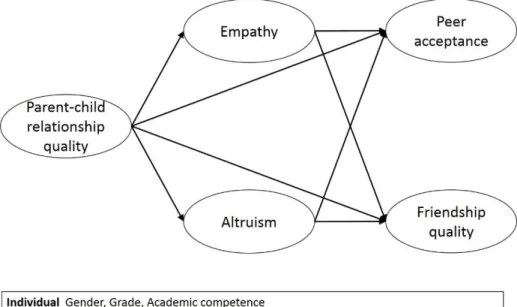
The purpose of this study is to develop a theoretical model for prosocial parent-to-peer pathways and test its validity using nationally representative data of school-aged children in South Korea. To be specific, this study aims to examine (1) the effect of parent-child relationships on positive peer relationships and (2) the mediating effects of children’s empathy and altruism on the association between parent- child relationships and positive peer relationships.
Positive peer relationships, i.e. peer acceptance and friendships, are one of the essential antecedents of school-aged children’s well-being and well-becoming. In line with attachment theory, a substantial body of literature has found that the quality of parent-child relationships is an important predictor of peer acceptance and friendship quality. Yet, a relatively few studies have examined the psychological mechanisms underlying the influence of parent-child relationships on positive peer relationships. Particularly in Korea, little research has been conducted on this positive parent-to-peer pathways, since a focus of childhood research was mainly on negative peer relationships such as peer rejection or bullying.
According to previous research findings, a good quality of relationships with parents is likely to foster children’s prosocial orientation such as empathy and altruism, which in turn promotes positive relationships with peers. The present study develops a research model where the effect of parent-child relationship quality on positive peer relationships can be either direct or indirect via empathy and altruism. The main research hypotheses involve: (1) the quality of parent-child relationships will have a positive effect on positive peer relationships, i.e. peer acceptance and friendship quality, and (2)
children’s empathy and altruism will mediate the effect of parent-child relationship quality on positive peer relationships.
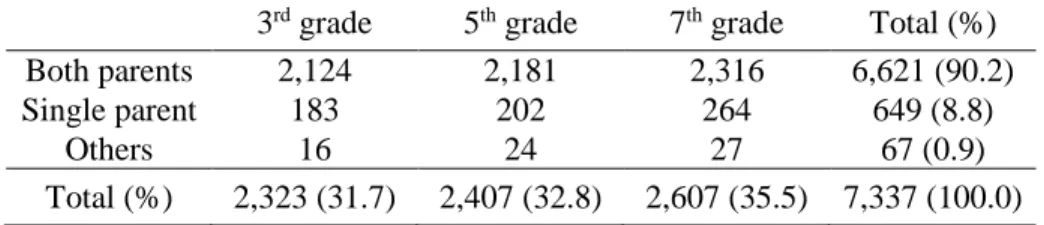
To empirically test the research model and hypotheses, structural equation modeling was performed to analyze the nationally representative data from the 2013 South Korean subsample of the International Survey of Children’s Well-Being. The sample consisted of 4,690 children in 3rd and 5th grade, who are living with at least one parent.
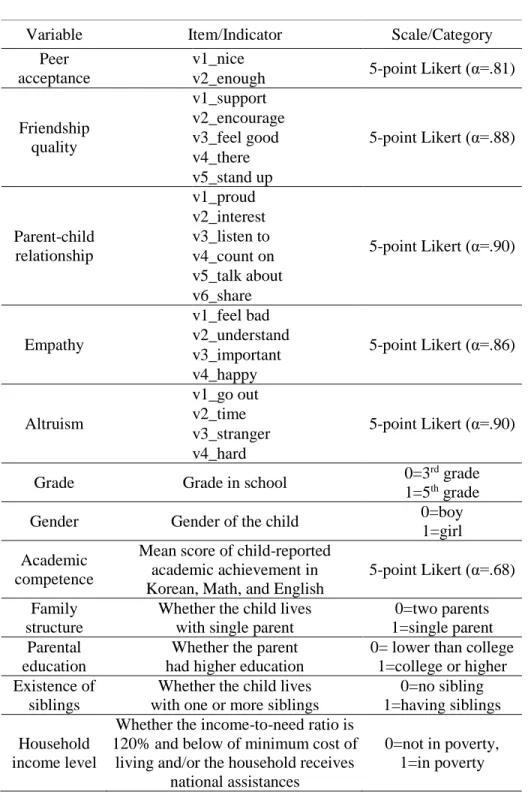
All of the major variables were measured using multi-item, self-report indicators.
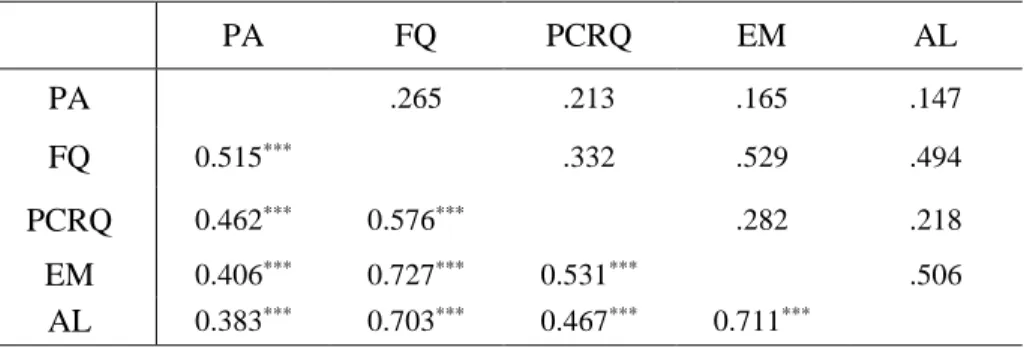
The analytic results indicate that the research model fits the sample data well and explains 29.3% of variance in peer acceptance and 64.6% in friendship quality. All the research hypotheses are supported:
(1) the quality of parent-child relationships does have a positive effect on peer acceptance and friendship quality, and (2) children’s empathy and altruism partially mediate the effect of parent-child relationship quality on positive peer relationships. Despite several limitations due to secondary data analysis, this study has a significance in that it develops a theoretical model for prosocial parent-to-peer pathways and empirically examine its validity with nationally representative data of school-aged children. This study calls for more research on Korean
children’s positive social relationships and the underlying mechanisms of their prosocial development.
Keywords: positive peer relationships, peer acceptance, friendships, parent-child relationships, empathy, altruism, structural equation modeling
Student Number: 2013-22835
CONTENTS
CHAPTER I – INTRODUCTION ... 1
1. Introduction ... 1
2. Problem Statement ... 4
3. Purpose of the Study ... 9
4. Research Question ... 10
5. Chapter Outline ... 10
CHAPTER II – LITERATURE REVIEW ... 12
1. Introduction ... 12
2. Positive Peer Relationships in School-aged Children ... 12
2.1 Development and domains ... 13
2.2 Consequences and importance ... 15
2.3 Proximal and distal predictors ... 18
3. Influence of Parent-Child Relationship Quality ... 21
3.1 Direct and indirect influences ... 22
3.2 Attachment theory ... 24
3.3 Research evidence ... 26
4. Processes Underlying Parent-to-Peer Pathway ... 29
4.1 Internal working model and prosocial orientation .... 30
4.2 Roles of empathy and altruism ... 32
4.3 Prosocial parent-to-peer pathways ... 36
5. Influence of Individual and Familial Characteristics ... 41
5.1 Individual characteristics ... 42
5.2 Familial characteristics ... 45
6. Conclusion ... 48
CHAPTER III – RESEARCH MODEL ... 49
1. Introduction ... 49
2. Conceptual Model ... 49
3. Research Hypotheses ... 50
4. Conclusion ... 51
CHAPTER IV – METHODS ... 52
1. Introduction ... 52
2. Data and Sample ... 52
3. Measurement ... 54
3.1 Dependent variables ... 55
3.2 Independent variable ... 56
3.3 Mediating variables ... 57
3.4 Control variables ... 58
4. Analysis Techniques ... 61
5. Conclusion ... 65
CHAPTER V – RESULTS ... 66
1. Introduction ... 66
2. Descriptive Statistics ... 66
2.1 Individual and familial characteristics ... 66
2.2 Distributions of major variables ... 68
2.3 Examination of normality assumption ... 69
3. Analysis of Measurement Model ... 70
3.1 Overall measurement model fit ... 71
3.2 Construct validity ... 73
4. Analysis of Structural Model ... 75
4.1 Overall structural model fit ... 76
4.2 Parameter estimation ... 78
4.3 Decomposition of effects... 82
5. Conclusion ... 84
CHAPTER VI – CONCLUSION ... 85
1. Introduction ... 85
2. Findings ... 85
3. Theoretical Implications ... 94
4. Practical Implications ... 96
5. Limitations and Suggestions ... 102
6. Conclusion ... 104
REFERENCES ... 105
APPENDIX ... 136
국문 초록 ... 140
TABLES
Table 1 Grade and family structure of the original sample ... 53
Table 2 Measures of variables ... 60
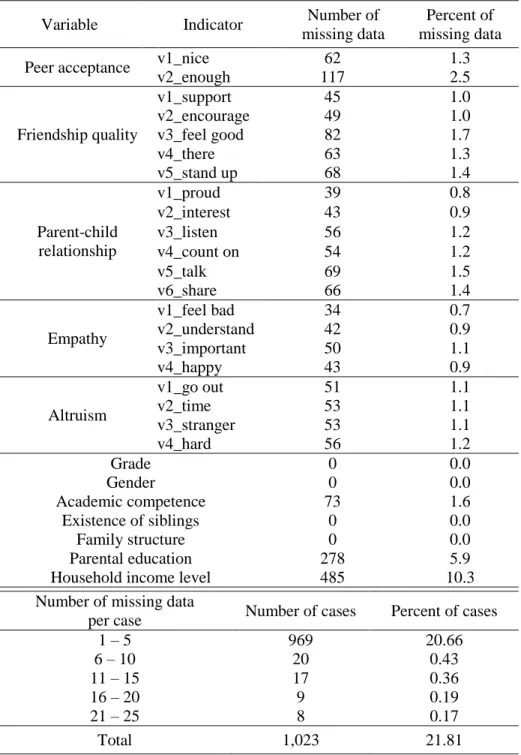
Table 3 Missing data for individual indicators and cases ... 63
Table 4 Criteria for assessing goodness-of-fit ... 65
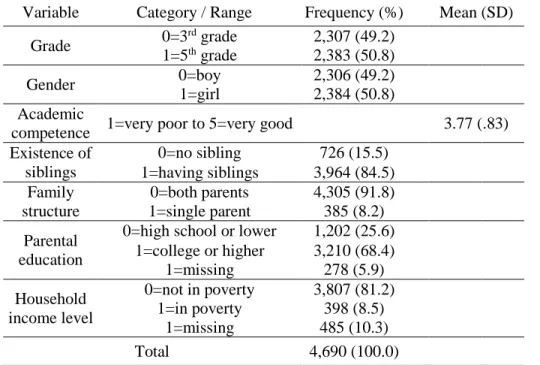
Table 5 Descriptive statistics of control variables ... 67
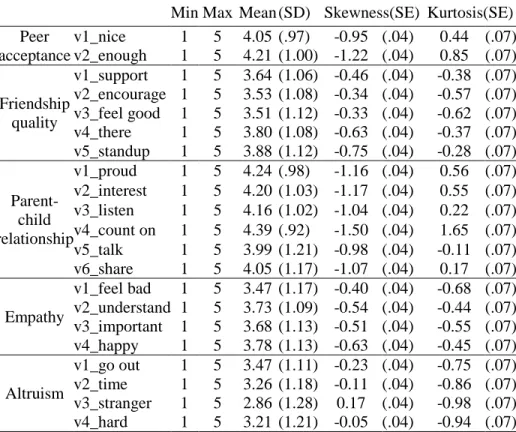
Table 6 Descriptive statistics of major variables ... 68
Table 7 Measurement model fit ... 73
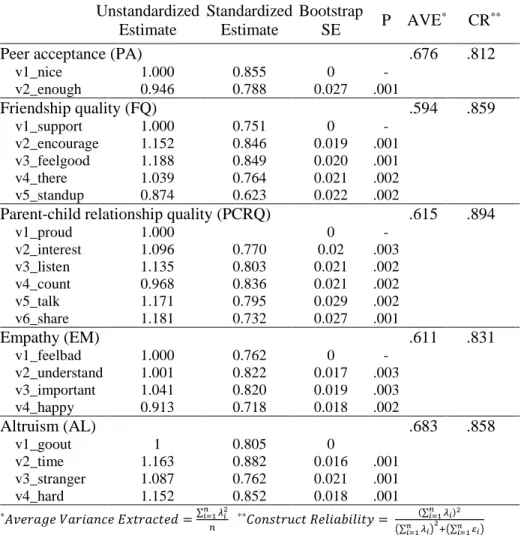
Table 8 Estimates of convergent validity... 74
Table 9 Estimates of correlation and squared correlation ... 75
Table 10 Structural model fit ... 77
Table 11 Estimates of squared multiple correlation ... 78
Table 12 Estimates of relationships among major variables ... 78
Table 13 Estimates of relationships between major and control variables ... 81
Table 14 Estimates of total, direct, and indirect effects ... 82
FIGURES
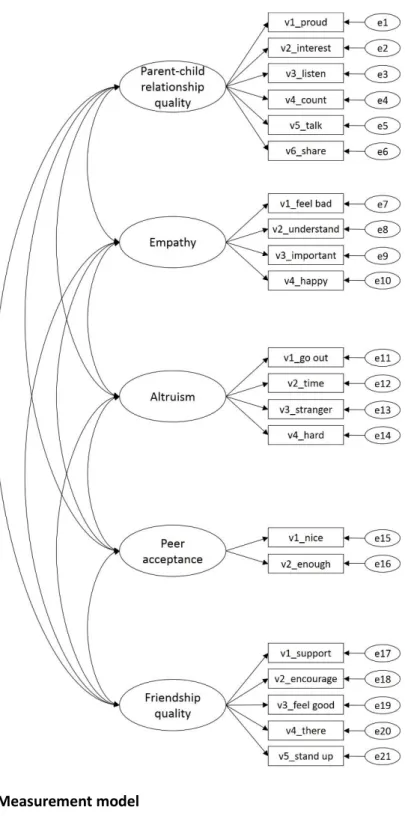
Figure 1 Conceptual model... 50Figure 2 Measurement model ... 72
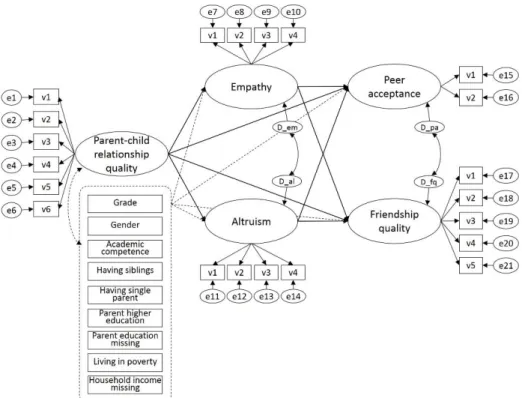
Figure 3 Structural model ... 76
Figure 4 Standardized estimates of relationships among major variables ... 79
CHAPTER I – INTRODUCTION
1. Introduction
All humans are social beings, continuously interacting with others and building a variety of relationships with different individuals over the course of their lives. Forming and maintaining good quality relationships are one of the fundamental human needs. Cacioppo and Patrick (2008, p.
7) state that “the need for meaningful social connection, and the pain we feel without it, are defining characteristics of our species.” A good quality of relationships contributes to human welfare. A body of research has found that the structure and process of relationships have a significant influence on our health and well-being (House, Umberson, &
Landis, 1988). The quality of relationships, as D. Howe (1995, p. 1) suggests, can be regarded as “the yardstick by which we measure happiness and contentment.”
Human relationships begin right after birth when an infant and the parent initiate to bond (Van Hasselt & Hersen, 1992). For most children, relationships with parents comprise almost the entirety of the developmental context in infancy and toddlerhood. As children grow, however, their social worlds expand outside the family, and peers take on a greater importance than in the past. Originated from the Latin par,
meaning equal, the term peer usually refers to someone in the same year or grade in the literature on peer relationships. Particularly when children enter elementary school, relationships with peers constitute their major developmental context. A good quality of peer relationships contributes to school-aged children’s social and emotional well-being, and provides them with opportunities to acquire a wide range of behaviors, skills, and attitudes that affect their successful adjustment to school life and subsequent positive development in adolescence and adulthood (K. H.
Rubin, Bukowski, & Parker, 2006). Therefore, it is indispensable for school-aged children to experience positive peer relationships for both their present happiness, i.e. well-being, and later healthy growth, i.e.
well-becoming.
Positive peer relationships have been categorized into two domains: peer acceptance at group level and friendships at dyadic level (Gifford-Smith & Brownell, 2003). Although the ability to relate with others is one of the innate human natures, researchers have observed large differences in peer acceptance and friendship quality among school-aged children. One of the most robust predictors of positive peer relationships was found to be the quality of parent-child relationships (Putallaz & Heflin, 1990). The positive association between parent-child
relationships and peer relationships has been hypothesized and investigated the most actively by attachment theorists, who argue that parent-child attachment is a prototype relationship that lays a foundation for later social development (Berlin & Cassidy, 1999). While they have accumulated much evidence on what is an important precursor of positive peer relationships, the question as to how it affects the quality of peer relationships remains not fully answered. In other words, although the association between parent-child and child-peer relationships has firmly been supported, “the psychological processes underlying this association” have not yet been clearly explored (Thompson, 2006, p. 65).
In attachment theory, the concept of internal working model provides a theoretical explanation for the psychological mechanisms through which the quality of parent-child relationships has an indirect influence on the quality of peer relationships. This concept, however, lacks an empirical validity by itself (Eisenberg, 2006; Schneider, Atkinson, & Tardif, 2001). According to previous research, the internal working model can be reified as a prosocial orientation which refers to
“a focus on the needs of others and an inclination to enhance the welfare of others” (Côté et al., 2011, p. 217; Thompson, 2015). In fact, empathy and altruism, two most important components of prosocial orientation,
have been found to be promoted within positive parent-child interactions and to predict positive peer interactions (Eisenberg, Fabes, & Spinrad, 2006; Eisenberg, Huerta, & Edwards, 2012). Thus, it seems reasonable to hypothesize that children’s prosocial orientation such as empathy and altruism would mediate the influence of parent-child relationships on positive peer relationships.
However, few studies have examined the mediating roles of prosocial orientation in positive parent-to-peer pathways (Clark & Ladd, 2000). To fill this gap, this study seeks to develop a theoretically valid model for prosocial parent-to-peer pathways and to test its statistical validity using nationally representative data of school-aged children in South Korea.
2. Problem Statement
This study brings up three problems in the field of childhood research in Korea, which motivate the researcher to conduct the present study. These problems involve a lack of research attention to (1) children’s positive peer relationships, (2) the association between positive parent-child relationships and positive peer relationships, and (3) the mechanisms underlying the positive parent-to-peer pathways.
First of all, more research is required on positive aspects of peer relationships, because children have a fundamental need to form and maintain at least a minimum quality of positive interpersonal relationships (Baumeister & Leary, 1995). Korean literature on peer relationships is at the beginning stage, compared with American and European literature (M. Moon, 2005). Although this area of research is developing in both quantity and diversity, Korean scholars have so far concentrated their attention mainly on negative peer relationships such as peer rejection, bullying, or victimization (M. Moon, 2005; Y. H. Song, 2012). The tendency to focus on peer-related problems is understandable since Korean society has observed a host of destructive effects of school bullying and peer rejection. Research on negative peer relationships has indeed provided valuable evidence for various social interventions to reduce these problems; as a result, an overall decreasing tendency has been reported in terms of the proportion of bullies and victims (Ministry of Education & Korean Educational Development Institution, 2014).
Nevertheless, the alleviation or even the absence of serious peer-related problems cannot assure that children are experiencing positive peer relationships. For example, not being rejected nor victimized by peers does not necessarily mean being accepted or maintaining good quality
friendships. Thus, it is needed to more investigate children’s positive peer relationships, which are critical to their present well-being and future well-becoming. A focus on positive aspects of peer relationships is not an attempt to “callously disregard the real pains and struggle,” but rather an effort to “foreswear the ascendancy of psychopathology and deviance” (Saleebey, 2013, p. 3).
Second, it is required to examine the influence of positive parent-child relationships on positive peer relationships, because good quality parent-child relationships are one of the fundamental contextual antecedents of good quality peer relationships. Western researchers have agreed on that early secure relationships with parents and the maintenance of positive parent-child relationships are strong predictors of good quality peer relationships in middle childhood (Thompson, 2006). Although Korean researchers have also emphasized the parental influence on children’s peer relationships, the discussion has been centered on the detrimental influences of negative parent-child relationships such as child maltreatment, poor parenting behaviors, or family conflicts, in association with children’s negative outcomes such as aggression, delinquency, bullying, or victimization (O. Kim & W. Lee, 2001; C. K. Lee & Yang, 2015; S. C. Lee, 2012; Y. H. Oh, 2012; J. H.
Park & Lim, 2014; Ro & Sim, 2004; Woo, 2013). Therefore, practical implications of these studies have also revolved around who are at risk of peer-related problems and how to buffer the adverse effects of negative parent-child relationships. Admittedly, the risks of negative parent-child relationships appear more salient than the possible benefits of positive parent-child relationships. But in reality, it may be more difficult to maintain a good quality of parent-child relationships than just to avoid negative parent-child relationships. In Korean society, most parents may recognize the importance of their roles in positive child development, but not all parents could provide affectionate and supportive relationship contexts, in which their children can foster a prosocial orientation that affects in turn the quality of their subsequent social relationships outside the family. In fact, the two domains of child development that Korean parents reported the greatest difficulties in were social and emotional development: parents expressed difficulty helping their children to make friends and cooperate, and raising them to be affectionate and concerned for others (S. O. Park & Kang, 1997).
Therefore, more investigations are called for on the influence of parent- child relationship quality on children’s positive peer relationships in
order to improve our understanding about one of the essential promotive factors of children’s social and emotional well-being.
Last but not least, it is necessary to explore psychological processes underlying the association between positive parent-child relationships and positive peer relationships in middle childhood, because understanding the mechanisms that explain the influences of parent-child relationships on positive peer relationships could provide theoretical and practical implications in the field of social work. Even though the impact of parent-child relationships on peer relationships has substantially been investigated in Western literature, the processes underlying this influence have received relatively little attention (Clark
& Ladd, 2000). From the review of literature, children’s prosocial orientation such as empathy and altruism can reasonably be hypothesized to play mediating roles in positive parent-to-peer pathways. This expectation comes from the notion that the quality of interpersonal relationships is “responsible for the kinds of individuals we become,”
which in turn “determine the kinds of relationships we construct”
(Hartup & Laursen, 1999). Recently in Korea, there have been several studies on the mediating roles of aggression, rejection sensitivity, or depression in negative parent-to-peer pathways (Ah & Jeong, 2007;
Hong & Park, 2013; M. H. Jang & Lee, 2011; H. R. Jeon & Lee, 2014;
E. J. Kim & Lee, 2009; M. W. Kim & Park, 2012; S. Park & Jin, 2013;
Zhang & Kim, 2014). But, there exist few studies investigating prosocial mechanisms underlying the influence of parent-child relationships on children’s positive peer relationships. The study on the mediating roles of prosocial orientation in positive parent-to-peer pathways could add to our current knowledge about positive child development, by scrutinizing
“the conditions and processes that contribute to the flourishing or optimal functioning of people” (Gable & Haidt, 2005, p. 104). Also, it could provide evidence for the field of social work about intervention points and strategies to promote positive peer relationships, because most of social work practices and programs primarily aim to bring about changes in psychosocial aspects that lead to the actual target changes (S. G. Lee, 2007).
3. Purpose of the Study
Considering the need for studying prosocial mechanisms underlying the association between parent-child relationship quality and positive peer relationships, this study seeks to examine the effect of parent-child relationships on positive peer relationships among Korean school-aged
children, focusing on the mediating roles of empathy and altruism. To be specific, this study aims to examine (1) the effect of parent-child relationships on peer acceptance and friendship quality, and (2) the mediating effects of empathy and altruism on the association between parent-child relationships and positive peer relationships among Korean school-aged children.
4. Research Question
In this study, two main questions are raised as follows:
(1) Does the quality of parent-child relationships have an effect on positive peer relationships, i.e. peer acceptance and friendship quality, among school-aged children?
(2) Do children’s empathy and altruism mediate the effect of parent-child relationship quality on positive peer relationships among school- aged children?
5. Chapter Outline
In this chapter, the backgrounds to and objectives of the present study have been introduced. In Chapter II, a theoretical framework and empirical evidence are presented in detail. In Chapter III, a conceptual
model and the research hypotheses are proposed. In Chapter IV, research methods to empirically test the proposed model are described. In Chapter V, the results of statistical analyses are reported. In Chapter VI, the findings and the implications thereof are discussed.
CHAPTER II – LITERATURE REVIEW
1. Introduction
In Chapter II, a theoretical framework and empirical evidence are provided to develop a valid research model of this study. This chapter is organized into four sections: (1) positive peer relationships in school- aged children, (2) influence of parent-child relationship quality, (3) processes underlying parent-to-peer pathway, and (4) influence of individual and familial characteristics. In the first section, the current knowledge about positive peer relationships in school-aged children is introduced. In the second section, the influence of parent-child relationship quality on positive peer relationships is explained based on attachment theory. In the third section, theoretical backgrounds to the mediating roles of prosocial orientation, i.e. empathy and altruism, are provided. In the fourth section, empirical findings about the influence of individual and familial characteristics on prosocial orientation and positive peer relationships are reviewed.
2. Positive Peer Relationships in School-aged Children
In this section, literature on positive peer relationships in school-aged children is reviewed. This section is organized into three parts: (1)
development and domains, (2) consequences and importance, and (3) proximal and distal predictors. In the first part, the development of social relationships from early childhood to middle childhood is explicated, and two distinct domains in positive peer relationships are introduced: peer acceptance and friendships. In the second part, the developmental consequences and importance of peer acceptance and friendships are presented. In the third part, proximal and distal predictors of positive peer relationships are reviewed, focusing on children’s social behaviors at individual level and the quality of parent-child relationships at environmental level.
2.1 Development and domains
It might be literally true that we are born alone and we die alone, but we cannot live without being socially connected (Cacioppo &
Patrick, 2008). Social relationships are an essential part of human life and welfare. When studying children’s well-being and their healthy development, it is needed to hold an “individual-in-relationships”
perspective, in which a child is not regarded as an isolated individual, but as a social being who lives in relational contexts (W. A. Collins, 1999, p. 3).
Infants begin to bond with their caregivers, mostly their parents, immediately after birth. For most children, relationships with parents are the first and most important social context where their genetic traits interact with environment and their basic needs are or are not met (Cacioppo & Patrick, 2008). Although the influence of parent-child relationships continues to be significant, relationships with other children such as siblings or playmates become more frequent and influential as children grow older. Especially in middle childhood, or elementary school years, peer relationships become increasingly important, since time spent outside family lengthens, social interactions involving peers increase, peer groups enlarge, and peer interactions are less supervised by adults. Also, school-aged children become more and more concerned about their place in peer groups and have a stronger need for establishing intimate relationships with friends (K. H. Rubin et al., 2006). In this regard, Gifford-Smith and Brownell (2003, p. 236) state that “it is during middle childhood that children can truly be said to participate in a separate social world of their peers apart from children's other socialization experiences.”
Researchers in the field of childhood studies have conceptually distinguished two domains of positive peer relationships:
peer acceptance at group level and friendships at dyadic level (Gifford-
Smith & Brownell, 2003; Ladd, 1999). This differentiation comes from the notion that human beings have basic needs both “for inclusion in group life and for close relationships” (Asher & Paquette, 2003, p. 75).
In general, peer acceptance is defined as the degree to which children are liked by other peers (Bukowski & Hoza, 1989; Ladd, 1999; Oberle, Schonert-Reichl, & Thomson, 2010), whereas friendship is defined as a voluntary and reciprocal form of dyadic relationship that contains a positive affective tie (Bukowski & Hoza, 1989; Ladd, 1999; Newcomb, Bukowski, & Bagwell, 1999). Although peer acceptance and friendships are interrelated to some degree, researchers have found that they constitute different domains of peer relationships: children who are rejected in peer groups may still have friends, whereas some highly accepted children have few or no reciprocal friendships (Gifford-Smith
& Brownell, 2003; K. H. Rubin et al., 2006).
2.2 Consequences and importance
Children's positive peer relationships serve both as the context in which their success and happiness are measured and the context in which adaptive social skills and behaviors are fostered (Hartup
& Laursen, 1999). In elementary school years, it is necessary to be accepted by peers and to maintain a good quality of friendships for their present well-being and future well-becoming.
Researchers have reported that peer acceptance has significant impacts on children’s psychological well-being and school adjustment. Peer-rated as well as self-perceived acceptance in childhood have been reported to increase self-esteem and to decrease dysphoria and loneliness (Asher & Paquette, 2003; Brown & Lohr, 1987; Kistner, Balthazor, Risi, & Burton, 1999). Stable peer acceptance is also found to buffer early academic difficulties (O'Neil, Welsh, Parke, Wang, & Strand, 1997). In contrast, longitudinal studies have substantiated that peer rejection predicts loneliness, behavioral problems, academic deficits, and school maladjustment (O'Neil et al., 1997; Parker & Asher, 1987).
Investigators have also supported that the participation in and the quality of friendships predict children’s social and emotional well-being and adjustment during elementary school years. Good quality friendships have been related to higher self-esteem, securer emotion, lower loneliness, better social skills, and school adjustment (Bishop &
Inderbitzen, 1995; Furman, 1998; Ladd, Kochenderfer, & Coleman, 1996). Furthermore, friendships are found to buffer the effects of
negative peer relationships, such as rejection or victimization (Hodges, Boivin, Vitaro, & Bukowski, 1999; Schwartz, Dodge, Pettit, & Bates, 2000). On the other hand, having no friends is found to influence loneliness, depression, and maladaptive behaviors in middle childhood and adolescence (Asher & Paquette, 2003).
In Korea, the dysfunctional effects of negative peer relationships have received great attention in the literature on peer relationships since the late 1990s (M. Moon, 2005; H. Sim & Shin, 2009).
Peer rejection has been related to school-aged children’s higher loneliness, lower self-perception, behavioral problems, and school maladjustment (Jung, Rhee, Koh, & Kim, 2001; Y. K. Kim & O. K. Lee, 2001; Rhee, Kim, & Oh, 2001). Peer victimization has also been associated with lower self-esteem, internalized and externalized behaviors, school maladjustment, and suicide ideation in middle childhood and adolescence (S. M. Choi & Kim, 2012; J. Y. Kim & Lee, 2010; H. S. Park, Kim, & Chung, 2014; Seo, 2014). Recently, however, research on the benefits of positive peer relationships has been accumulated: overall, good quality peer relationships have been found to positively influence psychosocial well-being of Korean school-aged
children (Chyung, 2015; Youngha Kang, 2012; J. S. Lee & Kim, 2013;
Yoo, Park, & Doh, 2015).
2.3 Proximal and distal predictors
It is unfortunate that not all children are well accepted by other peers or have good quality friendships during elementary school years. There are substantial variations among individual children in terms of the level of peer acceptance and the quality of friendships.
During the 1990s, Western researchers were interested in exploring the predictors of children’s positive peer relationships (Ladd, 1999). They have found that children’s peer relationships are likely a product of both children’s individual characteristics and their social environments (K. H.
Rubin et al., 2006).
At individual level, children’s social behaviors have extensively been investigated as one of the most proximal correlates of peer acceptance and friendship quality. Social behaviors are often categorized into three groups: moving toward others, i.e. prosocial behaviors; moving against others, i.e. aggressive behaviors; and moving away from others, i.e. withdrawn behaviors (K. H. Rubin et al., 2006;
Van Lieshout, Cillessen, & Haselager, 1999). Researchers have found a
relatively robust association between prosocial behaviors and peer acceptance as well as between aggressive behaviors and peer rejection (Crick, 1996; Gifford-Smith & Brownell, 2003; Van Lieshout et al., 1999). Prosocial behaviors were also significantly associated with the gain and the stability of friendships among elementary school children (Bowker, Rubin, Burgess, Booth-LaForce, & Rose-Krasnor, 2006).
Aggressive behaviors, on the contrary, have been reported to be negatively related to the quality of friendships, even though aggressive children are just as likely to have friends as non-aggressive children (K.
H. Rubin et al., 2006).
The aforementioned findings led researchers to explore the foundations explaining why children exhibit such different behaviors (Ladd, 1999). At environmental level, the quality of parent-child relationships was found to be one of the most important distal antecedents of school-aged children’s social behaviors and peer relationships (Ladd, 1999; Putallaz & Heflin, 1990; K. H. Rubin et al., 2006). Traditionally, parent-child relationships and peer relationships were considered as distinct and separate social contexts of children, but research evidence has supported that these two contexts are highly connected (Hartup, 1979; Z. Rubin & Sloman, 1984; Sroufe, Egeland, &
Carlson, 1999). A body of literature has consistently reported that positive parent-child relationships have great impacts on children’s social and emotional development and well-being (Eisenberg, 2006).
Putallaz and Heflin (1990) argued that the influence of parent-child relationships is so important that any theory or intervention which does not include parental roles in children’s social development would be incomplete and compromised.
In Korean literature, the quality of parent-child relationships has also been extensively studied as an important predictor of peer relationships in school-aged children (H. Sim & Shin, 2009). But the focus was more on the association between negative parent-child relationships and negative peer relationships (Y. A. Jang & Lee, 2007; O.
Kim & W. Lee, 2001; Y. H. Oh, 2012; Ro & Sim, 2004; Woo, 2013). For instance, child abuse and neglect by parents have been pointed out as risk factors of negative peer relationships, which in turn lead to other problematic outcomes in childhood and adolescence (An, Lee, & Chung, 2013; Bae, 2014; S. Kim, 2015). Yet, some studies indicate that positive parent-child interactions are associated with positive outcomes in peer relationships, just as negative parent-child interactions are related to negative peer relationships (H. J. Kim & Hong, 2015; J. Kim & Nam,
2013; Y. R. Lee, 2013). Recently, research interests in the influence of positive parent-child relationships on positive peer relationships in school-aged children appear increasing in Korean literature (S. B. Kim
& Lee, 2014; J. I. Lee, Kim, & Han, 2014).
3. Influence of Parent-Child Relationship Quality
In this section, a theoretical framework and empirical evidence for the influence of parent-child relationship quality on positive peer relationships in school-aged children are provided. The section is organized into three parts: (1) direct and indirect influences, (2) attachment theory, and (3) research evidence. In the first part, two different research focuses on parental influence – direct and indirect – are presented, and the current study is situated within the focus of indirect influences. In the second part, attachment theory is introduced as a main theoretical framework for the present study. In the third part, empirical findings supporting the assumptions of attachment theory are suggested.
3.1 Direct and indirect influences
There exist two main groups of researchers explaining the parental influences on peer relationships: one focuses on direct influence, the other on indirect influence (Hartup, 1992; Parke & O'Neil, 1999).
The first group of researchers emphasizes parents’ direct influence, i.e.
intervention, viewing parents as influencing children’s peer relationships directly and explicitly as instructors, advisors, or supervisors when their children initiate and maintain relationships with other peers. (Parke &
O'Neil, 1999; Z. Rubin & Sloman, 1984). They have found that certain types of direct influences, such as arranging and supervising peer-play activities or giving advice about making friends, can be effective for young children to be socially competent, whereas these direct interventions may not function well for older children (Ladd, 1999;
Parke et al., 2014).
By contrast, the other group of researchers is interested in parents’ indirect influence, i.e. stage-setting, regarding parents as affecting children’s peer relationships through their relationships with children and parenting practices (Parke & O'Neil, 1999; Z. Rubin &
Sloman, 1984). This group of researchers explains that parental influence is indirect because its purpose is not straightforwardly to affect children’s
peer relationships (Parke & O'Neil, 1999). To date, there has been more research evidence supporting parental indirect influences than the direct influences on peer relationships in school-aged children (Ladd, 1999).
Attachment theory and social learning theory are the two main theories explaining how parents indirectly influence children’s peer relationships. According to social learning theory, the manners in which parents engage in interpersonal relationships affect children’s peer relationships, since children learn from or model after how their parents relate to other people (Z. Rubin & Sloman, 1984). Attachment theorists, however, explain that secure and affective relationships with parents enable children to have a positive social orientation and to actively explore their social worlds, thereby helping them form and maintain good quality peer relationships (Z. Rubin & Sloman, 1984). While social learning theorists have emphasized the effects of certain discipline techniques on children’s social behaviors, attachment theorists have underscored the emotional nature of parent-child relationships which are internalized as internal working models and represented in children’s later relationships with others (Bugental & Grusec, 2006; Ladd, 1999;
Thompson, 2006).
The present study proposes attachment theory as its main theoretical framework in order to establish a valid research model, since it aims to explore the psychological mechanisms underlying the association between the quality of parent-child relationship and positive peer relationships. In line with attachment theory, the quality of parent- child relationships is hypothesized to have indirect influences on peer acceptance and friendship quality through children’s generalized social orientation.
3.2 Attachment theory
Attachment theory is one of the most influential theories that emphasize the impact of parent-child relationships on human development over the course of life span. According to Bowlby (1907- 1990), the founder of attachment theory, the affectionate bond between an infant and the primary caregiver is an evolutionarily adaptive relationship whose principal function is to increase the chances for survival of the child (Bretherton, 1992; McElhaney, Allen, Stephenson,
& Hare, 2009). Although Bowlby was influenced by Freudian psychoanalytic theory, there was a noteworthy shift from “the notion of a conflictual relationship between society and child” to “a more positive
view of the adaptive quality of parent-child relationships” (Bugental &
Grusec, 2006, p. 368). Ainsworth (1913-1999) is another pioneer of attachment theory, who devised an experiment called strange situation and formulated a typology of attachment quality: secure, avoidant, ambivalent or resistant attachment (Grusec & Lytton, 1988).
In attachment theory, parent-child attachment relationship is viewed as a prototype relationship which has a significant impact on children’s subsequent social relationships (Berlin & Cassidy, 1999;
England & Sroufe, 1992). Attachment theorists contend that individual differences in attachment quality are explained by parental sensitivity and warmth during infancy, and significantly account for variations in children’s later social development (Thompson, 2006). Parents of securely attached infants have been found to be more responsive, accepting, and cooperative than parents of the insecurely attached (Putallaz & Heflin, 1990).
The concept of internal working model in attachment theory provides an explanation for the mechanism through which early parent- child attachment quality affects children’s later social relationships (Eisenberg, 2006). Internal working models are described as mental representations about previous relationship experiences which are
utilized to make predictions as to how one’s needs can be, or not be, met within interpersonal relationships (Hartup & Laursen, 1999). Internal working models consist of generalized expectations about the self, others, and the relationship between self and others (Hartup & Laursen, 1999).
For example, a secure attachment relationship, based on a history of parents’ availability and responsiveness, makes a child develop a sense of self-worth and positive expectations about social interactions, which enables the child to move toward others to build positive social relationships. Conversely, an insecure attachment, following by parents’
insensitive caregiving, leads a child to view the self as unworthy of love and others untrustworthy, which influences the child’s actual social behaviors and the quality of relationships.
3.3 Research evidence
A body of literature on children’s social relationships has supported the assumptions and formulations of attachment theory.
According to these studies, the quality of early parent-child attachment is strongly related to the quality of subsequent interpersonal relationships, including later parent-child relationships and peer relationships (Thompson, 2006).
First of all, the quality of attachment is found to be one of the most direct and strongest predictors of later parent-child relationships:
a secure attachment predicts positive parent-child relationships in childhood and adolescence (Thompson, 2006). From a meta-analysis of the existing longitudinal data, Fraley (2002) concluded that there was a moderate stability of attachment security, versus insecurity, from infancy to late adolescence. However, Thompson (2006) noted that, if parents’
sensitive and supportive care is not maintained for any reason (e.g. due to changes in family ecological conditions), a secure attachment in infancy may not be related to the quality of later parent-child relationships.
The quality of attachment in early childhood is also found to predict children’s later peer relationships. Numerous studies have dealt with the association between parent-child and child-peer relationships since Bowlby argued that there was a strong causal relationship between the quality of parent-child attachment and children’s later capacity to make affectionate bonds (Berlin & Cassidy, 1999). Empirical findings have generally suggested that the quality of attachment successfully predicts children's social competence, peer acceptance, and friendship quality from early childhood to adolescence (England & Sroufe, 1992;
Hartup & Laursen, 1999; Putallaz & Heflin, 1990; Schneider et al., 2001;
Sroufe & Fleeson, 1986). Schneider et al. (2001) also reported that this prediction was stronger for peer relationships in middle childhood than in early childhood. In short, previous findings have justified attachment theorists’ argument that the quality of early parent-child relationships sets the stage for successful entry into relationships with others in later life (Sroufe et al., 1999).
However, a secure attachment, if not followed by continuing positive parent-child interactions, is not necessarily a strong predictor of positive peer relationships in the long term (Thompson, 2006).
According to Belsky and Fearon (2002), children who were insecurely attached but after were given secure care showed more positive developmental outcomes than children who were securely attached but were not given continued secure care. Since the quality of parent-child relationships is determined by both the past relational history and the current interactional experiences, it might be more sensible to measure the present quality of parent-child relationships, rather than the past attachment quality, when investigating the association between parent- child and child-peer relationships in elementary school years (Thompson, 2006). In fact, a body of research has found that the quality of concurrent
parent-child relationships significantly influences children’s peer relationships in school-aged children (Bohlin, Hagekull, & Rydell, 2000;
Ladd, 1999; Thompson, 2006).
In Korean literature, the present quality of parent-child relationships has also been positively related to the quality of peer relationships among preschool children (Y. Lee & Na, 1999), elementary school children (S. B. Kim & Lee, 2014; J. I. Lee et al., 2014; K. S. Lee, Suh, & Shin, 2000; S. H. Moon, 2008), and middle school adolescents (H. J. Jeon & Lee, 2002; Jeong, 2002; Y. Kim & Sim, 2000). But most of these findings had limited implications because the participants of each study were sampled only within a restricted local area. In addition, these studies only suggested the existence of a positive association between parent-child relationships and peer relationships, but could not explain why or how they are interrelated.
4. Processes Underlying Parent-to-Peer Pathway
In this section, a theoretical framework for and empirical findings on the psychological processes underlying the association between parent-child and child-peer relationships are provided. The section is organized into three parts: (1) internal working model and prosocial orientation, (2)
roles of empathy and altruism, and (3) prosocial parent-to-peer pathways.
In the first part, the concept of internal working model in attachment theory is reified as prosocial orientation. In the second part, empirical evidence is reviewed on the influences of parent-child relationship quality on children’s empathy and altruism, as well as the influences of empathy and altruism on peer relationships in elementary school years.
In the third part, research evidence and the lack thereof on the mediating roles of empathy and altruism on the positive parent-to-peer pathways is described.
4.1 Internal working model and prosocial orientation From an individual-in-relationships perspective, it is important to understand the continuous interactions between individual characteristics and relationship experiences (W. A. Collins, 1999). As D.
Howe (1995) states, the quality of relationships influences individual’s personal characteristics, which in turn affect the later relationship quality.
In attachment theory, the concept of internal working model provides a useful notion about the mechanism of parental influences on children’s peer relationships; yet this concept is too broad and abstract to empirically evaluate its validity (Schneider et al., 2001). One of the ways
attachment theorists have reified this concept is to emphasize the role of children’s social orientation (Thompson, 2015). Social orientation refers to a generalized motivational processes that influence the way in which an individual responds to social environments (Kuperminc & Allen, 2001). Attachment theorists have been more interested in children’s social orientation than specific social behaviors, since internal working models primarily guide children’s psychological processes involving memories, interpretations, and expectations, which, in turn, guide their actual behaviors (Markiewicz, Doyle, & Brendgen, 2001; Putallaz &
Heflin, 1990).
According to attachment theorists, a secure attachment establishes a prosocial orientation which helps children to build more positive social relationships with others without being overly concerned with their own needs (Bohlin et al., 2000; Klohnen & John, 1998;
Putallaz & Heflin, 1990). Prosocial orientation is defined as “a focus on the needs of others and an inclination to enhance the welfare of others”
(Côté et al., 2011, p. 217). The term prosocial usually collocates with behaviors to indicate voluntary and positive actions undertaken to
benefit others, such as caring, comforting, sharing, and helping behaviors (Batson & Powell, 2003; Caprara, Alessandri, & Eisenberg, 2012). But
it is also used to refer a type of social orientation that facilitates such prosocial behaviors (Mikulincer & Shaver, 2010). In a broad sense, prosocial behaviors include any behaviors that result in benefiting others regardless of motivations or intentions behind the expressed actions; but prosocial orientation is more an internal characteristic that focuses others’
needs and values others’ well-being (Eisenberg, Spinrad, & Knafo-Noam, 2015).
4.2 Roles of empathy and altruism
In the study of prosocial orientation, empathy and altruism have been studies as two most principal constructs of interest (Batson, Ahmad, Lishner, & Tsang, 2002). Empathy is defined as a cognitive awareness of others’ internal states and the vicarious affective response to others’ emotions (Hoffman, 2001), while altruism refers to a motivation to enhance others’ welfare (Batson & Powell, 2003).
Researchers have suggested that empathy is one of the most fundamental and indispensable factors that enable us to be socially connected with other human beings (Saarni, Campos, Camras, &
Witherington, 2006). For most children, empathy begins to emerge by the second year when they become aware of others’ internal states and
able to differentiate others’ perspective from their own one (Hoffman, 2001). Empathy has also been hypothesized to bring about altruism, which in turn leads to prosocial behaviors in actual social interactions (Batson et al., 2002; Eisenberg et al., 2006; Panfile & Laible, 2012;
Saarni et al., 2006). As children’s cognitive and emotional understandings mature, empathic responses to others’ distress become more predictive of altruistic orientation and behaviors (Eisenberg et al., 2006; Thompson, 2006).
Researchers have observed large differences among school- aged children in the ability to empathize with others and to show altruistic concerns. It is likely that genetic and biological factors explain some variations in empathy and altruism; but empirical evidence on this issue has so far been very limited. On the other hand, social environments have been found to play a critical role in the origins of empathy and altruism (Eisenberg et al., 2006). Particularly, they have scrutinized parental influences on children’s prosocial development. While social learning theorists emphasize an acquisition of certain prosocial behaviors by parenting practices, attachment theorists underline the emotional quality of parent-child relationships that foster empathy and altruism in children (Zahn-Waxler & Smith, 1992).
A number of studies have supported that a better quality of parent-child relationships predicts higher empathy and altruism in children (N. L. Collins & Feeney, 2000; Eisenberg et al., 2006; Krevans
& Gibbs, 1996; Thompson, 2006). Attachment theorists have suggested that empathy is promoted within good quality parent-child relationships that satisfy children’s own needs, encourage their emotional expressions, and discourage excessive self-concerns (Saarni et al., 2006; Zahn-Waxler
& Smith, 1992). Also, positive parent-child relationships have been found to help children to be more sensitive to humanistic and unselfish concerns that lead to altruistic behaviors toward others (Mikulincer, Shaver, Gillath, & Nitzberg, 2005; Thompson, 2006). In short, the affectionate relationships between parent and child are “essentially the crucible in which empathy and concern for others' well-being are forged”
(Saarni et al., 2006, p. 264).
In Korean literature, several studies have investigated the association between parent-child relationship quality and children’s prosocial orientation. But this association has mostly been examined with preschooler sample: in general, positive parent-child interactions have been related to higher prosocial orientation in young children (M.
S. Choi, Moon, Kim, & Lee, 2008; K. H. Kim & Ahn, 2009; Son, 2000).
For school-aged children, however, few studies were conducted on the influence of positive parent-child relationships on prosocial orientation;
rather, researchers have focused on the influences of negative parent- child relationships on children’s aggression, social withdrawn, or depression (C. K. Lee & Yang, 2015; Min, 2012; J. H. Park & Lim, 2014).
On the other hand, children’s prosocial orientation appears contributing to their positive peer relationships in school-aged children.
As stated in the second section in this chapter, children’s social behaviors are one of the strong predictors at individual level of peer acceptance and friendship quality. Therefore, it seems evident that children’s prosocial orientation behind their prosocial behaviors also influences positive peer relationships in school-aged children. Western researchers have found that empathic and altruistic tendencies significantly predict peer acceptance across the elementary school years (Edwards, Manstead, &
Macdonald, 1984; Van Lieshout et al., 1999). Children’s prosocial orientation has also been found to influence their friendship quality, since children who are able to understand others’ emotional states and respond in other-oriented way can easily build and maintain more positive relationships with friends (Eisenberg et al., 2012; Wilson, O'Brien, &
Sesma, 2009).
Lately, a Korean study reported a significant cross-sectional and longitudinal relationships between prosocial orientation and peer acceptance among elementary school children (H. Sim, 2005). Following this study, (Yang, Kim, Jung, Cha, & Park, 2007) found that the ability to understand others’ thoughts and emotion was related to higher peer acceptance and lower rejection among school-aged children. Similarly, H. J. Lee (2015) found a positive relationship between empathy and peer acceptance among children in 4th to 6th grade. For middle school children, cognitive and affective empathy were found to influence the quality of peer relationships (Yusun Kang & Park, 2014). The study of J. Y. Lee and Lee (2007) also suggested that altruism affected higher peer acceptance among high school students. However, these researchers could not obtain generalizable findings about the association between prosocial orientation and peer relationships due to the lack of representative data on empathy and altruism in Korean children.
4.3 Prosocial parent-to-peer pathways
In an attachment theoretical framework, children’s prosocial orientation, i.e. empathy and altruism, can be hypothesized to play mediating roles between parent-child relationship quality and positive
peer relationships. This hypothesis appears theoretically plausible because children’s empathy and altruism are found to be fostered within positive parent-child relationships and to predict later peer acceptance and friendship. However, few studies have empirically examined the roles of empathy and altruism as mediators in the parent-to-peer pathways.
Recently, Clark and Ladd (2000, p. 487) proposed a
“prosocial-orientation-as-mediator model” within an attachment theoretical framework. They hypothesized that children’s ability to empathize with and willingness to help others would mediate the relationship between parent-child relationships and peer relationships.
The results of their path analyses for 192 kindergarten children demonstrated that all the indirect paths from parent-child connectedness through children’s prosocial orientation to peer acceptance, the number of mutual friends, and friendship harmony were positively significant.
As hypothesized, children’s prosocial orientation was found to partially mediate the relationship between parent-child connectedness and positive peer relationships. The researchers also evaluated an alternative model called a “prosocial-orientation-as-determinant model,” in which children’s prosocial orientation affects both parent-child relationships
and peer relationships at the same time; but the alternative models were estimated less fit than the originally hypothesized model. Similar to this study, Zhou et al. (2002, p. 898) hypothesized a “parent-driven- socialization model,” in which parental warmth and positive expressivity influence children’s social outcomes by mediating children’s empathy.
They found that this model produced better fit than a “child-driven- alternative model” in which children’s empathy determines parental warmth and positive expressivity.
As Clark and Ladd (2000) pointed out, investigators have rarely examined the mediating role of children’s prosocial orientation on the impact of parent-child relationships on children's peer relationships, even though it is theoretically reasonable to hypothesize. On the other hand, a boy of research has examined the mediating role of children’s antisocial orientation, or aggression, in negative parent-to-peer pathways (Denham, Blair, Schmidt, & DeMulder, 2002; Dishion, 1990; Shields &
Cicchetti, 2001). Research interests in negative parent-to-peer pathways appear rapidly increasing in Korean literature as well. Recently, a number of studies have explored the psychological mechanisms underlying the association between negative parent-child relationships and negative peer relationships, mainly focusing on children’s
aggression, rejection sensitivity, emotion regulation, or depression (Ah
& Jeong, 2007; Hong & Park, 2013; M. H. Jang & Lee, 2011; H. R. Jeon
& Lee, 2014; E. J. Kim & Lee, 2009; M. W. Kim & Park, 2012; S. H.
Kim & Chung, 2011; S. Park & Jin, 2013; Zhang & Kim, 2014).
However, a relatively few Korean studies have explored the mechanisms underlying positive parent-to-peer pathways. Despite a general lack of research, some researchers have produced valuable findings. In the study of S. H. Park (2002), significant correlations were found between parental empathic care, children’s helping behaviors, and peer acceptance among children in 5th grade, suggesting that helping behaviors might play a mediating role on the relationship between parental empathic care and peer acceptance. In another study of B. S.
Sim and Ko (2008), children’s empathy and cooperation skills were found to partially mediate the negative association between parent-child attachment and peer conflicts among children in 6th grade. They also hypothesized the mediating effects of empathy and cooperation skills on the association between parent-child attachment and peer acceptance, but this hypothesis was not supported. More recent studies have shown that children’s empathy mediated the association between positive parenting behaviors and positive peer relationships (Im & Jin, 2014; S. E. Lee &
Nahm, 2011; J. H. Oh, 2015; Yoon & Jin, 2015). These findings imply that children’s prosocial orientation such as empathy and altruism might play a mediating role on the influence of parent-child relationship quality on positive peer relationships. But these studies have some limitations.
First, although research evidence on each hypothesized path was provided, these studies lacked a theoretical background to the mediation model as a whole. Second, the findings of these studies lacked external validity because the sample was not representative.
In summary, from the review of previous literature, more research is needed (1) in an “individual-in-relationships” perspective (W.
A. Collins, 1999, p. 3), (2) to overcome “the tendency to focus solely on the study of negative behaviors” (Crick, 1996, p. 2318), and (3) on “the psychological processes underlying” the parent-to-peer pathways (Thompson, 2006, p. 65). Especially in Korea, it is needed to conduct more theory-based studies on the mechanisms of positive parent-to-peer pathways with larger and representative sample of school-aged children.
In this regard, this study aims to develop a theoretical model for prosocial parent-to-peer pathways and test its statistical validity using nationally representative data of school-aged children. To be specific, this study seeks to examine (1) the effect of parent-child relationships on peer
acceptance and friendship quality, and (2) the mediating effects of empathy and altruism on the association between parent-child relationships and positive peer relationships among Korean school-aged children.
5. Influence of Individual and Familial Characteristics
To examine the relationships among constructs of interest more accurately, it is required to control for the influences of other variables.
In this section, the influences of individual and familial characteristics on children’s prosocial orientation and positive peer relationships are reviewed. The section is organized into two parts: (1) individual characteristics and (2) familial characteristics. In the first part, the influences of age, gender, and academic competence on empathy, altruism, peer acceptance, and friendship quality are explicated. In the second part, the influences of having siblings and family socioeconomic status on empathy, altruism, peer acceptance, and friendship quality are described.
5.1 Individual characteristics Age
In attachment theory, internal working models are considered as changing with age (Thompson, 2006). As reviewed in the previous section, empathy and altruism are also found to develop as children grow. Overall, prosocial orientation and behaviors tend to increase with age, but in middle childhood, there exist inconsistent findings: some observation studies reported that older children showed less, or no more, empathic and altruistic behaviors than younger children (Eisenberg et al., 2006; Jo, 2011; Zahn-Waxler & Smith, 1992; Zarbatany, Hartmann, & Gelfand, 1985).
On the other hand, age differences in positive peer relationships have been investigated mainly between developmental stages, i.e. early childhood, middle childhood, and adolescence (K. H.
Rubin et al., 2006). As reviewed in the first section, the importance of peer acceptance and friendships increases as children grow. Although there is little research on the age differences in peer acceptance and friendship quality during elementary school years, the effects of parent- child relationships on peer relationships might be moderated by age,
since dependency on parents significantly decrease from lower to higher grade in elementary school (Lieberman, Doyle, & Markiewicz, 1999).
Gender
Gender differences in children’s prosocial orientation have extensively been investigated by many researchers in the field of childhood studies (Zahn-Waxler & Smith, 1992). Although there exist inconsistent findings depending on designs and measures, school-aged girls were generally found to show more empathic response and altruistic behaviors than boys (Bar-Tal, 1976; Beutel & Johnson, 2004; Feshbach, 1982; Jo, 2011; Ma, Cheung, & Shek, 2007; C. O. Park & Ghim, 2010;
Zahn-Waxler & Smith, 1992). But it should be noted that the observed gender differences were weak, and their origins have not yet been clearly explored (Eisenberg, 2006; Eisenberg et al., 2006; S. H. Park, 2002).
Gender differences in children's friendships have also received great attention (Schneider, Wiener, & Murphy, 1994). In elementary school years, children are likely to interact and form friendships primarily with same-sex peers (Rose & Smith, 2009).
Researchers have generally not found a significant gender difference in the quantity of friendships; but as for the quality of friendships, girls’
friendships have been characterized as more intimate and collaborative, while boys’ friendships as more assertive and competitive (Parker &
Asher, 1993; Rose & Smith, 2009; Schneider et al., 1994).
On the other hand, there has been a lack of research on gender differences in peer acceptance despite the widespread interests in gender issue in child development (K. H. Rubin et al., 2006). This topic has been studied specifically with regard to the association between children’s sex and gender-stereotyped behaviors: boys who display female-stereotyped behaviors tend to be rejected, whereas girls who display male-stereotyped behaviors are generally accepted (K. H. Rubin et al., 2006). In some studies, girls’ higher empathy was found to predict peer acceptance; but, for boys, the influence of empathy on peer acceptance was weaker or even negative (H. J. Lee, 2015; Oberle et al., 2010). These results suggest that the relationship between prosocial orientation and peer acceptance might be moderated by children’s gender.
Academic competence
Cognitive competence, in addition to emotional competence, comprises a fundamental part of prosocial development, especially of empathy development (Saarni et al., 2006; Thompson, 2006). Therefore,
academic competence might be positively associated with prosocial orientation of school-aged children (Eisenberg et al., 2006). Academic competence has also generally been reported to have a positive association with peer acceptance and, though weaker, with friendships as well (Van Lieshout et al., 1999; Wentzel, 2009).
However, when longitudinally examined, academic competence might rather be an outcome than a predictor of prosocial orientation and positive peer relationships. A recent study demonstrated that children’s prosocial behaviors in 3rd grade strongly predicted academic achievement in 8th grade, after controlling for prior academic achievement (Caprara, Barbaranelli, Pastorelli, Bandura, & Zimbardo, 2000). Moreover, there exist substantial evidence on the beneficial effects of peer acceptance and friendships on academic achievement in school-aged children (Wentzel, 2009).
5.2 Familial characteristics Existence of siblings
Characterized by both commonality and complementarity, sibling relationships may provide a different social context from the context provided by parent-child relationships (Teti, 1992). Having