• 검색 결과가 없습니다.

Outcome of Video-assisted Thoracoscopic Surgeryfor Spontaneous Secondary Pneumothorax

N/A
N/A
Protected

Academic year: 2021

Share "Outcome of Video-assisted Thoracoscopic Surgeryfor Spontaneous Secondary Pneumothorax"

Copied!
4
0
0

로드 중.... (전체 텍스트 보기)

전체 글

(1)

Korean J Thorac Cardiovasc Surg 2011;44:225-228 □ Clinical Research □ DOI:10.5090/kjtcs.2011.44.3.225 ISSN: 2233-601X (Print) ISSN: 2093-6516 (Online)

− 225 −

*Department of Thoracic and Cardiovascular Surgery, College of Medicine, Hallym University

**Department of Thoracic and Cardiovascular Surgery, Kangnam Sacred Heart Hospital, College of Medicine, Hallym University

***Department of Thoracic and Cardiovascular Surgery, Chuncheon Sacred Heart Hospital, College of Medicine, Hallym University

****Department of Thoracic and Cardiovascular Surgery, Hangang Sacred Heart Hospital, College of Medicine, Hallym University

*****Department of Thoracic and Cardiovascular Surgery, Hallym University Sacred Heart Hospital, College of Medicine, Hallym University

******Department of Thoracic and Cardiovascular Surgery, Kangdong Sacred Heart Hospital, College of Medicine, Hallym University Received: October 25, 2010, Revised: November 25, 2010, Accepted: May 11, 2011

Corresponding author: Hee-Sung Lee, Department of Thoracic and Cardiovascular Surgery, Kangnam Sacred Heart Hospital, College of Medicine, Hallym University, 948-1, Daerim-dong, Yeongdeungpo-gu, Seoul 150-950, Korea

(Tel) 82-2-829-5138 (Fax) 82-2-849-4469 (E-mail) [email protected]

C

The Korean Society for Thoracic and Cardiovascular Surgery. 2011. All right reserved.

CC
This is an open access article distributed under the terms of the Creative Commons Attribution Non-Commercial License (http://creative- commons.org/licenses/by-nc/3.0) which permits unrestricted non-commercial use, distribution, and reproduction in any medium, provided the original work is properly cited.

Outcome of Video-assisted Thoracoscopic Surgery for Spontaneous Secondary Pneumothorax

Sung Jun Kim, M.D.*, Hee-Sung Lee, M.D.**, Hyoung-Soo Kim, M.D.***, Ho-Seung Shin, M.D.****, Jae-Woong Lee, M.D.*****, Kun-Il Kim, M.D.*****, Sung-Woo Cho, M.D.******, Won Yong Lee, M.D.****

Background: Conventional treatment (i.e. chest tube insertion and chemical pleurodesis) still remains standard for patients with secondary spontaneous pneumothorax because the risk of surgical bullectomy is deemed high in this subset. However, it has been suggested that surgical treatment using thoracoscopy may expedite postoperative re- covery and, thus, may reduce hospital stay. Materials and Methods: Retrospective review of 61 patients with sec- ondary spontaneous pneumothorax, who underwent conventional treatment (n=39) or video-assisted thoracoscopic surgery (VATS) (n=22) between January 2007 and December 2009, was performed. Talc was used for chemical pleurodesis in both groups. Results: Hospital stay of conventional treatment group and VATS group was 14.2±14.2 days (4∼58 days) and 10.6±5.8 days (5∼32 days), respectively, with statistically significant difference (p=0.033).

Recurrence rate of conventional treatment group was also significantly higher (12/39, 30%) compared to VATS group (1/22, 4.5%) (p=0.016). Conclusion: In selected patients with secondary spontaneous pneumothorax with con- tinuous air leak or inadequate lung expansion, thoracoscopic surgery with chemical pleurodesis using talc results in shorter hospital stay and lower recurrence rate compared to conventional approach.

Key words: 1. Pneumothorax 2. Thoracoscopy 3. Pleurodesis

INTRODUCTION

Differing from primary spontaneous pneumothorax, secon- dary spontaneous pneumothorax is characterized by the asso- ciation of underlying parenchymal lung lesions and multifocal bullae, which are not confined to the upper lobes but involv- ing multiple lobes [1]. Affecting elderly patients [2] whose

pulmonary function is frequently compromised, secondary pneumothorax has been thought to have a higher risk for sur- gical treatment [3]. However, conventional approach (i.e.

chest tube insertion and chemical pleurodesis) may be asso-

ciated with persistent air leak, severe pain from repeated

chemical irritation, prolonged hospital stay and high compli-

cation rate [4,5]. Recently, it has been suggested that vid-

(2)

Sung Jun Kim, et al

− 226 −

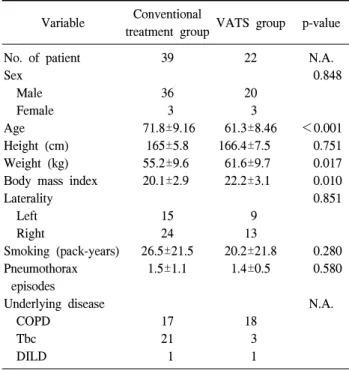
Table 1. Characteristics of patients Variable Conventional

treatment group VATS group p-value No. of patient

Sex Male Female Age Height (cm) Weight (kg) Body mass index Laterality Left Right

Smoking (pack-years) Pneumothorax

episodes Underlying disease COPD

Tbc DILD

39

36 3 71.8±9.16

165±5.8 55.2±9.6 20.1±2.9

15 24 26.5±21.5

1.5±1.1

17 21 1

22

20 3 61.3±8.46 166.4±7.5

61.6±9.7 22.2±3.1

9 13 20.2±21.8

1.4±0.5

18 3 1

N.A.

0.848

<0.001 0.751 0.017 0.010 0.851

0.280 0.580

N.A.

VATS=Video-assisted thoracoscopic surgery; COPD=Chronic ob- structive pulmonary disease; Tbc=Tuberculosis; DILD=Diffuse interstitial lung disease; N.A.=Not applicable.

eo-assisted thoracoscopic surgery (VATS) may result in lower morbidity and mortality even in patients with underlying pa- renchymal lung diseases. In this study, we sought to de- termine the outcome of VATS for secondary spontaneous pneumothorax in comparison to conventional approach.

MATERIALS AND METHODS

Retrospective review of 61 senile patients (age >50 years) with secondary pneumothorax, who underwent conventional treatment (n=39) or video-assisted thoracscopic surgery (VATS) (n=22) between January 2007 and December 2009, was performed. Conventional treatment group consisted of pa- tients whose air leak through the chest tube ceased after one or two episodes of chemical pleurodesis, and VATS group consisted of selected patients with good general condition who were considered as having a higher probability of con- ventional treatment failure, such as persistent air leak for more than 5 days, inadequate lung expansion, and multiple bullae on chest computed tomography. In the VATS group, surgical technique was utilized to excise only the air-leaking bullae, and chemical pleurodesis using talc (2 g) was performed. Under general anesthesia with double lumen endo- tracheal tube (Robertshaw

) for one-lung ventilation, a trocar (11.5 mm) was placed in the previous chest tube site, and thoracoscopy was introduced through the trocar. Once air-leaking bullae were identified, the two additional trocars (11.5 mm and 5 mm) were placed according to the location of the target bullae. Because of the multiplicity of bullous le- sion in these patients, resection of all bullae is not technically feasible, and, thus, we attempted to excise only air-leaking bullae by wedge resection using staplers. When pleural adhe- sion near the air-leaking bullae was severe, extensive adhe- siolysis was performed so as not to cause inadvertent tear of the surrounding visceral pleura upon the wedge resection.

Chemical pleurodesis using talc was performed prior to chest closure. In conventional treatment group, talc was introduced into the chest tube(s) after adequate lung expansion was as- certained on chest X-ray. Data are presented as frequencies or means with standard deviations. For the comparison of the two groups (Table 1), variables such as age, sex, height, body weight, body mass index, smoking history, hospital

stay, recurrence of air leak, morbidity and mortality, were in- cluded for analysis. Chi-square test was used for categorical variables, and student t-test was used for continuous varia- bles. Statistical analysis was conducted using SPSS (Version windows 18.0; SPSS Inc., Chicago, USA), and a p-value of less than 0.05 was considered statistically significant.

RESULTS

There were 56 men and 5 women: 36 men among 39 pa- tients in the conventional treatment group and 20 men among 22 patients in the VATS group. Underlying lung diseases were chronic obstructive pulmonary disease (COPD) in 35 (35/61, 57.3%), pulmonary tuberculosis (Tbc) in 24 (24/61, 39.3%), and diffuse interstitial lung disease (DILD) in 2 (2/61, 3.4%): 17 COPD, 21 Tbc, 1 DILD in the conventional treatment group and 18 COPD, 3 Tbc, 1 DILD in the VATS group. Age at treatment was 68.1±10.2 years (51∼89 years):

71.8±9.16 years (53∼89 years) in the conventional treatment

group and 61.3±8.4 years (51∼82 years) in the VATS group.

(3)

VATS for Spontaneous Secondary Pneumothorax

− 227 − Table 2. Comparison of the treatment outcome between the two groups

Variable Conventional

treatment group VATS group p-value Hospital stay (days)

Recurrence Morbidity Mortality

14.2±14.2 12 (30.7%)

0 2 (5%)

10.6±5.8 1 (4.5%)

0 0

0.033 0.016

- 0.280 VATS=Video-assisted thoracoscopic surgery.

Smoking history was 26 pack-years (0∼60) in the conven- tional treatment group and 20 pack-years (0∼60) in the VATS group. In the VATS group, no patient underwent open thoracotomy conversion from initial VATS trial, and no post- operative complication was noted. Air leak in the chest tube was noted for 4.0±2.0 days preoperatively and 2.2±1.8 days (0∼7 days) postoperatively in the VATS group. Hospital stay was 14.2±14.2 days (4∼58 days) in the conventional treat- ment group and 10.6±5.8 days (5∼32 days) in the VATS group, with significant inter-group difference (p<0.033).

Recurrence of pneumothorax was noted in 12 patients (12/39, 30%) in the conventional treatment group and 1 patient (1/22, 4.5%) in the VATS group. There were 2 deaths in the con- ventional treatment group: 1 hospital death due to the acute exacerbation of DILD and 1 late death due to the progression of COPD (Table 2).

DISCUSSION

Spontaneous pneumothorax is classified as primary or sec- ondary based on the absence or presence of parenchymal lung disease. Differing from primary pneumothorax which is prevalent among young population, secondary pneumothorax occurs more frequently in the elderly. Most common under- lying parenchymal lung diseases have been COPD [6] in western countries and pulmonary tuberculosis [7,8] in the East, but the incidence of spontaneous pneumothorax compli- cating pneumocystis carinii pneumonia has increased recently in western countries due to the prevalence of acquired im- mune deficiency syndrome [9]. Other etiologies include idio- pathic pulmonary fibrosis [10], ankylosing spondylitis [11], multiple sclerosis [12], and cystic fibrosis [13]. While ther-

apeutic algorithm for primary spontaneous pneumothorax has been well-established [14], treatment of secondary pneumo- thorax has remained to be defined. Because of the marginal pulmonary reserve in this setting [15,16], victims of secon- dary pneumothorax tend to show severe symptoms, and, thus, need urgent chest tube insertion [17,18]. Furthermore, prepon- derance of this condition in the elderly with poor general condition may preclude surgeons from performing early surgi- cal intervention, which in turn results in higher incidence of treatment failure, complication, and mortality [18]. Although spontaneous pneumothorax is mostly treated by thoracoscopic approach, VATS necessitate temporary one-lung ventilation, which may be poorly tolerated in patients with underlying pa- renchymal lung disease. Thus, conventional approach (i.e.

chest tube insertion with chemical pleurodesis) has long been regarded as the treatment of choice for secondary pneumo- thorax [3]. However, there might be a subset of patients with underlying lung disease who would benefit from early surgi- cal intervention. We deem that following patients with secon- dary pneumothorax would best benefit from VATS: patients in good clinical condition, patients with prolonged air leak longer than 5 days due to inadequate lung expansion, and pa- tients with bullae on chest computed tomography. In our ser- ies, no patient developed complication or recurrence by em- ploying these inclusion criteria. Because secondary pneumo- thorax is frequently associated with diffuse bullous lesion, complete resection of the bullae is difficult. To minimize sur- gical insult and operation time, we selectively removed bullae with profuse air-leak on air-leakage test upon VATS procedure. We also used talc [19] for chemical pleurodesis, which was conducted under thoracoscopic guidance. Talc pleurodesis should be performed with caution because this procedure may be associated with various complications, from mild complications such as temporary fever within 2 or 3 days after the procedure to severe ones such as acute respira- tory distress syndrome [20], none of which was observed in our series.

Clinical implication of our study may be undermined by

retrospective nature of the research and patient selection bias

in favor of patients with good clinical condition. Nevertheless,

reasonably low morbidity and mortality after VATS for sec-

ondary pneumothorax in our series may rationalize the appli-

(4)

Sung Jun Kim, et al

− 228 − cation of surgical approach for selected patients. Further re- search to determine the efficacy of VATS for secondary pnuemothorax may be mandatory.

CONCLUSION

In treating secondary spontanteous pneumothrax, thoraco- scopic bullae resection and chemical pleurodesis using talc may reduce hospital stay and recurrence compared to conven- tional treatment.

REFERENCES

1. Asai K, Urave N. Secondary spontaneous pneumothorax as- sociated with emphysema and ruptured bullae at the azygoe- sophageal recess. Gen Thorac Cardiovasc Surg 2008;56:539- 43.

2. Gupta D, hansell A, Nichols T, Duong T, Ayres JG, Strachan D. Epidemiology of pneumothorax in England.

Thorax 2000;55:666-71.

3. Tanaka F, Itoh M, Esaki H, Isobe J, Ueno Y, Inoue R.

Secondary spontaneous pneumothorax. Ann Thorac Surg 1993;55:372-6.

4. Schoenenberger R, Haefeli WE, Weiss P, Ritz RF. Timing of invasive procedures in therapy for primary and secondary pneumothorax. Arch Surg 1991;126:764-6.

5. Videm V, Pillgram-Larsen J, Ellingsen O, Andersen G, Ovrum E. Spontaneous pneumothorax in chronic obstructive pulmonary disease: complications, treatment and recurrences.

Eur J Respir Dis 1987;71:365-71.

6. Guo Y, Xie C, Rodriguez RM, Light RW. Factors related to recurrence of spontaneous pneumothorax. Respirology 2005;

10:378-84.

7. Kim MA, Lee MG, Suh CH, Chang WH. Clinical evaluation of spontaneous pneumothorax. -A review of 244 cases-.

Korean J Thorac Cardiovasc Surg 1994;27:292-6.

8. Son JW, Park JY, Kim KY, et al. Clinical analysis of spon- taneous pneumothorax. Tuberc Respir Dis 1999;47:374-82.

9. O’Rourke JP, Yee ES. Civilian spontaneous pneumothorax.

Treatment options and long-term results. Chest 1989;96:

1302-6.

10. Franquet T, Giménez A, Torrubia S, Sabaté JM, Rodriguez- Arias JM. Spontaneous pneumothorax and pneumomediastinum in IPF. Eur Radiol 2000;10:108-13.

11. Kaneda H, Saito Y, Okamoto M, Maniwa T, Minami K, Imamura H. Bilaterally repeated spontaneous pneumothorax with ankylosing spondylitis. Gen Thorac Cardiovasc Surg 2007;55:266-9.

12. Le Pavec J, Launay D, Mathai SC, Hassoun PM, Humbert M. Scleroderma lung disease. Clin Rev Allergy Immunol 2010. [Epub ahead of print].

13. Wait MA, Estera A. Changing clinical spectrum of sponta- neous pneumothorax. Am J Surg 1992;164:528-31.

14. Waller DA, Forty J, Soni AK, Conacher ID, Morritt GN.

Videothoracoscopic operation for secondary spontaneous pneumothorax. Ann Thorac Surg 1994;57:1612-5.

15. Limthongkul S, Wongthim S, Udompanich V, Charoenlap P, Nuchprayoo C. Spontaneous pneumothorax in chronic ob- structive pulmonary disease. J Med Assoc Thai 1992;75:

204-12.

16. Tschopp JM, Rami-Porta R, Noppen M, Astoul P. Manage- ment of spontaneous pneumothorax: state of the art. Eur Respir J 2006;28:637-50.

17. Henry M, Arnold T, Harvey J. BTS guidelines for the man- agement of spontaneous pneumothorax. Thorax 2003:58(Su- ppl 2):ii39-ii52.

18. Wait MA, Estrera A. Changing clinical spectrum of sponta- neous pneumothorax. Am J Surg 1992;164:528-31.

19. Lee P, Yap WS, Pek WY, Ng AWK. An audit of medical thoracoscopy and Talc poudrage for pneumothorax pre- vention in advanced COPD. Chest 2004;125:1315-20.

20. Sahn SA. Talc should be used for pleurodesis. Am J Respir

Crit Care Med 2000;162:2023-4.

수치

Table 1. Characteristics of patients Variable Conventional

참조

관련 문서

In this prospective study, the patients were randomly assigned to 3 different groups by two sur- geons: thoracoscopic bleb resection or electrical coagulation (TBR) only (50

We report our experience with thoracic duct ligation using video-assisted thoracoscopic surgery in a patient with chylothorax following blunt chest injury with associated

Serratus anterior plane block or thoracic paravertebral block for postoperative pain treatment after uniportal video-assisted thoracoscopic surgery: a

We report a patient with multiple bilateral mediastinal myelolipomas that were re- sected simultaneously using bilateral three-port video-assisted thoracoscopic

Both groups were compared in terms of the operation time, number of wedge resections, amount of chest tube drainage during the first 24 hours after surgery,

In order to evaluate the feasibility of sin- gle-port VATS for SSP, the postoperative results of single-port VATS (n=15) in patients with emphysema were compared with those

Video-assisted thoracoscopic surgery (VATS) has been established as the surgical approach of choice for lobectomy in patients with early-stage non-small cell lung cancer

The aim of this study was to compare the frequency of REPE after treatment of spontaneous pneumothorax with trocar or hemostat assisted closed thoracostomy.. Materials and Methods: