• 검색 결과가 없습니다.

Incidence of Dumping Syndrome after Sleeve Gastrectomy, Roux-en-Y Gastric Bypass and One-Anastomosis Gastric Bypass JMBS

N/A
N/A
Protected

Academic year: 2021

Share "Incidence of Dumping Syndrome after Sleeve Gastrectomy, Roux-en-Y Gastric Bypass and One-Anastomosis Gastric Bypass JMBS"

Copied!
9
0
0

로드 중.... (전체 텍스트 보기)

전체 글

(1)

ORIGINAL ARTICLE

Received: April 5, 2021, Revised: May 21, 2021, Accepted: May 21, 2021 Corresponding author: Adisa Poljo, Krankenhausstrae 9, Linz 4020, Austria

Clinic for General and Visceral Surgery, Kepler University Clinic

Tel: +43-5-768083-2133, Fax: +43-5-768083-2198, E-mail: [email protected]

CC This is an open access article distributed under the terms of the Creative Commons Attribution Non-Commercial License

(http://creativecommons.org/licenses/by-nc/4.0) which permits unrestricted non-commercial use, distribution, and reproduction in any medium, provided the original work is properly cited.

Incidence of Dumping Syndrome after Sleeve Gastrectomy, Roux-en-Y Gastric Bypass and One-Anastomosis Gastric Bypass

1

Clinic for General and Visceral Surgery, Kepler University Clinic,

2

Faculty of Medicine, Johannes Kepler University, Linz, Austria

Adisa Poljo

1,2

, Andreas Pentsch

1,2

, Sandra Raab

1,2

, Bettina Klugsberger

1,2

, Andreas Shamiyeh

1,2

Purpose: Dumping syndrome (DS) is an important but often underreported problem occurring after bariatric surgery. It is believed that gastric bypass procedures like Roux-en-Y Gastric By-pass (RYGB) and One-Anastomosis Gastric Bypass (OAGB) are more likely to cause DS than the pylorus-preserving Sleeve Gastrectomy (SG). The aim of this study was to evaluate the incidence of DS in patients undergoing SG, RYGB and OAGB. Materials and Methods: A retrospective clinical study with 180 patients undergoing SG (n=50), RYGB (n=53) and OAGB (n=77) between 2016-2018 was performed. All clinical and demo-graphic data were assessed. The percentage of excess weight loss (%EWL) was used to evaluate weight reduction. 127/180 (70.6%) patients took part in an additional phone interview. The incidence of DS was evaluated using validated Sigstad Score. Results: Information about the occurrence of dumping symptoms and patient satisfaction was obtained from 127 patients. Median follow-up was 20.0±11.4 months. Significant differences between the surgical procedures were found for the duration of surgery, complications, weight loss, incidence of DS and satisfaction postoperatively. DS occurred in 15.6% after SG, 56.4% after RYGB and 42.9% after OAGB. A higher weight loss was observed in patients who experienced dumping symptoms. Conclusion: The present results show a clear superiority of SG regarding both perioperative results and incidence of DS compared to RYGB and OAGB and may impact clinicians and patients in their choice of procedure.

Key Words: Bariatric surgery, Metabolic surgery, Sleeve gastrectomy, Gastric bypass, Dumping syndrome

INTRODUCTION

The steadily increasing number of people suffering from obesity has developed into one of the greatest public health challenges of the 21st century. Since the 1980s, the prevalence of obesity has tripled in many countries in the WHO European Region causing various physical disabilities and psychosocial problems [1].

Observational studies have shown that in cases of obesity, a conservative approach leads to sustainable

success in only very few cases. Therefore bariatric surgery

remains the most effective therapeutic option for

achieving permanent weight reduction and metabolic

improvements [2]. Today, the offers range from simple

restrictive models up to complex operations, which

radically intervene in the gastrointestinal tract and change

it in structure and function [3]. The focus here is primarily

on causing malabsorption. This leads to deficiency

symptoms in many cases, which must be prevented and

treated sufficiently. Beside the mechanistic model of

(2)

restriction and malabsorption, metabolic operations change the perception of hunger and satiety by altering the secretion of gut hormones (e.g. peptide YY, glucagon-like peptide-1, ghrelin, leptin) and adipocytokines and re-establishing the diversity of gut microbiota [4].

Complications that can negatively affect the postoperative course are bleeding, ulcers, stenoses and dumping syndrome (DS). DS is a very common and often self- induced problem after bariatric surgery. This com- plication has been known for many decades and has been observed increasingly after operations involving gastric resection with reconstruction, although it is frequently underdiagnosed. With the rise of bariatric surgery, dumping symptoms have increasingly received attention and have become the focus of interest in metabolic procedures. There are two types of DS - early and late dumping which include gastrointestinal and vasomotor symptoms following meal intake. Early dumping usually occurs within 30 minutes of food ingestion. High- osmolarity foods (e.g. high-sugar foods) cause an osmotic overload after bypassing much of the stomach undigested as they enter the small intestine. This hyperosmolality leads to fluid shifts from the circulation to the intestinal lumen, thereby diluting the ingested food. Together with a vagal response and hypersecretion of gastrointestinal hormones, such as neurotensin and vasoactive intestinal peptide, hypotension, dizziness, lightheadedness and a very unpleasant feeling of fatigue and exhaustion are induced in the patient. Abdominal symptoms include early satiety, bloating, pain, diarrhea, nausea, cramps, flatulence, and borborygmi. Late dumping occurs 1-3 hours postprandial and often presents a challenge in both diagnosis and treatment. The underlying pathophysiologic mechanism in late dumping is neuroglycopenia (NGP) caused by reactive hypoglycemia. This manifests mainly in adrenergic symptoms such as agitation, anxiety, sweating, tremor, tachycardia and palpitations. If left untreated, a NGP can even lead to coma with lethal outcome [5,6].

Interestingly, it is believed, that some of these symptoms might positively impact the weight loss process after bariatric surgery due to dietary adjustments after experiencing dumping [7]. The most common bariatric procedures currently performed are SG and RYGB [8].

The incidence and intensity of DS is related to the type of gastric resection and occurs more frequently after RYGB surgery compared to SG [9]. In the last decade, due to very promising results, the OAGB has been implemented more frequently [10]. There are indications that the OAGB is superior to the RYGB in terms of the incidence of postoperative dumping syndrome [11]. However, data directly comparing these procedures is limited. Therefore, this analysis takes the opportunity to compare all three procedures and to evaluate the incidence of DS in our own patient collective.

MATERIALS AND METHODS

From January 2016 to December 2018, 180 consecutive patients undergoing SG (n=50), RYGB (n=53) or OAGB (n=77) at our clinic were included in this retrospective observational study. The type of surgery for each patient was recommended based on age, baseline weight, comorbidities, and eating habits. Therefore, for example, SG was preferred for more obese patients due to worse conditions for surgery. However, if the patient is suffering from reflux, SG was avoided. For younger patients RYGB was recommended rather than OAGB because of a lack of long-term studies for OAGB. The clinical and demographic data of the study participants, surgery duration and incidence of operative complications were taken from the hospital information system and collected in the obesity database Mazimoi ODS (Bariatric Patient Documentation and Data Analysis). 127 (70.6%) of the patients were interviewed by phone in October 2019; 53 patients could not be reached by phone. A standardized questionnaire was filled out for each patient, recording responses on postoperative dumping symptoms and their satisfaction with the procedure. The Sigstad Score was used to evaluate dumping. We did not perform any provocative tests in order to assess dumping symptoms in a way which is more relevant to daily practice. Individual patient satisfaction was graded as 1=very good, 2=good, 3=satisfactory, 4=sufficient, 5=not sufficient and asking whether the patient would undergo the intervention again.

Patient inclusion for bariatric surgery was based on the

criteria of the National Institutes of Health Development

(3)

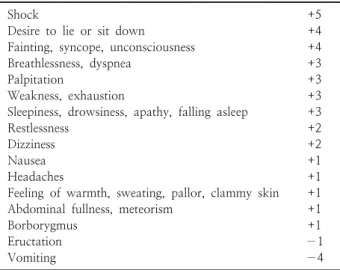
Table 1. Sigstad scoring system

Shock +5

Desire to lie or sit down +4

Fainting, syncope, unconsciousness +4

Breathlessness, dyspnea +3

Palpitation +3

Weakness, exhaustion +3

Sleepiness, drowsiness, apathy, falling asleep +3

Restlessness +2

Dizziness +2

Nausea +1

Headaches +1

Feeling of warmth, sweating, pallor, clammy skin +1

Abdominal fullness, meteorism +1

Borborygmus +1

Eructation −1

Vomiting −4

Panel (Body Mass Index (BMI) >40 kg/m

2

or BMI >35 kg/m

2

with at least one obesity-associated comorbidity) [3]. Inclusion criteria for admission to the study were a complete preoperative clarification and follow-up protocol.

Patients who did not meet the inclusion criteria were excluded from the study. Further exclusion criteria were any other bariatric procedure except SG, RYGB and OAGB. We did not exclude patients who had previous abdominal surgery or had already undergone bariatric surgery before (e.g. gastric band). Preoperatively all candidates were evaluated by a multidisciplinary medical unit and underwent preoperative nutritional consultation and psychological, and comprehensive medical evaluations.

A detailed assessment was performed of their general condition, comorbidities, risk factors, mental status, motivations for bariatric surgery, compliance and ability to adhere to a postoperative regimen. Biochemical and radiological studies (chest x-ray, upper GI series) as well as endocrine and cardiopulmonary assessment, were performed. Verbal informed consent was obtained from all patients prior to the interview. The study was conducted after approval from the ethics committee and Institutional Review Board (Ethics committee protocol number: 1025/2020).

1. Variables

All variables were analysed at baseline (perioperative values) and included gender, age, BMI, preoperative weight, type of surgery, operative time and complications.

Patients were evaluated 20.0±12.1 months after SG, 20.0±12.1 months after RYGB and 20.0±10.7 months after OAGB during a phone interview which included filling out a standardized questionnaire after patient’s consent. We included only patients with a follow-up of at least six months for evaluation of %EWL. Incidence of dumping syndrome and satisfaction were monitored, and a possible association between diabetes, EWL, satisfaction and dumping was tested. Complications were defined as minor in cases where no surgical reintervention was necessary (Clavien Dindo grade 1 or 2). Complications were defined as major when patients had to undergo surgical re-exploration (Clavien Dindo grade 3 or higher). Operation time was defined as the beginning of

the skin incision to completion of the surgical dressing.

Sigstad Score was used to evaluate dumping (Table 1). A score of 7 and above was considered positive for dumping syndrome.

2. Statistical analysis

All data was evaluated using IBM SPSS Statistics 24.0

(SPSS Inc. Chicago, IL, USA) and then processed and

graphically displayed in Microsoft Excel. By means of

descriptive statistics, mean values, standard deviations,

medians and ranges were calculated. An intention to treat

approach as well as a per-protocol approach has been

taken. All data of continuous variables were checked for

normal distribution using Kolmogorov-Smirnov-test

with Lilliefors significance correction. Comparisons (SG

vs. RYGB vs. OAGB) of variables with normally

distributed data without different variances were performed

by a parametric analysis of variance (ANOVA). For

comparisons of all other continuous variables and of

variables measured on ordinal scales a non-parametric

analysis of variance (Kruskal Wallis test) was used. Data of

categorical variables were compared by the exact

chisquare test. The absolute and relative frequencies of

individual parameters were compared using frequency

tables and displayed in crosstabs. Correlations were tested

using Fisher’s exact test. To investigate a possible relation

between the severity of dumping and weight loss, a

regression analysis of the Sigstad dumping score and the

(4)

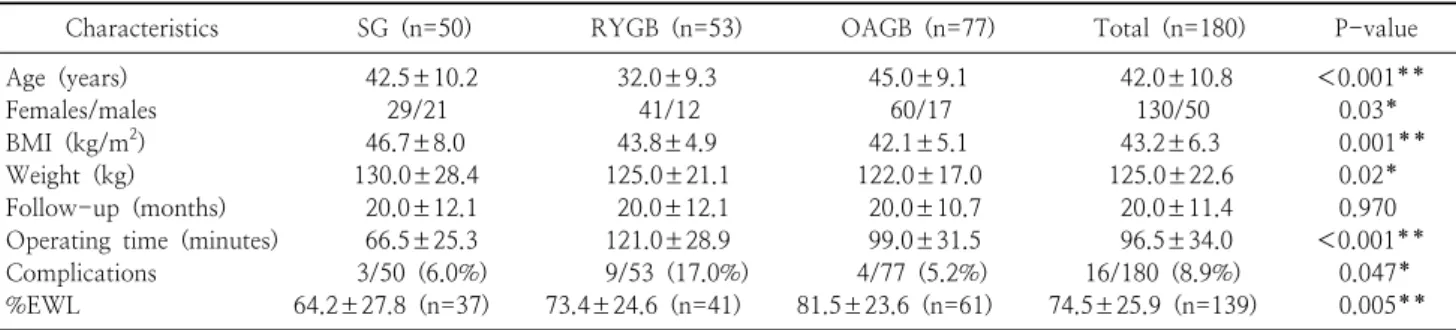
Table 2. Distribution of age, gender, preoperative anthropometric measures, follow up, operative time and complications between groups

Characteristics SG (n=50) RYGB (n=53) OAGB (n=77) Total (n=180) P-value

Age (years) 42.5±10.2 32.0±9.3 45.0±9.1 42.0±10.8 <0.001**

Females/males 29/21 41/12 60/17 130/50 0.03*

BMI (kg/m

2

) 46.7±8.0 43.8±4.9 42.1±5.1 43.2±6.3 0.001**

Weight (kg) 130.0±28.4 125.0±21.1 122.0±17.0 125.0±22.6 0.02*

Follow-up (months) 20.0±12.1 20.0±12.1 20.0±10.7 20.0±11.4 0.970

Operating time (minutes) 66.5±25.3 121.0±28.9 99.0±31.5 96.5±34.0 <0.001**

Complications 3/50 (6.0%) 9/53 (17.0%) 4/77 (5.2%) 16/180 (8.9%) 0.047*

%EWL 64.2±27.8 (n=37) 73.4±24.6 (n=41) 81.5±23.6 (n=61) 74.5±25.9 (n=139) 0.005**

Values are presented as mean±one standard deviation.

BMI = body mass index, EWL = excess weight loss.

*P<0.05, **P<0.01.

%EWL was performed. A significance level of 0.05 was applied to all statistical tests.

3. Operation techniques

In all patients standardized operation techniques were used and all procedures were performed laparoscopically under general anesthesia by the same surgeon. The operations were either primary bariatric surgery for 157 patients (87.2%) or reoperations following gastric banding in 23 patients (12.8%). Anastomosis integrity was verified after every procedure with an intraoperative endoscopic pneumatic-water test.

SG: Five ports were used. Three 12-mm ports were located in the epigastric, right hypochondriac and left lumbar region. A 5-mm port was placed subxiphoideal and a 15-mm port in the right lumbar region. A longitudinal resection from the angle of His to approximately 6cm orally to the pylorus was performed using a linear stapler (iDrive

with Tri-staple cartridges, Medtronic, USA). A 34-Fr bougie was used for calibration of the gastric tube and inserted along the lesser curvature.

RYGB: 5 ports were placed. One in the right hypochondriac region (12-mm), left hypochondriac region (12-mm), epigastrium (12-mm), subxiphoideal (5-mm), and left paraumbilical (12-mm). A gastric pouch was performed, calibrating it using a 34-Fr bougie, with a linear stapler (iDrive

with Tri-staple cartridges, Medtronic, USA). A 140-cm biliary limb and a 80-cm alimentary limb were performed. Gastrostomy was done using a 30-mm linear stapler. The enterotomies and

gastrotomies were sutured with Vicryl 3/0 SH. Petersen’s space was always closed.

OAGB: 5 ports were placed in the same positions as in RYGB. A long and slim gastric pouch, calibrated with a 34-Fr bougie, was constructed. Termino-lateral gastrojejunal anastomosis with 30-mm linear stapler (iDrive

with Tri-staple cartridges, Medtronic, USA) was performed.

The afferent loop was sutured up to the long stomach pouch with three Prolene sutures (anti-reflux sutures) and the draining loop is sutured to the antrum of the remnant stomach with another Prolene 2.0 suture with extra- corporeal slip knots. The enterotomies and gastrotomies were closed with continuous barbed suture V-Loc 2/0 (Medtronic, USA). The biliopancreatic limb length ranged between 140 and 180 cm. We choose not to close the Petersen’s space when performing OAGB.

RESULTS

27.8% patients received SG (n=50), 29.4% RYGB (n=53) and 42.8% (n=77) OAGB. After median 20.0±

11.4 months all patients were contacted again by phone;

127 (70.6%) patients could be reached and were included in the analysis of dumping syndrome and postoperative satisfaction. Patient demographics are shown in Table 2.

Complications are depicted in Table 3. There were no deaths. The overall complication rate was 8.9% (n=16).

There was no conversion to open surgery. Early major

complications (< 30 days) requiring reoperation occurred

in 7 patients (3.9%). Four patients after RYGB, two

patients after SG and one patient after OAGB and

(5)

Table 5. Weight loss results after SG, RYGB and OAGB

Characteristics Dumpers Non-dumpers Total P-value

%EWL after SG 97.3±49.4 (n=3) 58.9±21.7 (n=23) 63.4±27.6 (n=26) 0.02*

%EWL after RYGB 73.4±27.0 (n=16) 78.1±24.0 (n=14) 75.6±25.3 (n=30) 0.614

%EWL after OAGB 84.2±21.9 (n=23) 74.4±23.3 (n=26) 79.0±22.9 (n=49) 0.134

%EWL overall 81.0±26.3 (n=42) 69.6±23.9 (n=63) 74.2±25.4 (n=105) 0.023*

Values are presented as mean±one standard deviation.

*P<0.05.

Table 3. Complications other than DS after RYGB, SG and OAGB

Operation Complication Number of

patients (n) Treatment SG

(n=50)

Bleeding 2 Surgical

Bradykardia with short-term asystole

1 CPR, drugs

RYGB (n=53)

G-J anastomotic ulcer 5 PPI Stapler line failure of

the gastric remnant

1 Surgical

Internal hernia 1 Surgical

Bleeding 2 Surgical

OAGB (n=77)

G-J anastomotic failure

1 Endo-SPONGE

G-J anastomotic ulcer 3 PPI Total

(n=180)

16

Table 4. Incidence of dumping syndrome and satisfaction

Characteristics SG (n=32) RYGB (n=39) OAGB (n=56) Total (n=127) P-value

Dumping syndrome (DS) 5 (15.6%) 22 (56.4%) 24 (42.9%) 51 (40.2%) 0.001**

Sigstad score 0.0±4.7 10.0±8.1 4.0±8.9 4.0±8.2 <0.001**

Diabetes mellitus (DM) 9 (28.1%) 7 (17.9%) 17 (30.4%) 33 (26.0%) 0.379

DM+DS 2 (6.3%) 5 (12.8%) 7 (12.5%) 14 (11.0%) 0.758

Satisfaction grade

a

1.0±0.4 1.0±0.9 1.0±0.7 1.0±0.7 <0.001**

Undergo surgery again (yes) 31 (96.9%) 30 (76.9%) 53 (94.6%) 114 (89.8%) 0.032*

Values are presented as mean±one standard deviation.

a
1 = very good, 2 = good, 3 = satisfactory, 4 = sufficient, 5 = not sufficient.

*P<0.05, **P<0.01.

included stapler line failure, internal hernia, bleeding and anastomotic failure. Overall complication rate after SG was 6.0% (n=3), 17.0% (n=9) after RYGB, and 5.2%

(n=4) after OAGB (P<0.05). All patients recovered well after the treatment.

The overall incidence of DS in our study population was 40.2% (n=51). We reported 5 cases (15.6%) of DS after SG, 22 cases (56.4%) after RYGB and 24 cases (42.9%) after OAGB (P<0.01). There was no significant difference

in DS between RYGB and OAGB (P=0.216). The median Sigstad Score obtained was 0.0±4.7 for SG, 10.0±8.1 for RYGB and 4.0±8.9 for OAGB (P<0.01) (Table 4).

The distribution of diabetics in the three groups was evaluated and compared with the incidence of dumping.

In total, 26.0% of the 127 patients (n=33) suffered from DM type two. 27.5% (14/51) reporting symptoms of dumping were also diabetics. There was no correlation between DM and DS.

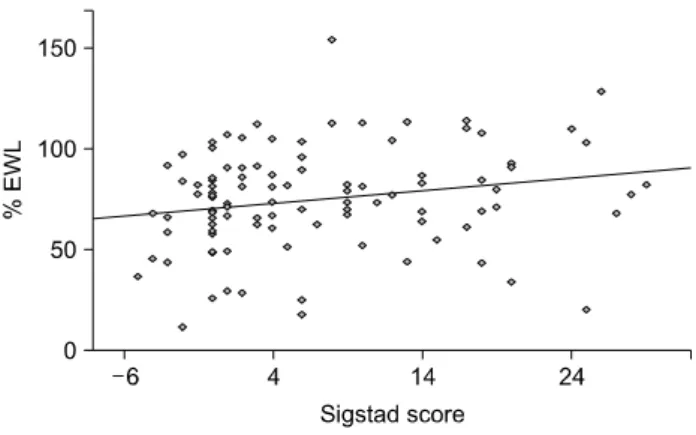
Median follow-up for weight loss was 22.1±11.6 months for SG, 21.6±10.8 for RYGB and 20.3±9.2 for OAGB (P=0.67) and did only include patients with a follow-up time of at least 6 months. In the analysis of weight loss significant differences were observed between patients who developed DS and those who did not (81.0±26.3 vs 69.6±23.9, P=0.023). %EWL for each group is shown in Table 4 and the correlation with DS in Table 5. Interestingly, comparing all three procedures, SG showed the highest weight loss for dumpers and lowest weight loss for non-dumpers. A regression analysis of the Sigstad dumping score and %EWL showed a correlation between the severity of DS and higher weight loss (R

2

=0.044) (Fig. 1).

Individual patient satisfaction was rated best in the SG

(6)

Fig. 1. Regression analysis

a

, %EWL after bariatric surgery (RYGB, SG, OAGB) vs Sigstad score.

group and achieved a grade point average of 1.13 followed by OAGB with 1.25 and RYGB with 1.72 (P<0,01).

96.9% (31/32) after SG, 76.9% (30/39) after RYGB and 94.6% (53/56) after OAGB stated they would undergo surgery again at any time (P<0,05). Overall satisfaction after bariatric surgery was 1.36 with 89.8% (114/127) not regretting their surgery. 13 patients would not want to undergo bariatric surgery again and when asked about their reasons, the answers were insufficient weight loss (n=2), malnutrition (n=4), and struggling with dumping (n=7). A statistically significant correlation between the occurrence of dumping and perceived satisfaction was shown. This was reflected both in grading postoperative satisfaction (P<0.01) and in the response to the question of whether they would undergo the same bariatric procedure again (P<0.01). Thus, 66.7% of patients without dumping rated the procedure performed as “very good,” whereas this was the case in 33.3% of patients with dumping. “Sufficient” and “not sufficient” was only answered by patients with dumping. Furthermore, 97.3%

of the patients without dumping stated that they would be willing to undergo surgery again, while 82.0% of those with dumping could imagine undergoing surgery again.

DISCUSSION

Starting with simple restrictive methods, bariatric surgery has now arrived at complex interventions with significant metabolic implications. Observations of

numerous surgeries have contributed to a better understanding of the physiology of the gastrointestinal tract and in this way revolutionized many treatment approaches. The breakthrough finally came with the introduction of laparoscopy. Morbidity and mortality were markedly reduced so that bariatric surgery became a safe and effective weapon in the fight against obesity.

The Sigstad score represents a useful tool in the evaluation of dumping syndrome. The diagnosis of dumping is primarily clinical and requires a detailed history and examination. If the diagnosis is doubted, an Mixed Meal-Test can be helpful in order to trigger symptoms of early dumping [12]. In the treatment of DS, a stepwise approach is recommended. This includes dietary adjustment, pharmacologic interventions and finally surgical re-interventions or continuous tube feeding. Dietary modifications are the main base of therapy and focus on the reduction of simple carbohydrates and giving preference to high protein foods.

Patients are instructed to reduce their portions, chew slowly and not drink liquids for half an hour after eating a solid meal. Also milk and diary products should be avoided. If these diet modifications do not lead to improvement, Somatostatin analogues such as octreotide and pasireotide are available. They have been shown to retard gastric emptying, slow bowel transit and inhibit the release of vasoactive peptides. However, these carry risk of side effects such as diarrhea, nausea, and steatorrhea [9].

Other medical treatment options include acarbose, verapamil, diazoxide, glucagon-like peptide-1 (GLP-1) analoga and GLP-1 receptor antagonists [13–15].

Surgical intervention is reserved only for a small group that does not respond to the measures mentioned above and report a significant reduction in quality of life.

Options that can be offered here are the insertion of a gastric tube into the remnant stomach, a restriction of the gastric outlet and a reversal operation. It is important, especially in the case of a reverse operation, that the patients are informed about possible weight regain and worsening of comorbidities [16].

The incidence of DS correlates with the type of

gastrectomy performed. Accordingly, a higher incidence

of DS is observed in patients after total gastrectomy

(7)

compared to proximal gastrectomy. DS has been proven to occur in 15-70% after gastric bypass procedures, with symptoms improving over time [17,18]. Kefurt et al. [19]

reported hypoglycemic episodes in 75% of patients after RYGB using continuous glucose monitoring, while a Mixed Meal-Test indicated hypoglycemia in 29%. In addition, however, DS is also observed in procedures that involve only partial gastric resection, such as SG.

Although this surgery is expected to have a lower risk of DS, two prospective studies reported DS rates of up to 40% 6-12 months after SG [20]. The aim of our study was to find the incidence of DS among patients after SG, RYGB and OAGB only by evaluating clinical symptoms and using the Sigstad score. Patient demographics, operative data and complication rates were similar to those reported in the literature. SG was associated with a significantly lower risk for DS compared to RYGB and OAGB (P

<0.01). It is believed that DS is less likely to occur after SG due to preservation of the pyloric sphincter [18]. The overall incidence of DS in our study population was 40.2%. We were not able to show a significant superiority regarding DS for OAGB compared to RYGB as reported in literature, although indicating a slight tendency in favor of OAGB. Further data collection and a larger sample size would be needed to confirm these finding. In our study there was no correlation between the prevalence of DM and DS. However, we observed an overall higher %EWL in patients who experienced DS and a weak but real correlation between the weight loss and severity of DS.

These results support the findings of Van Looveren et al.

[7] showing a causal relationship between dumping and postoperative weight loss. It is believed that experiencing dumping symptoms helps patients to adjust their diet which is often found to consist of high-calorie soft sweet foods, especially in liquid form. Therefore, DS can also be seen as a positive side effect rather than a complication [7].

While SG scored better in many parameters, reflux und weight regain are still matter of discussion by many authors when looking on the long-term follow up.

Felsenreich et al. [21] found that EWL and symptomatic reflux impair patients’ long-term quality of life after SG.

This observation should be taken into account when choosing the type of bariatric surgery for the individual

patient. In order to clearly prove or disprove differences between the treatment groups, a larger study population and longer follow-up period are required. Moreover, not all patients could be reached by telephone and were therefore not available for the evaluation of DS and postoperative satisfaction. The Sigstad Score was used to assess the incidence of DS. It should be noted that the assessment of symptoms is very subjective and may vary among patients. The use of continuous glucose monitoring systems would be an option to create a more comparable format. Furthermore, some of our patients had bariatric revisions as mentioned above, which in all cases were conversions from gastric banding to SG, RYGB and OAGB. These patients are known to be more prone to surgical complications. Nevertheless, we did not evaluate them separately because we do not expect the incidence of DS to be increased by preoperation. This could be a question of debate.

CONCLUSION

Significant differences between the surgical procedures in terms of operative time, dumping syndrome, weight loss, complications and satisfaction were reported.

Although any procedure which involves gastrointestinal resection or digestive system bypass includes the risk of developing DS, SG is associated with a significantly lower risk for DS than RYGB and OAGB. Considering our results, the superiority of SG compared to OAGB and RYGB was demonstrated in many parameters. Although RYGB is currently the most popular procedure in Austria, this study should serve as an opportunity to incorporate the presented results into the decision-making process for the most individually appropriate surgical procedure for the patient.

DISCLOSURE STATEMENT

The authors declare that they have no conflicts of interest.

Funding: The authors did not receive support from any organization for the submitted work.

Conflicts of interest/Competing interests: The authors

(8)

have no conflicts of interest to declare that are relevant to the content of this article.

Availability of data and material: The submitted work has not been published elsewhere in any form or language

Ethics approval: This retrospective study involving human participants was in accordance with the ethical standards of the institutional and national research committee and with the 1964 Helsinki Declaration and its later amendments or comparable ethical standards. The Ethics Committee of Johannes Kepler University Linz approved this study (IRB number 1025/2020). This study was a retrospective review that did not include patient identifiers, presented no more than minimal risk (including physical and psychological) to its research subjects.

Consent to participate: Verbal informed consent was obtained prior to the interview. Consent for publication:

All participants agreed verbally with the publication of the results. No (identifiable) personal data was published.

Author contributions: All authors contributed to the study conception and design. Material preparation and data collection were performed by Adisa Poljo. Statistical analysis was performed by Adisa Poljo. The first draft of the manuscript was written by Adisa Poljo and all authors commented on previous versions of the manuscript. All authors read and approved the final manuscript.

ACKNOWLEDGMENTS

The authors thank Gerhard Prager, MD of the Department of Surgery, Division of General Surgery, Medical University of Vienna, Austria for editorial services provided in the development of this manuscript and Philipp Hermann, Institute of Applied Statistics at Johannes Kepler University for his consultation.

REFERENCES

1. Giampaoli S, Vannucchi S. [Obesity and diabetes, a global prob- lem: what does recent data tell us?]. Ig Sanita Pubbl 2016;72:561-70. Italian.

2. Padwal R, Klarenbach S, Wiebe N, et al. Bariatric surgery: a sys- tematic review and network meta-analysis of randomized trials.

Obes Rev 2011;12:602-21.

3. Carbajo MA, Luque-de-León E, Jiménez JM, Ortiz-de-

Solórzano J, Pérez-Miranda M, Castro-Alija MJ. Laparoscopic one-anastomosis gastric bypass: technique, results, and long-term follow-up in 1200 patients. Obes Surg 2017;27:

1153-67.

4. Pucci A, Batterham RL. Mechanisms underlying the weight loss effects of RYGB and SG: similar, yet different. J Endocrinol Invest 2019;42:117-28.

5. Fujioka K. Follow-up of nutritional and metabolic problems af- ter bariatric surgery. Diabetes Care 2005;28:481-4.

6. Berg P, McCallum R. Dumping syndrome: a review of the cur- rent concepts of pathophysiology, diagnosis, and treatment. Dig Dis Sci 2016;61:11-8.

7. Van Looveren R, Mandeville Y, Logghe P, et al. The effect of dumping on weight loss in conversion of failed restrictive sur- gery: a cross-sectional pilot study. Obes Surg 2018;28:665-70.

8. Ozsoy Z, Demir E. Which bariatric procedure is the most popu- lar in the world? A bibliometric comparison. Obes Surg 2018;28:2339-52.

9. Ramadan M, Loureiro M, Laughlan K, et al. Risk of dumping syndrome after sleeve gastrectomy and Roux-en-Y gastric by- pass: early results of a multicentre prospective study. Gastroenterol Res Pract 2016;2016:2570237.

10. Melissas J, Stavroulakis K, Tzikoulis V, et al. Sleeve gastrectomy vs Roux-en-Y gastric bypass. Data from IFSO-European Chapter Center of Excellence program. Obes Surg 2017;27:

847-55.

11. Rheinwalt KP, Plamper A, Rückbeil MV, Kroh A, Neumann UP, Ulmer TF. One anastomosis gastric bypass-mini-gastric bypass (OAGB-MGB) versus Roux-en-Y gastric bypass (RYGB)-a mid-term cohort study with 612 patients. Obes Surg 2020;30:

1230-40.

12. van der Kleij FG, Vecht J, Lamers CB, Masclee AA. Diagnostic value of dumping provocation in patients after gastric surgery.

Scand J Gastroenterol 1996;31:1162-6.

13. Abrahamsson N, Engström BE, Sundbom M, Karlsson FA. GLP1 analogs as treatment of postprandial hypoglycemia following gastric bypass surgery: a potential new indication? Eur J Endocrinol 2013;169:885-9.

14. Moreira RO, Moreira RB, Machado NA, Gonçalves TB, Coutinho WF. Post-prandial hypoglycemia after bariatric sur- gery: pharmacological treatment with verapamil and acarbose.

Obes Surg 2008;18:1618-21.

15. Spanakis E, Gragnoli C. Successful medical management of sta- tus post-Roux-en-Y-gastric-bypass hyperinsulinemic hypoglycemia.

Obes Surg 2009;19:1333-4.

16. van Beek AP, Emous M, Laville M, Tack J. Dumping syndrome after esophageal, gastric or bariatric surgery: pathophysiology, diagnosis, and management. Obes Rev 2017;18:68-85.

17. Takiguchi N, Takahashi M, Ikeda M, et al. Long-term qual- ity-of-life comparison of total gastrectomy and proximal gas- trectomy by Postgastrectomy Syndrome Assessment Scale (PGSAS-45): a nationwide multi-institutional study. Gastric Cancer 2015;18:407-16.

18. Ahmad A, Kornrich DB, Krasner H, et al. Prevalence of dumping

syndrome after laparoscopic sleeve gastrectomy and comparison

with laparoscopic Roux-en-Y gastric bypass. Obes Surg

2019;29:1506-13.

(9)

19. Kefurt R, Langer FB, Schindler K, Shakeri-Leidenmühler S, Ludvik B, Prager G. Hypoglycemia after Roux-En-Y gastric bypass: detection rates of continuous glucose monitoring (CGM) versus mixed meal test. Surg Obes Relat Dis 2015;

11:564-9.

20. Papamargaritis D, Koukoulis G, Sioka E, et al. Dumping symp-

toms and incidence of hypoglycaemia after provocation test at 6 and 12 months after laparoscopic sleeve gastrectomy. Obes Surg 2012;22:1600-6.

21. Felsenreich DM, Prager G, Kefurt R, et al. Quality of life 10 years

after sleeve gastrectomy: a multicenter study. Obes Facts

2019;12:157-66.

수치

Table  1.  Sigstad  scoring  system
Table 2. Distribution of age, gender, preoperative anthropometric measures, follow up, operative time and complications between groups
Table  3.  Complications  other  than  DS  after  RYGB,  SG  and  OAGB
Fig. 1. Regression analysis a , %EWL after bariatric surgery (RYGB, SG,  OAGB)  vs  Sigstad  score.

참조

관련 문서

This RCT showed the efficacy of the novel R-Y reconstruction method involving the use of 2 circular staplers and no hand sewing after distal gastrectomy in gastric

This RCT showed the efficacy of the novel R-Y reconstruction method involving the use of 2 circular staplers and no hand sewing after distal gastrectomy in gastric cancer

Improved quality of life outcomes after laparoscopy-assisted distal gastrectomy for early gastric cancer: results of a prospec- tive randomized clinical trial.. Yasunaga H,

Article: Higher Plasma Motilin Levels in Obese Patients Decrease after Roux-en-Y Gastric Bypass Surgery and Regulate Hunger (Gut 2015. [Epub ahead of print]).. CC This is an

Relative outcome measures for bariatric surgery: evidence against excess weight loss and excess body mass index loss from a series of laparo- scopic Roux-en-Y gastric bypass

This clinical case study shows the positive effect of herbal medicine, acupuncture, and moxibustion on relief of symptoms of early dumping syndrome.. Key words:

Methods: During the period from January 2008 to December 2009, patients who underwent laparoscopic duodenojejunal bypass (LDJB) or laparoscopic Roux-en-Y gastric bypass (LRYGB)

Laparoscopic loop duodenojejunal bypass with sleeve gastrectomy (LDJB-SG) has theoretical advantages compared with laparoscopic Roux-en-Y gastric bypass.. All procedures