Korean Journal of Microbiology (2017) Vol. 53, No. 3, pp. 227-229 pISSN 0440-2413
DOI https://doi.org/10.7845/kjm.2017.7041 eISSN 2383-9902
Copyright ⓒ 2017, The Microbiological Society of Korea
Note (Genome Announcement)
Complete genome sequence of Spirosoma rigui KCTC 12531 T , a bacterium isolated from fresh water from the Woopo wetland for taxonomic study
Dong-Uk Kim, Ju-Young Kim, Su Jeong Kim, Min Ji Kim, Ju Yeon Lee, and Myung Kyum Kim*
Department of Bio and Environmental Technology, College of Natural Science, Seoul Women’s University, Seoul 01797, Republic of Korea
계통분류학적 연구를 위한 우포늪에서 분리된 박테리아 Spirosoma rigui KCTC 12531 T 의 완전한 게놈 서열
김동욱 ・ 김주영 ・ 김수정 ・ 김민지 ・ 이주연 ・ 김명겸*
서울여자대학교 자연과학대학 생명환경공학과
(Received July 3, 2017; Revised September 12, 2017; Accepted September 20, 2017)
*For correspondence. E-mail: [email protected];
Tel.: +82-2-970-5667; Fax: +82-2-970-5974
Spirosoma rigui KCTC 12531
Twas isolated from fresh water from the Woopo wetland, Korea. In this study, we report the complete genome sequence of a bacterium Spirosoma rigui KCTC 12531
T, its complete genome sequence was obtained using the PacBio RS II platform. The genome comprised of 5,828,404 bp with the G + C content of 54.4%, the genome included 4,774 genes were predicted, among them, 4,647 genes are protein-coding genes.
Keywords: Spirosoma, fresh water, PacBio RS II, wetland, Woopo
The family Flexibacteraceae is one of the major phylo- genetic lineages within the phylum Bacteroidetes (Garrity and Holt, 2001). The family Flexibacteraceae constitutes a phylo- genetically diverse group within the phylum Bacteroidetes.
One of the lineages in this group comprises the genera Spirosoma, Runella, Larkinella and Dyadobacter currently classified in the family Flexibacteraceae (Baik et al., 2007). In
case of Spirosoma, Larkin and Borrall (1984) was first proposed the genus Spirosoma is a member of the family Flexibacteraceae.
Woopo wetland, located in the east of the Nakdong river, is the largest undisturbed wetland in the Republic of Korea (Baik et al., 2008). As the Ramsar wetland, it was declared a nature conservation area in 1997 (http://ramsar.wetlands.org/). Due to its special features of biodiversity, this wetland have drawn a great public attention. However, whole genomic information of isolates from this site is still lacking. Therefore, we sequenced and analyzed the genome of Spirosoma rigui KCTC 12531
Tfor the increase of understanding of ecological niche of wetland.
In this study, we report a complete genome sequence of
Spirosoma rigui KCTC 12531
Twas isolated from fresh water
from the Woopo wetland, Korea using the standard dilution
plating technique (Baik et al., 2007). Strain KCTC 12531
Tis
characterized as a Gram-reaction-negative, yellow-pigmented
and gliding motility bacterium. The genomic DNA was extracted
using a genomic DNA purification kit (Promega). A library was
228 ∙ Kim et al.
미생물학회지 제53권 제3호
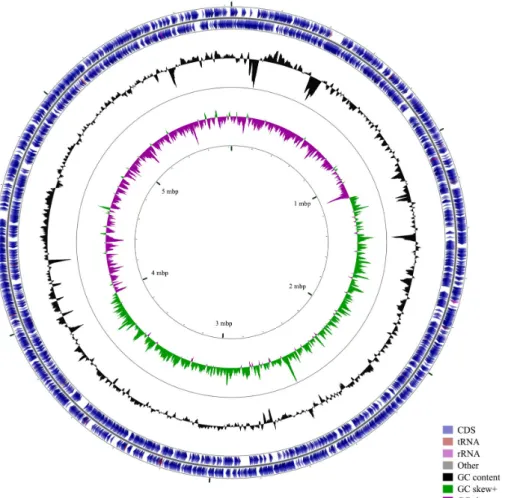
Fig. 1. Graphical circular map of Spirosoma rigui KCTC 12531
T. From outside to the center: Genes on forward strand, Genes on reverse strand, RNA genes (tRNAs peach, rRNAs pink, other RNAs grey), GC content, GC skew.
Table 1. Genome features of Spirosoma rigui KCTC 12531
TAttribute Value
Genome size (bp) 5,828,404
DNA G + C content (bp) 54.4%
No. of contigs 1
Total genes 4,774
Protein-coding genes 4,647
rRNA 9
tRNA 43
Pseudogene 73
constructed according to Pacific Biosciences RS II sequencing method manual. The 161,346 sequencing reads were obtained and were assembled using the PacBio SMRT Analysis (version, 2.3.0) with default options. Genome sequencing and annotation were carried out using Pacific Biosciences RS II platform.
CGview software was used to construct the genome map (Grant and Stothard, 2008). The final assembly resulted in 1 contig generating corresponding genome size of 5,828,404 bp. The protein-coding sequences (CDS), rRNA, tRNA and the genome annotation was performed by NCBI Prokaryotic Genome Automatic Annotation Pipeline (PGAP, http://www.ncbi.nlm.
nih.gov/books/NBK174280/) (Tatusova et al., 2013). The genome of strain KCTC 12531
Tconsists of a circular chromosome of the size 5,828,404 bp with the GC content of 54.4%. A total of 4,774 genes were predicted, among them, 4,647 genes are protein-coding genes, 9 rRNA genes, 43 tRNA genes and 73 pseudogene were assigned (Fig. 1 and Table 1). The genome of
strain Spirosoma rigui KCTC 12531
Tencodes several genes for defense against protein damage like DNA damage and ionizing radiation. Clp protease system including proteolytic subunit, ATPase subunits (ClpA, ClpB and ClpX) is one of the well-known cluster of genes responsible for restoration.
Among these genes, ClpX is important for the radiation
resistance and the regulation of cell division (Kim et al., 2017).
Complete genome sequence of Spirosoma rigui KCTC 12531
T∙ 229
Korean Journal of Microbiology, Vol. 53, No. 3 The Spirosoma rigui KCTC 12531
Tis available at KCTC
12531
Tand NBRC 101117
T.
Nucleotide sequence accession number
The genome sequence was deposited in DDBJ/EMBL/
GenBank under the under the accession number CP020105.
적 요
이 연구에서는 우포늪의 깨끗한 물에서 분리된 Spirosoma rigui KCTC 12531
T의 완전한 게놈 서열을 분석하였다. 이 게 놈은 G + C 함량이 54.4%인 5,828,404 bp으로 구성되어 있고 4,774 개의 유전자와 4,647개의 단백질 코딩 유전자, 9개의 rRNA 유전자 그리고 43개의 tRNA 유전자 및 73개의 위유전 자(pseudogene)를 포함하고 있다.
Acknowledgements
This research was supported by the MIST (Ministry of Science and ICT), Korea, under the National Program for Excellence in SW supervised by the IITP (Institute for Information and communications Technology Promotion) (2016-0-00022).
References