• 검색 결과가 없습니다.

The Role of Bronchodilators in Preventing Exacerbations of Chronic Obstructive Pulmonary Disease

N/A
N/A
Protected

Academic year: 2021

Share "The Role of Bronchodilators in Preventing Exacerbations of Chronic Obstructive Pulmonary Disease"

Copied!
7
0
0

로드 중.... (전체 텍스트 보기)

전체 글

(1)

increasingly recognized, that distinct COPD phenotypes exist, and these may be prone to a more personalized, “targetted”

management approach

2

. In this regard, a “frequent exacerba- tor” phenotype has been identified, and exacerbation risk is now used to classify COPD patients according to the Global Initiative for Chronic Obstructive Lung Disease (GOLD) strat- egy paper (GOLD groups C and D, subjects with a history of 2 moderate, or one severe hospitalized exacerbation in the past years)

1

.

Exacerbations are considered key events in the clinical course of COPD, and the prevention of exacerbations is high- lighted as a pivotal therapeutic goal and relevant outcome measure by current treatment strategies or guidelines. While these events are somehow associated with the severity of COPD, the distribution of exacerbations in COPD is not uni- form, with seasonal or temporal clustering

3,4

, in particular in a subset of COPD patients at high risk for exacerbations, where the individual history of prior exacerbations is the strongest single predictor of future events

5

.

Current strategies recommend long-acting bronchodilators as first line maintenance therapy for symptomatic COPD

1

. Long-acting bronchodilators produce consistent improve- ments in lung function and patient-centred outcomes,

Exacerbations and Bronchodilator Therapy

The term chronic obstructive pulmonary disease (COPD) has been established as an umbrella term to label a clinical syndrome characterized by chronic, poorly reversible airflow obstruction, airway inflammation in the presence of chronic bronchitis and/or pulmonary emphysema

1

. It is, however,

The Role of Bronchodilators in Preventing Exacerbations of Chronic Obstructive

Pulmonary Disease

Kai M. Beeh, M.D., Ph.D.

Insaf Respiratory Research Institute, Wiesbaden, Germany

Bronchodilators are the cornerstone of symptomatic chronic obstructive pulmonary disease (COPD) treatment.

They are routinely recommended for symptom reduction, with a preference of long-acting over short-acting drugs.

Bronchodilators are classified into two classes based on distinct modes of action, i.e., long-acting antimuscarinics (LAMA, once-daily and twice-daily), and long-acting β2-agonists (LABA, once-daily and twice-daily). In contrast to asthma management, evidence supports the efficacy of both classes of long-acting bronchodilators as monotherapy in preventing COPD exacerbations, with greater efficacy of LAMA drugs versus LABAs. Several novel LAMA/LABA fixed dose combination inhalers are currently approved for COPD maintenance treatment. These agents show superior symptom control to monotherapies, and some of these combinations have also demonstrated superior efficacy in exacerbation prevention versus monotherapies, or combinations of inhaled corticosteroids plus LABA. This review summarizes the current data on clinical effectiveness of bronchodilators alone or in combination to prevent exacerbations of COPD.

Keywords: Pulmonary Disease, Chronic Obstructive; Therapy; Bronchodilators

Copyright © 2016

The Korean Academy of Tuberculosis and Respiratory Diseases.

All rights reserved.

Address for correspondence: Kai M. Beeh, M.D., Ph.D.

Insaf Respiratory Research Institute GmbH, Biebricher Allee 34, D-65187 Wiesbaden, Germany

Phone: 49-611-9854347, Fax: 49-611-9854348 E-mail: [email protected]

Received: Aug. 9, 2016 Revised: Aug. 19, 2016 Accepted: Aug. 30, 2016

cc It is identical to the Creative Commons Attribution Non-Commercial License (http://creativecommons.org/licenses/by-nc/4.0/).

(2)

including airflow (forced expiratory volume in 1 second), hyperinflation (inspiratory capacity or functional residual capacity), symptomatic control of dyspnea, health-related quality of life, exercise capacity, prevention of exacerbations, and, potentially, mortality in subsets of patients

1,6,7

. To achieve bronchodilation, two classes of drugs are currently available, namely long-acting muscarinic antagonists (LAMA), and long-acting β2-agonists (LABA). Both classes of agents have been demonstrated to be clinically effective, with acceptable safety profiles

7

. Importantly, the combined use of two bron- chodilators with different mechanism of action is considered an effective strategy to optimize bronchodilation in COPD, and there is now ample evidence for the improved clinical efficacy of fixed combinations of long-acting bronchodilators versus monotherapies or inhaled corticosteroid (ICS)/LABA combinations, in particular with regards to functional and symptomatic outcomes

8-11

. Importantly, in COPD, bronchodi- lators can also effectively prevent exacerbations of the disease, as single agents or in combinations. The potential mecha- nisms, by which bronchodilators may prevent exacerbations have been under discussion. These may include direct effects on airflow, reduced hyperinflation, thus leading to improved respiratory mechanics and increased thresholds for develop- ment of symptoms, but also indirect mechanisms (improved secretion clearance through better airway patency) and anti- inflammatory properties of bronchodilators (reduced sputum production, cytokine release) have been proposed (Figure 1).

An in-depth review on this topic was published by Wedzicha et al.

12

.

This review will discuss the available evidence of the clinical effectiveness of long-acting bronchodilators to prevent COPD exacerbations. As ICS have also demonstrated efficacy in de- creasing exacerbations

13

, an important question that is now being addressed in many clinical trials is which combinations of these agents have the greatest benefit for decreasing exacer- bations.

LABA: Salmeterol, Formoterol, Indacaterol, and Olodaterol

Available LABAs for the maintenance treatment of COPD include twice-daily drugs with approx. Twelve hours duration of action (formoterol [FOR] and salmeterol [SAL]), and once- daily drugs with 24 hour bronchodilator effect (indacaterol [IND] and olodaterol [OLO]). Recent meta-analyses on the preventive effect of the older drugs SAL and FOR confirm some clinical benefits of these drugs on exacerbations, al- though results from single studies are conflicting

7,14

. It must be considered that most of the studies with data on exacerba- tions with twice-daily LABAs were not powered to show an effect on exacerbation prevention as primary study endpoint.

The largest body of evidence has been generated with SAL, of- ten in the context of the pivotal trials that led to approval of the ICS/LABA combination fluticasone/salmeterol (FLU/SAL), where SAL monotherapy was used as active comparator. In the Towards a Revolution in COPD Healthcare (TORCH) long-term trial, SAL twice-daily over 3 years in 6,112 COPD patients led to a significant reduction of the overall annualized exacerbation rate, the number of exacerbations requiring sys- temic corticosteroids and/or hospitalization versus placebo

15

.

In contrast, during a one year trial in 812 patients with budesonide/formoterol with FOR monotherapy as control arm, FOR 12 μg twice-daily did not reduce moderate or severe exacerbations versus placebo

16

.

IND, a once-daily LABA approved at doses of 75 (United States), 150 or 300 μg (Europe and Asia) was shown to reduce moderate-to-severe exacerbations in studies over at least 6 months duration versus placebo, in a post-hoc analysis of ran- domized trials in 2,716 moderate-to-severe COPD patients.

Indacaterol at doses of 150 and 300 μg significantly reduced the COPD exacerbation rates compared with placebo by 31%

and 29%, respectively (both p=0.002), and also significantly prolonged the time to first moderate-to-severe exacerbation

Indirect?

Direct?

Direct Direct

Airway inflammation Airflow

Symptom threshold Hyperinflation

Bronchodilators Anti-inflammatory drugs
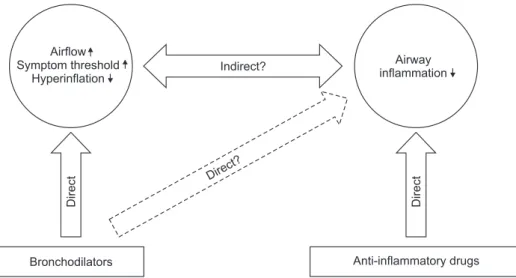
Figure 1. Potential mechanisms of chron-

ic obstructive pulmonary disease excer-

bation prevention.

(3)

versus placebo

17

.

OLO is another once-daily LABA licensed for the mainte- nance treatment of COPD (approved dose 5 μg, once-daily).

In phase III long-term trials over 48 weeks, clinical benefits in terms of lung function and symptomatic improvements com- parable to other available LABAs were observed; however, exacerbation were collected only as safety endpoints, with no conclusive effect of OLO versus placebo or comparators

18,19

.

Finally, the once-daily LABA vilanterol (VI) is used as a partnering agent for the ICS/LABA combination fluticasone furoate/vilanterol (FF/VI) and the LAMA/LABA combination umeclidinium/vilanterol (UMEC/VI). In the large-scale “Study to Understand Mortality and Morbidity” (SUMMIT) random- ized trial over a median study period of 1.8 years in 16,590 COPD patients

20

, VI monotherapy reduced the annual rate of moderate/severe exacerbations versus placebo (0.31 vs. 0.35, p=0.017). However, VI is not licensed as a monotherapy for the maintenance therapy of COPD.

LAMA: Tiotropium, Glycopyrronium, Umeclidinium, and Aclidinium

LAMAs are considered a first-line option for the long-term maintenance treatment of COPD. Of these, the richest body of evidence exists for tiotropium (TIO) once-daily (18 μg de- livered via HandiHaler or 5 μg via Respimat Soft Mist Inhaler), with experience from clinical trials and everyday practice of

>10 years. The preventive effect of TIO on exacerbations has been repeatedly and consistently demonstrated in well-con- trolled long-term trials. In particular, two studies with >1,000 patients were specifically designed to evaluate the effect of TIO versus placebo on moderate or severe, hospitalized exac- erbations over 6 and 12 months treatment duration

21,22

. Both studies showed consistent reductions in the total number of exacerbations, the proportion of subjects experiencing at least one exacerbation, and prolongation of the time-to-first exac- erbation. In the study by Niewoehner et al.

22

, there was also a trend towards reduction of hospitalized exacerbations with tiotropium versus placebo. Finally, in the long-term UPLIFT trial, TIO was superior to the control arm in a number of ex- acerbation outcomes

23

. Exacerbation prevention with tiotro- pium delivered by the Respimat was also shown to be non- inferior to the HandiHaler device in the large-scale TIOSPIR trial

24

.

In head-to-head comparator trials, TIO once-daily was supe- rior to SAL twice-daily in all exacerbation-related outcomes

25

. The superiority of the LAMA TIO was further confirmed in a head-to-head trial versus the once-daily LABA IND, where TIO significantly prolonged the time to first moderate-to- severe exacerbation versus LABA

26

. Finally, in another head- to-head trial of TIO versus ICS/LABA, there was no difference between treatments in reducing the overall annual rate of

moderate-to-severe exacerbations

27

. Altogether, these results led to the recommendation of using the LAMA TIO as a fist- line treatment also in subjects with a high risk for exacerba- tions (GOLD 2016 groups C and D).

More recently, additional LAMA drugs have been intro- duced into the COPD management options, including once- daily glycopyrronium (licensed as twice-daily drug in the United States), umeclidinium, and the twice-daily drug acli- dinium.

In a 1-year phase III trial

28

, glycopyrronium 50 μg once- daily reduced the risk of a moderate-to-severe exacerbation in moderate-to-severe COPD patients by 34% versus placebo, an effect comparable in magnitude to the effect of tiotropium in the control arm (open label, 39% reduction vs. placebo).

For umeclidinium (62.5 μg once-daily), no data on exacer- bation prevention have been reported this far. Effects on other clinical outcomes in studies over 3 to 6 months duration sug- gest comparable efficacy to other LAMAs, though

29

.

Exacerbations (diary or healthcare resource utilization de- fined) were evaluated as secondary outcome parameter in the 24-week randomized, placebo-controlled ATTAIN trial with twice-daily aclidinium (400 μg twice-daily)

30

. In this study, a 33% reduction in the overall exacerbation rate versus placebo was observed with aclidinium. Longer trials with exacerba- tions as primary endpoint, however, have not been performed.

A recent systematic review performed by the German Insti- tute for Quality and Efficiency in Healthcare (IQWIG) as part of the mandatory national value assessment procedure for novel drugs, using data from the aclidinium/formoterol fixed combination pivotal phase III trials, suggests there is some in- cremental benefit of aclidinium over formoterol twice-daily in preventing severe exacerbations

31

.

Altogether, the current evidence suggests, that LAMAs, in particular TIO, represent the most effective monotherapy to prevent exacerbations of COPD. Hence, the first-line recom- mendation of this class of bronchodilator as preferred option over LABAs for maintenance therapy in patients with high risk of exacerbations appears clearly justified.

LABA Plus ICSs

Unlike in asthma, there is no recommendation for ICS monotherapy in COPD, based on their limited efficacy on rel- evant outcomes in COPD. ICS, however, may improve clinical effects observed with bronchodilator monotherapy alone, in particular when combined with LABAs. The primary domain of ICS/LABA in COPD is the prevention of exacerbations in high-risk patients with at least severe airflow limitation.

Available ICS/LABA combinations include twice-daily FLU/

SAL, budesonide/formoterol (BUD/FOR), beclomethasone/

formoterol, and once-daily FF/VI. ICS/LABA combinations

consistently reduce exacerbation rates in high-risk patients

(4)

versus placebo, although less consistently against monothera- pies

32,33

. For example, in the TORCH trial, FLU/SAL reduced the rate of moderate/severe exacerbations versus placebo by 25%, versus SAL by 12%, while the rate of severe hospitalized exacerbations was not different from SAL monotherapy

15

. In the TRISTAN study, moderate/severe exacerbation rates, in contrast, were similar between ICS/LABA and LABA mono- therapy

34

. Similar results have been seen with BUD/FOR versus LABA component alone. A more recent meta-analysis estimated the exacerbation reduction of ICS/LABA versus LABA alone by 17%, without demonstrable effect on hospi- talized exacerbations

32

. As described earlier, an ICS/LABA combination was not superior to a LAMA alone in preventing exacerbations in the INSPIRE study

27

.

Since the year 2013, a once-daily ICS/LABA combination, FF/VI, has been approved for COPD. In two pivotal phase III studies, the combination of FF/VI reduced exacerbation rates versus VI alone in one study, while the other study did not show any difference

35

. More recently, in the SUMMIT study

20

a numerical reduction of exacerbations with FF/VI versus VI alone was seen (0.25 vs. 0.31, no formal statistical comparison was reported), but this study included COPD patients with a low exacerbation risk (GOLD B). In line with other studies, the occurrence of pneumonia was increased with ICS/LABA combination therapy versus LABA alone

35

.

Novel Developments: Dual LABA/LAMA Fixed Combinations

It has been known for decades, that in COPD a combination of bronchodilator drugs with different mode of action provides better lung function improvements and clinical outcomes than one drug alone

36

. The first study specifically designed to evaluate the impact of combined bronchodilator therapy on exacerbations was published in 2007

37

. In this study, an accepted definition for an exacerbation was used, the study duration was appropiate (52 weeks), and exacerbations were the primary endpoint. Over the study period of 1 year, no difference in the incidence of exacerbation was observed for tiotropium vs tiotropium plus SAL or SAL/FLU (62.8% of

patients vs. 64.8% and 60.0%, respectively). In addition, the time to first exacerbation was not different between treatment arms. However, the study was limited by a high dropout rate, therefore further studies evaluating the benefits of dual bron- chodilator therapy versus single agents in carefully selected patient groups were required.

With the advent of long-acting bronchodilator drugs, several novel LAMA/LABA fixed combinations have been approved for COPD maintenance treatment (Table 1). These include once-daily options glycopyrronium/indacaterol (GP/IND), tiotropium/olodaterol (TIO/OLO), UMEC/VI, and finally, twice-daily aclidinium/formoterol (ACL/FOR). Consistently, these combinations provide superior lung function improve- ments versus bronchodilator monotherapies and ICS/LABA combinations, while also improving patient-related outcomes like dyspnea or quality of life in most controlled trials

8-11,38

. Giv- en the excellent efficacy of LAMA monotherapy in prevent- ing exacerbations, it was tempting to speculate on whether these novel dual combinations with superior, at times so far unseen, bronchodilator efficacy would also lead to further improvements in exacerbation prevention, in particular as—

on average—exacerbation frequency increases with airflow obstruction, and a reasonable correlation of the magnitude of hyperinflation with exacerbation occurrence have been observed. Indeed, this question has now been addressed in a few controlled clinical trials with LAMA/LABA combination therapy versus active controls, using exacerbations as key out- comes.

Firstly, the SPARK Study evaluated the effect of 1-year treat- ment with once-daily GP/IND (50/110 μg) on the annual rate of moderate/severe exacerbations in 2,224 severe to very severe COPD patients with a history of at least one moderate exacerbation in the years prior to study entry (GOLD groups C and D), using LAMA monotherapy (GP 50 μg once-daily, open-label TIO 18 μg once-daily) as active control

39

. For all exacerbations (mild, moderate, and severe), GP/IND reduced the annual exacerbation rate by 15% and 14% versus GP and TIO, respectively (p=0.001 and p<0.01). Regarding the primary endpoint (moderate/severe exacerbations), GP/IND signifi- cantly reduced these events versus GP alone by 12% (p<0.05), while a nonsignificant reduction by 10% was seen versus open

Table 1. Overview of dual LAMA/LABA fixed combination currently approved

Drug Company Dosage/Regimen

Glycopyrronium/Indacaterol Novartis 43/85 μg once-daily (EU, Japan)

15.6/27.5 μg twice-daily (USA) via SDDPI

Umeclidinium/Vilanterol GSK 62.5/25 μg once-daily via MDDPI

Tiotropium/Olodaterol Boehringer Ingelheim 5/5 μg once-daily via Soft Mist Inhaler

Aclidinium/Formoterol AstraZeneca 340/12 μg twice-daily via MDDPI

LAMA: long-acting antimuscarinics; LABA: long-acting β2-agonists; SDDPI: single dose dry powder inhaler; MDDPI: multi dose dry powder

inhaler.

(5)

label TIO (p=0.09). IND/GP also improved health-related quality of life (St. George’s Respiratory Questionnaire) signifi- cantly versus both controls.

In the pivotal phase III TONADO replicate 1-year trials comparing TIO/OLO fixed combination (5/5 μg once-daily via Respimat) versus single components, the occurrence of exacerbations was lowest in the TIO/OLO combination group as compared to the monotherapy comparators

8

. However, numerical trends were observed only, and TONADO trials were no dedicated exacerbations trials. Nonetheless, given these encouraging results, the comparative efficacy of TIO/

OLO over TIO monotherapy is currently evaluated in a large, long-term study using various exacerbation outcomes as primary endpoints (DYNAGITO; Clinicaltrial.gov identifier:

NCT02296138). Hopefully, this study will shed more light on the potential superior efficacy of dual bronchodilation to pre- vent exacerbations versus the current “gold standard,” TIO.

Recently, results from a head-to-head comparator trial of GP/IND once-daily versus a twice-daily ICS/LABA combina- tion (FLU/SAL) were reported (FLAME Study)

40

. The study aimed to demonstrate non-inferiority of the dual LAMA/

LABA combination versus ICS/LABA in terms of the total annual exacerbation rate. While non-inferiority was demon- strated, the secondary analyses also proved superiority of the LAMA/LABA combination over ICS in reducing the rate of all (mild, moderate, and severe) and moderate/severe exacerba- tions. This was supported by superiority of several additional exacerbation endpoints (time-to-first mild, moderate, and se- vere exacerbation), as well as improvements in lung function and health status. The FLAME study therefore for the first time demonstrated superiority of a “pure” bronchodilator approach versus a regime containing an anti-inflammatory component to prevent exacerbations in high-risk subjects with COPD.

Strikingly, the superior effect of the dual bronchodilation ap- proach was independent of the baseline level of blood eosino- phils, a biomarker that has recently been suggested to suit as a guidance to identify COPD patients with responsiveness to

the exacerbation prevention effect of ICS

41

.

For both UMEC/VI and ACL/FOR, no dedicated exacer- bations studies have been performed. For ACL/FOR, some subgroup analyses suggest a benefit of ACL/FOR versus FOR monotherapy in preventing exacerbations (IQWIG)

42

, how- ever these effects require confirmation in longer-term studies.

Summary

Bronchodilators are the cornerstone COPD management.

They are recommended on a regular basis to prevent or reduce symptoms, improve health status and exercise toler- ance. Importantly, long-acting bronchodilators also prevent the occurrence of exacerbations, with superior efficacy of LAMA over LABA in head-to-head trials. With two classes of bronchodilators with distinct, yet complementary mode of action available (LAMA and LABA), either class of drug can be given alone or in combination, the latter is now possible in form of fixed drug combinations. Currently, the role of LAMA/

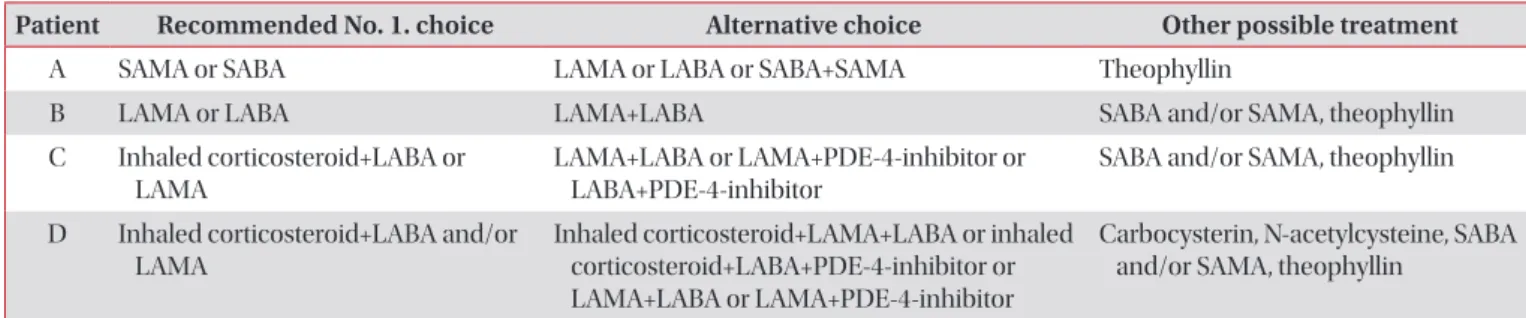
LABA dual bronchodilator drugs is seen as alternative options in more severly symptomatic patients, not necessarily with a background or risk of exacerbations (Table 2). However, given the superior clinical efficacy in improving lung function and symptoms versus monotherapies, this view will likely change in the near future. Importantly, recent large scale trials indi- cate the superiority of a pure dual bronchodilator approach over LAMA monotherapy and ICS/LABA combinations also in high-risk exacerbators (COPD GOLD groups C and D), challenging our current clinical practice to optimally prevent exacerbations in these patients. in the future, development of “triple therapies” (ICS/LAMA/LABA) will help to clarify a potential role of ICS when added to “optimal” bronchodilator background.

Table 2. GOLD 2016: pharmacologic therapy for stable COPD

Patient Recommended No. 1. choice Alternative choice Other possible treatment

A SAMA or SABA LAMA or LABA or SABA+SAMA Theophyllin

B LAMA or LABA LAMA+LABA SABA and/or SAMA, theophyllin

C Inhaled corticosteroid+LABA or LAMA

LAMA+LABA or LAMA+PDE-4-inhibitor or LABA+PDE-4-inhibitor

SABA and/or SAMA, theophyllin

D Inhaled corticosteroid+LABA and/or LAMA

Inhaled corticosteroid+LAMA+LABA or inhaled corticosteroid+LABA+PDE-4-inhibitor or LAMA+LABA or LAMA+PDE-4-inhibitor

Carbocysterin, N-acetylcysteine, SABA and/or SAMA, theophyllin

Adopted from Global Initiative for Chronic Obstructive Lung Disease (2016)

1

, http://www.goldcopd.org.

GOLD: Global Initiative for Chronic Obstructive Lung Disease; COPD: chronic obstructive pulmonary disease; SAMA: short- acting antimuscarinic; SABA: short-acting beta-agonist; LAMA: long-acting antimuscarinics; LABA: long-acting β2-agonists; PDE-4:

phosphodiesterase 4.

(6)

Conflicts of Interest

No potential conflict of interest relevant to this article was reported.

References

1. Global Initiative for Chronic Obstructive Lung Disease. Glob- al strategy for the diagnosis, management, and prevention of chronic obstructive pulmonary disease: 2016 update [Inter- net]. Global Initiative for Chronic Obstructive Lung Disease;

2016 [cited 2016 Jul 9]. Available from: http://www.goldcopd.

org.

2. Han MK, Agusti A, Calverley PM, Celli BR, Criner G, Curtis JL, et al. Chronic obstructive pulmonary disease phenotypes:

the future of COPD. Am J Respir Crit Care Med 2010;182:598- 604.

3. Rabe KF, Fabbri LM, Vogelmeier C, Kogler H, Schmidt H, Beeh KM, et al. Seasonal distribution of COPD exacerbations in the Prevention of Exacerbations with Tiotropium in COPD trial. Chest 2013;143:711-9.

4. Hurst JR, Donaldson GC, Quint JK, Goldring JJ, Baghai-Ravary R, Wedzicha JA. Temporal clustering of exacerbations in chronic obstructive pulmonary disease. Am J Respir Crit Care Med 2009;179:369-74.

5. Hurst JR, Vestbo J, Anzueto A, Locantore N, Mullerova H, Tal- Singer R, et al. Susceptibility to exacerbation in chronic ob- structive pulmonary disease. N Engl J Med 2010;363:1128-38.

6. Vogelmeier C, Buhl R, Criee CP, Gillissen A, Kardos P, Kohler D, et al. Guidelines for the diagnosis and therapy of COPD is- sued by Deutsche Atemwegsliga and Deutsche Gesellschaft fur Pneumologie und Beatmungsmedizin. Pneumologie 2007;61:e1-40.

7. Appleton S, Poole P, Smith B, Veale A, Lasserson TJ, Chan MM. Long-acting beta2-agonists for poorly reversible chronic obstructive pulmonary disease. Cochrane Database Syst Rev 2006;(3):CD001104.

8. Buhl R, Maltais F, Abrahams R, Bjermer L, Derom E, Ferguson G, et al. Tiotropium and olodaterol fixed-dose combination versus mono-components in COPD (GOLD 2-4). Eur Respir J 2015;45:969-79.

9. Beeh KM, Derom E, Echave-Sustaeta J, Gronke L, Hamil- ton A, Zhai D, et al. The lung function profile of once-daily tiotropium and olodaterol via Respimat((R)) is superior to that of twice-daily salmeterol and fluticasone propionate via Accuhaler((R)) (ENERGITO((R)) study). Int J Chron Ob- struct Pulmon Dis 2016;11:193-205.

10. Bateman ED, Ferguson GT, Barnes N, Gallagher N, Green Y, Henley M, et al. Dual bronchodilation with QVA149 versus single bronchodilator therapy: the SHINE study. Eur Respir J 2013;42:1484-94.

11. Vogelmeier CF, Bateman ED, Pallante J, Alagappan VK,

D’Andrea P, Chen H, et al. Efficacy and safety of once-daily QVA149 compared with twice-daily salmeterol-fluticasone in patients with chronic obstructive pulmonary disease (ILLU- MINATE): a randomised, double-blind, parallel group study.

Lancet Respir Med 2013;1:51-60.

12. Wedzicha JA, Decramer M, Seemungal TA. The role of bron- chodilator treatment in the prevention of exacerbations of COPD. Eur Respir J 2012;40:1545-54.

13. Agarwal R, Aggarwal AN, Gupta D, Jindal SK. Inhaled corti- costeroids vs placebo for preventing COPD exacerbations: a systematic review and metaregression of randomized con- trolled trials. Chest 2010;137:318-25.

14. Wang J, Nie B, Xiong W, Xu Y. Effect of long-acting beta- agonists on the frequency of COPD exacerbations: a meta- analysis. J Clin Pharm Ther 2012;37:204-11.

15. Calverley PM, Anderson JA, Celli B, Ferguson GT, Jenkins C, Jones PW, et al. Salmeterol and fluticasone propionate and survival in chronic obstructive pulmonary disease. N Engl J Med 2007;356:775-89.

16. Szafranski W, Cukier A, Ramirez A, Menga G, Sansores R, Nahabedian S, et al. Efficacy and safety of budesonide/for- moterol in the management of chronic obstructive pulmo- nary disease. Eur Respir J 2003;21:74-81.

17. Wedzicha JA, Buhl R, Lawrence D, Young D. Monotherapy with indacaterol once daily reduces the rate of exacerbations in patients with moderate-to-severe COPD: Post-hoc pooled analysis of 6 months data from three large phase III trials.

Respir Med 2015;109:105-11.

18. Koch A, Pizzichini E, Hamilton A, Hart L, Korducki L, De Salvo MC, et al. Lung function efficacy and symptomatic ben- efit of olodaterol once daily delivered via Respimat(R) versus placebo and formoterol twice daily in patients with GOLD 2-4 COPD: results from two replicate 48-week studies. Int J Chron Obstruct Pulmon Dis 2014;9:697-714.

19. Ferguson GT, Feldman GJ, Hofbauer P, Hamilton A, Allen L, Korducki L, et al. Efficacy and safety of olodaterol once daily delivered via Respimat(R) in patients with GOLD 2-4 COPD:

results from two replicate 48-week studies. Int J Chron Ob- struct Pulmon Dis 2014;9:629-45.

20. Vestbo J, Anderson JA, Brook RD, Calverley PM, Celli BR, Crim C, et al. Fluticasone furoate and vilanterol and survival in chronic obstructive pulmonary disease with heightened cardiovascular risk (SUMMIT): a double-blind randomised controlled trial. Lancet 2016;387:1817-26.

21. Dusser D, Bravo ML, Iacono P. The effect of tiotropium on exacerbations and airflow in patients with COPD. Eur Respir J 2006;27:547-55.

22. Niewoehner DE, Rice K, Cote C, Paulson D, Cooper JA Jr, Kor- ducki L, et al. Prevention of exacerbations of chronic obstruc- tive pulmonary disease with tiotropium, a once-daily inhaled anticholinergic bronchodilator: a randomized trial. Ann In- tern Med 2005;143:317-26.

23. Tashkin DP, Celli B, Senn S, Burkhart D, Kesten S, Menjoge S,

(7)

et al. A 4-year trial of tiotropium in chronic obstructive pul- monary disease. N Engl J Med 2008;359:1543-54.

24. Wise RA, Anzueto A, Cotton D, Dahl R, Devins T, Disse B, et al. Tiotropium Respimat inhaler and the risk of death in COPD. N Engl J Med 2013;369:1491-501.

25. Vogelmeier C, Hederer B, Glaab T, Schmidt H, Rutten-van Molken MP, Beeh KM, et al. Tiotropium versus salmeterol for the prevention of exacerbations of COPD. N Engl J Med 2011;364:1093-103.

26. Decramer ML, Chapman KR, Dahl R, Frith P, Devouassoux G, Fritscher C, et al. Once-daily indacaterol versus tiotropium for patients with severe chronic obstructive pulmonary disease (INVIGORATE): a randomised, blinded, parallel-group study.

Lancet Respir Med 2013;1:524-33.

27. Wedzicha JA, Calverley PM, Seemungal TA, Hagan G, Ansari Z, Stockley RA, et al. The prevention of chronic obstructive pulmonary disease exacerbations by salmeterol/fluticasone propionate or tiotropium bromide. Am J Respir Crit Care Med 2008;177:19-26.

28. Kerwin E, Hebert J, Gallagher N, Martin C, Overend T, Alagap- pan VK, et al. Efficacy and safety of NVA237 versus placebo and tiotropium in patients with COPD: the GLOW2 study.

Eur Respir J 2012;40:1106-14.

29. Feldman G, Maltais F, Khindri S, Vahdati-Bolouri M, Church A, Fahy WA, et al. A randomized, blinded study to evaluate the efficacy and safety of umeclidinium 62.5 mug compared with tiotropium 18 mug in patients with COPD. Int J Chron Obstruct Pulmon Dis 2016;11:719-30.

30. Jones PW, Singh D, Bateman ED, Agusti A, Lamarca R, de Miquel G, et al. Efficacy and safety of twice-daily aclidinium bromide in COPD patients: the ATTAIN study. Eur Respir J 2012;40:830-6.

31. Institut für Qualität und Wirtschaflichkeit im Gesund- heitswesen. Aclidiniumbromid: Nutzenbewertung nach

§35 SGB V. A15-45 [Internet]. Köln: IQWIG; 2016 [cited 2016 Jul 9]. Available from: http://www.g-ba.de/down- loads/92-975-1206/2016-01-15_Nutzenbewertung-IQWiG_

Aclidiniumbromid.pdf.

32. Nannini LJ, Lasserson TJ, Poole P. Combined corticosteroid and long-acting beta2-agonist in one inhaler versus long- acting beta2-agonists for chronic obstructive pulmonary dis- ease. Cochrane Database Syst Rev 2012;(9):CD006829.

33. Oba Y, Lone NA. Comparative efficacy of inhaled corticoste- roid and long-acting beta agonist combinations in preventing COPD exacerbations: a Bayesian network meta-analysis. Int J

Chron Obstruct Pulmon Dis 2014;9:469-79.

34. Calverley P, Pauwels R, Vestbo J, Jones P, Pride N, Gulsvik A, et al. Combined salmeterol and fluticasone in the treatment of chronic obstructive pulmonary disease: a randomised con- trolled trial. Lancet 2003;361:449-56.

35. Dransfield MT, Bourbeau J, Jones PW, Hanania NA, Mahler DA, Vestbo J, et al. Once-daily inhaled fluticasone furoate and vilanterol versus vilanterol only for prevention of exacerba- tions of COPD: two replicate double-blind, parallel-group, randomised controlled trials. Lancet Respir Med 2013;1:210- 23.

36. Petty TL. The combination of ipratropium and albuterol is more effective than either agent alone. Chest 1995;107(5 Suppl):183S-6S.

37. Aaron SD, Vandemheen KL, Fergusson D, Maltais F, Bour- beau J, Goldstein R, et al. Tiotropium in combination with placebo, salmeterol, or fluticasone-salmeterol for treatment of chronic obstructive pulmonary disease: a randomized trial.

Ann Intern Med 2007;146:545-55.

38. Mahler DA, Decramer M, D’Urzo A, Worth H, White T, Al- agappan VK, et al. Dual bronchodilation with QVA149 re- duces patient-reported dyspnoea in COPD: the BLAZE study.

Eur Respir J 2014;43:1599-609.

39. Wedzicha JA, Decramer M, Ficker JH, Niewoehner DE, Sandstrom T, Taylor AF, et al. Analysis of chronic obstructive pulmonary disease exacerbations with the dual bronchodila- tor QVA149 compared with glycopyrronium and tiotropium (SPARK): a randomised, double-blind, parallel-group study.

Lancet Respir Med 2013;1:199-209.

40. Wedzicha JA, Banerji D, Chapman KR, Vestbo J, Roche N, Ayers RT, et al. Indacaterol-Glycopyrronium versus Salmeter- ol-Fluticasone for COPD. N Engl J Med 2016;374:2222-34.

41. Pascoe S, Locantore N, Dransfield MT, Barnes NC, Pavord ID. Blood eosinophil counts, exacerbations, and response to the addition of inhaled fluticasone furoate to vilanterol in pa- tients with chronic obstructive pulmonary disease: a second- ary analysis of data from two parallel randomised controlled trials. Lancet Respir Med 2015;3:435-42.

42. Institut für Qualität und Wirtschaflichkeit im Gesundheits- wesen. Aclidiniumbromid/Formoterol. Nutzenbewertung nach §35 SGB V. A15-06 [Internet]. Köln: IQWIG; 2015 [cited 2016 Jul 9]. Available from: http://www.g-ba.de/down- loads/92-975-767/2015-05-04_Nutzenbewertung-IQWiG_

A15-06_Aclidiniumbromid-Formoterol.pdf.

수치

Figure 1. Potential mechanisms of chron- chron-ic obstructive pulmonary disease   excer-bation prevention.
Table 1. Overview of dual LAMA/LABA fixed combination currently approved
Table 2. GOLD 2016: pharmacologic therapy for stable COPD

참조

관련 문서

In this study, we suggest that negative airway reversibility test (ART) result did not mean the FEV1 limit that could increase after bronchodilator treatment in COPD patients, and

All studies with other causes of pulmonary hypertension than COPD (including chronic thromboembolic pulmonary hypertension and pulmonary arterial hyperten- sion) were excluded.

Recent reports also suggested that static hyperinflation as expressed by the IC/TLC ratio is an independent predictor of exercise capacity and quality of life, and moreover,

COPD is a comprehensive disease including chronic bronchi- tis and emphysema, and is characterized by the pathological limitation of airflow in the airway

Clinicians’ prescrip- tion decisions regarding ICS-containing inhalers in real-world clinical setting was not significantly differ between normal and increased FeNO groups

(2) Combination of ICSs and long-acting bronchodila- tors: An ICS combined with a LABA is more effective than the individual components in improving lung function and health

Although inflammatory reaction by immune processes plays a signifi- cant role in the pathogenesis of COPD, the earliest abnormali- ties in the COPD lung caused by

Backgrounds : The exacerbations of asthma and chronic obstructive pulmonary disease (COPD) have been suggested to be associated with respiratory tract viral