Introduction
According to a survey conducted by the Korean Academy of Tuberculosis and Respiratory Diseases in 2008, people over the age of 40 years have a high chronic obstructive pulmonary disease (COPD) prevalence rate of 13%1. According to the Na- tional Statistical Office, COPD is one of the 10 major causes of death in South Korea2. The World Health Organization (WHO) expects that the prevalence and mortality rates of COPD will increase worldwide3. The WHO also emphasizes the impor- tance of prevention, early diagnosis, and proper treatment of COPD by selecting it as one of the five non-infectious diseases that must be managed worldwide. In 2012, the Korean Acad- emy of Tuberculosis and Respiratory Diseases published the COPD clinical practice guideline (in Korean), which could be used in clinical practice. In 2014, the revised version of the COPD guideline (in Korean) was published on the basis of the
Summary of the Chronic Obstructive
Pulmonary Disease Clinical Practice Guideline Revised in 2014 by the Korean Academy of
Tuberculosis and Respiratory Disease
Hyoung Kyu Yoon, M.D.
1, Yong-Bum Park, M.D.
2, Chin Kook Rhee, M.D.
3, Jin Hwa Lee, M.D.
4and Yeon-Mok Oh, M.D.
5, on behalf of the Committee of the Korean COPD Guideline 2014
1Division of Pulmonary and Critical Care Medicine, Department of Internal Medicine, Yeouido St. Mary’s Hospital, College of Medicine, The Catholic University of Korea, Seoul, 2Division of Pulmonary, Allergy, and Critical Care Medicine, Department of Internal Medicine, Hallym University Kangdong Sacred Heart Hospital, Seoul, 3Department of Internal Medicine, Seoul St. Mary’s Hospital, College of Medicine, The Catholic University of Korea, Seoul, 4Department of Internal Medicine, Ewha Womans University School of Medicine, Seoul, 5Department of Pulmonary and Critical Care Medicine, Asan Medical Center, University of Ulsan College of Medicine, Seoul, Korea
Chronic obstructive pulmonary disease (COPD) results in high morbidity and mortality among patients both domestically and globally. The Korean clinical practice guideline for COPD was revised in 2014. It was drafted by the members of the Korean Academy of Tuberculosis and Respiratory Diseases, as well as participating members of the Health Insurance Review and Assessment Service, Korean Physicians’ Association, and Korea Respiration Trouble Association. This revised guideline covers a wide range of topics, including the epidemiology, diagnosis, assessment, monitoring, management, exacerbation, and comorbidities of COPD in Korea. We drafted a guideline on COPD management by performing systematic reviews on the topic of management with the help of a meta-analysis expert.
We expect this guideline will be helpful medical doctors treating patients with respiratory conditions, other health care professionals, and government personnel in South Korea.
Keywords: Pulmonary Disease, Chronic Obstructive; Guideline; Diagnosis; Treatment
Address for correspondence: Yeon-Mok Oh, M.D.
Department of Pulmonary and Critical Care Medicine and Clinical Research Center for Chronic Obstructive Airway Diseases, Asan Medical Center, University of Ulsan College of Medicine, 88 Olympic-ro 43-gil, Songpa-gu, Seoul 05505, Korea
Phone: 82-2-3010-3136, Fax: 82-2-3010-6968 E-mail: [email protected]
Received: Oct. 14, 2016 Revised: Jan. 6, 2017 Accepted: Mar. 10, 2017
cc It is identical to the Creative Commons Attribution Non-Commercial License (http://creativecommons.org/licenses/by-nc/4.0/).
Copyright © 2017
The Korean Academy of Tuberculosis and Respiratory Diseases.
All rights reserved.
findings of new studies published over the previous 2 years4. This revision has been made not only by the Korean Acad- emy of Tuberculosis and Respiratory Diseases but also by the Health Insurance Review and Assessment Service, Korean Physicians’ Association, and Korea Respiration Trouble As- sociation. Therefore, the revised clinical practice guideline is more advanced than the original one. We expect this guideline would be helpful not only to medical doctors treating patients with respiratory conditions but also to other health care pro- fessionals and government personnel in South Korea.
Definition, Epidemiology, Cause, and Mechanism
COPD can be defined as follows.
“It is a pulmonary disease with irreversible air inflow limita- tion and is induced by damage to the airway and lung paren- chyma due to chronic inflammation.” The most important cause of chronic inflammation is smoking, but it can also be induced by occupational exposure, indoor air contamination, and infection. As it is a very common disease, it has a severe socioeconomic influence. It generally progresses, but preven- tion and treatment are possible. Acute exacerbation occurs frequently and comorbid diseases are comparatively more common in the general population, influencing the severity and prognosis of COPD.
COPD is a leading cause of morbidity and mortality world- wide3,5. The prevalence of COPD has increased over the decades. This phenomenon is due to consistent exposure to COPD risk factors and global population aging, and it is anticipated to continue into the future. A study by the WHO estimated that in 2007, the global number of patients with COPD was 210 million6. As for the COPD prevalence in Korea, 13.4% of the population over 40 years of age has COPD based on the Global Initiative for Chronic Obstructive Lung Dis- ease (GOLD) criteria (forced expiratory volume in 1 second/
forced vital capacity [FEV1/FVC] <0.7), with 19.4% of the male population and 7.9% of the female population having COPD based on the 2008 Korean National Health and Nutrition Ex- amination Survey7. However, among 353 patients diagnosed with COPD, only nine (2.4%) were diagnosed with COPD by a doctor, and only eight (2.1%) received treatment. This sug- gests that most Korean patients with COPD are not diagnosed and treated. COPD is an important cause of mortality in most countries. According to the Global Burden of Disease Study conducted in 1990, COPD ranked sixth among the global causes of death, but it is anticipated to rank third in 2020 and fourth in 20308. According to Statistics Korea, the total number of deaths from COPD, based on disease code, was 3,329 in the year 2000 (2,120 among men and 1,209 among women), and 5,002 in the year 2010 (3,526 among men and 1,476 among women). In 2010, chronic lower airway disease ranked sev-
enth among the overall causes of death, accounting for a total of 7,092 deaths (4,473 among men and 2,619 among wom- en)8. In an aging population, the risk of death from COPD has been increasing, and it ranks fifth among the overall causes of death in the age group of 80 years or older, with a mortality rate of 3,732 per 100 thousand.
Additionally, COPD results in a huge socioeconomic bur- den. In Korea, based on the 2010 data of the Health Insurance Review and Assessment Service, about 284 billion Korean won is spent on the medical treatment of COPD1. According to the 2009 data of the Health Insurance Review and Assess- ment Service, the medical fee per individual is as high as 3.23 million won, and it has been increasing rapidly in recent years.
Moreover, in 1990, COPD ranked 12th among the cause of disability-adjusted life years (DALYs) loss in the world, but it is anticipated to rank seventh in 20303. In Korea, DALYs from COPD have rapidly increased from 270 years per 100 thou- sand in 2002 (ranking 10th) to 550 years per 100 thousand in 2007 (ranking seventh)9.
The most important and well-known risk factor for COPD is smoking. Other risk factors include occupational dust, chemi- cal materials, air pollution, low socioeconomic status, chronic bronchitis, and respiratory infection. Host factors related to COPD include genetics, age, sex, lung growth, and airway hypersensitivity10,11. Smoke and harmful substances induce lung inflammation, and lung parenchyma damage from such inflammation and disruption of the normal repair system can induce emphysema and small airway fibrosis12. Such patho- logic alteration induces air trapping and airflow limitation.
Diagnosis and Assessment
A person over the age of 40 years exposed to cigarette smoke or other risk factors and showing symptoms of dys- pnea, cough, and sputum production should be suspected of having COPD13.
To diagnose COPD, a patient should undergo spirometry
mMRC 0-1 CAT <10
mMRC >2 CAT >10 Symptoms (mMRC or CAT score)
Exacerbation frequency >2/yr or one hospitalization due to exacerbation
Exacerbation frequency of 0-1/yr
(Da)
(Ga) (Na)
FEV <60%1
FEV >60%1
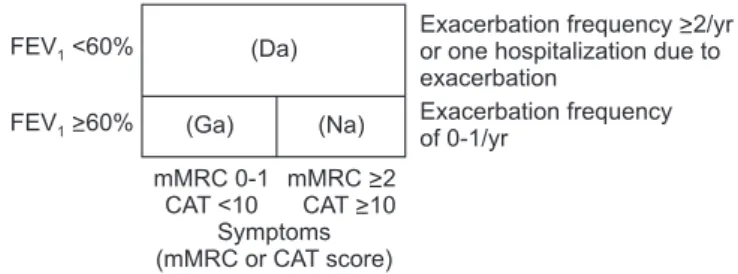
Figure 1. Classification of patients with chronic obstructive pulmo- nary disease (COPD). FEV1: forced expiratory volume in 1 second;
mMRC: modified Medical Research Council dyspnea score; CAT:
COPD assessment test score. Adapted with permission from the Korean Academy of Tuberculosis and Respiratory Diseases4.
that determines the FEV1, FVC, and the ratio of FEV1/FVC.
FEV1/FVC <0.7 confirms an airflow limitation, which is an objective diagnostic evidence of COPD. More importantly, spirometry should be performed after short-acting bronchodi- lator inhalation to confirm the airflow limitation in COPD.
For COPD treatment, spirometry, symptom grade, and exacerbation history should be assessed (Figure 1). First, the severity of COPD on spirometry should be classified into two categories: FEV1 ≥60% versus FEV1 <60%. Second, the symp- tom grade should also be classified into two categories: the modified Medical Research Council dyspnea scores (mMRC) 0–1 versus mMRC ≥2, or the score of the COPD assessment test score (CAT) <10 versus CAT ≥10. Third, the exacerba- tion frequency should be classified as follows: 0–1/yr versus
≥2/yr. According to this assessment, patients with COPD are classified into three groups: Ga, Na, and Da (Figure 1). When patients with COPD show other accompanying diseases, such as cardiovascular disorders, osteoporosis, depression, or lung cancer, their prognosis is poor. Therefore, the comorbid dis- eases accompanying COPD should be evaluated.
Patients with asthma-COPD overlap syndrome exhibit features of both asthma and COPD. Experts suggest that treat- ment for both asthma and COPD should be administered to such patients.
An mMRC dyspnea grade of 2 refers to the situation where a patient walks slower on ground level than a similarly aged person because of shortness of breath, or when a patient stops for breathing when walking at his or her own pace on ground level.
FEV1 of 50% predicted value, the cut-off threshold in the GOLD documents, is an arbitrary one. For the treatment of
stable COPD patients, one of the important medications is an inhaled corticosteroid (ICS). ICS has been proven to be effective in COPD patients with FEV1 less than around 60% of predicted value. So, we decided the cut-off FEV1 value of 60%.
We have defined the Da group which is an analogy of the combination, both GOLD group C and D. As for the GOLD group C, the proportion of it is very small in a clinical practice setting and the recommended medications are similar to those of the GOLD group D. So, we decided the combined group, Da.
Management of Stable COPD
The goals of management of stable COPD are to reduce both current symptoms and future risks with minimal side ef- fects from treatment. Ongoing monitoring should ensure that the treatment goals are being met, and it should include con- tinuous evaluation of exposure to risk factors and monitoring of disease progression, the effect of treatment and possible ad- verse effects, exacerbation history, and comorbidities. Identifi- cation and reduction of exposure to risk factors are important in the treatment and prevention of COPD.
1. Pharmacologic management
Appropriate pharmacologic therapy can reduce symptoms, reduce the frequency and severity of exacerbations, and im- prove health status and exercise tolerance. To date, none of the existing medications for COPD has been shown to modify disease progression or reduce mortality14-16.
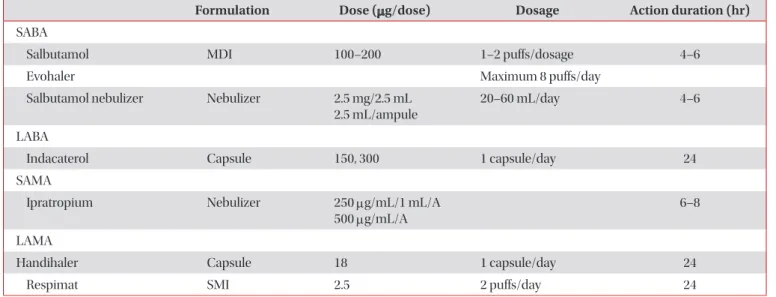
Table 1. Available inhaled bronchodilators in Korea (2014)
Formulation Dose (μg/dose) Dosage Action duration (hr)
SABA
Salbutamol MDI 100–200 1–2 puffs/dosage 4–6
Evohaler Maximum 8 puffs/day
Salbutamol nebulizer Nebulizer 2.5 mg/2.5 mL 2.5 mL/ampule
20–60 mL/day 4–6
LABA
Indacaterol Capsule 150, 300 1 capsule/day 24
SAMA
Ipratropium Nebulizer 250 μg/mL/1 mL/A
500 μg/mL/A 6–8
LAMA
Handihaler Capsule 18 1 capsule/day 24
Respimat SMI 2.5 2 puffs/day 24
Adapted with permission from the Korean Academy of Tuberculosis and Respiratory Diseases4.
SABA: short-acting β2-agonist; MDI: metered-dose inhaler; LABA: long-acting β2-agonist; SAMA: short-acting muscarinic agent; LAMA: long- acting muscarinic agent; SMI: soft mist inhaler.
1) Bronchodilators
Bronchodilators are the cornerstone of pharmacological treatment in COPD (Table 1). Inhalation therapy is preferred over oral, subcutaneous, or intravenous administration, be- cause inhalation therapy can maximize the bronchodilator’s effect on the airway with least systemic side effects. When treatment is administered via inhalation, attention is essential to ensure effective drug delivery and training in inhaler tech- nique. A metered-dose inhaler, dry powder inhaler, soft mist inhaler, or nebulizer can be used for inhalation therapy, ac- cording to the patient’s clinical situation.
(1) β2-agonists: Short-acting β2-agonists (SABAs) are rec- ommended as needed for the relief of dyspnea and exercise limitation17. Many trials have proven the clinical benefits of long-acting β2-agonists (LABAs) in COPD, including the im- provement of health status, FEV1, FVC, and exercise capacity.
Therefore, regular treatment with LABAs is more highly rec- ommended than irregular usage of SABAs on an as-needed basis to address the airflow limitation in COPD. Indacaterol is a once daily β2-agonist with a duration of action of 24 hours.
This bronchodilator’s effect is significantly greater than that of formoterol and salmeterol, and similar to that of tiotropium.
Indacaterol has significant effects on breathlessness and health status18,19.
(2) Anticholinergic agents: Long-acting muscarinic agents (LAMAs) provide clinically significant improvements in lung function, reduce acute exacerbation, and improve health status and the effects of pulmonary rehabilitation in patients with COPD20,21. A large, long-term clinical trial on patients with COPD showed no effect of tiotropium added to other standard therapies on the rate of lung function decline and no evidence of cardiovascular risk22. In another large trial, tiotropium was found to be superior to salmeterol in reducing exacerbations, even though the difference was negligible23,24. The long-acting anticholinergics aclidinium25-29 and glycopyr- ronium30-32 seem to have a similar action as tiotropium on lung function and breathlessness; however, far less data are available for other outcomes.
(3) Methylxanthines: Methylxanthines may act as nonse- lective phosphodiesterase inhibitors, but they have also been reported to have a range of nonbronchodilator actions, whose significance has been disputed. Theophylline is the most com- monly used methylxanthine. Theophylline is less effective and less well tolerated than are inhaled long-acting bronchodila- tors, and it is not recommended if the latter drugs are available and affordable. The addition of theophylline to salmeterol produced a greater improvement in FEV1 and breathlessness than did salmeterol alone33. Low-dose theophylline reduces exacerbations but does not improve postbronchodilator lung function.
(4) Combination bronchodilator therapy: Combining bronchodilators with different mechanisms and durations of action may increase the degree of bronchodilation with
equivalent or lesser side effects. The combination of a β2- agonist, an anticholinergic, and/or theophylline may produce additional improvements in lung function and health status.
Combinations of a LABA and a long-acting anticholinergic have shown a significant improvement in dyspnea and health status, as well as an increase in lung function compared with that shown by monotherapy; however, the prevention of exac- erbation of COPD is still limited34,35.
2) Corticosteroids
(1) Inhaled corticosteroids: Regular treatment with ICSs improves symptoms, lung function, and quality of life, and reduces the frequency of exacerbations in patients with COPD having an FEV1 <60% predicted36,37. Withdrawal from treatment with ICSs may lead to exacerbations in some pa- tients. However, regular treatment with ICSs does not modify the long-term decline of FEV1 or mortality in patients with COPD14,16,38,39.
(2) Combination of ICSs and long-acting bronchodila- tors: An ICS combined with a LABA is more effective than the individual components in improving lung function and health status and reducing exacerbations in patients with moderate to very severe COPD36,37. However, a large, prospective clini- cal trial failed to demonstrate a statistically significant effect of combination therapy on mortality38. Moreover, combina- tion therapy is associated with an increased risk of pneumo- nia. The addition of a LABA/ICS combination to tiotropium improves lung function and quality of life, and may further reduce exacerbations. Nevertheless, more studies on triple therapy are needed40.
3) Phosphodiesterase-4 inhibitors
Roflumilast is recommended for patients with COPD with severe airflow limitation (postbronchodilator FEV1/FVC, 0.7;
FEV1 <50%), symptoms of chronic bronchitis, and a history of exacerbations, in whom the disease is not adequately con- trolled by long-acting bronchodilators41-48. The most frequent adverse effects are nausea, reduced appetite, weight loss, ab- dominal pain, diarrhea, sleep disturbances, and headache41-45.
4) Other pharmacologic treatments
(1) Vaccination: Influenza vaccination and pneumococcal vaccination are recommended for patients with COPD.
(2) Antibiotics: Although studies have shown some effects of antibiotics on exacerbation rate49-52, the role of this treat- ment is unclear. Prophylactic antibiotic treatment is not rec- ommended because of an unfavorable balance between the benefits and side effects.
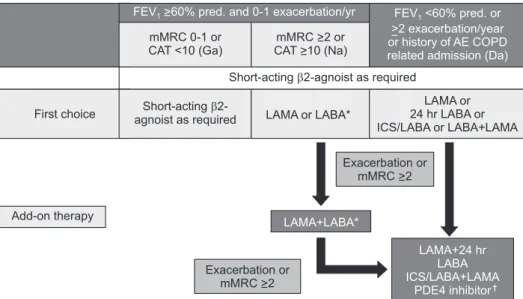
2. Pharmacologic treatment algorithms based on the Korean COPD classification (Figure 2)
1) Group Ga patients
SABA is recommended as a first-line therapy since SABA can improve lung function and decrease dyspnea. If dyspnea (mMRC ≥2) or acute exacerbation develops despite medical treatment, LABA or LAMA can be tried. However, not enough trials have been conducted on group Ga COPD.
2) Group Na patients
LABA or LAMA is recommended as a first-line therapy.
Randomized controlled trials comparing ultra LABA and LAMA have shown no significant difference in the outcomes such as pulmonary function, symptomatic improvement, and health status. The choice of long-acting bronchodilators should depend on the patient’s perception of symptom relief, side effects, and clinician’s discretion. For patients with severe breathlessness, the alternative is a combination of long-acting bronchodilators. Combination therapy with LAMA and LABA can be provided for patients who show no improvement of symptoms with single therapy or undergo frequent exacerba- tion.
3) Group Da patients
Single therapy with LAMA or ultra LABA, or combination therapy with LABA+LAMA or ICS+LABA can be administered as a first-line therapy. If dyspnea (mMRC ≥2) or acute exac- erbation develops despite first-line treatment, combination therapy with ICS, LABA, and LAMA or addition of a phospho- diesterase-4 (PDE4) inhibitor can be tried. In a post-hoc anal- ysis of the UPLIFT trial, triple therapy with LABA+LAMA+ICS resulted in less hospitalization and more improvement of pulmonary function and quality of life than did combination
therapy with ICS+LABA, but without a significant difference in mortality between the two groups. PDE4 inhibitors can be administered to this group of patients with COPD and chronic bronchitis phenotype who undergo frequent exacerbations, if the side effects of PDE4 inhibitors, including nausea, diarrhea, and weight loss, are not serious. Theophylline should not be added to PDE4 inhibitors.
3. Nonpharmacologic therapies 1) Smoking cessation
Smoking cessation is one of the most important interven- tions. It slows the rate of decline in FEV1 with consequent benefits in terms of progression of symptoms and survival39. Pharmacotherapy and nicotine replacement reliably increase the long-term smoking abstinence rates.
2) Physical activity/pulmonary rehabilitation
The principal goals of pulmonary rehabilitation are to re- duce symptoms, improve quality of life, and increase physi- cal and emotional participation in everyday activities53. All patients who experience shortness of breath when walking on their own pace on level ground should be offered rehabilita- tion. Several studies have documented an effect of pulmonary rehabilitation in patients with breathlessness, usually mMRC
> 1, and following acute exacerbations.
3) Oxygen therapy
The long-term administration of oxygen (>15 hr/day) to patients with chronic respiratory failure has been shown to increase survival in patients with severe resting hypoxemia54. Long-term oxygen therapy is indicated for patients who have the following conditions:
Partial pressure of oxygen (PaO2) at or below 55 mm Hg
Figure 2. Pharmacologic treatment for stable COPD. *Including ultra LABA.
†Postbronchodilator FEV1/FVC, 0.7;
FEV1, <50%), symptoms of chronic bron- chitis, and a history of exacerbations.
FEV1: forced expiratory volume in 1 sec- ond; mMRC: modified Medical Research Council dyspnea score; CAT: COPD assessment test score; AE COPD: acute exacerbation of chronic obstructive pul- monary disease; LAMA: long-acting mus- carinic antagonist; LABA: long-acting β2-agonist; ICS: inhaled corticosteroid;
PDE4: phosphodiesterase-4; FVC: forced vital capacity; COPD: chronic obstructive pulmonary disease. Adapted with per- mission from the Korean Academy of Tuberculosis and Respiratory Diseases4. FEV >60% pred. and 0-1 exacerbation/yr1
mMRC 0-1 or CAT <10 (Ga)
mMRC >2 or CAT >10 (Na)
FEV <60% pred. or
>2 exacerbation/year or history of AE COPD related admission (Da)
1
Short-acting 2-agnoist as required
First choice Short-acting 2-
agnoist as required LAMA or LABA*
LAMA or 24 hr LABA or ICS/LABA or LABA+LAMA
LAMA+LABA*
LAMA+24 hr LABA ICS/LABA+LAMA
PDE4 inhibitor Add-on therapy
Exacerbation or mMRC >2
Exacerbation or mMRC >2
or arterial oxygen saturation (SaO2) at or below 88%, with or without hypercapnia confirmed twice over a 3-week period;
or PaO2 between 55 mm Hg and 60 mm Hg, or SaO2 of 89%, if there is evidence of pulmonary hypertension, peripheral edema suggesting congestive cardiac failure, or polycythemia (hematocrit >55%).
4) Bronchoscopic lung volume reduction
In a post-hoc analysis, bronchoscopic lung volume reduc- tion (BLVR) in patients with COPD and severe airflow limita- tion (FEV1, 15%–45% predicted), heterogeneous emphysema on computed tomography (CT), and hyperinflation (total lung capacity >100% and residual volume >150% predicted) induced modest improvements in lung function, exercise tolerance, and symptoms, at the cost of more frequent exacer- bations of COPD, pneumonia, and hemoptysis after implanta- tion55. Additional data are required to define the optimal BLVR technique and patient population.
Acute Exacerbation of COPD
1. Definition
Acute exacerbation of COPD can be defined as a worsening of the patient’s respiratory symptoms that is beyond normal day-to-day variations and leads to a change in medication56. 2. Meaning and importance
Acute exacerbation of COPD can impact the natural course of COPD in the following ways:
- Worsening of quality of life
- Deterioration of symptoms and lung function (requiring a few weeks to recover)
- Acceleration of decline of lung function - Increase in mortality rate
- Increase in socioeconomic burden 3. Etiology
The causes of COPD acute exacerbation are numerous.
The most common cause is respiratory infection (viral and/
or bacterial)57,58. Air pollution can also cause exacerbation.
Discontinuing maintenance medication and poor adher- ence to COPD medication can also be causes. However, the cause of exacerbation cannot be identified in one-third of the cases. Diseases with similar symptoms (pneumonia, conges- tive heart failure, pneumothorax, pleural effusion, pulmonary thromboembolism, and arrhythmia) should also be differenti- ated from COPD exacerbations.
4. Symptoms and diagnosis
Symptoms for COPD acute exacerbations are aggravation of dyspnea, increase in cough and sputum volume, and change in sputum color. Diagnosis of COPD is based on the presence of symptoms that are beyond normal day-to-day variations.
5. Assessment of severity and criteria for hospitalization Severity of exacerbation can be assessed using the following variables.
1) History
- History of previous exacerbation frequency and severity - Degree of air-flow obstruction in the stable state - Duration and severity of deterioration of symptoms - Comorbidity (especially, cardiac disease)
- Current medication - Home O2 therapy 2) Physical examination - Use of accessory muscle
- Paradoxical chest wall movement - Cyanosis
- Peripheral edema - Hemodynamic instability - Decrease of mentality 3) Laboratory findings
- Pulse oximetry: If oxygen saturation is below 90%, hospi- talization should be considered. If respiratory failure is suspected, arterial blood gas analysis (ABGA) should be performed.
- Chest plain radiography: If there is a clear difference in the findings between the initial and follow-up radiographs, hospitalization should be considered.
- Electrocardiography should be performed to check for concomitant heart disease.
- Complete blood count: To check for anemia, polycythe- mia, and leukocytosis.
- Blood chemistry: To check for electrolyte imbalance and hyperglycemia.
- Sputum study: The characteristics of the sputum should be checked because antibiotic treatment may be necessary if the sputum is purulent. Culture tests may be helpful in selecting the antibiotics.
6. Medication 1) Bronchodilators
SABA or short-acting muscarinic antagonist (SAMA) is rec- ommended. Theophylline can be used if SABA and/or SAMA are not effective.
2) Steroids
Systemic steroids can reduce the recovery and admission periods. They also improve lung function and oxygen satura- tion. Systemic steroids can also reduce further exacerbation.
Administration of 30–40 mg of prednisolone for 10–14 days is recommended. Intravenous administration is not superior to oral administration.
3) Antibiotics
Antibiotics are reported to reduce treatment failure and mortality. They are recommended when the sputum is puru- lent or for patients on mechanical ventilation59.
7. Respiratory support 1) Oxygen
Oxygen therapy is a key component of management of COPD exacerbation. The target goal of saturation is 88%–92%.
ABGA should be performed 30–60 minutes after oxygen ther- apy. However, too much oxygen can result in CO2 retention.
2) Ventilatory support
Some patients require admission to the intensive care unit.
Noninvasive positive pressure ventilation (NIPPV) or invasive mechanical ventilation (IMV) may be needed for such pa- tients.
3) NIPPV
Success rate of NIPPV is reported to be 80%–85%. NIPPV improves respiratory acidosis, respiratory rate, and dyspnea.
It also reduces complications, such as ventilator-associated pneumonia, and the duration of hospitalization. Moreover, NIPPV also reduces the IMV rate and mortality.
4) Invasive mechanical ventilation
The indications of IMV are listed in (1) respiratory or cardi- ac arrest, (2) decreased mentality, (3) unable to remove secre- tion, (4) unable to tolerate NIPPV or NIPPV failure, (5) others.
8. Discharge and follow-up
Indications of discharge are listed in the indications of dis- charge are (1) patient can walk across the room, (2) patient can eat and sleep without frequent awakening, (3) patient can use long-acting bronchodilator±ICS properly, (4) stable result of arterial blood gas analysis for 12–24 hours, (5) others. Pa- tients should use an inhaled long-acting bronchodilator±ICS before discharge. Education for smoking cessation, assess- ment of the effect of the inhaler, and follow-up measurements of lung function are needed.
9. Prevention
COPD can be prevented by nonpharmaceutical and phar- maceutical treatments.
1) Nonpharmaceutical treatment - Pulmonary rehabilitation
- Smoking cessation - Vaccination
2) Pharmaceutical treatment
- Inhaled long-acting bronchodilators: LABA or LAMA - ICS
- PDE4 inhibitor
Comorbidities of COPD
Most patients with COPD have comorbidities, which have a significant impact on prognosis60,61. Table 2 shows the preva- lence of comorbidities in Korean patients with COPD based on National Health Insurance data for 2009 provided by the Health Insurance Review and Assessment Service.
Comorbidities such as heart failure exaggerate or induce dyspnea and/or cough, which are symptoms similar to those in COPD exacerbation. The diagnosis of heart failure in pa- tients with COPD could be delayed. Therefore, patients with COPD should be regularly evaluated for the presence of co- morbidities.
The treatment of comorbidities in patients with COPD is not different from that in those without COPD. Treatment is equally important in both groups of patients.
Cardiovascular diseases are the most common and im- portant comorbidities of COPD62. Ischemic heart disease, heart failure, atrial fibrillation, and hypertension are the most common cardiovascular diseases. Beta-blockers are one of the most important drugs for the treatment of ischemic heart
Table 2. Prevalence of comorbidities in Korean patients with chronic obstructive pulmonary disease (n=192,496)*
Comorbidity No. of patients Prevalence (%)
Hypertension 97,672 51
Diabetes mellitus 48,189 25
Ischemic heart disease 35,021 18
Heart failure 36,736 19
Metabolic syndrome 33,323 17
Osteoporosis 17,572 9
Depression 17,313 9
*Supported by the National Strategic Coordinating Center for Clinical Research.
disease and heart failure. If patients with COPD require beta- blockers, selective beta-1 inhibitors are the best choice, par- ticularly for patients with severely impaired lung function63,64.
Metabolic syndrome and type 2 diabetes mellitus are very common since most patients with COPD are elderly and cur- rent or former smokers. Weight reduction aimed at achieving a body mass index of less than 21 kg/m2 is not recommended for patients with severe COPD, because it might increase re- spiratory mortality65,66.
Gastroesophageal reflux disease is also a common comor- bidity and seems to be one of the risk factors for COPD exac- erbation67-69. In Korean patients with COPD, the prevalence of gastroesophageal reflux disease is 28%68. However, the preven- tive effect of proton pump inhibitors on COPD exacerbation has not yet been proven.
Although osteoporosis is one of the main comorbidities in COPD62,70, it is sometimes neglected or its diagnosis is de- layed71; this leads to general weakness and worse prognosis70. Since systemic corticosteroids are one of the well-known risk factors for osteoporosis, their overuse should be avoided.
Anxiety and depression are also common comorbidities72. The prevalence of depression in patients with COPD is higher than that in the general population13. Approximately 25% of the patients with COPD have depression73-75. Korean Patient Health Questionnaire-9 is recommended as a screening tool to diagnose depression in patients with COPD76-78.
Lung cancer is another common comorbidity in patients with COPD79. Recently, a large, randomized controlled trial demonstrated the survival benefit of CT screening in patients with lung cancer80. However, the benefits of CT screening in patients with COPD have not yet been evaluated. Severe airflow limitation is an absolute contraindication for surgery, even though lung cancer is detected early.
Severe respiratory infection is also common in patients with COPD81. If a patient with COPD experiences recurrent pneumonia and has been taking an ICS, discontinuing the ICS should be considered82.
Conflicts of Interest
No potential conflict of interest relevant to this article was reported.
Acknowledgments
We appreciate the effort of all the experts who participated in revising the COPD clinical practice guideline in 2014. The participants were the Korean Academy of Tuberculosis and Respiratory Diseases, Health Insurance Review and Assess- ment Service, Korean Physicians’ Association, and Korea Respiration Trouble Association. This study was supported
by grants from the National Strategic Coordinating Center for Clinical Research (A102065 & H110C2020).
References
1. Kim C, Yoo KH, Rhee CK, Yoon HK, Kim YS, Lee SW, et al.
Health care use and economic burden of patients with diag- nosed chronic obstructive pulmonary disease in Korea. Int J Tuberc Lung Dis 2014;18:737-43.
2. Statistics Korea. The result of causes of death statistics in 2010. Daejeon: Statistics Korea; 2011.
3. Mathers CD, Loncar D. Projections of global mortality and burden of disease from 2002 to 2030. PLoS Med 2006;3:e442.
4. Korean Academy of Tuberculosis and Respiratory Diseases.
COPD clinical practice guidelines revised in 2014 [Internet].
Seoul: Korean Academy of Tuberculosis and Respiratory Dis- eases; 2014 [cited 2017 May 1]. Available from: http://www.
lungkorea.org/bbs/index.html?code=guide&page=2.
5. Lopez AD, Shibuya K, Rao C, Mathers CD, Hansell AL, Held LS, et al. Chronic obstructive pulmonary disease: current bur- den and future projections. Eur Respir J 2006;27:397-412.
6. Bousquet J, Kiley J, Bateman ED, Viegi G, Cruz AA, Khaltaev N, et al. Prioritised research agenda for prevention and con- trol of chronic respiratory diseases. Eur Respir J 2010;36:995- 1001.
7. Yoo KH, Kim YS, Sheen SS, Park JH, Hwang YI, Kim SH, et al.
Prevalence of chronic obstructive pulmonary disease in Ko- rea: the fourth Korean National Health and Nutrition Exami- nation Survey, 2008. Respirology 2011;16:659-65.
8. Statistics Korea. 2010 Morbidity statistics on causes of death among Koreans. Daejeon: Statistics Korea; 2011.
9. Oh IH, Yoon SJ, Kim EJ. The burden of disease in Korea. J Ko- rean Med Assoc 2011;54:646-52.
10. Lamprecht B, McBurnie MA, Vollmer WM, Gudmundsson G, Welte T, Nizankowska-Mogilnicka E, et al. COPD in never smokers: results from the population-based burden of ob- structive lung disease study. Chest 2011;139:752-63.
11. Eisner MD, Anthonisen N, Coultas D, Kuenzli N, Perez-Padilla R, Postma D, et al. An official American Thoracic Society pub- lic policy statement: novel risk factors and the global burden of chronic obstructive pulmonary disease. Am J Respir Crit Care Med 2010;182:693-718.
12. Barnes PJ, Shapiro SD, Pauwels RA. Chronic obstructive pulmonary disease: molecular and cellular mechanisms. Eur Respir J 2003;22:672-88.
13. Vestbo J, Hurd SS, Agusti AG, Jones PW, Vogelmeier C, Anzue- to A, et al. Global strategy for the diagnosis, management, and prevention of chronic obstructive pulmonary disease: GOLD executive summary. Am J Respir Crit Care Med 2013;187:347- 65.
14. Burge PS, Calverley PM, Jones PW, Spencer S, Anderson JA, Maslen TK. Randomised, double blind, placebo controlled
study of fluticasone propionate in patients with moderate to severe chronic obstructive pulmonary disease: the ISOLDE trial. BMJ 2000;320:1297-303.
15. Anthonisen NR, Connett JE, Kiley JP, Altose MD, Bailey WC, Buist AS, et al. Effects of smoking intervention and the use of an inhaled anticholinergic bronchodilator on the rate of de- cline of FEV1. The Lung Health Study. JAMA 1994;272:1497- 505.
16. Vestbo J, Sorensen T, Lange P, Brix A, Torre P, Viskum K. Long- term effect of inhaled budesonide in mild and moderate chronic obstructive pulmonary disease: a randomised con- trolled trial. Lancet 1999;353:1819-23.
17. Sestini P, Cappiello V, Aliani M, Martucci P, Sena A, Vaghi A, et al. Prescription bias and factors associated with improper use of inhalers. J Aerosol Med 2006;19:127-36.
18. Donohue JF, Fogarty C, Lotvall J, Mahler DA, Worth H, Yor- gancioglu A, et al. Once-daily bronchodilators for chronic ob- structive pulmonary disease: indacaterol versus tiotropium.
Am J Respir Crit Care Med 2010;182:155-62.
19. Kornmann O, Dahl R, Centanni S, Dogra A, Owen R, Lassen C, et al. Once-daily indacaterol versus twice-daily salmeterol for COPD: a placebo-controlled comparison. Eur Respir J 2011;37:273-9.
20. Barr RG, Bourbeau J, Camargo CA, Ram FS. Inhaled tiotro- pium for stable chronic obstructive pulmonary disease. Co- chrane Database Syst Rev 2005;(2):CD002876.
21. Kesten S, Casaburi R, Kukafka D, Cooper CB. Improvement in self-reported exercise participation with the combination of tiotropium and rehabilitative exercise training in COPD patients. Int J Chron Obstruct Pulmon Dis 2008;3:127-36.
22. Tashkin DP, Celli B, Senn S, Burkhart D, Kesten S, Menjoge S, et al. A 4-year trial of tiotropium in chronic obstructive pul- monary disease. N Engl J Med 2008;359:1543-54.
23. Chong J, Karner C, Poole P. Tiotropium versus long-acting be- ta-agonists for stable chronic obstructive pulmonary disease.
Cochrane Database Syst Rev 2012;(9):CD009157.
24. Vogelmeier C, Hederer B, Glaab T, Schmidt H, Rutten-van Molken MP, Beeh KM, et al. Tiotropium versus salmeterol for the prevention of exacerbations of COPD. N Engl J Med 2011;364:1093-103.
25. Jones PW, Singh D, Bateman ED, Agusti A, Lamarca R, de Miquel G, et al. Efficacy and safety of twice-daily aclidinium bromide in COPD patients: the ATTAIN study. Eur Respir J 2012;40:830-6.
26. Kerwin E, Hebert J, Gallagher N, Martin C, Overend T, Alagap- pan VK, et al. Efficacy and safety of NVA237 versus placebo and tiotropium in patients with COPD: the GLOW2 study.
Eur Respir J 2012;40:1106-14.
27. Beier J, Kirsten AM, Mroz R, Segarra R, Chuecos F, Caracta C, et al. Efficacy and safety of aclidinium bromide compared with placebo and tiotropium in patients with moderate-to- severe chronic obstructive pulmonary disease: results from a 6-week, randomized, controlled Phase IIIb study. COPD
2013;10:511-22.
28. D’Urzo A, Kerwin E, Rennard S, He T, Gil EG, Caracta C. One- year extension study of ACCORD COPD I: safety and efficacy of two doses of twice-daily aclidinium bromide in patients with COPD. COPD 2013;10:500-10.
29. Gelb AF, Tashkin DP, Make BJ, Zhong X, Garcia Gil E, Car- acta C, et al. Long-term safety and efficacy of twice-daily aclidinium bromide in patients with COPD. Respir Med 2013;107:1957-65.
30. Beeh KM, Singh D, Di Scala L, Drollmann A. Once-daily NVA237 improves exercise tolerance from the first dose in patients with COPD: the GLOW3 trial. Int J Chron Obstruct Pulmon Dis 2012;7:503-13.
31. Chapman KR, Beeh KM, Beier J, Bateman ED, D’Urzo A, Nut- brown R, et al. A blinded evaluation of the efficacy and safety of glycopyrronium, a once-daily long-acting muscarinic antagonist, versus tiotropium, in patients with COPD: the GLOW5 study. BMC Pulm Med 2014;14:4.
32. D’Urzo A, Kerwin E, Overend T, D’Andrea P, Chen H, Goyal P. Once daily glycopyrronium for the treatment of COPD:
pooled analysis of the GLOW1 and GLOW2 studies. Curr Med Res Opin 2014;30:493-508.
33. ZuWallack RL, Mahler DA, Reilly D, Church N, Emmett A, Rickard K, et al. Salmeterol plus theophylline combination therapy in the treatment of COPD. Chest 2001;119:1661-70.
34. Rodrigo GJ, Plaza V. Efficacy and safety of a fixed-dose combi- nation of indacaterol and Glycopyrronium for the treatment of COPD: a systematic review. Chest 2014;146:309-17.
35. Wedzicha JA, Decramer M, Ficker JH, Niewoehner DE, Sandstrom T, Taylor AF, et al. Analysis of chronic obstructive pulmonary disease exacerbations with the dual bronchodila- tor QVA149 compared with glycopyrronium and tiotropium (SPARK): a randomised, double-blind, parallel-group study.
Lancet Respir Med 2013;1:199-209.
36. Szafranski W, Cukier A, Ramirez A, Menga G, Sansores R, Nahabedian S, et al. Efficacy and safety of budesonide/for- moterol in the management of chronic obstructive pulmo- nary disease. Eur Respir J 2003;21:74-81.
37. Calverley P, Pauwels R, Vestbo J, Jones P, Pride N, Gulsvik A, et al. Combined salmeterol and fluticasone in the treatment of chronic obstructive pulmonary disease: a randomised con- trolled trial. Lancet 2003;361:449-56.
38. Calverley PM, Anderson JA, Celli B, Ferguson GT, Jenkins C, Jones PW, et al. Salmeterol and fluticasone propionate and survival in chronic obstructive pulmonary disease. N Engl J Med 2007;356:775-89.
39. Pauwels RA, Lofdahl CG, Laitinen LA, Schouten JP, Postma DS, Pride NB, et al. Long-term treatment with inhaled budesonide in persons with mild chronic obstructive pulmo- nary disease who continue smoking. European Respiratory Society Study on Chronic Obstructive Pulmonary Disease. N Engl J Med 1999;340:1948-53.
40. Karner C, Cates CJ. Combination inhaled steroid and long-act-
ing beta(2)-agonist in addition to tiotropium versus tiotropi- um or combination alone for chronic obstructive pulmonary disease. Cochrane Database Syst Rev 2011;(3):CD008532.
41. Rabe KF, Bateman ED, O’Donnell D, Witte S, Bredenbroker D, Bethke TD. Roflumilast: an oral anti-inflammatory treatment for chronic obstructive pulmonary disease: a randomised controlled trial. Lancet 2005;366:563-71.
42. Calverley PM, Rabe KF, Goehring UM, Kristiansen S, Fabbri LM, Martinez FJ, et al. Roflumilast in symptomatic chronic obstructive pulmonary disease: two randomised clinical tri- als. Lancet 2009;374:685-94.
43. Calverley PM, Sanchez-Toril F, McIvor A, Teichmann P, Bredenbroeker D, Fabbri LM. Effect of 1-year treatment with roflumilast in severe chronic obstructive pulmonary disease.
Am J Respir Crit Care Med 2007;176:154-61.
44. Fabbri LM, Calverley PM, Izquierdo-Alonso JL, Bundschuh DS, Brose M, Martinez FJ, et al. Roflumilast in moderate-to- severe chronic obstructive pulmonary disease treated with longacting bronchodilators: two randomised clinical trials.
Lancet 2009;374:695-703.
45. Rice KL, Kronenberg RS, Hedemark LL, Niewoehner DE. Ef- fects of chronic administration of codeine and promethazine on breathlessness and exercise tolerance in patients with chronic airflow obstruction. Br J Dis Chest 1987;81:287-92.
46. Chong J, Poole P, Leung B, Black PN. Phosphodiesterase 4 in- hibitors for chronic obstructive pulmonary disease. Cochrane Database Syst Rev 2011;(5):CD002309.
47. Bateman ED, Rabe KF, Calverley PM, Goehring UM, Brose M, Bredenbroker D, et al. Roflumilast with long-acting beta2- agonists for COPD: influence of exacerbation history. Eur Respir J 2011;38:553-60.
48. Lee SD, Hui DS, Mahayiddin AA, Roa CC Jr, Kwa KH, Goeh- ring UM, et al. Roflumilast in Asian patients with COPD: a ran- domized placebo-controlled trial. Respirology 2011;16:1249- 57.
49. Ni W, Shao X, Cai X, Wei C, Cui J, Wang R, et al. Prophylactic use of macrolide antibiotics for the prevention of chronic obstructive pulmonary disease exacerbation: a meta-analysis.
PLoS One 2015;10:e0121257.
50. Seemungal TA, Wilkinson TM, Hurst JR, Perera WR, Sapsford RJ, Wedzicha JA. Long-term erythromycin therapy is associ- ated with decreased chronic obstructive pulmonary disease exacerbations. Am J Respir Crit Care Med 2008;178:1139-47.
51. Sethi S, Jones PW, Theron MS, Miravitlles M, Rubinstein E, Wedzicha JA, et al. Pulsed moxifloxacin for the prevention of exacerbations of chronic obstructive pulmonary disease: a randomized controlled trial. Respir Res 2010;11:10.
52. Albert RK, Connett J, Bailey WC, Casaburi R, Cooper JA Jr, Criner GJ, et al. Azithromycin for prevention of exacerbations of COPD. N Engl J Med 2011;365:689-98.
53. Nici L, Donner C, Wouters E, Zuwallack R, Ambrosino N, Bourbeau J, et al. American Thoracic Society/European Re- spiratory Society statement on pulmonary rehabilitation. Am
J Respir Crit Care Med 2006;173:1390-413.
54. Stoller JK, Panos RJ, Krachman S, Doherty DE, Make B; Long- term Oxygen Treatment Trial Research Group. Oxygen ther- apy for patients with COPD: current evidence and the long- term oxygen treatment trial. Chest 2010;138:179-87.
55. Sciurba FC, Ernst A, Herth FJ, Strange C, Criner GJ, Marquette CH, et al. A randomized study of endobronchial valves for ad- vanced emphysema. N Engl J Med 2010;363:1233-44.
56. Global Initiative for Chronic Obstructive Lung Disease (GOLD). Global strategy for the diagnosis, management and prevention of COPD [Internet]. Global Initiative for Chronic Obstructive Lung Disease; 2015 [cited 2015 Jun 1]. Available from: http://www.goldcopd.com/guidelines-global-strategy- for-diagnosis-management.html.
57. Wedzicha JA, Seemungal TA. COPD exacerbations: defining their cause and prevention. Lancet 2007;370:786-96.
58. Sethi S, Murphy TF. Infection in the pathogenesis and course of chronic obstructive pulmonary disease. N Engl J Med 2008;359:2355-65.
59. Anthonisen NR, Manfreda J, Warren CP, Hershfield ES, Hard- ing GK, Nelson NA. Antibiotic therapy in exacerbations of chronic obstructive pulmonary disease. Ann Intern Med 1987;106:196-204.
60. Sin DD, Anthonisen NR, Soriano JB, Agusti AG. Mortality in COPD: role of comorbidities. Eur Respir J 2006;28:1245-57.
61. Almagro P, Cabrera FJ, Diez J, Boixeda R, Alonso Ortiz MB, Murio C, et al. Comorbidities and short-term prognosis in patients hospitalized for acute exacerbation of COPD: the EPOC en Servicios de medicina interna (ESMI) study. Chest 2012;142:1126-33.
62. Fabbri LM, Luppi F, Beghe B, Rabe KF. Complex chronic co- morbidities of COPD. Eur Respir J 2008;31:204-12.
63. Salpeter S, Ormiston T, Salpeter E. Cardioselective beta- blockers for chronic obstructive pulmonary disease. Co- chrane Database Syst Rev 2005;(4):CD003566.
64. Jabbour A, Macdonald PS, Keogh AM, Kotlyar E, Mellemkjaer S, Coleman CF, et al. Differences between beta-blockers in patients with chronic heart failure and chronic obstructive pulmonary disease: a randomized crossover trial. J Am Coll Cardiol 2010;55:1780-7.
65. Cao C, Wang R, Wang J, Bunjhoo H, Xu Y, Xiong W. Body mass index and mortality in chronic obstructive pulmonary disease: a meta-analysis. PLoS One 2012;7:e43892.
66. Yamauchi Y, Hasegawa W, Yasunaga H, Sunohara M, Jo T, Takami K, et al. Paradoxical association between body mass index and in-hospital mortality in elderly patients with chronic obstructive pulmonary disease in Japan. Int J Chron Obstruct Pulmon Dis 2014;9:1337-46.
67. Hurst JR, Vestbo J, Anzueto A, Locantore N, Mullerova H, Tal- Singer R, et al. Susceptibility to exacerbation in chronic ob- structive pulmonary disease. N Engl J Med 2010;363:1128-38.
68. Kim J, Lee JH, Kim Y, Kim K, Oh YM, Yoo KH, et al. Associa- tion between chronic obstructive pulmonary disease and
gastroesophageal reflux disease: a national cross-sectional cohort study. BMC Pulm Med 2013;13:51.
69. Martinez CH, Okajima Y, Murray S, Washko GR, Martinez FJ, Silverman EK, et al. Impact of self-reported gastroesophageal reflux disease in subjects from COPDGene cohort. Respir Res 2014;15:62.
70. Ferguson GT, Calverley PM, Anderson JA, Jenkins CR, Jones PW, Willits LR, et al. Prevalence and progression of osteo- porosis in patients with COPD: results from the TOwards a Revolution in COPD Health study. Chest 2009;136:1456-65.
71. Madsen H, Brixen K, Hallas J. Screening, prevention and treat- ment of osteoporosis in patients with chronic obstructive pulmonary disease: a population-based database study. Clin Respir J 2010;4:22-9.
72. Kunik ME, Roundy K, Veazey C, Souchek J, Richardson P, Wray NP, et al. Surprisingly high prevalence of anxiety and de- pression in chronic breathing disorders. Chest 2005;127:1205- 11.
73. Chin HJ, Lee KH, Park CS, Son CW, Lee HY, Yu SK, et al.
Prevalence and risk factors of depression in patients with chronic obstructive pulmonary disease. Tuberc Respir Dis 2008;65:191-7.
74. Ryu YJ, Chun EM, Lee JH, Chang JH. Prevalence of depression and anxiety in outpatients with chronic airway lung disease.
Korean J Intern Med 2010;25:51-7.
75. Hwang YI, Lee YS, Oh YM, Lee SD, Park SW, Kim YS, et al.
Prevalence of depression and its influence on health-related
quality of life in COPD patients. Chest 2011;140:542A.
76. Hwang YI, Kim, HJ, Won WY, Joh JS, Oh YM, Jung KS, et al.
Screening for depression in patients with chronic obstruc- tive pulmonary disease: a systematic review. Korean J Med 2012;83:468-75.
77. Choi HS, Choi JH, Park KH, Joo KJ, Ga H, Ko HJ, et al. Stan- dardization of the Korean Version of Patient Health Question- naire-9 as a screening instrument for major depressive disor- der. J Korean Acad Fam Med 2007;28:114-9.
78. Lim KH, Park YN, Kim DH, Shin IH, Lee WS, Kim JB. A pre- liminary study of the standardization of the Korean Version of the Patient Health Questionnaire-9. Korean J Health Promot Dis Prev 2009;9:275-81.
79. Anthonisen NR, Connett JE, Enright PL, Manfreda J; Lung Health Study Research Group. Hospitalizations and mor- tality in the Lung Health Study. Am J Respir Crit Care Med 2002;166:333-9.
80. National Lung Screening Trial Research Team, Aberle DR, Adams AM, Berg CD, Black WC, Clapp JD, et al. Reduced lung-cancer mortality with low-dose computed tomographic screening. N Engl J Med 2011;365:395-409.
81. Benfield T, Lange P, Vestbo J. COPD stage and risk of hospital- ization for infectious disease. Chest 2008;134:46-53.
82. Kew KM, Seniukovich A. Inhaled steroids and risk of pneu- monia for chronic obstructive pulmonary disease. Cochrane Database Syst Rev 2014;(3):CD010115.