• 검색 결과가 없습니다.

Reoperative Aortic Root Replacement in Patients with Previous Aortic Root or Aortic Valve Procedures

N/A
N/A
Protected

Academic year: 2021

Share "Reoperative Aortic Root Replacement in Patients with Previous Aortic Root or Aortic Valve Procedures"

Copied!
8
0
0

로드 중.... (전체 텍스트 보기)

전체 글

(1)

ISSN: 2233-601X (Print) ISSN: 2093-6516 (Online)

Received: August 31, 2015, Revised: October 28, 2015, Accepted: October 28, 2015, Published online: August 5, 2016

Corresponding author: Joon Bum Kim, Department of Thoracic and Cardiovascular Surgery, Asan Medical Center, University of Ulsan College of Medicine, 88 Olympic-ro 43-gil, Songpa-gu, Seoul 05505, Korea

(Tel) 82-2-3010-5416 (Fax) 82-2-3010-6966 (E-mail) [email protected]

© The Korean Society for Thoracic and Cardiovascular Surgery. 2016. All right reserved.

This is an open access article distributed under the terms of the Creative Commons Attribution Non-Commercial License (http://creativecommons.org/

licenses/by-nc/4.0) which permits unrestricted non-commercial use, distribution, and reproduction in any medium, provided the original work is properly cited.

Reoperative Aortic Root Replacement in Patients with Previous Aortic Root or Aortic Valve Procedures

Byung Kwon Chong, M.D., Sung-Ho Jung, M.D., Ph.D., Suk Jung Choo, M.D., Ph.D., Cheol Hyun Chung, M.D., Ph.D., Jae Won Lee, M.D., Ph.D., Joon Bum Kim, M.D., Ph.D.

Department of Thoracic and Cardiovascular Surgery, Asan Medical Center, University of Ulsan College of Medicine

Background: Generalization of standardized surgical techniques to treat aortic valve (AV) and aortic root dis- eases has benefited large numbers of patients. As a consequence of the proliferation of patients receiving aortic root surgeries, surgeons are more frequently challenged by reoperative aortic root procedures. The aim of this study was to evaluate the outcomes of redo-aortic root replacement (ARR). Methods: We retro- spectively reviewed 66 patients (36 male; mean age, 44.5±9.5 years) who underwent redo-ARR following AV or aortic root procedures between April 1995 and June 2015. Results: Emergency surgeries comprised 43.9%

(n=29). Indications for the redo-ARR were aneurysm (n=12), pseudoaneurysm (n=1), or dissection (n=6) of the residual native aortic sinus in 19 patients (28.8%), native AV dysfunction in 8 patients (12.1%), struc- tural dysfunction of an implanted bioprosthetic AV in 19 patients (28.8%), and infection of previously re- placed AV or proximal aortic grafts in 30 patients (45.5%). There were 3 early deaths (4.5%). During fol- low-up (median, 54.65 months; quartile 1–3, 17.93 to 95.71 months), there were 14 late deaths (21.2%), and 9 valve-related complications including reoperation of the aortic root in 1 patient, infective endocarditis in 3 patients, and hemorrhagic events in 5 patients. Overall survival and event-free survival rates at 5 years were 81.5%±5.1% and 76.4%±5.4%, respectively. Conclusion: Despite technical challenges and a high rate of emer- gency conditions in patients requiring redo-ARR, early and late outcomes were acceptable in these patients.

Key words: 1. Aorta

2. Aorta, Thoracic 3. Aortic valve 4. Reoperation

Introduction

Bentall and de Bono [1] introduced the initial stan- dardized procedure for aortic root replacement (ARR) in 1968, and since then, technical improvements, sur- gical modifications, and development of new materi- als during the last 3 decades have made this proce- dure safer and more reproducible.

In the current era, reported surgical outcomes fol-

lowing ARR are very favorable in elective cases with hospital mortality rates of less than 5% [2-4]. With an increase in cases undergoing aortic root proce- dures, the number of patients who require redo-ARR has increased as well. Redo-ARR is regarded as tech- nically challenging, and related with high morbidity and mortality rates especially in emergency settings [5-7]. In the interest of reviewing outcomes of re- do-ARR in the current era, we sought to evaluate the

http://dx.doi.org/10.5090/kjtcs.2016.49.4.250

(2)

Table 1. Baseline characteristics

Characteristic Value

No. of patients 66

Age (yr) 45.2±12.8

Male gender 36 (54.5)

Body mass index (kg/m

2

) 21.83±4.67

Diabetes mellitus 6 (9.1)

Hypertension 15 (22.7)

History of cerebrovascular accident 5 (7.6)

Atrial fibrillation 1 (1.5)

Chronic renal failure 5 (7.6)

Marfan syndrome 8 (12.1)

Behcet’s disease 9 (13.6)

Takayasu’s arteritis 6 (9.1)

Emergency 29 (43.9)

Estimated glomerular filtration rate (mL/min/1.73 m

2

)

72.9±22.3

No. of previous operations through sternotomy

1 53 (80.3)

2 11 (16.7)

3 1 (1.5)

4 1 (1.5)

Echocardiographic data

Left atrial dimension (mm) 38.9±9.5

Left ventricular ejection fraction (%) 54.3±12.3 Peak TR pressure gradient (mmHg) 26.2±10.3 TR

None-to-trace 14 (21.2)

Grade I 40 (60.6)

Grade II 8 (12.1)

Grade III 3 (4.5)

Grade IV 1 (1.5)

Values are presented as mean±standard deviation or number (%).

TR, tricuspid regurgitation.

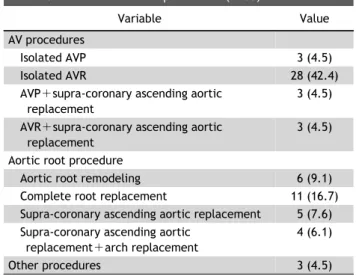
Table 2. Previous aortic root procedures (N=66)

Variable Value

AV procedures

Isolated AVP 3 (4.5)

Isolated AVR 28 (42.4)

AVP +supra-coronary ascending aortic replacement

3 (4.5)

AVR +supra-coronary ascending aortic replacement

3 (4.5)

Aortic root procedure

Aortic root remodeling 6 (9.1)

Complete root replacement 11 (16.7)

Supra-coronary ascending aortic replacement 5 (7.6) Supra-coronary ascending aortic

replacement +arch replacement

4 (6.1)

Other procedures 3 (4.5)

Values are presented as number (%).

AVP, aortic valve repair; AVR, aortic valve replacement.

early and late outcomes of redo-ARR in our institution.

Methods

From the institutional prospective cardiac surgical database, we identified 66 consecutive adult patients (>17 years old) who underwent reoperative complete ARR following surgery for the aortic valve (AV) or an aortic root procedure between April 1995 and June 2015. The ARR was defined by complete replacement of the AV and aortic sinus by valved conduits using mechanical protheses, bio-prostheses, or a homograft.

All subject patients underwent coronary reattachment to a new aortic sinus using the coronary button tech- nique. Retrospective medical chart reviews were con-

ducted to collect information on prior aortic root surgeries, baseline demographic and clinical profiles, details on redo-ARR surgeries, and postoperative out- comes. Major early adverse events included stroke, renal failure that required new dialysis, bleeding con- trol surgery, pericardial effusion, surgical site wound problems, and permanent pacemaker insertion. Primary outcomes of interest were death and valve-related complications that included hemorrhagic complica- tions secondary to anticoagulation therapy, throm- boembolic events, requirement for surgery in the op- erated aortic root, and infective endocarditis [4].

Emergency surgery was defined as an operation before the beginning of the next working day after the decision to operate based on the new EuroSCORE II guidelines. Early death was defined as occurring within 30 days following surgery or during index hospitalization.

Categorical variables were expressed as percen-

tages or frequencies, and continuous variables were

expressed as mean±standard deviation or median

with range. Kaplan-Meier curves were formulated to

delineate the overall survival and event-free survival

rates. Differences in these rates between the groups

were assessed using the log-rank test. To identify the

predictors of primary adverse outcomes (death and

valve-related complications), Cox-proportional hazard

models were used. Covariates listed in Tables 1, 2,

and 3 were evaluated in univariable Cox models, and

those with p-values of less than 0.1 in the univariable

(3)

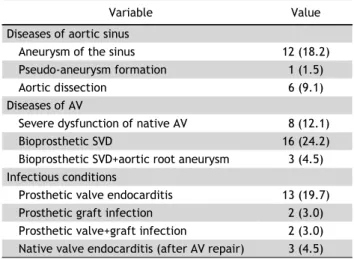
Table 3. Indications of redo-aortic root replacement

Variable Value

Diseases of aortic sinus

Aneurysm of the sinus 12 (18.2)

Pseudo-aneurysm formation 1 (1.5)

Aortic dissection 6 (9.1)

Diseases of AV

Severe dysfunction of native AV 8 (12.1)

Bioprosthetic SVD 16 (24.2)

Bioprosthetic SVD+aortic root aneurysm 3 (4.5) Infectious conditions

Prosthetic valve endocarditis 13 (19.7)

Prosthetic graft infection 2 (3.0)

Prosthetic valve+graft infection 2 (3.0) Native valve endocarditis (after AV repair) 3 (4.5) Values are presented as number (%).

AV, aortic valve; SVD, structural valve dysfunction.

Table 4. Operative profiles and outcomes

Variable Value

Types of implanted aortic valves

Mechanical 49 (74.2)

Homograft 8 (12.1)

Bioprosthetic 9 (13.6)

Concomitant procedures

Arch repair 14 (21.2)

Hemi arch 9 (13.6)

Total arch 5 (7.6)

Mitral valve surgery 6 (9.0)

Repair 3 (4.5)

Replacement 3 (4.5)

Tricuspid repair 1 (1.5)

Coronary artery bypass grafting 9 (13.6) Cardiopulmonary bypass time (min) 274.8±110.9

Cardiac ischemic time (min) 164.0±50.0

Total circulatory arrest 25 (37.9)

Values are presented as number (%) or mean±standard deviation.

models were candidates for multivariable Cox-hazard models. The multivariable analyses involve a step- wise backward elimination technique and variables with p-values of less than 0.1 were used in the final Cox-hazard model.

Statistical analyses were performed using IBM SPSS Statistics for Windows ver. 21.0 software (IBM Co., Armonk, NY, USA). This study was approved by the Asan Medical Center Ethics Committee/Review Board (S2016-1344-0001), who waived the need for patient consent.

Results

1) Baseline characteristics

The mean age of subject patients in this study was 45.2±12.8 years (range, 35.3 to 55 years) and 29 cases (43.9%) were emergency procedures. Fifteen patients (22.7%) presented with systemic vasculitis syndrome such as Behcet disease (n=9) and Takayasu arteritis (n=6). Among the patients, 53 patients (80.3%) had undergone 1 previous cardiac operation, 11 (16.7%) had undergone 2, and 2 (3.0%) had undergone 3 or more operations. Further details on baseline charac- teristics of patients are shown in Table 1.

The most common prior surgical procedure was an isolated aortic valve replacement (AVR; n=28, 42.4%), followed by a complete ARR (n=11, 16.7%), and aort- ic root remodeling (n=6, 9.1%). Other previous aortic root procedures are further detailed in Table 2.

Indications for the redo-ARR were aneurysm (n=12), pseudoaneurysm (n=1), or dissection (n=6) of the re- sidual native aortic sinus in 19 patients (28.8%), na- tive AV dysfunction in 8 patients (12.1%), structural dysfunction of an implanted bioprosthetic AV in 19 patients (28.8%), and infection of a previously replaced AV or previously placed proximal aortic grafts in 30 patients (45.5%) (Table 3). The mean interval be- tween previous aortic root procedures and index re- do-ARR was 65.3±14.7 months.

Most patients received mechanical valved-conduits for redo-ARR (74.2%) while homograft and biopro- sthetic valved conduits were used in 12.1% and 13.6% of patients, respectively. Concomitant arch re- pair was undertaken in 14 patients (21.2%), while an additional 11 patients required circulatory arrest during redo-ARR with a mean duration of 17.4±4.2 minutes. Details of concomitant cardiac procedures, and durations of cardiopulmonary bypass (CPB) and cardiac ischemia during procedures are summarized in Table 4.

2) Outcomes

There were 3 early deaths (4.5%, all of which oc-

curred in emergency operations), in which the in-

dications for redo-ARR were residual aortic dis-

section in which the indications for redo-ARR were

as follows; a dissection of residual native aorta in 1

(4)

Table 5. Adverse outcomes (N=66)

Variable Value

Early death 3 (4.5)

No. of patients with early major morbidity 18 (27.3)

Stroke 4 (6.1)

Requirement for new dialysis 3 (4.5)

Surgical bleeding requiring re-exploration 8 (12.1)

Pericardial effusion 1 (1.5)

Surgical site wound problem 1 (1.5)

Permanent pacemaker implantation 3 (4.5) Requirement for extracorporeal membrane

oxygenation

3 (4.5)

Multiple organ failure 2 (3.0)

Prolonged ventilator support ( >24 hr) 9 (13.6)

Late death 14 (21.2)

Secondary outcomes

Anticoagulation-related bleeding 5 (7.6)

Aortic root reoperation 1 (1.5)

Infective endocarditis 3 (4.5)

All clinical endpoints 20 (30.3)

Values are presented as number (%).

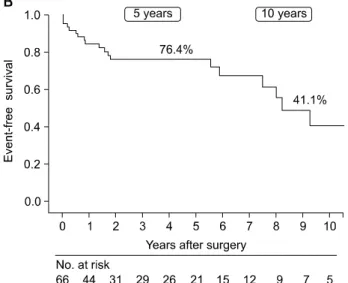
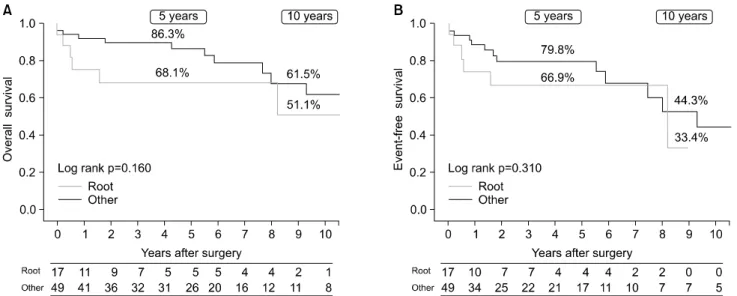
Fig. 1. Kaplan-Meier plots for (A) overall and (B) event-free survival.

patient and infective endocarditis of prosthetic AV in 2 patients. No patients died following elective pro- cedures. The former mortality case received redo-ARR due to severe aortic regurgitation caused by residual aortic dissection in the native aortic root followed by supra-coronary aortic replacement in the setting of acute type A aortic dissection. The patient died of multi-organ failure despite redo-ARR and postoperative

extracorporeal membrane oxygenation support. The latter two mortality cases required emergency oper- ations due to aggravation of infective endocarditis in prosthetic AV. However, septic shock followed by multi-organ failure led to death in these two patients.

Overall, 18 patients (27.3%) experienced major early complications, details of which are shown in Table 5.

During follow-up (median, 54.65 months; quartile 1–3, 17.93 to 95.71 months), there were 14 late deaths (21.2%), 9 valve-related complications including re- operation of the aortic root in 1 patient, infective en- docarditis in 3 patients, and hemorrhagic events in 5 patients (Table 5). There was 1 case of reoperation of the reoperated aortic root: trido Bentall operation was conducted to treat recurred infective endocarditis.

Overall survival at 5 and 10 years were 81.5%±

5.1% and 57.6%±9.3%, respectively. Event-free sur- vival rates at 5 and 10 years were 76.4%±5.4% and 41.1%±11.7%, respectively (Fig. 1).

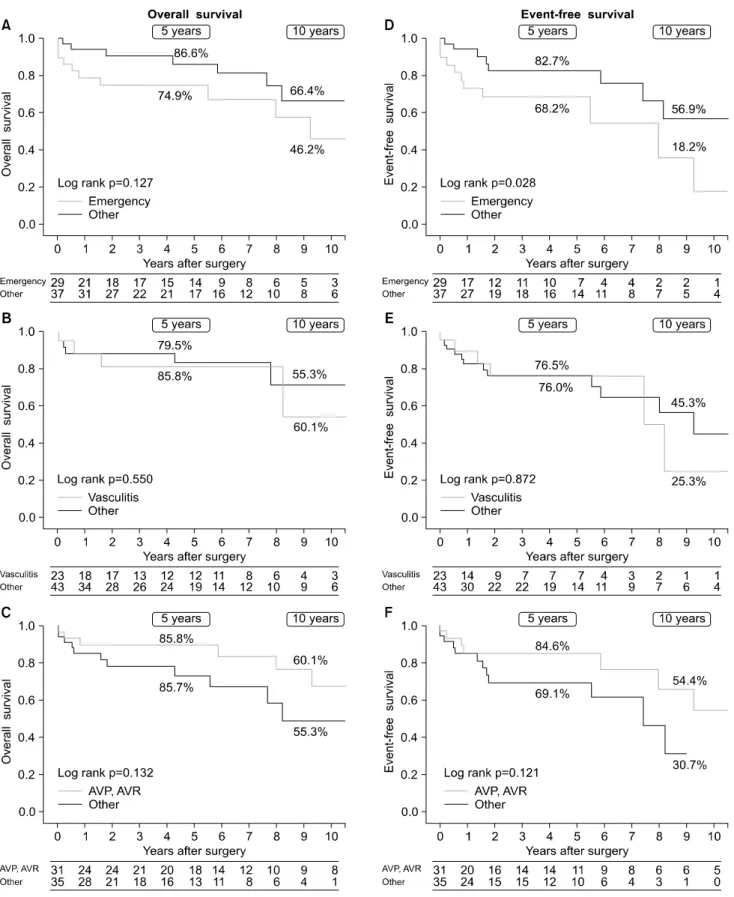
Five-year survival and event-free survival rates ac- cording to the baseline presentations were as fol- lows: (1) emergency group (n=29);, 74.9%±8.2%, 68.2%±9.8%, (2) vasculitis (Behcet, Marfan, Takaya- su) group (n=23); 85.8%±7.6%, 76.5%±11.5%, and (3) AV only AVP or AVR (AVP: aortic valve repair, AVR: Aortic valve replacement) group (n=31); 85.8%±

9.4%, 84.6%±10.0%, respectively (Fig. 2). There was

no statistical difference in overall survival according

to the baseline settings of the patients (Fig. 2). The

emergency group had a lower event-free survival

(5)

Fig. 2. Kaplan-Meier plots for overall survival in (A) emergency, (B) vasculitis, and (C) AVP or AVR groups vs. other groups. Kaplan-Meier

plots for event-free survival in (D) emergency, (E) vasculitis, and (F) AVP or AVR groups vs. other groups. AVP, arginine vasopressin; AVR,

aortic valve replacement.

(6)

Fig. 3. Kaplan-Meier plots for (A) overall and (B) event-free survival in previous ARR followed redo-ARR patients vs. other patients. ARR, aortic root replacement.

rate than that of non-emergency group (p-value=

0.028).

Among 66 patients, 17 had undergone previous ARR either by valve-sparing or by valve-replacement, followed by redo-ARR. There were no significant dif- ferences between those who had undergone ARR and those who had undergone other procedures in over- all survival (p=0.160) and event-free survival (p=0.310) (Fig. 3).

On multivariable Cox-proportional hazard models, emergency surgery (hazard ratio [HR], 2.80; 95%

confidence interval [CI], 1.12 to 7.00; p=0.027) was the only significant and independent predictor of the major adverse outcomes (death and valve-related complications) while the baseline hemoglobin level was a marginally significant factor associated with the adverse outcomes (HR, 0.80; 9 5% CI, 0.63 to 1.03 by 1 g/dL increment; p=0.079).

Discussion

Due to the progress in surgical techniques, reoper- ation in cardiac surgery is increasingly performed [8]. Re-operative aortic root, ascending aorta, or both are challenging reoperations associated with high mortality rate [5-7]. Due to great diversity among these operations, however, the reported mortality and morbidity have been highly variable among studies. In addition, there have been only a few stud-

ies that specifically evaluated clinical outcomes of re- do-ARR. The present study aimed to evaluate a ho- mogeneous cohort who underwent redo-ARR follow- ing AV or aortic root procedures.

Although redo-ARR had been reported to carry a high postoperative mortality in older studies, more recent series have demonstrated early mortality of 3% to 7% [9,10]. Our data showed similar outcomes with an in-hospital mortality rate of 4.5% (n=3).

Interestingly, these outcomes are very similar to those for an elective primary ARR procedure, which varies from 4.5% to 7.5% [11,12].

As the number of repeat-sternotomies increases,

surgical risks of cardiac procedures are also repor-

tedly increased with a strong positive association. In

this study, the number of repeat sternotomies was

not associated with any early or late adverse out-

comes. Of note, 13 patients (19.7%) had more than

three cardiac operations in this study. Safe re-entry

into the chest is thought to be the most important

factor for favorable outcomes [9]. Advances in surgi-

cal strategies for re-exploration of the sternum pro-

moted by the use of modern computed tomography

imaging are believed to have contributed favorable

results during re-entry into the chest [9,13,14]. Once

high-risk patients have been identified with CT, uti-

lization of CPB through other sites like the femoral

or axillary vessels could be an option for safe re-en-

try into the sternum.

(7)

Previous studies identified risk factors of in-hospi- tal mortality, which were age of the patient (≥75 years), preoperative New York Heart Association fun- ctional class IV, emergency presentation, prior car- diac surgery, unplanned coronary artery bypass graft- ing, prolonged CPB time, and postoperative renal fail- ure [5-7,9,10,13-17]. In our study, emergency surgery was the only significant and independent predictor of the primary adverse outcomes (HR, 2.80; 9 5% CI, 1.12 to 7.00; p=0.027). Among 66 patients, 29 pa- tients had redo-ARR in emergency presentation. In subgroup analysis, event-free survival rate was sig- nificantly lower (log rank p-value=0.028) in the eme- rgency group than in that of the non-emergency group.

Due to very limited numbers of early mortality cases (n=3 out of 66), as well as late adverse out- comes, studies on a larger cohort are needed to de- termine risk factors of redo-ARR.

In the present study 3 patients died in the early period, of which 2 patients died of acute prosthetic valve endocarditis (PVE). Both patients had under- gone a previous ARR followed by the current re- do-ARR due to acute PVE. A PVE is known as a cata- strophic complication, which carries operative mortal- ity of 25% to 60% [18,19 ]. In this study, 13 patients presented with PVE and 2 of them died, constituting 15.4% of the early mortality rate for PVE, which seemed encouraging considering the challenging na- ture of such a condition.

1) Limitations

This study has several major limitations including the retrospective nature of the analyses and the small sample size. In addition, results are those of a high-vol- ume tertiary academic center; therefore, they may not be generalizable to other settings.

2) Conclusions

Despite technical challenges and a high rate of emergency conditions in patients requiring redo-ARR, early and late outcomes following the procedure were acceptable in these patients.

Conflict of interest

No potential conflict of interest relevant to this ar- ticle was reported.

Acknowledgments

This study was supported by a Grant of the Sam- sung Vein Clinic Network (Daejeon, Anyang, Cheong- ju, Cheonan; Fund No.KTCS04-051).

References

1. Bentall H, De Bono A. A technique for complete replace- ment of the ascending aorta. Thorax 1968;23:338-9.

2. Etz CD, von Aspern K, Girrbach FF, et al. Long-term surviv- al after composite mechanical aortic root replacement: a consecutive series of 448 cases. J Thorac Cardiovasc Surg 2013;145(3 Suppl):S41-7.

3. Zehr KJ, Orszulak TA, Mullany CJ, et al. Surgery for aneur- ysms of the aortic root: a 30-year experience. Circulation 2004;110:1364-71.

4. Sioris T, David TE, Ivanov J, Armstrong S, Feindel CM.

Clinical outcomes after separate and composite replace- ment of the aortic valve and ascending aorta. J Thorac Cardiovasc Surg 2004;128:260-5.

5. Schepens MA, Dossche KM, Morshuis WJ. Reoperations on the ascending aorta and aortic root: pitfalls and results in 134 patients. Ann Thorac Surg 1999;68:1676-80.

6. Dougenis D, Daily BB, Kouchoukos NT. Reoperations on the aortic root and ascending aorta. Ann Thorac Surg 1997;64:

986-92.

7. Kirsch EW, Radu NC, Mekontso-Dessap A, Hillion ML, Loisance D. Aortic root replacement after previous surgical intervention on the aortic valve, aortic root, or ascending aorta. J Thorac Cardiovasc Surg 2006;131:601-8.

8. Vallely MP, Hughes CF, Bannon PG, Hendel PN, French BG, Bayfield MS. Composite graft replacement of the aortic root after previous cardiac surgery: a 20-year experience.

Ann Thorac Surg 2000;70:851-5.

9. Raanani E, David TE, Dellgren G, Armstrong S, Ivanov J, Feindel CM. Redo aortic root replacement: experience with 31 patients. Ann Thorac Surg 2001;71:1460-3.

10. Szeto WY, Bavaria JE, Bowen FW, et al. Reoperative aortic root replacement in patients with previous aortic surgery.

Ann Thorac Surg 2007;84:1592-8.

11. Varrica A, Satriano A, de Vincentiis C, et al. Bentall oper- ation in 375 patients: long-term results and predictors of death. J Heart Valve Dis 2014;23:127-34.

12. Gott VL, Gillinov AM, Pyeritz RE, et al. Aortic root replace- ment. Risk factor analysis of a seventeen-year experience with 270 patients. J Thorac Cardiovasc Surg 1995;109:536-44.

13. Di Bartolomeo R, Berretta P, Petridis FD, et al. Reoperat- ive surgery on the thoracic aorta. J Thorac Cardiovasc Surg 2013;145(3 Suppl):S78-84.

14. Malvindi PG, van Putte BP, Heijmen RH, Schepens MA,

Morshuis WJ. Reoperations on the aortic root: experience

(8)

in 46 patients. Ann Thorac Surg 2010;89:81-6.

15. David TE, Feindel CM, Ivanov J, Armstrong S. Aortic root replacement in patients with previous heart surgery. J Card Surg 2004;19:325-8.

16. Jault F, Nataf P, Rama A, et al. Chronic disease of the as- cending aorta. Surgical treatment and long-term results. J Thorac Cardiovasc Surg 1994;108:747-54.

17. Estrera AL, Miller CC 3rd, Porat E, et al. Determinants of early and late outcome for reoperations of the proximal

aorta. Ann Thorac Surg 2004;78:837-45.

18. Watanabe G, Haverich A, Speier R, Dresler C, Borst HG.

Surgical treatment of active infective endocarditis with paravalvular involvement. J Thorac Cardiovasc Surg 1994;

107:171-7.

19. Moon MR, Miller DC, Moore KA, et al. Treatment of endo- carditis with valve replacement: the question of tissue versus mechanical prosthesis. Ann Thorac Surg 2001;71:

1164-71.

수치

Table 1. Baseline characteristics
Table 4. Operative profiles and outcomes
Fig. 1. Kaplan-Meier plots for (A) overall and (B) event-free survival.
Fig. 2. Kaplan-Meier plots for overall survival in (A) emergency, (B) vasculitis, and (C) AVP or AVR groups vs
+2

참조

관련 문서

This finding could be caused by diseased myocardium such as LVH, which is more easily influenced by afterload increase associated with aortic stiffness. Kaplan-Meier survival

Second, we removed the previous graft, debrided the abscess, and performed an in situ re-replacement of the ascending aorta, aortic arch, and proximal descending thoracic aorta,

Changes in the degree of paravalvular aortic leakage (p=0.153). Since all patients had functional MR, the extent of MR was expected to de- crease after aortic stenosis

Because aortic or femoral artery cannulation and cross-clamping would have a high risk of stroke owing to severe calcification of the ascending aorta and

Background: This study evaluated the early and long-term outcomes of surgical aortic valve replacement (AVR) in elderly patients in the era of transcatheter

This retrospective study analyzed the outcomes of aortic diameter, including aortic root, ascending aor- ta, and proximal arch diameters, after aortic wrapping during aortic

Of the 143 patients, we excluded 22 patients with prior aortic dissection, 4 patients who underwent ARR under the age of 18 years, 11 patients who had a change in β-blocker or

In this case report, we present a patient with symptomatic severe aortic stenosis and previous mechanical mitral valve replacement who was successfully treated with TAVI using