INTRODUCTION
Alcohol use disorders tend to co-occur with other psychi- atric disorders much more frequently than would be expect- ed by chance (1-5). The most commonly reported comorbid disorders are other substance use disorders (2, 4, 6), nicotine addiction (7), antisocial personality disorder (2, 4, 6, 8), mood disorders (2, 4-6, 9), and anxiety disorders (2, 9).
The association between alcohol use disorders with other psychiatric disorders is important from both a research and a therapeutic point of view. Patients with alcohol use disor- ders combined with other psychiatric disorders are known to have a poorer clinical course (10, 11). To explain the mecha- nisms of these comorbidity disorders, a causal hypothesis and a shared etiologic model have received some attention. In causal hypotheses, alcohol disorders may cause other psychi- atric disorders and problems (12, 13), or vice versa, i.e. alco- hol is secondly used to self-medicate symptoms of other psy- chiatric disorders (14, 15). In shared etiologic model, com- mon factors may contribute to the manifestation of alcoholism and other psychiatric disorders (16-19). The heterogeneity of these relationships and the characteristics of alcoholism itself make it difficult to identify a single mechanism of comor- bidity (20).
In Korea, there has been only one nationwide epidemio-
logic survey of psychiatric disorders (21, 22), in which the Diagnostic Interview Schedule (DIS) (23), a standardized diagnostic instrument, was used to identify psychiatric cases in the community. In cross-cultural comparison study, it was found that both lifetime prevalence and the male-to-female ratio of alcohol abuse/dependence in Korea were the highest among several countries, at 22.4% (male 44%, female 2.4%) and 18.3, respectively (24). Generally, in alcohol use disorders, the higher the prevalence, the lower is the male-to-female ratio (24). The Korean findings are inconsistent with this pattern (24). In addition to the highest prevalence, this un- usual male-to-female ratio in Korea has attracted interna- tional attention. In regard to the comorbidity of alcohol use disorders in Korea, the relative risks have been presented in a previous paper (25). This analysis, however, has a number of limitations in terms of interpreting the characteristics of Korean alcoholics combined with other psychiatric disorders, specifically: 1) the exclusion criteria were not applied when diagnosing disorders; 2) the odds ratio was not determined by logistic regression analyses; 3) the large rate difference between male and female might have obliterated gender-spe- cific results.
After applying exclusion criteria to the above nationwide epidemiological data, we performed further analysis to clari- fy the characteristics of the comorbidity pattern of Korean
Maeng Je Cho, Bong-Jin Hahm*, Tongwoo Suh�, Guk-Hee Suh�, Seong-Jin Cho*, Chung Kyoon Lee
Department of Psychiatry, Seoul National University College of Medicine, Seoul; Department of Psychiatry*, Gachon Medical School, Gil Medical Center, Inchon; Korean Institute for Health and Social Affairs�, Seoul; Department of Psychiatry�, Hankang Sacred Heart Hospital, College of Medicine, Hallym University, Seoul, Korea Received : 2 November 2001 Accepted : 28 January 2002 Address for correspondence Maeng Je Cho, M.D.
Department of Psychiatry, Seoul National University College of Medicine, 28 Yongon-dong, Chongro- gu, Seoul 110-744, Korea
Tel : +82.2-760-3155, Fax : +82.2-744-7241 E-mail : [email protected]
*This study was supported by a 97-Grant from the Korean Academy of Medical Sciences, KMA.
236
Comorbid Mental Disorders Among the Patients with Alcohol Abuse and Dependence in Korea
This study investigated the patterns of alcohol disorder comorbidity with other psy- chiatric disorders, using Korean nationwide epidemiological data. By two-stage cluster sampling, 5,176 adult household residents of Korea were interviewed using the Korean version of the Diagnostic Interview Schedule. Psychiatric disor- ders strongly associated with alcohol disorders were, other drug abuse or depen- dence, major depression, simple phobia, antisocial personality disorder, tobacco dependence, and pathological gambling. Male alcoholics had a tendency to begin with tobacco dependence, and some male pathological gamblers first had alco- hol disorders. The presence of comorbid psychiatric disorders was associated with a more severe form and the later onset of alcohol disorders, and associated with help-seeking for alcohol abuse/dependence.
Key Words : Alcoholism; Comorbidity; Mental Disorders; Epidemiology
alcoholics. The points of interest, therefore, in this study were as follows: first, to examine the magnitude the comorbidity of alcohol disorders with other psychiatric disorders, accord- ing to gender; second, to determine the temporal relation- ships in the patterns of onset of comorbid disorders; third, to investigate the impact of comorbidity on the age of onset, duration, and the number of alcohol disorder symptoms;
fourth, to examine how comorbidity influences help-seek- ing behavior for alcohol or other psychiatric disorders.
METHODS
Nationwide epidemiological data (21, 22) were collected from community households selected by two-stage cluster sampling in 1984. All family members in the household, aged between 18 to 65, and those who had lived in a household for more than three months, were interviewed. A total of 5,176 respondents completed the interview (response rate 83.5%). The validated Korean version of the Diagnostic Inter- view Schedule (K-DIS) (21) was administered to each sub- ject by trained lay interviewers. Detail methods have been described in the previous paper (21). The DIS is a standard- ized, structured diagnostic instrument for psychiatric epi- demiologic study, generating 44 DSM-III psychiatric diag- noses and associated information.
In previous reports of this survey, the analysis of the data was committed by Dr. Yamamoto in UCLA (26). For this study, we re-analyzed the data used for generating diagnosis after applying exclusion criteria. We re-checked each variable to ensure legitimate values were entered, and if not, reason-
able corrections were made. Sixteen of the 5,176 respondents were excluded due to inappropriate data records. Sample weight was calculated by sex, age (five age groups), and area (Seoul and rural). It was adjusted to reflect the 1980 census data. Diagnostic scoring and statistical analyses were per- formed with SAS win 6.12 software. In the case of the life- time prevalence rate of alcohol disorders, a minimum of two symptoms was necessary, and there was no requirement that they occurred simultaneously. Six-month and one-year preva- lences of alcohol disorders were defined in terms of the appear- ance of at least one symptom, given that full criteria had been met at some time. The age of onset of disorders was defined as the age at which the first symptom appeared, and recency as the age of the most recent symptom. Duration was defined as the period between these two. The severity of alcohol dis- orders was based on symptom counts.
Logistic regression analyses were used to calculate the odds ratios, controlling for demographic variables (27). The mag- nitude of comorbidity, the temporal relationship of the age of onset between alcohol disorders and comorbid psychiatric disorders, impact of comorbidity on the age of onset, dura- tion, and severity of alcohol disorders, and health service uti- lization were evaluated.
RESULTS
Comorbid rates of alcohol disorders with other psychi- atric disorders
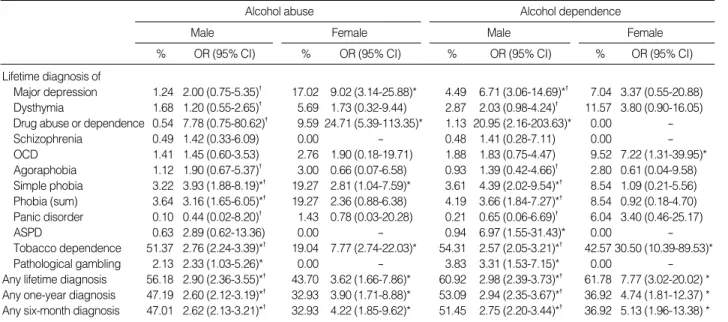
Table 1 shows comorbid rates of alcohol use disorders with
Lifetime diagnosis of
Major depression 1.24 2.00 (0.75-5.35)� 17.02 9.02 (3.14-25.88)* 4.49 6.71 (3.06-14.69)*� 7.04 3.37 (0.55-20.88) Dysthymia 1.68 1.20 (0.55-2.65)� 5.69 1.73 (0.32-9.44) 2.87 2.03 (0.98-4.24)� 11.57 3.80 (0.90-16.05) Drug abuse or dependence 0.54 7.78 (0.75-80.62)� 9.59 24.71 (5.39-113.35)* 1.13 20.95 (2.16-203.63)* 0.00 -
Schizophrenia 0.49 1.42 (0.33-6.09) 0.00 - 0.48 1.41 (0.28-7.11) 0.00 -
OCD 1.41 1.45 (0.60-3.53) 2.76 1.90 (0.18-19.71) 1.88 1.83 (0.75-4.47) 9.52 7.22 (1.31-39.95)*
Agoraphobia 1.12 1.90 (0.67-5.37)� 3.00 0.66 (0.07-6.58) 0.93 1.39 (0.42-4.66)� 2.80 0.61 (0.04-9.58) Simple phobia 3.22 3.93 (1.88-8.19)*� 19.27 2.81 (1.04-7.59)* 3.61 4.39 (2.02-9.54)*� 8.54 1.09 (0.21-5.56) Phobia (sum) 3.64 3.16 (1.65-6.05)*� 19.27 2.36 (0.88-6.38) 4.19 3.66 (1.84-7.27)*� 8.54 0.92 (0.18-4.70) Panic disorder 0.10 0.44 (0.02-8.20)� 1.43 0.78 (0.03-20.28) 0.21 0.65 (0.06-6.69)� 6.04 3.40 (0.46-25.17)
ASPD 0.63 2.89 (0.62-13.36) 0.00 - 0.94 6.97 (1.55-31.43)* 0.00 -
Tobacco dependence 51.37 2.76 (2.24-3.39)*� 19.04 7.77 (2.74-22.03)* 54.31 2.57 (2.05-3.21)*� 42.57 30.50 (10.39-89.53)*
Pathological gambling 2.13 2.33 (1.03-5.26)* 0.00 - 3.83 3.31 (1.53-7.15)* 0.00 -
Any lifetime diagnosis 56.18 2.90 (2.36-3.55)*� 43.70 3.62 (1.66-7.86)* 60.92 2.98 (2.39-3.73)*� 61.78 7.77 (3.02-20.02) * Any one-year diagnosis 47.19 2.60 (2.12-3.19)*� 32.93 3.90 (1.71-8.88)* 53.09 2.94 (2.35-3.67)*� 36.92 4.74 (1.81-12.37) * Any six-month diagnosis 47.01 2.62 (2.13-3.21)*� 32.93 4.22 (1.85-9.62)* 51.45 2.75 (2.20-3.44)*� 36.92 5.13 (1.96-13.38) *
Alcohol abuse Alcohol dependence
Table 1.Comorbidity of alcohol abuse/dependence with other psychiatric disorders
Multiple logistic regression analyses were performed using other psychiatric disorders as the dependent variable and alcohol abuse/dependence and age as the independent variable. OR: odds ratio, CI: confidence interval, OCD: obsessive compulsive disorder, ASPD: antisocial personality disorder.
*significant OR, p<0.05, �significant difference between male and female, p<0.05.
Male Female Male Female
% OR (95% CI) % OR (95% CI) % OR (95% CI) % OR (95% CI)
overall and individual psychiatric disorders. Overall, more than half of lifetime alcohol use disorders were comorbid with any other lifetime psychiatric disorder. Alcohol depen- dence, in general, showed a greater magnitude of comorbid- ity with other psychiatric disorders than alcohol abuse. Odds ratios were significantly larger for females than for males, and this trend was also observed for six-month and one-year diag- noses.
Other drug abuse/dependence, major depression, simple phobia, antisocial personality disorder, tobacco dependence, and pathological gambling were strongly associated with alcohol use disorders. Most of the disorders, except simple phobia and agoraphobia, showed a stronger association with alcohol use disorders in females than in males. The gender differences of these associations were particularly large for major depression, drug abuse/dependence, and tobacco depen- dence.
Temporal ordering of onset of alcohol disorders and comorbid psychiatric disorders
The order of onset time of alcohol disorders in relation to other comorbid psychiatric disorders was examined (Table 2).
Tobacco dependence usually preceded the onset of alcohol
use disorders in males. Phobias and obsessive compulsive disorder also tended to precede alcohol use disorders, while pathological gambling tended to occur later than alcohol disorders for males. No remarkable temporal relationships were observed between alcohol disorders and major depres- sion and drug abuse/dependence.
Comorbidity and age of onset, duration, and severity of alcohol disorders
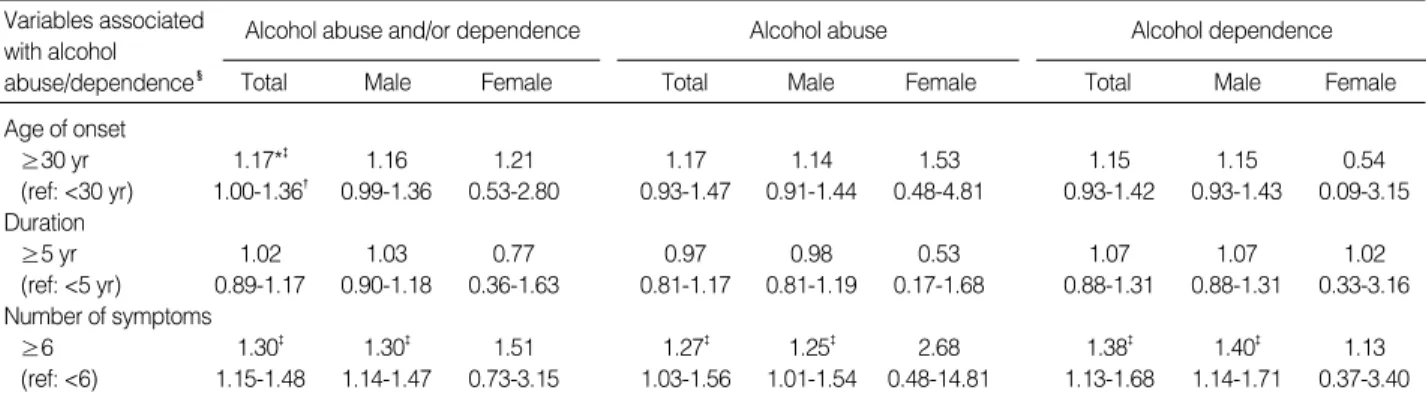
As shown in Table 3, the presence of comorbid psychiatric disorders was associated with the later onset of alcohol disor- ders. There was no consistent or significant impact of comor- bidity upon the duration of alcohol disorders. Symptoms of alcohol disorders were more severe in cases that were associ- ated with other psychiatric disorders.
Comorbidity and help seeking
To see the effect of the presence of other comorbid disor- ders on help seeking behavior, six-month prevalences were used. Tables 4 and 5 show the impact of comorbidity on help- seeking by patients for alcohol disorders and other psychi- atric disorders. Presence of comorbid psychiatric disorders,
595 1 2 3 515 9 0 9 35 1 2 1 23 0 0 0 1,170 11 4
599 1 0 0 527 3 0 2 37 0 0 0 25 0 0 0 1,188 4 0
593 1 0 5 526 3 0 5 38 0 0 1 23 1 0 1 1,180 5 0
584 3 2 8 517 5 2 7 33 0 1 4 23 0 0 1 1,157 8 5
313 17 19 189 239 15 18 242 32 2 1 4 14 0 2 6 598 34 41
590 6 3 3 514 14 2 4 40 0 0 0 25 0 0 0 1,169 20 5
Major depression
Drug abuse or dependence Obsessive compulsive disorder Phobias (sum)
Tobacco dependence Pathological gambling
Male Female
Table 2.Temporal relationship of age of onset between alcohol abuse (AA)/dependence (AD) and comorbid psychiatric disorders
PU: No comorbid psychiatric disorder, i.e. AA or AD only, PR: AA or AD occur antecedent to comorbid psychiatric disorder, SA: AA or AD and comor- bid psychiatric disorder co-occur at the same year, SE: Comorbid psychiatric disorder occur antecedent to AA or AD.
AA (N) Comorbid psychiatric
disorders
Total (N)
AD (N) AA (N) AD (N)
PU PR SA SE PU PR SA SE PU PR SA SE PU PR SA SE PU PR SA
Age of onset
≥30 yr 1.17*� 1.16 1.21 1.17 1.14 1.53 1.15 1.15 0.54
(ref: <30 yr) 1.00-1.36� 0.99-1.36 0.53-2.80 0.93-1.47 0.91-1.44 0.48-4.81 0.93-1.42 0.93-1.43 0.09-3.15 Duration
≥5 yr 1.02 1.03 0.77 0.97 0.98 0.53 1.07 1.07 1.02
(ref: <5 yr) 0.89-1.17 0.90-1.18 0.36-1.63 0.81-1.17 0.81-1.19 0.17-1.68 0.88-1.31 0.88-1.31 0.33-3.16 Number of symptoms
≥6 1.30� 1.30� 1.51 1.27� 1.25� 2.68 1.38� 1.40� 1.13
(ref: <6) 1.15-1.48 1.14-1.47 0.73-3.15 1.03-1.56 1.01-1.54 0.48-14.81 1.13-1.68 1.14-1.71 0.37-3.40
Alcohol abuse and/or dependence Alcohol abuse Alcohol dependence
Table 3.Effect of comorbid psychiatric disorders on age of onset, duration, and number of symptoms of alcohol abuse/dependence
�Multiple logistic regression analyses were performed using each variable associated with alcohol abuse/dependence as the dependent variable and comorbid psychiatric disorder, sex, age, and marital status as the independent variable.
*First row of each cell indicates value of odds ratio, �Second row of each cell indicates 95% confidence interval, �p<0.05.
Total Variables associated with alcohol
abuse/dependence� Male Female Total Male Female Total Male Female
though statistically non-significant, absolutely increased the odds of help-seeking for alcohol disorders. On the other hand, an alcohol disorder patient's help-seeking for other comorbid psychiatric disorders was very weak. Alcohol abusers were less likely to seek help for other psychiatric disorders, whereas alcohol dependence was weakly associated with increased help-seeking for other psychiatric disorders.
DISCUSSION
In this study, the number of cases in several disorders was insufficient to analyze the comorbidity of alcohol disorders.
Disorders with a very low prevalence, such as schizophreni- form disorder and mania, were dropped from the statistical analyses. This limitation was more prominent in the female alcoholics. Other limitations were the onset and recency of each disorder were determined by retrospective reports, and those in institutions were not included in this survey.
Alcohol disorders were often associated with other psychi- atric disorders. Generally, alcohol dependence had stronger associations than alcohol abuse with other disorders, and the odds ratios were larger for females than for males. These find- ings are consistent with other studies (2, 4). In terms of the individual comorbid disorders, while the findings were con- sistent in many ways with the prior article on this topic, the pattern of comorbidity showed differences according to sex and the type of alcohol disorder (alcohol abuse and depen- dence).
Although the present study is limited to some extent by the insufficient number of cases, some patterns of association between alcohol disorders and other disorders were observed.
Many male alcoholics tended to begin with tobacco, and some of these might succeed to gambling. These findings suggest the progression of addictive behavior in some risk group.
Although attention has been focused on the role of anxiety disorders in alcohol or substance disorders, in fact the onset of anxiety disorders was found to be more likely to precede that of alcohol or substance disorders (6, 20, 28), the present study produced no confirmatory findings.
The impact of comorbidity on the later onset of alcohol disorders may be explained through the comorbidity mech- anisms. Since several psychiatric disorders begin later than alcohol disorders, alcohol disorders caused by other psychi- atric disorders may have a later onset than non-comorbid alco- hol disorders. Additionally, it will take some time to progress from primary psychiatric disorders to secondary alcohol dis- orders. It is also possible that alcohol disorders in shared eti- ologic model may be expressed later than non-comorbid alco- hol disorders.
Although there was no statistical significance, the impact of comorbidity on the duration of alcohol disorders was het- erogeneous with respect to sex and the type of alcohol disor- der. This result suggests the heterogeneity of the impact of comorbidity on the duration of alcohol disorders or it could be merely a result of the insufficient number of cases.
Our finding that the presence of comorbid psychiatric dis- orders was associated with increases in the symptoms of alco- hol disorders is consistent with that of a previous study (9), and this impact was more prominent in females. Consider- ing the higher comorbidity rate and symptom count among females than males, it would appear that alcohol disorders are more complicated in females than males, as suggested by Helzer et al. (4, 29).
1.36* 1.347 1.45 1.38 1.30 1.30
0.98-1.89� 0.96-1.86 - 0.86-2.44 0.82-2.33 - 0.85-1.98 0.85-1.99 -
0.064� 0.084 0.159 0.232 0.234 0.229
Table 4.Effect of six-month comorbid psychiatric disorder on help-seeking for six-month alcohol abuse/dependence
Multiple logistic regression analyses were performed using help-seeking for alcohol abuse/dependence as the dependent variable and comorbid psy- chiatric disorders, sex, age, and marital status as the independent variable. *First row of each cell indicates value of odds ratio, �Second row of each cell indicates 95% confidence interval, �Third row of each cell indicates p-value.
Total Male Female Total Male Female Total Male Female
Alcohol abuse and/or dependence Alcohol abuse Alcohol dependence
0.98* 0.93 0.71 0.62 1.13 1.11
0.74-1.28� 0.70-1.23 - 0.44-1.13 0.36-1.07 - 0.84-1.54 0.81-1.51 -
0.860� 0.604 0.151 0.085 0.420 0.526
Table 5.Effect of six-month comorbid alcohol abuse/dependence on help-seeking for six-month other psychiatric disorders
Multiple logistic regression analyses were performed using help-seeking for psychiatric disorders as the dependent variable and comorbid alcohol abuse/dependence, sex, age, and marital status as the independent variable. *First row of each cell indicates value of odds ratio, �Second row of each cell indicates 95% confidence interval, �Third row of each cell indicates p-value.
Total Male Female Total Male Female Total Male Female
Alcohol abuse and/or dependence Alcohol abuse Alcohol dependence
Comorbidity is believed to be a major determinant of help- seeking (30, 31). Alcoholics who sought medical consulta- tion for an alcohol-related problem were more likely to have other psychiatric disorders. This means that alcoholics are unlikely to seek medical consultation unless some other dis- order is also present. This behavior may be explained by a lack of insight of alcohol problems. Another finding was that alcohol abusers were unlikely to seek medical consultation even though some other disorder was present. This behavior may be explained by an indifference to mental health. More- over, these help-seeking behaviors are a major obstacle in the treatment of alcoholics.
This study indicates that the comorbidity of alcohol disor- ders and other psychiatric disorders is common and that comorbidity has an important role in the expression of alco- hol disorders. These findings might also have implications in terms of investigating the etiology and treatment of alco- hol problems. We would like to suggest that the nosological differences of alcohol disorders, according to the sex and type of alcohol disorder, are suitable areas for further investigation.
REFERENCES
1. Boyd JH, Burke JD, Gruenberg E, Holzer CE III, Rae DS, George LK, Karno M, Stolzman R, McEvoy L, Nestadt G. Exclusion criteria of DSM-III. A study of co-occurrence of hierarchy-free syndromes.
ArchGen Psychiat 1984; 41: 983-9.
2. Kessler RC, Crum RM, Warner LA, Nelson CB, Schulenberg J, Anthony JC. Lifetime co-occurrence of DSM-III-R alcohol abuse and dependence with other psychiatric disorders in the National Comorbidity Survey. Arch Gen Psychiat 1997; 54: 313-21.
3. Bijl RV, Ravelli A, van Zessen G. Prevalence of psychiatric disor- der in the general population: results of The Netherlands Mental Health Survey and Incidence Study (NEMESIS). Soc Psychiat Psy- chiatr Epidemiol 1998; 33: 587-95.
4. Helzer JE, Pryzbeck TR. The co-occurrence of alcoholism with other psychiatric disorders in the general population and its impact on treat- ment. J Stud Alcohol 1988; 49: 219-24.
5. Regier DA, Farmer ME, Rae DS, Locke BZ, Keith SJ, Judd LL, Goodwin FK. Comorbidity of mental disorders with alcohol and other drug abuse. JAMA 1990; 264: 2511-8.
6. Bucholz KK. Nosology and epidemiology of addictive disorders and their comorbidity. Psychiatr Clin North Am 1999; 22: 221-40.
7. Miller NS, Gold MS. Comorbid cigarette and alcohol addiction:
epidemiology and treatment. J Addict Dis 1998; 17: 55-66.
8. Lewis CE, Rice J, Helzer JE. Diagnostic interactions: alcoholism and antisocial personality. J Nerv Ment Dis 1983; 171: 105-13.
9. Swendsen JD, Merikangas KR, Canino GJ, Kessler RC, Rubio-Stipec M, Angst J. The comorbidity of alcoholism with anxiety and depres- sive disorders in four geographic communities. Comprehensive Psy- chiatry 1998; 39: 176-84.
10. Osher FC, Kofoed LL. Treatment of patients with psychiatric and psychoactive substance abuse disorders. Hosp Community Psychiat
1989; 40: 1025-30.
11. Kessler R. The National Comorbidity Survey: preliminary results and future directions. Int J Meth Psychiatr Res 1995; 5: 139-51.
12. Schuckit M, Hesselbrock V. Alcohol dependence and anxiety disor- ders: what is the relationship. Am J Psychiat 1994; 151: 1723-34.
13. Schuckit M, Irwin M, Smith T. One-year incidence rate of major depression and other psychiatric disorders in 239 alcoholic men.
Addiction 1994; 89: 441-5.
14. Stockwell T, Smail P, Hodgson R, Canter S. Alcohol dependence and phobic anxiety states II. A retrospective study. Br J Psychiat 1984;
144: 58-63.
15. Kushner MG, Sher KJ, Wood MD, Wood PK. Anxiety and drinking behavior: moderating effects of tension-reduction alcohol outcome expectancies. Alcohol Clin Exp Res 1994; 18: 852-60.
16. Clifford CA, Hopper JL, Fulker DW, Murray RM. A genetic and environmental analysis of a twin family study of alcohol use, anxiety, and depression. Genet Epidemiol 1984; 1: 63-79.
17. Kendler KS, Walters EE, Neale MC, Kessler RC, Heath AC, Eaves LJ. The structure of the genetic and environmental risk factors for six major psychiatric disorders in women. Arch Gen Psychiat 1995;
52: 374-83.
18. Maier W, Lichtermann D, Minges J. The relationship of alcoholism and unipolar depression: a controlled family study. J Psychiatr Res 1994; 28: 303-17.
19. Merikangas KR, Risch NJ, Weissman MM. Comorbidity and co- transmission of alcoholism, anxiety, and depression. Psychol Med 1994; 24: 69-80.
20. Merikangas KR, Mehta RL, Molnar BE, Walters EE, Swendsen JD, Aguilar-Gaziola S, Bijl R, Borges G, Caraveo-Anduaga JJ, DeWit DJ, Kolody B, Vega WA, Wittchen HU, Kessler RC. Comorbidity of substance use disorders with mood and anxiety disorders: results of the International Consortium in Psychiatric Epidemiology. Addict Behav 1998; 23: 893-907.
21. Lee CK, Kwak YS, Yamamoto J, Rhee H, Kim YS, Han JH, Choi JO, Lee YH. Psychiatric epidemiology in Korea, part I: Gender and age differences in Seoul. J Nerv Ment Dis 1990; 178: 242-6.
22. Lee CK, Kwak YS, Yamamoto J, Rhee H, Kim YS, Han JH, Choi JO, Lee YH. Psychiatric epidemiology in Korea, part II: Urban and rural differences. J Nerv Ment Dis 1990; 178: 247-52.
23. Robins LN, Helzer JE, Croughan JL, Ratcliff KS. The NIMH Diagnos- tic Interview Schedule: its history, characteristics, and validity. Arch Gen Psychiat 1981; 38: 381-9.
24. Helzer JE, Canino GJ, Yeh EK, Bland RC, Lee CK, Hwu HG, New- man S. Alcoholism-North America and Asia. A comparison of popu- lation surveys with the Diagnostic Interview Schedule. Arch Gen Psychiat 1990; 47: 313-9.
25. Lee CK. The epidemiological study of mental disorders in Korea (X):
prevalence of alcoholism. Seoul J Psychiat 1988; 13: 15-26.
26. Lee CK, Kwak YS, Rhee H, Kim YS, Han JH, Choi JO, Lee YH.
The epidemiological study of mental disorders in Korea (I): lifetime prevalence of urban and rural area. Seoul J Psychiat 1986; 11: 121- 40.
27. Kraemer HC. Statistical issues in assessing comorbidity. Stat Med 1995; 14: 721-33.
28. Merikangas KR, Stevens DE, Fenton B, Stolar M, O'Malley S, Woods SW, Risch N. Co-morbidity and familial aggregation of alcoholism and anxiety disorders. Psychol Med 1998; 28: 773-88.
29. Helzer JE, Burnam A, McEvoy LT. Alcohol abuse and dependence.
In: Robins LN, Regier DA, Psychiatric Disorders in America: The Epidemiologic Catchment Area Study. New York, N.Y.: The Free
Press, 1991; 81-115.
30. Bland RC, Newman SC, Orn H. Help-seeking for psychiatric disor- ders. Can J Psychiat 1997; 42: 935-42.
31. Wu LT, Kouzis AC, Leaf PJ. Influence of comorbid alcohol and psy- chiatric disorders on utilization of mental health services in the Na- tional Comorbidity Survey. Am J Psychiat 1999; 156: 1230-6.