Antioxidant Activity of Chestnut (Castanea crenata S.et Z.) bur Fermented by Lactobacillus casei
Dong Ha Jun1, Cho Woo-A1, Jae Bong Lee1, Min Jung Jang2, Mi Suk You3, Jung Youl Park4, Sea Hyun Kim5 and Jin Tae Lee1*
1Department of Cosmeceutical Science, Daegu Haany University, Gyungsan 712-220, Korea
2Skin Science R&D Center, DermaTech KOREA Co., Ltd, Gyeongsan 712-210, Korea
3Human Cosmetic Co., Ltd, Gyeongsan 712-220, Korea
4Industry-Academic Cooperation Foundation, Hanbat National University, Daejeon 305-719, Korea
5Division of Special-purpose Trees, Korea Forest Research Institute, Suwon 441-350, Korea Received July 21, 2014 /Revised September 1, 2014 /Accepted October 20, 2014
The aim of this study was to show the antioxidant properties of chestnut (Castanea crenata) bur ex- tracts fermented by Lactobacillus casei. The chestnut has been used as a cosmetic material in Korea for many years. This study showed that reactive oxygen species (ROS) were inhibited by the fermentation materials of chestnut bur extracts. The antioxidant activities were analyzed and expressed as EDA, ABTS, reducing power, SOD-like activity, hydrogen peroxide scavenging activity, superoxide anion radical scavenging activity, and nitric oxide scavenging ability. The antioxidant activities of fermenta- tion materials from L. casei of chestnut bur extracts were higher than those of butylated hydrox- yanisole (BHA), epigallocatechin gallate (EGCG), and ascorbic acid (AA). Therefore, we expect that fer- mentation materials from L. casei of chestnut bur extracts are valuable resources as natural anti- oxidants and functional cosmetics ingredients.
Key words : Castanea crenata, chestnut burs, ferment, Lactobacillus casei
*Corresponding author
*Tel : +82-53-819-1430, Fax : +82-53-819-1430 E-mail : [email protected]
This is an Open-Access article distributed under the terms of the Creative Commons Attribution Non-Commercial License (http://creativecommons.org/licenses/by-nc/3.0) which permits unrestricted non-commercial use, distribution, and reproduction in any medium, provided the original work is properly cited.
Journal of Life Science 2014 Vol. 24. No. 11. 1193~1199 DOI : http://dx.doi.org/10.5352/JLS.2014.24.11.1193
서 론
생체 내 정상적인 세포대사과정에서 생성되거나 여러 환경 오염 및 화학물질의 노출 등에 의해 생성되는 수퍼옥사이드 라디칼(superoxide radical aninon, O2-
·), 과산화수소 (hydrogen peroxide, H2O2), 하이드록시 라디칼(hydroxylrad- icals, ·OH) 등의 산소화합물을 총칭하여 활성 산소종(reactive oxygen species, ROS)이라 하며, 세포의 산화적 스트레스를 유발하는 것으로 알려져 있다[4, 8].
밤나무(Castanea crenata S. et Z)는 참나무과에 속하는 낙엽 교목으로 잎은 어긋나고 얇은 가죽질이고, 타원 모양 피침형 또는 타원형이며 길이는 12∼15 cm 너비는 5.5∼7 cm이다.
기부는 쐐기 모양 또는 좌우 비대칭형이고, 끝은 꼬리 모양으 로 뾰족하며, 윗면은 짙은 녹색으로 광택이 있다[3].
밤은 우리나라 전 지역에서 걸쳐 널리 자생 또는 재배되고 있는 식물로, 주로 열매는 율자(栗子)라 하여, 수확한 후 식용 하거나 일부를 한약재 및 앙금 등의 가공식품으로 가용하고
있으며, 과실 이외에도 수피, 뿌리, 꽃 및 잎을 달인 액이나 분말은 창상 및 염증의 치료에 효과가 있고, 특히 잎은 우리나 라와 유럽 등 옻나무에 의한 알레르기 질환이나 천식성 기침 에 민간약으로 사용하였다고 보고되고 있다[1]. 지금까지 밤나 무 잎에 대한 연구로는 밤나무 잎을 이용하여 잎차를 제조한 후 화학성분 분석, 밤나무 잎차의 항알레르기 효과, 밤잎차 추출물의 항산화 및 항미생물 효과, 밤나무 잎으로부터 항산 화 물질의 분리, Polyphenol 화합물에 의한 미백효과 등 일부 에 국한되어 있는 실정이다[13].
오래 전부터 사람들은 화장하는 문화를 접하여 왔으며 화장 품은 시대와 함께 변화하고 있고, 특히 여성의 경우 자신을 가꾸는 본능은 시대와 상관없이 거듭되고 있다. 특히, 현대인 들의 생활수준 향상과 함께 소비자들의 첨가물에 대한 관심도 가 높아짐에 따라 인체에 무해한 천연물 유래의 항산화제 개 발이 절실히 요구되고 있다. 또한, 최근 기능성 화장품 소재로 서의 사용을 목적으로 한 천연 향장 소재 개발 연구가 다양하 게 이루어지고 있으며 천연물의 항산과 및 피부노화에 따른 주름 억제 등을 목적으로 하는 연구가 활발히 진행되고 있다 [7, 15].
전 세계의 사람들에게 화장품은 인체를 청결하게 하고 미화 하는 단순한 기능에서 젊고 건강한 피부를 유지하는 제품으로 개발되면서 필수품으로 자리 잡고 있다. 현대에 와서는 수요 가 확대되고, 산업의 발달로 화장품 기술의 발전, 원료의 개발 이 이루어지게 되었으며 발전에 따라 고급화, 특별하고, 다양
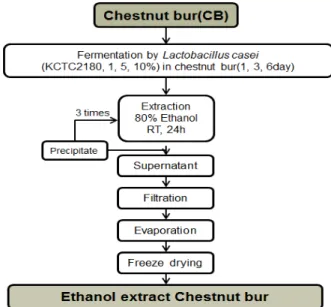
Fig. 1. The procedure for extraction from chestnut bur.
Fig. 2. Electron donating ability of extracts of fermentation by Lactobacillus casei in chestnut bur. Non : ethanol extracts of 1 day fermentation by Lactobacillus casei (0%) in chest- nut bur, CBa : ethanol extracts of 1day fermentation by Lactobacillus casei (1%) in chestnut bur, CBb : ethanol ex- tracts of 1 day fermentation by Lactobacillus casei (5%) in chestnut bur, CBc : ethanol extracts of 1day fermenta- tion by Lactobacillus casei (10%) in chestnut bur, CBd : ethanol extracts of 3 day fermentation by Lactobacillus casei (0%) in chestnut bur, CBe : ethanol extracts of 3 day fermentation by Lactobacillus casei (1%) in chestnut bur, CBf : ethanol extracts of 3 day fermentation by Lactobacillus casei (5%) in chestnut bur, CBg : ethanol ex- tracts of 3 day fermentation by Lactobacillus casei (10%) in chestnut bur, CBh : ethanol extracts of 6 day fermenta- tion by Lactobacillus casei (0%) in chestnut bur, CBi : etha- nol extracts of 6 day fermentation by Lactobacillus casei (1%) in chestnut bur, CBj : ethanol extracts of 6 day fer- mentation by Lactobacillus casei (5%) in chestnut bur, CBk : ethanol extracts of 6 day fermentation by Lactobacillus casei (10%) in chestnut bur, AA : Ascorbic acid. Result are means ± S.D. of triplicate data.
한 효능을 기대하는 기능성 제품에 관심이 높아지고 있다. 기 능성 화장품 산업은 산업의 특성상 다품종 소량생산, 환경 친 화형, 고부가가치, 지식기반 산업으로 원료에 따라서는 의약 품이나 기능성 식품을 소재로의 활용이 가능하다. 기능성 화 장품은 일반 화장품에 비해 생리활성이 강조된 화장품 또는 기능이 강조된 화장품을 말한다. 현재 기능성 향상소재 중 많 은 부분이 천연물, 특히 한방생약에서 추출되고 있으며, 한방 생약은 과거 수백 년 동안 동양에서 오랫동안 사용되었던 것 이 대부분으로 어느 정도 약효가 인정된 것들이 많다[5].
최근 들어 화장품관련 산업 및 학계에서는 자연계에서 존재 하는 다양한 천연물 발효로부터 얻어지는 각종 유용성분을 화장품소재로 활용하려는 연구 및 생리활성 작용에 대한 검색 이 활발하게 이루어지고 있으며, 특히 주름개선 기능이나 면 역력이 있는 알려진 일부 성분들은 인체의 생리 기능 조절 및 항상성 유지에 관여하여 활성산소 제거를 통한 노화방지 및 항염 효과 등 피부 건강을 유지하는데 중요한 역할을 하는 것으로 밝혀짐에 따라 이들을 이용한 다양한 기능성 화장품소 재 개발이 화장품산업의 새로운 연구 목표로 부각되고 있다.
이에 따라 활성산소종에 의한 항산화 방어막의 붕괴와 미생 물로부터 피부를 보호하기 위한 항산화, 항균, 미백 및 항노화 효과를 가진 천연소재 개발 연구가 다양하게 이루지고 있고, 현재 기능성화장품 시장이 확대되고 있는 추세이다.
따라서 국내의 천연자원 및 부산물로부터 기능성을 갖는 다양한 물질을 탐색하여 자원의 효율적인 측면, 새로운 기능 성을 함유한 화장품소재 개발 및 피부 노화 메커니즘을 연구 함으로써 밤송이의 활용방안을 찾기 위한 연구의 기초 자료로 서 그 화학성분을 분석하였으며, 또한 새로운 기능성 소재를 탐색하기 위한 일환으로 밤송이 발효 추출물을 이용하여 항노 화 및 항염증 효과에 대한 연구를 하였다.
재료 및 방법
시료 제조
본 실험에 사용된 밤송이는 경남 합천군 대병면 양리 일대 밤나무 자생 야산에서 채취하여 실험 재료로 사용하였다. 채 취된 밤나무 과수는 밤 과육, 내피(율피), 외피, 밤송이로 분리 하였고, 이중 밤송이를 세척 후 분쇄하여 분말화 한 후, 실온에 보관하여 본 실험의 시료로 사용하였다. 발효 침전물의 경우 분말화 한 밤송이를 10배 중량의 혼합액체배지(Sucrose 22.0 g/l, Glucose 5.0 g/l, Soypeptone 11.0 g/l, Yeast extract 5.0 g/l, CH3COONa 2.0 g/l, K2HPO4 0.2 g/l, MgCl2 0.02 g/l)를 넣고 pH 6.00으로 보정 후 멸균하였다. 그 후 균주를 각각 1, 5, 10%로 접종하여 1, 3, 6일간 발효하며 pH와 생균수를 측정 하여 발효과정을 확인하였다. 이렇게 발효한 밤송이에 80%
에탄올을 10배수로 첨가하여 실온에서 24시간 동안 추출한 후 추출액은 No. 2 filter paper로 여과하여, 여액을 진공회전 농축기를 사용하여 농축하고, 동결건조 하였으며, -20℃에서
Fig. 3. ABTS+ cation radical scavenging activity of extracts of fermentation by Lactobacillus casei in chestnut bur. Non : ethanol extracts of 1 day fermentation by Lactobacillus casei (0%) in chestnut bur, CBa : ethanol extracts of 1 day fermentation by Lactobacillus casei (1%) in chestnut bur, CBb : ethanol extracts of 1 day fermentation by Lactobacillus casei (5%) in chestnut bur, CBc : ethanol ex- tracts of 1 day fermentation by Lactobacillus casei (10%) in chestnut bur, CBd : ethanol extracts of 3 day fermenta- tion by Lactobacillus casei (0%) in chestnut bur, CBe : ethanol extracts of 3 day fermentation by Lactobacillus casei (1%) in chestnut bur, CBf : ethanol extracts of 3 day fermentation by Lactobacillus casei (5%) in chestnut bur, CBg : ethanol extracts of 3 day fermentation by Lactobacillus casei (10%) in chestnut bur, CBh : ethanol extracts of 6 day fermentation by Lactobacillus casei (0%) in chestnut bur, CBi : ethanol extracts of 6 day fermenta- tion by Lactobacillus casei (1%) in chestnut bur, CBj : etha- nol extracts of 6 day fermentation by Lactobacillus casei (5%) in chestnut bur, CBk : ethanol extracts of 6 day fermentation by Lactobacillus casei (10%) in chestnut bur, AA : Ascorbic acid. Result are means ± S.D. of triplicate data.
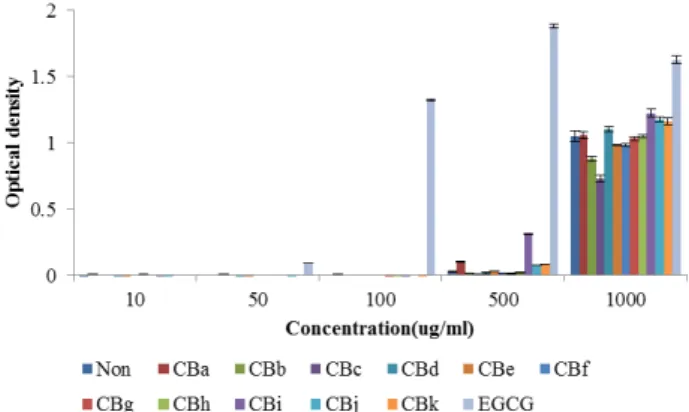
Fig. 4. Reducing power of extracts of fermentation by Lactobacil- lus casei in chestnut bur. Non : ethanol extracts of 1 day fermentation by Lactobacillus casei (0%) in chestnut bur, CBa : ethanol extracts of 1 day fermentation by Lactobacillus casei (1%) in chestnut bur, CBb : ethanol ex- tracts of 1 day fermentation by Lactobacillus casei (5%) in chestnut bur, CBc : ethanol extracts of 1 day fermenta- tion by Lactobacillus casei (10%) in chestnut bur, CBd : ethanol extracts of 3 day fermentation by Lactobacillus casei (0%) in chestnut bur, CBe : ethanol extracts of 3day fermentation by Lactobacillus casei (1%) in chestnut bur, CBf : ethanol extracts of 3 day fermentation by Lactobacillus casei (5%) in chestnut bur, CBg : ethanol ex- tracts of 3 day fermentation by Lactobacillus casei (10%) in chestnut bur, CBh : ethanol extracts of 6 day fermenta- tion by Lactobacillus casei (0%) in chestnut bur, CBi : etha- nol extracts of 6 day fermentation by Lactobacillus casei (1%) in chestnut bur, CBj : ethanol extracts of 6 day fer- mentation by Lactobacillus casei (5%) in chestnut bur, CBk : ethanol extracts of 6 day fermentation by Lactobacillus casei (10%) in chestnut bur, EGCG : Epigallocatechin gallate. Result are means ± S.D. of triplicate data.
보관하면서 실험에 사용하였다.
1,1-Diphenyl-2-picrylhydrazyl (DPPH) radical 소거능 측정
전자공여능(EDA: electron donating ability)은 Blois의[2]
방법을 변형하여 측정하였다. 각 시료용액 100 ul에 0.2 mM 의 1,1-diphenyl-2-picryl-hydrazyl (DPPH) 50 ul 가하고 차광 상태에서 37℃에서 30분간 반응시켰다. 반응 후 517 nm에서 흡광도를 측정하였다.
ABTS+ radical cation 소거작용 측정
ABTS+ radical cation 소거작용 측정은 Roberta 등[12]의 방법으로 측정하였다. 이 실험에서, ABTS+ radical cation은 7 mM ABTS와 2.4 mM potassium persulfate (K2S2O8)을 1:1로 혼합하여 암실에서 실온으로 24시간 동안 반응하였다. 사용 전에 ABTS+ 용액을 에탄올에 희석하여 734 nm에서 흡광도
값이 0.706±0.001이 되게 하여 사용하였다.
환원력 측정
Reducing power는 Oyaizu의[11] 방법을 변형하여 측정하 였다. 시료 0.1 ul에 0.2M sodiumphosphate buffer (pH 6.6) 400 ul, 1% potassium ferricyanide 500 ul를 각각 혼합하여 50℃에서 20분 동안 반응시킨 후 10% trichloroacetic acid 0.5 ml을 가하였다. 위 반응액을 12,000 rpm에서 10분간 원심 분리하여 상층액 500 ul에 증류수 500 ul, 1% ferric chloride 100 ul를 가하여 10분간 반응 후 혼합한 반응액의 흡광도 값 을 700 nm에서 측정하였다.
Superoxide dismutase (SOD) 유사활성 측정
SOD 유사활성 측정은 Marklund 등의 방법[10]에 따라 시 료 0.2 ml에 Tris-HCL Buffer 2.6 ml와 7.2 mM pyrogallol 0.2 ml을 가하고 37℃에서 10분간 방치한 후 1N HCl 0.1 ml로
Fig. 5. Superoxide dismutase(SOD)-like activity of extracts of fermentation by Lactobacillus casei in chestnut bur. Non : ethanol extracts of 1 day fermentation by Lactobacillus casei (0%) in chestnut bur, CBa : ethanol extracts of 1 day fermentation by Lactobacillus casei (1%) in chestnut bur, CBb : ethanol extracts of 1 day fermentation by Lactobacillus casei (5%) in chestnut bur, CBc : ethanol ex- tracts of 1 day fermentation by Lactobacillus casei (10%) in chestnut bur, CBd : ethanol extracts of 3 day fermen- tation by Lactobacillus casei (0%) in chestnut bur, CBe : ethanol extracts of 3 day fermentation by Lactobacillus casei (1%) in chestnut bur, CBf : ethanol extracts of 3day fermentation by Lactobacillus casei (5%) in chestnut bur, CBg : ethanol extracts of 3 day fermentation by Lactobacillus casei (10%) in chestnut bur, CBh : ethanol extracts of 6 day fermentation by Lactobacillus casei (0%) in chestnut bur, CBi : ethanol extracts of 6 day fermentation by Lactobacillus casei (1%) in chestnut bur, CBj : ethanol ex- tracts of 6 day fermentation by Lactobacillus casei (5%) in chestnut bur, CBk : ethanol extracts of 6 day fermenta- tion by Lactobacillus casei (10%) in chestnut bur, AA : Ascorbic acid. Result are means ± S.D. of triplicate data.
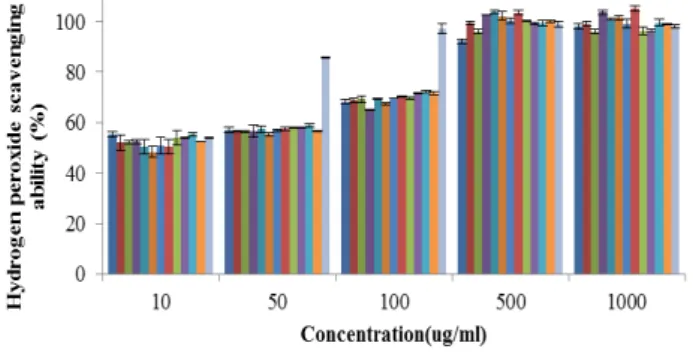
Fig. 6. Hydrogen peroxide scavenging activity of extracts of fer- mentation by Lactobacillus casei in chestnut bur. Non : ethanol extracts of 1 day fermentation by Lactobacillus casei (0%) in chestnut bur, CBa : ethanol extracts of 1 day fermentation by Lactobacillus casei (1%) in chestnut bur, CBb : ethanol extracts of 1 day fermentation by Lactobacillus casei (5%) in chestnut bur, CBc : ethanol ex- tracts of 1 day fermentation by Lactobacillus casei (10%) in chestnut bur, CBd : ethanol extracts of 3 day fermenta- tion by Lactobacillus casei (0%) in chestnut bur, CBe : etha- nol extracts of 3 day fermentation by Lactobacillus casei (1%) in chestnut bur, CBf : ethanol extracts of 3 day fer- mentation by Lactobacillus casei (5%) in chestnut bur, CBg : ethanol extracts of 3 day fermentation by Lactobacillus casei (10%) in chestnut bur, CBh : ethanol extracts of 6day fermentation by Lactobacillus casei (0%) in chestnut bur, CBi : ethanol extracts of 6 day fermentation by Lactobacillus casei (1%) in chestnut bur, CBj : ethanol ex- tracts of 6 day fermentation by Lactobacillus casei (5%) in chestnut bur, CBk : ethanol extracts of 6 day fermenta- tion by Lactobacillus casei (10%) in chestnut bur, AA : Ascorbic acid. Result are means ± S.D. of triplicate data.
반응을 정지시킨 후 420 nm에서 흡광도를 측정하였다.
Hydrogen peroxide (H2O2) 저해활성 측정
Hydrogen peroxide 저해활성 측정은Jayaprakasha 등[6]의 방법을 변형하여 측정하였다. 40 mM Hydrogen peroxide의 용액은 PBS (pH 7.4) 으로 희석한다. 0.5 ml의 다양한 농도의 시료를 0.5 ml의 PBS에 희석한 Hydrogen peroxide 용액을 첨가한다. 37℃에서 10분간 반응한 후 230 nm에서 흡광도를 측정하였다.
Superoxide anion radical (O2-
) 저해활성 측정 Superoxide radical 저해활성 측정은Siddguraju와 Becker [14]의 방법으로 측정하였다. 0.1 M phosphate buffer (pH 7.4), 0.24 mM nitroblue tetrazolium (NBT), 0.4 M xanthine이 함유 된 반응혼합물과 각각의 농도의 시료에 0.049 U/ml Xanthine oxidase를 첨가하여 37℃에서 20분간 반응시킨다. 1N HCl
을 이용하여 반응 정지 한 후 410 nm에서 흡광도를 측정하였 다.
Nitric Oxide radical (NO2-
) 소거능 측정 NO2-
소거능 측정은 Marcocci L 등[9]의 방법을 변형하여 측정하였다. 시료 0.5 ml에 10 mM sodium nitroprusside 1.5 ml을 가하여 실온에서 150 min간 반응시킨 후 반응 용액 0.5 ml과 Griess Reagent (2% sulfanilamide과 0.2% N-(1-Naphthy) ethylenediamine 용액, 1:1) 0.5 ml을 첨가하여 10분간 반응 후 546 nm에서 흡광도를 측정하였다.
결과 및 고찰
1,1-Diphenyl-2-picrylhydrazyl (DPPH) radical 소거 활성
1,1 diphenyl-2-picrylhydrazyl (DPPH)는 짙은 자색을 띄는
Fig. 7. Superoxide anion radical (O2-) scavenging activity of ex- tracts of fermentation by Lactobacillus casei in chestnut bur. Non : ethanol extracts of 1 day fermentation by Lactobacillus casei (0%) in chestnut bur, CBa : ethanol ex- tracts of 1 day fermentation by Lactobacillus casei (1%) in chestnut bur, CBb : ethanol extracts of 1 day fermenta- tion by Lactobacillus casei (5%) in chestnut bur, CBc : etha- nol extracts of 1 day fermentation by Lactobacillus casei (10%) in chestnut bur, CBd : ethanol extracts of 3 day fermentation by Lactobacillus casei (0%) in chestnut bur, CBe : ethanol extracts of 3 day fermentation by Lactobacillus casei (1%) in chestnut bur, CBf : ethanol ex- tracts of 3 day fermentation by Lactobacillus casei (5%) in chestnut bur, CBg : ethanol extracts of 3 day fermenta- tion by Lactobacillus casei (10%) in chestnut bur, CBh : ethanol extracts of 6 day fermentation by Lactobacillus casei (0%) in chestnut bur, CBi : ethanol extracts of 6 day fermentation by Lactobacillus casei (1%) in chestnut bur, CBj : ethanol extracts of 6 day fermentation by Lactobacillus casei (5%) in chestnut bur, CBk : ethanol ex- tracts of 6 day fermentation by Lactobacillus casei (10%) in chestnut bur, BHA : Butylated Hydroxyanisole. Result are means ± S.D. of triplicate data.
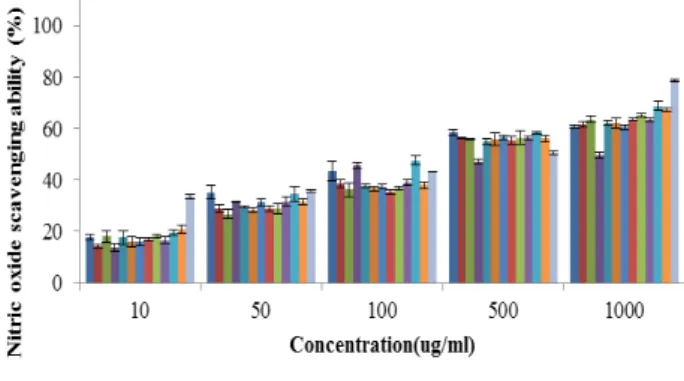
Fig. 8. Nitiric oxide scavenging ability of extracts of fermenta- tion by Lactobacillus casei in chestnut bur. Non : ethanol extracts of 1 day fermentation by Lactobacillus casei (0%) in chestnut bur, CBa : ethanol extracts of 1 day fermenta- tion by Lactobacillus casei (1%) in chestnut bur, CBb : ethanol extracts of 1 day fermentation by Lactobacillus casei (5%) in chestnut bur, CBc : ethanol extracts of 1day fermentation by Lactobacillus casei (10%) in chestnut bur, CBd : ethanol extracts of 3 day fermentation by Lactobacillus casei (0%) in chestnut bur, CBe : ethanol ex- tracts of 3 day fermentation by Lactobacillus casei (1%) in chestnut bur, CBf : ethanol extracts of 3 day fermenta- tion by Lactobacillus casei (5%) in chestnut bur, CBg : ethanol extracts of 3 day fermentation by Lactobacillus casei (10%) in chestnut bur, CBh : ethanol extracts of 6day fermentation by Lactobacillus casei (0%) in chestnut bur, CBi : ethanol extracts of 6 day fermentation by Lactobacillus casei (1%) in chestnut bur, CBj : ethanol ex- tracts of 6 day fermentation by Lactobacillus casei (5%) in chestnut bur, CBk : ethanol extracts of 6 day fermenta- tion by Lactobacillus casei (10%) in chestnut bur, AA : Ascorbic acid. Result are means ± S.D. of triplicate data.
비교적 안정한 free radical로서 cystein, glutathion과 같은 함 황아미노산과 Ascorbic acid 및 BHA 등에 의해 환원되어 탈색 되므로 다양한 천연소재로부터 항산화물질을 검색하는데 많 이 이용되고 있다. 밤송이 발효 추출물 모두 100 ug/ml 66%
이상의 전자공여능의 활성을 나타내었다. 1,000 ug/ml 농도에 서 균주 5% 접종 후 6일간 배양액 한 추출물이 92.9%로 가장 높은 전자공여능 활성을 나타내었다.
ABTS+ radical cation 소거작용 측정
ABTS radical cation소거능은 2,2'-Azino-bis(3-ethyl- benzothiazoline-6-sulfonic acid) diammonium salt (ABTS)와 potassium persulfate와의 반응으로 ABTS+ radical이 생성되 면 특유의 색인 청록색을 띄게 되는데, 시료를 첨가함에 따라 연한녹색으로decolorization되는 것을 측정하는 방법이며, hydrogen-donating antioxicant 와 chain breaking actioxidant
모두를 측정할 수 있다. 발효밤송이 추출물 모두 50 ug/ml 53% 이상의 ABTS 라디칼 소거능의 활성을 나타내었으며, 100 ug/ml 농도에서 균주 10% 접종 후 3일간 배양액 추출물이 83.2%로 가장 높은 전자공여능 활성을 나타내었다.
환원력 측정
활성 산소종 및 유리기에 전자를 공여하는 능력인 환원력은 항산화능과 밀접한 관련이 있는 것으로 알려져 있는데 이는 항산화 활성에 주요한 인자로 작용한다. 이 실험은 700 nm에 서 ferric-ferricyanide (Fe3+
)혼합물이 수소를 공여하여 유리라 디칼을 안정화시켜 ferrous (Fe2+
)로 전환하는 환원력을 흡광 도 값으로 나타낸 것이다.
발효밤송이 추출물의 환원력 측정결과 저농도에서는 환원 력이 없었으며 1,000 ug/ml의 농도에서 1일 6일 발효한 경우 접종한 균 함량이 높을수록 환원력이 떨어지는 것으로 나타났 으며, 3일 발효한 밤송이의 경우 균 접종량이 많을수록 환원력
이 높아지는 경향을 나타냈다. 그 중 6일 1% 접종한 밤송이의 환원력이 1.23으로 대조군으로 사용된 EGCG와 유사한 환원 력을 나타내었다.
Superoxide dismutase (SOD) 유사활성 측정
항산화 효소 중의 하나인 superoxide dismutase (SOD)는 생체에 매우 유해한 superoxide anion radical과 반응하여 hy- drogen peroxide (H2O2)를 생성하는 효소로, 산소를 소비하는 모든 생물 종에 존재하여 생체 내에서 활성산소 장애에 대한 방어 작용을 하는 대표적인 활성산소 저해제이다. 또한 SOD 는 자유 라디칼을 근본적으로 제거하는 효소이고 다른 종류의 항산화제보다 우수한 효과를 나타내기 때문에 의약제재로서 많은 관심을 일으키고 있으며, 현재 항염증 제재나 피부 노화 방지를 위한 미용제재로 화장품 등에 이용되고 있다. 발효밤 송이의 Superoxide dismutase (SOD)를 측정한 결과 비발효 밤송이는 36.60%의 유사활성능을 나타내었으며, 발효물에서 는 주목할 만한 효과를 나타내는 시료가 없었다.
Hydrogen peroxide (H2O2) 저해활성 측정
Hydrogen peroxide는 산소의 환원대사물질로서 미토콘드 리아나 peroxisome 등의 정상세포로부터 형성 되거나 다양한 외부 요소에 의해 형성되는데, DNA 및 단백질 손상을 유발하 거나 생체막 구성 성분인 불포화 지방산을 공격하여 과산화 지질을 생성함으로써 생체기능저하 또는 노화 및 성인병을 유발하는 것으로 알려져 있다. 발효밤송이 추출물의 hydro- gen peroxide의 소거활성 결과로서 농도 의존적인 저해 활성 을 나타내었으며, 100 ug/ml의 농도에서 균주 5% 접종 후 6일간 배양액 추출물이 72.1%의 높은 hydrogen peroxides 소 거능을 확인 할 수 있었다.
Superoxide anion radical (O2-
) 저해활성 측정 활성산소는 생물학적 반응에서 세포내 효소 또는 대부분의 전자 운반과정에서 만들어지며 안정되지 못하여 강한 활성을 가진다. 활성산소는 분자나 이온과 다르게 1개 이상의 짝 없는 전자를 갖는 화학물질로서 여러 가지 물질대사를 영위하는데 이용되지만 자외선, 생화학적 반응 등으로 1O2, ・O2-
, OH, hy- drogen peroxide 등 free radical의 생산이 과잉되면 생체에 대하여 독성을 나타내어 여러 가지 질환의 발생기전에 관여한 다고 한다. Superoxide anion radical 실험에서는 BHA를 대조 물질로 사용하였으며 실험결과는 Fig. 7에 나타내었다. 대조군 으로 사용한 BHA의 경우 100 ug/ml 에서 59.9%의 효과를 나타내었으며, 비발효물의 경우 48.4%, 발효물의 경우 발효일 이 증가할수록 Superoxide anion radical 소거능이 우수하게 나타났다. 특히 6일 발효한 밤송이 발효물의 경우 68.4%, 65.8%, 57.9%의 대조군보다 유사하거나 우수한 Superoxide anion radical 소거능을 나타내었으며 500 ug/ml의 농도에서
는 80% 이상의 소거능을 나타내어 대조군보다 우수한 Super- oxide anion radical 소거능을 나타내었다.
Nitric Oxide radical (NO2-
) 소거능 측정
Nitric oxide (NO)는 gas상의 단순한 무기 radical로 자연계 에 존재하고 있다. NO는 L-arginine으로부터 nitric oxide syn- thase (NOS)에 의해 만들어지며, NOS는 항상성 유지에 필요 한 NO를 생성하는 endothelial NOS (eNOS) 및 neuronal NOS (nNOS)와 염증성 인자 등에 의해 유도되는 inducible NOS (iNOS)로 분류할 수 있다. iNOS (inducible nitiric oxide synthase)는 macrophage, 혈관내피세포, 혈관 평활근 세포, 소 화관 상피세포, 간세포 등에서 많이 발현되어 장시간 동안 NO 를 형성하며, 생성된 NO는 염증반응에 있어서 중요한 media- tor로 작용한다. 고농도의 NO는 DNA에 손상을 줄 수 있으며, superoxide ion과 반응 시에 peroxynitrite를 만드는데, perox- ynitrite는 hydroxyl radical을 형성하여 조직의 파괴를 일으킬 수 있다.
염증과 관련된 nitric oxide radical 소거능을 측정한 결과 발효 밤송이 추출물의 경우 100, 500, 1,000 ug/ml에서 균주 5% 접종 후 6일간 배양액 추출물이 각각 36.5%, 58.3%, 68.8%
의 우수한 nitric oxide radical 소거능을 나타내었다.
감사의 글
본 연구는 중소기업청에서 지원하는 2013년도 기술혁신개 발사업(No. S2085017), 2013년도 산학협력 기업부설연구소 지 원사업(No. C0019259)의 연구수행으로 인한 결과물임을 밝힙 니다.
References
1. Ahn, D. K. 1998. Illustrated Book of Korean Medicinal herbs, pp.718-179, 2th ed., Kyo-Hak Publishing Co.: Ggeumcheon, Seoul, Korea.
2. Blois, M. S. 1958. Antioxidant determination by the use of a stable free radical. Nature 26, 1199-1204
3. Choi, O. B., Kim, K. M., Yoo, G. S. and Park, K. H. 1998.
Anti-allergic effects of castanea crenata leaf tea. Korean J Food Sci Technol 30, 468-471.
4. De Zwart, L. L., Meerman, J. H., Commandeur, J. N. and Vermeulen, N. P. 1999. Biomarkers of free radical damage applications in experimental animals and in humans. Free Radic Biol Med 26, 202-226.
5. Hong, E. S., Ahn, G. W. and Jo, B. K. 2008. The study on the potential anti-aging properties of Prunella vulgaris ex- tracts in vitro and in vivo. J Soc Cosmet Scientists Korea 34, 129-135.
6. Jayaprakasha, G. K., Jaganmohan, R. L. and Sakariah, K. K.
2004. Antioxidant activities of flavidin in different in vitro
초록:유산균 발효에 의한 밤송이추출물의 항산화 효과
전동하1․조우아1․장민정2․유미숙3․박정렬4․김세현5․이진태1*
(1대구한의대학교 화장품약리학과, 2더마텍코리아(주), 3휴먼코스메틱㈜, 4국립한밭대학교, 5국립산림과학원 특용자원연구과)
국내의 천연자원 및 부산물로부터 기능성을 갖는 다양한 물질을 탐색하여 자원의 효율적인 측면, 새로운 기능 성을 함유한 화장품소재 개발 및 피부 노화 메커니즘을 연구함으로써 밤과수 과정에서 폐기되는 밤송이의 활용방 안을 찾기 위한 연구의 기초 자료로서 그 화학성분을 분석하였으며, 또한 새로운 기능성 소재를 탐색하기 위한 일환으로 밤송이 발효 추출물을 이용하여 항산화 효과에 대한 연구를 하였다. DPPH 라디칼소거능, Hydrogen peroxide저해활성, Nitric oxide radical 소거능 측정결과 균주 5% 접종 후 6일간 배양액 추출에서 가장 높은 항산 화활성을 나타내었다. 또한 ABTS 라디칼소거능, 환원력 측정, Superoxide anion radical 저해활성 실험을 통해서 대조군으로 사용된 BHA와 Ascrobic acid, EGCG에 비교하여 발효밤송이 추출물은 유사한 항산화 활성을 나타나 는 결괄를 얻었다. 이와 같은 결과로 미루어 보아 발효 밤송이 추출물은 효능이 좋은 천연 항산화제로 기능성 화장품의 소재로 개발될 가능성이 매우 높다고 사료된다.
moder systems. Bioorg Med Chem 12, 5141-5146.
7. Kang, D. Y., Shin, M. O., Son, J. H. and Bae, S. J. 2009. The antioxidative and antimicrobial effects of Celastrus orbiculatus. J Life Sci 19, 52-57.
8. Kim, Y. C., Hong, H. D., Rho, J. H., Cho, C. W., Rhee, Y.
K. and Yim, J. H. 2007. Changes of phenolic acid contents and radical scavenging activities of ginseng according to steaming times. J Ginseng Res 31, 230-236.
9. Marcocci, L., Maguire, J. J., Droy-Lefaix, M. T. and Packer, L. 1994. The Nitric oxide Scavenging properties of Ginkgo Biloba Extract EGb 761. Biochem Biophys Res Commun 201, 748-755.
10. Marklund, S. and Marklund, G. 1974. Involvement of the superoxide anion radical in the autooxidation of pyrogallol and a convenient assay for superoxide dismutase. Eur J Biochem 47, 469-474.
11. Oyaizu, M. 1986. Studies on products of browning reactions:
antioxidative activities of products of browning reaction prepared from glucosamine. Jpn J Nutr 44: 307-315.
12. Re, R., Pellegrini, N., Proteggente, A., Pannala, A., Yang, M. and Rice-Evans, C. 1999. Antioxidant activity applying an improved ABTS radical cation decolorization assay. Free Radic Biol Med 26, 1231-1237.
13. Roberto, C. 1984. The macdonald encyclopedia of medical plants.
pp. 71. 5th ed., Macdonald Press: London, UK.
14. Stirpe, F. and Della Corte, E. 1969. The regulation of rat liver xanthine oxidase. Conversion in vitro of the enzyme activity from dehydrogenase (type D) to oxidase (type O).
J Biol Chem 244, 3855-3863.
15. Zhoh, C. K., Kim, B. N., Hong, S. H. and Han, C. G. 2002.
The antimicrobial effects of natural aromas for substitution of parabens. J Soc Cosmet Scientists Korea 28, 166-185.