Reliability of Muscle Evaluation with a Tactile Sensor System
Young-Rak Oh, D.D.S., Dong-Ju Lee, D.D.S., Sung-Hwan Kim, D.D.S., Mee-Eun Kim, D.D.S.,M.S.D.,Ph.D., Ki-Suk Kim, D.D.S.,M.S.D.,Ph.D.
Department of Oral Medicine, College of Dentistry, Dankook University
A tactile sensor employs a piezoelectric element to detect contact frequency shifts and thereby measure the stiffness or softness of material such as tissue, which allows the sensor to be used in many fields of research for urology, cardiology, gynecology, sports medicine and caner detection and especially for cosmetics and skin care.
In this study, reliability of the tactile sensor system was investigated with its manual application to the muscles susceptible to temporomandibular disorders.
Stiffness and elasticity of anterior temporalis, masseter and trapezius muscles were calibrated bilaterally from 5 healthy men with an average of 24.5±0.94 years. The tactile sensor used in this study had a computer-controlled and motor-driven sensor unit which automatically pressed down on the skin surface over the muscles being measured and retracted, thereby providing the hysteresis curve. The slope of the tangent of the hysteresis curve (△f/△x) is defined as stiffness of the muscle being measured and the distance between the two parts of the curve as its elasticity. To determine inter-examiner reliability, all the measurements were performed by the two examiners A and B, respectively and the same examination were repeated with an interval of 2 days for intra-examiner reliability.
The results from this study demonstrated high reliability in measuring stiffness and elasticity of anterior temporalis, masseter and upper trapezius muscles using a tactile sensor system. It is suggested that the tactile sensor system can be a highly reproducible and effective instrument for quantitative evaluation of the muscle in head and neck region.
Key words : Tactile sensor, Muscle, Stiffness, Elasticity
표 1
1)
Ⅰ. INTRODUCTION
Temporomandibular disorders (TMD) is one of the most common orofacial pain conditions, characterized by facial pain associated with jaw function, limited range of mandibular motion, and TMJ sounds during jaw movement and function
1).
Corresponding author : Prof. Mee-Eun Kim
Department of Oral Medicine, College of Dentistry, Dankook University
Sinbu-dong San 7-1 Cheonan 330-716 Email. [email protected]
received: 2005-06-01 accepted: 2005-08-03
These disorders involve masticatory musculature, the temporomandibular joint (TMJ) and associated structures, or both
2)and have the uncertainty about etiology. The American Academy of Orofacial Pain (AAOP)
3)has classified TMD into three diagnostic categories, (1) cranial bone (including the mandible) disorders (2) TMJ disorders and (3) masticatory muscle disorders and the muscle disorders of these categories exhibit high prevalence in clinical situations.
As evaluation of muscle condition in relation of
TMD is of critical importance for diagnosis and
determination of therapeutic effect, the condition of
affected muscle has been evaluated with various
methods including digital palpation, algometery, electromyography (EMG), and determination of bite force and chewing ability. Recently, a tactile sensor system newly-developed has been tried for this purpose
4,5).
The tactile sensor consists of a piezoelastic transducer and a vibration pickup. For the tactile sensor, when an alternating voltage is applied across the electrode, the transducer is able to vibrate and the vibration pick up detects the generated vibration. When the free end of the transducer contacts some material such as soft tissue, the frequency changes depending upon the acoustic impedance of the object. The amount of the frequency change explains hardness or softness of the object.
6,7)Some studies about the tactile sensor has been applied to investigate physical properties of human skin
7,8), regional myocardial stiffness
9-11), stiffness of lymph nodes
12)and hardness of other soft tissues.
13)Using this method, stiffness and elasticity of muscle can also be calibrated in real time, which suggests that the tactile sensor more accurately reflect muscle fatigue than conventional methods
4).
Prior to its diverse application in clinical setting, we investigated intra-reliability and inter-reliability of the tactile sensor system on the evaluation of the muscles mainly associated with TMD.
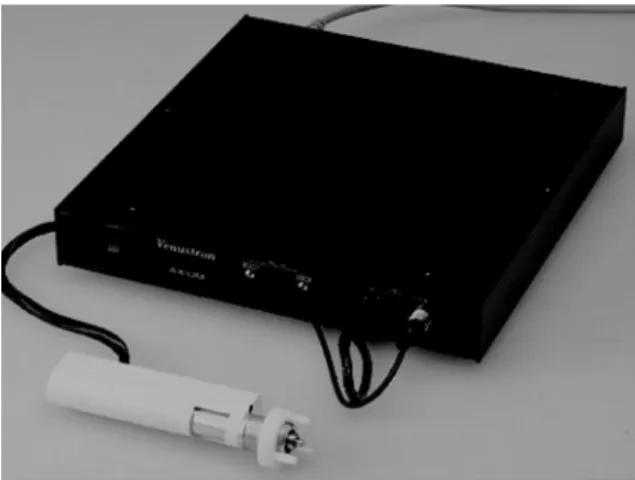
Fig. 1. The tactile sensor system (VenustronⓇ, Axiom Co. Ltd., Japan) used for this study.
Ⅱ. MATERIALS AND METHODS 1. Tactile sensor system
A tactile sensor system
14)employed for this study was Venustron
Ⓡ(Axiom Co. Ltd., Japan) as seen in Fig. 1. and 2. The sensor consists of a piezoelastic transducer made of ceramics such as lead zirconate titanate (PZT) and a vibration pickup (made of PZT or polyvinylidene fluoride (PVF2) film) and it is connected to a computer equipped with the appropriate software.
When there is an electric input, the PZT element vibrates at its own inherent resonance frequency. If the sensor probe vibrating in this frequency is pressed against an object, this frequency shifts and the amount of shift in frequency is determined by the object’s acoustical impendance, which directly correlated with the hardness/softness of the material. The change in frequency, or △f is defined as the difference between the new frequency, fx and the initial frequency, f
0, shown as △f = f
x- f
0. The initial frequency, f
0was 57 Hz and the tip diameter of sensor probe was 5 mm in this tactile sensor system.
When the sensor probe is placed over the surface to be measured, measurement begins via the Window’s compatible software. A small motor
Fig. 2. The tactile sensor tip (arrow) which is placed and moved on the material to be measured.
located in the upper end of the probe shaft is activated by the computer, which controls the depression. The sensor tip pushes down on the material once and retracts to provide a continuous stream of simultaneous stiffness, pressure and depression in real time. 200 tactile, pressure and depression data per second are swiftly and sequentially processed and recorded by the computer.
2. Measurement of muscle stiffness and elasticity
The subjects consisted of 5 healthy men who participated voluntarily in this study and their mean age was 24.5 ± 0.94 years. Stiffness and elasticity of their anterior temporalis, masseter and upper trapezius muscles were measured bilaterally by a tactile sensor system.
Each subject was instructed to sit on a chair for evaluation of anterior temproalis, masseter and upper trapezius muscles. Before operating the sensor, the thickest skin area over anterior temporalis and masseter muscles were selected as the points to be pressed by a tactile sensor, and marked with a pen and a skin point over upper trapezius was also indicated.(Fig. 3) While the subjects were light contact in their teeth, the probe of the tactile sensor was placed perpendicularly over the marked point over the skin, followed by computer-controlled movement including gently pressing straight down on the muscle for a second and retracting.
Fig. 3. The stiffness and elasticity of muscles were measuring using a tactile sensor (a, anterior temporalis muscle; b, masseter muscle; c, upper trapezius muscle).
Prior to commencing the experiments, the two examiner involved in this study performed several practice measurements to become familiar with the tactile sensor and the amount of depression that is appropriate to be measured in the three muscles were determined. The distance moved by the sensor probe was determined as 3 mm in anterior temporalis, 7 mm in masseter, and 7 mm in trapezius. A hysteresis curve in Fig. 4 is composed of two parts, which are formed when the sensor pushes down (bottom) and then retracts (top)
14). The slope of the tangent of the hysteresis curve (Δ f/Δx) is defined as stiffness of the muscle being measured and the distance between the two parts as its elasticity.
Fig. 4. Hysteresis curves of the anterior temporalis, masseter and upper trapezius muscles.
To determine inter-examiner reliability, all the measurements were performed by the two examiners A and B, respectively and the same examination were repeated with an interval of 2 days for intra-examiner reliability. Each measure- ment per muscle was done three times and their average was collected for data analyses.
3. Statistical analysis
Correlation coefficient and paired t-test was used to evaluate the correlation between two examiners and between two examinations performed by each examiner. Differences were regarded as statistically significant at p < 0.05.
Ⅲ. RESULTS
The two examiners, A and B performed independently the measurement of stiffness and elasticity of muscles for each subject for determining inter-examiner reliability and the selected muscles in this study were anterior temporalis, masseter and upper trapezius muscles which are easy to access and frequently associated with TMD. To determine intra-examiner reliability,
Stiffness(△f/△x) Elasticity(Hz)
Examiner A Examiner B Examiner A Examiner B
Mean±SD 3.407 ± 0.852 3.535 ± 0.921 92.423 ± 24.859 89.333 ± 25.505
coefficient Correlation .950 (p=.000) .907 (p=.000)
T-test p=.194 p=.393
Table 1. Inter-reliability on stiffness and elasticity of masseter muscle
Stiffness(△f/△x) Elasticity(Hz)
Exam 1 Exam 2 Exam 1 Exam 2
Mean±SD 3.407 ± 0.852 3.488 ± 0.943 92.423 ± 24.859 87.710 ± 23.899
Correlation coefficient .968 (p=.000) .984 (p=.000)
T-test p=.318 p=.052
Table 2. Intra-reliability on stiffness and elasticity of masseter muscle
the examination was done twice at an interval of 2 days, which was expressed as exam 1 and 2 in the following tables.
When a pressure of 40 g was applied to masseter muscles, muscle stiffness ranged from 2.264 to 5.601 and elasticity from 64.443 Hz to 132.833 Hz. Table 1 and 2 exhibited that there was no significant difference in stiffness and elasticity of masseter measured with the tactile sensor between the two examiners and between the two separate examinations. In addition, the correlation coefficients indicated the favorable inter- and inter-reliability.
Stiffness and elasticity of anterior temporalis muscle were 2.029 to 4.751 and 74.633 Hz to 166.7 Hz, respectively when a pressure of 30g was applied and their values were not significantly different and they were highly correlated between the two examiners (Table 3) and between the two examinations (Table 4).
With a pressure of 50 g applied on upper
trapezius muscle, stiffness was 2.148 to 4.510 and
elasticity was 61.1 Hz to 127.4 Hz. The values of
stiffness and elasticity were highly correlated
between the examiners and between the
examinations and their differences were not
significant (Table 5 and 6).
Stiffness(△f/△x) Elasticity(Hz)
Examiner A Examiner B Examiner A Examiner B
Mean±SD 3.359 ± 0.867 3.350 ± 0.738 98.573 ± 19.486 99.530 ± 23.354
Correlation coefficient .956 (p=.000) .975 (p=.000)
T-test p=.915 p=.187
Table 3. Inter-reliability on stiffness and elasticity of anterior temporalis muscle
Stiffness(△f/△x) Elasticity(Hz)
Exam 1 Exam 2 Exam 1 Exam 2
Mean±SD 3.359 ± 0.867 3.378 ± 0.820 98.573 ± 19.486 98.088 ± 14.994
Correlation coefficient .923 (p=.000) .843 (p=.002)
T-test p=.861 p=.815
Table 4. Intra-reliability on stiffness and elasticity of anterior temporalis muscle
Stiffness(△f/△x) Elasticity(Hz)
Examiner A Examiner B Examiner A Examiner B
Mean±SD 3.210 ± 0.648 3.288 ± 0.675 92.790 ± 21.834 89.727 ± 18.422
Correlation coefficient .922 (p=.000) .929 (p=.000)
T-test p=.372 p=.273
Table 5. Inter-reliability on stiffness and elasticity of upper trapezius muscle
Stiffness(△f/△x) Elasticity(Hz)
Exam 1 Exam 2 Exam 1 Exam 2
Mean±SD 3.210 ± 0.648 3.204 ± 0.388 92.790 ± 21.834 84.240 ± 15.715
Correlation coefficient .869 (p=.001) .847 (p=.002)
T-test p=.963 p=.050
Table 6. Intra-reliability on stiffness and elasticity of upper trapezius muscle
Ⅳ. DISCUSSION
The tactile sensor is composed of a piezoelectric element to detect contact frequency shifts and thereby measure the stiffness or softness of material such as tissue, which allows the sensor to
be used for researches of various fields in medicine
including dermatology
7,8,13), cardiology
9-11), cancer
detection
12,15)and dentistry
4,5). A study
7)using a
spring loaded tactile sensor indicated the sensor
was able to detect changes in stiffness and elastic
related properties of human skin, related to age,
day-to-day variations and application of cosmetics.
Takei et al
8)applied a tactile skin sensor for measuring skin hardness in patients with systemic sclerosis and autoimmune Raynaud’s phenomenon and Yamamoto et al
16)estimated brain stiffness measured using a tactile sensor in animal models.
Hatakeyama et al
17)employed a tactile sensor to estimate the degree of liver fibrosis after partial hepatectomy, showing that quantification of liver hardness by tactile sensor predicted liver regenerative activity.
The areas of the jaw and the mouth are made up of various soft tissue including facial skin, muscles (facial expression, mastication, and tongue), lips, cheek, gums, tongue, and the mucous membrane of the palate. In order to have normal function of the orofacial region, the characteristics of each soft tissue must be understood. Stiffness or softness of each soft tissue measured by the tactile sensor can be used as one parameter in the diagnosis of the function of soft tissues in the orofacial region
5). The tactile sensor can be also used for researches on muscle fatigue which is considered as one of the most common causes of masticatory muscle disorders including muscle soreness and muscle spasm. A study
4)comparing the usefulness of tactile sensor and EMG to investigate masseter muscle fatigue, the tactile sensor indicated that increases in stiffness and decreases in elasticity of the masseter muscle were proportional to the number of masticatory cycles. While a frequency analysis of simultaneously recorded EMG of the masseter muscle showed a decrease in the higher frequency components, this parameter was proportional to the number of mastication cycles in only a small number of the subjects. Although the study comprised only small sized subjects and didn’t perform statistical analysis, their results demonstrate that muscle stiffness and elasticity measured by the tactile sensor more accurately reflect muscle fatigue than conventional parameter of EMG.
18)Nishikawa et al
19)compared the stiffness of shoulder muscle related to bathing type using the tactile sensor.
The tactile sensor system used in this study allows for automatic, computer-controlled depre- ssion which eliminates the variability associated with manual application of the tactile sensor and thus provides highly accurate data
20). All three parameters (tactile, depression, and pressure) are measured and their data are displayed simultaneously. The probe can be hand-held, but it is highly recommended that a stand be used whenever possible for steadier measurements.
Numerous researches concerning usefulness of the tactile sensor performed on biopsy specimen
12,17)or animal samples
7-9,16)that allowed use of tactile sensor fixed on the stand. Because there’s difficulty to use the stand in clinical situation such as measurement of muscles in orofacial region, it was needed to investigate the reliability of tactile sensor on physical properties of muscles when manual application was employed.
In addition, if the sensor is used to measure object materials that are not consistent but rather are thick and made up of different layers, such as skin and the underlying muscle, then the hysteresis curve can be used to view the object’s characteristics at different layers.
14)The first portion of the curve describes the first layer while the next portion describes the next layer and so on.
Where one portion ends the next begins. The
hysteresis curves in this study also reflected two
different layers composed of skin and the
underlying muscles. (Fig. 4) How deep the sensor
is actually measuring must be researched in order
to be determined. Based on that human skin ranges
from 1 to 4 mm in its thickness, Motooka et al
21)determined 3 mm as the distance moved by sensor
to calibrate hardness of facial skin and Katayama
and Inada
4)determined 7 mm for measurement of
masseter muscle. While 7 mm of distance was
selected for masseter and upper trapezius muscle,
the distance moved by the sensor probe for anterior
temporalis was set to 3 mm in this study. The
hysteresis curve obtained from these condition
displays two different layers measured and the data
concerning stiffness and elasticity of each muscle
was selected from area reflecting muscle portion.
The results from this study exhibited high reproducibility of the sensor in estimating the stiffness and elasticity of anterior temporalis, masseter and upper trapezius muscles. Further studies are needed in order to evaluate function of various soft tissues including the muscles related to head and neck region with a tactile sensor.
V. CONCLUSIONS
The reliability of the tactile sensor system, a newly-developed instrument to estimate stiffness or softness of materials such as soft tissue, was investigated with its manual application to the muscles susceptible to TMD. The results from this study demonstrated high intra- and inter-reliability in measuring stiffness and elasticity of anterior temporalis, masseter and upper trapezius muscles using a tactile sensor, suggesting that the sensor is a highly reproducible, effective and easy-to-use instrument for quantitative evaluation of the muscle in head and neck region.
REFERENCES
1. American Dental Association. The presidents conference on the examination, diagnosis and management of temporomandibular disorders.
Chicago: American Dental Association; 1983.
2. Okeson J, editor. Orofacial pain : guidelines for assessment, diagnosis, and management. Chicago:
Quintessence Publishing Co., Inc., 1996.
3. McNeil C, editor. Temporomandibular disorders:
guidelines for classification, assessment, and management. Chicago: Quintessence Books; 1993.
4. Katayama H, Inada J. Evaluation of muscle fatigue in the masseter muscle using a tactile sensor. Journal of the Osaka Odontology Society, 2000; 63:23-32.
5. Inada J, Katayama H, Yoshida Y. Research pertaining to the hardness/softness of the facial muscles and the soft tissue of the inner oral cavity. Japanese Journal of Oral Biology, 1998; 40: 160.
6. Omata S, Terunuma Y. New tactile sensor like the human hand and its application. Sensors and Actuators A, 1992;35:9-15.
7. Lindahl OA, Omata S, ?ngquist KA. A tactile sensor for detection of physical properties of human skin in vivo. J Med Eng Technol, 1998;22:147-153.
8. Takei M, Shiraiwa H, Omata S, Motooka N, Mitamura K, Horie T, Ookubo T, Sawada S. A new tactile sensor for measuring skin hardness in patients with systemic sclerosis and autoimmune Raynauds phenomenon. J Int Med Res. 2004;32:222-231 9. Inaba H, Miyaji K, Kaneko Y, Ohtsuka T, Ezure M,
Tambara K, Takamoto S, Omata S. Use of tactile stiffness to detect fatigue in the latissimus dorsi muscle. Artificial Organs. 2000;24:808-815.
10. Inaba H, Miyaji K, Kaneko Y, Ohtsuka T, Takamoto S, Omata S. Muscle contraction and relaxation described by tactile stiffness. Artificial Organs.
2000;25:42-46.
11. Miyaji K, Furuse A, Kaneko Y, Ohtsuka T, Sugiura S, Omata S. Regional myocardinal stiffness measured by a new tactile system. Jpn Heart J, 1997;38:709-715 12. Miyaji K, Furuse A, Nakajima J, Kohno T, Yagyu K, Oka T, Omata S. The stiffness of lymph nodes containing lung carcinoma metastases. Cancer, 1997;80:1920-1925.
13. Sakai S, Sasai S, Endo Y, Matsue K, Tagami H, Inoue S. Characterization of the physical properties of the stratum corneum by a new tactile sensor. Skin Research and Technology, 2000;6:128-134.
14. www.axiom-j.co.jp.
15. Hara K, Motooka N, Omata S, Mabuchi T, Kimishima I, Abe R. Development of mammography instrument using new tactile sensor capable of sensing stiffness of tissue. Technical digest of the 14th sensor symposium, 1996;101-104.
16. Yamamoto Y, Moritake K, Nagai H, Sato M.
Quantitative estimation of brain stiffness measured using a tactile biosensor in animal models. Neurol Res, 2004;26:622-627.
17. Hatakeyama Y, Ono T, Sato N, Sakuma H, Koyama Y, Inoue N, Takenoshita S, Omata S. Usefulness of the tactile sensor for estimating the degree of liver fibrosis and the DNA synthesis activity of remnant liver cells after partial hepatectomy. J Med Sci 2002;48:93-101.
18. Clark GT, Carter MC. Electromyographic study of human jaw-closing muscle endurance, fatigue and recovery at various isometric force levels. Arch Oral Biol, 1985;30-563-569.
19. Nishikawa K, Murakami K. Effect of bathing on the stiffness of shoulder muscle. Ningen Kougaku, 2000;
36: 318-319.
20. Venstron users manual version 2.3, Axiom Co., Ltd.
Koriyma, Japan
21. Motooka N, Omata S, Koizumi J, Yamaguchi K,
국문요약
촉각센서를 이용한 근육평가의 신뢰도 조사
단국대학교 치과대학 구강내과학교실 오영락․이동주․김성환․김미은․김기석
악골과 구강은 피부, 근육, 입술, 뺨, 치은, 혀, 점막 등의 다양한 연조직으로 구성되어 있으며, 악구강계의 정상 적인 기능을 평가하기 위해서는 각 연조직의 특성을 이해하는 것이 중요하다. 또한 각 조직의 질병 이환 여부와 치료 전후의 상태를 평가, 비교하는 것도 중요하므로 이를 평가하기 위한 다양한 연구들이 진행되어 왔다. 특히, 최근에는 촉각센서(tactile sensor)라는 새로운 기기가 개발되면서 연조직의 탄성 및 경도와 관련된 특성을 밝히 려는 시도가 이루어지고 있다.
이 연구의 목적은 구강안면동통과 관련성이 높은 측두근, 교근 및 승모근의 근육상태를 촉각센서를 이용하여 평가함에 있어 먼저 술자간, 술자내 신뢰도를 조사하고자 하였다.
건강한 성인 남자 5명의 좌우측 전측두근, 교근 및 상부승모근의 경도와 탄성을 촉각센서(Venustron II, Axiom Co., Japan)를 이용하여 측정하였다. 각 근육당 표본수는 10개였다. 피검자를 의자에 바로 앉힌 다음, 피검 자의 안면피부에 촉각센서의 probe를 각 근육에 수직되게 위치시켜 근육의 경도와 탄성을 측정하였다. 교근과 전측두근은 수축시 최대풍융부를 촉진하여 펜으로 표시하고 치아가 가볍게 닿게 한 안정 상태에서 센서의 probe 를 근육의 최대풍융부에 수직으로 motor-drive를 이용하여 눌러서 측정하였다. 승모근은 상부를 촉진하여 표시 한 다음, 동일한 방법으로 측정하였다.
피검자에 대하여 같은 날 2명의 술자가 각각 근육의 경도와 탄성의 변화를 측정하여 술자간 신뢰도 조사하였 고, 2일 뒤 다시 한번 측정하여 술자내 신뢰도를 조사하였으며 통계분석에는 Correlation coefficient 및 Paired t-test를 이용하였다.
실험결과, 전측두근, 교근 및 상부승모근의 경도와 탄성에 대한 두 검사자의 평균값은 유의한 차이를 보이지 않았으며 서로 높은 상관관계를 보여주었다. 또한 한 검사자가 2일의 간격을 두고 시행한 두 번의 검사에서도 두 검사간 평균값은 유의한 차이를 보이지 않았으며 서로 높은 상관관계를 보여주었다.
즉, 촉각센서를 사용한 교근과 전측두근 및 상부승모근의 경도와 탄성의 평가는 높은 술자간, 술자내 신뢰도를 보여주었으며, 두경부 근육을 정량적으로 평가할 수 있는 재현성 높고 효과적인 검사법이라고 할 수 있다.
주제어 : 촉각센서(tactile sensor), 근육, 경도(stiffness), 탄성(elasticity)
Watanabe S, Imanishi N, Usui H, Honda K. Develop- ment of new instrument to assess visco-elasticity of skin and muscle. Tech digest of the 15th senor symposium, 1997;87-90.