계획된 행위이론을 적용한 실습중 사고예방 교육 프로그램 개발
- 치기공학과 학생을 중심으로 -
박 종 희 김천대학교 치기공학과
Development of an Accident Prevention Education Program on an application of the Theory of Planned Behavior during Exercise
(Focusing on Students Majoring in Dental Technicians)
Jong-hee Park
Department of Dental Laboratory Technology, Gimcheon university
Purpose: The purposes of this study were to provide information about safe actions during the practice of dental technology, promote belief in safe actions among the students of dental technology, and reinforce their knowledge about how to act safety.
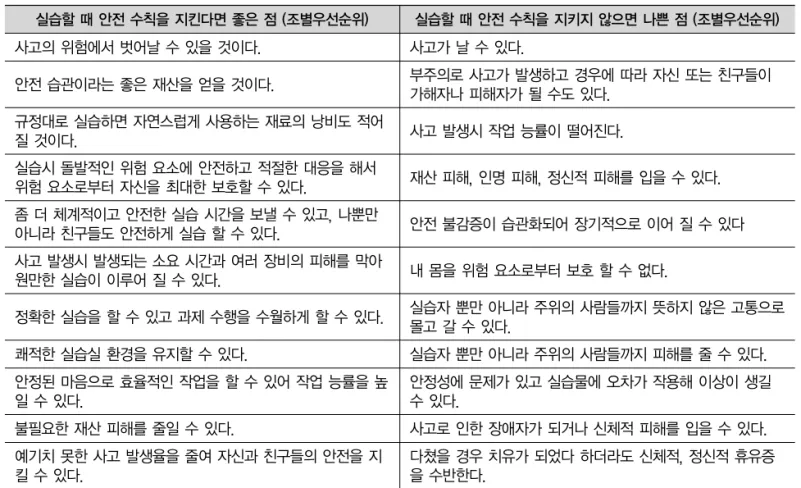
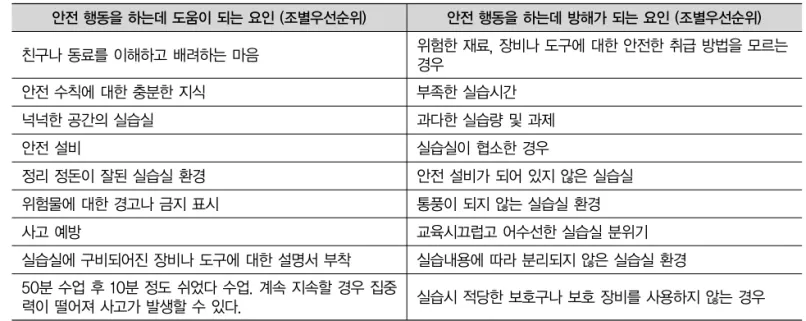
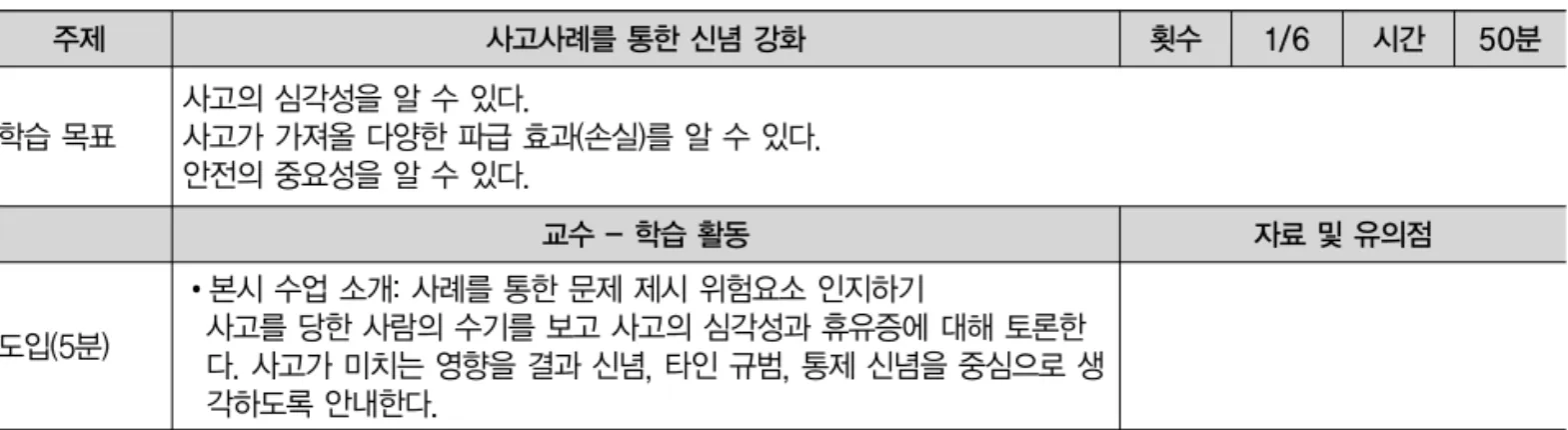
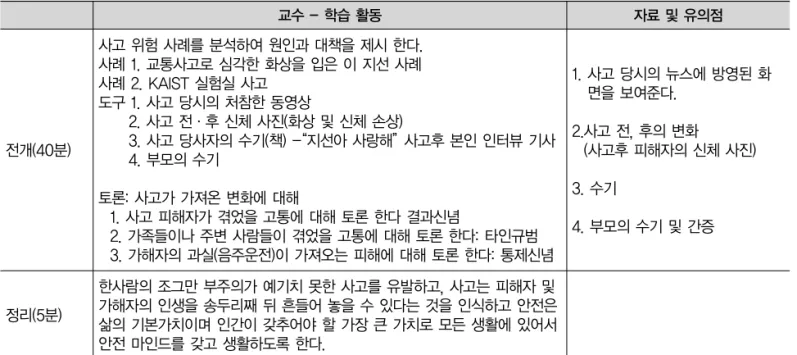
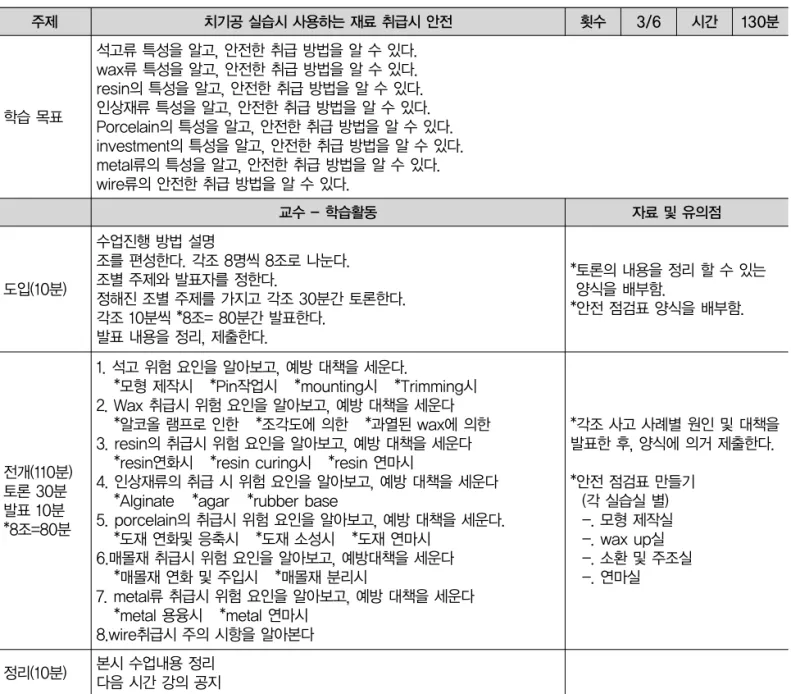
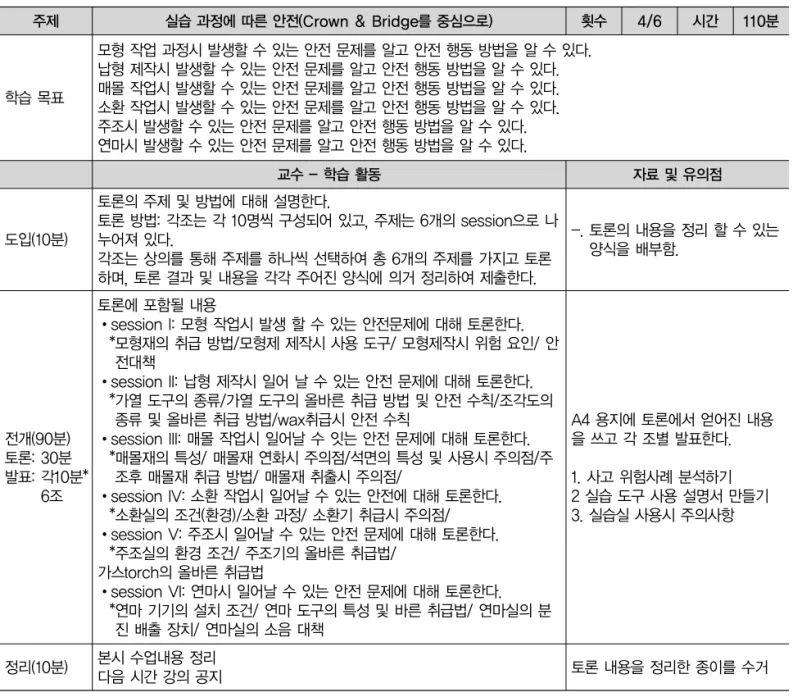
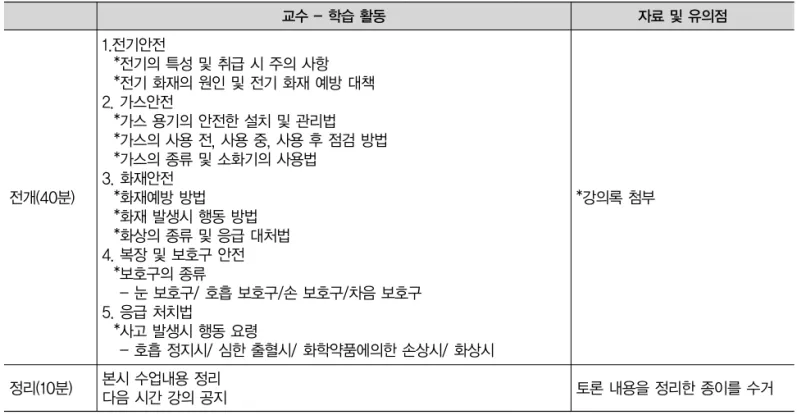
Methods: Open questions were asked to 120 sophomores majoring dental technology to understand the target group’s belief about safe actions. Following the instructions by Ajzen & Fishbein, the collected data were grouped according to similar beliefs. Those beliefs of the highest frequency were given a priority and got to represent the belief level of the target group. Even with belief changes, however, they would not be able to practice safe actions if they had no knowledge about how to do safe actions. For desirable behavioral changes among the students, the students were then asked to discuss the current state of safety accidents and issues focusing on the materials and processes used in the practice and give presentations regarding the subjects to identify risk factors. Then the identified risk factors were used to devise the program contents so that the students could practice safe actions through accurate behavioral approaches and belief changes by educating them about how to act safely by the practice processes and the involved materials and devices.
Results: Not only do the students of Dept. of Dental Technicians have difficulties with the complex practice processes while practicing to make dental prosthesis, but they are exposed to the risk of accidents as they’re poor at dealing with the materials and devices. Although there is a definite need for accident prevention education programs before practice, the reality is that the school doesn’tthe schoosuch education. Based on the judgment that an education program designed to reinforce belief for behavioral changes would generate effgrams results, an education program was developed by applying the Theory of Planned Behavior(TPB). Along with their beliefs, the current state of accidents n. Basepractice, demand for safety education, and practice level of safe actions were used to device the contents of accident prevention education and to develop an accident prevention education program for dental technology.
[Abstract]
성 명 박 종 희 전 화 010-8817-6087 E-mail [email protected] 교신저자
Ⅰ. 서 론
1. 사고예방 교육의 필요성
인간은 기본적으로 안전에 대한 욕구를 갖고 있으며 궁 극적으로는 안전하고 행복한 삶을 추구한다. 그러나 일생 을 살아가는 동안 크고 작은 사고를 경험하게 되는데 살 아가면서 경험하게 되는 모든 사고를 예방할 수는 없지만 우리가 경험하게 되는 대부분의 사고는 부주의에 의한 것 (70%)으로 조금만 주의를 기울여 행동한다면 예방할 수 있다(교육과학기술부, 2009).
교육과학기술부(2009)는 최근 6년간(2003-2008) 대학 실험실이나 연구실에서 발생한 총 사고는 143건으로 이 중 인적 피해 발생 사고는 94건이라고 보고하고 이것은 자체 인지 건수이며 실제 사고는 더 많을 것으로 추정되 므로 사고보고 의무화 필요성을 제기, 2009년 법률개정 안을 제출하여 현재 국회에 계류 중이다.
치기공학과 학생들은 대학에 입학하여 처음 치과 보철 물 제작을 위한 실습을 하게 되는데 이때 학생들은 복잡 한 실습과정에 어려움을 느낄 뿐만 아니라 사용하는 재료 나 도구의 취급 방법 등이 서툴기 때문에 불안전한 상태 로 실습을 하게 됨으로써 사고의 위험에 노출되게 된다 (박종희, 2005). 따라서 사고예방 교육을 통해 안전의 중 요성을 알리고 안전 수칙을 지키는 것을 실천하도록 하여 야 하는데 학교에서의 안전 교육은 실습전 한, 두번 정도 주의를 주는 정도에 불과한 것으로 나타나 안전 교육이 제대로 이루어지지 않고 있는 실정이다(박종희, 2005).
치기공학과 실습중 사고 실태를 보면 사고 경험이 있었다 가 36%이었으며, 화상, 절상, 타박상등 다양한 형태로 다 친 것으로 나타났고 가장 많이 다친 부위는 손으로 84.7%
이었다(박종희, 2005). 실습 담당교수는 반드시 실습전 사용하는 장비의 점검과 실습 준비를 철저히 하여 실습실 안전 환경을 조성하고 각 실습에 따른 안전 교육을 실시
하여 쾌적하고 안전한 분위기에서 실습이 이루어지도록 하여야 한다. 더우기 치기공학과 학생들의 사고 예방 교 육이 중요한 이유는 평생 직업으로 함께 할 전공의 일을 처음 배우는 과정에서부터 정확한 안전 행동 방법을 알고 작업함으로써 평생 안전을 위한 기초가 될 수 있기 때문 이다. 사고예방 교육을 하기위해서는 실습중 발생하고 있 는 안전사고 실태, 학생들의 안전 행동 실천 정도, 안전 교육 요구도, 사용하는 재료나 장비, 도구에 대한 위험 인 식 정도 등에 대한 조사가 선행되어 이러한 기초 조사를 토대로 치기공 실습시 필요한 사고 예방 교육프로그램 내 용을 구성하고 사고 예방 교육을 체계적이고 지속적으로 하여야한다. 그러나 현재 치기공학과 학생들을 위한 실습 실 안전 교육 프로그램은 미미한 실정이다.
계획된 행위이론(Theory of Planned Behavior)은 행 동에 대한 태도, 주관적 규범, 지각된 행위통제가 행동의 도에 영향을 미치고, 지각된 행위통제와 행동의도가 행동 에 영향을 준다는 이론(Fishbein과 Ajzen, 1980)으로 이 이론에서 태도는 개인이 특정 행동을 수행하는 것에 대하 여 내리는 긍정적 또는 부정적 평가를 말하는 것으로 한 개인이 어떠한 행동을 하는 것이 좋을 것인지(긍정적) 나 쁠 것인지(부정적), 그리고 그 행동을 좋아하는지, 싫어하 는지를 나타내는 판단을 의미하며 이것은 행동에 대한 태 도에 호감을 가지면 가질수록 그 행동을 하고자 하는 의 도가 더 커지므로 사람이 취할 행동에 대한 일반적인 경 향을 유추할 수 있다. 주관적 규범은 특정 행동을 하거나 하지 않도록 부과되는 사회적 압력을 개인이 지각하는 정 도를 말하는 것으로 주관적 규범(subjective norms)은 어 떤 행동을 할 것인가에 대해 행위자가 중요하게 생각하는 사람들이 호의적인 태도를 가진다면 그 수행을 할 가능성 이 커지고, 반대로 부정적인 태도를 가지면 그 수행을 하 지 않을 가능성이 커진다 (Fishbein과 Ajzen, 1980). 계 획된 행위 이론에서 추가된 지각된 행위 통제는 개인이 Conclusion: The study presents an accident prevention education program developed to reinforce dental technology students' beliefs and knowledge and to help them do safe actions during practice.
Key words :