Original Article
pISSN 2233-9019 · eISSN 2233-9116
Korean J Fam Pract. 2015;5(3, suppl. 2):117-121
KJFP
Korean Journal of Family PracticeOriginal Article
pISSN 2233-9019 · eISSN 2233-9116 Korean J Fam Pract. 2015;5(3, suppl. 2):PB-1
KJFP
Korean Journal of Family PracticeReceived June 18, 2015 Revised August 21, 2015 Accepted August 31, 2015 Corresponding Author Jeong-sook Yoon
Tel: +82-70-7609-9913, Fax: +82-70-7005-4230 E-mail: [email protected]
Copyright © 2015 The Korean Academy of Family Medicine
This is an open-access article distributed under the terms of the Creative Commons Attribution Non-Commercial License (http://creativecommons.org/licenses/by-nc/3.0) which permits unrestricted noncommercial use, distribution, and reproduction in any medium, provided the original work is properly cited.
서 론
Pseudomonas aeruginosa
는 주요한 병원감염균이다.1, 2)P
.aeruginosa
병원균은 대부분의 항균제에 내성으로carbapenem
외 에는 쓸 수 있는 항균제가 없는 경우가 많다.3, 4) 그러나carbapenem
에까지 내성인P
.aeruginosa
와Acinetobacter
균이 증가하고 있다.2006
년12
개의3
차 병원5)을 대상으로 한 연구 결과,P
.aeruginosa
의imipenem
내성율은29
%나 되었다.Imipenem
의 내성 기전들 로는 막변형, 항균제 유출, 분해효소 등이 있으며, 분해효소는 주 로metallo
-β
-lactamase
가 많고 대부분이bla
VIM-2나bla
IMP-1이다.6,7)
metallo β
-lactamase
와 유전자에 관한 연구는3
차 병원 분리주 를 대상으로 드물게 이루어져 왔다. 그러나 지역사회를 대표하는1
차 병원 들에서metallo β
-lactamase
에 관한 연구는 거의 없다.8)저자들은
1
차 병원 들에서 전향적 연구로서P
.aeruginosa
균주의imipenem
내성을 살펴보고, 국내에서 흔한metallo β
-lactamase
유 전자인bla
VIM-2,bla
IMP-1,bla
NDM-1을 관찰하고자 하였다.재료 및 방법
1. 배양 및 항균제 감수성 검사
1
차 병원27
병원 들로부터 의뢰온 폐쇄성, 개방성 농, 혈액, 체액, 객담, 소변960
검체를 대상으로 배양 및 항균제 감수성 검사를 실 시했다.1
차 병원의 정의는 외래환자만 보며, 의사수3
인 이내인 경 우로 하였다.3
차 병원에 입원 경력이 있거나 항균제 사용력이 있는 환자는 대상에서 제외하였다. 반복 분리주는 제외하였다. 생화학적 방법과API 20NE system
(bioMerieux
,Marcy 1
’Etoile
,France
) 및한국 1차 병원의 Pseudomonas aeruginosa에서 bla VIM-2 유전자 관찰
윤정숙
*서울 베스티안 병원
bla
VIM-2of Pseudomonas aeruginosa in primary hospitals in Korea
Jeong-sook Yoon*
Director of laboratory medicine, Bestian Seoul Hospital.
Background: In 2007, the resistance rate of Pseudomonas aeruginosa to imipenem was 29% in Korean tertiary hospitals. The main cause of imipenem resistance is the metallo- β-lactamase. A few studies about metallo-β-lactamase are found in tertiary hospitals, however, there are few studies in primary hospitals. Therefore, we studied whether genes encoding metallo-β-lactamase were present in P. aeruginosa isolates from primary hospitals, and studied blaVIM-2, blaIMP-1, blaNDM-1 using molecular methods.
Materials and methods: A total of 960 blood, body fluid, open and closed pus, sputum, and urine specimens obtained from 27 primary hospitals of Bundang district were used this study. A screening test of metallo-β-lactamase was performed. The primers for blaVIM-2, blaIMP-1, and blaNDM-1 were used. DNA was extracted using the AccuPrep Nano-plus Plasmid mini Extraction Kit(Bioneer, Cheongwon, Korea). PCR was performed using AccuPower PCR PreMix(Bioneer).
Results: P. aeruginosa was isolated from 42 of the 960 specimens. After PCR was performed for all 42 isolates using the three sets of metallo-β-lactamase gene-specific primers, blaVIM-2 Was detected in one sputum isolate.
Conclusion: This study gives us warning that the metallo-β-lactamase could spread in the community.
Keywords: Pseudomonas aeruginosa, VIM-2, resistance
Jeongsook Yoon. blaVIM-2 of Pseudomonas aeruginosa in primary hospitals in Korea
Korean Journal of Family Practice
KJFP
Vitek
(Biomerieux
,Marcy 1
’Etoile
,France
) 으로 균을 동정하였다.항균제 감수성검사는 디스크확산법 및
Vitek 2 system
(Biomerieux
,Marcy 1
’Etoile
,France
)으로 두가지 모두 검사하였다. 항균제는piperacillin
,tobramycin
,piperacillin
/tazobactam
,cefotaxime
,ceftazidime
,cefepime
,aztreonam
,gentamicin
,amikacin
,ciprofloxacin
,trimethoprim
/sulfamethoxazole
,imipenem
,colistin
을 포함했다. 대조균주는P
.aeruginosa ATCC 27853
으로 하였다.2. 선별 검사
metallo
-β
-lactamase
를 검출하고자Hodge
변법과imipenem
-EDTA
상승 시험을 실시하였다.Hodge
변법은E
.coli ATCC 25922
를McFarland 0
.5
관 탁도로Mueller
-Hinton
한천에 면 봉으로 접종한 후 배지 중앙에imipenem
디스크를 놓고 시험 세 균을imipenem
디스크로부터 획선하였다.24
시간 배양 후 억제 대가 시험 세균의 증식선에 따라 들어가면 양성으로 판독하였다.Imipenem
-EDTA
상승 시험은 시험 세균을McFarland 0
.5
관 탁 도로Mueller
-Hinton
한천에 면봉으로 접종 후10μg imipenem
디 스크와0
.5 M EDTA
디스크를10mm
간격으로 놓고,35
℃에서24
시간 배양한 후 디스크 사이에 억제대가 생기면 양성으로 판독했 다.9, 10)3. metallo-β-lactamase 유전자의 중합 효소 연쇄 반응(PCR) 1) 시발체
bla
VIM-2,bla
IMP-1,bla
NDM-1에 대한 시발체의 염기서열은 다음과 같다.7, 11, 12)VIM2(1) blaVIM-2 5’ ATGTTCAAACTTTTGAGTAAG 3’
VIM2(2) blaVIM-2 5’ CTACTCAACGACTGAGCG 3’
IMP1(1) blaIMP-1 5’-CATGGTTTGGTGGTTCTTGT-3’
IMP1(2) blaIMP-1 5’-ATAATTTGGCGGACTTTGGC-3’
NDM1(1) blaNDM-1 5’ ATGGAATTGCCCAATATTATGC 3’
NDM1(2) blaNDM-1 5’ TCAGCGCAGCTTGTCGGCCAT 3’
bla
IMP-1은485 bp
,bla
VIM-2는801 bp
,bla
NDM-1은300 bp
의 띠가 예상되었다.2) 중합효소연쇄반응
AccuPrep Nano
-plus Plasmid mini Extraction Kit
(bioneer
,cheongwon
,Korea
)를 사용하여DNA
를 추출하였다.PCR
은AccuPower PCR PreMix
(bioneer
,cheongwon
,Korea
)를 이용하여 수행하였다.20pmol
짜리primer
각각1μg
,DNA 1μg
씩을 첨가하여 최종 부피
20μL
가 되게 하였다.cycle
은94
℃에서5
분간 둔 후,94
℃에서30
초간denaturation
,56
℃에서30
초간annealing
,72
℃ 에서45
초간extension
을25
회 하였다.7)Gene Amp PCR System 9600
(Perkin
-Elmer Centus Corp
.,Norwalk
,CT
,USA
)을 이용 하여 수행하였다.bla
IMP-1은485 bp
,bla
VIM-2는801 bp
,bla
NDM-1은300 bp
에서 띠를 관찰하였다. 양성 대조 균주는KONSAR
(Korean Nationwide Surveilance of Antimicrobial Resistance
)에서bla
VIM-2와
bla
IMP-1P
.aeruginosa
를 구하였고, 음성 대조 균주는P
.aeruginosa ATCC 27853
균주를 사용하였다.3) 전기영동
증폭된
DNA
산물10μL
를ethidium bromide
(10μL
/ml
)가 첨가 된2
%agarose gel
(Promega
,Madison
,WI
,USA
)에서150 volt
,30
분간 전기영동하였다.7)Size marker
는0
~1
,500 base pair
구간 의100 bp DNA ladder standard
(Gibco Bethesda Research Lab
.,Bethesda
,MA
,USA
)를 이용하였다.결 과
960
검체중P
.aeruginosa
는42
균주 검출되었다(4
.4
%). 항 균제 감수성율을 살펴보면,ceftazidime 87
%,cefotaxime 33
%,cefepime 73
%,aztreonam 80
%,piperacillin 60
%,piperacillin
/tazobactam 82
%,tobramycin 60
%,gentamicin 79
%,amikacin 83
%,ciprofloxacin 69
%,trimethoprim
/sulfamethoxazole 78
%,imipenem 100
%,colistin 100
%의 감수성율을 나타냈다(Table 1
).Table 1. Antimicrobial susceptibility of P. aeruginosa in primary hospitals
항균제 1차병원 감수성율(%) 3차 병원 감수성율(%)[14]
CAZ 87 78
CTX 33 *
CEP 73 73
IPM 100 71
ATM 80 69
CPF 69 61
TRI 78 *
PIP/Tazo 82 75
AMK 83 75
GM 79 65
PIP 60 63
COL 100 *
abbreviations; IPM: imipenem, ATM: aztreonam, CEP: cefepime, CAZ:ceftazidime, CTX:cefotaxime. CPF: ciprofloxacin, TRI: trimethoprim/
sulfamethoxazole, PIP/Tazo: piperacillin/tazobactam, AMK: amikacin, GM gentamicin, PIP: piperacillin, TOB: tobarmycin, COL: colistin
* no results
윤정숙. 한국 1차 병원의 Pseudomonas aeruginosa에서 blaVIM-2 유전자 관찰 Korean Journal of Family Practice
KJFP
대조군과 비교할 때,
1
차 병원에서의 항균제 감수성율이 더 높았 다(ceftazidime 87
%vs 78
%,imipenem 100
%vs 71
%,aztreonam 80
%vs 69
%,ciprofloxacin 69
%vs 61
%,piperacillin
/tazobactam 82
%vs 75
%,amikacin 83
%vs 75
%,gentamicin 79
%vs 65
%).metallo
-β
-lactamase
선별검사에서 양성균은 관찰되지 않았다.모든
P
.aeruginosa 42
검체를 가지고bla
VIM-2,bla
IMP-1,bla
NDM-1에 대하여PCR
을 시행한 결과, 객담에서 분리된 균주에서metallo
-β
-lactamase gene bla
VIM-2가 검출되어801 bp
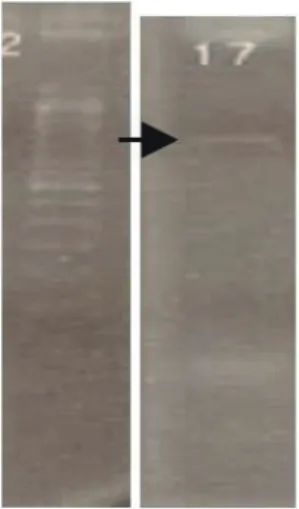
에서 띠가 관찰되었 다(Figure 1
).고 찰
P
.aeruginosa
는 기회감염균으로서 주로 병원환경과 중환자 에게 많이 감염된다.1, 2) 병원균은penicillin
,aminoglycoside
,ciprofloxacin
,broad spectrum cephalosporin
,monobactam
모 두에 내성이고imipenem
외에는 쓸 수 있는 항균제가 거의 없 다.3, 4)imipenem
은penicillin
-binding protein
과의 친화력이 우 수하며,ESBL
을 포함한 대부분의β
-lactamase
를 가수분해하여betalactam
내성 세균에 의한 감염증 치료에 유용하게 사용된다. 근 래imipenem
에까지 내성인P
.aeruginosa
와Acinetobacter spp
. 가 증가하였고,Enterobacteriaceae
중에도 내성 균주가 보고되고 있다.13)3
차 병원12
병원을 대상으로 한 연구에서imipenem
내성 율은29
% 였다.14) 다른 연구에서도imipenem
내성율을31
.2
% 로 보고하여,15)3
차 병원의imipenem
내성율은 거의3
분의1
에 달함 을 알 수 있다. 더구나 내성율이2005
년도에는21
%,2006
년도에는29
%로 급속히 증가되고 있다고 하였다. 다른3
차 병원에서도2000
년23
%,2001
년24
%,2002
년28
%,2003
년30
%로서 점점 증가추 세였다.14, 19)Enterobacteriaceae
에도carbapenem
내성이 전달되어CRE
(carbapenem resistant Enterobacteriaceae
)로 발표되고 있다.16)Imipenem
내성균의 치료로는colistin
과tigecycline
이 비교적 효 과적이라고 한다.6, 17)Imipenem
의 내성기전으로는 막변형으로 인 한 항균제 축적의 감소나 유출 펌프 때문으로 사료되고,imipenem
분해효소도 있다.Carbapenem
분해 효소는 기능성 분류로Ambler class A
인serine
형,class B
인metallo
-β
-lactamase
,class D
인oxacillinase
가 있다.Imipenem
내성은 주로class B
인metallo
-β
-lactamase
에 의하고,6, 18)metallo
-β
-lactamase
는monobactam
을 제외한β
-lactam
제제에 내성이며,clavulanic acid
에 의해서는 효소 활성이 억제되지 않으나, 금속 이온chelator
인EDTA
에 의 해서는 억제된다.19) 국내에bla
IMP가 발견된 이후 여러 종이 발견 되었고 그 중VIM
-2
,IMP
-1
이 가장 많이 보고되어 있다.13, 19)581 P
.aeruginosa
균주 중bla
VIM-2 유전자를 나타낸 것은34
균주,bla
IMP-1 유전자를 나타낸 것은2
균주였다.7)metallo
-β
-lactamase
는plasmid
나transposon
내에 다른 항균제 내성 유전자와 함께integron
상태로 공존하므로17) 쉽게 획득되어 전파가 가능하고 다제 내성균으로 발전할 수 있다.Integron
의 구조와 크기는 각각 다르 며, 이들은 플라즈미드나 염색체내에서 수평이동으로써 다른 균에 전달될 수 있다.transconjugant
실험에서integron
이E
.coli J53
으 로 전달되는 것을 확인한 바 있다.bla
VIM-2의 구조는3
-6kb
로 다양 하고, 위치와 서열이 다양하다.13)이런 상황에서 국내
1
차 병원에서metallo
-β
-lactamase
와 유 전자를 연구한 것은 거의 없다.3
차 병원에서imipenem
내성균이 급증하는 현실에서 지역사회의 감염감시 업무를 소홀히 할 수 없 을 것이다. 그러나 현재1
차 병원의 연구는 거의 없어, 저자들은1
차 병원에서의metallo
-β
-lactamase
와 유전자를 살펴보기로 하였 다. 더욱이 최근에는 미국과 여러나라에서metallo
-β
-lactamase
인bla
NDM-1의 유행이 보고되고 있다.NDM
-1
형은2008
년도 인도를여행한 스웨덴인에서 처음 보고되었으며, 최근 국내 질병관리본부 에서도
bla
NDM-1이 보고되었다.20, 21)bla
NDM-1은 주로Klebsiella
나E
.coli
균주 및P
.aeruginosa
에서 보고된다.16, 22, 23)이번 연구에서
1
차 병원들로부터 의뢰온960
검체들 중42
검체 가P
.aeruginosa
로 판명되어12
개3
차 병원 연구보다 낮은 빈도 로 검출되었다.14) 역시1
차 병원에서3
차 병원의 빈도보다 낮은 빈 도를 나타냈다. 이번 연구의 항균제 감수성율은ceftazidime 87
%,cefotaxime 33
%,cefepime 73
%,aztreonam 80
%,piperacillin 60
%,piperacillin
/tazobactam 82
%,tobramycin 60
%,gentamicin
The primers for blaVIM-2, blaIMP-1, and blaNDM-1 were used. DNA was extracted using the AccuPrep Nano-plus Plasmid mini Extraction Kit (Bioneer, Cheongwon, Korea). PCR was performed using AccuPower PCR PreMix (Bioneer)
Figure 1. blaVIM-2 detected on 801 bp. band by PCR
Jeongsook Yoon. blaVIM-2 of Pseudomonas aeruginosa in primary hospitals in Korea
Korean Journal of Family Practice
KJFP
79
%,amikacin 83
%,ciprofloxacin 69
%,trimethoprim
/sulfamethoxazole 78
%,imipenem 100
%,colistin 100
%의 감수 성율을 나타냈다(Table 1
). 항균제 감수성율은 시흥지역을 대상 으로 한 이전 연구와 매우 유사하였다.8)3
차 병원의 연구에서는ceftazidime 78
%,cefepime 73
%,aztreonam 69
%,piperacillin
/tazobactam 75
%,amikacin 75
%,gentamicin 65
%를 나타냈고, 따 라서1
차 병원의 연구가 더 높은 항균제 감수성율을 나타냈다.14) 이 번 연구에서 검출된42
주의P
.aeruginosa
중에imipenem
내성은 없 었다.1
차 병원에imipenem
내성균이 거의 없고, 아직imipenem
이 유효한 치료 효과가 있음을 알 수 있다.3
차 병원이나 대학 병원 에서imipenem
내성율이 거의30
%에 육박함과 비교하여 지역사회 를 대표하는1
차 병원에는imipenem
내성균이 발견되지 않아3
차 병원과 큰 차이를 나타내었다.그러나 이번 연구에서
bla
VIM-2가1
차 병원에서 검출되었다 (Figure 1
). 객담 검체에서 분리된 균주로PCR
을 시행한 결과,801 bp
에서 정확한 띠가 관찰되었다. 스크리닝 검사와의 불일치의 이 유는 유전자 수준에서의bla
VIM-2 유전자가 충분히metallo
-β
-lactamase
단백을 형성하지 않았기 때문으로 사료된다. 이 환자는community
에서 균을 획득했고 이전 입원경력이나 항균제 사용력 이 없으므로 ‘community onset infection
’으로 정의된다.3
차 병원의 국내 보고에서도20
균주의metallo
-β
-lactamase
생성 균주 중19
균주가bla
VIM-2를 보유하고 있어metallo
-β
-lactamase
유전자 중 대다수가bla
VIM-2임을 나타냈다.19) 또, 한3
차 병원에서도bla
VIM-2 유전자를 가진P
.aeruginosa
의 빈도는1997
년11
.5
%,1998
년8
.2
%,1999
년5
.9
% 로 꾸준히 보고되었다고 하였 다.24)본 연구에서
imipenem
디스크 확산법에서는26mm
로 감수성, 액체배지희석법에서는MIC 2μg
/mL
, 한천 희석법은2μg
/mL
로 감 수성이었다.Imipenem
감수성균에서metallo
-β
-lactamase
유전자
bla
VIM-2가 검출되었는데, 어떤 보고에서는carbapenemase
를 생성하는
P
.aeruginosa
라고 해도, 그 중3
분의1
은 항균제 감수성 범 위 내에 들었다고 하여,carbapenemase
를 생성하여도 감수성 균이 상당수를 차지함을 나타냈다.17) 내성유전자가 있어도carbapenem
제제의 종류에 따라 내성 정도가 다른 것으로 보고되어 있으므로ertapenem
,meropenem MIC
을 검사하였다. 그 결과ertapenem
,meropenem MIC
는1µg
/mL
,2µg
/mL
이었다.국내
3
차 병원에서도imipenem
감수성 균에서bla
VIM-2 빈도 를 살펴보면 총 빈도는 지금보다 높아질 것이다. 따라서 이 현상은metallo
-β
-lactamase
를 생성하지 못하거나, 적게 생성하므로 아 직 내성 표현형을 나타내지 않는plasmid level
의gene transference
나 다른
clone
간의genetic exchange
를 나타내는 것으로 사료된 다.Shenoy
등의 연구에서도PCR
에서bla
NDM-1을 나타낸 경우,screeing test
에서metallo
-β
-lactamase
가 검출된 경우는 일부였다 고 하였다.25) 그리고 현재metallo
-β
-lactamase
유전자bla
VIM-2가 국내1
차 병원으로 전파되어 있는 상황으로 사료된다. 지역사회에서metallo
-β
-lactamase
생성균의 감시를 더욱 철저히 하여야 할 것 으로 생각된다. 이를 위해서는Metalo
-β
-lactamase
의 빠른 검출을 위해서 분자적 검출이 필요하다. 결론적으로 국내1
차 병원에서P
.aeruginosa 42
균주 중 한 균주에서bla
VIM-2를 나타냈다. 아직1
차 병원에metallo
-β
-lactamase
에 의한imipenem
내성균이 만연하 지는 않으나 분자적 수준의 유전자 전이를 나타내는 것으로 고려되 어, 지역사회에metallo
-β
-lactamase bla
VIM-2 유전자가 침투, 확산 되어 있다고 생각된다. 분자 유전 수단을 통한 감염 감시 관리를 철 저히 하여야 할 것이다.요 약
연구배경:
2007
년, 한국3
차 병원에서Pseudomonas aeruginosa
의imipenem
내성율은29
%였다. 내성의 가장 흔한 원인은Metallo
-β
-lactamase
이다.3
차 병원에서는metallo
-β
-lactamases
에 관한 보고들이 있으나,1
차 병원에서 이에 대한 연구는 거의 없다. 이 연 구의 목적은1
차 병원들에서metallo
-β
-lactamase
가 존재하는지 와 한국에서 흔한bla
VIM-2,bla
IMP-1 유전자 및bla
NDM-1을 분자적으 로 검출하고자 한 것이다.재료 및 방법: 연구 대상은
27
개의 분당지역1
차 병원들로부터 의 뢰온 개방성 또는 폐쇄성 창상, 혈액, 체액, 객담, 소변960
검체였 다. 이들에서 분리된P
.aeruginosa
에서metallo
-β
-lactamase
선 별 검사를 실시하였다. 시발체bla
VIM-2,bla
IMP-1,bla
NDM-1를 제조 하였다. 검체에서AccuPrep Nano
-plus Plasmid mini Extraction Kit
(bioneer
,cheongwon
,Korea
)를 이용하여DNA
를 추출한 후,AccuPower PCR PreMix
를 이용하여PCR
을 수행하였다.결과:
960
검체중P
.aeruginosa
는42
검체에서 분리되었다 (4
.4
%).42
검체 모두를PCR
한 결과1
균주에서bla
VIM-2, 가 검출되었다.결론: 한국의
1
차 병원들의P
.aeruginosa
균주에서bla
VIM-2가 검출 되었다.metallo
-β
-lactamase
유전자를 검출하기 위한surveillance
프로그램이 필요할 것이다.윤정숙. 한국 1차 병원의 Pseudomonas aeruginosa에서 blaVIM-2 유전자 관찰 Korean Journal of Family Practice
KJFP
중심단어: 녹농균,
VIM
-2
, 내성균 REFERENCES1. Inacio HS, Bomfim MR, França RO, Farias LM, Carvalho MA, Serufo JC et al.Phenotypic and Genotypic Diversity of Multidrug- Resistant Pseudomonas aeruginosa Isolates from Bloodstream Infections Recovered in the Hospitals of Belo Horizonte, Brazil.
Chemotherapy. 2014 ;60(1):54-62. [Epub ahead of print]
2. Yan Y, Yao X, Li H, Zhou Z, Huang W, Stratton CW, et al. A Novel Pseudomonas aeruginosa Strain with an oprD Mutation in Relation to a Nosocomial Respiratory Infection Outbreak in an Intensive Care Unit. J Clin Microbiol. 2014 ;52(12):4388-90.
3. Bell, S. M., J. N. Pham, and J. Y. M. Lanzarone. Mutation of Pseudomonas aeruginosa to piperacillin resistanc mediated by β -lactamase production. J. Antimicrob. Chemother. 1985;15:665- 670.
4. Scullly, B. E., M. F. Parry, H. C. Neu, and Mandell. Oral cyflofloxacin therapy of infections due to Pseudomonas aerginosa. Lancet 1986;1:819-22.Scullly, B. E., M. F. Parry, H. C. Neu, and Mandell.
Oral cyflofloxacin therapy of infections due to Pseudomonas aerginosa. Lancet 1986;1:819-22.
5. Hong SG, Yong DE, Lee KY, Kim EC, Lee WK, Jeong SH, et al.
Antimicrobial resistance of clinically important bacteria isolated from hospitals located in representative provinces of Korea. Korean J Clin Microbiol 2003;6(1): 29-36.
6. Castanheira M, Sader HS, Deshpande LM, Fritsche TR, and Jones RN. Antimicrobial activities of tigecycline and other broad spectrum antimicrobials tested against serine carbapanemase and metallo-β -lactamase producing Enterobacteriaceae: Report from the Sentry antimicrobial surveillance program. Antimicrob Agents Chemother 2008;52(2):570-3.
7. Lee KY, Yum JH, Yong DE, Lee HM, Kim HD, Jennis DD, et al.
Novel acquired metallo-β-lactamase gene, blaSIM-1, on a class 1 integron from Acinetobacter baumannii clinical isolates from Korea.
Antimicrob Agents Chemother 2005;49(11):4485-91.
8. Yoon JS. Antimicrobial resistance of urinary isolates in the urine collected from patients admitted into primary-care hospital in Shiheung district. Korean J Clin Microbiol 2013;16(2);145-8.
9. Performance Standards for Antimicrobial Susceptibility Testing;
Twentieth Informational Supplement. Table 2A-S2. 2010.
10. Lee K, Chong Y, Shin HB, Kim YA, Yong D, Yum JH. Modified Hodge and EDTA-disk synerge tests to screen metallo-beta- lactamase-producine strains of Pseudomonas and Acinetobacter species. Clin Microbiol Infect 2001;7:88-91.
11. Liu ZY, Li W, Wang J, Pan J, Sun SP, Yu YH. First NDM-1 producing E.coli strain in China. PLoS One. 2013 Jun 10;8(6):1-6.
12. Poirel L, Naas T, Nicolas D, Collet L, Bellais S, Cavallo JD et al.
Characterization of VIM-2, a carbapenem-hydrolyzing metallo- beta-lactamase and its plasmid- and integron-borne gene from a Pseudomonas aeruginosa clinical isolate in France. Antimicrob
Agents Chemother 2000;44:891-7.
13. Yum JH, Shin HB, Yong DE, Chong YS. Diversity of integrons carrying blaVIM-2 cassette in Pseudomonas spp. and Acinetobacter spp. Korean J Clin Microbiol 2012;15;131-8.
14. Lee HM, Kim CK, Lee JW, Lee SH, Ahn JY, Hong SG et al.
Antimicrobial resistance of clinically important bacteria isolated from 12 hospitals in Korea in 2005 and 2006. Korean J Clin Microbiol 2007;10:59-69.
15. Yoon YS, Lee BY, Bae IK, Kwon SB, Jeong SH, Jeong TJ. Prevalence of Imipenem-Resistant Pseudomonas aeruginosa Isolates and Mechanisms of Resistance. Korean J Clin Microbiol 2005;8(1):26- 33.
16. Green DA, Srinivas N, Watz N, Tenover FC, Amieva M, Banaei N. A pediatric case of New Delhi metallo-β-lactamase(NDM-1)- producing Enterobacteriaceae in the United States. Pediatric Infect Dis J. 2013 Jun 5. [Epub ahead of print]
17. Castanheira M, Sader HS, Deshpande LM, Fritsche TR, Jones RN.
Antimicrobial activities of tigecycline and other broad-spectrum antimicrobials tested against serine carbapenemase- and metallo-β -lactamase-producing Enterobacteriaceae: Report from the SENTRY antimicrobial surveillance program. Antimicrob Agents Chemother 2008;52(2):570-3.
18. Queenan, A. M., and K. Bush. 2007. Carbapenemases: the versatile β-lactamases. Clin. Microbiol. Rev. 20:440-458.
19. K IS, Oh WI, Song JH, Lee NY. Screening and Identification of metallo-β-lactamase gene in clinical isolates of imipenem-resistant Pseudomonas aeruginosa. Korean J Lab Med 2004;24(3)177-82.
20. Rasheed JK, Kitchel B, Zhu W, Anderson KF, Clark NC, Ferraro MJ el al. New Delhi metallo-β-lactamase-producing Enterobacteriaceae, United States. Emerging Infect Dis 2013;19870- 8.
21. Yoo JS, Kim HS, Yang JW, Yoo JI, Kim HS, Park HK et al.
Nosocomial transmission of NDM-1-producing Escherichia coli ST101 in a Korean hospital. J Antimicrob Chemother. 2013;
68:2170-2.
22. Bushnell G, Mitrani-Gold F, Mundy LM. Emergence of New Dehli metallo-β-lactamase type 1-producing enterobacteriaceae and non-enterobacteriaceae: global case detection and bacterial surveillance. Int J Intect Dis 2013;17(5):e325-33.
23. Cunningham SA, Noorie T, Meunier D, Woodford N, Patel R.
Rapid and simultaneous detection of genes encoding Klebsiella pneumoniae carbapenemase (blaKPC) and New Dehli metallo-β -lactamase(blaNDM) in Gram-negative bacilli. J Clin Microbiol 2013;51(4):1269-71.
24. Lee K, Lim JB, Yum JH, Yong D, Chong Y, Kim JM. blaVIM2 cassette-containing novel integrons in metallo-β-lactamase- producing Pseudomonas aeruginosa and Pseudomonas putida isolated disseminated in Korean hospital. Antimicrob Agents Chemother 2002;46:1053-8.
25. Shenoy KA, Jyothi EK, Ravikumar R. Phenotypic identification &
molecular detection of bla (ndm-1) gene in multidrug resistant Gram-negative bacilli in a tertiary care centre. Indian J Med Res.
2014;139(4):625-31.
![Table 1. Antimicrobial susceptibility of P. aeruginosa in primary hospitals 항균제 1차병원 감수성율(%) 3차 병원 감수성율(%)[14] CAZ 87 78 CTX 33 * CEP 73 73 IPM 100 71 ATM 80 69 CPF 69 61 TRI 78 * PIP/Tazo 82 75 AMK 83 75 GM 79 65 PIP 60 63 COL 100 *](https://thumb-ap.123doks.com/thumbv2/123dokinfo/5418670.226749/2.892.461.821.828.1080/antimicrobial-susceptibility-aeruginosa-hospitals-항균제-차병원-감수성율-감수성율.webp)