263
Gullain-barre Syndrome Associated with Non-Hodgkin's Lymphoma
Jun-Hwa Song, M.D.1, Gun Wook Park, M.D., Ph.D.1, Young Joo Sim, M.D., Ph.D.2, Jae Yong Jeon, M.D.3, Seong Jae Lee, M.D., Ph.D.3, Jung Keun Hyun M.D., Ph.D.3,
Yoon-Young Cho, M.D.1 and Sung-Dong Park, M.D.4,
1Department of Internal Medicine, Dongguk University College of Medicine, Gyeongju, 2Department of Rehabilitation Medicine, Kosin University College of Medicine, Pusan, 3Dankook University College of Medicine, Cheonan,
4Department of General Thorasic and Cardiovascular Surgery, Dongguk University College of Medicine, Gyeongju, Korea
A 67-year-old man developed swelling of the right leg with inguinal and abdominal pain over a period of 5 days. Excisional biopsy of the left supraclavicular lymph nodes revealed the diffuse, large B cell type of malignant lymphoma. After chemotherapy, he complained of a tingling sensation and weakness in the left upper extremity, and then this progressed to quadriplegia. Electrodiagnostic testing demonstrated the characteristic findings of demyelination, which was consistent with Guillain-Barre syndrome (GBS).
Non-Hodgkin's Lymphoma (NHL) leading to GBS, as was observed in the present case, suggests that physicians should be aware of GBS and non-Hodgkin’s lymphoma as the full spectrum of these dis- easeshas not been fully defined. (Korean J Hematol 2008;43:263-267.)
Key Words: Guillain-barre syndrome, Non-Hodgkin's lymphoma, Chemotherapy, Quadriplegia
접수:2008년 11월 11일, 수정:2008년 12월 22일 승인:2008년 12월 26일
교신저자:전재용, 충남 천안시 안서동 산 16-5
330-715, 단국대학교 의과대학 재활의학교실 Tel: 041-550-6640, Fax: 041-551-7062
E-mail: [email protected]
The present research was conducted by the research fund of Dankook University in 2006.
Correspondence to:Jae Yong Jeon, M.D.
Department of Rehabilitation, Dankook University College of Medicine
San 16-5, Anseo-dong, Cheonan 330-715, Korea Tel: +82-41-550-6640, Fax: +82-41-551-7062 E-mail: [email protected]
INTRODUCTION
The neurologic complications of lymphoma have been reviewed by a number of authors. It has been estimated that the nervous system is in- volved in about 10∼25% of cases.1) Its neurologic complications include: local depositions in brain, spinal cord, and cranial and peripheral nerves;
disorders of obscure origin, such as, encephalo- myelitis, cerebellar degeneration, peripheral neu- ropathy, and polymyositis; progressive multifocal leukoencephalopathy; and opportunistic infec- tions, such as, herpes zoster and cryptococcosis.2)
Guillain-Barre syndrome (GBS) is an inflam- matory demyelinating symmetrical sensorimotor polyneuropathy that involves peripheral and cra- nial nerves and roots. GBS is viewed as a reactive, self-limited, autoimmune disease triggered by a preceding bacterial or viral infection. Immune re- actions in GBS against target epitopes in Sch- wann-cell surface membrane or myelin result in acute inflammatory demyelinating neuropathy (85%
of cases). Moreover, reactions against epitopes contained in axonal membranes cause the acute axonal forms of GBS (15% of cases).3)
The effects of lymphoma on the peripheral nervous system have been reviewed in some
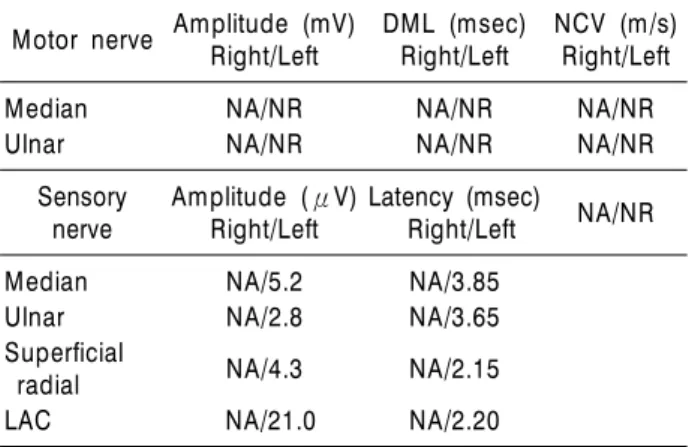
Table 1. Results of nerve conduction studies Motor nerve Amplitude (mV)
Right/Left DML (msec)
Right/Left NCV (m/s) Right/Left
Median NA/NR NA/NR NA/NR
Ulnar NA/NR NA/NR NA/NR
Sensory nerve
Amplitude (μV) Right/Left
Latency (msec)
Right/Left NA/NR
Median NA/5.2 NA/3.85
Ulnar NA/2.8 NA/3.65
Superficial
radial NA/4.3 NA/2.15
LAC NA/21.0 NA/2.20
NCS, nerve conduction study; DML, distal motor latency;
NCV, nerve conduction velocity; NR, no response; NA, not assessed; LAC, lateral antebrachial cutaneous.
GBS in association with Hodgkin's disease, but its association with non-Hodgkin's lymphoma (NHL) is relatively rare. This study stresses the possibility of the occurrence of GBS in a patient with NHL, and suggests that the spectra of these disease entities have not been fully defined.
CASE REPORT
In October 2002, a 67-year-old man developed right leg swelling with inguinal and mild ab- dominal pain 5 days prior to his presentation at our clinic. A physical examination revealed mild abdominal tenderness and non-tender movable lymph nodes in the left supraclavicular area.
There was no evidence of other neurological abnormalities. The only significant medical his- tory was that of a ureter stone, which had been removed 2 weeks before this presentation.
Ultrasonography showed lymphadenopathy of paraaortic and both iliac vessels, and in lumbar areas. Abdominal and chest computerized tomo- graphic (CT) scans showed enlarged multiple lymph nodes on the celiac axis, around the supe- rior mesentery artery, both lower tracheal regions, and in paraaortic, subcarinal and both hilar areas, and revealed splenomegaly and hydrone- phrosis.
Results of hematological laboratory tests were;
white cell count 5,870/μL, hemoglobin 12.1g/dL, platelets 201,000/μL, atypical lymphocytes 11%
(reference 0%), beta 2 microglobulin 7.12 (refe- rence range 1.0∼3.0), LDH 650U/L (reference range 101∼208), calcium 8.8mg/dL, uric acid 9.9 mg/dL (reference range 2.4∼7.0mg/dL), BUN/Cr 18/1.7mg/dL, AST/ALT 42/12U/L. Serum elec- trophoresis results were compatible with acute in- flammation, i.e., increased α1 and α2 globulin and normal δ globulin. Bone marrow (BM) aspi- ration and biopsy indicated malignant B-cell lym- phoma, suggesting BM metastasis. Excisional bi- opsy of the left supraclavicular lymph nodes con- firmed malignant lymphoma, of the diffuse, large
CD79a, bcl-2, bcl-6, MIB) were positive.
On day 12 after admission, chemotherapy with cyclophosphamide (1,350mg, day1), adriamycin (40mg, day1), vincristine (2mg, day1) and solo- ndo (100mg, days 1∼5) was started. On day 38 post-admission, chemotherapy was repeated.
On day 44 post-admission (6 days after repeat chemotherapy), the patient complained of tin- gling sensation in the left hand, which later ex- tended to the left foot. On day 64 (26 days after repeat chemotherapy), weakness appeared in his left upper extremity without any definite sensory abnormality.
Nerve conduction studies (NCS), i.e., needle electrode examination (NEE), and somatosensory evoked potential (SEP), were performed. Skin temperature was maintained at 34oC. No motor responses were obtained. Sensory studies of the left median, ulnar and superficial radial nerves revealed low response amplitudes, except for the left lateral antebrachial cutaneous nerve, which had a normal latency and amplitude. Motor and sensory conduction studies in the left upper limb are shown in Table 1. SEPs of both median nerves were normal. On NEE, no evidence of de- nervation was obtained for all muscles inves- tigated in the left upper extremity. This electro- diagnostic testing was regarded as an incomplete
Fig. 1. Magnetic resonance imaging findings demonstrating a swelling and enhancement in the 6th and 7th cervical nerve roots. (A) T1 weighted axial imaging. (B) Gadolinium enhanced T1 weighted axial imaging.
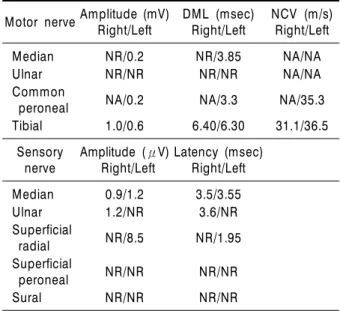
Table 2. Follow-up nerve conduction studies Motor nerveAmplitude (mV)
Right/Left DML (msec)
Right/Left NCV (m/s) Right/Left
Median NR/0.2 NR/3.85 NA/NA
Ulnar NR/NR NR/NR NA/NA
Common
peroneal NA/0.2 NA/3.3 NA/35.3
Tibial 1.0/0.6 6.40/6.30 31.1/36.5 Sensory
nerve Amplitude (μV)
Right/Left Latency (msec) Right/Left
Median 0.9/1.2 3.5/3.55
Ulnar 1.2/NR 3.6/NR
Superficial
radial NR/8.5 NR/1.95
Superficial
peroneal NR/NR NR/NR
Sural NR/NR NR/NR
evaluation due to the patient's clinical status, i.e., prominent left hand swelling.
On day 65 post-admission (27 days after repeat chemotherapy), brain MRI (magnetic resonance imaging) revealed no brain involvement. Howev- er, cervical MRI revealed swelling and enhance- ment at the 6th and 7th cervical spinal nerve roots (Fig. 1). Accordingly, a compression lesion at the cervical root was regarded as the reason for the initial tingling sensation and weakness in his left upper extremity.
On day 72 (34 days after repeat chemotherapy), he complained of weaknesses of the lower ex- tremities, facial palsy, and respiratory difficulties, and electrodiagnostic testing was re-performed.
Compound motor action potentials (CMAPs) of the right median and both ulnar nerves were not detectable while the CMAPs of both tibial, left common peroneal and left median nerves showed reduced amplitudes, conduction block, and low conduction velocities. Sensory nerve action poten- tials (SNAPs) of the right superficial radial, both superficial peroneal and sural nerves were not measurable, while the SNAPs of both median, right ulnar, and left superficial peroneal nerves showed reduced amplitudes and prolonged laten- cies. Motor and sensory conduction studies in both upper and lower limbs are shown in Table 2.
NEE showed denervation potentials in the left flexor carpi radialis and tibialis anterior muscles.
Based on his clinical course and neurologic test findings, a diagnosis of GBS was made.
Although treatment with high-dose steroids was started immediately after the diagnosis was made, he experienced respiratory difficulties and finally required intubation and assisted venti- lation.
DISCUSSION
Patients with lymphoma frequently develop neurologic abnormalities. The differential diag- nosis of peripheral neuropathies depends on the clinical setting, but mainly includes nervous sys- tem infiltration with lymphoma and drug tox- icity, both of which have been well described.6) Central nervous system infiltration can usually be diagnosed easily using imaging techniques, and in certain circumstances, by subsequent stereo- tatic biopsy. The occurrence of lymphoma caus- ing peripheral nerve infiltration has been de- scribed, but is uncommon and difficult to diag- nose.5) Peripheral nerve involvement in lympho- ma can present with several different syndromes.
Patients may present with plexopathy or in- dividual cranial or peripheral nerve deficits, or with generalized sensory, sensorimotor or motor neuropathies.2)
As discussed above, many factors have been implicated as precipitating causes of GBS, but al- though a number of causes are possible, it is as- sumed that immune response in the central and peripheral nervous systems is responsible. It seems likely that malignant tumors act as sources of the antigenic factors that are responsible for initiating an immune response in the nervous system, which may then manifest as GBS.7) Drug toxicity is the other major cause of neu- rological abnormalities. High-dose cytarabine may cause cerebellar dysfunction,8) vinca alkaloids ty- pically induce sensorimotor polyneuropathy.5) Fur- thermore, intrathecal chemotherapy with metho- trexate and cytarabine may be responsible for myelopathy.9)
Chemotherapy, especially with vinca alkaloids, is probably the commonest cause of peripheral neuropathy in patients with lymphoma. More- over, all currently proven combinations of chemo- therapeutic regimens used for advanced lympho- ma treatment use at least one of the vinca alka- loids, which makes it difficult to detect whether
criminating vinca alkaloids as a cause of periph- eral neuropathy relates mostly to vincristine, but vindesine and vinblastine almost certainly possess similar neurotoxicities.5)
Pal PK studied clinical and electrophysiolo- gical characteristics in vincristine induced neuro- pathy.10) Conduction studies showed prolonged mean distal latencies, decreased mean amplitudes of compound muscle action potentials, with al- most unchanged conduction velocities. They con- cluded that vincristine produces a distal symme- trical sensorimotor neuropathy, predominantly involving large diameter fibers during the early stages. Furthermore, electrophysiological studies characterized this neuropathy as a distal axono- pathy.
In the described case, the compression lesion at the 6th and 7th cervical root was regarded as the reason for the initial tingling sensation and weakness in his left upper extremity. Rapid pro- gression of proximal symmetrical motor weakness over a 27∼29 day period after repeat chemo- therapy, together with areflexia, lead to a suspi- cion of GBS. He also displayed most of the diag- nostic features of GBS, including progression of symptoms over days to four weeks, mild sensory symptoms or signs, weakness of facial muscles, and swallowing difficulty.
Electrodiagnostic testing was used to differ- entiate GBS and toxic polyneuropathy because our patient had finished repeat chemotherapy containing vincristine within the preceding 6 days. This was in-line with the characteristic findings of demyelination, which is consistent with GBS.
In summary, we describe a rare association be- tween NHL and GBS in an elderly man ad- ministered chemotherapy containing vincristine.
Toxic polyneuropathy was excluded based on cli- nical features and electrodiagnostic testing. We conclude that although the occurrence of GBS in a patient with NHL is rare, it should be consid- ered in the differential diagnosis of neurologic
symptoms in chemotherapy-treated lymphoma patients.
요 약
미만성 거대 B세포 림프종에서 부종양 증후군으로 길 리안 바레 증후군이 발생하는 경우는 드물며 기전도 확 실하지 않다. 저자들은 미만성 거대 B세포 림프종이 있 는 환자에서 항암치료를 하던 중 부종양 증후군으로 길 리안 바레 증후군을 전기진단 검사로 진단하였고 그 예 를 경험하였기에 보고하는 바이다.
REFERENCES
1) Whisnant JP, Siekert RG, Sayre GP. Neurologic manifestations of the lymphomas. Med Clin North Am 1956;40:1151-61.
2) Mcleod JG. Peripheral polyneuropathy associated with lymphomas, leukemias, and polycythemia vera.
In: Dyck PJ, Thomas PK, Lambert EH, Bunge R, eds. Peripheral neuropathy. 3rd ed, Philadelphia:
Saunders, 1993:1591-8.
3) Hahn AF. Guillain-Barré syndrome. Lancet 1998;
352:635-41.
4) Vallat JM, De Mascarel HA, Bordessoule D, et al.
Non-Hodgkin malignant lymphomas and peripheral neuropathies-13 cases. Brain 1995;118:233-45.
5) Hughes RA, Britton T, Richards M. Effects of lym- phoma on the peripheral nervous system. J R Soc Med 1994;87:526-30.
6) Re D, Schwenk A, Hegener P, Bamborschke S, Diehl V, Tesch H. Guillain-Barré syndrome in a patient with non-Hodgkin's lymphoma. Ann Oncol 2000;11:
217-20.
7) Klingon GH. The Guillain-Barré syndrome asso- ciated with cancer. Cancer 1965;18:157-63.
8) Johnson NT, Crawford SW, Sargur M. Acute ac- quired demyelinating polyneuropathy with respira- tory failure following high-dose systemic cytosine arabinoside and marrow transplantation. Bone Mar- row Transplant 1987;2:203-7.
9) Dunton SF, Nitschke R, Spruce WE, Bodensteiner J, Krous HF. Progressive ascending paralysis following administration of intrathecal and intravenous cyto- sine arabinoside. A Pediatric Oncology Group study.
Cancer 1986;15:1083-8.
10) Pal PK. Clinical and electrophysiological studies in vincristine induced neuropathy. Electromyogr Clin Neurophysiol 1999;39:323-30.