662
Copyright © 2017 The Korean Society of Fisheries and Aquatic Science pISSN:0374-8111, eISSN:2287-8815
서 론
항균제는수산양식및축산분야등우리가섭취하는식품을 안정적으로생산하기위해서는반드시필요한약제임은분명하 며
,
국내에서판매되는항균제는2011
년878
톤, 2012
년855
톤, 2013
년765
톤으로매년항균제사용량이감소하고있지만,
수 산용항균제의경우2011
년239
톤, 2012
년227
톤, 2013
년213
톤으로매년일정한수준으로사용되고있다
(KMFDS, 2015).
항균제내성균의출현은질병의치료및예방뿐만아니라성장
촉진목적으로사용되는항균제와밀접한관계가있고
(Van den
Bogaard and Stobberingh, 1999),
항균제의오·
남용으로인한 내성균증가는어류및가축의질병치료를어렵게만들뿐만아 니라공중보건학적으로도심각한문제를초래할수있다(Souli et al., 2008).
특히항생제내성균이가진내성유전자는식품,
환 경등여러가지경로를통해인간에게질병을유발하는병원균 에게전달될수있으며,
낮은농도의항균제라도장기간사용할경우세균의약제내성을증가시킬뿐만아니라다제내성균 으로발전시킬
가능성도있다고하는연구결과를볼때올바
른항균제사용과오
·
남용방지는무엇보다중요하다(Van den
Bogaard and Stobberingh, 2000; Tendencia and Pena, 2001).
패류양식장은마을
,
가축사육시설등이위치한육상과인접한 연안해역에위치하고있으며,
패류는이동성이거의없고,
여과 섭식과정을통해먹이를섭취하는생리특성때문에주변해수 중에존재하는세균들을체내에축적하게되며,
강우발생으로 다량의육상오염물질이패류생산해역으로유입되며패류중 의세균학적오염도는크게증가한다(Lee et al., 2010; Park et al., 2011; Park et al., 2012).
대장균(Escherichia coli)
은사람 이나가축의장내에주로서식하는세균이며,
환경,
식품,
임상 에서의항균제내성균출현과내성패턴의변화를이해하는데 유용한세균으로알려져있어패류양식장에서분리된대장균 의항균제내성특성에관한연구가부분적으로이루어져있다(Levin et al., 1997; Park et al., 2013).
서해안 패류에서 분리한 대장균 및 장염비브리오균의 항균제 내성 패턴
류아라·박큰바위·김송희·함인태·권지영*·김지회
1·유홍식
2·이희정·목종수
국립수산과학원 식품위생가공과, 1국립수산과학원 연구기획과, 2국립수산과학원 서해수산연구소
Antimicrobial Resistance Patterns of Escherichia coli and Vibrio para- haemolyticus Isolated from Shellfish from the West Coast of Korea
A Ra Ryu, Kunbawui Park, Song Hee Kim, In Tae Ham, Ji Young Kwon*, Ji Hoe Kim1, Hong Sik Yu2, Hee Jung Lee and Jong Soo Mok
Food Safety and Processing Research Division, National Institute of Fisheries Science, Busan 46083, Korea
1Research and Development Planning Department, National Institute of Fisheries Science, Busan 46083, Korea
2 West Sea Fisheries Research Institute, National Institute of Fisheries Science, Incheon 22383, Korea
This study investigated the antimicrobial resistance patterns of Escherichia coli and Vibrio parahaemolyticus iso- lated from oysters Crassostrea gigas , short-necked clams Ruditapes philippinarum and corb shells Cyclina sinensis from the West Coast of Korea from June through November 2013. The antimicrobial susceptibility patterns of the isolated strains of E. coli and V. parahaemolyticus to 12 antimicrobial agents used in Korea for clinical or veterinary therapy were analyzed. Antimicrobial resistance to at least one antibiotic was seen in 52.0% of the E . coli isolates (156 strains) and 44.3% of the V . parahaemolyticus isolates (194 strains). The resistance of the E. coli (34.0%) and V . parahaemolyticus (41.8%) isolates to ampicillin was highest. Multiple antimicrobial resistance against at least three antimicrobials was seen in 9.0% of the E. coli isolates and 1.0% of the V. parahaemolyticus isolates.
Key words: Antimicrobial resistance, Escherichia coli , Shellfishes, Vibrio parahaemolyticus
This is an Open Access article distributed under the terms of the Creative Commons Attribution Non-Commercial Licens (http://creativecommons.org/licenses/by-nc/3.0/) which permits unrestricted non-commercial use, distribution, and reproduction in any medium, provided the original work is properly cited.
https://doi.org/10.5657/KFAS.2017.0662
Korean J Fish Aquat Sci 50(6) 662-668, December 2017
Received 10 October 2017; Revised 30 October 2017; Accepted 1 November 2017
*Corresponding author: Tel: +82. 51. 720. 2631 Fax: +82. 51. 720. 2619
E-mail address: [email protected]
장염비브리오균
(Vibrio parahaemolyticus)
은그람음성,
무포 자,
호염성간균으로기수지역과해양환경에널리분포하는해 양상재세균이며(Su and Liu, 2007; Ceccarelli et al., 2013),
급 성장염의주요원인균으로알려져있고(Zarei et al., 2012),
어 류및사육환경,
해수및패류양식장에서항균제에내성을가 진장염비브리오균이분리되기도한다(Son et al., 2005; Oh et al., 2009; Oh et al., 2011; Park et al., 2013).
한편,
패류양식 장에서분리되는대장균및장염비브리오균의항균제내성특 성과내성유전자의획득과정을보다명확하게이해하기위해 서는같은시료에서분리한대장균및장염비브리오균의항균 제내성특성에관한연구가필요하나,
이에대한연구는미미 한실정이다.
본연구에서는패류생산해역의위생관리를위한육상오염원 저감화대책과패류생산해역에서의항균제내성균출현을이 해하는데기초자료로활용하고자서해안주요패류생산해역 에서양식되는굴
,
바지락및가무락에서대장균및장염비브리 오균을분리하고,
각각의분리균주가가진항균제내성특성을 조사비교하였다.
재료 및 방법
패류 시료
대장균
(E. coli)
및장염비브리오균(V. parahaemolyticus)
분 리를위하여2013
년6
월부터11
월까지서해안에서상업적패 류생산이왕성하게이루어지고있는인천광역시강화군강화 도남부해역에서는굴(Crassostrea gigas),
바지락(Ruditapes philippinarum)
및가무락(Cyclina sinensis),
인천광역시옹진 군덕적자월면해역에서는굴및바지락,
충청남도태안군이원 면해역에서는굴,
전라북도고창군곰소만해역에서는바지락 을채취하여대장균및장염비브리오균의항균제내성특성조 사를위한시험시료로사용하였다.
대장균의 분리
대장균의분리는
ISO/TS 16649-3 (2005)
의방법에따라실시 하였다.
즉,
패류시료를0.1% peptone
희석수를첨가하여파쇄 한후minerals modified glutamate medium (Oxoid, UK)
에접 종하여37±1℃
에서18-24
시간동안증균배양하고, tryptone bile glucuronoide agar (Oxoid, UK)
에획선도말하여전형적 인반응을나타내는청색집락(Blue colony)
또는청녹색집락(Blue-green colony)
을분리하였다.
청색또는청녹색집락을 순수배양한후VITEK system (BioMerieux Vitek, France)
로 동정하기위한분리균주로사용하였다.
장염비브리오균의 분리
장염비브리오균의분리는
Bacteriological Analytical Manual
의방법에준하여실시하였다(Elliot et al., 1995).
박신한패육과패액에
phosphate buffered saline (PBS: 140 mM NaCl, 5 mM anhydrous Na
2HPO
4and 1.5 mM KH
2PO
4pH 7.4)
을첨 가하여 시험시료를 균질화하고, alkaline peptone water (pH 8.5±0.2, 2% NaCl
함유)
에접종한후35±0.5℃
에서배양하 였다.
증균배양액을
thiosulfate citrate bile salt agar (Difco, France)
에획선도말하여35℃
에서24
시간배양한후,
전형적인반응 을 나타내는 균주를대상으로VITEK system (Biomerieux,
France)
로동정하기위한분리균주로사용하였다.
대장균 및 장염비브리오균의 동정
분리된대장균을
0.5% NaCl
이첨가된tryptic soy agar (Mer- ck, Germany)
에장염비브리오균은
2% NaCl
이첨가된tryptic soy agar
에배양한후0.85% NaCl
용액에배양한대장균및장 염비브리오균을현탁하여McFarland No. 0.5
로조정하고, VI- TEK 2 GN card (BioMerieux Vitek, France)
에균현탁액을주 입한후VITEK system (BioMerieux Vitek, France)
를이용하 여대장균및장염비브리오균을동정하여항균제감수성시험 균주로사용하였다.
항균제 감수성 시험
분리동정된각각의대장균및장염비브리오균에대한항균제 감수성평가는
Acar and Goldstein (1991)
의디스크확산법을 이용하였다.
각균주를muller hinton broth (Merck, Germany)
에서35℃, 18-24
시간배양한다음균배양액의농도를McFar-
land No. 0.5
로희석조정한후대장균은염을첨가하지않은muller hinton agar (Merck, Germany)
평판에장염비브리오균 은2% NaCl
이첨가된muller hinton agar
평판에도말하고, 5
분간방치한후항균제디스크
(Φ 8 mm)
를평판에고착시켰다.
항균제는
ampicillin (10 µg; AM), gentamicin (10 µg; GM), streptomycin (10 µg; S), amoxicillin/clavulanic acid (20 µg/10 µg; AMC), rifampin (5 µg; RA), chloramphenicol (30 µg;
C), tetracycline (30 µg; TE), trimethoprim (5 µg; TMP), tri- methoprim/sulfamethoxazole (1.25 µg/23.75 µg; SXT), cefo- taxime (30 µg; CTX), nalidixic acid (30 µg; NA), ciprofloxacin (5 µg; CIP)
을사용하였으며,
미국CLSI (2012)
의정도관리허 용기준(Quality control range)
에부합됨을확인한후감수성시 험을실시하였다.
결과 및 고찰
대장균(E. coli)및 장염비브리오균(V. parahaemolyticus) 검출 현황
2013
년6
월부터11
월까지서해안패류생산해역에서상업적 유통목적으로양식중인굴,
가무락및바지락에서E. coli
및V. parahaemolyticus
분리하였으며,
그분리균주현황을Table
1
에나타내었다.
서해안패류양식장에서채취한
90
개시료에서E. coli
는156
균주, V. paraheamolyticus 194
균주가분리동정되었으며,
조 사해역별로살펴보면강화도남부해역의굴6
개,
바지락6
개 및가무락6
개시료에서E. coli
및V. parahaemolyticus
가각 각27
균주및35
균주,
덕적자월면해역의굴12
개및바지락30
개시료에서E. coli 75
균주와V. parahaemolyticus 76
균주 를분리하였다.
이원면해역과곰소만에서생산되는굴및바 지락에서E. coli
는각각32
균주및23
균주가분리되었고, V.
parahaemolyticus
의경우굴에서는57
균주,
바지락에서는26
균주가분리되었다.
한편,
바지락(48
개)
에서는E. coli 107
균주 및V. parahaemolyticus 103
균주,
굴(36
개)
에서E. coli
및V.
parahaemolyticus
는각각45
및82
균주,
가무락(6
개)
에서는E.
coli 4
균주및V. parahaemolyticus 9
균주가분리되었다.
이상의결과
, E. coli
는굴보다는바지락에서많이분리되었는데바지락은펄에서바닥식으로양식되고있어육상에서유입되는오 염물질의영향을굴보다는더쉽게받는서식환경지의특성에 기인한것으로보인다
.
한편
, V. parahaemolyticus
는굴과바지락에서거의비슷한 수준으로분리되었으며,
이는6
월부터11
월까지는V. parahae- molyticus
이생육하기적당한수온이며,
해수중에존재하는V.
parahaemolyticus
을 여과섭식(Filter-feeding)
과정에서 패류 체내에V. parahaemolyticus
가농축되므로패류에서비슷한수 준으로분리된것으로추정된다. Yu et al. (2014)
는곰소만바지 락에서V. parahaemolyticus
의검출현황을조사한결과, 7
월 부터10
월까지모든시료에서검출되었으며, 11
월에도87.5%
의검출율을나타내었다고보고하였으며
, Kirs et al. (2011)
는 총58
개의굴시료중55
개의시료에서V. parahaemolyticus
가검출되어
94.8%
의검출율을나타내었다고보고한바있으며,
Haley et al. (2014)
는V. parahaemolyticus
은수온의상승에따Table 1. Distribution of Escherichia coli and Vibrio parahaemolyticus isolated from shellfishes
Sampling area Shellfishes No. of samples No. of E. coli isolates No. of V. parahaemolyticus isolates
Ganghwado south
Oyster 6 3 14
Short-neck clam 6 20 12
Corb shell 6 4 9
Deokjeok-Jawol Oyster 12 11 11
Short-neck clam 30 64 65
Iwon-myeon Oyster 18 31 57
Gomso bay Short-neck clam 12 23 26
Total 90 156 194
Table 2. Antimicrobial resistance of Escherichia coli and Vibrio parahaemolyticus isolates from shellfishes Antimicrobial agents Drug amount
(µg)/disk Diffusion zone
break point (mm) No. of E. coli
isolates (%) No. of V. parahaemolyticus isolates (%)
Ampicillin (AM) 10 ≤ 13 53(34.0) 81(41.8)
Gentamicin (GM) 10 ≤ 12 0(0.0) 0(0.0)
Streptomycin (S) 10 ≤ 11 7(4.5) 0(0.0)
Amoxycillin/
clavulanic acid (AMC) 20/10 ≤ 13 14(9.0) 21(10.8)
Rifampin (RA) 5 ≤ 17 4(2.6) 2(1.0)
Chloramphenicol (C) 30 ≤ 12 9(5.8) 0(0.0)
Tetracycline (TE) 30 ≤ 14 8(5.1) 0(0.0)
Trimethoprim (TMP) 5 ≤ 10 18(11.5) 5(2.6)
Trimethoprim/
Sulfamethoxazole (SXT) 1.25/23.75 ≤ 10 9(5.8) 1(0.5)
Cefotaxime (CTX) 30 ≤ 14 2(1.3) 0(0.0)
Nalidixic acid (NA) 30 ≤ 13 8(5.1) 2(1.0)
Ciprofloxacin (CIP) 5 ≤ 15 2(1.3) 0(0.0)
라검출율이증가하였다는연구결과도있다
. 항균제 감수성
서해안굴
,
가무락및바지락에서분리한E. coli (
총156
균주)
및V. parahaemolyticus (
총194
균주)
를대상으로12
종의항균 제에대하여감수성시험을실시하였으며,
그결과를Table 2
에 나타내었다.
분리된E. coli 156
균주는ampicillin (34.0%)
에대 한내성율이가장높게나타내었으며, trimethoprim (11.5%), amoxicillin/clavulanic acid (9.0%), chloramphenicol (5.8%), trimethoprim/sulfamethoxazole (5.8%), tetracycline (5.1%),
nalidixic acid (5.1%)
순으로항균제내성율이높았다.
또한E.
coli
는streptomycin, rifampin, cefotaxime, ciprofloxacin
에대 해서는5%
이하의내성율을나타내었으며, gentamicin
에대해서는모든분리된
E. coli
균주에서감수성인것으로확인되었다
.
한편
, V. parahaemolyticus 194
균주는ampicillin (41.8%)
에 대한내성율이가장높게나타내었으며, amoxicillin/clavulanic acid
및trimethoprim
에대해서는각각10.8%
및2.6%
의내성 율을보였다.
분리된V. parahaemolyticus
는rifampin, trime- thoprim/sulfamethoxazole, nalidixic acid
에대한내성율은1%
이하로확인되었고
, gentamicin, streptomycin, chlorampheni- col, tetracycline, cefotaxime, ciprofloxacin
에대해서는 모든 분리균주에서감수성으로나타났다.
이상의결과
,
서해안 패류양식장에서분리된E. coli
및V.
parahaemolyticus
균주들의ampicillin, amoxicillin/clavulanic acid
내성율의차이는미비하였으나, trimethoprim
에대한내성 율은다소차이가있었다.
또한, streptomycin, chlorampheni- col, tetracycline, cefotaxime, ciprofloxacin
에대해서는E. coli
균주들에서만내성이확인되었고,
분리된V. parahaemolyticus
균주들은모두감수성을나타내어항균제에대한내성차이를 확인할수있었다.
한편
, Park et al. (2013)
은남해안패류양식장에서분리한E.
coli
의tetracycline, streptomycin, ampicillin
에대한내성율이 각각29.9%, 25.5%
및18.6%
으로조사되었다고보고한연구 결과와다소차이가있었다.
이러한결과차이는E. coli
는사 람이나동물의장내에주로서식하는세균으로패류양식장주 변배수유역에분포한마을,
하수처리장,
가축사육시설등의배 출수중에존재하는E. coli
의영향과E. coli
가가진항균제내 Table 4. Antimicrobial resistance profiles of Vibrio paraheamo- lyticus isolatesNo. of
antimicrobials Antimicrobial
resistance patterns1 No. of resistant isolates Total
(%)
0 108 55.7
1
AM 57
TMP 3 32.0
RA 1
NA 1
2
AM/AMC 20
11.3
AM/RA 1
AM/TMP 1
3 AM/AMC/NA 1
AM/TMP/SXT 1 1.0
1AM, ampicillin; TMP, trimethoprim; RA, rifampin; NA, nali- dixic acid; AMC, amoxicillin/clavulanic acid; SXT, trimethoprim/
sulfamethoxazole.
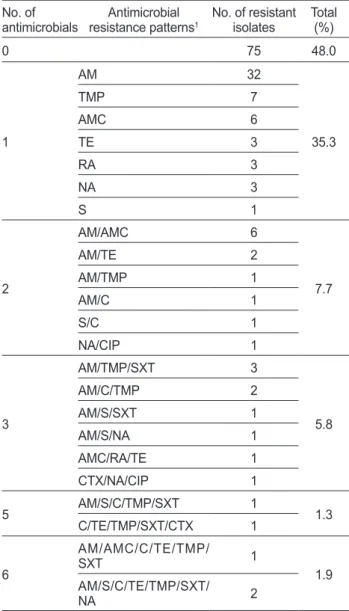
Table 3. Antimicrobial resistance profiles of Escherichia coli isolates
No. of
antimicrobials Antimicrobial
resistance patterns1 No. of resistant isolates Total
(%)
0 75 48.0
1
AM 32
35.3
TMP 7
AMC 6
TE 3
RA 3
NA 3
S 1
2
AM/AMC 6
7.7
AM/TE 2
AM/TMP 1
AM/C 1
S/C 1
NA/CIP 1
3
AM/TMP/SXT 3
5.8
AM/C/TMP 2
AM/S/SXT 1
AM/S/NA 1
AMC/RA/TE 1
CTX/NA/CIP 1
5 AM/S/C/TMP/SXT 1
C/TE/TMP/SXT/CTX 1 1.3
6
AM/AMC/C/TE/TMP/
SXT 1
AM/S/C/TE/TMP/SXT/ 1.9
NA 2
1AM, ampicillin; AMC, amoxicillin/clavulanic acid ; TMP, trimethoprim; TE, tetracycline; RA, rifampin; NA, nalidixic acid;
S, streptomycin; C, chloramphenicol; CIP, ciprofloxacin; SXT, trimethoprim/sulfamethoxazole; CTX, cefotaxime.
성패턴차이에의한것으로사료되며
,
육상오염원배출수중 에존재하는항균제내성균이패류양식장에영향을미칠수있 는것으로추정된다(Kotlarska et al., 2015). Kwon et al. (2016)
은창선해역주변배수유역에소재한육상오염원배출수와인 접한지중해담치(Mytilus galloprovincialis)
양식장에서 분리 한대장균의ampicillin
내성율은각각81.5%
및76.4%
이었으며
, tetracycline
의경우에는육상오염원과지중해담치에서각각
96.7%
및83.6%
으로나타나이동성이없는지중해담치의 양식특성상으로볼때지중해담치에서확인된항생제내성은 육상오염원의영향으로판단된다고보고하였다
.
Yu et al. (2014)
는남해안산굴및서해안산바지락에서분 리한V. parahaemolyticus
은ampicillin
에대해각각79.1%
및61.2%
로높은내성이확인되었다고보고한연구결과보다는내성율이낮았지만
, Oh et al. (2009)
가경남연안기수지역에서 분리한V. parahaemolyticus
에서의ampicillin
내성율(44.1%)
하고는비슷한수준의결과를나타내었다.
외국의경우Baker- Austin et al. (2008)
은미국조지아및남칼로리나의해수와침 전물에서분리한V. parahaemolyticus
에서의ampicillin
내성율 이46.6%
이었다고보고하였다.
이상의결과비브리오균중일부는내성인자들을수계침전 물이나주변환경으로부터획득할수있다는보고
(Neela et al., 2007)
로볼때V. parahaemolyticus
의항균제내성율차이는수 산물등시료의종류,
생활특성및해역환경차이에의한것으 로추정된다.
여러종류의항균제에내성을나타내는균들을다 제내성균(Multiple antimicrobial resistance bacteria, MARB)
이라고부르며,
이러한다제내성균의출현과내성유전자의확 산은질병치료를어렵게만들고있어세계적인문제로대두되 고있다(Den nesen et al., 1998).
본연구에서3
종이상의항균 제에내성을나타내는다제내성균은E. coli
및V. parahaemo- lyticus
분리균주들에서각각14
균주(9.0%)
및2
균주(1.0%)
로확인되어V. parahaemolyticus
보다는E. coli
분리균주에 서다제내성균이많이검출되었다(Table 3
및Table 4). Yu et al. (2014)
는남해안산 굴및서해안산바지락에서 분리한V.
parahaemolyticus
에서3
종이상의항균제에내성을가지는다 제내성균이3.6%
로검출되었다고보고한연구결과하고는차 이가없었지만, Kim et al. (2016)
은서해안굴에서분리한V.
parahaemolyticus
에서3
종이상의항균제에내성을가지는다 제내성균이50.9%
로검출되었다고보고한연구결과보다는큰 차이를나타내었다.
한편
,
분리된대장균의다제내성균비율은Park et al. (2013)
이남해안굴,
바지락및피조개에서분리한E. coli
중17.7%
가
3
종이상의항균제에내성을가졌다고보고한연구결과와Jo et al. (2016)
가서해안패류양식장에서분리한대장균중의27.8%
가3
종이상의항균제에내성을가지는것으로확인되었다는연구결과보다낮았다
.
이러한결과의차이는육상오염원 배출수를통해패류생산해역으로유입되는항균제내성균의영향에기인한것으로추정되며
, Kwon et al. (2016)
은창선해 역주변배수유역에소재한육상오염원배출수와인접한지중 해담치(Mytilus galloprovincialis)
양식장에서 분리한대장균 의다제내성균의검출비율은각각90.9%
및91.0%
로나타났 다고보고하였다.
한편
,
패류는해수중의세균을체내에농축하는특성이있고,
육상과인접한해역에서서식하는특성으로육상오염물질의 영향을쉽게받기때문에수산물생산해역에서의항균제내성 균의출현과내성패턴의변화추이를파악할수있는좋은지표 생물이될수있을것으로사료되지만,
굴등일부수산물은가 열조리과정없이날것으로많이섭취하기때문에항균제내성 균의존재는사회적문제로대두될수있을것으로추정된다.
또한,
항균제내성인자를보유한내성균이하천이나마을하수 를통해연안해역으로유입되며해양환경에존재하는이종또 는동종세균으로plasmid, transposon, integron
등과같은이 동성인자(mobile element)
의수평적전이(horizontal transfer)
를통해내성균의확산을배제할수없다(Fiqueira et al., 2011;
Moura et al., 2012).
따라서
,
수산물생산해역에서의항균제내성균에대한지속적 인모니터링이필요하며,
생산해역에서내성균확산방지와수 산물의안전성확보를위해육상오염물질유입차단을위한적 절한오염원관리대책수립과더불어어류양식장에서사용되 는항균제의오·
남용방지를위해사용자에대한교육과관리당 국의지속적점검이요구된다.
사 사
이 논문은
2017
년도 국립수산과학원 수산과학연구사업(R2017057)
의지원으로수행된연구이며연구비지원에감사드립니다
.
References
Acar JF and Goldstein FW. 1991. Disk susceptibility test. In:
antibiotics in laboratory medicine. Lorian V, ed. Williams &
Wilkins, Baltimore, U.S.A., 17-52.
Baker-Austin C, McArthur JV, Tuckfield RC, Najapro M, Lin- dell AH, Gooch J and Stepanauskas R. 2008. Antibiotic re- sistance in the shellfish pathogen Vibrio parahaemolyticus isolates from the coastal water and sediment of Georgia and South Carolina USA. J Food Protect 71, 2552-2558.
Ceccarelli D, Hasan NA, Hug A and Colwell RR. 2013. Dis- tribution and dynamics of epidemic and pandemic Vibrio
parahaemolyticus virulence factors. Front Cell Infect Mi-
crobio 3, 1-9. http://dx.doi.org/10.3389/fcimb.2013. 00097.CLSI (Clinical and Laboratory Standards Institute). 2012. Per- formance standards for antimicrobial susceptibility testing.
CLSI document M100-S22. Clinical and Laboratory Stan-
dard Institute. Wayne, Pa. U.S.A., 44-128.
Dennesen PJ, Bonten MJ and Weinstein RA. 1998. Multiresis- tant bacteria as a hospital epidemic problem. Ann Med 30, 176-185.
Elliot EL, Kaysner CA, Jackson L and Tamplin ML. 1995. Vib-
rio cholerae, V. parahaemolyticus, V. vulnificus and other Vibrio spp. In: Bacteriological Analytical Manual. Asso-
ciation of Official Analytical Chemists ed. FDA, Arlington, U.S.A., 9.01-9.27.Figueira V, Serra E and Manaia CM. 2011. Differential patterns of antimicrobial resistance in population subsets of Esche-
richia coli isolated from waste and surface waters. Sci Total
Environ 409, 1017-1023.Haley B, Kokashvili T, Taskshvediani A, Janelidze N, Mitaish- vil N, Grim C, Magny G, Chen A, Taviani E, Eliashvili T, Tediashvili M, Whitehouse C, Colwell R and Huq A. 2014.
Molecular diversity and predictability of Vibrio parahaemo-
lyticus along the Georgian coastal zone of the Black Sea.
Front Microbial 5, 1-9.
Jo MR, Park YS, Park K, Kwon JY, Yu HS, Song KC, Lee HJ, Oh EG, Kim JH, Lee TS and Kim PH. 2016. Antimicrobial Resistance in Escherichia coli Isolated from Shellfish Farms on the West Coast of Korea. Korean J Fish Aquat Sci 49, 13- 19. http://dx.doi.org/10.5657/KFAS.2016.0013.
Kirs M, DePaola A, Fyfe R, Jones JL, Krantz J, Van Laanen A, Cotton D and Castle M. 2011. A survey of oysters (Crassostrea gigas) in New Zealand for Vibrio parahaemo-
lyticus and Vibrio vulnicus. Int J Food Microbiol 147, 149-
Kim S, An S, Park B, Oh EG, Song KC, Wan KJ and Yu H. 2016. 153.Virulence factors and antimicrobials susceptibility of Vib-
rio parahaemolyticus isolated from the oyster Crassostrea gigas. Korean J Fish Aquat Sci 49, 116-123. http://dx.doi.
org/10.5657/KFAS.2016.0116.
KMFDS (Korea Ministry of Food and Drug Safety). 2015. 2014 Antimicrobial use and monitoring of antimicrobial resis- tance. MFDS, Osong, Korea, 1-107.
Kotlarska E, Luczkiewicz A, Pisowacka M and Burzynski A.
2015. Antibiotic resistance and prevalence of class 1 and 2 integrons in Escherichia coli isolated from two wastewater treatment plants, and their receiving waters (Gulf of Gdansk, Baltic Sea, Poland). Environ Sci Pollut Res Int 22, 2018- 2030. http://doi.org/10.1007/s11356-014-3474-7.
Kwon SJ, Lee KJ, Jung YJ, Park SG, Go KR, Yang JH and Mok JS. 2016. Antimicrobial resistance of Escherichia coli iso- lates from mussel Mytilus galloprovincialis farms and in- land pollution sources in the Changseon area, Korea. Kore- an J Fish Aquat Sci 49, 564-572. http://dx.doi.org/10.5657/
KFAS.2016.0564.
Lee TS, Oh EG, Yu HD, Ha KS, Yu HS, Byun HS and Kim JH.
2010. Impact of rainfall events on the bacteriological water quality of the shellfish growing area in Korea. Korean J Fish
Aquat Sci 43, 406-414.
Levin BR, Lipsitch M, Perrot V, Schrag S, Antia R, Simonsen L, Walker NM and Stewart FM. 1997. The population genetics of antibiotic resistance. Clin Infect Dis 24, 9-16.
Moura A, Pereira C, Henriques I and Correia A. 2012. Novel gene cassettes and integrons in antibiotic-resistant bacteria isolated from urban wastewaters. Res Microbiol 163, 92- 100.
Neela FA, Nonaka L and Suzuki S. 2007. The diversity of multi- drug resistance profiles in tetracycline resistant Vibrio spe- cies isolated from coastal sediments and seawater. J Micro- biol 45, 64-68.
Oh EG, Son KT, Ha KS, Yoo HD, Yu HS, Shin SB, Lee HJ and Kim JH. 2009. Antimicrobial Resistance of Vibrio strains from Brackish Water on the Coast of Gyeongsang- namdo. Korean J Fish Aquat Sci 42, 335-343. http://dx.doi.
org/10.5657/ -KFAS.2009.42.4.335.
Oh EG, Son KT, Yu HS, Lee TS, Lee HJ, Shin SB, Kwon JY, Park KBW and KIM JH. 2011. Antimicrobial resistance of
Vibrio parahaemolyticus and Vibrio alginolyticus strains
isolated from Farmed Fish in Korea during 2005-2007. J Food Prot 74, 380-386. http://dx.doi.org/ 10.4315/0362- 028X.JFP-10-307.Park K, Jo MR, Lee HJ, Kwon JY, Son KT and Lee TS. 2011.
Evaluation of the effect of the dischatged water from Bong stream after events on the bacteriological water quality in Gangjinman, Korea. Korean J Fish Aquat Sci 44, 622-629.
Park K, Jo MR, Kim YK, Lee HJ, Kwon JY, Son KT and Lee TS. 2012. Evaluation of the effects of the inland pollution sources after rainfall events on the bacteriological water quality in Narodo area, Korea. Korean J Fish Aquat Sci 45, 414-422. Http://dx.doi.org/10.5657/KFAS.2012.0414.
Park K, Park JY, Jo MR, Yu HS, Lee HJ, Kim JH, Oh EG, Shin SB Kim YK and Lee TS. 2013. Antimicrobial resistance in
Escherichia coli isolated from shellfish farms in the south-
ern coast of Korea. Korean J Fish Aquat Sci 46, 528-533.http://dx.doi.org/10.5657/KFAS.2013.0528.
Souli M, Galani I and Gianmarellou H. 2008. Emergence of ex- tensively drug-resistant and pandrug resistnace gram nega- tive bacilli in Europe. Euro Surveill 47, 1-11.
Son KT, Oh EG, Lee TS, Lee HJ, Kim PH and Kim JH. 2005.
Antimicrobial susceptibility of Vibrio parahaemolyticus and
Vibrio alginolyticus from fish farms on the southern coast of
Korea. J Kor Fish Soc 38, 365-371.Su CY and Liu C. 2007. Vibrio parahaemolyticus: a concern of seafood safety. Food Microbiol 24, 549-558. http://dx.doi.
org/10.1016/j.fm.2007.01.005.
Tendencia EA and Pena LD. 2001. Antibiotic resistance of bac- teria from shrimp ponds. Aquaculture 195, 193-204.
Vam den Bogaard AE and Stobberingh EE. 1999. Antibi- otic usage in animals: impact on bacterial resistance and public health. Drugs 58, 589-607. http://dx.doi.
org/10.2165/00003495-199958040-00002.
Van den Bogaard AE and Stobberingh EE. 2000. Epidemiol- ogy of resistance to antibiotics: Links between animals and humans. Int Antimicrob Agents 14, 327-335. http://dx.doi.
org/10.1016/S0924-8579(00)00145-X.
Yu HS, Oh EG, Shin SB, Park YS, Lee HJ, Kim JH and Song KC. 2014. Distribution and Antimicrobial Resistance of Vib-
rio parahaemolyticus Isolated from Korean Shellfish. Kore-
an J Fish Aquat Sci 57, 508-515. http://dx.doi.org/10.5657/KFAS.2014.0508.
Zhang L and Orth K. 2013. Virulence determinants for Vibrio
parahaemolyticus infection. Curr Opin Microbiol 16, 70-77.
http://dx.doi.org/10.1016/j.mib.2013.02.002.