production of L-arginine and its derivatives
Shin and Lee
Shin and Lee Microbial Cell Factories 2014, 13:166 http://www.microbialcellfactories.com/content/13/1/166
R E V I E W
Open Access
Metabolic engineering of microorganisms for the
production of L-arginine and its derivatives
Jae Ho Shin
1and Sang Yup Lee
1,2,3*Abstract
L-arginine (ARG) is an important amino acid for both medicinal and industrial applications. For almost six decades,
the research has been going on for its improved industrial level production using different microorganisms. While
the initial approaches involved random mutagenesis for increased tolerance to ARG and consequently higher ARG
titer, it is laborious and often leads to unwanted phenotypes, such as retarded growth. Discovery of L-glutamate
(GLU) overproducing strains and using them as base strains for ARG production led to improved ARG production
titer. Continued effort to unveil molecular mechanisms led to the accumulation of detailed knowledge on amino
acid metabolism, which has contributed to better understanding of ARG biosynthesis and its regulation. Moreover,
systems metabolic engineering now enables scientists and engineers to efficiently construct genetically defined
microorganisms for ARG overproduction in a more rational and system-wide manner. Despite such effort, ARG
biosynthesis is still not fully understood and many of the genes in the pathway are mislabeled. Here, we review the
major metabolic pathways and its regulation involved in ARG biosynthesis in different prokaryotes including recent
discoveries. Also, various strategies for metabolic engineering of bacteria for the overproduction of ARG are
described. Furthermore, metabolic engineering approaches for producing ARG derivatives such as L-ornithine
(ORN), putrescine and cyanophycin are described. ORN is used in medical applications, while putrescine can be
used as a bio-based precursor for the synthesis of nylon-4,6 and nylon-4,10. Cyanophycin is also an important
compound for the production of polyaspartate, another important bio-based polymer. Strategies outlined here
will serve as a general guideline for rationally designing of cell-factories for overproduction of ARG and related
compounds that are industrially valuable.
Keywords: Metabolic engineering, L-Arginine, L-Ornithine, Putrescine, Biopolymers, Polyaspartate
Introduction
L-arginine (ARG) is a semi-essential amino acid that is
im-portant for medicinal and industrial applications. ARG is
known to stimulate secretion of growth hormones [1],
prolactin [2], insulin [3] and glucagon [4], promote muscle
mass [5], enhance wound healing [6] and as a precursor
for nitric oxide [7]. Physiological importance of ARG
sup-plementation is further raised by the important roles of
ni-tric oxide in cardiovascular and neurological systems [8].
For many important applications of ARG, its industrial
level production has become an important task. It can be
produced by microbial fermentation at an industrial scale
[9] as for other amino acids such as L-glutamate (GLU)
[10], lysine (LYS) [11], tryptophan (TRP) [12],
L-valine (VAL) [13], L-threonine (THR) [14] and L-alanine
(ALA) [15]. For these amino acids, model organisms such
as Corynebacterium glutamicum [16] and Escherichia coli
[17] have been widely used as production hosts, while
ARG production has been performed using B. subtilis [18]
and C. glutamicum [9]. It has been almost six decades
since ARG production has been explored and studied
using microorganisms. As in the cases for other amino
acid production, random mutagenesis has been used in
order to obtain efficient producer strains [19]. However,
random mutagenesis is problematic due to the unwanted
genomic changes introduced. Thus, much effort has been
exerted to develop strains through metabolic engineering.
* Correspondence:[email protected] 1
Metabolic and Biomolecular Engineering National Research Laboratory, Department of Chemical and Biomolecular Engineering (BK21 Plus Program), Center for Systems and Synthetic Biotechnology, Institute for the BioCentury, KAIST, 291 Daehak-ro, Yuseong-gu, Daejeon 305-701, Republic of Korea
2
BioProcess Engineering Research Center, KAIST, Daejeon 305-701, Republic of Korea
Full list of author information is available at the end of the article
© 2014 Shin and Lee; licensee BioMed Central Ltd. This is an Open Access article distributed under the terms of the Creative Commons Attribution License (http://creativecommons.org/licenses/by/4.0), which permits unrestricted use, distribution, and reproduction in any medium, provided the original work is properly credited. The Creative Commons Public Domain Dedication waiver (http://creativecommons.org/publicdomain/zero/1.0/) applies to the data made available in this article, unless otherwise stated.
Systems metabolic engineering now allows construction
of efficiently performing cell-factories for the microbial
production of not only amino acids but also bio-fuels
[20,21], pharmaceuticals [22], bio-plastics [23], platform
chemicals [24-26] and even silk proteins [27]. It is
pow-ered by rapidly advancing tools and continuously
accumu-lating genetic and molecular information. It also aims to
develop strains based on optimization of the entire
biopro-cess from strain design to industrial level cultivation. Its
strategies include deletion of competing pathways [28],
strengthening upstream pathways for increasing precursor
pool [11], engineering transporters [29] and fine-tuning
expression levels [30]. Systems metabolic engineering
approach has been successfully applied in order to
rationally design ARG producer strain for the efficient
industrial level production which can be potentially
engineered to produce ARG derivatives as well [9].
Systems metabolic engineering strategies can also be
used for producing ARG-related compounds, such as
L-ornithine (ORN), putrescine, and cyanophycin that share
common pathways. ORN is a non-proteinogenic amino
acid that has shown to improve athletic performance
along with ARG and L-citrulline (CIT), another
inter-mediate metabolite in the ARG biosynthetic pathway
[31]. Putrescine is a four-carbon diamine platform
chem-ical that can be incorporated into various polymers such
as nylon-4,6 and nylon-4,10. Cyanophycin can be used
to produce polyaspartate which is another bio-polymer
for various technical applications. However, efficient
metabolic engineering for such compounds has been
limited by incomplete understanding on ARG biosynthesis
even with the publically available genome sequences [32].
Here, we review the three major pathways for ARG
bio-synthesis in prokaryotes including the recent discoveries.
We also discuss various strategies applied to engineer
strains for the efficient production of ARG, ORN,
putres-cine and cyanophycin using recently established examples.
L-Arginine biosynthetic pathway and its regulation
In prokaryotes, there are three major biosynthetic
path-ways for ARG;
“linear”, “recycling” and the “new”
path-ways (Figure 1) [33,34]. Each pathway is comprised of
eight enzymatic steps from GLU and the major
diffe-rences in these pathways are in that different genes are
involved for conversion of N-acetylornithine (Ac-ORN)
for further downstream reactions toward ARG [35]. In
the linear pathway (Figure 1A), Ac-ORN is converted to
ORN by acetylornithinase (AOase; encoded by argE)
[36], whereas in the recycling pathway (Figure 1B) this is
catalyzed by a different enzyme, ornithine
acetyltransfe-rase (OATase; encoded by argJ) [37]. In the third
path-way, which has not been named, ORN is bypassed and
instead N-acetylcitrulline (Ac-CIT) is formed by
acety-lornithine carbamoyltransferase (AOTCase; encoded by
argF’, Figure 1C) [38]. While certain aspects of the
path-way components are still under debate, they are
un-doubtedly important in ARG biosynthesis and metabolic
engineering purposes.
In the linear pathway (Figure 1A), GLU is converted to
acetylglutamate (Ac-GLU) by N-acetylglutamate
syn-thase (NAGS, encoded by argA) which is inhibited by
ARG through negative feedback regulation [36,39].
Se-quential catalytic reactions catalyzed by the next three
enzymes, N-acetylglutamate kinase (NAGK, encoded by
argB), N-acetylglutamate semialdehyde dehydrogenase
(encoded by argC) and N-acetylornithine transaminase
(encoded by argD), which are common in the three
pathways (Figure 1), yield N-acetylornithine (Ac-ORN)
[34]. The next step, which distinguishes the linear
path-way from the other two pathpath-ways, is deacetylation of
Ac-ORN by AOase to yield ORN [40,41]. The next and
final steps are carried out by ornithine
carbamoyltrans-ferase (OTC or OTCase, encoded by argF),
argininosuc-cinate synthase (encoded by argG) and argininosucargininosuc-cinate
lyase (encoded by argH), which finally yield ARG [35].
This pathway has been found in a few species such as
Myxococcus xanthus
[41] and E. coli [36].
In many other prokaryotes including Geobacillus
stear-othermophilus
(formerly Bacillus stearothermophilus)
[37,42,43], Thermotoga neapolitana [42],
Pseudomo-nads [44], Neisseria gonorrhoeae [45] Streptomyces
coe-licolor
[46] and C. glutamicum (formerly Micrococcus
glutamicus) [19,47], ARG is synthesized via the
recyc-ling pathway and many aspects remain unknown herein
(Figure 1B). The recycling pathway is regarded as more
evolved and economical than the linear pathway and is
“recycling” in the sense that the acetyl group
deacety-lated from Ac-ORN in the fifth biosynthetic step
(simi-larly as in AOase) is re-used to acetylate GLU in the
first committed step (similarly as in NAGS) of the
path-way (Figure 1B). The OATase involved in the recycling
step is either monofunctional or bifunctional depending
on the species. For example, the OATase from G.
stear-othermophilus
[37] and N. gonorrhoeae [40] is bifunctional
and accepts both Ac-CoA and Ac-ORN as substrates to
acetylate GLU, whereas that from S. coelicolor only accepts
Ac-ORN as a substrate and considered monofunctional
[46]. However, many of monofunctional OATases are
mislabeled as bifunctional and some are still being
cor-rected [48]. For example, the OATase from C.
glutami-cum
which had been known to be bifunctional for
decades [19,47,49-51] has been re-considered as
mono-functional [52-54], while that from C. crenatum remains
bifunctional [34]. For species such as S. coelicolor, the
OATase is characterized. However, NAGS has not been
identified in this bacterium, while new classes of NAGS
are continuously being discovered for other species
[53]. For example, the novel type of NAGS (C-NAGS)
[53] encoded by cg3035 from C. glutamicum adds to the
diversity of NAGS including (1) the classical NAGS (as in
the linear pathway), (2) the bifunctional OATase (as in the
recycling pathway), (3) ArgH(A) fusion types (argH-argA
fusion) [55], and (4) the short versions of NAGS
(S-NAGS) [56]. Additionally, for species that have both
NAGS and OATase such as G. stearothermophilus [43]
and N. gonorrhoeae [57], there is a functional
redun-dancy and the NAGS function is regarded as anaplerotic
to replenish Ac-GLU [57,58]. Moreover, another
dis-tinctive feature of this pathway is that NAGK reaction
instead of NAGS reaction is negatively regulated by
ARG [44,52,59,60].
In the newly discovered pathway (Figure 1C), AOTCase
from Xanthomonas campestris transfers carbamoyl group
from carbamoyl phosphate to Ac-ORN to form Ac-CIT
[38]. Here, the formation of ORN is bypassed and ArgE
deacetylates Ac-CIT to yield CIT. While the details of this
pathway, as with the linear and recycling pathways, have
not been fully explored, C. glutamicum and its related
spe-cies with the recycling pathway are recognized as the
or-ganisms to most efficiently produce ARG.
In terms of the chromosomal genetic organization, ARG
biosynthetic genes are diversely organized in different
spe-cies, and that from C. glutamicum has been studied the
most. In C. glutamicum, the argCJBDFRGH cluster is
or-ganized into two operons (argCJBDFR and argGH) [52]
and transcription of these operons are regulated by ARG
[61], ArgR [62] and FarR [63], while the putative argA
(cg3035, encoding C-NAGS) is separated from this cluster
[32,52,53]. FarR regulates transcription of the arg operon
by binding to the upstream of argC, argB, argF and argG
genes [63,64]. FarR additionally controls the ARG
bio-synthesis by binding to the upstream of the gdh gene
encoding glutamate dehydrogenase which converts
α-ketoglutarate (α-KG) into GLU [63]. Similarly, ArgR, a
global regulator, binds to argC and argG promoters to
control ARG biosynthesis [49] and the degree of
down-regulation is increased by ARG [61] but its binding affinity
decreases by L-proline (PRO), which can be considered as
a stimulator for ARG biosynthesis [65]. Additionally, other
strains have different chromosomal organization in the
ARG operon. For example, it is partially clustered in the
order of argCJBD in the chromosome for gram-positive
bacteria such as G. stearothermophilus and S. coelicolor
[46,66], while the bipolar organization of argECBH is
found in gram-negative bacteria such as E. coli [67-70].
Metabolic engineering for L-arginine production
Initial approach to produce ARG at industrial scale began
with random mutagenesis of microorganisms (Table 1).
Mutants selected based on their resistance to
anti-metabolites and other analogues such as canavanine
(CVN) [40,71], homoarginine [72], arginine hydroxamate
(AHX) [18,73], 6-azauracil (6 AU) [74], 2-thiazolealanine
(TA) [75], and sulfaguanine (SG) [75] have been used in
early attempts to overproduce ARG. Mutations were
in-duced by radiation [75,76] or treatment with mutagen
such as N-methyl-N’-nitro-N-nitrosoguanidine (NTG)
[18,75]. The rational for this is to confer higher tolerance
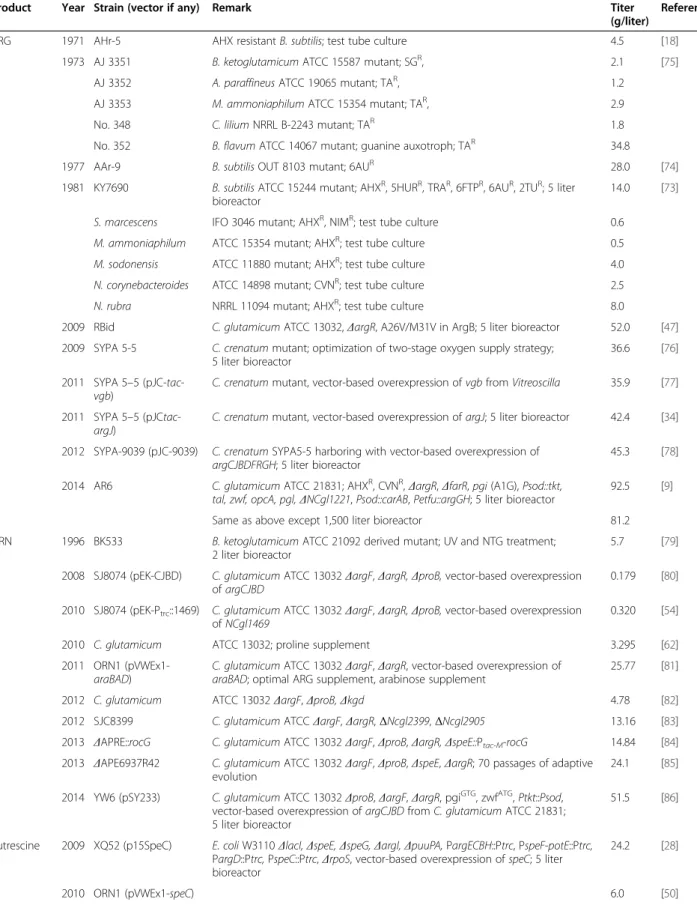
Figure 1 Representative ARG biosynthesis routes in prokaryotes. (A) The linear pathway, (B) the recycling pathway and (C) the newly discovered pathway for the ARG biosynthesis are shown. Dashed line indicates feedback inhibition by ARG on the first (NAGS) (A) and second (NAKG) (B) committed steps in the pathways. Blue arrows indicate argE used in the linear pathway (A). Orange arrows indicate argJ used in the recycling pathway (B). Green arrow indicates argF’ used in the newly found pathway (C). ARG catabolic pathways are also shown. Ac-GLU, N-acetylglutamate; Ac-GLU-P, N-acetylglutamyl-5-phosphate; Ac-GLU-SA, N-acetylglutmate-5-semialdehyde; ARG-Suc, L-argininosuccinate; GLU-SA, L-glutamate-5-semialdehyde; P5C, 1-pyrroline-5-carboxylate. The asterisk indicates putative NAGS that has not been characterized inTable 1 ARG, ORN, putrescine and cyanophycin producing strains
Product Year Strain (vector if any) Remark Titer (g/liter)
Reference ARG 1971 AHr-5 AHX resistant B. subtilis; test tube culture 4.5 [18]
1973 AJ 3351 B. ketoglutamicum ATCC 15587 mutant; SGR, 2.1 [75]
AJ 3352 A. paraffineus ATCC 19065 mutant; TAR, 1.2
AJ 3353 M. ammoniaphilum ATCC 15354 mutant; TAR, 2.9
No. 348 C. lilium NRRL B-2243 mutant; TAR 1.8
No. 352 B. flavum ATCC 14067 mutant; guanine auxotroph; TAR 34.8
1977 AAr-9 B. subtilis OUT 8103 mutant; 6AUR 28.0 [74]
1981 KY7690 B. subtilis ATCC 15244 mutant; AHXR, 5HURR, TRAR, 6FTPR, 6AUR, 2TUR; 5 liter
bioreactor
14.0 [73] S. marcescens IFO 3046 mutant; AHXR, NIMR; test tube culture 0.6
M. ammoniaphilum ATCC 15354 mutant; AHXR; test tube culture 0.5 M. sodonensis ATCC 11880 mutant; AHXR; test tube culture 4.0 N. corynebacteroides ATCC 14898 mutant; CVNR; test tube culture 2.5 N. rubra NRRL 11094 mutant; AHXR; test tube culture 8.0
2009 RBid C. glutamicum ATCC 13032,ΔargR, A26V/M31V in ArgB; 5 liter bioreactor 52.0 [47] 2009 SYPA 5-5 C. crenatum mutant; optimization of two-stage oxygen supply strategy;
5 liter bioreactor
36.6 [76] 2011 SYPA 5–5
(pJC-tac-vgb)
C. crenatum mutant, vector-based overexpression of vgb from Vitreoscilla 35.9 [77] 2011 SYPA 5–5
(pJCtac-argJ)
C. crenatum mutant, vector-based overexpression of argJ; 5 liter bioreactor 42.4 [34] 2012 SYPA-9039 (pJC-9039) C. crenatum SYPA5-5 harboring with vector-based overexpression of
argCJBDFRGH; 5 liter bioreactor
45.3 [78] 2014 AR6 C. glutamicum ATCC 21831; AHXR, CVNR,ΔargR, ΔfarR, pgi (A1G), Psod::tkt,
tal, zwf, opcA, pgl,ΔNCgl1221, Psod::carAB, Petfu::argGH; 5 liter bioreactor
92.5 [9] Same as above except 1,500 liter bioreactor 81.2 ORN 1996 BK533 B. ketoglutamicum ATCC 21092 derived mutant; UV and NTG treatment;
2 liter bioreactor
5.7 [79] 2008 SJ8074 (pEK-CJBD) C. glutamicum ATCC 13032ΔargF, ΔargR, ΔproB, vector-based overexpression
of argCJBD
0.179 [80] 2010 SJ8074 (pEK-Ptrc::1469) C. glutamicum ATCC 13032ΔargF, ΔargR, ΔproB, vector-based overexpression
of NCgl1469
0.320 [54] 2010 C. glutamicum ATCC 13032; proline supplement 3.295 [62] 2011 ORN1
(pVWEx1-araBAD)
C. glutamicum ATCC 13032ΔargF, ΔargR, vector-based overexpression of araBAD; optimal ARG supplement, arabinose supplement
25.77 [81] 2012 C. glutamicum ATCC 13032ΔargF, ΔproB, Δkgd 4.78 [82] 2012 SJC8399 C. glutamicum ATCCΔargF, ΔargR, ΔNcgl2399, ΔNcgl2905 13.16 [83] 2013 ΔAPRE::rocG C. glutamicum ATCC 13032ΔargF, ΔproB, ΔargR, ΔspeE::Ptac-M-rocG 14.84 [84]
2013 ΔAPE6937R42 C. glutamicum ATCC 13032ΔargF, ΔproB, ΔspeE, ΔargR; 70 passages of adaptive evolution
24.1 [85] 2014 YW6 (pSY233) C. glutamicum ATCC 13032ΔproB, ΔargF, ΔargR, pgiGTG, zwfATG, Ptkt::Psod,
vector-based overexpression of argCJBD from C. glutamicum ATCC 21831; 5 liter bioreactor
51.5 [86] Putrescine 2009 XQ52 (p15SpeC) E. coli W3110ΔlacI, ΔspeE, ΔspeG, ΔargI, ΔpuuPA, PargECBH::Ptrc, PspeF-potE::Ptrc,
PargD::Ptrc, PspeC::Ptrc,ΔrpoS, vector-based overexpression of speC; 5 liter bioreactor
24.2 [28] 2010 ORN1 (pVWEx1-speC) 6.0 [50]
of ARG to microorganisms and to remove feedback
in-hibition by ARG [9]. Historically, the random mutation
approach had been used in various prokaryotic and
eukaryotic strains including B. subtilis [18,73,74], Serratia
marcescens
[73], Micrococcus sodonensis [73], Norcadia
corynebacteroides
[73], N. rubra [73], Saccharomyces
cere-visiae
[73], Candida tropicalis [73], C. glutamicum [72], C.
crenatum
[76], Brevibacterium flavum [75], B.
ketogluta-micum
[75], C. lilium [75], Arthrobacter paraffineus [75]
and Microbacterium ammoniaphilum [73,75] to produce
ARG. The trend later shifted toward using GLU
overpro-ducing C. glutamicum strain and its related species C.
crenatum
as base strains, which led to industrial level
ARG titers. More importantly, the random mutation
method is now used in synergistic combination with
high-throughput molecular tools which enables systems
metabolic engineering for industrial microbial strain
development.
The strategies for rationally designing ARG
overprodu-cer typically consist of (1) removal of feedback inhibition,
(2) overexpression of the biosynthetic genes (e.g., the arg
operon) and/or removal of the repressors (e.g., argR and
farR), (3) increasing NADPH pool required for ARG
bio-synthesis, (4) increasing carbamoyl phosphate pool by
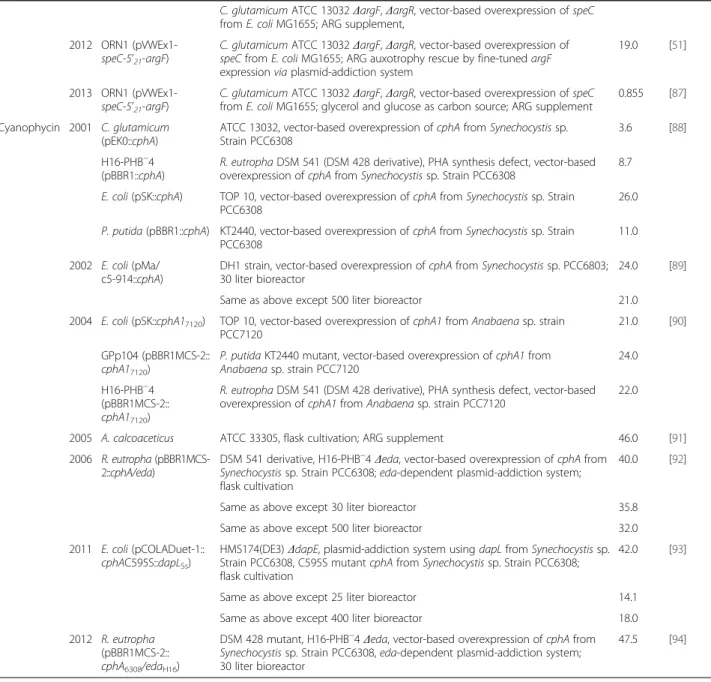
Table 1 ARG, ORN, putrescine and cyanophycin producing strains (Continued)
C. glutamicum ATCC 13032ΔargF, ΔargR, vector-based overexpression of speC from E. coli MG1655; ARG supplement,
2012 ORN1 (pVWEx1-speC-5’21-argF)
C. glutamicum ATCC 13032ΔargF, ΔargR, vector-based overexpression of speC from E. coli MG1655; ARG auxotrophy rescue by fine-tuned argF expression via plasmid-addiction system
19.0 [51] 2013 ORN1
(pVWEx1-speC-5’21-argF)
C. glutamicum ATCC 13032ΔargF, ΔargR, vector-based overexpression of speC from E. coli MG1655; glycerol and glucose as carbon source; ARG supplement
0.855 [87] Cyanophycin 2001 C. glutamicum
(pEK0::cphA)
ATCC 13032, vector-based overexpression of cphA from Synechocystis sp. Strain PCC6308
3.6 [88] H16-PHB−4
(pBBR1::cphA)
R. eutropha DSM 541 (DSM 428 derivative), PHA synthesis defect, vector-based overexpression of cphA from Synechocystis sp. Strain PCC6308
8.7 E. coli (pSK::cphA) TOP 10, vector-based overexpression of cphA from Synechocystis sp. Strain
PCC6308
26.0 P. putida (pBBR1::cphA) KT2440, vector-based overexpression of cphA from Synechocystis sp. Strain
PCC6308
11.0 2002 E. coli (pMa/
c5-914::cphA)
DH1 strain, vector-based overexpression of cphA from Synechocystis sp. PCC6803; 30 liter bioreactor
24.0 [89] Same as above except 500 liter bioreactor 21.0 2004 E. coli (pSK::cphA17120) TOP 10, vector-based overexpression of cphA1 from Anabaena sp. strain
PCC7120
21.0 [90] GPp104 (pBBR1MCS-2::
cphA17120)
P. putida KT2440 mutant, vector-based overexpression of cphA1 from Anabaena sp. strain PCC7120
24.0 H16-PHB−4
(pBBR1MCS-2:: cphA17120)
R. eutropha DSM 541 (DSM 428 derivative), PHA synthesis defect, vector-based overexpression of cphA1 from Anabaena sp. strain PCC7120
22.0 2005 A. calcoaceticus ATCC 33305, flask cultivation; ARG supplement 46.0 [91] 2006 R. eutropha
(pBBR1MCS-2::cphA/eda)
DSM 541 derivative, H16-PHB−4Δeda, vector-based overexpression of cphA from Synechocystis sp. Strain PCC6308; eda-dependent plasmid-addiction system; flask cultivation
40.0 [92] Same as above except 30 liter bioreactor 35.8 Same as above except 500 liter bioreactor 32.0 2011 E. coli (pCOLADuet-1::
cphAC595S::dapLSs)
HMS174(DE3)ΔdapE, plasmid-addiction system using dapL from Synechocystis sp. Strain PCC6308, C595S mutant cphA from Synechocystis sp. Strain PCC6308; flask cultivation
42.0 [93] Same as above except 25 liter bioreactor 14.1 Same as above except 400 liter bioreactor 18.0 2012 R. eutropha
(pBBR1MCS-2:: cphA6308/edaH16)
DSM 428 mutant, H16-PHB−4Δeda, vector-based overexpression of cphA from Synechocystis sp. Strain PCC6308, eda-dependent plasmid-addiction system; 30 liter bioreactor
47.5 [94]
Strains that have been reported to produce ARG, ORN, putrescine and cyanophycin are listed in the order of year for each compound. The relevant genetic information and production titers are shown. All cyanophycin production titers are given in a different unit scale (w/w %) than the rest which are given in g/liter. 5HUR, 5-hydroxyuridine; TRA, triazolealanine; 6FTP, 6-fluorotryptophan; 2TU, 2-thiouracil; 5FU, 5-fluorouracil; NIM, polyoxyethylene stearylamine.
overexpression of carAB operon and (5) deletion of
ex-porter for GLU encoded by NCgl1221. For example,
re-verse engineering approach was taken to the wild-type C.
glutamicum
ATCC 13032 strain for deleting argR and
introducing A26V and M31V mutations in ArgB in order
to alleviate feedback inhibition [47]. This is an important
study because it presented the first genetically defined and
not randomly mutated strain for ARG production and the
engineered strain produced 52 g/liter of ARG [47].
Plasmid-based engineering system has also been
ex-plored. Overexpression of a bacterial hemoglobin from
Vitreoscilla
in C. crenatum SYPA 5–5 for increased
dis-solved oxygen availability led to the production of
35.9 g/liter ARG [77]. Plasmid-based overexpression of
the argCJBDFRGH cluster or argJ alone in C. crenatum
SYPA 5–5 also led to enhanced ARG production,
reach-ing 45.3 g/liter or 42.4 g/liter, respectively [34,78]. A
possible explanation for little difference in ARG titer
here despite the different number of gene
overexpres-sion is probably because different cultivation conditions
were used (e.g., different temperatures).
Along the same line, a recent systems metabolic
engin-eering study led to a very successful production of ARG
at the industrial-scale [9]. C. glutamicum ATCC 21831
was initially treated with CVN and AHX in order to
in-crease its ARG tolerance and subjected to stepwise
strain development. The argR and farR genes were
de-leted in order to relieve negative regulation on ARG
bio-synthesis. Next, in order to improve the NADPH pool,
the pentose phosphate pathway (PPP) flux was enhanced
by reducing the pgi expression through replacing ATG
start codon with GTG, and overexpressing the major
PPP operon consisting the tkt, tal, zwf, opcA and pgl by
replacing the native promoter with the strong sod
pro-moter. Finally the promoters for carAB and argGH
op-erons were also changed in order to optimize fluxes
toward the ARG biosynthesis and the Ncgl1221 gene,
en-coding the GLU exporter, was deleted. As a result, the
final constructed strain produced 92.5 g/liter and 81.2 g/
liter of ARG at the laboratory-scale and at the
industrial-scale fermentations, respectively [9]. This work is a good
example of systems metabolic engineering for
develo-ping a microbial strain capable of overproducing ARG
to the level and performance suitable for
industrial-scale production.
Metabolic engineering for L-ornithine production
The ARG-derivative, ORN, has also been produced by
microbial fermentation. Both the strategies of random
mutagenesis [79] and systems metabolic engineering
have been employed for developing strains (Figure 2).
In rationally designing an ORN producer, knocking
out the competing branches to redirect carbon flux to
ORN pathway is an important and common strategy.
Specifically, the strategies of PRO supplement [62],
ARG supplement [81], vector-based overexpression of
argCJBD
[80], NCgl1469 overexpression [54],
over-expression of rocG from B. subtilis [84],
ΔargF [80-85],
ΔproB [82,84,85], ΔspeE [84,85], ΔargR [81,83-85],
ΔNCgl2399 [83], ΔNCgl2905 [83], and Δkgd [82] have
been employed for developing strains for ORN
overpro-duction (Table 1).
The strategies for the development of ORN producers
are similar to those employed for ARG producers except
auxotrophy rescue by supplements is additionally used.
Here,
ΔargF and ΔproB are often included in order to
disrupt OTCase and gamma-glutamyl kinase,
respect-ively [80-85]. Although this strategy leads to higher
ORN titer, it makes the strain auxotrophic for ARG and
PRO since their biosynthesis is disrupted [62,81].
An-other common strategies are deletion of the repressor
(ΔargR) [81,83-85] as in ARG strain cases, and
overex-pression of the biosynthetic genes (e.g., argCJBD) using
plasmids [80]. Overexpression of putative biosynthetic
genes can also be a strategy for ORN production. It has
been reported that overexpression of putative NAGS
encoded by NCgl1469 leads to increased ORN
produc-tion [54] while others claim Ncgl1469 as diaminopentane
acetyltransferase [95]. It is possible that Ncgl1469
poten-tially encodes a broad-substrate acetyltransferase that
has not been characterized in detail. The TCA cycle flux
can also be reduced by deleting 2-oxoglutarate
dehydro-genase complex (ODHC) for the enhanced production
of ORN [82].
Increasing the NADPH pool also improves ORN
pro-duction. The use of B. subtilis rocG which encodes
NAD-dependent glutamate dehydrogenase allows
con-version of
α-KG to GLU in an NADPH-independent
manner and leaves more NADPH for ORN biosynthesis
[84]. Increasing the NADPH level can also be achieved
by inactivating two putative gluconate kinases (gntK)
encoded by NCgl2399 and NCgl2905 [83].
Overexpres-sion of the ATP-dependent NAD kinase encoded by
ppnK
also leads to enhanced ORN production, while
overexpression of glucose-6-phosphate dehydrogenase
encoded by zwf and 6-phosphogluconate dehydrogenase
encoded by gnd does not do the same [85]. A possible
explanation is that plasmid-based overexpression of zwf
and gnd causes cellular burdens because
chromosomal-level overexpression has shown improvement in ORN
titer [86]. An indirectly associated pathway for
spermi-dine biosynthesis can also be deleted for enhanced ORN
production, yet the reason behind it has not been
ex-plained [85]. Combining the aforementioned strategies, a
recently developed strain was reported to produce
51.5 g/L of ORN [86]. In this strain, the PPP flux was
enhanced by changing the tkt promoter and the start
co-dons of pgi and zwf. The argCJBD cluster from C.
glutamicum
ATCC 21831 was overexpressed and argF,
proB
and argR were deleted.
Metabolic engineering for putrescine production
Putrescine (1,4-diaminobutane) can be produced by
metabolic engineering of ARG related pathways. The
major chassis organisms that have been employed are E.
coli
[28] and C. glutamicum [50]. While the putrescine
biosynthesis pathway is not well known in C.
glutami-cum,
it is a desirable host as it produces ORN
effi-ciently and tolerates putrescine better than E. coli
[28,50]. Although putrescine biosynthesis can be
alter-natively achieved via agmatine pathway (Figure 2), the
ODC pathway was shown to be more efficient than the
agmatine pathway [50]. In addition to the strategies
employed for developing ARG and ORN producers
de-scribed in prior sections, engineering the transporters
are the additional strategies for designing cell-factories
for putrescine production.
Putrescine can be synthesized from ORN by a single
reaction carried out by ornithine decarboxylase (ODC)
encoded by speC (Figure 2). The ODC from E. coli is
often used since the metabolic pathway in C.
glutami-cum
for putrescine has not been identified [50]. To
de-velop a putrescine producing C. glutamicum strain, the
arginine repressor encoded by argR should be
inacti-vated as in the ARG and ORN overproducing strains
[50,51]. While disruption of OTCase is also a strategy
for improving ORN pool, this makes the strain to
be-come an ARG auxotroph [50]. Here, the ARG
auxotro-phy caused by
ΔargF can be overcome by introducing a
plasmid expressing argF which is also fine-tuned [51].
The use of this strategy is an example of
plasmid-addiction system and it circumvents the undesirable use
Figure 2 Systems metabolic engineering strategies. The metabolic engineering strategies used for the construction of microbial strains producing ARG, ORN, putrescine and cyanophycin are shown. Increased and decreased gene expression levels are shown in green and orange arrows. Purple arrows indicate reactions carried out by chemical means. The pgi encodes phosphoglucose isomerase, zwf encodes glucose-6-phosphate dehydrogenase, pgl encodes 6-phosphogluoconolactonase, gnd encodes 6-phosphogluconate dehydrogenase, tkt encodes transketolase and tal encodes transaldolase. Gene deletion is indicated with red crosses. GABA, gamma-aminobutyrate; Ac-putrescine, acetyl-putrescine; G6P, glucose-6-phosphate; F6P, fructose-6-phosphate; F1,6P, fructose-1,6-bisphosphate; 6PGL, 6-phosphogluconolactone; 6PG, 6-phosphogluconate; Ru5P, ribulose-5-phosphate; R5P, ribose-5-phosphate; G3P, glyceraldehyde-3-phosphate; X5P, xylulose-5-phosphate; S7P, sedoheptulose-7-phosphate; E4P, erythrose-4-phosphate; A, ARG; O, ORN; P, putrescine.of antibiotic as well because cell viability becomes
plasmid-dependent [96]. While engineering of the
putres-cine transport system in C. glutamicum would further
en-hance its production, this strategy has yet been applied
only in E. coli [28]. Along with the overexpression of
pu-trescine/ornithine antiporter (encoded by potE) and
dele-tion of putrescine importer (encoded by puuP), the
competitive and degradation routes were deleted in the
putrescine producing E. coli XQ52 strain [28].
Chromo-somal deletion of puuA encoding glutamate-putrescine
ligase, speE encoding spermidine synthase, speG encoding
spermidine acetyltransferase, and argI encoding one of the
monomers for OTCase improved putrescine production.
The native promoters of the key biosynthetic genes
(argECBH operon, argD and speC) were changed to
stron-ger promoters and the repressor argR was deleted. The
rpoS
gene encoding the stress-responsive RNA polymerase
sigma factor was also deleted, which led to the
develop-ment of the final strain capable of producing 24.2 g/liter of
putrescine [28]. While the highest putrescine producing
strain reported is so far E. coli, further engineering of
ORN overproducing C. glutamicum strain will likely led to
the development of a more efficient putrescine producer
due to its high-tolerance to putrescine [86].
Metabolic engineering for cyanophycin production
Cyanophycin was first discovered more than a century ago
in cyanobacteria as a carbon and nitrogen storage
com-pound [97]. Cyanophycin has been recently attracting
at-tention because it can be chemically reduced to make
polyaspartate. Polyaspartate is a completely biodegradable
polymer [88], which can be used as a polyacrylate
substi-tute, an additive polymer in the oil field [98], and as a
polymer suitable for water treatments and medical
appli-cations [99]. Additionally, cyanophycin can also be used to
produce isotope-labeled ARG [100].
Cyanophycin is composed of equimolar amount of ARG
and L-aspartate (ASP). Cyanophycin synthetase encoded
by cphA carries out the reaction of polymerizing ASP and
ARG (Figure 2). Various strains including P. putida
[88,90], R. eutropha [88,92,94], C. glutamicum [88] and
E. coli
[88,89,93] have been employed for the
produc-tion of cyanophycin through the heterologous expression
of cphA from Synechocystis sp. PCC6803 [89] or
Ana-baena
sp. strain PCC7120 [90]. Acinetobacter
calcoaceti-cus
[91,101] has also been used to produce cyanophycin
using the endogenous cphA gene [91,101]. The metabolic
engineering strategies employed include the use of
mu-tants incapable of accumulating polyhydroxyalkanoates
[88,92,94], plasmid-addiction system using eda [92,94] or
dapE
[93] deleted strains, and the use of CphA variant
having C595S mutation [102]. There was an interesting
re-port on the use of 2-keto-3-deoxy-6-phosphogluconate
al-dolase encoded by eda, which is required in gluconate and
fructose metabolism. The use of this gene for
plasmid-addiction system in
Δeda strain circumvents the need to
use antibiotics in large-scale cultivation. The 30, 400 and
500 liter-scale bioreactors have been used for the
large-scale production of cyanophycin, which was followed by
successful purification; at the end, the titer corresponding
to 750 g of cyanophycin with 75% extraction yield have
been reported [89].
Conclusions
With increasing volumes of biological information and
availability of high-throughput molecular tools, systems
metabolic engineering has become an essential strategy
for developing microbial strains overproducing ARG,
ORN, putrescine and cyanophycin. Systems metabolic
engineering obviously requires thorough understanding
of the metabolism and gene regulatory circuits towards
the production of desired products. The strategies of
knocking out the negative regulatory mechanisms,
amp-lifying the fluxes of pathways towards the product
for-mation, deleting the byproducts forming pathways, and
increasing the exporters while reducing the importers
have been combined to develop microbial strains capable
of producing ARG and related products. Such
engineer-ing strategies have been successfully applied to rationally
construct a high-performance strain which works
effi-ciently not only at the laboratory-scale but also at the
semi industrial-scale fermentation. New tools of systems
metabolic engineering are continuously emerging. For
example, further metabolic engineering of the strain
based on the sRNA technology can be envisioned to
rap-idly develop high-level producers. The strategies
de-scribed here will be useful for developing microbial
strains capable of more efficiently producing ARG and
related products, including not only those mentioned in
this paper but also other derivatives including sarcosine,
creatine, agmatine and creatinine.
Abbreviations
ARG:arginine; LYS: lysine; TRP: tryptophan; VAL: valine; THR: L-threonine; ALA: L-alanine; ASP: L-aspartate; ORN: L-ornithine; PRO: L-proline; CIT: L-citrulline; GLU: L-glutamate; Ac-ORN: acetylornithine; Ac-CIT: N-acetylcitrulline; Ac-CoA: Acetyl coenzyme A;α-KG: α-ketoglutarate; OATase: Ornithine acetyltransferase; OTCase: Ornithine cabamoyltransferase; NAGS: N-acetylglutamate synthase; NAGK: N-acetylglutamate kinase; AOase: Acetylornithinase; AOTCase: Acetylornithine carbamoyltransferase; ODC: Ornithine decarboxylase; PPP: Pentose phosphate pathway; AHX: Arginine hydroxamate; CVN: Canavanine; 6 AU: 6-azauracil; TA: 2-thiazolealanine; SG: Sulfaguanine; NTG: N-methyl-N’-nitro-N-nitrosoguanidine; NADPH: Nicotinamide adenine dinucleotide phosphate; ATP: Adenosine triphosphate.
Competing interests
The authors declare that they have no competing interests.
Authors’ contributions
SY Lee conceived the project. SY Lee and JH Shin wrote the manuscript. Both authors read and approved the final manuscript,
Acknowledgements
Authors thank Dr. H.U. Kim for critically reading the manuscript. This work was supported by the Technology Development Program to Solve Climate Changes on Systems Metabolic Engineering for Biorefineries from the Ministry of Science, ICT and Future Planning (MSIP) through the National Research Foundation (NRF) of Korea (NRF-2012M1A2A2026556).
Author details
1Metabolic and Biomolecular Engineering National Research Laboratory,
Department of Chemical and Biomolecular Engineering (BK21 Plus Program), Center for Systems and Synthetic Biotechnology, Institute for the BioCentury, KAIST, 291 Daehak-ro, Yuseong-gu, Daejeon 305-701, Republic of Korea.
2BioProcess Engineering Research Center, KAIST, Daejeon 305-701, Republic
of Korea.3BioInformatics Research Center, KAIST, Daejeon 305-701, Republic of Korea.
Received: 7 October 2014 Accepted: 15 November 2014
References
1. Albaroth J, Muller OA, Schopohl J, Vonwerder K: Arginine stimulates growth-hormone secretion by suppressing endogenous somatostatin secretion. J Clin Endocrinol Metab 1988, 67:1186–1189.
2. Davis SL: Plasma levels of prolactin, growth-hormone, and insulin in sheep following infusion of arginine, leucine and phenylalanine. Endocrinology 1972, 91:549–555.
3. Thams P, Capito K: L-Arginine stimulation of glucose-induced insulin secretion through membrane depolarization and independent of nitric oxide. Eur J Endocrinol 1999, 140:87–93.
4. Palmer JP, Benson JW, Walter RM, Ensinck JW: Arginine-stimulated acute phase of insulin and glucagon-secretion in diabetic subjects. J Clin Invest 1976, 58:565–570.
5. Jobgen WJ, Meininger CJ, Jobgen SC, Li P, Lee MJ, Smith SB, Spencer TE, Fried SK, Wu GY: Dietary L-arginine supplementation reduces white fat gain and enhances skeletal muscle and brown fat masses in diet-induced obese rats. J Nutr 2009, 139:230–237.
6. Barbul A, Lazarou SA, Efron DT, Wasserkrug HL, Efron G: Arginine enhances wound-healing and lymphocyte immune-responses in humans. Surgery 1990, 108:331–337.
7. Rogers NE, Ignarro LJ: Constitutive nitric-oxide synthase from cerebellum is reversibly inhibited by nitric-oxide formed from L-arginine. Biochem Biophys Res Commun 1992, 189:242–249.
8. Ignarro LJ, Cirino G, Casini A, Napoli C: Nitric oxide as a signaling molecule in the vascular system: an overview. J Cardiovasc Pharmacol 1999, 34:879–886. 9. Park SH, Kim HU, Kim TY, Park JS, Kim SS, Lee SY: Metabolic engineering of
Corynebacterium glutamicum for L-arginine production. Nat Commun 2014, 5:4618.
10. Chen N, Du J, Liu H, Xu QY: Elementary mode analysis and metabolic flux analysis of L-glutamate biosynthesis by Corynebacterium glutamicum. Ann Microbiol 2009, 59:317–322.
11. Becker J, Zelder O, Hafner S, Schroder H, Wittmann C: From zero to hero-design-based systems metabolic engineering of Corynebacterium glutamicum for L-lysine production. Metab Eng2011, 13:159–168. 12. Leuchtenberger W, Huthmacher K, Drauz K: Biotechnological production of
amino acids and derivatives: current status and prospects. Appl Microbiol Biotechnol 2005, 69:1–8.
13. Park JH, Lee KH, Kim TY, Lee SY: Metabolic engineering of Escherichia coli for the production of L-valine based on transcriptome analysis and in silico gene knockout simulation. Proc Natl Acad Sci U S A 2007, 104:7797–7802. 14. Lee KH, Park JH, Kim TY, Kim HU, Lee SY: Systems metabolic engineering
of Escherichia coli for L-threonine production. Mol Syst Biol 2007, 3:149. 15. Jojima T, Fujii M, Mori E, Inui M, Yukawa H: Engineering of sugar
metabolism of Corynebacterium glutamicum for production of amino acid L-alanine under oxygen deprivation. Appl Microbiol Biotechnol 2010, 87:159–165.
16. Becker J, Wittmann C: Bio-based production of chemicals, materials and fuels - Corynebacterium glutamicum as versatile cell factory. Curr Opin Biotechnol 2012, 23:631–640.
17. Becker J, Wittmann C: Systems and synthetic metabolic engineering for amino acid production - the heartbeat of industrial strain development. Curr Opin Biotechnol 2012, 23:718–726.
18. Kisumi M, Kato J, Sugiura M, Chibata I: Production of L-arginine by arginine hydroxamate-resistant mutants of Bacillus subtilis. Appl Microbiol 1971, 22:987–991.
19. Udaka S, Kinoshita S: Studies on L-ornithine fermentation I. The biosynthetic pathway of L-ornithine in Micrococcus glutamicum. J Gen Appl Microbiol 1958, 4:272–282.
20. Lee J, Jang YS, Choi SJ, Im JA, Song H, Cho JH, Seung DY, Papoutsakis ET, Bennett GN, Lee SY: Metabolic engineering of Clostridium acetobutylicum ATCC 824 for isopropanol-butanol-ethanol fermentation. Appl Environ Microbiol 2012, 78:1416–1423.
21. Jang YS, Malaviya A, Lee J, Im JA, Lee SY, Lee J, Eom MH, Cho JH, Seung DY: Metabolic engineering of Clostridium acetobutylicum for the enhanced production of isopropanol-butanol-ethanol fuel mixture. Biotechnol Prog 2013, 29:1083–1088.
22. Paddon CJ, Westfall PJ, Pitera DJ, Benjamin K, Fisher K, McPhee D, Leavell MD, Tai A, Main A, Eng D, Polichuk DR, Teoh KH, Reed DW, Treynor T, Lenihan J, Fleck M, Bajad S, Dang G, Dengrove D, Diola D, Dorin G, Ellens KW, Fickes S, Galazzo J, Gaucher SP, Geistlinger T, Henry R, Hepp M, Horning T, Iqbal T, et al: High-level semi-synthetic production of the potent antimalarial artemisinin. Nature 2013, 496:528–532.
23. Jung YK, Kim TY, Park SJ, Lee SY: Metabolic engineering of Escherichia coli for the production of polylactic acid and its copolymers. Biotechnol Bioeng 2010, 105:161–171.
24. Park SJ, Kim EY, Noh W, Park HM, Oh YH, Lee SH, Song BK, Jegal J, Lee SY: Metabolic engineering of Escherichia coli for the production of 5-aminovalerate and glutarate as C5 platform chemicals. Metab Eng 2013, 16:42–47.
25. Jang YS, Kim B, Shin JH, Choi YJ, Choi S, Song CW, Lee J, Park HG, Lee SY: Bio-based production of C2-C6 platform chemicals. Biotechnol Bioeng 2012, 109:2437–2459.
26. Yim H, Haselbeck R, Niu W, Pujol-Baxley C, Burgard A, Boldt J, Khandurina J, Trawick JD, Osterhout RE, Stephen R, Estadilla J, Teisan S, Schreyer HB, Andrae S, Yang TH, Lee SY, Burk MJ, Van Dien S: Metabolic engineering of Escherichia coli for direct production of 1,4-butanediol. Nat Chem Biol 2011, 7:445–452.
27. Xia XX, Qian ZG, Ki CS, Park YH, Kaplan DL, Lee SY: Native-sized recombinant spider silk protein produced in metabolically engineered Escherichia coli results in a strong fiber. Proc Natl Acad Sci U S A 2010, 107:14059–14063.
28. Qian ZG, Xia XX, Lee SY: Metabolic engineering of Escherichia coli for the production of putrescine: a four carbon diamine. Biotechnol Bioeng 2009, 104:651–662.
29. Qian ZG, Xia XX, Lee SY: Metabolic engineering of Escherichia coli for the production of cadaverine: a five carbon diamine. Biotechnol Bioeng 2011, 108:93–103.
30. Na D, Yoo SM, Chung H, Park H, Park JH, Lee SY: Metabolic engineering of Escherichia coli using synthetic small regulatory RNAs. Nat Biotechnol 2013, 31:170–174.
31. Meneguello MO, Mendonca JR, Lancha AH Jr, Costa Rosa LF: Effect of arginine, ornithine and citrulline supplementation upon performance and metabolism of trained rats. Cell Biochem Funct 2003, 21:85–91. 32. Kalinowski J, Bathe B, Bartels D, Bischoff N, Bott M, Burkovski A, Dusch N,
Eggeling L, Eikmanns BJ, Gaigalat L, Goesmann A, Hartmann M, Huthmacher K, Kramer R, Linke B, McHardy AC, Meyer F, Mockel B, Pfefferle W, Puhler A, Rey DA, Ruckert C, Rupp O, Sahm H, Wendisch VF, Wiegrabe I, Tauch A: The complete Corynebacterium glutamicum ATCC 13032 genome sequence and its impact on the production of L-aspartate-derived amino acids and vitamins. J Biotechnol 2003, 104:5–25.
33. Lu CD: Pathways and regulation of bacterial arginine metabolism and perspectives for obtaining arginine overproducing strains. Appl Microbiol Biotechnol 2006, 70:261–272.
34. Dou WF, Xu MJ, Cai DM, Zhang XM, Rao ZM, Xu ZH: Improvement of L-arginine production by overexpression of a bifunctional ornithine acetyltransferase in Corynebacterium crenatum. Appl Biochem Biotechnol 2011, 165:845–855.
35. Glansdorff N, Xu Y: Microbial Arginine Biosynthesis: Pathway, Regulation and Industrial Production. In Amino Acid Biosynthesis - Pathways, Regulation and Metabolic Engineering, Volume Volume 5. Edited by Wendisch V. Heidelberg, Germany: Springer; 2007:219–257.
36. Vyas S, Maas WK: Feedback inhibition of acetylglutamate synthetase by arginine in Escherichia coli. Arch Biochem Biophys 1963, 100:542–546.
37. Sakanyan V, Charlier D, Legrain C, Kochikyan A, Mett I, Pierard A, Glansdorff N: Primary structure, partial purification and regulation of key enzymes of the acetyl cycle of arginine biosynthesis in Bacillus stearothermophilus: dual function of ornithine acetyltransferase. J Gen Microbiol 1993, 139:393–402.
38. Morizono H, Cabrera-Luque J, Shi DS, Gallegos R, Yamaguchi S, Yu XL, Allewell NM, Malamy MH, Tuchman M: Acetylornithine transcarbamylase: a novel enzyme in arginine biosynthesis. J Bacteriol 2006, 188:2974–2982. 39. Haas D, Leisinge T, Kurer V: N-acetylglutamate synthetase of Pseudomonas
aeruginosa - an assay in vitro and feedback inhibition by arginine. Eur J Biochem 1972, 31:290–295.
40. Picard FJ, Dillon JR: Cloning and organization of seven arginine biosynthesis genes from Neisseria gonorrhoeae. J Bacteriol 1989, 171:1644–1651. 41. Harris BZ, Singer M: Identification and characterization of the Myxococcus
xanthus argE gene. J Bacteriol 1998, 180:6412–6414.
42. Marc F, Weigel P, Legrain C, Almeras Y, Santrot M, Glansdorff N, Sakanyan V: Characterization and kinetic mechanism of mono- and bifunctional ornithine acetyltransferases from thermophilic microorganisms. Eur J Biochem 2000, 267:5217–5226.
43. Sakanyan V, Kochikyan A, Mett I, Legrain C, Charlier D, Pierard A, Glansdorff N: A reexamination of the pathway for ornithine biosynthesis in a Thermophilic and two mesophilic Bacillus Species. J Gen Microbiol 1992, 138:125–130.
44. Udaka S: Pathway-specific pattern of control of arginine biosynthesis in bacteria. J Bacteriol 1966, 91:617–621.
45. Martin PR, Mulks MH: Sequence analysis and complementation studies of the argJ gene encoding ornithine acetyltransferase from Neisseria gonorrhoeae. J Bacteriol 1992, 174:2694–2701.
46. Hindle Z, Callis R, Dowden S, Rudd BA, Baumberg S: Cloning and expression in Escherichia coli of a Streptomyces coelicolor A3(2) argCJB gene cluster. Microbiology 1994, 140:311–320.
47. Ikeda M, Mitsuhashi S, Tanaka K, Hayashi M: Reengineering of a Corynebacterium glutamicum L-arginine and L-citrulline producer. Appl Environ Microbiol 2009, 75:1635–1641.
48. Xu Y, Labedan B, Glansdorff N: Surprising arginine biosynthesis: a reappraisal of the enzymology and evolution of the pathway in microorganisms. Microbiol Mol Biol Rev 2007, 71:36–47. 49. Yim SH, Jung S, Lee SK, Cheon CI, Song E, Lee SS, Shin J, Lee MS:
Purification and characterization of an arginine regulatory protein, ArgR, in Corynebacterium glutamicum. J Ind Microbiol Biotechnol 2011, 38:1911–1920.
50. Schneider J, Wendisch VF: Putrescine production by engineered Corynebacterium glutamicum. Appl Microbiol Biotechnol 2010, 88:859–868. 51. Schneider J, Eberhardt D, Wendisch VF: Improving putrescine production by Corynebacterium glutamicum by fine-tuning ornithine transcarbamoylase activity using a plasmid addiction system. Appl Microbiol Biotechnol 2012, 95:169–178.
52. Sakanyan V, Petrosyan P, Lecocq M, Boyen A, Legrain C, Demarez M, Hallet JN, Glansdorff N: Genes and enzymes of the acetyl cycle of arginine biosynthesis in Corynebacterium glutamicum: enzyme evolution in the early steps of the arginine pathway. Microbiology 1996, 142:99–108. 53. Petri K, Walter F, Persicke M, Ruckert C, Kalinowski J: A novel type of
N-acetylglutamate synthase is involved in the first step of arginine biosynthesis in Corynebacterium glutamicum. BMC Genomics 2013, 14:713. 54. Hwang GH, Cho JY: Identification of a suppressor gene for the
arginine-auxotrophic argJ mutation in Corynebacterium glutamicum. J Ind Microbiol Biotechnol 2010, 37:1131–1136.
55. Xu Y, Glansdorff N, Labedan B: Bioinformatic analysis of an unusual gene-enzyme relationship in the arginine biosynthetic pathway among marine gamma proteobacteria: implications concerning the formation of N-acetylated intermediates in prokaryotes. BMC Genomics 2006, 7:4. 56. Errey JC, Blanchard JS: Functional characterization of a novel ArgA from
Mycobacterium tuberculosis. J Bacteriol 2005, 187:3039–3044.
57. Shi D, Sagar V, Jin Z, Yu X, Caldovic L, Morizono H, Allewell NM, Tuchman M: The crystal structure of N-acetyl-L-glutamate synthase from Neisseria gonorrhoeae provides insights into mechanisms of catalysis and regulation. J Biol Chem 2008, 283:7176–7184.
58. Cunin R, Glansdorff N, Pierard A, Stalon V: Biosynthesis and metabolism of arginine in bacteria. Microbiol Rev 1986, 50:314–352.
59. Xu MJ, Rao ZM, Dou WF, Jin J, Xu ZH: Site-directed mutagenesis studies on the L-arginine-binding sites of feedback inhibition in
N-Acetyl-l-glutamate Kinase (NAGK) from Corynebacterium glutamicum. Curr Microbiol 2012, 64:164–172.
60. Ramon-Maiques S, Fernandez-Murga ML, Gil-Ortiz F, Vagin A, Fita I, Rubio V: Structural bases of feed-back control of arginine biosynthesis, revealed by the structures of two hexameric N-acetylglutamate kinases, from Thermotoga maritima and Pseudomonas aeruginosa. J Mol Biol 2006, 356:695–713.
61. Theron G, Reid SJ: ArgR-promoter interactions in Corynebacterium glutamicum arginine biosynthesis. Biotechnol Appl Biochem 2011, 58:119–127.
62. Lee SY, Cho JY, Lee HJ, Kim YH, Min J: Enhancement of ornithine production in proline-supplemented Corynebacterium glutamicum by ornithine cyclodeaminase. J Microbiol Biotechnol 2010, 20:127–131. 63. Hanssler E, Muller T, Jessberger N, Volzke A, Plassmeier J, Kalinowski J,
Kramer R, Burkovski A: FarR, a putative regulator of amino acid metabolism in Corynebacterium glutamicum. Appl Microbiol Biotechnol 2007, 76:625–632.
64. Lee SY, Park JM, Lee JH, Chang ST, Park JS, Kim YH, Min J: Interaction of transcriptional repressor ArgR with transcriptional regulator FarR at the argB promoter region in Corynebacterium glutamicum. Appl Environ Microbiol 2011, 77:711–718.
65. Lee SY, Shin HS, Park JS, Kim YH, Min J: Proline reduces the binding of transcriptional regulator ArgR to upstream of argB in Corynebacterium glutamicum. Appl Microbiol Biotechnol 2010, 86:235–242.
66. Savchenko A, Weigel P, Dimova D, Lecocq M, Sakanyan V: The Bacillus stearothermophilus argCJBD operon harbours a strong promoter as evaluated in Escherichia coli cells. Gene 1998, 212:167–177.
67. Piette J, Cunin R, Boyen A, Charlier D, Crabeel M, Vanvliet F, Glansdorff N, Squires C, Squires CL: The regulatory region of the divergent argECBH operon in Escherichia coli K-12. Nucleic Acids Res 1982, 10:8031–8048. 68. Charlier D, Roovers M, Vanvliet F, Boyen A, Cunin R, Nakamura Y, Glansdorff
N, Pierard A: Arginine regulon of Escherichia coli K-12: A study of repressor operator interactions and of in vitro binding affinities versus in vivo repression. J Mol Biol 1992, 226:367–386.
69. Bringel F, Frey L, Boivin S, Hubert JC: Arginine biosynthesis and regulation in Lactobacillus plantarum: the carA gene and the argCJBDF cluster are divergently transcribed. J Bacteriol 1997, 179:2697–2706.
70. RodriguezGarcia A, Ludovice M, Martin JF, Liras P: Arginine boxes and the argR gene in Streptomyces clavuligerus: evidence for a clear regulation of the arginine pathway. Mol Microbiol1997, 25:219–228.
71. Walker JB: Canavanine and homoarginine as antimetabolites of arginine and lysine in yeast and algae. J Biol Chem 1955, 212:207–215.
72. Nakayama K, Yoshida H: Fermentative production of L-arginine. Agric Biol Chem 1972, 36:1675–1684.
73. Yoshida H, Araki K, Nakayama K: Fermentative production of L-arginine. 5. L-Arginine production by arginine analog-resistant mutants of microorganisms. Agric Biol Chem 1981, 45:959–963.
74. Kato J, Kisumi M, Takagi T, Chibata I: Increase in arginine and citrulline production by 6-azauracil-resistant mutants of Bacillus subtilis. Appl Environ Microbiol 1977, 34:689–694.
75. Kubota K, Onoda T, Kamijo H, Yoshinag F, Okumura S: Microbial production of L-arginine. 1. Production of L-arginine by mutants of glutamic acid-producing bacteria. J Gen Appl Microbiol 1973, 19:339–352. 76. Xu H, Dou WF, Xu HY, Zhang XM, Rao ZM, Shi ZP, Xu ZH: A two-stage
oxygen supply strategy for enhanced L-arginine production by Corynebacterium crenatum based on metabolic fluxes analysis. Biochem Eng J 2009, 43:41–51.
77. Xu MJ, Rao ZM, Xu H, Lan CY, Dou WF, Zhang XM, Xu HY, Jin JA, Xu ZH: Enhanced production of L-arginine by expression of Vitreoscilla hemoglobin using a novel expression system in Corynebacterium crenatum. Appl Biochem Biotechnol 2011, 163:707–719.
78. Xu MJ, Rao ZM, Yang J, Xia HF, Dou WF, Jin J, Xu ZH: Heterologous and homologous expression of the arginine biosynthetic argC ~ H cluster from Corynebacterium crenatum for improvement of L-arginine production. J Ind Microbiol Biotechnol 2012, 39:495–502.
79. Choi DK, Ryu WS, Choi CY, Park YH: Production of L-ornithine by arginine auxotrophic mutants of Brevibacterium ketoglutamicum in dual substrate-limited continuous culture. J Ferment Bioeng 1996, 81:216–219. 80. Hwang JH, Hwang GH, Cho JY: Effect of increased glutamate availability on L-ornithine production in Corynebacterium glutamicum. J Microbiol Biotechnol 2008, 18:704–710.
81. Schneider J, Niermann K, Wendisch VF: Production of the amino acids L-glutamate, L-lysine, L-ornithine and L-arginine from arabinose by recombinant Corynebacterium glutamicum. J Biotechnol 2011, 154:191–198. 82. Lu DM, Liu JZ, Mao ZW: Engineering of Corynebacterium glutamicum to
enhance L-ornithine production by gene knockout and comparative proteomic analysis. Chin J Chem Eng 2012, 20:731–739.
83. Hwang GH, Cho JY: Implication of gluconate kinase activity in L-ornithine biosynthesis in Corynebacterium glutamicum. J Ind Microbiol Biotechnol 2012, 39:1869–1874.
84. Jiang LY, Zhang YY, Li Z, Liu JZ: Metabolic engineering of Corynebacterium glutamicum for increasing the production of L-ornithine by increasing NADPH availability. J Ind Microbiol Biotechnol 2013, 40:1143–1151. 85. Jiang LY, Chen SG, Zhang YY, Liu JZ: Metabolic evolution of
Corynebacterium glutamicum for increased production of L-ornithine. BMC Biotechnol 2013, 13:47.
86. Kim SY, Lee J, Lee SY: Metabolic engineering of Corynebacterium glutamicum for the production of L-ornithine. Biotechnol Bioeng. in press. 87. Meiswinkel T, Rittmann D, Lindner SN, Wendisch VF: Crude glycerol-based
production of amino acids and putrescine by Corynebacterium glutamicum. Bioresour Technol 2013, 145:254–258.
88. Aboulmagd E, Voss I, Oppermann-Sanio FB, Steinbuchel A: Heterologous expression of cyanophycin synthetase and cyanophycin synthesis in the industrial relevant bacteria Corynebacterium glutamicum and Ralstonia eutropha and in Pseudomonas putida. Biomacromolecules 2001, 2:1338–1342.
89. Frey KM, Oppermann-Sanio FB, Schmidt H, Steinbuchel A: Technical-scale production of cyanophycin with recombinant strains of Escherichia coli. Appl Environ Microbiol 2002, 68:3377–3384.
90. Voss I, Diniz SC, Aboulmagd E, Steinbuchel A: Identification of the Anabaena sp strain PCC7120 cyanophycin synthetase as suitable enzyme for production of cyanophycin in gram-negative bacteria like Pseudomonas putida and Ralstonia eutropha. Biomacromolecules 2004, 5:1588–1595.
91. Elbahloul Y, Krehenbrink M, Reichelt R, Steinbuchel A: Physiological conditions conducive to high cyanophycin content in biomass of Acinetobacter calcoaceticus strain ADP1. Appl Environ Microbiol 2005, 71:858–866.
92. Voss I, Steinbuchel A: Application of a KDPG-aldolase gene-dependent addiction system for enhanced production of cyanophycin in Ralstonia eutropha strain H16. Metab Eng 2006, 8:66–78.
93. Kroll J, Klinter S, Steinbuchel A: A novel plasmid addiction system for large-scale production of cyanophycin in Escherichia coli using mineral salts medium. Appl Microbiol Biotechnol 2011, 89:593–604.
94. Lin KC, Elbahloul Y, Steinbuchel A: Physiological conditions conducive to high cell density and high cyanophycin content in Ralstonia eutropha strain H16 possessing a KDPG aldolase gene-dependent addiction system. Appl Microbiol Biotechnol 2012, 93:1885–1894.
95. Kind S, Jeong WK, Schroder H, Zelder O, Wittmann C: Identification and elimination of the competing N-acetyldiaminopentane pathway for improved production of diaminopentane by Corynebacterium glutamicum. Appl Environ Microbiol 2010, 76:5175–5180.
96. Kroll J, Klinter S, Schneider C, Voss I, Steinbuchel A: Plasmid addiction systems: perspectives and applications in biotechnology. Microb Biotechnol 2010, 3:634–657.
97. Borzi A: Malpighia. In Le comunicazioni intracellulari delle Nostochinee, Volume 1; 1886:28–74.
98. Schwamborn M: Chemical synthesis of polyaspartates: a biodegradable alternative to currently used polycarboxylate homo- and copolymers. Polym Degrad Stab 1998, 59:39–45.
99. Zotz RJ, Schenk S, Kuhn A, Schlunken S, Krone V, Bruns W, Genth S, Schuler G: Safety and efficacy of LK565 - a new polymer ultrasound contrast agent. Z Kardiol 2001, 90:419–426.
100. Lutte S, Pohlmann A, Zaychikov E, Schwartz E, Becher JR, Heumann H, Friedrich B: Autotrophic production of stable-isotope-labeled arginine in Ralstonia eutropha Strain H16. Appl Environ Microbiol 2012, 78:7884–7890. 101. Elbahloul Y, Steinbuchel A: Engineering the genotype of Acinetobacter sp
strain ADP1 to enhance biosynthesis of cyanophycin. Appl Environ Microbiol 2006, 72:1410–1419.
102. Kroll J, Steinle A, Reichelt R, Ewering C, Steinbuchel A: Establishment of a novel anabolism-based addiction system with an artificially introduced mevalonate pathway: complete stabilization of plasmids as universal application in white biotechnology. Metab Eng 2009, 11:168–177. doi:10.1186/s12934-014-0166-4
Cite this article as: Shin and Lee: Metabolic engineering of microorganisms for the production of L-arginine and its derivatives. Microbial Cell Factories 2014 13:166.
Submit your next manuscript to BioMed Central
and take full advantage of:
• Convenient online submission
• Thorough peer review
• No space constraints or color figure charges
• Immediate publication on acceptance
• Inclusion in PubMed, CAS, Scopus and Google Scholar
• Research which is freely available for redistribution
Submit your manuscript at www.biomedcentral.com/submit