ISSN 0378-6471 (Print)⋅ISSN 2092-9374 (Online)
https://doi.org/10.3341/jkos.2019.60.12.1140
Original Article
눈물 내 기질 금속단백분해효소 9 농도에 따른 건성안의 임상양상 비교
The Correlation between Tear Matrix Metalloproteinase-9 Concentration and Clinical Findings in Dry Eye Disease
김해랑⋅이효경
Hae Rang Kim, MD, Hyo Kyung Lee, MD
인제대학교 의과대학 해운대백병원 안과학교실
Department of Ophthalmology, Haeundae Paik Hospital, Inje University College of Medicine, Busan, Korea
Purpose: To investigate the correlation between the matrix metalloproteinase-9 (MMP-9) concentration, and subjective symp- toms and objective signs in dry eye patients.
Methods: We retrospectively reviewed the medical records of 134 eyes of 67 patients who were diagnosed with dry eye disease.
The results of tear MMP-9, which were conducted at a care testing facility, were defined as negative (N), equivocal (E), weak positive (W), positive (P) or strong positive (S). Using three methods with different classification ranges, MMP-9 results were classified into a negative group or positive group. The objective signs of dry eye disease, including tear break-up time (TBUT), tear volume measured by Schirmer’s test, degree of corneal erosion estimated by the Oxford stain score (OSS), and ocular sur- face disease index (OSDI) as the subjective symptom, were recorded. The differences of indices were compared between the negative and positive groups.
Results: There was no significant difference of the TBUT, Schirmer’s test, or OSS between the MMP-9 negative and positive groups. Also, the percentage of females was significantly higher in the negative group compared with the positive group regard- less of the classification methods (all, p < 0.05). When the MMP-9N alone was classified as a negative group, the OSDI score was significantly higher in the positive group when compared to that of the negative group (p = 0.009).
Conclusions: The measurement of MMP-9 in patients with dry eye disease may be helpful in predicting subjective symptoms of dry eye disease.
J Korean Ophthalmol Soc 2019;60(12):1140-1147
Keywords: Dry eye disease, Matrix metalloproteinase 9, Ocular surface disease index, Tear matrix metalloproteinase-9
■Received: 2019. 5. 22. ■ Revised: 2019. 7. 4.
■Accepted: 2019. 12. 6.
■Address reprint requests to Hyo Kyung Lee, MD
Department of Ophthalmology, Haeundae Paik Hospital, #875 Haeundae-ro, Haeundae-gu, Busan 48108, Korea
Tel: 82-51-797-2311, Fax: 82-51-797-2314 E-mail: [email protected]
*Conflicts of Interest: The authors have no conflicts to disclose.
ⓒ2019 The Korean Ophthalmological Society
This is an Open Access article distributed under the terms of the Creative Commons Attribution Non-Commercial License (http://creativecommons.org/licenses/by-nc/3.0/) which permits unrestricted non-commercial use, distribution, and reproduction in any medium, provided the original work is properly cited.
건성안은 눈물 생성의 감소와 눈물 증발의 증가로 안구 의 불편감과 시력장애가 발생하는 다인성 질환으로 눈물의 삼투압 상승과 안구표면의 염증을 동반한다.1-3 우리나라에
서 건성안의 유병률은 10.4%까지 보고되며, 고령화, 스마 트폰 및 컴퓨터 사용 증가 등의 요인에 의해 건성안환자는 지속적으로 증가하고 있다.4-6 건성안의 진단에는 이물감, 뻑뻑함, 흐려 보임, 피로감, 눈 충혈과 같은 환자의 주관적 인 증상과 눈물막파괴시간, 쉬르머검사, 형광물질을 이용한 안구표면 염색 점수 검사, 눈물삼투압 측정, 마이봄샘기능 검사 등의 검사 결과가 함께 고려된다.3,7 그러나 건성안의 객관적 지표들과 환자의 주관적인 증상이 일치하지 않는 경우가 많아 건성안환자의 진단과 치료 방침 결정에 어려 움이 있다.3,8,9
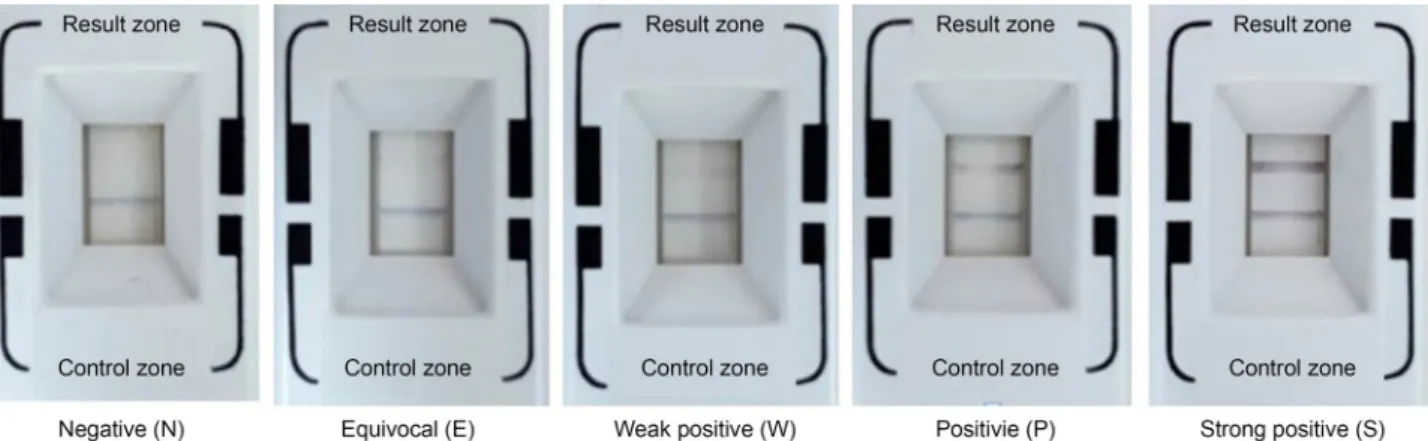
Figure 1. Classification of matrix metalloproteinase-9 (MMP-9) test results. Distinct blue line in the result zone guarantees both the
accuracy of test procedures and the validity of test results. Absence of red line is defined as ‘Negative (N)’ and marked red line paral- lel to blue line is defined as ‘Strong positive (S)’, with in-between subdivisions proportionally to the clarity of the red line. The red line gradually becomes more prominent from the left to the right configurations.최근 건성안의 발병 기전에 대한 연구들이 활발히 진행 되며, 이와 관련된 새로운 검사 장비들이 시장에 소개되고 있다. 특히 건성안환자에서 안구 표면의 염증 정도와 밀접 한 관련이 있는 것으로 알려진 기질 금속단백분해효소(matrix metalloproteinase, MMP)를 측정하는 진단 키트가 최근 도 입되어 활발히 사용되고 있다.10-13 기질 금속단백분해효소 는 안구 표면의 생리적, 병리적 대사에 작용하는 촉매 효소 의 일종이다. 특히 기질 금속단백분해효소 9 (MMP-9)은 각막 상피 세포, 섬유모세포, 눈물샘에서 생산되어 각막 표 면의 상처 재생에 중요한 역할을 한다.10 기질 금속단백분 해효소 9는 쇼그렌증후군을 비롯한 안구 표면 질환 및 건 성안환자의 눈물에서 유의하게 높은 농도로 나타나 진단적 인 가치가 있으며, 눈물 내 염증 수치를 반영하는 염증성 생체 지표(biomarker)이다.11,14,15 따라서 눈물 내 기질 금속 단백분해효소 9의 측정은 건성안환자의 진단 및 치료에 도 움을 줄 주요 검사 방법으로 기대되나 아직까지 관련된 임 상 연구가 미비한 실정이다.10,11,14,16
이에 본 연구에서는 눈 물 내 기질 금속단백분해효소 9 검출의 유무를 세분화하여 기질 금속단백분해효소 9의 결과에 따라 건성안의 주관적 증상 혹은 객관적 징후의 차이가 있는지 알아보고자 하였 다.
대상과 방법
2018년 4월부터 2019년 2월까지 해운대백병원 외래를 내원한 환자군 중 초진 당시 건성안으로 진단된 성인 67명 134안을 대상으로 의무기록을 후향적으로 분석하였다.
건성안의 진단기준으로는 2007년 International Dry eye Workshop (DEWS) 연구를 참조하여 건성안과 관련된 주관
적인 안구 불편감을 호소하거나, 눈물막파괴시간이 10초 미만이거나, 마취 점안액을 사용하지 않고 5분 동안 시행한 쉬르머검사(Schirmer’s test)에서 측정된 눈물의 양이 10 mm 이하인 경우로 정의하였다.3 모든 환자에서 연령, 성별, 안 과 및 전신적인 과거력을 조사하였고, 초진 당시 인공누액 이외의 안약을 점안하고 있거나, 건성안 이외의 안과적 질 환으로 수술이나 레이저 치료를 시행하였던 경우 대상에서 제외하였다. 본 연구는 인제대학교 해운대백병원 기관윤리 심의위원회로부터 승인을 받았다(승인 번호: 2019-04-026-001).
모든 환자에서 최대교정시력(logMAR)을 조사하였고, 전 통적인 건성안 관련 지표에 대한 검사로 쉬르머검사, 눈물 막파괴시간(tear break-up time), Oxford stain score를 이용 한 각막염색 점수, 안구표면질환지수(Ocular Surface Disease Index, OSDI) 설문지를 시행한 결과를 기록하였다. 쉬르머 검사는 점안 마취 없이 Schirmer tear® (Eagle Vision, Memphis, TN, USA) 검사지를 아래 눈꺼풀 바깥 1/3 지점에서 결막 낭 내로 들어가게 위치시키고 5분 후 눈물에 의해 검사 지가 젖은 길이(mm)를 측정하였다. 눈물막파괴시간은 Fluorescein® (Haag-Streit international, Koniz, Switzerland) 을 결막낭에 접촉하여 피검자의 눈을 3회 이상 깜빡이게 한 뒤, 세극등현미경의 코발트 블루 광원을 조사한 상태에 서 염색된 눈물막 층에서 형광 색소 염색의 첫 결손이 관찰 될 때까지의 시간을 초 단위로 측정하였다. 각막염색 점수 는 Fluorescein® (Haag-Streit international)으로 안구 표면을 염색한 후 나타난 각막 미란의 정도를 Oxford schema에 따 라 0-5점으로 점수를 매겼다.17 주관적 증상의 중증도는 OSDI 설문지로 분석하였다.18 안구 증상(ocular symptoms) 3문항, 시 기능 관련(vision-related function) 6문항, 환경 요 인(environmental triggers) 3문항의 총 12문항으로 구성된
A
B
C
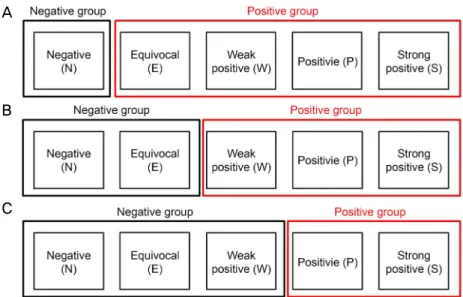
Figure 2. Categorization of the patients based on the results of matrix metalloproteinase-9 (MMP-9). (A) Result of MMP-9 negative
was identified as negative group and the result of MMP-9 equivocal, weak positive, positive, and strong positive were categorized as positive group. (B) Result of MMP-9 negative and equivocal were categorized as negative group and the result of MMP-9 weak positive, positive, and strong positive were categorized as positive group. (C) Result of MMP-9 negative, equivocal, and weak pos- itive were categorized as negative group while the other results of MMP-9 were categorized as positive group.설문지에 환자가 각 질문마다 0에서 4점으로 응답하도록 한 후 각 점수의 총합을 질문 수로 나눈 다음 25를 곱하여, 전체 점수를 1점부터 100점까지 환산하여 계산하였다.
눈물 내 기질 금속단백분해효소 9 측정은 건성안 관련 안과적 임상검사 전 가장 먼저 시행되었고 InflammaDryTM (Rapid Pathogen Screening, Inc., Sarasota, FL, USA)이 사 용되었다. 점안 마취 없이 아래 눈꺼풀 안검 결막의 여러 위치에 6-8회 이상 샘플 수집기의 플리스를 접촉시켜 눈물 검체를 채취하였다. 샘플 수집기의 플리스가 눈물에 충분 히 젖어 반짝거리는 것을 확인한 후, 검사 카세트의 샘플 이송 창에 샘플 수집기의 플리스를 조립하였다. 완충액에 흡수제 팁을 20초 이상 담근 후 보호 캡을 닫아 수평 표면 에 10분간 평평하게 위치시킨 다음 검사 결과를 해석하였 다. 검사 결과는 창에 나타나는 파란색 대조 선과 빨간색 결과 선으로 표시되었다. 파란색의 대조 선이 나타난 경우 검사가 올바르게 시행되었다고 판단하였으며, 파란색 선이 나타나지 않은 경우 연구에서 제외하였다. 빨간색 선이 없 으면 음성(negative, N)으로 판단하였고, 결과 기준 이미지 인 Fig. 1을 참고하여 빨간색 선의 진한 정도에 따라 애매 모호함(equivocal, E), 약양성(weak positive, W), 양성 (positive, P), 강양성(strong positive, S)으로 나누었다. 각 환자의 검사 결과는 사진 자료 형태로 보관되어 두 명의 검 사자(H.K.L., H.R.K.)가 독립적으로 분석하였으며 두 검사 자의 결과가 일치하지 않는 경우 연구에서 제외하였다. N,
E, W, P, S로 분류된 기질 금속단백분해효소 9 검사 결과 를 Fig. 2의 모식도와 같이 각 군의 범위를 달리하여 3가지 방법으로 기질 금속단백분해효소 9 음성군과 양성군으로 재분류하였다.
총 134안을 기질 금속단백분해효소 9 음성군과 양성군으 로 각각 분류하여 쉬르머검사, 눈물막파괴시간, 각막염색 점수 결과를 비교하였다. 단, 안구표면질환지수는 안구 각 각이 아닌 대상자를 기질 금속단백분해효소 9 음성군과 양 성군으로 나누어 비교하였으며 양안의 기질 금속단백분해 효소 9 검사 결과가 일치하지 않는 경우 양 눈에서 더 심한 기질 금속단백분해효소 9 검사 결과를 채택하였다. 모든 통 계는 SPSS 12.0 (SPSS Inc., Chicago, IL, USA)을 사용하였 다. 기질 금속단백분해효소 9 음성군과 양성군 간의 연속 변수 차이에 대하여 student t-test를 시행하였고 p값의 유의 수준은 0.05 미만으로 하였다.
결 과
총 67명 134안이 연구에 포함되었다(Table 1). 전체 대상 자의 나이는 54.33 ± 13.39세였고 49명(74.13%)이 여성이었 다. 전체 대상안의 최대교정시력은 0.05 ± 0.11 logMAR, 눈 물막파괴시간은 3.79 ± 1.40초, 쉬르머검사는 9.52 ± 7.93 mm, 각막염색 점수는 1.13 ± 1.43점이었다. 전체 대상자의 OSDI 검사 결과는 54.66 ± 23.88점이었다. 기질 금속단백분해효
Characteristic Value (n = 67)
Number of eyes 134
Sex (male:female) 18:49
Age at diagnosis (years) 54.33 ± 13.39
BCVA (logMAR) 0.05 ± 0.11
TBUT (seconds) 3.79 ± 1.40
Schirmer’s test (mm) 9.52 ± 7.93
Cornea erosion (OSS) 1.13 ± 1.43
OSDI(score) 54.66 ± 23.88
Values are presented as mean ± standard deviation unless other- wise indicated.
BCVA = best corrected visual acuity; logMAR = logarithm of minimal angle of resolution; TBUT = tear breakup time; OSS = oxford stain score; OSDI = ocular surface disease index.
Table 1. Baseline characteristics
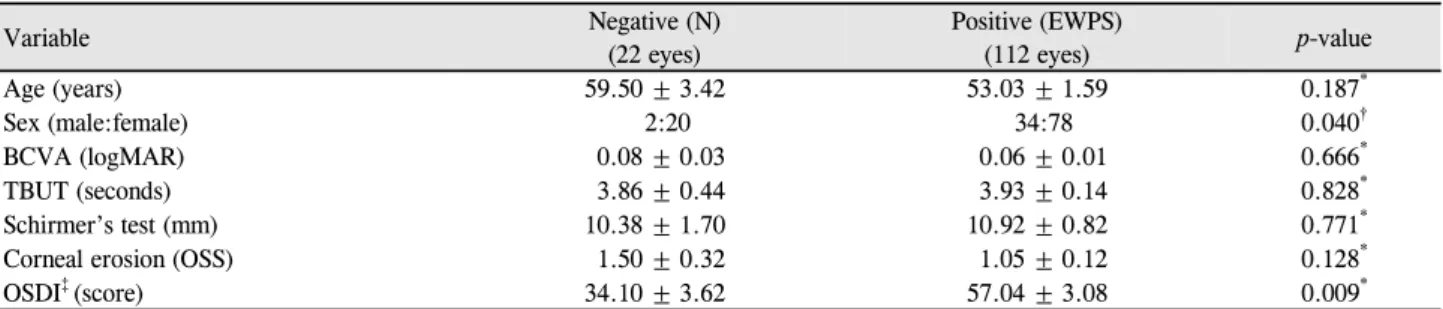
Variable Negative (N)
(22 eyes)
Positive (EWPS)
(112 eyes) p-value
Age (years) 59.50 ± 3.42 53.03 ± 1.59 0.187*
Sex (male:female) 2:20 34:78 0.040†
BCVA (logMAR) 0.08 ± 0.03 0.06 ± 0.01 0.666*
TBUT (seconds) 3.86 ± 0.44 3.93 ± 0.14 0.828*
Schirmer’s test (mm) 10.38 ± 1.70 10.92 ± 0.82 0.771*
Corneal erosion (OSS) 1.50 ± 0.32 1.05 ± 0.12 0.128*
OSDI‡ (score) 34.10 ± 3.62 57.04 ± 3.08 0.009*
Values are presented as mean ± standard deviation unless otherwise indicated.
MMP = matrix metalloproteinase; BCVA = best corrected visual acuity; logMAR = logarithm of minimal angle of resolution; TBUT = tear breakup time; OSS = Oxford stain score; OSDI = Ocular surface disease index.
*The comparison was performed by using Student t-test; †the comparison was performed by using Pearson’s chi-squared test; ‡the comparison was performed by division based on the subjects, not by eyes. If MMP-9 results in both eyes are not identical, more severe MMP-9 results are selected for the analysis. Eight patients are included in the negative group (N) and 59 patients are included in the positive group (EWPS).
Table 2. Comparison of the demographics and test results between MMP-9 negative group and MMP-9 positive group when assum-
ing result of MMP-9 negative as negative group소 9 검사 결과는 음성(N) 22안, 애매모호함(E) 34안, 약양 성(W) 16안, 양성(P) 41안, 강양성(S) 21안이었다. 모든 환 자에서 OSDI 점수를 산출할 수 있었으며, 이 중 양안에서 기질 금속단백분해효소 9 검사 결과가 상이했던 경우는 13명 (19.40%)이었다.
총 134안을 대상으로, 기질 금속단백분해효소 9 결과에 따른 음성군과 양성군의 분류 기준을 달리하여 두 군에서 눈물막파괴시간, 쉬르머검사, 각막염색 점수, OSDI 점수를 비교하였다. 먼저 기질 금속단백분해효소 9 음성(N)만을 기 질 금속단백분해효소 9 음성군(N)으로 분류하고 나머지를 양성군(EWPS)으로 분류하였다(Table 2). 음성군 22안, 양 성군 112안이었으며 남성과 여성의 비율은 각각 2:20, 34:78로 기질 금속단백분해효소 9 음성군에서 유의하게 여 성의 비율이 높았다(p=0.040). 기질 금속단백분해효소 9 음 성군과 양성군의 눈물막파괴시간은 각각 3.86 ± 0.44초, 3.93 ± 0.14초로 통계적으로 유의한 차이를 보이지 않았다
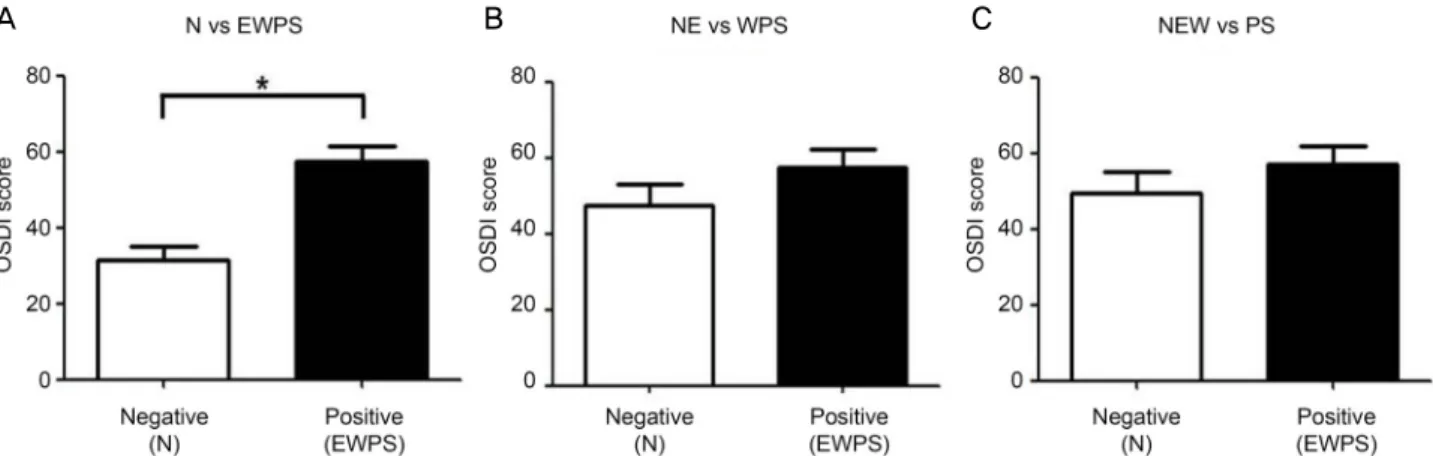
(p=0.828). 쉬르머검사로 측정한 눈물양은 기질 금속단백분 해효소 9 음성군과 양성군 각각에서 10.38 ± 1.70 mm, 10.92 ± 0.82 mm였고, 각막염색 점수는 각각 1.50 ± 0.32점, 1.05 ± 0.12점으로 모두 통계적인 차이를 보이지 않았다(순 서대로 p=0.771, p=0.128). 한편 OSDI 검사를 시행한 총 67명 중 음성군(N) 8명, 양성군(EWPS) 59명의 두 군에서 OSDI 검사 결과는 각각 34.10 ± 3.62점, 57.04 ± 3.08점으로, 기 질 금속단백분해효소 9 양성군에서 음성군에 비해 통계적 으로 유의하게 OSDI 평균 점수가 높았다(p=0.009) (Fig. 3).
다음으로 기질 금속단백분해효소 9 검사 결과 중 음성 (N)과 애매모호함(E)을 음성군(NE)으로 분류하고 나머지 를 양성군(WPS)으로 분류하였다(Table 3). 음성군 56안, 양 성군 78안이었으며 남성과 여성의 비는 각각 10:46, 26:52 로 기질 금속단백분해효소 9 음성군에서 유의하게 여성의 비율이 높았다(p=0.046). 기질 금속단백분해효소 9 음성군 과 양성군에서 눈물막파괴시간, 쉬르머검사 결과, 각막염색 점수는 모두 통계적으로 유의한 차이를 보이지 않았다. OSDI 검사 결과도, 26명의 음성군(NE)과 41명의 양성군 (WPS)에서 각각 50.06 ± 4.54점, 57.00 ± 3.73점으로 통계 적으로 유의한 차이가 없었다(p=0.246). 마지막으로 기질 금속단백분해효소 9 검사 결과 중 음성(N), 애매모호함(E), 약양성(W)을 음성군(NEW), 나머지를 양성군(PS)으로 분 류하여 비교하였다. 음성군 72안, 양성군 62안이었으며 남 성과 여성의 비는 각각 13:59, 23:39로 기질 금속단백분해 효소 9 음성군에서 유의하게 여성의 비율이 높았다(p=0.013).
두 군 간에 눈물막파괴시간, 쉬르머검사, 각막염색 점수, OSDI 검사 결과 모두 통계적으로 유의한 차이가 없었다 (Table 4).
A B C
Figure 3. The difference of ocular surface disease index (OSDI) between the groups. (A) OSDI scores when result of matrix metal-
loproteinase-9 (MMP-9) negative was identified as negative. Note the significant difference of the average of OSDI scores between the negative (N) and positive (EWPS) (*p < 0.05). No significant difference of OSDI score was found when result of MMP-9 neg- ative and equivocal were assumed as negative (B) nor result of MMP-9 negative, equivocal, and weak positive were assumed as neg- ative (C).Variable Negative (NE)
(56 eyes)
Positive (WPS)
(78 eyes) p-value
Age (years) 54.54 ± 2.68 53.22 ± 1.78 0.673*
Sex (male:female) 10:46 26:52 0.046†
BCVA (logMAR) 0.06 ± 0.01 0.06 ± 0.02 0.891*
TBUT (seconds) 3.92 ± 0.23 3.91 ± 0.17 0.974*
Schirmer’s test (mm) 10.51 ± 1.06 11.05 ± 1.02 0.715*
Corneal erosion (OSS) 1.14 ± 0.19 1.14 ± 0.14 0.994*
OSDI‡ (score) 50.06 ± 4.54 57.00 ± 3.73 0.246*
Values are presented as mean ± standard deviation unless otherwise indicated.
MMP = matrix metalloproteinase; BCVA = best corrected visual acuity; logMAR = logarithm of minimal angle of resolution; TBUT = tear breakup time; OSS = Oxford stain score; OSDI = Ocular surface disease index.
*The comparison was performed by using Student t-test; †the comparison was performed by using Pearson’s chi-squared test; ‡the comparison was performed by division based on the subjects, not by eyes. If MMP-9 results in both eyes are not identical, more severe MMP-9 results are selected for the analysis. Twenty six patients are included in the negative group (NE) and 41 patients are included in the positive group (WPS).
Table 3. Comparison of the demographics and test results between MMP-9 negative group and MMP-9 positive group when assum-
ing result of MMP-9 negative and equivocal as negative groupVariable Negative (NEW)
(72 eyes)
Positive (PS)
(62 eyes) p-value
Age (years) 52.82 ± 2.17 54.53 ± 2.04 0.567*
Sex (male:female) 13:59 23:39 0.013†
BCVA (logMAR) 0.07 ± 0.01 0.05 ± 0.01 0.144*
TBUT (seconds) 3.94 ± 0.19 3.87 ± 0.20 0.809*
Schirmer’s test (mm) 11.21 ± 0.95 10.26 ± 1.17 0.945*
Corneal erosion (OSS) 1.01 ± 0.15 1.32 ± 0.18 0.188*
OSDI‡ (score) 55.87 ± 4.64 56.31 ± 4.01 0.927*
Values are presented as mean ± standard deviation unless otherwise indicated.
MMP = matrix metalloproteinase; BCVA = best corrected visual acuity; logMAR = logarithm of minimal angle of resolution; TBUT = tear breakup time; OSS = Oxford stain score; OSDI = Ocular surface disease index.
*The comparison was performed by using student t-test; †the comparison was performed by using Pearson’s chi-squared test; ‡the comparison was performed by division based on the subjects, not by eyes. If MMP-9 results in both eyes are not identical, more severe MMP-9 results are selected for the analysis. Thirty three patients are included in the negative group (NEW) and 34 patients are included in the positive group (PS).
Table 4. Comparison of the demographics and test results between MMP-9 negative group and MMP-9 positive group when assum-
ing result of MMP-9 negative, equivocal and weak positive as negative group고 찰
2007년 DEWS에서 건성안이 발생하고 지속되는 기전에 안구 표면의 염증 반응이 밀접하게 관련되어 있음이 제기 된 이후 염증을 억제하는 다양한 약제들이 건성안 치료에 도입되었으나, 임상검사의 부재로 건성안환자에서 실제로 안구 표면의 염증이 증가하였는지 확인하기는 어려웠다.3 기질 금속단백분해효소 9는 염증의 생체 지표로써, 다양한 안구 표면 염증 질환에서 눈물의 기질 금속단백분해효소 9 수치가 상승함이 보고된 바 있으나 과거의 연구들은 실 험실 연구가 대부분이었으므로 임상적인 사용의 한계가 있 었다.10,11,14,16,19 하지만 최근 면역측정법(immunoassay)을 통 하여 기질 금속단백분해효소 9를 간단하게 검출할 수 있는 검사 키트(InflammaDryTM, Rapid Pathogen Screening, Inc.) 가 시장에 소개되었고, 우리나라에서도 건성안 진단 시 최 초 1회 사용이 허가되어 건성안환자들을 대상으로 널리 검 사가 시행되고 있다. 건성안환자에서 InflammaDryTM (Rapid Pathogen Screening, Inc.)으로 측정한 눈물 내 기질 금속단 백분해효소 9의 임상적 유용성에 대해 최초로 보고한 Sambursky et al14은 143명의 건성안환자와 63명의 건강한 대조군을 대상으로, 기존의 건성안 지표로 알려진 눈물막 파괴시간, 쉬르머검사, 각결막 염색 지수, OSDI 점수와 비 교하였을 때 기질 금속단백분해효소 9 면역측정법이 85%
의 민감도, 94%의 특이도, 73%의 음성 예측도, 97%의 양 성 예측도를 가진다고 보고하였다. 하지만 Messmer et al10 은 안구 표면 염증 및 자가면역질환과 관련된 건성안환자 의 40%만이 기질 금속단백분해효소 9 양성을 나타냈으며, Lanza et al12 역시 건성안 증상을 호소하는 사람의 39%에 서만 기질 금속단백분해효소 9가 양성으로 나타났다는 상 이한 결과를 보고하였다. Messmer et al10의 연구에서 심한 건성안의 비율이 상대적으로 낮았던 점, Lanza et al12의 연 구 대상군이 고령의 남성 재향 군인에 편향되어 있었고 InflammaDryTM (Rapid Pathogen Screening, Inc.) 결과에 영향을 줄 수 있는 항암 치료나 스테로이드 사용 등에 대한 조사가 이루어지지 않은 점 등을 고려한다면, 이러한 차이 는 각 연구 대상의 차이에서 비롯되었을 가능성이 있다. 하 지만 InflammaDryTM (Rapid Pathogen Screening, Inc.) 검 사 결과의 판정은 기준 이미지를 척도로 하기 때문에 검사 결과의 해석이 연구자 간 차이가 있었을 가능성도 있다.
기존 문헌에 따르면 InflammaDryTM (Rapid Pathogen Screening, Inc.)은 눈물 내 기질 금속단백분해효소 9의 농 도가 40 ng/mL 이상인 경우 양성의 결과가 나오며, 검사 결과 창에서 빨간 선의 선명도는 눈물 내 기질 금속단백분 해효소 9의 농도와 비례하는 것으로 알려져 있다.10,11,20 하
지만 InflammaDryTM (Rapid Pathogen Screening, Inc.)은 정량 검사가 아닌 정성 검사이기 때문에 검사 결과 창의 빨 간 선이 선명하지 않은 경우 검사자 간 결과 해석이 상이할 수 있다.11 따라서 본 연구에서는 이런 애매모호한 검사 결 과의 해석이 기존의 건성안 지표들과의 상관성에 있어 차 이를 유발하는지 확인하고자 기질 금속단백분해효소 9 음 성군과 양성군의 분류 기준을 달리하여 기존의 건성안 지 표들과 비교하였다. 그 결과, 세부 분류 기준과 무관하게 건성안환자의 객관적인 검사 지표들과 기질 금속단백분해 효소 9 검사 결과는 유의미한 관련을 보이지 않았다. 이 는 기존의 연구와 유사한 결과로써, Sambersky et al16는 InflammaDryTM (Rapid Pathogen Screening, Inc.) 검사 양 성인 환자의 1/3에서 각막상피미란이 없었음을 보고하였다.
다만, 기질 금속단백분해효소 9가 염증의 초기 생체 지표인 것을 고려한다면, 건성안환자에서 기질 금속단백분해효소 9의 증가가 각막상피미란에 선행할 가능성이 있으므로 시 간 변화에 따른 InflammaDryTM (Rapid Pathogen Screening, Inc.) 결과의 변화를 추가적으로 살펴볼 필요가 있을 것이다.21
OSDI 설문지로 측정한 환자의 주관적인 건성안 증상은 기질 금속단백분해효소 9 검사 결과 창의 빨간 선이 전혀 나타나지 않은 경우만을 음성군으로 분류하고 나머지를 양 성군으로 분류했을 때 기질 금속단백분해효소 9 결과와 유 의한 상관관계를 보였다. 이는 기질 금속단백분해효소 9가 각막염색 정도보다는 환자의 증상과 더 큰 관련성을 가졌 음을 보고한 기존의 보고와 유사한 결과이다.22 건성안은 다인성 질환으로서 아직까지 발병 기전이 완전히 밝혀지지 않아, 환자의 징후에 비해 증상이 매우 심한 경우 진단 및 치료의 결정과 질병의 경과 판단에 어려움이 있다.13 본 연 구에서는 눈의 건조감, 이물감, 눈부심 등 건성안과 연관이 있는 것으로 알려진 안구 불편감이 있는 경우 모두를 건성 안으로 정의하여 상대적으로 넓은 진단 기준을 채택하였음 에도 불구하고, 총 67명의 환자 중 양안에서 모두 기질 금 속단백분해효소 9 음성이 나온 경우는 8명, 16안에 불과하 였다. 따라서 검사의 높은 양성 예측도를 고려한다면 객관 적인 징후 없이 건성안의 주관적인 증상만 있는 경우에도 항염증 치료를 비롯한 적극적인 건성안 치료를 고려해볼 수 있으며, 기질 금속단백분해효소 9 양성인 군은 더 심한 임상 증상을 호소할 가능성이 높아 국소 스테로이드 또는 국소 사이클로스포린 제제를 건성안 치료 초기부터 사용하 는 것으로 고려해야 할 것이다.11,23 하지만 기질 금속단백분 해효소 9 음성(N)인 경우 임상 증상이나 객관적 증후와 관 련 없이 항염증 치료를 배제한 단순 눈물의 보충 등의 고전 적 치료만 시행할지 여부에 대해서는 추가적인 연구가 필 요할 것으로 생각된다. 한편 본 연구에서 결과 분류 기준과
관련 없이 기질 금속단백분해효소 9 음성군에서 양성군에 비해 항상 통계적으로 유의하게 여성의 비율이 높았다. 따 라서 여성 환자가 건성안 증상을 호소할 때 진단에 있어 진 성 건성안인지 혹은 증상을 야기할 만한 타 요인이 동반되 어 있지 않은지 면밀히 살펴보아야 할 것이며 건성안 치료 시에도 신중하게 고려해야 할 것이다.
InflammaDryTM (Rapid Pathogen Screening, Inc.)은 임상 에서 눈물의 기질 금속단백분해효소 9를 측정할 수 있는 유일한 진단 장비이나 그 검사의 재현성과 신뢰성에 대해 서는 세밀한 고찰이 필요하다.11 최근의 안내 수술, 감염, 익상편, 반복각막미란, 마이봄선장애, 주사(rosacea), 알레 르기 등의 다양한 안구 표면 질환에서는 건성안 없이도 검 사 결과가 위양성으로 나올 수 있으며, 전신적인 면역억제 제, 국소 또는 전신 스테로이드, 사이클로스포린, 테트라사 이클린, 아지트로마이신의 복용은 기질 금속단백분해효소 대사에 관여하여 검사 결과가 위음성으로 나올 수 있다. 또 한 국소 마취제 점안, 국소 염색약 사용, 쉬르머검사 등이 결 과에 영향을 줄 수 있으므로 InflammaDryTM (Rapid Pathogen Screening, Inc.) 검사가 그 이후에 시행된다면 검사 결과의 신뢰성이 떨어지게 된다.11 또 현재까지 진행된 InflammaDryTM (Rapid Pathogen Screening, Inc.) 임상 연구들은 단 한 번의 검사 결과만을 연구 보고에 사용하였기 때문에 검사 결과 의 신뢰를 증가시키기 위해 재현성과 반복성에 대한 추가 적인 고찰이 필요할 것이다. Schargus et al24는 이를 보강하 기 위하여 InflammaDryTM (Rapid Pathogen Screening, Inc.) 과 기질 금속단백분해효소 9 ELISA 검사를 동시에 시행하 여 검사 위양성이 없었으며, InflammaDryTM (Rapid Pathogen Screening, Inc.)에서 음성인 경우 모두에서 ELISA 결과 기 질 금속단백분해효소 9 농도가 40 ng/mL 미만임을 확인하 였다. 한편 InflammaDryTM (Rapid Pathogen Screening, Inc.)의 cut-off 값은 40 ng/mL로써, 정상인에서 평균에 표 준 편차의 2-3배를 곱한 값을 검사 양성의 기준치로 삼는 것에 기반한다.12 하지만 정상인에서 눈물 내 기질 금속단 백분해효소 9의 농도는 3-41 ng/mL로 다양하게 보고되고 있어 cut-off 값의 당위성에 대해서는 추가적인 임상 연구 가 필요할 것으로 생각된다.11
본 연구의 한계점은 첫째, 상대적으로 적은 환자 수 및 연구 안이다. 이 때문에 양안 모두를 연구 대상에 포함시켜 이에 따른 중복의 오류가 발생하였을 것으로 생각된다. 둘 째, 본 연구는 단면 연구로서 건성안으로 진단된 환자만을 대상으로 하였기에 정상 대조군과의 비교 결과가 없다. 그 러나 현재 국내에서는 건성안으로 진단된 환자에서 1회의 InflammaDryTM (Rapid Pathogen Screening, Inc.) 검사만을 허용하고 있으므로 검사 기기의 대규모 상용화 및 추가적
인 검사 범위 허용 없이는 정상 대조군과의 비교 연구 진행 에 어려움이 있다. 마지막으로 기질 금속단백분해효소 9 결 과를 기준 이미지에 따라 5개로 분류하였으나 검사자의 주 관에 따른 차이를 완전히 배제할 수 없었다. 이를 보완하고 자 본 연구에서는 기질 금속단백분해효소 9 검사 결과의 해석에 있어 두 명의 검사자가 개별적으로 시행하여 검사 결과가 일치하는 경우 연구에 포함시켰다.
결론적으로 본 연구를 통해 눈물 내 기질 금속단백분해 효소 9의 농도와 건성안의 주관적인 증상이 유의한 상관 관계가 있음을 확인할 수 있었다. 따라서 건성안환자에서 눈물 내 기질 금속단백분해효소 9 측정은 환자가 느끼는 주관적 증상 예측에 도움을 주는 지표로 고려될 수 있을 것 이다. 다만 기존에 사용되는 건성안의 객관적 지표들과의 상관관계는 명확하지 않아 임상적인 해석에 세밀한 주의를 요한다.
REFERENCES
1) Lemp MA. Report of the national eye institute/industry workshop on clinical trials in dry eyes. CLAO J 1995;21:221-32.
2) The definition and classification of dry eye disease: report of the Definition and Classification Subcommittee of the International Dry Eye WorkShop (2007). Ocul Surf 2007;5:75-92.
3) Methodologies to diagnose and monitor dry eye disease: report of the Diagnostic Methodology Subcommittee of the International Dry Eye WorkShop (2007). Ocul Surf 2007;5:108-52.
4) Uchino M, Dogru M, Yagi Y, et al. The features of dry eye disease in a Japanese elderly population. Optom Vis Sci 2006;83:797-802.
5) Ahn JM, Lee SH, Rim TH, et al. Prevalence of and risk factors as- sociated with dry eye: the Korea National Health and Nutrition Examination Survey 2010-2011. Am J Ophthalmol 2014;158:
1205-14.e7.
6) Roh HC, Lee JK, Kim M, et al. Systemic comorbidities of dry eye syndrome: the Korean National Health and Nutrition Examination Survey V, 2010 to 2012. Cornea 2016;35:187-92.
7) Bron AJ. Diagnosis of dry eye. Surv Ophthalmol 2001;45 Suppl 2:S221-6.
8) Mishima S, Kubota Z, Farris RL. The tear flow dynamics in normal and in keratoconjunctivitis sicca cases. Excerpta Medica Int Congr Ser 1970;222:1801-5.
9) Baudouin C, Aragona P, Van Setten G, et al. Diagnosing the se- verity of dry eye: a clear and practical algorithm. Br J Ophthalmol 2014;98:1168-76.
10) Messmer EM, von Lindenfels V, Garbe A, Kampik A. Matrix met- alloproteinase 9 testing in dry eye disease using a commercially available point-of-care immunoassay. Ophthalmology 2016;123:
2300-8.
11) Lanza NL, Valenzuela F, Perez VL, Galor A. The matrix metal- loproteinase 9 point-of-care test in dry eye. Ocul Surf 2016;14:
189-95.
12) Lanza NL, McClellan AL, Batawi H, et al. Dry eye profiles in pa- tients with a positive elevated surface matrix metalloproteinase 9
= 국문초록 =
눈물 내 기질 금속단백분해효소 9 농도에 따른 건성안의 임상양상 비교
목적: 건성안환자에서 눈물 내 기질 금속단백분해효소 9의 농도와 건성안의 주관적 증상 및 객관적 징후의 연관성을 알아보고자 하였 다.
대상과 방법: 건성안을 진단받은 67명 134안의 의무기록을 후향적으로 분석하였다. 본 논문은 눈물 내 기질 금속단백분해효소 9 현장 검사의 결과를 음성(negative, N), 애매모호함(equivocal, E), 약양성(weak positive, W), 양성(positive, P), 강양성(strong positive, S)의 5가지로 정의하였고, 분류 범위를 달리하여 3가지 방법으로 기질 금속단백분해효소 9 결과를 음성인 군과 양성인 군으로 분류하 였다. 모든 환자에서 건성안의 객관적 징후인 눈물막파괴시간, 쉬르머검사로 측정한 눈물의 양, 각막염색 정도로 평가한 각막미란과 주관적인 증상인 안구표면질환지수를 기록하여 두 군 간의 차이를 비교하였다.
결과: 기질 금속단백분해효소 9 양성인 군과 음성인 군에서 눈물막파괴시간, 쉬르머검사, 각막염색 정도는 유의한 차이를 보이지 않았 으며, 모든 경우에서 기질 금속단백분해효소 9 음성인 군에서 양성인 군에 비해 여성의 비율이 유의하게 높았다(모두 p<0.05). 기질 금속단백분해효소 9 음성만을 기질 금속단백분해효소 9 음성인 군으로 분류하였을 때, 안구표면질환지수는 기질 금속단백분해효소 9가 양성인 군에서 유의하게 높았다(p=0.009).
결론: 건성안환자에서 눈물 내 기질 금속단백분해효소 9 측정은 환자가 느끼는 건성안의 주관적 증상의 예측에 도움이 될 수 있다.
<대한안과학회지 2019;60(12):1140-1147>
김해랑 / Hae Rang Kim
인제대학교 의과대학 해운대백병원 안과학교실 Department of Ophthalmology,
Haeundae Paik Hospital, Inje University College of Medicine point-of-care test versus negative patients. Ocul Surf 2016;14:216-23.
13) Seo MH, Shin JY, Lee DH, Kim JH. Objective parameters asso- ciated with subjective symptom severity in dry eye syndrome patients. J Korean Ophthalmol Soc 2017;58:259-67.
14) Sambursky R, Davitt WF 3rd, Latkany R, et al. Sensitivity and spe- cificity of a point-of-care matrix metalloproteinase 9 immunoassay for diagnosing inflammation related to dry eye. JAMA Ophthalmol 2013;131:24-8.
15) Pflugfelder SC, de Paiva CS. The pathophysiology of dry eye disease:
what we know and future directions for research. Ophthalmology 2017;124:S4-13.
16) Sambursky R, Davitt WF 3rd, Friedberg M, Tauber S. Prospective, multicenter, clinical evaluation of point-of-care matrix metal- loproteinase-9 test for confirming dry eye disease. Cornea 2014;
33:812-8.
17) Bron AJ, Evans VE, Smith JA. Grading of corneal and conjunctival staining in the context of other dry eye tests. Cornea 2003;22:640-50.
18) Miller KL, Walt JG, Mink DR, et al. Minimal clinically important difference for the ocular surface disease index. Arch Ophthalmol 2010;128:94-101.
19) Kaufman HE. The practical detection of mmp-9 diagnoses ocular
surface disease and may help prevent its complications. Cornea 2013;32:211-6.
20) Park JY, Kim BG, Kim JS, Hwang JH. Matrix metalloproteinase 9 point-of-care immunoassay result predicts response to topical cy- closporine treatment in dry eye disease. Transl Vis Sci Technol 2018;7:31.
21) Kolaczkowska E, Arnold B, Opdenakker G. Gelatinase B/MMP-9 as an inflammatory marker enzyme in mouse zymosan peritonitis:
comparison of phase-specific and cell-specific production by mast cells, macrophages and neutrophils. Immunobiology 2008;213:
109-24.
22) Chotikavanich S, de Paiva CS, Li de Q, et al. Production and activ- ity of matrix metalloproteinase-9 on the ocular surface increase in dysfunctional tear syndrome. Invest Ophthalmol Vis Sci 2009;50:
3203-9.
23) Starr CE, Gupta PK, Farid M, et al. An algorithm for the pre- operative diagnosis and treatment of ocular surface disorders. J Cataract Refract Surg 2019;45:669-84.
24) Schargus M, Ivanova S, Kakkassery V, et al. Correlation of tear film osmolarity and 2 different MMP-9 tests with common dry eye tests in a cohort of non-dry eye patients. Cornea 2015;34:739-44.