• 검색 결과가 없습니다.

Comparison of Antioxidant Activities in Tomato Leaves and Stems

N/A
N/A
Protected

Academic year: 2021

Share "Comparison of Antioxidant Activities in Tomato Leaves and Stems"

Copied!
8
0
0

로드 중.... (전체 텍스트 보기)

전체 글

(1)

Comparison of Antioxidant Activities in Tomato Leaves and Stems

Kyung Jun Lee

1

, Gi-An Lee

1

, Jong-Ro Lee

1

, Jong-Wook Chung

2

, Yang-Hee Cho

1

, Hee-Kyoung Kang

3

and Kyung-Ho Ma

1

*

1

National Agrobiodiversity Center, NAS, RDA, Jeonju 54874, Korea

2

Department of Industrial Plant Science & Technology, Chungbuk National University, Cheongju 28644, Korea

3

Department of Horticulture, College of Industrial Science, Kongju National University, Yesan 32439, Korea

Abstract - This study was conducted to investigate the antioxidant activity in the leaves and stems of 50 tomato accessions, in order to examine the possibility of using tomato by-products as a functional material. The extracts of the leaves (LE) and stems (SE) were analyzed for DPPH, ABTS, and total polyphenol content (TPC). Antioxidant activities and TPC differed significantly between the LE and SE of the 50 tomato accessions. TPC in LE and SE showed wide variation, ranging from 24.4 to 60.6 and 12.5 to 18.8 ㎎ GAE/g, respectively. The DPPH and ABTS antioxidant activities of LE ranged from 10.0 to 38.2% (scavenging effect) and 20.8 to 59.0 ㎎ ASC/g, respectively, while the DPPH and ABTS measurements of SE were 1.4 to 8.8% and 2.2 to 22.5 ㎎ ASC/g, respectively. As assessed by the relative antioxidant capacity index (RACI), IT033117 and IT203466 had the highest antioxidant activity in LE and SE, respectively. These results will expand the knowledge of antioxidant activity and provide information on tomato accessions valuable for the development of functional foods and food additives.

Key words - Antioxidant activity, Leaves extracts, Stem extracts, Tomato

*Corresponding author. E-mail : [email protected] Tel. +82-63-238-4870

ⓒ 2016 by The Plant Resources Society of Korea

Introduction

Tomato (Solanum lycopersicum L.) is widely consumed, either raw or after processing, and can provide a significant proportion of the total antioxidants in one’s diet (Martinez-Valverde et al., 2002). Tomato contains carotenoids, such as lycopene, β-carotene, and vitamin E, which are known as effective antioxidants (Engelhard et al., 2006). Increasing the production of tomato fruits causes growth to the same extent in leaves and stems; parts of the plants are used as compost, but large amounts are wasted (Kobayashi et al., 2012). Optimal use is a big challenge, because wise use of resources and recycling is becoming ever more necessary (Kobayashi et al., 2012).

Functional constituents in tomato plants can be used as food preservatives and biological control agents. In addition, it has been reported that the aroma of plants differs according to the picking season and site, and that antibacterial activity varies greatly (Angioni et al., 2006; Chorianopoulos et al., 2006).

A wealth of scientific evidence has shown that, under

conditions of oxidative stress, reactive oxygen species (ROS), such as superoxide, hydroxyl, and peroxyl radicals, are generated, and the balance between antioxidation (reduction) and oxidation is believed to be critical for maintaining a healthy biological system (Davies, 2000). ROS play an important role in the etiology and pathophysiology of human aging and diseases such as cancer, coronary heart disease, Alzheimer's disease and other neurodegenerative disorders, atherosclerosis, cataracts, and inflammation (Gey, 1990; Ames, 1983; Davies, 2000; Finkel and Holbrook, 2000; Khodr and Khalil, 2001; Kim et al., 2016). In a healthy state, there is a dynamic balance between the production of free radicals in the body and the generation of antioxidants that scavenge or quench them to protect the body against their deleterious effects. The concentration of antioxidants present under normal physiological conditions may be insufficient to neutralize free radicals generated under pathological conditions.

Therefore, it is important to enrich one’s diet with antioxidants to protect against harmful diseases. Hence, there has been increased interest in the food industry and in preventive medicine in the development of “natural antioxidants”

Original Research Article

(2)

from plant materials (Amaeze et al., 2011; Yang et al., 2015).

Antioxidant compounds have received attention from consumers of natural products and researchers owing to their pharmacological properties. Antioxidants lower the oxidative stress caused by reactive oxygen species (ROS) (Nordberg and Arner, 2001). There is increasing interest in natural antioxidant products for use as medicines and food additives (Mossi et al., 2004; Willcox et al., 2004). Phytochemicals, such as polyphenols and carotenoids, are important because of their contributions to human health and their multiple biological effects, such as antioxidant, antimutagenic, anticarcinogenic, and cytoprotective activities (Ajila and Rao, 2008).

The objective of this study was to explain the possibility of using tomato by-products such as leaves and stems as a functional material. In this study, the antioxidant activity present in the leaves and stems extracts of 50 tomato accessions were measured by DPPH radical scavenging activity, ABTS radical scavenging activity, and total polyphenol content.

Materials and Methods

Plant materials

Fifty tomato accessions (Solanum lycopersicum L.) were obtained from the National Agro-biodiversity Center of the Rural Development Administration (RDA), Republic of Korea (http://genebank.rda.go.kr). The accessions were grown in a field in 2014. The leaves and stems of the 50 tomato accessions were dried at 40 ℃ for 4 days. Seven grams of dried tomato leaves and stems were extracted using an ASE-200 (Dionex, CA, USA) extractor. Extractions were performed in 40 ㎖ 75% ethanol under nitrogen gas at a pressure of 1,500 psi at 70°C. Extracted samples were dried using a HT-4X vacuum concentrator (Genevac, Suffolk, UK).

DPPH assay

DPPH radical-scavenging activity was assessed using a previously published method with some modifications (Lee and Lee, 2004) . DPPH solution (150 ㎕; 150 µM in anhydrous EtOH) was added to 100 ㎕ of sample solution. The mixture was shaken vigorously and left to stand at 25°C in the dark for 30 min. Absorbance at 517 ㎚ was measured using a spectro- photometer (Epoch; Bio-Tek, Winooski, VT, USA).

ABTS assay

ABTS radical-scavenging activity was estimated using a previously published method with some modifications (Re et al., 1999). The ABTS radical cation was generated by adding 7 mM ABTS to 2.45 mM potassium persulfate, followed by overnight incubation in the dark at room temperature. The ABTS radical cation solution was diluted with methanol (MeOH) to obtain an absorbance of 0.7 ± 0.02 at 735 ㎚. The diluted ABTS radical cation solution (190 ㎕) was added to 10 ㎕ of sample solution. After 6 min, absorbance at 735 ㎚ was determined using a spectrophotometer (Epoch; Bio-Tek, Winooski, VT, USA). Ascorbic acid was used as a standard, and the results are expressed in ascorbic acid equivalent.

Total polyphenol content assay

Total polyphenol content was measured using the modified Folin-Ciocalteu method (Waterhouse 2001). Folin-Ciocalteu reagent (100 ㎕) was added to 100 ㎕ of sample solution and reacted at room temperature for 3 min. After adding 100 ㎕ of 2% sodium carbonate, the mixture was incubated at room temperature for 30 min. Absorbance was measured at 750 ㎚ using a spectrophotometer (Epoch; Bio-Tek, Winooski, VT, USA). Total phenolic content is reported as ㎎ of gallic acid equivalent (GAE) per gram of dried weight sample (㎎

GAE/g).

Statistical analysis

Least Significant Difference (LSD) was used to detect significant differences among the 50 tomato accessions using SPSS Statistics 20 (SPSS Inc., Chicago, IL, USA). Cluster analysis was performed using the R statistical software (http://www.r-project.org). PAST3 software was used for principal component analyses (PCA) (Hammer et al., 2001).

Results

Antioxidant activities of leaves (LE) and stem extracts (SE) from 50 tomato accessions

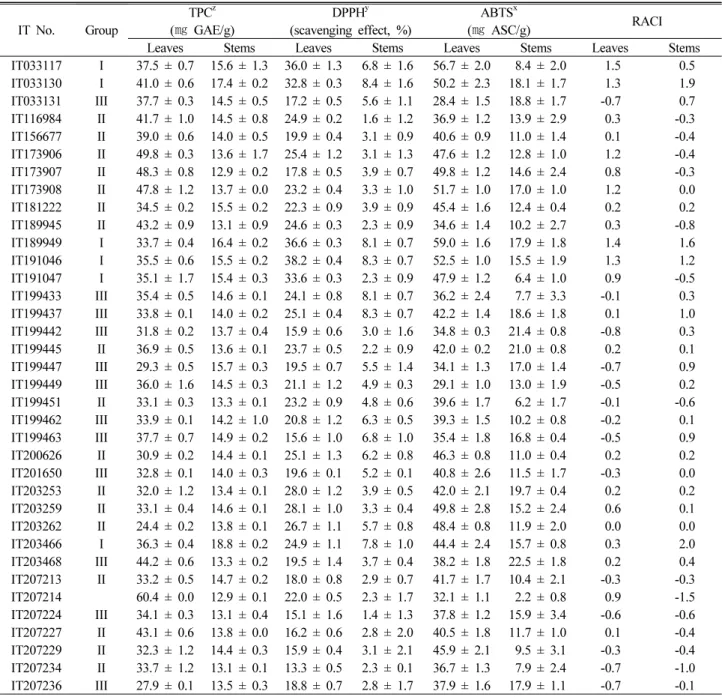
Total polyphenol content (TPC) and antioxidant activities of LE and SE in the 50 tomato accessions are summarized in Table 1 and Table 2. The TPC of LE and SE ranged from 35.9

± 6.5 and 14.1 ± 6.3 ㎎ GAE/g, respectively. Among the 50

(3)

Table 1. Total polyphenol content and antioxidant activities of leaves and stem extracts in 50 tomato accessions

Min Max Average SD CV (%) Kurtosis Skewness

Leaves

TPC

z

24.4 60.4 35.9 6.5 18.0 3.27 1.43

DPPH

y

10.0 38.2 21.9 6.3 28.6 0.40 0.76

ABTS

x

20.8 59.0 40.3 8.0 19.8 0.05 -0.02

Stems

TPC 12.5 18.8 14.1 1.2 8.8 3.74 1.63

DPPH 1.4 8.8 4.4 2.0 45.5 -0.41 0.80

ABTS 2.2 22.5 13.2 4.5 34.2 -0.44 0.07

z

TPC, total polyphenol content (㎎ GAE/g);

y

DPPH (scavenging effect,%);

x

ABTS (㎎ ASC/g).

Table 2. ABTS and DPPH antioxidant activities and polyphenol contents of stem and leaves extracts of 50 tomato accessions

IT No. Group

TPC

z

(㎎ GAE/g)

DPPH

y

(scavenging effect, %)

ABTS

x

(㎎ ASC/g) RACI

Leaves Stems Leaves Stems Leaves Stems Leaves Stems

IT033117 I 37.5 ± 0.7 15.6 ± 1.3 36.0 ± 1.3 6.8 ± 1.6 56.7 ± 2.0 8.4 ± 2.0 1.5 0.5

IT033130 I 41.0 ± 0.6 17.4 ± 0.2 32.8 ± 0.3 8.4 ± 1.6 50.2 ± 2.3 18.1 ± 1.7 1.3 1.9

IT033131 III 37.7 ± 0.3 14.5 ± 0.5 17.2 ± 0.5 5.6 ± 1.1 28.4 ± 1.5 18.8 ± 1.7 -0.7 0.7

IT116984 II 41.7 ± 1.0 14.5 ± 0.8 24.9 ± 0.2 1.6 ± 1.2 36.9 ± 1.2 13.9 ± 2.9 0.3 -0.3

IT156677 II 39.0 ± 0.6 14.0 ± 0.5 19.9 ± 0.4 3.1 ± 0.9 40.6 ± 0.9 11.0 ± 1.4 0.1 -0.4

IT173906 II 49.8 ± 0.3 13.6 ± 1.7 25.4 ± 1.2 3.1 ± 1.3 47.6 ± 1.2 12.8 ± 1.0 1.2 -0.4

IT173907 II 48.3 ± 0.8 12.9 ± 0.2 17.8 ± 0.5 3.9 ± 0.7 49.8 ± 1.2 14.6 ± 2.4 0.8 -0.3

IT173908 II 47.8 ± 1.2 13.7 ± 0.0 23.2 ± 0.4 3.3 ± 1.0 51.7 ± 1.0 17.0 ± 1.0 1.2 0.0

IT181222 II 34.5 ± 0.2 15.5 ± 0.2 22.3 ± 0.9 3.9 ± 0.9 45.4 ± 1.6 12.4 ± 0.4 0.2 0.2

IT189945 II 43.2 ± 0.9 13.1 ± 0.9 24.6 ± 0.3 2.3 ± 0.9 34.6 ± 1.4 10.2 ± 2.7 0.3 -0.8

IT189949 I 33.7 ± 0.4 16.4 ± 0.2 36.6 ± 0.3 8.1 ± 0.7 59.0 ± 1.6 17.9 ± 1.8 1.4 1.6

IT191046 I 35.5 ± 0.6 15.5 ± 0.2 38.2 ± 0.4 8.3 ± 0.7 52.5 ± 1.0 15.5 ± 1.9 1.3 1.2

IT191047 I 35.1 ± 1.7 15.4 ± 0.3 33.6 ± 0.3 2.3 ± 0.9 47.9 ± 1.2 6.4 ± 1.0 0.9 -0.5

IT199433 III 35.4 ± 0.5 14.6 ± 0.1 24.1 ± 0.8 8.1 ± 0.7 36.2 ± 2.4 7.7 ± 3.3 -0.1 0.3

IT199437 III 33.8 ± 0.1 14.0 ± 0.2 25.1 ± 0.4 8.3 ± 0.7 42.2 ± 1.4 18.6 ± 1.8 0.1 1.0

IT199442 III 31.8 ± 0.2 13.7 ± 0.4 15.9 ± 0.6 3.0 ± 1.6 34.8 ± 0.3 21.4 ± 0.8 -0.8 0.3

IT199445 II 36.9 ± 0.5 13.6 ± 0.1 23.7 ± 0.5 2.2 ± 0.9 42.0 ± 0.2 21.0 ± 0.8 0.2 0.1

IT199447 III 29.3 ± 0.5 15.7 ± 0.3 19.5 ± 0.7 5.5 ± 1.4 34.1 ± 1.3 17.0 ± 1.4 -0.7 0.9

IT199449 III 36.0 ± 1.6 14.5 ± 0.3 21.1 ± 1.2 4.9 ± 0.3 29.1 ± 1.0 13.0 ± 1.9 -0.5 0.2

IT199451 II 33.1 ± 0.3 13.3 ± 0.1 23.2 ± 0.9 4.8 ± 0.6 39.6 ± 1.7 6.2 ± 1.7 -0.1 -0.6

IT199462 III 33.9 ± 0.1 14.2 ± 1.0 20.8 ± 1.2 6.3 ± 0.5 39.3 ± 1.5 10.2 ± 0.8 -0.2 0.1

IT199463 III 37.7 ± 0.7 14.9 ± 0.2 15.6 ± 1.0 6.8 ± 1.0 35.4 ± 1.8 16.8 ± 0.4 -0.5 0.9

IT200626 II 30.9 ± 0.2 14.4 ± 0.1 25.1 ± 1.3 6.2 ± 0.8 46.3 ± 0.8 11.0 ± 0.4 0.2 0.2

IT201650 III 32.8 ± 0.1 14.0 ± 0.3 19.6 ± 0.1 5.2 ± 0.1 40.8 ± 2.6 11.5 ± 1.7 -0.3 0.0

IT203253 II 32.0 ± 1.2 13.4 ± 0.1 28.0 ± 1.2 3.9 ± 0.5 42.0 ± 2.1 19.7 ± 0.4 0.2 0.2

IT203259 II 33.1 ± 0.4 14.6 ± 0.1 28.1 ± 1.0 3.3 ± 0.4 49.8 ± 2.8 15.2 ± 2.4 0.6 0.1

IT203262 II 24.4 ± 0.2 13.8 ± 0.1 26.7 ± 1.1 5.7 ± 0.8 48.4 ± 0.8 11.9 ± 2.0 0.0 0.0

IT203466 I 36.3 ± 0.4 18.8 ± 0.2 24.9 ± 1.1 7.8 ± 1.0 44.4 ± 2.4 15.7 ± 0.8 0.3 2.0

IT203468 III 44.2 ± 0.6 13.3 ± 0.2 19.5 ± 1.4 3.7 ± 0.4 38.2 ± 1.8 22.5 ± 1.8 0.2 0.4

IT207213 II 33.2 ± 0.5 14.7 ± 0.2 18.0 ± 0.8 2.9 ± 0.7 41.7 ± 1.7 10.4 ± 2.1 -0.3 -0.3

IT207214 60.4 ± 0.0 12.9 ± 0.1 22.0 ± 0.5 2.3 ± 1.7 32.1 ± 1.1 2.2 ± 0.8 0.9 -1.5

IT207224 III 34.1 ± 0.3 13.1 ± 0.4 15.1 ± 1.6 1.4 ± 1.3 37.8 ± 1.2 15.9 ± 3.4 -0.6 -0.6

IT207227 II 43.1 ± 0.6 13.8 ± 0.0 16.2 ± 0.6 2.8 ± 2.0 40.5 ± 1.8 11.7 ± 1.0 0.1 -0.4

IT207229 II 32.3 ± 1.2 14.4 ± 0.3 15.9 ± 0.4 3.1 ± 2.1 45.9 ± 2.1 9.5 ± 3.1 -0.3 -0.4

IT207234 II 33.7 ± 1.2 13.1 ± 0.1 13.3 ± 0.5 2.3 ± 0.1 36.7 ± 1.3 7.9 ± 2.4 -0.7 -1.0

IT207236 III 27.9 ± 0.1 13.5 ± 0.3 18.8 ± 0.7 2.8 ± 1.7 37.9 ± 1.6 17.9 ± 1.1 -0.7 -0.1

(4)

Table 2. ABTS and DPPH antioxidant activities and polyphenol contents of stem and leaves extracts of 50 tomato accessions (Continued)

IT No. Group

TPC

z

(㎎ GAE/g)

DPPH

y

(scavenging effect, %)

ABTS

x

(㎎ ASC/g) RACI

Leaves Stems Leaves Stems Leaves Stems Leaves Stems

IT207239 II 28.8 ± 0.4 13.0 ± 0.3 18.0 ± 1.3 3.7 ± 1.2 43.4 ± 3.0 8.4 ± 2.0 -0.4 -0.8 IT207288 III 32.5 ± 0.3 12.8 ± 0.1 16.4 ± 0.8 2.6 ± 0.5 27.2 ± 1.6 20.3 ± 1.0 -1.0 -0.1 IT211836 II 28.9 ± 1.7 13.1 ± 0.1 22.4 ± 1.5 3.7 ± 1.4 34.5 ± 2.2 7.5 ± 1.7 -0.6 -0.8 IT229536 II 36.4 ± 0.5 13.0 ± 0.1 21.7 ± 1.2 3.1 ± 1.0 38.2 ± 2.5 8.6 ± 0.7 -0.1 -0.8 IT229651 III 33.6 ± 0.3 13.5 ± 0.1 14.8 ± 1.3 4.5 ± 1.3 24.9 ± 2.9 11.9 ± 0.7 -1.1 -0.2 IT229694 II 42.5 ± 0.2 12.8 ± 0.0 22.0 ± 1.5 3.7 ± 1.1 34.1 ± 1.0 10.8 ± 2.1 0.1 -0.7 IT229711 II 27.5 ± 0.8 12.8 ± 0.1 26.9 ± 1.1 3.1 ± 0.2 43.8 ± 1.4 7.5 ± 1.4 0.0 -1.0 IT235444 III 32.1 ± 0.3 13.8 ± 0.2 20.4 ± 0.5 4.6 ± 0.7 35.3 ± 2.8 12.6 ± 0.7 -0.5 -0.1 IT236523 II 38.7 ± 0.5 13.6 ± 0.2 28.7 ± 1.0 3.2 ± 0.9 47.4 ± 2.0 15.5 ± 1.9 0.8 -0.2 IT247989 II 38.2 ± 0.4 14.3 ± 0.1 16.3 ± 0.4 2.9 ± 1.0 35.1 ± 1.4 12.4 ± 1.0 -0.4 -0.3 IT259085 III 33.8 ± 0.8 12.5 ± 0.1 16.8 ± 0.8 4.1 ± 1.4 29.2 ± 1.9 11.9 ± 1.1 -0.8 -0.6 IT259255 III 30.3 ± 0.8 12.5 ± 0.1 10.0 ± 0.5 4.0 ± 1.0 20.8 ± 0.5 11.3 ± 3.4 -1.7 -0.6 IT265355 II 32.6 ± 0.1 13.5 ± 0.1 15.6 ± 0.5 5.0 ± 2.0 44.0 ± 2.5 11.7 ± 2.8 -0.4 -0.2 IT265357 III 29.8 ± 0.3 14.6 ± 0.0 14.2 ± 0.4 8.8 ± 1.6 39.6 ± 0.6 16.1 ± 0.4 -0.8 1.1

LSD 1.14 0.69 1.43 1.8 2.82 2.89

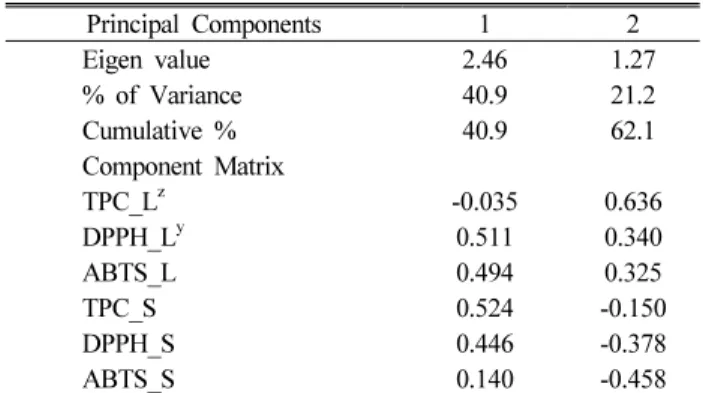
Table 3. Eigenvalue and percent of total variation and component matrix for the principal component axes

Principal Components 1 2

Eigen value 2.46 1.27

% of Variance 40.9 21.2

Cumulative % 40.9 62.1

Component Matrix

TPC_L

z

-0.035 0.636

DPPH_L

y

0.511 0.340

ABTS_L 0.494 0.325

TPC_S 0.524 -0.150

DPPH_S 0.446 -0.378

ABTS_S 0.140 -0.458

z
TPC, total polyphenol content;

y

L, Leaves extracts; S, Stem extracts.

tomato accessions, IT207214 (60.4 ± 0.0 ㎎ GAE/g) and IT203466 (18.8 ± 1.3 ㎎ GAE/g) had the highest TPC in LE and SE, respectively (Table 2). TPC in LE was 2.54-fold higher than it was in SE. DPPH antioxidant activities of LE and SE in the 50 tomato accessions were found to range from 10.0 ± 0.5 to 38.2 ± 0.4% and from 1.4 ± 1.3 to 8.8 ± 1.6%

(scavenging effect), respectively. Of the 50 accessions, IT191046 in LE and IT265357, IT033130, IT191046, IT199437, IT189949, IT199433, and IT203466 in SE had the highest DPPH antioxidant activity (Table 2). ABTS antioxidant activities varied from 20.8 ± 0.5 to 59.0 ± 1.6 and 2.2 ± 0.8 to 22.5 ± 1.8 ㎎ ASC/g in LE and SE, respectively (Table 1).

Among the 50 tomato accessions, IT033117 and IT189949 in LE and IT203253, IT207288, IT199445, IT199442, and IT203468 in SE had the highest ABTS antioxidant activities (Table 2). The integration of antioxidant capacity results derived from different chemical methods allowed us to calculate the Relative Antioxidant Capacity Index (RACI).

The results are shown in Table 2. We found that IT033117 had the highest RACI (1.5), followed by IT189949 (1.4), IT247989 (1.3), IT191046 (1.3), IT033130 (1.2), and IT173906 (1.2), with IT259255 having the lowest RACI (-1.7) in LE. In SE, IT203466 had the highest RACI (2.0), followed by IT033130 (1.9), IT189949 (1.6), and IT191046 (1.2), with IT207214 having the lowest RACI (-1.5).

PCA analysis

PCA was performed for antioxidant activities, as shown in

Table 3. A cumulative variance of 62.1% was accounted for

by the first two axes, with an Eigenvalue >1.0. The first PC

was more related to DPPH and ABTS of LE and DPPH and

TPC of SE. The second principal component exhibited

positive effects for TPC of LE and negative effects for ABTS

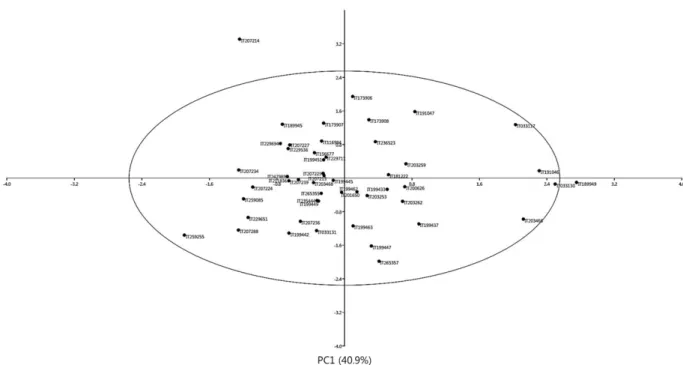
of SE. The distribution of the 50 tomato accessions in the

PCA analysis is shown in Fig. 1. Placing an ellipse around the

data that represented the 95% confidence interval (CI) using

Hotelling’s T2 statistic showed that all tomato accessions

(5)

Fig. 1. 2D scatter diagram of principal component analysis (PCA) of 50 tomato accessions based on antioxidant activity.

Table 4. Average values ± SD of each group clustered based on TPC and antioxidant activities of leaves or stem extracts in the 50 tomato accessions

Group n TPC

z

_L

y

TPC_S DPPH

x

_L DPPH_S ABTS

w

_L ABTS_S

I 6 36.5 ± 2.5ns

v

16.5 ± 1.4b 33.7 ± 4.7c 7.0 ± 2.4c 51.8 ± 5.5c 13.7 ± 5ns II 25 36.4 ± 6.7 13.7 ± 0.7a 21.9 ± 4.5b 3.5 ± 1.1b 42.4 ± 5.3b 12.0 ± 3.7 III 18 33.7 ± 3.7 13.9 ± 0.9a 18.1 ± 3.7a 5.0 ± 2.1a 34.0 ± 6.0a 15.3 ± 4.2

Fig. 2. Hierarchical clustering analysis of antioxidant activity in 50 tomato accessions. L, leaves extracts; S, stem extracts.

except two (IT189949 and IT207214) were in the 95% CI range. IT207214 showed the highest TPC in LE (60.4 ± 0.0

㎎ GAE/g), while IT189949 had the highest level of ABTS antioxidant activity (59.0 ± 1.6 ㎎ ASC/g).

Clustering analysis

The fifty tomato accessions were classified into three groups according to their TPC and antioxidant activities (Table 4 and Fig. 2). Among 50 tomato accessions, IT207214 was an outlier that could not be classified into any of the three groups. In TPC and antioxidant activities of LE and SE, there was no significant difference of TPC in LE and ABTS in SE among three groups (Table 4). Group I contained six accessions, IT189949, IT191046, IT033130, IT203466, IT033117, and IT191047, and had the highest TPC and antioxidant activities.

Group II contained 25 accessions and showed middling levels

(6)

of antioxidant activities. Group III comprised 18 tomato accessions with low antioxidant activities.

Discussion

Information concerning phenolic compounds found in plant byproducts is limited, especially precise information concerning the constituents of plant fractions. Many studies have estimated the phenolic constituents of fruit byproducts (Elbadrawy and Sello, 2011; Taveira et al., 2012). Few studies have focused on the whole tomato plant, although the properties of tomato fruits have been extensively studied (Silva-Beltran et al., 2015). A recent investigation has revealed that the leaves of tomato plants contain several active metabolites, including phenolic compounds and steroidic alkaloids (Taveira et al., 2012).

Total polyphenol content (TPC) was determined by the Folin-Ciocallteu method in this study. Tomato plants contain a large variety of phenolic derivatives. These compounds are essential for plant growth and reproduction. In addition, phenolic compounds are natural antioxidants that may be found in all parts of a plant and function as antibiotics and natural pesticides (Gupta and Sharma, 2006). Silva-Beltran et al. (2015) reported that leaves extracts of two tomato varieties exhibited higher phenolic contents, with values of 83.4 and 125.5 ㎎ GAE/g, than did extracts from the stems and roots. In our study, leaves extracts showed 2.54-fold higher phenolic content than did stem extracts (Tables 1 and 2). A greater concentration of phenolic compounds is most likely found in leaves because of the stress caused by UV irradiation and other factors, which makes it necessary for the vacuoles of plant dermal tissues to defend against these factors (Chandra and Ramalingam, 2011). Rivero et al.

(2003) reported that leaves are exposed to more direct light and UV radiation than are other parts of a plant and, therefore, exhibit a greater concentration of phenolic compounds.

Isolation of antioxidant compounds from plants is possible through extraction with different solvents and depends on the nature of the solvents used for extraction (Tatiya et al., 2011).

In this study, the antioxidant activities of leaves and stem extracts were assessed by measuring three compounds (DPPH, ABTS, and TPC). Many methods for evaluating

antioxidant activity have been developed. Their merits and disadvantages have been discussed in several reviews (Halliwell et al., 1995; Frankel and Meyer, 2000; Prior et al., 2005; Roginsky and Lissi, 2005; MacDonald-Wicks et al., 2006;). However, each method of measuring antioxidant capacity has its own limitations because multiple reaction mechanisms and different phase locations can affect the measurements of antioxidant capacity. Therefore, Sun and Tanumihardjo (2007) proposed a relative antioxidant capacity index (RACI). The key advantage of the RACI is that it is a numerical scale that can integrate multiple chemical methods, thus allowing comparison of antioxidant capacity over a large number of samples. Our results showed that leaves taken from the 50 different tomato accessions had different antioxidant capacities (Table 2). To compare data obtained by different chemical methods used to evaluate antioxidant activity, we used the RACI to compare the 50 tomato leaves (Fig. 1). It appears that the results of RACI analysis can be used to select tomato accessions with high antioxidant activity in leaves so that new breeding methods can be developed.

In the result of RACI, IT033117 tomato by-products showed the highest antioxidant activity among 50 tomato accessions (Table 2). Also, six tomato accessions in group I contain IT033117 showed higher antioxidant activity and TPC when compared to other groups among tomato by-products (Table 4). Son et al. (2011) reported that 771 tomato samples collected from five countries showed the sweetness of juice range from 2.0 to 11.5%, averaging 5.6%

and fruit weight from 1 to 442 g, averaging 15g, in which the tomato samples collected from Korea showed the sweetness of juice range from 6.5 to 7.5% (in Brix). Similarly in the present study, six tomato accessions in group I showed various sweetness of juice and fruit weight with range from 3.7% (IT203466) to 6.3% (IT033130) (in Brix) and 6.7 g (IT033130) to 138.9 g (IT191047) (data not shown).

IT033117 showed 5.5% sweetness and 11.8 g fruit weight, which is seemed to be a good source for developing a new variety. Among the six tomato accessions in group I, IT033130 and IT203466 seemed to be difficult to use for commercial breeding, because of their lesser sweetness (IT203466, 3.7%) and smaller fruit weight (IT033130, 6.7g).

Although they are showed limited to utilize as a tomato fruit,

(7)

our results revealed that the possibility of their use as antioxidants.

We conclude that the antioxidant activities of leaves and stem extracts differ among the 50 tomato accessions (Table 2). The antioxidant activities of byproducts in many plants have been investigated using various evaluation methods, such as DPPH, ABTS, FRAP, and ORAC (Taveira et al.

2012; Kim et al., 2014; Zhen et al., 2016). Those studies reported that antioxidant data are meaningful at the sectional level and suggested that variations in antioxidant activities can be useful on an industrial scale. The results of our study indicate that tomato byproducts have significant antioxidant activities. Also, leaves extracts contain more powerful antioxidants than do stem extracts. Although a broader investigation of tomato byproducts is needed to confirm this characterization, our study is of interest as it identifies a new source of natural antioxidant products.

Acknowledgement

This research was supported by a Research Program (Code no. PJ010883) of Agricultural Science and Technology Development funded by National Institute of Agricultural Science, Rural Development Administration, Republic of Korea.

References

Ajila, C.M. and U.J.S.P. Rao. 2008. Protection against hydrogen peroxide induced oxidative damage in rat erythrocytes by Mangifera indica L. peel extract. Food Chem. Toxicol.

46:303-309.

Amaeze, O.U., G.A. Ayoola, M.O. Sofidiya, A.A. Adepoju-Bello, A.O. Adegoke and H.A.B. Coker. 2011. Evaluation of antioxidant activity of Tetracarpidium conophorum (Mull.

Arg) Hutch & Dalziel leaves. Oxid. Med. Cell. Longev.

Article ID 976701.

Ames, B.N. 1983. Dietary carcinogens and anticarcinogens.

Oxygen radicals and degenerative diseases. Science 221:1256- 1264.

Angioni, A., A. Barra, V. Coroneo, S. Dessi and P. Cabras.

2006. Chemical composition, seasonal variability, and antifungal activity of Lavandula stoechas L. ssp. stoechas essential oils

from stem/leaves and flowers J. Agr. Food Chem.

54:4364-4370.

Chandra, H.M. and S. Ramalingam. 2011. Antioxidant Potentials of Skin, Pulp, and Seed Fractions of Commercially Important Tomato Cultivars. Food Sci. Biotechnol. 20:15-21.

Chorianopoulos, N., E. Evergets, A. Mallouchos, E. Kalpoutzakis, G.J. Nychas and S.A. Haroutounian. 2006. Characterization of the essential oil volatiles of Satureja thymbra and Satureja parnassica: Influence of harvesting time and antimicrobial activity. J. Agr. Food Chem. 54:3139-3145.

Davies, K.J.A. 2000. Oxidative stress, antioxidant defenses, and damage removal, repair, and replacement systems.

Iubmb. Life 50:279-289.

Elbadrawy, E. and A. Sello. 2011. Evaluation of nutritional value and antioxidant activity of tomato peel extracts. Arab.

J. Chem. (in Press) doi:10.1016/j.arabjc.2011.11.011.

Engelhard, Y.N., B. Gazer and E. Paran. 2006. Natural antioxidants from tomato extract reduce blood pressure in patients with grade-1 hypertension: a double-blind, placebo- controlled pilot study. Am. Heart. J. 151:100.

Finkel, T. and N.J. Holbrook. 2000. Oxidants, oxidative stress and the biology of ageing. Nature 408:239-247.

Frankel, E.N. and A.S. Meyer. 2000. The problems of using one-dimensional methods to evaluate multifunctional food and biological antioxidants. J. Sci. Food Agr. 80:1925-1941.

Gey, K.F. 1990. The antioxidant hypothesis of cardiovascular disease: Epidemiology and mechanisms. Biochem. Soc.

Trans. 18:1041-1045.

Gupta, V.K. and S.K. Sharma. 2006. Plants as natural antioxidants. Nat. Prod. Radiance 5:326-334.

Halliwell, B., M.A. Murcia, S. Chirico and O.I. Aruoma. 1995.

Free-radicals and antioxidants in food and in vivo - What they do and how they work. Crit. Rev. Food Sci. 35:7-20.

Hammer, O., D.A.T. Harper and P.D. Ryan. 2001. PAST:

paleontological statistics software package for education and data analysis. Palaeontologia Electronica 4:1-9.

Khodr, B. and Z. Khalil. 2001. Modulation of inflammation by reactive oxygen species: Implications for aging and tissue repair. Free Radic. Bio. Med. 30:1-8.

Kim, T.Y., S.A. Jang, Y.B. Chae and J.P. Bak. 2016.

Antioxidant and protective effects of Leonurus sibiricus L.

extract on ultraviolet B (UVB)-induced damage in human keratinocytes. Korean J. Plant Res. 29:11-19 (in Korean).

Kim, W.R., E.O. Kim, K. Kang, S. Oidoysambuu, S.H. Jung,

B.S. Kim, C.W. Nho and B.H. Um. 2014. Antioxidant

(8)

activity of phenolics in leaves of three red pepper (Capsicum annuum) Cultivars. J. Agr. Food Chem. 62:850-859.

Kobayashi, F., K. Ishida, H. Ikeura, S. Odake and Y. Hayata.

2012. Application of tomato (Solanum lycopersicum) leaf volatiles as antifungal agents against plant pathogenic fungi.

J. Agr. Sci. 4: 231-235.

Lee, D.J. and J.Y. Lee. 2004. Antioxidant activity by DPPH assay. Korean J. Crop Sci. 49:187-194 (in Korean).

MacDonald-Wicks, L.K., L.G. Wood and M.L. Garg. 2006.

Methodology for the determination of biological antioxidant capacity in vitro: a review. J. Sci. Food Agr. 86:2046-2056.

Martinez-Valverde, I., M.J. Periago, G. Provan and A. Chesson.

2002. Phenolic compounds, lycopene and antioxidant activity in commercial varieties of tomato (Lycopersicum esculentum).

J. Sci. Food Agr. 82:323-330.

Mossi, A.J., R.L. Cansian, A.Z. Carvalho, C. Dariva, J.V.

Oliveira, M. Mazutti, I.N. Filho and S. Echeverrigaray.

2004. Extraction and characterization of volatile compounds in Maytenus ilicifolia, using high-pressure CO

2

. Fitoterapia 75:168-178.

Nordberg, J. and E.S.J. Arner. 2001. Reactive oxygen species, antioxidants, and the mammalian thioredoxin system. Free Radic. Bio. Med. 31:1287-1312.

Prior, R.L., X.L. Wu and K. Schaich. 2005. Standardized methods for the determination of antioxidant capacity and phenolics in foods and dietary supplements. J. Agr. Food Chem. 53:4290-4302.

Re, R., N. Pellegrini, A. Proteggente, A. Pannala, M. Yang and C. Rice-Evans. 1999. Antioxidant activity applying an improved ABTS radical cation decolorization assay. Free Radic. Bio. Med. 26:1231-1237.

Rivero, R.M., J.M. Ruiz and L. Romero. 2003. Can grafting in tomato plants strengthen resistance to thermal stress? J. Sci.

Food Agr. 83:1315-1319.

Roginsky, V. and E.A. Lissi. 2005. Review of methods to determine chain-breaking antioxidant activity in food. Food

Chem. 92:235-254.

Silva-Beltran, N.P., S. Ruiz-Cruz, C. Chaidez, J.D. Ornelas-Paz, M.A. Lopez-Mata, E. Marquez-Rios and M.I. Estrada. 2015.

Chemical constitution and effect of extracts of tomato plants byproducts on the enteric viral surrogates. Int. J. Environ.

Heal. Res. 25:299-311.

Son, C.Y., Y.J. Jung, I.H. Lee, H.H. Kyoung, J.S. Lee and K.K.

Kang. 2011. Studies on genetic variation of soluble solids, acidity and carotenoid contents in tomato fruits from germplasm. Korean J. Plant Res. 24:195-199 (in Korean).

Sun, T. and S.A. Tanumihardjo. 2007. An integrated approach to evaluate food antioxidant capacity. J. Food Sci. 72:R159- R165.

Tatiya, A.U., G.G. Tapadiya, S. Kotecha and S.J. Surana. 2011.

Effect of solvents on total phenolics, antioxidant and antimicrobial properties of Bridelia retusa Spreng, stem bark. Indian J. Nat. Prod. Resour. 2:442-447.

Taveira, M., F. Ferreres, A. Gil-Izquierdo, L. Oliveira, P.

Valentao and P.B. Andrade. 2012. Fast determination of bioactive compounds from Lycopersicon esculentum Mill.

leaves. Food Chem. 135:748-755.

Waterhouse, A.L. 2001. Determination of Total Phenolics: In Current Protocols in Food Analytical Chemistry. John Wiley

& Sons, Inc., New York, U.S.A. pp. 11.1.1-11.1.7.

Willcox, J.K., S.L. Ash and G.L. Catignani. 2004. Antioxidants and prevention of chronic disease. Crit. Rev. Food Sci.

44:275-295.

Yang, S.R., Songzhyhao and H.O. Boo. 2015. Antioxidant activity of several cabbage (Brassica oleracea L.) cultivars.

Korean J. Plant Res. 28:312-320.

Zhen, J., T.S. Villani, Y. Guo, Y.D. Qi, K. Chin, M.H. Pan, C.T.

Ho, J.E. Simon and Q.L. Wu. 2016. Phytochemistry, antioxidant capacity, total phenolic content and anti-inflammatory activity of Hibiscus sabdariffa leaves. Food Chem. 190:

673-680.

(Received 7 June 2016 ; Revised 1 August 2016 ; Accepted 26 August 2016)

수치

Table 2. ABTS and DPPH antioxidant activities and polyphenol contents of stem and leaves extracts of 50 tomato accessions
Table 3. Eigenvalue and percent of total variation and component matrix for the principal component axes
Fig. 1. 2D scatter diagram of principal component analysis (PCA) of 50 tomato accessions based on antioxidant activity.

참조

관련 문서

DPPH radical scavenging activity of hot and 70% ethanol extracts obtained from Wasabi japonica

ABTS radical and DPPH radical scavenging activities were used to compare the relative antioxidant activities of extracts from oat sprout cultivars. [Results

Correlation between total antioxidant capacities measured by the DPPH and ABTS radical scavenging abilities for Schizandra fruit extracts by microwave-assisted extraction..

Especially, DPPH radical scavenging activity, reducing power and tyrosinase inhibition activity were significantly higher in leaves extracts than stems extracts of Gaeddongssuk..

chelating, and nitrite scavenging activity. Electron donating ability was the 79.68% in the water extract from leaves. The ABTS radical scavenging activity of the hot

Changes in DPPH radical scavenging activity of Doraji ethanol extracts with different aging temperatures and periods.. Changes in ABTS radical scavenging activity

In order to measured antioxidant activities, we measured total phenol and flavonoids contents, DPPH free radical scavenging activity and reducing

Antioxidant effects were evaluated based on total polyphenol/flavonoid contents, ABTS radical scavenging activity, DPPH radical scavenging activity, SOD activity,