• 검색 결과가 없습니다.

No Adverse Outcomes of Video-Assisted Thoracoscopic Surgery Resection of cT2 Non-Small Cell Lung Cancer during the Learning Curve Period

N/A
N/A
Protected

Academic year: 2021

Share "No Adverse Outcomes of Video-Assisted Thoracoscopic Surgery Resection of cT2 Non-Small Cell Lung Cancer during the Learning Curve Period"

Copied!
6
0
0

로드 중.... (전체 텍스트 보기)

전체 글

(1)

ISSN: 2233-601X (Print) ISSN: 2093-6516 (Online)

Received: December 12, 2016, Revised: March 13, 2017, Accepted: March 29, 2017, Published online: August 5, 2017 Corresponding author: Zeynep Bilgi, Department of Thoracic Surgery, Kars Harakani State Hospital, Kars 36100, Turkey

(Tel) 90-5379849451 (Fax) 90-5379849451 (E-mail) [email protected]

© The Korean Society for Thoracic and Cardiovascular Surgery. 2017. All right reserved.

This is an open access article distributed under the terms of the Creative Commons Attribution Non-Commercial License (http://creativecommons.org/

licenses/by-nc/4.0) which permits unrestricted non-commercial use, distribution, and reproduction in any medium, provided the original work is properly cited.

No Adverse Outcomes of Video-Assisted Thoracoscopic Surgery Resection of cT2 Non-Small Cell Lung Cancer

during the Learning Curve Period

Zeynep Bilgi, M.D. 1 , Hasan Fevzi Batırel, M.D. 2 , Bedrettin Yıldızeli, M.D. 2 , Korkut Bostancı, M.D. 2 , Tunç Laçin, M.D. 2 , Mustafa Yüksel, M.D. 2

1

Department of Thoracic Surgery, Kars Harakani State Hospital,

2
Department of Thoracic Surgery, Marmara University Faculty of Medicine

Background: Video-assisted thoracoscopic surgery (VATS) anatomic lung resections are gradually becoming the standard surgical approach in early-stage non-small cell lung cancer (NSCLC). The technique is being applied in cases of larger tumors depending on the experience of the surgical team. The objective of this study was to compare early surgical and survival outcomes in patients undergoing anatomic pulmonary resections using VATS and thoracotomy techniques for clinical T2 NSCLC during the adaptation period of the surgical team to the VATS approach. Methods: The data of all patients who underwent anatomic pulmonary resection for NSCLC using VATS and open techniques since April 2012 were recorded to create a prospective lung cancer database. Clinical T2 NSCLC patients who underwent VATS anatomic lung resection were identified and com- pared with cT2 patients who underwent open resection. Results: Between April 2012 and August 2014, 269 anatomical resections for NSCLC were performed (80 VATS and 189 thoracotomy). Thirty-four VATS patients who had clinical T2 disease were identified and stage-matched to thoracotomy patients. The average tumor diameter was comparable (34.2±11.1×29.8±10.1 mm vs. 32.3±9.8×32.5±12.2 mm, p=0.4). Major complications were higher in the thoracotomy group (n=0 vs. n=5, p=0.053). There was no 30-day mortality, and the 2-year survival rate was 91% for VATS and 82% for thoracotomy patients (p=0.4). Conclusion: VATS anatom- ic resections in clinical T2 NSCLC tumors are safe and have perioperative and pathologic outcomes similar to those of thoracotomy, while remaining within the learning curve.

Key words: 1. Video-assisted thoracic surgery 2. Surgical complications

3. Learning curve 4. Patient safety

Introduction

Video-assisted thoracoscopic surgery (VATS) lobec- tomy for patients with non-small cell lung cancer (NSCLC) has become more widely adopted because of the reported advantages of faster recovery in com- parison to thoracotomy [1,2]. Although there are no

randomized double-blind reports on this issue be- cause of the technical aspects and patient/surgeon preferences, after the publication of large database studies evaluating perioperative outcomes and onco- logical effectiveness, VATS anatomic lung resections are being established as the standard of care for ear- ly-stage NSCLC [3,4]. While the indications for VATS

https://doi.org/10.5090/kjtcs.2017.50.4.275

(2)

anatomic resection are clearer for peripheral T1 NSCLC, clinical T2 tumors pose additional points of concern regarding minimally invasive surgery, such as larger size, visceral pleural invasion, higher in- cidence of mediastinal lymph node metastasis, up- staging, and technical difficulties [5].

Despite very strong patient preferences and enthu- siasm from the surgical community, the widespread adoption of VATS was slower than that of laparo- scopic surgery, mostly because of a steeper learning curve. As of 2014, 30% of the anatomic resections in the US have been performed using VATS [6]; how- ever, standardization of the technique and problems with lymph node dissection still remain. Some au- thors have proposed robotic surgery as an alter- native involving a more intuitive process [7], but cost issues and the accessibility of the required equip- ment have stalled this possibility.

Most of the literature reporting the outcomes and defining the learning curve for the adaptation of VATS anatomic resections concentrates overwhel- mingly on T1 tumors and ground-glass lesions.

Despite the fact that lung cancer screening has gained importance, resulting in the diagnosis of an increased number of such lesions, a large subset of patients present in later stages [8], and the question of the feasibility of offering these patients minimally invasive surgery in a newly established VATS pro- gram is unanswered.

The objective of this study was to determine the perioperative and early survival outcomes of clinical T2 NSCLC patients who underwent anatomic re- section via thoracotomy and VATS in a newly estab- lished VATS program.

Methods

1) Patients

VATS anatomical resections were routinely per- formed by a team (an attending surgeon, a senior resident, and 2 operating room nurses) as the first-line approach for all applicable cases (excluding cases with central tumors and cases needing pneu- monectomy, chest wall resection, or sleeve resection), irrespective of the clinical stage, at Marmara University Hospital since April 2012. No other ex- clusion criteria were used for the oncologically re- sectable patients referred to the VATS team. The at-

tending surgeon of the VATS team had been rou- tinely performing minor VATS operations (VATS lysis of adhesions, pleural biopsy, VATS bullectomy, and VATS sympathectomy) and had completed 20 VATS lobectomies under supervision at another institute.

Patients were staged using computed tomography of the chest, including the adrenal glands, and posi- tron emission tomography (PET) for systemic disease.

Magnetic resonance imaging of the brain was added to the preoperative staging if the patient w as symp- tomatic or received neoadjuvant treatment.

Patients with clinical T2 NSCLC in the VATS data- base (out of 71 anatomic resections) were included in the study, w hereas 34 out of the 158 patients who underwent anatomic resections done by the thoracotomy team during the same time w ere enrolled. All patients met the oncologic criteria for resection after the standard-of-care clinical staging.

The timeline was chosen to allow a mean follow-up of at least 18 months.

Invasive mediastinal staging (cervical mediastino- scopy and endobronchial ultrasonography sampling) was performed in patients with PET-positive N2 lymph nodes. If pN2 disease was discovered preope- ratively, rendering the patient’s stage inoperable, the patient was referred for neoadjuvant treatment and restaged appropriately for surgery after treatment.

Patients who underwent VATS anatomical resec- tions for clinical T2 tumors were identified from the prospectively collected database and compared with those who underwent thoracotomy and anatomical resection.

2) Operative technique

All patients underwent general anesthesia and dou- ble-lumen endotracheal intubation. Intraoperative mode- rate fluid restriction w as used (4–6 mL/kg) per in- stitutional protocol. Patients were transferred to the normal surgical floor after arterial blood gas tests.

The intensive care unit stay was determined clin- ically, and no routine protocol was followed. Postope- rative pain was controlled with epidural bupivacaine patient-controlled analgesia (PCA) or intravenous mor- phine PCA if epidural placement was not successful.

All patients started oral intake at postoperative hour

6 if there was no contraindication, and maintenance

fluids were restricted accordingly. All patients were

encouraged to mobilize as maximally tolerated, and

(3)

Table 1. Patient demographics and preoperative evaluation

Characteristic Thoracotomy

Video-assisted thoracoscopic

surgery

p-value

Age (yr) 61.0±7.1 61.9±8.9 0.278

Gender 0.549

Male 26 (76) 28 (82)

Female 8 (24) 6 (18)

Smoking (pack year) 42.1±27.9 43.4±35.5 0.914

FEV

1

(L) 2.5±0.7 2.6±0.7 0.502

%FEV

1

94±25 87±18

FVC (L) 3.1±0.7 3.4±0.7

%FVC 99.6±25.7 96.4±14.7

Comorbidities 1.000

None 16 (47) 16 (47)

Chronic obstructive pulmonary disease

6 (18) 6 (18)

Hypertension 15 (44) 10 (29)

Coronary artery disease 5 (15) 9 (26)

Diabetes 2 (6) 3 (9)

Chronic renal failure 1 (3) 1 (3) Previous malignancy 3 (9) 2 (6)

Values are presented as mean±standard deviation or number (%).

FEV

1

, forced expiratory volume in one second; FVC, forced vital capacity.

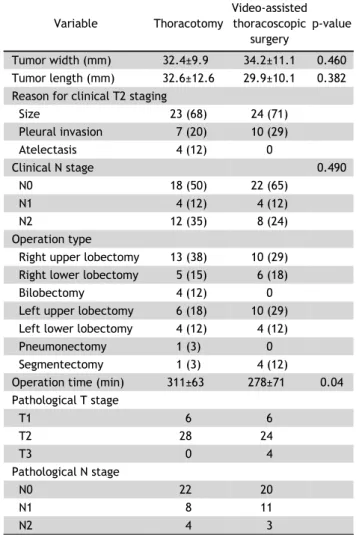
Table 2. Clinical and pathological staging results by operation type

Variable Thoracotomy

Video-assisted thoracoscopic

surgery

p-value

Tumor width (mm) 32.4±9.9 34.2±11.1 0.460 Tumor length (mm) 32.6±12.6 29.9±10.1 0.382 Reason for clinical T2 staging

Size 23 (68) 24 (71)

Pleural invasion 7 (20) 10 (29)

Atelectasis 4 (12) 0

Clinical N stage 0.490

N0 18 (50) 22 (65)

N1 4 (12) 4 (12)

N2 12 (35) 8 (24)

Operation type

Right upper lobectomy 13 (38) 10 (29) Right lower lobectomy 5 (15) 6 (18)

Bilobectomy 4 (12) 0

Left upper lobectomy 6 (18) 10 (29) Left lower lobectomy 4 (12) 4 (12)

Pneumonectomy 1 (3) 0

Segmentectomy 1 (3) 4 (12)

Operation time (min) 311±63 278±71 0.04 Pathological T stage

T1 6 6

T2 28 24

T3 0 4

Pathological N stage

N0 22 20

N1 8 11

N2 4 3

Values are presented as mean±standard deviation, number (%), or number.

chest tubes were pulled out if there was no air leak and the drainage was less than 150 mL per 24 hours.

VATS resection was performed using the anterior biportal and triportal technique, with a non-rib spreading utility incision at the fourth or the fifth in- tercostal space. Individual vascular and bronchial structures were dissected and divided using appro- priate endoscopic staplers. A single chest drain was advanced through the camera port at the seventh or the eighth intercostal space.

Standard posterolateral thoracotomy through the fifth intercostal space was used for open surgery cases. Lobar vessels were hand-tied, and bronchial closure was done using either bronchial staplers or sutures according to the surgeon’s preference. All pa- tients underwent lymph node dissection of all rou- tine stations irrespective of the operative approach.

3) Statistical analysis

All anatomic lung resection cases that were done after April 2012 were recorded in a prospective database. Clinical T2 NSCLC patients were selected.

Data regarding the patient demographics, pulmonary function tests, comorbidities, additional treatment modalities, clinical/surgical staging, postoperative cour- se, pathology results, and overall survival were col- lected.

Statistical analysis w as performed using IBM SPSS ver. 20.0 (IBM Corp., Armonk, NY, USA). The chi- square test, Mann-Whitney U-test, and t-test for in- dependent samples were used for the comparison. All p-values<0.05 were considered to indicate statistical significance. Six patients who converted to thor- acotomy because of perioperative complications were kept out of the lymph node count analysis.

The study protocol was reviewed and approved by

the institutional review board, and all patients gave

(4)

Table 3. Complications and LOS

Variable Video-assisted thoracoscopic surgery Thoracotomy p-value

No. of complications 9 17 0.046

Complication breakdown Atelectasis (1), atrial fibrillation (1), pneumonia (2), prolonged air leak (5)

Atelectasis (1), atrial fibrillation (3), pneumonia (2), reoperation (1), prolonged air leak (6), chylothorax (1), vocal cord paralysis (3)

LOS (day) 7.2±4.6 8.9±4 0.021

LOS without postoperative complications (day)

5.4±1.8 6.4±2.1 0.011

Values are presented as mean±standard deviation.

LOS, length of hospital stay.

Fig. 1. Survival curves for VATS and thoracotomy patients. VATS, video-assisted thoracoscopic surgery.

written informed consent before enrollment. The study was approved by Marmara Ethics Board (deci- sion no. 09.2015.224).

Results

Between April 2012 and August 2014, 229 ana- tomic lung resections for NSCLC and benign diseases were performed at our institution. Thirty-four pa- tients were identified as having clinical T2 NSCLC and underwent a planned VATS resection (group 1).

These patients were compared to clinical T2 thor- acotomy patients (group 2).

Demographic factors and patient characteristics are summarized in Tables 1 and 2. The groups w ere evenly divided with respect to age, sex, functional ca- pacity (comorbidities and pulmonary function tests), preoperative staging, and type of resection.

1) Perioperative findings

Six VATS patients were converted to lateral thor- acotomy because of intraoperative difficulties. The VATS patients had no major postoperative complica- tions, fewer postoperative complications (n=9 versus n=17, p=0.046), and shorter length of hospital stay (LOS) (Table 3). There was no 30-day mortality in either group. One patient from group 2 died within 90 days of the operation (Fig. 1).

2) Pathology results and early survival findings On the basis of the pathology results, 4 patients from the VATS group w ere upstaged as T3 and 6 pa- tients from the thoracotomy group were downstaged to T1. Nine VATS and 6 thoracotomy patients had nodal upstaging, but all patients remained in the op-

erability range.

The total number of lymph node stations dissected did not differ between the groups (VATS: n=6±1.7, thoracotomy: n=6±2.2; p=0.1). The total number of lymph nodes (nodes that were dissected during the operation and sent separately from the specimen, counted as 1 per lymph node station due to en bloc resection and the nodes that were dissected from the specimen during the grossing process in the patho- logical workup) tended to be lower in VATS patients (8.1±2.3 versus 9.8±4.1) but this trend failed to reach statistical significance. Patients who were con- verted to open surgery were excluded from the lymph node count analysis.

A total of 21 VATS and 23 thoracotomy patients

were offered adjuvant chemotherapy on the basis of

the pathology results. Timely chemotherapy com-

pletion rates were found to be similar between the

groups (VATS [n=17] versus thoracotomy [n=16],

(5)

p=0.8).

The overall survival rate in the VATS and the thor- acotomy group was 33.2% and 31.5%, respectively, with a median follow-up period of 20 months (p=

0.4).

Discussion

VATS anatomic lung resections are being adopted worldwide as the procedure of choice for early-stage lung cancers. The learning curve for this minimally invasive approach has been studied, and various re- ports have found this approach to be safe even with limited open surgery experience. Most studies have reported that 50 cases are needed for the first pla- teau performance, at which the incidence of compli- cations becomes comparable to that of the super- vising surgeons [9]. Patient cohorts in these reports usually have very early-stage tumors, and some have ground-glass opacities. Although these types of tu- mors are projected to become more frequent in the practice of a thoracic surgeon, a large percentage of patients present with larger tumors and are in- operable at the time of presentation.

The study population in this article was largely male and mostly consisted of smokers. This aligns with statistics from other developing countries, where smoking is still prevalent and patients present in later stages of cancer, because of an absence of large-scale screening programs. During the study pe- riod, 71 patients were referred to the VATS team, 34 of whom had clinical T2 tumors. All assigned pa- tients were routinely started with VATS, unless they were presumed to need pneumonectomy, sleeve re- section, or chest wall resection. Nine patients were converted to thoracotomy, 6 of whom were clinical T2 patients. Even though this represents a high per- centage, there was no in-hospital mortality in either group and the VATS team could complete the learn- ing curve in 1 year, as demonstrated by the last con- version for a clinical T2 patient happening in month 13 of the program.

VATS resection was marginally more favorable in terms of complication rates (p=0.046) than thor- acotomy, and showed a similar distribution of com- plication types. Moreover, VATS patients had shorter LOS when they had no postoperative complications, which is concurrent with the established literature.

We did not observe a tendency for shorter hospital stays in clinical T2 patients during the progression of the learning curve.

With respect to the oncological quality of the re- sections, VATS T2 patients did not show statistically significant differences in comparison to thoracotomy T2 patients, as demonstrated by the number of lymph node stations dissected and the overall surviv- al rate. Despite the fact that VATS patients had a tendency for fewer cumulative lymph nodes, the in- cidence of nodal upstaging was slightly higher than in some other study populations [10,11]. Since an in- creased number of dissected lymph node stations and the T stage have been reported as a predictive factor for nodal upstaging, this fact can be in- terpreted as the proof of adequacy of lymph node sampling for cT2 tumors during the learning curve.

The limitations of the present study include the small sample size and the possible patient selection bias. Despite the facts that a single team routinely started the operations with VATS, excluding patients with chest wall invasion, possible pneumonectomy, or sleeve resection, and that all consecutive patients were included in the selection pool, patterns of pa- tient referral might have confounded the analysis.

The sample size was small, but it might more accu- rately represent a thoracic surgery practice outside a major surgical center; it has been reported that 21%

of centers perform close to 70% of the anatomic re- sections per year [12].

There are no high-quality evidence-based guide- lines outlining the appropriate starter cases for VATS oncologic resections, which would complement an in- dividual surgeon’s discretion. Given the nature of the newly established programs, a single-institution study might not be sufficiently all-encompassing to answer such a need. Since its inception, the types of VATS operations have steadily expanded (sleeve resections, T3 tumors, pneumonectomy, etc.) and the technique itself has become more sophisticated (3-dimensional surgery, uniportal VATS, etc.). A multi-institutional study is needed to clarify the outlines of a graded experience for VATS surgeons.

In summary, our results suggest that in a newly

established VATS program, it may be safe to offer

clinical T2 patients VATS surgery, without com-

promising safety of oncological outcomes. Most of the

cT2 patients will still benefit from minimally invasive

(6)

surgery in terms of decreased hospital stay and bet- ter postoperative function. This approach may short- en the time required to achieve proficiency for sur- geons working in populations with high smoking rates and a low accessibility of screening programs, resulting in cumulative benefits for the community.

Conflict of interest

No potential conflicts of interest relevant to this article are reported.

References

1. Paul S, Altorki NK, Sheng S, et al. Thoracoscopic lobectomy is associated with lower morbidity than open lobectomy: a propensity-matched analysis from the STS database. J Thorac Cardiovasc Surg 2010;139:366-78.

2. Whitson BA, Groth SS, Duval SJ, Swanson SJ, Maddaus MA.

Surgery for early-stage non-small cell lung cancer: a sys- tematic review of the video-assisted thoracoscopic sur- gery versus thoracotomy approaches to lobectomy. Ann Thorac Surg 2008;86:2008-16.

3. Klapper J, D’Amico TA. VATS versus open surgery for lung cancer resection: moving toward a minimally invasive approach. J Natl Compr Canc Netw 2015;13:162-4.

4. Whitson BA, Andrade RS, Boettcher A, et al. Video-assisted thoracoscopic surgery is more favorable than thoracotomy

for resection of clinical stage I non-small cell lung cancer.

Ann Thorac Surg 2007;83:1965-70.

5. Shimizu K, Yoshida J, Nagai K, et al. Visceral pleural in- vasion is an invasive and aggressive indicator of non-small cell lung cancer. J Thorac Cardiovasc Surg 2005;130:160-5.

6. Dziedzic D, Orlowski T. The role of VATS in lung cancer surgery: current status and prospects for development.

Minim Invasive Surg 2015;2015:938430.

7. Melfi FM, Mussi A. Robotically assisted lobectomy: learning curve and complications. Thorac Surg Clin 2008;18:289-95.

8. Catarino PA, Goldstraw P. The future in diagnosis and staging of lung cancer: surgical techniques. Respiration 2006;73:717-32.

9. Yu WS, Lee CY, Lee S, Kim DJ, Chung KY. Trainees can safely learn video-assisted thoracic surgery lobectomy de- spite limited experience in open lobectomy. Korean J Thorac Cardiovasc Surg 2015;48:105-11.

10. Licht PB, Jorgensen OD, Ladegaard L, Jakobsen E. A na- tional study of nodal upstaging after thoracoscopic versus open lobectomy for clinical stage I lung cancer. Ann Thorac Surg 2013;96:943-9.

11. Zhou H, Tapias LF, Gaissert HA, et al. Lymph node assess- ment and impact on survival in video-assisted thoraco- scopic lobectomy or segmentectomy. Ann Thorac Surg 2015;100:910-6.

12. Bach PB, Cramer LD, Schrag D, Downey RJ, Gelfand SE, Begg CB. The influence of hospital volume on survival af- ter resection for lung cancer. N Engl J Med 2001;345:

181-8.

수치

Table 1. Patient demographics and preoperative evaluation Characteristic Thoracotomy Video-assisted thoracoscopic  surgery p-value Age (yr) 61.0±7.1 61.9±8.9 0.278 Gender 0.549   Male 26 (76) 28 (82)   Female  8 (24) 6 (18)
Fig. 1. Survival curves for VATS and thoracotomy patients. VATS,  video-assisted thoracoscopic surgery.

참조

관련 문서

44 글의 첫 번째 문장인 The most important thing in the Boat Race is harmony and teamwork.을 통해 Boat Race에서 가장 중요한 것은 조 화와 팀워크임을

Now that you have the right bike for you, it is important to learn the right riding position.. A poor riding position can lead to injuries

44 글의 첫 번째 문장인 The most important thing in the Boat Race is harmony and teamwork.을 통해 Boat Race에서 가장 중요한 것은 조 화와 팀워크임을

12 that절 내의 주어를 문장의 주어로 쓰고 that절 내의 동사를 to부정사로 써 서 수동태 문장을 만들 수 있다... 13 반복되는 the reason을 관계대명사 which로 바꿔주고

Now that you have the right bike for you, it is important to learn the right riding position.. A poor riding position can lead to

The proposal of the cell theory as the birth of contemporary cell biology Microscopic studies of plant tissues by Schleiden and of animal tissues by Microscopic studies of

그것은 이미지를 문자적 으로 서술하는 문제이며 옐름슬레브Hjelmslev[4]의 용어를 쓰자면 (코노테 이션과 반대되는 의미로서) 공정작용operation의

웹 표준을 지원하는 플랫폼에서 큰 수정없이 실행 가능함 패키징을 통해 다양한 기기를 위한 앱을 작성할 수 있음 네이티브 앱과