INTRODUCTION
Significance
Acute myocardial infarction (AMI) is a major cause of death in Korea and worldwide. (American Heart Association, AHA, 2003; Korea National Statistics Office, KNSO, 2003). Approximate 10,000 people die from the ischemic heart disease each year in Korea (KN- SO, 2003).
Owing to the development of emergency medicine and the critical care technology, survivals from this disease are increasing. Mortality from the heart disease has been
decreased by 14.9 per 100,000 during the last decade between year 1991 and 2001 (KNSO, 2003). However, because of the rapid process of this disease, early mortal- ity rate of AMI is high. Although there are some discrep- ancies among statistical resources, approximately 50%
of death occurs before the patients’ arrival at the hospi- tal; and the mortality rate for the first one-hour and 24 hours reach 68% and 85% respectively (KNSO, 1999, retrieved in 2003).
Early reperfusion therapy using thrombolytic agents or the percutaneous transluminal coronary angioplasty (PT- CA) contributed to decreasing the early mortality of AMI patients over the last few decades in the US
Pre- and In-Hospital Delay in Treatment and in-Hospital Mortality after
Acute Myocardial Infarction
Kyuneh An, RN, PhD1, Bongyeun Koh, PhD2
1. Full time lecturer, College of Nursing, Ewha Woman’s University
2. Assistant Professor, Department of Emergency Medical Technology, Dongnam Health College
This work was supported by Korea Research Foundation Grant (KRF-2002-003-E00180) and by Ewha New Faculty Grant.
Corresponding author: An Kyungeh, PhD, RN, College of Nursing, Ewha Woman’s University, 11-1, Daehyun-dong, Seodaemun-gu, Seoul 120-750, Korea.
Tel: 82-2-3277-3926 Fax: 82-2-3277-2850 E-mail: [email protected] Received September 23, 2003 ; Accepted November 18, 2003January 31, 2000
Purpose. 1) To identify the time taken from symptom onset to the arrival at the hospital (pre-hospital delay time) and time taken from the arrival at the hospital to the initiation of the major treatment (in-hospital delay time) 2) to examine whether rapid treatment results in lower mortality. 3) to examine whether the pre- and in-hospital delay time can independently predict in-hospital mortality.
Methods. A retrospective study with 586 consecutive AMI patients was conducted.
Results. Pre-hospital delay time was 5.25 (SD=10.36), and in-hospital delay time was 1.10 (SD=1.00) hours for the thrombolytic therapy and 50.24 (SD=121.18) hours for the percutaneous transluminal coronary angio- plasty (PTCA). In-hospital mortality was the highest when the patients were treated between 4 to 48 hours after symptom onset using PTCA (p=.02), and when treated between 30 minutes and one hour after hospi- tal arrival using thrombolytics (p=.01). Using a hierarchical logistic regression model, the pre- and in-hospi- tal delay times did not predict the in-hospital mortality.
Conclusion. Pre- and in-hospital delay times need to be decreased to meet the desirable therapeutic time win- dow. Thrombolytics should be given within 30 minutes after arrival at the hospital, and PTCA should be ini- tiated within 4 hours after symptom onset to minimize in-hospital mortality of AMI patients.
Key Words:Acute myocardial infarction, Delay in treatment, Mortality
(Blohm, Hartford, Karlsson & Herlitz, 1998; Mitic, &
Perkins, 1984). Timely reperfusion therapy consistently improved hemodynamic conditions, decreased infarct size and improved survival in previous studies (Berger, Holmes, Califf, & Criger, 1997; Berger, Radford, &
Krumholz, 2000; Cannon & Goldhaber, 1995; Hwang, 1995; Leizorovicz, Boissel & Robert, 1992).
The extent of protection from mortality, however, ap- pears to be directly related to the rapidity of reperfusion after the onset of symptoms of an AMI. Although the intravenous thrombolysis is a feasible and the most rec- ommended therapy, the benefits of this treatment de- creased because of the delay between the onset of the symptoms and the treatment (Yoo et al., 1995). If the thrombolytic therapy can be initiated within one hour after symptom onset, it reduces the mortality of the AMI by 45.8%. The mortality rate can be reduced only 15% when the thrombolytics begun between two and six hours (Gruppo Italiano per studio della streptochi- nasinell Infarcto miacardico, GISSI, 1986).
Although the major portion of the total delay time consisted of the pre-hospital delay time, the in-hospital delay time is still important for following reasons: the in- hospital delay can be reduced by efforts of health care providers (Gonzalez, Jones, Ornato, Bleecker & Strauss, 1992). Therefore, understanding both pre- and in-hospi- tal delay time is important to reduce the total delay time and increase the survivals from the AMI.
Along with the health care providers’ recognition of the importance of early diagnosis and treatment, delay time to the treatment tend to be decreased in the US and European countries (Boersma, Mass, Deckers &
Simons, 1996; Goldberg et al., 1992; GISSI, 1986).
Particularly in-hospital delay time has been remarkably decreased during the past seven years in the series of na- tionwide trials in the US and European countries (Chareonthaitawee, 1997; Gilber et al., 2002; GISSI, 1986; Goldberg et al., 1992).
However, there are lack of data regarding the time de- lay between the symptom onset and the treatment among Koreans. Although several studies have been conducted regarding the delay time between the symp- tom onset and treatment after AMI among Korean, data from those studies are not sufficient to be conclusive and far more studies are needed (An, 2001; Kim & Kim, 1999; Park, Kim, Lee & Lee, 2000, Song, 1997; Yoo et al., 1995).
The first limitation of the previous studies regarding as-
sociations between delay times and mortality was the small number of cases in Korea. In addition, previous studies mostly focused on the pre-hospital delay time, and the in-hospital delay times haven’t been sufficiently investigated (Kim & Kim, 1999; Park et al., 2000; Yoo et al., 1995; Jung et al., 1997; Hwang, 1995). Some studies even exclusively obtained cases only from the AMI pa- tients who were presented at the hospital within the therapeutic time window, and reported the delay time that may not represent average delay time of the AMI patients in Korea (Hwang, 1995). Therefore, this study aimed to describe the actual pre- and in-hospital delay time and to examine whether the longer delay time was associated with the higher mortality after AMI.
Purpose of the study
The purposes of the study were 1) to describe the time taken from symptom onset to the arrival at the hospital (pre-hospital delay time) and time taken from the arrival at the hospital to the major treatments (in-hospital delay time), 2) to examine whether more rapid time to treat- ment results in lower mortality, 3) to examine whether the pre- and in-hospital delay in treatment, after control- ling the effects of other risk factors on mortality, can in- dependently predict the in-hospital mortality.
Definition of Terms
Pre-hospital delay time has been defined as the time taken from symptom onset to the arrival at the hospital.
In-hospital delay time has been defined as the time taken from the arrival at the hospital to the initiation of the major treatment (either PTCA or thrombolytics).
Overall delay time has been defined as the time taken from symptom onset to the initiation of the major treat- ment.
Hypotheses
Hypothesis 1. In-hospital mortality will be lower in the patients who arrive at the hospital earlier than the pa- tients who arrive at the hospital later after the symptom of AMI.
Hypothesis 2. In hospital mortality will be lower in pa- tients who were treated earlier than who were treated later using thrombolytics.
Hypothesis 3. In hospital mortality will be lower in pa- tients who were treated earlier than who were treated later using PTCA.
Hypothesis 4. Pre-hospital delay time will indepen-
dently predict the in-hospital mortality after controlling other traditional risk factors.
Hypothesis 5. In-hospital delay time will independent- ly predict the in-hospital mortality after controlling oth- er traditional risk factors.
METHOD
A retrospective observation study of the data recruited from five university hospitals and one large tertiary hos- pital located in Seoul and Pusan.
Subjects
Medical records of 852 AMI patients who were admit- ted to one of the research sites were reviewed for the purpose of this study. After applying the inclusion and exclusion criteria, 586 cases were analyzed for this study. Among these 138 patients were directly inter- viewed and others were retrieved from medical record review. Inclusion criteria were who met two of follow- ings: 1) typical chest pain lasting longer than 20 minutes;
2) ST segment elevation or signs of AV block on EKG; 3) elevation of CK, CKMB or troponin. Additionally AMI patients who were diagnosed by the echo cardiogram or cardiac angiogram were also included. Exclusion criteria were patients who didn’t meet the inclusion criteria de- scribed above, who had no confirmative data for the di- agnosis, who had primary treatment visiting the target hospital, and patients who couldn’t be followed up for mortality.
Instrument
A structured chart abstract form was used for collect- ing data. This form was developed by the researcher and tested for the content validity by the panel of experts consisting of four faculties in cardiovascular nursing, one cardiologist, and one psychologist.
Data were either obtained by interview after the in- formed consents were granted for data collection or ex- tracted anonymously from the medical record review.
The chart abstract form included following information:
1) socio-demographic variables such as age, sex; 2) major health history including history for previous heart dis- ease; 3) time for the symptom onset, arrival at the hospi- tal, the time of initiation of diagnostic tests, and the time of initiation of treatment; 4) clinical information for the adjustment of severity of the disease using APACHE III such as the first vital sign, the worst vital sign during the
first 24hours after arrival at the hospital, level of con- sciousness, Killip classification, co-morbidity of diabetes and hypertension, episode of ventricular tachycardia, episode of ventricular fibrillation, and other complica- tions in early stage of the disease 5) basic data for the confirmative diagnosis of an AMI 6) survival or death.
Data analysis
Data were analyzed using descriptive statistics to de- scribe the time taken from the time of symptom onset to arrival at the hospital, time taken from symptom onset to the treatment, time taken from the arrival at the hos- pital to the diagnosis and treatment. Extreme cases were excluded for data analysis. To describe the in-hospital delay times were obtained by reviewing available med- ical records, and the time taken from the arrival at the hospital to the major treatment were calculated for each group of subjects who had either thrombolytic therapy or the PTCA. The overall delay time was calculated by summating pre- and in-hospital delay times.
Chi-square and ANOVA were conducted to examine whether there are significant differences in the mortality by the pre- or in-hospital delay times. Separate Chi- square and ANOVA were conducted to identify factors associated with the mortality. A hierarchical logistic re- gression was conducted to examine whether the delay times can be independently predicted the in-hospital mortality after controlling other physiologic predictors.
All statistical analysis was conducted using SPSSWIN 10.0.
RESULTS
General and Clinical Characteristics of the Subjects Total 586 AMI cases were analyzed including 426 men (72.7%) and 160 women (27.3%) for the purposes of this study. The age of subjects ranged from 21 to 96 years with the mean of 60.21 (±13.27) years. Women were older than men (69.37±10.84 vs. 56.78±12.49 years). The in-hospital mortality of the AMI patients in this study was 9.7% (57 out of 586 patients). Women show higher in-hospital mortality than men (10.8 vs.
8.6%)(χ2=6.975, df=1, p=.008). Clinical characteristics of the subject are summarized in Table 1.
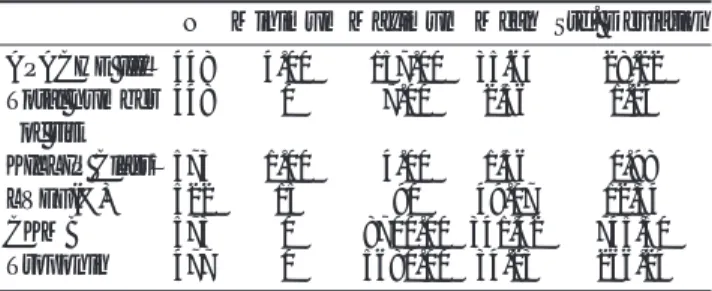
The pre-hospital delay time and the in-hospital delay time are summarized in Table 2.
The mean of the pre-hospital delay was about 5.25 hours. The in-hospital delay time was 1.10hours for the
patients treated by thrombolytic therapy, and 50.24 for the patients treated by PTCA. The overall delay time was 5.02 hours for the patients who were treated by thrombolytics and 55.91 for the patients treated by PT- CA. Additionally, the mean of the time taken from the arrival at the emergency room to the diagnosis an AMI was 14.51 minutes.
Hypothesis testing
Chi-square tests were conducted to examine the differ- ences in the mortality between/among groups of pre-, in-hospital, and the overall delay times (Table 3). There was no significant difference in the mortality between the group who arrived at the hospital within the first two hours and who arrived at the hospital after two hours.
Therefore the first hypothesis, ‘in-hospital mortality will be lower in the patients who arrive at the hospital earlier than the patients who arrive at the hospital later after the symptom of AMI’ has been rejected.
Among the patients who had thrombolytic therapy, pa- Table 1.Clinical Characteristics of the Subjects (N=586)
N Minimum Maximum Mean Std. Deviation APACHE III1 448 4.00 157.00 35.64 28.22
Total number 448 0 7.00 2.56 1.24
of risk
KILLIP Class2 573 1.00 4.00 1.56 0.98
LVEF(%)3 522 15 90 49.07 12.34
CKMB 573 0 8700.00 341.42 745.30
Troponin 477 0 5680.00 34.23 266.24
1a modification method for the severity of the disease using first vital sign, the worst vital sign during the first 24 hours after ar- rival at the hospital, level of consciousness.
2classification method for pulmonary complications: class I to IV.
3Left ventricular ejection fraction.
Table 3.In-hospital Mortality by the Pre- and in-hospital Delay Times
χ2 df p
Symptom to Arrival at ER 1.03 1 0.31
Symptom to Thrombolytics 0.52 3 0.92
Symptom to PTCA 9.63 3 0.02
ER to diagnosis 2.23 2 0.33
ER to Thrombolytics 11.79 3 0.01
ER to PTCA 5.66 3 0.13
Table 2.Pre- and in-hospital Delay Times
Hours/minutes N(%) M(SD)
less than 2 256 (44.6) 001.23 (0.56)
Symptom to Arrival at ER (Hrs) and longer 318 (55.4) 008.49 (13.04)
Total 574(100.0) 005.25 (10.36)
less than 2 061 (21.0) 001.59 (0.41)
2 and longer less than 4 109 (37.6) 002.95 (0.54)
Symptom to Thrombolytics (Hrs) 4 and longer less than 6 065 (22.4) 004.87 (0.57)
6 and longer 055 (19.0) 013.13 (13.85)
Total 290 (100.0) 005.02 (7.26)
less than 4 038(22.5) 002.98 (0.86)
4 and longer less than 8 047 (27.8) 005.86 (1.15)
Symptom to PTCA (Hrs) 8 and longer less than 48 039 (23.1) 017.74 (8.20)
48 and longer 045 (26.6) 185.96 (184.92)
Total 169 (100.0) 055.91 (123.18)
0 175 (58.3) 0000.0 (0)
ER to diagnosis (min) less than 5 114 (38.0) 011.91 (12.50)
5 and longer 011 (3.7) 272.27 (239.86)
Total 300 014.51 (67.48)
less than 0.5 069 (23.3) 000.24 (0.20)
0.5 and longer, less than 1 102 (34.5) 000.79 (0.14)
ER to Thrombolytics (Hrs) 1 and longer, less than 1.5 073 (24.7) 001.27 (0.14)
Longer than 1.5 052 (17.6) 002.61 (1.47)
Total 296 (100.0) 001.10 (1.00)
less than 1.5 045 (25.9) 000.90 (0.28)
Longer than 1.5, less than 4 045 (25.9) 002.51 (0.76)
ER to PTCA (Hrs) Longer than 4, less than 48 040 (23.0) 013.80 (9.98)
Longer than 48 044 (25.3) 182.65 (186.77)
Total 174 (100.0) 050.24 (121.18)
tients who were treated between 30 minutes and one hour since the arrival at the hospital showed higher mor- tality compared to the group who were treated either earlier than 30 minutes or later than one hour since the patients’ arrival at the hospital (χ2=11.065, df=3, p=.011). Therefore the second hypothesis, ‘in hospital mortality will be lower in patients who were treated ear- lier than who were treated later using thrombolytics’ was rejected.
Among who were treated by PTCA, there was a signif- icant difference in mortality among groups of the time taken from the symptom onset to the PTCA (χ2=8.7, df=3, p=.033). However, patients who had PTCA be- tween 4 to 48 hours had higher mortality compared to those who had PTCA either earlier than 4 hours or later than 48 hours since their symptom onset, and the third hypothesis ‘in hospital mortality will be lower in patients who were treated earlier than who treated later using PTCA’ was rejected.
A hierarchical logistic regression was conducted to ex- amine whether, after controlling the effects of physiolog- ical predictors, delay times can independently predict the mortality. From chi-square tests for the categorical variables and ANOVA tests for the continuous variables, factors significantly associated with the mortality were identified (Table 4 and 5).
For the logistic hierarchical regression, sex, number of risk factors, Killip-classification, age, APACHE III, and LVEF, were entered into the model, followed by the pre- and in-hospital delay times (Table 6 & 7)(see also Table 4
and 5 for the significance of factors included in the mod- el). At the first step of the hierarchical model, APACHE III and the EF appeared as significant predictors of the in-hospital mortality as shown in Table 6. At the second step, entering two new variables did not improve the predictability of mortality in the model as shown in Table 7 (∆R2=.003, (Xdiff,22=1.142, p=.565). Therefore, the forth and fifth and sixth hypotheses were rejected.
DISCUSSION
This study aimed to describe the pre- and in-hospital delay times in treatment and to examine whether more rapid treatment reduces the mortality and increases sur- vivals after acute myocardial infarction. This is the first
Table 4.Factors Associated with Mortality I
χ2 df p
Sex (n=448) 06.77 1 .007
Risk Factor (n=448) 31.57 7 .000
Killip Class (n=437) 67.69 3 .000
Table 5.Factors Associated with Mortality II
M(SD) t p
Age Survival (n=469) 58.48 (13.00) -6.330 .000 Death (n=57) 69.85 (10.99)
APACHE III Survival (n=391) 28.39 (16.61) -19.23 .000 Death (n=57) 85.33 (39.42)
LVEF (%) Survival (n=354) 50.25 (11.44) 5.61 .000 Death (n=41) 39.46 (13.47)
CKMB Survival (n=385) 405.88 (885.79) .60 .551 Death (n=53) 332.33 (358.73)
Troponin Survival (n=304) 14.45 (25.93) .70 .483 Death (n=41) 11.51 (18.58)
Table 6.Predicting the In-hospital Mortality Including Risk Factors (Reduced Model)
95%Confidence B Ward F p Odd ratio interval
Lower Upper
Age 0.04 1.93 0.16 1.04 0.98 1.11
Sex -0.210 0.07 0.80 0.81 0.17 3.90
APACHE III 0.06 18.220 0.00 1.06 1.03 1.09 Risk Factor -0.400 1.17 0.28 0.67 0.33 1.38
Killip Class 1.04 0.79
Killip (1) -0.690 0.64 0.42 0.50 0.09 2.70 Killip (2) -0.310 0.09 0.77 0.73 0.09 6.00 Killip (3) -0.920 0.61 0.44 0.40 0.04 4.01
EF -0.050 4.12 0.04 0.95 0.91 0.10
(Constant) -3.540 1.72 0.19 0.03 Negelkerk R2=.542
Table 7.Predicting In-hospital Mortality Including Risk Factors and Pre-hospital and In-hospital Delay Time (Full Model)
95%Confidence B Ward F p Odd ratio interval
Lower Upper
Age 0.04 1.59 0.21 1.04 0.98 1.10
Sex -0.07 0.01 0.93 0.93 0.19 4.71
APACHE III 0.06 18.42 0.00 1.06 1.03 1.09 Risk Factor -0.38 1.09 0.30 0.68 0.33 1.40
Killip Class 1.32 0.72
Killip (1) -0.85 0.94 0.33 0.43 0.08 2.40 Killip (2) -0.31 0.09 0.77 0.73 0.09 5.97 Killip (3) -0.93 0.64 0.43 0.40 0.04 3.85
EF -0.05 3.63 0.06 0.95 0.91 1.00
Pre-hospital 0.10 0.75 0.39 1.11 0.88 1.40 delay time
In-hospital 0.00 0.67 0.41 1.00 0.10 1.01 delay time
(Constant) -3.91 2.03 0.15 0.02 Negelkerk R2=.542
domestic study that includes more than five hundreds patients recruited from five university hospitals and one tertiary hospital in Seoul and Pusan. With the large number of cases, findings from this study may provide better understanding of the pre- and in-hospital delay times in AMI patients and their outcomes in terms of the in-hospital mortality.
Both the pre- and in-hospital delay times appeared re- markably shorter in this study compared to the previous studies conducted among Koreans (An, 2001; Jung, 1997; Kim & Kim, 1999; Song, 1997; Yoo et al., 1995).
Moreover, exclusion of the last quartile for the overall delay time, the mean of the delay time will be a lot shorter and close to the mean of the delay time reported in the US and European countries (Berger et al., 1997;
Berger et al., 1999; Berger et al., 2000; Canon et al., 1999, Canon et al., 2000; Herlitz, Hartfort, & Blohm, 1989; Herlitz et al., 1992; Kelion, Banning, Shahi &
Bell, 1998; Kereiakes, Gibler, Martin, Pieper &
Anderson, 1992).
There were significant discrepancies in the mean of the pre-hospital delay times between the group who present- ed at the hospital within the first two hours and the group who presented at the hospital after the first two hours (1.23 vs. 8.49 hours). Similarly, most of delay times were skewed except the time taken from the ar- rival at the emergency room to the initiation of the thrombolytic therapy. The last 19%, and 26% of pa- tients contributed to raising the mean delay time in thrombolytic group and PTCA group, respectively (Table 2).
It is also of interest that for the patients who were treated by PTCA, the mortality was affected by the over- all delay time, where as the mortality was affected by the in-hospital delay time among patients who were treated by thrombolytics (Table 3).
Older age, female, higher score of the adjusted severity of the disease (APACHE III), and total number of risk factors, poorer pulmonary condition represented as the higher Killip class, and lower ejection fraction appeared as significant predictor of mortality from AMI in this sample (Table 4 and 5). This finding is mostly consistent with previous studies conducted in the US or European countries (Anderson, Karagounis, & Muhlestein, 1996;
Becker et al., 1998; Berger et al., 1999; Castella, Gilabert, Torner & Torres, 1991; Berger et al., 1997;
Cannon et al., 2000; Schwarz, Schoberberger, Rieder &
Kunze, 1994). Moreover, the logistic regression model
confirmed the APACHE III and LVEF as the most consis- tent and stable predictor of the mortality (Table 6 and 7).
Not finding significant linear relationship between the delay times and mortality is of interest. Among those who had PTCA, mortality was higher when they treated between 4 to 48 hours compared to those who had ei- ther earlier than 4 hours or later than 48 hours. Among those who had thrombolytic therapy, the mortality was higher in the group of patients who were treated be- tween 30 minutes and one hours since arrived at the emergency room compared to those who were treated either earlier than 30 minutes or later than one hour.
This finding provide an important clinical implication:
for the best chance of survival of the patients, throm- bolytics should be given within 30 minutes and PTCA should be initiated within 4 hours after the symptom on- set. Higher mortality of the same group compared to late comers may be due to the larger effects of the physi- ologic condition that over to the effects of time variable.
The poorer physiologic markers, such as older age, high- er Killip class, severer condition in terms of the APACHE III, lower EF among the patients who died compared to the patients who survivals support this as- sumption.
The time variables did not independently predict the mortality in this study. This finding shows that the time variable alone may not make a good predictor for the mortality. Rather it should be counted as a covariates in the predict model.
CONCLUSION
For the best chance of survival of the patients, throm- bolytics should be given within 30 minutes , and PTCA should be initiated within 4 hours after symptom start- ed. Descriptive statistics of the pre- and in-hospital delay time in this study suggested that both pre- and in-hospi- tal delay times are diminishing than the delay times re- ported in previous studies. The time taken from the symptom onset to the PTCA and the time taken from the arrival at the hospital to the thrombolytic therapy were significantly associated with the in-mortality whereas other delay times were not significantly associ- ated with the in-hospital mortality. Neither pre- nor in- hospital delay times did not predict the in-hospital mor- tality.
Further studies are needed to reduce both pre- and in-
hospital delay time and subsequent mortality among AMI patients.
References
American Heart Association (1999). 1998 Heart and Stroke: statis- tical update. Dallas, Tex.
American Heart Association (2003). http://www.americanheart.org.
An, K. (2001). Pre-hospital delay in treatment after acute myocar- dial infarction. J Korean Acad Nurs, 31(7), 1141-1150.
Anderson, J. L., Karagounis, L. A., & Muhlestein, J. B. (1996).
Explaining Discrepant Mortality Results Between Primary Percutaneous Transluminal Coronary Angioplasty and Thrombolysis for Acute Myocardial Infarction. Am J Cardiol, 78(8). 934-939.
Becker, R. C., Burns, M., Gore, J. M., Spencer, F. A., Ball, S. P., French, W., Lambrew, C., Bowlby, L., Hilbe, J., Rogers, W. J.,
& The National Registry of Myocardial Infarction(NRMI-2) Participants. (1998). Early assessment and in-hospital manage- ment of patients with acute myocardial infarction at increased risk for adverse outcome; A nationwide perspective of current clinical practice. Am Heart J, 135(5(1)), 786-796.
Berger, A. K., Radford, M. J., & Krumholz, H. M. (2000). Factors associated with delay in reperfusion therapy in elderly patients with acute myocardial infarction; Anaysis of the Cooperative Cardiovascular Project. Am Heart J, 139(6), 985-992.
Berger, A. K., Schulman, K. A., Gersh, B. J., Pirzada, S., Breall, J.
A., Johnson, A. E., & Every, N. R. (1999). Primary Coronary Angioplasty vs Thrombolysis for the Management of Acute Myocardial Infarction in Elderly Patients. JAMA, 282(4), 341- 348.
Berger, P. B., Ellis, S. G., Holmes, D. R. Jr., Granger, C. B., Criger, D. A., Betriu, A., Topol, E. J., & Calif-RM (1999). Relationship between delay in performing direct coronary angioplasty and early clinical outcome in patients with acute myocardial infarc- tion: results from the global use of strategies to open occluded arteries in Acute Coronary Syndromes (GUSTO-IIb) trial.
Circulation, 100(1), 14-20.
Berger, P. B., Holmes, D. R., Califf, R. M., & Criger, D. A. (1997).
Hospital Delay in Achieving Reperfusion with Direct PTCA in GUSTO-IIb: Relationship to 30-day Mortality. Circulation, 96(8S), 531-1.
Blohm, M. B., Hartford, M., Karlsson, T., & Herlitz, J. (1998).
Factors associated with pre-hospital and in-hospital delay time in acute myocardial infarction: a 6-year experience. J intern Med, 243(3), 243-250.
Boersma, E., Maas, Ac., Deckers, J.W., & Simoons, M.L. (1996).
Early thrombolytic treatment in acute myocardial infarction:
reappraisal of the golden hour. Lancet, 348, 673-682.
Cannon, C. P., & Goldhaber, S. Z. (1995). The Importance of Rapidly Treating Patients with Acute Myocardial Infarction.
Chest, 107(3), 598-600.
Cannon, C. P., Gibson, C. M., Lambrew, C. T., Shoultz, D. A., Levy, D., French, W. J., Gore, J. M., Weaver, W. D., Rogers, W. J., Gore, J. M., Weaver, W. D., Rogers, W. J., & Tiefen- brunn, A. J. (2000). Relationship of Symptom-Onset- To- Balloon Time and Door-to- Balloon Time With Mortality in Patients Undergoing Angioplasty for Acute Myocardial Infarction. JAMA, 283(22), 2941-2947.
Cannon, P. C., Johnson, E. B., Cermignani, M., Scirica, B. M., Sagarin, M. J., & Walls, R. M. (1999). Clinical investigations:
emergency department thrombolysis critical pathway reduces Door-to-Drug times in acute Myocardial infarction. Clin Cardiol, 22, 17-20.
Castella, X., Gilabert, J., Torner, F., & Torres, C. (1991). Mortality prediction models in intensive care: Acute Physiology and Chronic Health Evaluation II and Mortality Prediction Model compared. Critical Care Med, 19(2), 191-197.
Chareonthaitawee, P., Christian, T. F., O’Connor, M. K., Berger, P.
B., Grines, C. L., & Gibbons, R. J. (1997). Noninvasive predic- tion of residual blood flow within the risk area during acute myocardial infarction: A multicenter validation study of pa- tients undergoing direct coronary angioplasty. Am Heart J, 134(4), 639-646.
Gilbler, W. B., Armstrong, P. W., Ohman, E. M., Weaver, W. D., Stebbins, A. L., Gore, J. M., Newby, L. K., Califf, R. M., &
Topol, E. J. (2002). Persistence of delays in presentation and treatment for patients with acute myocardial infarction: the GUSTO-I and GUSTO-III experience. Ann Emerg Med, 39(2), 124-130.
Goldberg, R. J., Gurwitz, J., Yarzebski, J., Landon, J., Gore, J. M., Alpert, J. S., Dalen, P. M., & Dalen, J. E.(1992). Patient delay and receipt of thrombolytic therapy among patients with acute myocardial infarction from a community-wide perspective.
Am-J-Cardiol., 70(4), 421-5.
Gonzalez, E. R., Jones, L. A., Ornato, J. P., Bleecker, G. C., &
Strauss, M. J. (1992). Hospital delays and problems with thrombolytic administration in patients receiving thrombolytic therapy: a multicenter prospective assessment. Virginia Thrombolytic Study Group [see comments]. Ann-Emerg-Med., 21(10), 1215-21.
Gruppo Italiano per studio della streptochinasinell Infarcto miac- ardico (GISSI) (1986). Effectiveness of intravenous throm- bolytic treatment in acute myocardial infarction, Lancet, 397.
Herlitz, J., Blohm, M., Hartford, M., Karlson, B. W., Luepker, R., Holmberg, S., Risenfors, M., & Wennerblom, B. (1992).
Follow-up of a 1-year media campaign on delay times and am- bulance use in suspected acute myocardial infarction. Eur- Heart-J., 13(2), 171-7.
Herlitz, U. Hartfort, M., & Blohm, M.(1989). Effect of a media cam- paign on delay times and ambulance use in suspected acute myocardial infarction. Am J Cardiol, 64, 90.
Hwang, S. O. (1995). Reasons for not receiving reperfusion therapy in acute myocardial infarction. Korean J Internal Med, 48(6), 783-789.
Jung, J. O., Kim, Y. C., Sung, B. Y., Kim, J. K., Jung, J. Y., Ru, J. G., Sung, I. H., & Jeon, E. S. (1997). Morphological characteristics of intimal hyperplasia in stented coronary arteries assessed with intravascular ultrasound. Korean Circulation, 27(8), 842- 850.
Kelion, A. D., Banning, A. P., Shahi, M., & Bell, J. A. (1998). The effect of reduction of door-to-needle times on the administra- tion of thrombolytic therapy for acute myocardial infarction.
Postgrad-Med-J., 74(875), 533-536.
Kereiakes, D. J., Gibler, W. B., Martin, L. H., Pieper, K. S., &
Anderson, L. C., (1992). Relative importance of emergency medical system transport and the prehospital electrocardio- gram on reducing hospital time delay to therapy for acute my- ocardial infarction: a preliminary report from the Cincinnati Heart Project. Am-Heart-J., 123(4 Pt 1), 835-840.
Kim, C. J., & Kim, G. Y. (1999). Treatment-seeking behavior among those with signs and symptoms of acute myocardial in- farction. Korean J Nurs, 29(3), 605-613.
Korea National Statistical Office (1999). http://www. nso.ac.kr.
Korea Statistical Office (2003). Retrieved from the site on 2003/9/01. http://www.nso.go.kr.
Leizorovicz, A., Boissel, J. P., & Robert, F. (1992). Coronary reper- fusion rates in acute myocardial infarction patients after throm- bolytic treatment with anistreplase: correlation with the delay from onset of symptoms to treatment: a review of 424 case records of patients admitted to coronary reperfusion studies with anistreplase. J-Cardiovasc-Pharmacol., 19(1), 34-39.
Mitic, W. R., & Perkins, J. (1984). The effect of a media campaign of heart attack delay and decision times. Can J Public Health, 75, 415.
National Institute of Health (1998). Morbidity and Mortality: 1996
Chart book on Cardiovascular, Lung and Blood Disease.
Park, O.J., Kim, C. J., Lee, H. Y., & Lee, H. O. (2000). A survey on the delay time before seeking treatment and clinical symptoms in patients with acute myocardial infarction. Korean J Acod Nurs, 30(3), 659-669.
Schwarz, B, Schoberberger, R., Rieder, A., & Kunze, M.(1994).
Factors delaying treatment of acute myocardial infarction. Eur Heart J, 15(12), 1595-1598.
Song, M. K. (1997). The prehospital delay time in patients with acute myocardial infarction. Unpublished thesis, The Catholic University of Korea, Seoul.
Yoo, B. S., Yoon, J. H., Park, K. S., Ahn, S. C., Yoh, K. K., Cho, Y.
K., Song, K. S., Lee, B. S., & Hwang, S. O. (1995). Reasons for not receiving reperfusion therapy in acute myocardial infarc- tion. Korean J Internal Med, 48(6), 783-789.