• 검색 결과가 없습니다.

A Case of Jacobsen Syndrome Presenting with a Huge Cephalhematoma and Thrombocytopenia after Birth

N/A
N/A
Protected

Academic year: 2021

Share "A Case of Jacobsen Syndrome Presenting with a Huge Cephalhematoma and Thrombocytopenia after Birth"

Copied!
5
0
0

로드 중.... (전체 텍스트 보기)

전체 글

(1)

출생 후 커다란 두혈종과 혈소판감소증을 보인 Jacobsen Syndrome 1예

신주희

1

ㆍ김가은

1

ㆍ이로지

1

ㆍ정난이

1

ㆍ심예지

1

ㆍ하정숙

2

계명대학교 동산의료원

1

소아청소년과,

2

진단검사의학과

A Case of Jacobsen Syndrome Presenting with a Huge Cephalhematoma and Thrombocytopenia after Birth

Juhee Shin, M.D.

1

, Gaeun Kim, M.D.

1

, Rosie Lee, M.D.

1

, Nani Jung, M.D.

1

, Ye Jee Shim, M.D.

1

and Jung-Sook Ha, M.D.

2

Departments of

1

Pediatrics,

2

Laboratory Medicine, Keimyung University School of Medicine and Dongsan Medical Center, Daegu, Korea

Jacobsen syndrome (JS) is a contiguous gene syndrome resulting from a deletion of chro- mosome 11q, with various clinical manifestations. A post-term small for gestational age infant was born by normal vaginal delivery without trauma or vacuum extraction. On day 5, right parietotemporal scalp swelling developed, with petechiae on the right cheek and thrombocytopenia (platelets: 63,000/L). A prominent forehead, wide-set eyes, short and upturned nose were noted. Karyotyping and microarray analysis demonstrated del(11)(q24q25), consistent with Jacobsen syndrome. Brain magnetic resonance imaging (MRI) revealed a huge cephalhematoma. The patient is scheduled to receive periodic evaluations for thrombocytopenia and heart, kidney, abdominal malformations, oph- thalmologic and auditory problems. There are lots of newborns with cephalhematoma or petechiae after birth. Not all newborns with these symptoms need evaluations, but if they have these symptoms with suspect features or appearances, we need to go through further evaluations.

pISSN 2233-5250 / eISSN 2233-4580 https://doi.org/10.15264/cpho.2018.25.1.56 Clin Pediatr Hematol Oncol 2018;25:56∼60

Received on March 22, 2018 Revised on April 3, 2018 Accepted on April 9, 2018

Corresponding Author: Ye Jee Shim Department of Pediatrics, Keimyung University School of Medicine and Dongsan Medical Center, 56 Dalseong-ro, Jung-gu, Daegu 41931, Korea

Tel: +82-53-250-7024 Fax: +82-53-250-7783 E-mail: [email protected] ORCID ID: orcid.org/0000-0002-5047-3493

Key Words: Jacobsen syndrome, 11q deletion, Paris-Trousseau syndrome, Thrombocyto- penia, Distal 11q deletion syndrome

Introduction

Jacobsen syndrome (JS) is a contiguous gene syndrome resulting from a deletion of chromosome 11q, mostly distal to 11q23 [1]. The deletion usually extends to the telomere [2]. The prevalence of JS is estimated at 1:100,000 births [3]. The female/male ratio is about 2:1 [4]. The clinical fea- tures of JS are quite variable, and include heart and skeletal abnormalities, and growth and developmental delay [4,5].

Typical facial features include skull deformities, ptosis, stra- bismus, a prominent nasal bridge, and low-set ears.

Cutaneous syndactyly, and a large and long first toe can

be seen [5]. Many patients have thrombocytopenia or pan-

cytopenia at birth, also called Paris-Trousseau syndrome

(PTS) [6]. Of 3 reported in Korea, 1 was diagnosed before

birth [7-9]. We report a case of JS in a 13-day-old, full-term

infant who represented with a cephalhematoma and pe-

techiae and was found to have an 11q24q25 deletion.

(2)

Fig. 1. An infant with Jacobsen syndrome and a large cephalhematoma. (A) Scalp swelling reached about 8×7 cm in the right

parietotemporal area. (B) The right third and fourth fingers were flexed, showing camptodactyly. (C) The fourth right toe was thinner than the other toes.

Fig. 2. Brain magnetic resonance imaging findings revealing a

large cephalhematoma in the right parietal lobe (arrow) in an infant with Jabobsen syndrome.

Case Report

This study was approved by the institutional review board of Keimyung University Dongsan Medical Center (Approval No. 2018-03-051). A 13-day-old female infant was transferred to our hospital and admitted with a history of petechiae on the right cheek and a right parietotemporal cephalhematoma. She was born at 41 weeks by normal vaginal delivery. There was no history of asphyxia or pre- mature rupture of membranes. The birth weight was 2,560 g, consistent with post term small for gestational age (SGA) and intrauterine growth restriction (IUGR). There was no history of trauma or vaccum extraction. Neonatal screening with tandem mass spectrometry was unremarkable. On day 3 after birth, right parietotemporal scalp swelling gradually developed. On day 9, right cheek petechiae were observed.

On day 13 when she was transferred, the scalp swelling had reached about 8×7 cm and the right cheek petechiae were still present (Fig. 1A). A prominent forehead, wide-set eyes, short and upturned nose, slightly triangular face, and camptodactyly were observed. Her right third and fourth fingers were flexed and difficult to extend (Fig. 1B). Her fourth right toe was thinner than the others (Fig. 1C). There was no hepatosplenomegaly or palpable abdominal mass.

The heart beat was regular with no murmur.

Initial blood tests revealed thrombocytopenia (platelets:

63,000/ L). She had no family history of coagulation

disorder. Anti-platelet antibody, prothrombin time, activated

partial thromboplastin time, fibrinogen, platelet function an-

alyzer-100, coagulation factor, and von Willebrand factor

test results were normal. Blood and urine cytomegalovirus

polymerase chain reaction test were negative. Skull radiog-

raphy showed cortex tearing and a huge biparietal

cephalhematoma. Ultrasonography and MRI revealed a

(3)

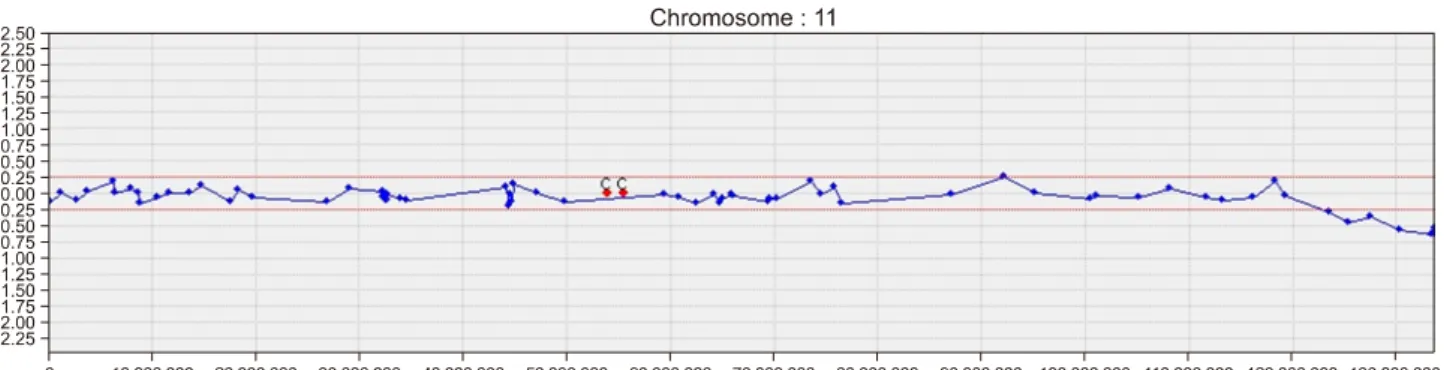
Fig. 3. The chromosomal microarray analysis (G-scanning, MGmed, Korea) showing arr11q24q25(123630374_135054016)x1 in an

infant with Jabobsen syndrome.

Fig. 4. Karyotype result showing deletion of distal 11q24q25

(arrow) in an infant with Jabobsen syndrome.

large, right parietal lobe cephalhematoma (Fig. 2).

Based on the symptoms and physical examination, kar- yotyping and chromosomal microarray analysis (G-scanning, MGmed, Korea) were performed and identified 46, XX, del(11)(q24q25) and arr11q24q25(123630374_135054016)x1, respectively (Fig. 3, 4). Accordingly, this patient was diag- nosed with JS.

Cephalhematoma aspiration yielded 55 mL without pre-treatment. Serial testing showed slightly improved thrombocytopenia (platelets: 96,000-115,000/ L) and no other symptoms were noted. No other treatment was per- formed, but gentle care was done. Periodic evaluation for thrombocytopenia was scheduled as an out-patient.

Pediatric orthopedics was consulted. Further necessary evaluation included echocardiography, developmental as- sessment, renal ultrasonography for malformations and ab- dominal ultrasonography to exclude pyloric stenosis.

Ophthalmologic and auditory evaluation will be needed.

Discussion

JS is a variable phenotypic, heterogeneous disorder that is confirmed by cytogenetic analysis of a deletion on chro- mosome 11q extending to the telomere [5]. Most deletions occur at 11q23, with some cases reportedly occurring at q24, q22, and q21 [1,10]. More severe clinical features can be seen with larger deletions [5]. JS occurs 1 in 100,000 births and roughly 50% cases diagnosed by age 1-year have more obvious clinical manifestations [5,11].

JS is known to show varying degrees of skeletal dis-

orders, hormonal abnormalities including growth hormone deficiency (GHD) or hypothyroidism, and cognitive impair- ment [2-6]. The severity of neurocognitive deficiency de- pends on the size of deletion [4]. Short stature is found in 75% of cases and mild to severe mental retardation in 97%

of cases [5]. Because GHD and central hypothyroidism are characteristic and common hormonal defects in JS, growth hormone or thyroid-stimulating hormone testing should be performed [3]. Most patients have dysmorphic features as a prominent forehead, low-set ears, trigonocephaly, a flat nasal bridge, and a large and long first toe as in our case [2,5]. Cardiac anomaly is observed in 56% of cases and in- clude ventricular septal defects, aortic or mitral valve abnor- malities, coarctation of the aorta, and hypoplastic left heart syndrome, which is rare in the general population [2,5].

Cardiac abnormalities can lead to severe complications and

(4)

an electrocardiogram and echocardiography should be performed. Abdomen and kidney ultrasonography can be useful to evaluate gastrointestinal and renal anomalies.

Pyloric stenosis is the most common gastrointestinal malfor- mation, occurring in 56% of cases [2,5]. Feeding difficulty and chronic constipation can be present. Kidney dysplasia, double ureters, multicystic kidney, and cryptorchidism are frequently observed [2,5]. An ophthalmologic examination and auditory testing should be performed [5].

Our patient had thrombocytopenia and many JS patients have thrombocytopenia at birth [5]. Up to 47-94% of JS pa- tients are reported with thrombocytopenia [4,5,12], although severe bleeding such as intraventricular hemorrhage (IVH) is rarely reported [13]. Some cases were reported with coa- gulopathy, which may be related with preterm birth, SGA, or IUGR [13]. It includes intraluminal bleeding and IVH which can lead to death [13]. In this patient, the presence of thrombocytopenia with SGA, IUGR, facial characteristics and skeletal anomalies helped the diagnosis. If there is thrombocytopenia with morphologic abnormalities, genetic syndrome should be suspected and chromosomal studies should be proceeded accordingly [14].

Paris-Trousseau syndrome is a mild phenotypic form, with chronic thrombocytopenia, giant alpha granules in ab- normal giant platelets deletion of 11q23.3, abnormal plate- let function, and abnormal megakaryocytes [4,12].

Paris-Trousseau thrombocytopenia normalizes with time while platelet function is maintained [6]. This phenotype is highly penetrant, affects at least 88.5 to 92% of patients, and can also be seen in JS [6]. In the Paris-Trousseau syn- drome, friend leukemia virus integration 1 (FLI1) is strongly associated with dysmegakaryocytopoiesis and thrombocyto- penia [5].

One study reported a patient with JS and 15% giant alpha granules presenting as Paris-Trousseau syndrome [12].

Another study found that the genomic 11q24.2q24.3 de- leted region present in JS contains 8 OMIM genes: ETS1, FLI1, SENCR, KCNJ1, KCNJ5, ARHGAP32 (RICS), TP53AIP1, and BARX2 [2]. As FLI 1 is included in the deleted portion of JS, the Paris-Trousseau syndrome can present with thrombocytopenia [2]. Accordingly, a study suggested that the Paris-Trousseau syndrome is either a variant of JS or

the same disease [15].

Many neonates with a cephalhematoma or petechiae have no risk factors such as vacuum extraction or trauma.

Based on our case findings, although there is no risk factor for newborns, we suggest that neonates with petechiae or cephalhematoma may go through further evaluations such as blood test or image work up to screen a case like our case. And if these test have any doubts, we recommend to do karyotyping and microcarray analysis to confirm the disease related to thrombocytopenia like JS.

References

1. Jacobsen P, Hauge M, Henningsen K, Hobolth N, Mikkelsen M, Philip J. An (11;21) translocation in four generations with chromosome 11 abnormalities in the offspring. A clinical, cy- togenetical, and gene marker study. Hum Hered 1973;23:

568-85.

2. Tassano E, Janis S, Canepa A, et al. Interstitial 11q24 deletion:

a new case and review of the literature. J Appl Genet 2016;57:357-62.

3. Pivnick EK, Velagaleti GV, Wilroy RS, et al. Jacobsen syn- drome: report of a patient with severe eye anomalies, growth hormone deficiency, and hypothyroidism associated with de- letion 11 (q23q25) and review of 52 cases. J Med Genet 1996;33:772-8.

4. Grossfeld PD, Mattina T, Lai Z, et al. The 11q terminal dele- tion disorder: a prospective study of 110 cases. Am J Med Genet A 2004;129A:51-61.

5. Mattina T, Perrotta CS, Grossfeld P. Jacobsen syndrome.

Orphanet J Rare Dis 2009;4:9.

6. Favier R, Jondeau K, Boutard P, et al. Paris-Trousseau syn- drome: clinical, hematological, molecular data of ten new cases. Thromb Haemost 2003;90:893-7.

7. Noh JH, Park IS, Lee HK, Kim YC. A case of Jacobsen syndrome. J Korean Soc Neonatol 2002;9:211-4.

8. Yoon JH, Kim SR, Lee WI, et al. A case of prenatally diag- nosed Jacobsen syndrome. Korean J Obstet Gynecol 2005;48:1358-61.

9. Nam HK, Choi R, Kim CH, Lee SJ. A case of 11q deletion syndrome. J Korean Pediatr Soc 1991;34:1587-92.

10. Penny LA, Dell'Aquila M, Jones MC, et al. Clinical and molec- ular characterization of patients with distal 11q deletions. Am J Hum Genet 1995;56:676-83.

11. Malia LA, Wolkoff LI, Mnayer L, Tucker JW, Parikh NS. A case report: jacobsen syndrome complicated by Paris-Trousseau syndrome and shone's complex. J Pediatr Hematol Oncol 2015;37:e429-32.

12. Breton-Gorius J, Favier R, Guichard J, et al. A new congenital

(5)

dysmegakaryopoietic thrombocytopenia (Paris-Trousseau) as- sociated with giant platelet alpha-granules and chromosome 11 deletion at 11q23. Blood 1995;85:1805-14.

13. Ichimiya Y, Wada Y, Kunishima S, et al. 11q23 deletion syn- drome (Jacobsen syndrome) with severe bleeding: a case report. J Med Case Rep 2018;12:3.

14. Kim JY, Lee KH, Lee SC, Lee JY. Monosomy 22 mosaicism associated thrombocytopenia presenting as Behcet's disease.

Clin Pediatr Hematol Oncol 2012;19:40-3.

15. Krishnamurti L, Neglia JP, Nagarajan R, et al. Paris-Trousseau

syndrome platelets in a child with Jacobsen's syndrome. Am

J Hematol 2001;66:295-9.

수치

Fig. 1. An infant with Jacobsen syndrome and a large cephalhematoma. (A) Scalp swelling reached about 8×7 cm in the right  parietotemporal area
Fig. 3. The chromosomal microarray analysis (G-scanning, MGmed, Korea) showing arr11q24q25(123630374_135054016)x1 in an infant with Jabobsen syndrome.

참조

관련 문서

• Normal Giants - These are mainly low-mass stars at the end of their lives that have swelled to become a giant star. This category also includes some high mass stars

All patients with fever, thrombocytopenia and leukocytopenia in SFTS endemic areas should be suspected of SFTS, even they don’t have his- tory of tick bite... Major exposure

Long-term outcome after an early invasive versus selective invasive treatment strategy in patients with non.ST-elevation acute coronary syndrome and elevated

An investigation of adults with Asperger syndrome or high functioning autism, and normal sex differences.. The facilitation of social-emotional understanding

"At the heart of the Iran deal was a giant fiction: that a murderous regime desired only a peaceful nuclear energy program.. Today, we have definitive proof that this

19) Yu Y, Kang J., Clinical studies on treatment of chronic prostatitis with acupuncture

ƒ Monosaccharide may be present in the form of Monosaccharide may be present in the form of a linear or ring structure. ƒ In solution it is in the form of

(which is linearly independent) similar to above series form with a different r and different coeff... has double root, , Case II –