• 검색 결과가 없습니다.

Analysis of Risk Factors for Conversion from Off-Pump to On-Pump Coronary Artery Bypass Graft

N/A
N/A
Protected

Academic year: 2021

Share "Analysis of Risk Factors for Conversion from Off-Pump to On-Pump Coronary Artery Bypass Graft"

Copied!
8
0
0

로드 중.... (전체 텍스트 보기)

전체 글

(1)

ISSN: 2233-601X (Print) ISSN: 2093-6516 (Online)

Received: February 5, 2016, Revised: August 4, 2016, Accepted: August 12, 2016, Published online: February 5, 2017

Corresponding author: Won Yong Lee, Department of Thoracic and Cardiovascular Surgery, Hallym University Sacred Heart Hospital, 22 Gwanpyeong-ro 170beon-gil, Dongan-gu, Anyang 14068, Korea

(Tel) 82-31-380-3815 (Fax) 82-31-380-4118 (E-mail) [email protected]

© The Korean Society for Thoracic and Cardiovascular Surgery. 2017. All right reserved.

This is an open access article distributed under the terms of the Creative Commons Attribution Non-Commercial License (http://creativecommons.org/

licenses/by-nc/4.0) which permits unrestricted non-commercial use, distribution, and reproduction in any medium, provided the original work is properly cited.

Analysis of Risk Factors for Conversion from Off-Pump to On-Pump Coronary Artery Bypass Graft

Junghyeon Lim, M.D. 1 , Won Yong Lee, M.D. 1 , Yong Joon Ra, M.D. 1 , Jae Han Jeong, M.D. 2 , Ho Hyun Ko, M.D. 1

1
Department of Thoracic and Cardiovascular Surgery, Hallym University Sacred Heart Hospital, Hallym University College of Medicine,

2

Department of Thoracic and Cardiovascular Surgery, Chosun University Hospital,

Chosun University College of Medicine

Background: Off-pump coronary artery bypass (OPCAB) is performed worldwide, but significant risks are as- sociated with conversion to on-pump surgery. Therefore, we evaluated the composite outcomes between an OPCAB group and a conversion group. Methods: From January 2008 to December 2012, 100 consecutive pa- tients underwent OPCAB at Hallym University Sacred Heart Hospital, of whom 84 underwent OPCAB without adverse events (OPCAB group), and 16 were converted to on-pump surgery (conversion group). Early mor- bidity, early and long-term mortality, and major adverse cardiac and cerebrovascular events (MACCEs) were the primary and long-term composite endpoints. Results: The mean follow-up period was 55±26 months, with 93% of the patients completing follow-up. The composite outcomes in the OPCAB and conversion groups were as follows: early morbidity, 2.3% versus 12.5%; early mortality, 4.7% versus 0%; long-term mortality, 14.3% versus 25.0%; and MACCEs, 14.3% versus 18.8%, respectively. No composite endpoints showed statistically significant differences. Preoperative acute myocardial infarction (AMI) was identified as an independent risk factor for conversion (p=0.025). Conclusion: The conversion group showed no statistically significant differences in early mortality and morbidity, MACCEs, or long-term mortality compared with the OPCAB group. The preoperative diagnosis of AMI was associated with an increased number of conversions to on-pump surgery.

Key words: 1. Coronary artery bypass 2. Conversion

3. Risk factors

Introduction

In 1967, Kolessov [1] reported 6 cases in which coronary artery bypass grafting (CABG) was per- formed without cardiopulmonary bypass (CPB); this was the first report of off-pump coronary artery by- pass (OPCAB). After more than 2 decades, extensive efforts by Calafiore and Subramanian in the mid-1990s

revived the concept of OPCAB [2,3]. Moreover, several technical and clinical advances have led some physi- cians to prefer OPCAB [4].

Despite the multiple benefits of OPCAB, its long-term outcomes associated with the patency of grafts have been controversial. Moreover, patients who undergo OPCAB occasionally require conversion to on-pump surgery with CPB. These conversions induce an eme-

https://doi.org/10.5090/kjtcs.2017.50.1.14

(2)

rgent situation, which significantly increases the risks of morbidity and mortality [5,6]. Nevertheless, few reports have evaluated the risks and outcomes asso- ciated with conversion during OPCAB.

In the present study, we compared the composite short-term and long-term outcomes between patients who underwent OPCAB without adverse events and those who required conversion to on-pump CABG (ONCAB), and analyzed the risk factors for conversion.

Methods

From January 2008 to December 2012, 101 conse- cutive patients underwent OPCAB at Hallym Universi- ty Sacred Heart Hospital. One emergency case was excluded from the study. The institutional review board of our hospital approved this study with a waiver of informed consent (No. 2016-I004).

Eighty-four patients underwent OPCAB without ad- verse events (OPCAB group), while 16 were con- verted from OPCAB to ONCAB during the operation (conversion group). The mean follow-up period was 55±26 months, and 7 patients were lost to follow-up (follow-up completion rate, 93%). Among the 100 consecutive patients, 74 were men, the mean age at operation was 64.5±10.2 years, and the mean num- ber of distal anastomoses was 3.1±0.7. The preoperative diagnosis was divided into 3 categories: stable angina (2 patients), unstable angina (75 patients), and acute myocardial infarction (AMI, 23 patients).

The diagnostic criterion for AMI was the detection of increased troponin I values by a fluoroimmuno- assay (above the 99th percentile upper reference lim- it) with at least 1 of the following: symptoms of is- chemia, new significant ST-T wave changes or new left bundle branch block, the development of patho- logical Q waves on electrocardiography, imaging evi- dence of new loss of viable myocardium or a new regional wall motion abnormality, or the identification of an intracoronary thrombus by angiography [7].

Unstable angina was defined as chest discomfort or pain, with at least 1 of the following 3 features:

occurring at rest or with minimal exertion; lasting longer than 10 minutes; having a recent onset within the past 2 weeks; and/or having a crescendo pattern, without an increased biomarker of necrosis [8].

Subgroups of AMI according to non-ST-elevated or ST-elevated myocardial infarction (MI) and the period

of MI were not considered.

Left ventricle (LV)-related indices such as LV di- mensions, wall thickness, LV function, and mitral re- gurgitation (MR) were evaluated as risk factors for conversion.

Under routine anesthetic monitoring and techni- ques, all procedures were performed through a me- dian sternotomy. One surgeon operated on all the patients. The left internal mammary artery (IMA) was used as a conduit for the left anterior descend- ing artery (LAD) in all patients, except in 1 patient with poor IMA flow. The radial artery and great sa- phenous vein were used as additional conduits. The anesthesiologist actively managed hemodynamic in- stability resulting from displacement of the heart and occlusion of the target coronary arteries during OPCAB through a combination of positioning the operating table, administering intravenous fluids and blood products if needed, and providing pharmacologic therapies, including the continuous infusion of dop- amine, dobutamine, and amrinone, and an inter- mittent bolus injection of phenylephrine. Deep peri- cardial sutures and stabilization devices, such as the Octopus Tissue Stabilizer (Medtronic Inc., Minneapo- lis, MN, USA) and the Guidant OPCAB System (Guidant Co., Santa Clara, CA, USA), were used to elevate and stabilize the heart when required. Apical retraction was achieved using cardiac suction devices such as the Starfish heart positioner (Medtronic Inc.). Coronary anastomoses were performed using a monofilament suture in the following order: the totally occluded coronary artery, the LAD, the right coronary artery (RCA), and the circumflex artery (Cx). If conversion was required during distal coronary anastomosis, the heart was repositioned to its normal position with an in situ intracoronary shunt, and CPB was performed as soon as possible.

Major postoperative morbidities included low car- diac output syndrome requiring an intra-aortic bal- loon pump (IABP) or extracorporeal membrane oxy- genation, acute renal failure ( ARF) requiring dialysis, cerebrovascular accidents (CVAs), reoperation for ble- eding, prolonged ventilator care for over 48 hours, and infections such as pneumonia and mediastinitis.

Early mortality and major morbidity were the com-

posite endpoints for early outcomes. Late mortality

and major adverse cardiac and cerebrovascular events

( MACCEs) were the composite endpoints for long-term

(3)

Table 2. Comparison of preoperative data between the OPCAB and conversion groups

Variable OPCAB (n=84) Conversion (n=16) p-value

Patient profile

Age (yr) 64.5±10.4 64.5±9.2 0.986

Age >70 yr 26 (31.0) 7 (43.8) 0.318

Age >75 yr 11 (13.1) 0 0.204

Sex (female) 21 (25.0) 5 (31.3) 0.756

Acute myocardial infarction 15 (18.0) 8 (50.0) 0.009

Smoking 36 (43.4) 6 (37.5) 0.691

Body surface area (m

2

) 1.713±0.164 1.776±0.210 0.178

Underlying disease

Hypertension 61 (73.5) 13 (81.3) 0.552

Diabetes mellitus 39 (47.0) 9 (56.3) 0.471

Cerebrovascular accident 7 (8.43) 1 (6.3) >0.999

Chronic renal failure 7 (8.43) 0 0.594

Asthma 0 1 (6.3) 0.160

Dyslipidemia 63 (75.0) 7 (43.8) 0.018

Chronic obstructive pulmonary disease 0 2 (12.5) 0.024

Preoperative atrial fibrillation 3 (3.6) 2 (12.5) 0.180

Preoperative data

Aspirin 80 (96.4) 14 (87.5) 0.245

Clopidogrel 47 (56.6) 11 (68.8) 0.342

3-Vessel disease 68 (81.0) 15 (93.8) 0.294

Mean blood pressure (mm Hg) 88.1±10.5 84.5±12.0 0.220

Hemoglobin (g/dL) 12.7±1.9 13.0±1.6 0.610

Blood urea nitrogen (mg/dL) 19.1±11.9 20.0±10.6 0.774

Creatine (mg/dL) 1.3±1.5 1.1±1.1 0.646

Creatine kinase –myocardial band (ng/mL) 5.46±16.32 27.43±68.9 0.224

Troponin-I (ng/mL) 1.29±3.86 2.38±3.91 0.322

Values are presented as mean±standard deviation or number (%).

OPCAB, off-pump coronary artery bypass.

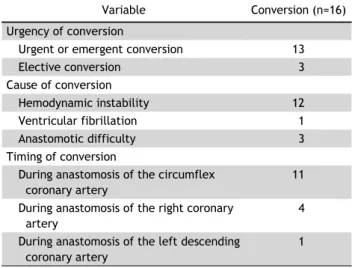
Table 1. Data related to conversion in our patient sample

Variable Conversion (n=16)

Urgency of conversion

Urgent or emergent conversion 13

Elective conversion 3

Cause of conversion

Hemodynamic instability 12

Ventricular fibrillation 1

Anastomotic difficulty 3

Timing of conversion

During anastomosis of the circumflex coronary artery

11

During anastomosis of the right coronary artery

4

During anastomosis of the left descending coronary artery

1

outcomes. MACCEs included CVAs, MIs, reinterven- tion, and heart failure that required hospital admission.

Univariate and multivariate analyses were used to identify independent risk factors for conversion to ONCAB. The preoperative demographics and charac- teristics were compared between the OPCAB and conversion groups.

1) Statistical analysis

Numerical variables were compared in an unad-

justed manner using the two-sample Student t-test,

and categorical variables were compared across groups

using the chi-square or Fisher exact test. Indepen-

dent risk factors for conversion were identified through

multivariable regression analysis. Logistic regression

analysis was used for adjustments. The backward

elimination method was used to model logistic re-

(4)

Table 3. Comparison of preoperative factors related to the left ventricle

Preoperative LV factors Off-pump coronary artery bypass (n=84) Conversion (n=16) p-value

Mitral regurgitation 20 (23.8) 4 (25.0) >0.999

LVEF (%) 50.5±13.5 45.2±13.5 0.154

LVEF <40% 21 (25.0) 6 (37.5) 0.359

LVEF <30% 5 (6.0) 1 (6.3) >0.999

LV end-diastolic diameter (mm) 49.6±6.08 51.5±8.38 0.287

Interventricular septum dimension at diastole (mm) 9.9±2.21 10.3±2.93 0.675

LV posterior wall dimension at diastole (mm) 9.5±1.84 9.7±2.4 0.739

Values are presented as number (%) or mean±standard deviation.

LVEF, left ventricular ejection fraction; LV, left ventricular.

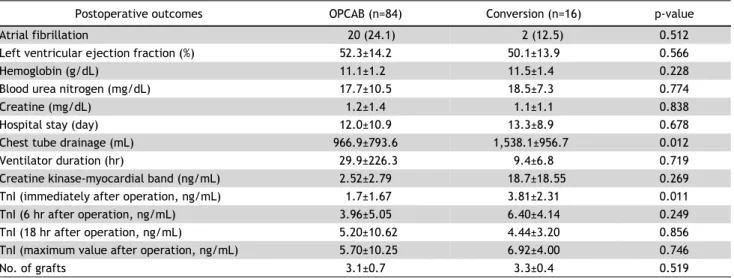
Table 4. Comparison of operative and postoperative data between the OPCAB and conversion groups

Postoperative outcomes OPCAB (n=84) Conversion (n=16) p-value

Atrial fibrillation 20 (24.1) 2 (12.5) 0.512

Left ventricular ejection fraction (%) 52.3±14.2 50.1±13.9 0.566

Hemoglobin (g/dL) 11.1±1.2 11.5±1.4 0.228

Blood urea nitrogen (mg/dL) 17.7±10.5 18.5±7.3 0.774

Creatine (mg/dL) 1.2±1.4 1.1±1.1 0.838

Hospital stay (day) 12.0±10.9 13.3±8.9 0.678

Chest tube drainage (mL) 966.9±793.6 1,538.1±956.7 0.012

Ventilator duration (hr) 29.9±226.3 9.4±6.8 0.719

Creatine kinase-myocardial band (ng/mL) 2.52±2.79 18.7±18.55 0.269

TnI (immediately after operation, ng/mL) 1.7±1.67 3.81±2.31 0.011

TnI (6 hr after operation, ng/mL) 3.96±5.05 6.40±4.14 0.249

TnI (18 hr after operation, ng/mL) 5.20±10.62 4.44±3.20 0.856

TnI (maximum value after operation, ng/mL) 5.70±10.25 6.92±4.00 0.746

No. of grafts 3.1±0.7 3.3±0.4 0.519

Values are presented as number (%) or mean±standard deviation.

OPCAB, off-pump coronary artery bypass; TnI, troponin I.

gression analysis. Logistic regression analysis was used to analyze the associations between conversion and the postoperative outcomes. Finally, Kaplan-Meier analysis was used to analyze the estimated early and late survival associated with convertsion. This stat- istical estimation was performed using IBM SPSS ver.

23.0 (IBM Co., Armonk, NY, USA).

Results

Conversion was emergently performed in 12 patients due to hypotension ( systolic blood pressure <70 mm Hg without recovery after ceasing cardiac manipu- lation), and in 1 patient due to ventricular fibrillation.

Three patients were electively converted to ONCAB due to anastomotic difficulties. The coronary anasto- moses that prompted conversion involved the Cx in

11 cases, the RCA in 4 cases, and the LAD in 1 case (Table 1). Cardioplegia was used in 10 patients (62.5%) in the conversion group. The on-pump beating-heart technique was used in the other 6 patients according to the surgeon’s preference.

The patients’ demographic and preoperative char- acteristics are compared in Table 2. AMI, chronic ob- structive pulmonary disease, and dyslipidemia were statistically significant risk factors for conversion to ONCAB (p=0.009, p=0.024, and p=0.018, respectively).

Thus, these 3 variables were included in the adjusted

multivariable model. After adjustment, only the pre-

operative diagnosis of AMI was identified as an in-

dependent risk factor for conversion to ONCAB (ad-

justed odds ratio, 4.238; 95% confidence interval, 1.2

to 19.2; p=0.025). Regarding LV-related risk factors for

conversion, a comparison of the LV dimensions, wall

(5)

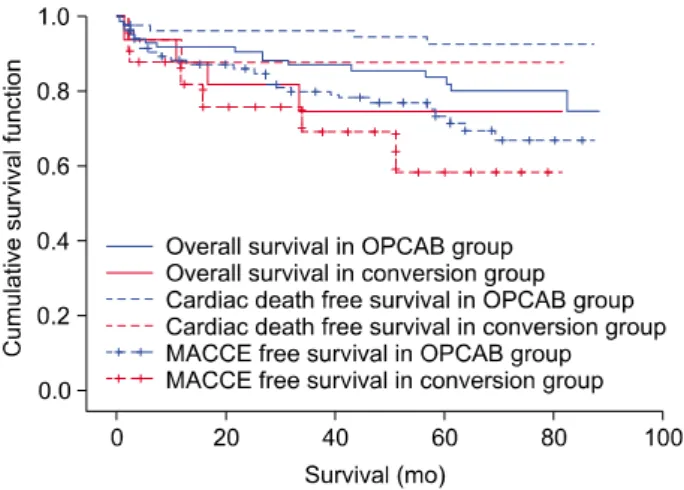
Fig. 1. Kaplan-Meier survival graph. OPCAB, off-pump coronary artery bypass; MACCE, major adverse cardiac and cerebrovas- cular event.

thickness, LV function, and MR between the two groups is presented in Table 3. No LV-related indices showed statistically significant differences.

The operative and postoperative variables are sum- marized in Table 4. The amount of chest tube drain- age (CTD) between the 2 groups was the only stat- istically significant difference (p=0.012).

Early mortality occurred in 4 patients (4.7%) in the OPCAB group and 0 (0%) in the conversion group.

The causes of early mortality in the OPCAB group were low cardiac output syndrome in 2 cases ( 2.3%) and pneumonia in the other 2 (2.3%), following early morbidity. Early mortality did not show a statistically significant difference between the groups. Two cases of early morbidity occurred in the OPCAB group (2.3%): 1 patient had an intracranial hemorrhage due to a CVA and the other patient underwent prolonged ventilator care. Both patients died of pneumonia, on the 58th and 33rd day postoperatively, respectively.

In the conversion group, 2 patients (12.5%) under- went reoperations for bleeding. They were discharged home without complications. The amount of CTD was significantly greater in the conversion group than in the OPCAB group (p=0.012).

According to the results of the univariate analysis, reoperation for bleeding was significantly more fre- quent in the conversion group than in the OPCAB group (p=0.024). However, the results of the multi- variate analysis did not show statistically significant differences (p=0.999).

Late mortality and MACCEs were estimated as

long-term composite endpoints. MACCEs occurred in 12 patients (14.3%) in the OPCAB group and 3 pa- tients (18.8%) in the conversion group. The rate of MACCEs was not significantly different between the 2 groups. In the OPCAB group, 7 patients were diag- nosed as having a new MI. Three of them underwent percutaneous coronary intervention, and the others recovered without reintervention. Another 3 patients were admitted for heart failure management, and 1 case each of cerebral hemorrhage and cerebral in- farction occurred. In the conversion group, 1 patient each had MI, cerebral infarction, and heart failure that required hospital admission. Late mortality oc- curred in 12 patients (14.3%) in the OPCAB group and 4 (25.0%) in the conversion group. The causes of late mortality in the OPCAB group were sepsis in 2 cases (2.3%); sudden cardiac death in 2 cases (2.3%); and dementia, CVA, MI, brain cancer, trauma, and pneumonia in 1 case (1.2%) each. Two cases (2.3%) had unknown causes of death. The causes of late mortality in the conversion group were aplastic anemia in 1 case (6.3%), pancreatic cancer in 1 case (6.3%), and sudden cardiac death in 2 cases (12.5%).

The 5-year survival rate was 83.5% in the OPCAB group and 73.9% in the conversion group. Additio- nally, the MACCE-free 5-year survival rate was 72.4%

in the OPCAB group and 56.8% in the conversion group. The cardiac death-free 5-year survival rate was 92.7% in the OPCAB group and 87.5% in the conversion group. None of the survival indices dif- fered between the groups to a statistically significant extent ( Fig. 1).

Discussion

Since the introduction of OPCAB, controversy has

emerged regarding its superiority to ONCAB. Early

recovery after OPCAB due to avoiding CPB is the most

important benefit. The adverse effects of CPB involve

entire systems of the human body, including the brain,

heart, kidneys, and lungs. Furthermore, systemic in-

flammation due to CPB disturbs immunologic and

hematologic systems. Therefore, CPB increases oper-

ative risks such as CVA, myocardial injuries, ARF,

pulmonary edema, bleeding, and infection. Chowdhury

et al. [9] reported favorable outcomes in patients

with OPCAB, especially in those with high-risk factors

such as old age, female sex, LV dysfunction, and a

(6)

history of previous stroke or sternotomy. Neverthe- less, physicians opposed to OPCAB have insisted that its technical difficulty hinders complete revasculariza- tion, predisposes grafts to precocious occlusion, causes more MACCEs, and results in less favorable long-term outcomes. Furthermore, OPCAB operations may none- theless require CPB for various reasons, including the patient being in an unstable condition, difficult dis- section and anastomosis of the target coronary ar- teries, and revision due to inadequate graft flow.

Acute conversion from OPCAB to ONCAB requires emergent CPB, which increases the risk of morbidity and mortality. Nevertheless, few studies have inves- tigated conversion, especially in association with long-term outcomes. In the literature, the conversion rate has been reported to range from 1.1% to 22.0%, with hemodynamic instability identified as the most common cause of conversion [10]. Conversion rates have been regarded as being dependent on the sur- geon’s experience. Our policy is the routine use of OPCAB in all patients with CABG, irrespective of their condition, and our threshold for conversion is rela- tively low. Additionally, the present study included cases of OPCAB within the learning curve of our institution. Therefore, the conversion rate of 16% in our study was high.

Hattler et al. [11] reported that the patency of grafts to the Cx and posterior descending coronary artery was significantly poorer in the OPCAB group than in the ONCAB group, although no statistically significant differences were found in the patency rates of grafts in the LAD or RCA between the two groups. The posterior areas of the LV are regarded as the most challenging for OPCAB. In this study, conversion to ONCAB was performed in 11 cases (68.75%) in which we operated on the Cx, 4 cases (25.0%) involving the RCA, and 1 case (6.25%) in- volving the LAD. The authors agree that manipulation of the posterior heart is the most difficult step of OPCAB, and suggest that cardiac positioners may be helpful to prevent conversion. Air embolism into the RCA caused ventricular fibrillation in 1 case during saline testing for anastomotic leakage.

Li et al. [12] reported that left main coronary ar- tery disease, heart failure, 3-vessel coronary disease, and MI were associated with conversion [13]. The current study also found that the diagnosis of AMI was an independent risk factor for conversion. Re-

garding AMI, a severely depressed, dilated, thinned, or thickened LV has been considered to be a risk factor for conversion. The increased MR due to a dis- torted heart has also been considered to prevent suc- cessful OPCAB [14]. However, the present study did not demonstrate that poor LV indices and MR sig- nificantly increased the conversion rate. Further stud- ies are needed to clarify the significance of the asso- ciation of AMI with increased conversion rates.

Mukherjee et al. [15] reported that morbidities such as stroke, MI, renal failure, deep sternal wound infection, bleeding requiring reoperation, IABP, trans- fusion, and respiratory and gastrointestinal complica- tions were more frequently associated with conversion.

Edgerton et al. [16] classified conversion patients into elective, urgent, and emergent conditions accord- ing to the level of urgency of CPB and into the early and late phases of operation according to the timing of conversion; they found higher mortality rates in the urgent/emergent and late conversion groups. The urgency of conversion from OPCAB to ONCAB can predispose patients to ischemic injuries of major or- gans, which can lead to CVA, MI, ARF, or death. In the present study, no patient in the conversion group exhibited postoperative complications or mortality as- sociated with ischemia of the major organs. Concern- ing myocardial insults, no statistically significant dif- ference was found in the release of troponin I post- operatively in the conversion and OPCAB groups. In the present study, a period of 5–10 minutes was re- quired to prepare and perform CPB. This timing did not cause CVA, MI, or fatal ischemia of the vital organs. Additionally, our small sample size may have led to a statistically insignificant result.

Many studies regarding OPCAB have reported worse outcomes for the conversion group than for the non-conversion group. Novitzky et al. [17] reported that converted patients had significantly more 30-day complications and deaths than unconverted patients and patients undergoing ONCAB (17.5% vs. 5.7% vs.

5.5%, respectively; p<0.001). They also reported

that converted patients had a higher 1-year compo-

site adverse event rate (21.1%) than the other pa-

tients [17]. Reeves et al. [5] reported that converted

OPCAB was associated with 12-fold and 8-fold higher

hospital mortality than ONCAB or OPCAB without

conversion, respectively; additionally, converted pa-

tients had a 6-fold increased risk of stroke and other

(7)

serious postoperative complications in comparison to unconverted patients. They also reported that con- verted patients had an approximately 3-fold incr- eased risk of death for 3 years after surgery than unconverted patients or patients who underwent ONCAB [5].

In contrast with previous reports, the early mortal- ity rate and composite adverse outcomes in the pres- ent study were not significantly different between the OPCAB and conversion groups ( 4.7% vs. 0%, p>

0.999 and 2.3% vs. 12.5%, p=0.119, respectively).

Moreover, no statistically significant differences were found between these groups in terms of MACCEs (14% vs. 19%, respectively; p=0.704) or the 5-year overall survival rate (83.5% vs. 73.9%, respectively;

p=0.281). As previously mentioned, the small number of cases and low threshold for conversion at our in- stitution may be the reasons for this finding. High risks of conversion are mainly due to the emergent situations requiring CPB rather than conversion itself.

Most situations that require CPB support can be pre- dicted when preparing and positioning the heart, or dissecting target coronary arteries for distal anas- tomoses. Therefore, prompt decision-making and the early implementation of CPB are essential to prevent further deterioration during conversion due to ische- mia of the coronary artery and other vital organs.

The long-term adverse effects of conversion are controversial. Physicians who favor ONCAB think that patients who undergo conventional CABG have better long-term patency rates than those who undergo OPCAB with or without conversion. These issues must be studied further to reach a definitive conclusion.

Preventing conversion to ONCAB is also important, in addition to the prompt use of CPB. To avoid emergent conversion to ONCAB during OPCAB, physi- cians use several maneuvers such as grafting the LAD or collateralized vessels first, using epicardial pacing or intracoronary shunts, performing precon- ditioning trials before arteriotomy, using pharmaco- logic support or IABP prophylactically, and minimiz- ing compression and retraction of the heart with the use of various cardiac positioners [14]. Kim et al. [18]

reported that IABP can maintain a stable condition in patients with OPCAB. IABP would be a good option for facilitating OPCAB. Nevertheless, it causes vascular complications and requires more resources. Starfish or Urchin heart positioners (Medtronic Inc.) can help

maintain a stable condition during OPCAB, but they may cause hematoma in the myocardium or bleeding.

The present study has other limitations in addition to a small sample size. It was a non-randomized, ret- rospective, observational study based on electronic medical records. It also lacked long-term patency data. These limitations affect the statistical power and implications of the findings of our study.

In conclusion, the preoperative diagnosis of AMI was associated with an increased risk of conversion to ONCAB. No statistically significant differences were found in early morbidity and mortality, MACCEs, or long-term mortality between the OPCAB and con- version groups.

Conflict of interest

No potential conflicts of interest relevant to this article are reported.

Acknowledgments

This study was supported by a Grant of the Samsung Vein Clinic Network (Daejeon, Anyang, Cheongju, Cheonan; Fund No. KTCS04-062).

References

1. Kolessov VI. Mammary artery-coronary artery anastomosis as method of treatment for angina pectoris. J Thorac Cardiovasc Surg 1967;54:535-44.

2. Calafiore AM, Di Giammarco G, Teodori G, et al. Left ante- rior descending coronary artery grafting via left anterior small thoracotomy without cardiopulmonary bypass. Ann Thorac Surg 1996;61:1658-65.

3. Subramanian VA, McCabe JC, Geller CM. Minimally invasive direct coronary artery bypass grafting: two-year clinical experience. Ann Thorac Surg 1997;64:1648-53.

4. Kaya K, Cavolli R, Telli A, et al. Off-pump versus on-pump coronary artery bypass grafting in acute coronary syn- drome: a clinical analysis. J Cardiothorac Surg 2010;5:31.

5. Reeves BC, Ascione R, Caputo M, Angelini GD. Morbidity and mortality following acute conversion from off-pump to on-pump coronary surgery. Eur J Cardiothorac Surg 2006;

29:941-7.

6. Tabata M, Takanashi S, Horai T, Fukui T, Hosoda Y. Emer- gency conversion in off-pump coronary artery bypass grafting. Interact Cardiovasc Thorac Surg 2006;5:555-9.

7. Thygesen K, Alpert JS, Jaffe AS, et al. Third universal defi- nition of myocardial infarction. Circulation 2012;126:2020-35.

8. Cannon CP, Braunwald E. Non-ST-segment elevation acute

(8)

coronary syndrome (non-ST-segment elevation myocardial infarction and unstable angina). In: Kasper DL, Fauci AS, Hauser SL, editors. Harrison’s principles of internal medicine.

19th ed. New York (NY): McGraw-Hill Education; 2015. p.

1593-8.

9. Chowdhury R, White D, Kilgo P, et al. Risk factors for con- version to cardiopulmonary bypass during off-pump coronary artery bypass surgery. Ann Thorac Surg 2012;93:1936-41.

10. Hovakimyan A, Manukyan V, Ghazaryan S, Saghatelyan M, Abrahamyan L, Hovaguimian H. Predictors of emergency conversion to on-pump during off-pump coronary surgery.

Asian Cardiovasc Thorac Ann 2008;16:226-30.

11. Hattler B, Messenger JC, Shroyer AL, et al. Off-Pump coronary artery bypass surgery is associated with worse arterial and saphenous vein graft patency and less effective revascula- rization: results from the Veterans Affairs Randomized On/Off Bypass (ROOBY) trial. Circulation 2012;125:2827-35.

12. Li Z, Amsterdam EA, Danielsen B, Hoegh H, Young JN, Armstrong EJ. Intraoperative conversion from off-pump to on-pump coronary artery bypass is associated with in- creased 30-day hospital readmission. Ann Thorac Surg 2014;98:16-22.

13. Jin R, Hiratzka LF, Grunkemeier GL, Krause A, Page US 3rd.

Aborted off-pump coronary artery bypass patients have much worse outcomes than on-pump or successful off-pump patients. Circulation 2005;112(9 Suppl):I332-7.

14. Mukherjee D, Ahmed K, Baig K, Patel VM, Darzi A, Athanasiou T. Conversion and safety in off-pump coronary artery bypass: a system failure that needs re-emphasis.

Ann Thorac Surg 2011;91:630-9.

15. Mukherjee D, Rao C, Ibrahim M, et al. Meta-analysis of or- gan damage after conversion from off-pump coronary ar- tery bypass procedures. Ann Thorac Surg 2011;92:755-61.

16. Edgerton JR, Dewey TM, Magee MJ, et al. Conversion in off-pump coronary artery bypass grafting: an analysis of predictors and outcomes. Ann Thorac Surg 2003;76:1138-42.

17. Novitzky D, Baltz JH, Hattler B, et al. Outcomes after con- version in the Veterans Affairs randomized on versus off bypass trial. Ann Thorac Surg 2011;92:2147-54.

18. Kim KB, Lim C, Ahn H, Yang JK. Intraaortic balloon pump

therapy facilitates posterior vessel off-pump coronary ar-

tery bypass grafting in high-risk patients. Ann Thorac Surg

2001;71:1964-8.

수치

Table 2. Comparison of preoperative data between the OPCAB and conversion groups
Table 4. Comparison of operative and postoperative data between the OPCAB and conversion groups
Fig. 1. Kaplan-Meier survival graph. OPCAB, off-pump coronary  artery bypass; MACCE, major adverse cardiac and  cerebrovas-cular event.

참조

관련 문서

Increased bleeding and subsequent transfusion of allogeneic blood products are undoubtedly associated with adverse outcome in cardiac surgical patients.(Hajjar et

Background/Aims: Limited data are available regarding the long-term clinical outcomes of percutaneous coronary intervention (PCI) using second-generation drug-eluting stent

Third, early out- comes, mid-term outcomes, and angiographic patency rates were comparable between the on-pump and off-pump redo CABG groups.. In the present study,

The comparison of clinical outcomes of off-pump versus on-pump coronary artery bypass grafting in high risk patients. Yokoyama T, Baumgartner FJ, Gheissari A,

Background: We evaluated the surgical results and predictors of long-term survival in patients who underwent cor- onary artery bypass grafting (CABG) at the time of an aortic

Off pump coronary artery bypass (OPCAB) can reduced the postoperative bleeding because there is no surgical in-.. The patients were divided into transfusion group

All of the patients underwent anaortic off-pump CABG (OPCAB) using the in situ left or right internal thoracic arteries (ITA); 3 patients had severe stenosis of the proximal

Purpose: New-onset postoperative atrial fibrillation (POAF) is associated with poor short- and long-term outcomes after isolated coronary artery bypass graft (CABG) surgery..