• 검색 결과가 없습니다.

DNA-Damage Inducible 1 is a Property of Human Non-Small Cell Lung Cancer

N/A
N/A
Protected

Academic year: 2021

Share "DNA-Damage Inducible 1 is a Property of Human Non-Small Cell Lung Cancer"

Copied!
8
0
0

로드 중.... (전체 텍스트 보기)

전체 글

(1)

Tuberc Respir Dis 2012;72:124-131

CopyrightⒸ2012. The Korean Academy of Tuberculosis and Respiratory Diseases. All rights reserved.

DNA-Damage Inducible 1 is a Property of Human Non-Small Cell Lung Cancer

Ji Yeon Lee, M.D.

1,2

, Eunsil Kang, M.S.

2

, Beom Jin Lim, M.D.

3

, Yoon Soo Chang, M.D.

2

, Se-Kyu Kim, M.D.

2

1

Division of Pulmonary and Critical Care Medicine, Department of Internal Medicine and Lung Institute, Seoul National University College of Medicine, Departments of

2

Internal Medicine and

3

Pathology, Yonsei University Health System, Yonsei University College of Medicine, Seoul, Korea

Background: DNA damage-inducible 1 (Ddi1), one of the ubiquitin-like and ubiquitin-associated family of proteins, may function in the regulation of the ubiquitin-proteasome pathway, which has been validated as a target for antineoplastic therapy. We investigated Ddi1 expression in human lung cancer tissues and evaluated the relationship of this expression pattern with clinicopathological factors in patients with non-small-cell lung cancer (NSCLC).

Methods: Ddi1 expression was examined by immunohistochemistry in tumor tissues from 97 patients with stage I NSCLC, who had undergone curative surgical resection at two tertiary referral hospitals from 1993∼2004. None of the patients received preoperative chemotherapy and/or radiation therapy.

Results: Thirty-nine (40.2%) of the 97 cases were positive for Ddi1. Ddi1 expression was dominantly seen in cytoplasm rather than in the nuclei of cancer cells in all histological types, whereas adjacent nontumoral lung tissue showed negative Ddi1 staining in most cases. Ddi1 expression tended to increase in well-differentiated tumors but without statistical significance. Positive Ddi1 expression was associated with a tendency for better disease-free survival and disease-specific survival, although the difference was not significant.

Conclusion: Ddi1 expression is a property of NSCLC. Because Ddi1 could be a potential target for cancer therapy, more research is needed to evaluate its role in NSCLC.

Key Words: Lung Neoplasms; Immunohistochemistry; Ubiquitin; Proteasome Endopeptidase Complex; Anti- neoplastic Agents

Address for correspondence: Se-Kyu Kim, M.D.

Department of Internal Medicine, Yonsei University College of Medicine, 50, Yonsei-ro, Seodaemun-gu, Seoul 120-749, Korea

Phone: 82-2-2228-1954, Fax: 82-2-393-6884 E-mail: [email protected]

Received: Nov. 3, 2011 Revised: Nov. 28, 2011 Accepted: Dec. 21, 2011

Introduction

Lung cancer is one of the most commonly diagnosed cancers as well as the leading cause of cancer deaths worldwide

1

. However, only about 20% of patients with non-small cell lung cancer (NSCLC) have their disease diagnosed at a stage in which surgery can be recom- mended as part of initial care. Moreover, the 5-year sur- vival rate of even the earliest stage I lung cancers after

complete surgical resection is still only approximately 70%, leading to the need for novel therapeutic targets and modalities

2

.

One of the strategies for lung cancer therapy is target-

ing the ubiquitin-proteasome system (UPS), which plays

a central role in cell homeostasis, resulting in dereg-

ulation of cell processes necessary for survival

3,4

. DNA

damage-inducible 1 (Ddi1) belongs to the ubiquitin-like

(UbL) and ubiquitin-associated (UBA) family of proteins

that has been implicated in the regulation of UPS

5

. Ddi1

appears to release substrate from an ubiquitination com-

plex, making the substrate available for deubiquitina-

tion, and, thus, is presumed to play an important role

facilitating proteasomal degradation. Additionally, Ddi1

is the only representative in which the UbL and UBA

domains flank an aspartyl protease-like (RVP) domain.

(2)

This central Ddi1 domain has a remarkable structural similarity with retroviral proteases, suggesting that Ddi1 functions proteolytically during regulated protein turn- over in the cell. Notably, current studies show that this RVP domain is a potential therapeutic target for retro- viral aspartic protease inhibitors

6

.

Much effort has been made to reposition the estab- lished retroviral aspartic protease inhibitors as anti- cancer agents for patients with NSCLC. Recent studies have shown that nelfinavir, ritonavir, and saquinavir in- hibit the growth of NSCLC and every cell type among 60 kinds of cancer cells

7

. Nelfinavir was the most effec- tive of all protease inhibitors tested, resulting in apopto- sis and non-apoptotic cell death. Non-apoptotic cell death was related to induction of endoplasmic reticulum stress, which subsequently led to autophagy, a normal process of self digestion that generates energy for the cell under conditions of stress

8

. Consequentially, these results suggest that nelfinavir could be repositioned as a lung cancer therapeutic, and one of the potential tar- gets for this promising drug is Ddi1.

However, the clinical role of Ddi1 in human cancer is unknown. Therefore, in this study, we investigated Ddi1 immunohistochemical expression in human lung cancer tissue and evaluated whether Ddi1 expression in- creased in lung cancer compared with that in adjacent nontumoral tissue. We also investigated Ddi1 function by assessing intracellular localization as well as tissue distribution of Ddi1 expression to confirm whether Ddi1 could be developed as a useful target for nelfinavir.

Materials and Methods 1. Study Subjects

The study group comprised 97 patients with stage I NSCLC. Patients underwent curative surgical resection at two tertiary referral hospitals (Severance and Gangnam Severance Hospital, Yonsei University College of Medicine, Seoul, Korea) from 1993∼2004. The fol- low-up duration was defined as the interval between the date of operation and the date of death or last fol- low-up. None of the patients received preoperative che-

motherapy and/or radiation therapy.

Patient charts, including pathology and operative re- ports, were reviewed, and the data were coded. One representative formalin-fixed paraffin-embedded pri- mary tumor block was obtained for each case.

 This study was approved by the Institutional Review Board of Severance Hospital (4-2011-0409). The board waived informed consent from the patients. This study was conducted in accordance with the Declaration of Helsinki.

2. Immunohistochemistry (IHC)

Sections (4-μm thick) were prepared from each of the paraffin-embedded samples. After sections were de- paraffinized in xylene (three 10-minute washes) and de- hydrated in a graded ethanol series (100-, 90-, 70-, and 50%, 5-minute washes), endogenous peroxidase activity was blocked with 30% hydrogen peroxide in water for 5 min. Antigens were retrieved for Ddi1 staining by boiling in 10 mM citrate acid (pH 6.0) for 3 min using a microwave oven. Sections were then incubated with rabbit anti-Ddi1 polyclonal antibodies (GeneTex, Irvine, CA, USA) and diluted 1:100 in antibody diluents (DAKO, Glostrup, Denmark) for 1 hour at 37

o

C.

Secondary biotinylated link anti-mouse IgG or anti-rab- bit IgG for the Labeled Streptavidin-Biotin2 System, horseradish peroxidase (DAKO), and a third streptavidin peroxidase conjugate (DAKO) were incubated with the sections at room temperature. The reaction was vi- sualized with the 3, 3-diaminbenzidine substrate system (DAKO). Hematoxylin was used as the counterstain.

Human placenta tissue was used as a positive control because of its easy availability and relatively stable reactivity. The negative control consisted of isotype con- trol antibody (rabbit polyclonal IgG, DAKO) substituted for the primary Ddi1 antibody. Controls were run with each batch of slides at an average of approximately 15 slides per batch.

3. IHC Interpretation

Slides were interpreted by one experienced patholo-

gist (LBJ). The intensity of Ddi1 expression as evaluated

(3)

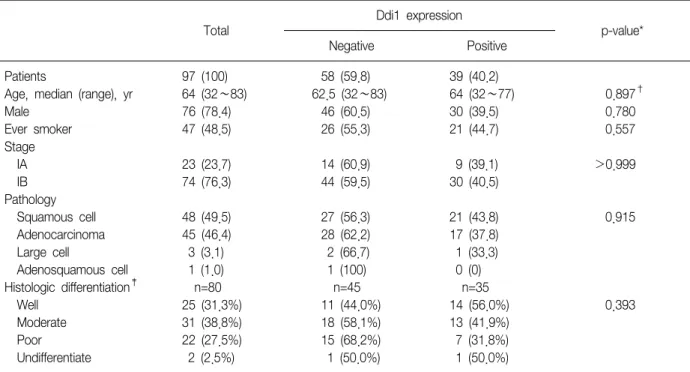
Table 1. Clinicopathological features related to DNA damage-inducible 1 (Ddi1) expression in non-small-cell lung cancer (NSCLC)

Total

Ddi1 expression

p-value*

Negative Positive

Patients 97 (100) 58 (59.8) 39 (40.2)

Age, median (range), yr 64 (32∼83) 62.5 (32∼83) 64 (32∼77) 0.897

Male 76 (78.4) 46 (60.5) 30 (39.5) 0.780

Ever smoker 47 (48.5) 26 (55.3) 21 (44.7) 0.557

Stage

IA 23 (23.7) 14 (60.9) 9 (39.1) >0.999

IB 74 (76.3) 44 (59.5) 30 (40.5)

Pathology

Squamous cell 48 (49.5) 27 (56.3) 21 (43.8) 0.915

Adenocarcinoma 45 (46.4) 28 (62.2) 17 (37.8)

Large cell 3 (3.1) 2 (66.7) 1 (33.3)

Adenosquamous cell 1 (1.0) 1 (100) 0 (0)

Histologic differentiation

n=80 n=45 n=35

Well 25 (31.3%) 11 (44.0%) 14 (56.0%) 0.393

Moderate 31 (38.8%) 18 (58.1%) 13 (41.9%)

Poor 22 (27.5%) 15 (68.2%) 7 (31.8%)

Undifferentiate 2 (2.5%) 1 (50.0%) 1 (50.0%)

Data are presented as number (%) unless otherwise indicated.

*Pearson's χ

2

or Fisher's exact test were used to estimate p-values.

Mann-Whitney U-test was used to estimate the p-value.

Seventeen (17) cases were indeterminate.

microscopically was graded on a scale of 0∼3+ with 3 being the highest expression observed (0, no staining;

1+, weak; 2+, moderate; 3+, intense). Frequency was quantified as the percentage of cells staining pos- itive for Ddi1 with the primary antibody as follows: 0, no staining; 1, positive staining in <25 % of counted cancer cells; 2, positive staining in 25∼50 % of counted cancer cells; 3, positive staining in >50 % of counted cancer cells. Intensity score (0∼3+) was multiplied by the frequency score (0∼3) to give an overall score of 0∼9. The overall score for each specimen was then cat- egorically assigned to one of the following groups: 0, negative expression; 1∼2, weak expression; 3∼6, moderate expression; 9, strong expression. Scores ≥1 were considered as positive.

4. Statistical analyses

Continuous variables were analyzed using non- parametric tests (Mann-Whitney U-test or Kruskal-Wallis test), and categorical variables were compared with the

Pearson's χ

2

or Fisher's exact tests, as appropriate.

Survival curves were estimated using the Kaplan-Meier method, and statistical significance between survival curves was assessed by the log-rank test. Multivariate analysis was performed using Cox's proportional haz- ards regression model. SPSS version 17.0 (SPSS Inc., Chicago, IL, USA) was used for all analyses. A p-value

<0.05 was considered significant.

Results 1. Clinicopathological variables

The demographic and clinical characteristics of the

enrolled patients are listed in Table 1. Age, gender, and

histological distributions in our population agreed with

the literature for stage I NSCLC

9,10

. The median age of

the patients was 64 years (range, 32∼83 years), and

the majority of patients were male (78.4%). The NSCLC

tumors were comprised of 48 squamous cell carcino-

mas, 45 adenocarcinomas, three large-cell carcinomas,

(4)

Figure 1. DNA damage-inducible 1 (Ddi1) expression in controls and lung cancer tissues; (A) positive control, (B) negative control, (C) bron- chioalveolar carcinoma, (D) adenocarcinoma, (E) squamous cell carcino- ma, (F) large cell carcinoma, and (G) adjacent nontumoral lung tissue (×200).

and one adenosquamous cell carcinoma. Twenty-three (23.7%) patients were stage IA and 74 (76.3%) were stage IB.

2. Ddi1 is mainly localized in the cytoplasm of NSCLC cells

Figure 1 shows IHC staining patterns for the positive

and negative controls. Ddi1 expression was seen in the

cytoplasm of most syncytiotrophoblasts in normal pla-

(5)

Table 2. DNA damage-inducible 1 (Ddi1) expression ac- cording to non-small-cell lung cancer (NSCLC) histological subtype

Total (n=97)

Squamous cell (n=48)

Adenoca (n=45)

Large cell (n=3) Scores

0 58 (59.8) 27 (56.3) 28 (62.2) 2 (66.7) 1 8 (8.2) 5 (10.4) 3 (6.7) 0 (0) 2 8 (8.2) 7 (14.6) 1 (2.2) 0 (0) 3 12 (12.4) 5 (10.4) 6 (13.3) 1 (33.3) 4 5 (5.2) 3 (6.3) 2 (4.4) 0 (0) 6 4 (4.1) 0 (0) 4 (8.9) 0 (0) 9 2 (2.1) 1 (2.1) 1 (2.2) 0 (0) Expression

Weak 16 (16.5) 12 (25.0) 4 (8.9) 0 (0) Moderate 21 (21.6) 8 (16.7) 12 (26.7) 1 (33.3) Strong 2 (2.1) 1 (2.1) 1 (2.2) 0 (0) Data are presented as number (%).

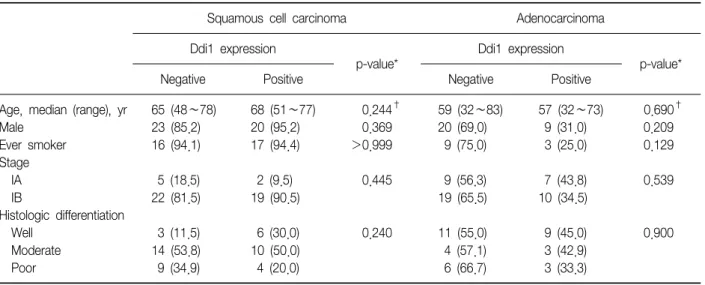
Table 3. Clinicopathological features related to DNA damage-inducible 1 (Ddi1) expression in histologic subtypes of non-small-cell lung cancer (NSCLC)

Squamous cell carcinoma Adenocarcinoma

Ddi1 expression

p-value*

Ddi1 expression

p-value*

Negative Positive Negative Positive

Age, median (range), yr 65 (48∼78) 68 (51∼77) 0.244

59 (32∼83) 57 (32∼73) 0.690

Male 23 (85.2) 20 (95.2) 0.369 20 (69.0) 9 (31.0) 0.209

Ever smoker 16 (94.1) 17 (94.4) >0.999 9 (75.0) 3 (25.0) 0.129

Stage

IA 5 (18.5) 2 (9.5) 0.445 9 (56.3) 7 (43.8) 0.539

IB 22 (81.5) 19 (90.5) 19 (65.5) 10 (34.5)

Histologic differentiation

Well 3 (11.5) 6 (30.0) 0.240 11 (55.0) 9 (45.0) 0.900

Moderate 14 (53.8) 10 (50.0) 4 (57.1) 3 (42.9)

Poor 9 (34.9) 4 (20.0) 6 (66.7) 3 (33.3)

Data are presented as number (%).

*Pearson's χ

2

or Fisher's exact test were used to estimate p-values.

Mann-Whitney U test was used to estimate the p-value.

centa, which served as the positive control.

Of the 97 NSCLC cases, 39 (40.2%) were interpreted as Ddi1 positive, including 21 (43.8%) of 48 squamous cell carcinomas, 17 (37.8%) of 45 adenocarcinomas, and one of three large cell carcinomas (Table 1). Ddi1 ex- pression was localized to the tumor cells, whereas bron- chial epithelial cells, pneumocytes, and chondrocytes from bronchial cartilage in the adjacent nontumoral lung tissue showed Ddi1 negative staining in most cases examined. In all of the positive cases, Ddi1 expression was seen dominantly in the cytoplasm of cancer cells rather than in the nucleus, regardless of histological type. A cytoplasmic membrane staining pattern was ob- served in addition to the cytoplasmic and nuclear stain- ing in one case of poorly differentiated adenocarcinoma (Figure 1).

Table 1 compares various parameters between the Ddi1 negative and positive groups. Histological subtype was not related to Ddi1 expression. Age, gender, smok- ing history, and pathological stage also did not differ between the groups. Ddi1 expression tended to in- crease with NSCLC differentiation; however, the differ- ence was not significant. Table 2 shows Ddi1 ex- pression according to histological subtype. No differ- ences in age, pathological stage, or histological differ-

entiation were observed between the Ddi1 expression groups when subgroup analyses were performed for the histological subtypes (Table 3).

3. Clinical and pathological correlations

The median follow-up duration was 120 months. In

a univariate analysis, the positive Ddi1 expression group

tended to show lower rates of tumor recurrence, distant

(6)

Figure 2. Survival analysis of patients with stage I non-small-cell lung cancer stratified for DNA damage-in- ducible 1 (Ddi1) expression; (A) disease free survival, (B) disease specific survival and (C) overall survival of patients with non-small-cell lung cancer.

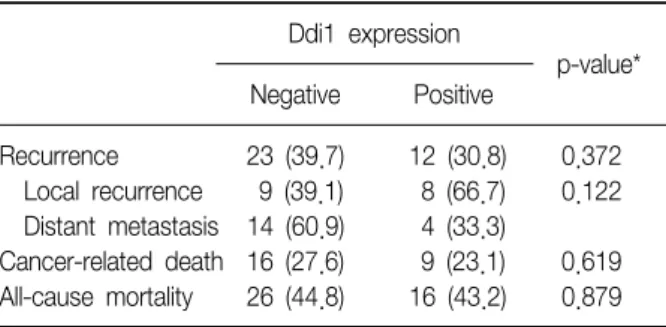
Table 4. Correlations between DNA damage-inducible 1 (Ddi1) expression and clinical outcome

Ddi1 expression

p-value*

Negative Positive

Recurrence 23 (39.7) 12 (30.8) 0.372

Local recurrence 9 (39.1) 8 (66.7) 0.122 Distant metastasis 14 (60.9) 4 (33.3)

Cancer-related death 16 (27.6) 9 (23.1) 0.619 All-cause mortality 26 (44.8) 16 (43.2) 0.879

*Pearson's χ

2

and Fisher's exact test were used to estimate p-values.

metastasis, cancer-related death, and all-cause mortality but without statistical significance (Table 4).

Of 97 patients, 12 (30.8%) of 39 Ddi1 positive patients and 23 (39.7%) of 58 Ddi1 negative patients experi- enced a recurrence. The Kaplan-Meier disease-free sur-

vival (DFS) estimates for patients grouped according to Ddi1 expression are shown in Figure 2A; the median DFS time was 168.2 months in the Ddi1 positive group but was not reached in the Ddi1 negative group.

Five-year DFS rate of Ddi1 positive group was 79.2%

whereas that of Ddi1 negative group was 72.3%, which did not reach statistical significance (p=0.476; log-rank test).

Nine (23.1%) and 16 (27.6%) cancer-related deaths occurred in Ddi1 positive and negative patients, respectively. The median disease-specific survival (DSS) time was not reached in either Ddi1 expression group, whereas the estimated 5-year DSS rate was the same (81.4%) (Figure 2B).

The median overall survival (OS) times were 152.8

and 174.4 months, and the estimated 5-year OS rates

were 73.0% and 74.1% in the Ddi1 positive and neg-

(7)

ative groups. The Kaplan-Meier estimates for both groups showed no significant difference in OS (Figure 2C). The Cox regression analysis adjusting for patho- logical stage and age demonstrated no significant differ- ence in DFS, DSS, or OS between the Ddi1 expression groups (data not shown).

The results were similar when subgroup analyses were performed for the histological subtypes. Ddi1 ex- pression did not significantly influence DFS, DSS, or OS of patients with squamous cell carcinoma or ad- enocarcinoma (data not shown).

Discussion

Among the UbL-UBA family of proteins, Ddi1 is the least studied and has never been associated with lung cancer. In the present study, IHC showed positive Ddi1 staining in about 40% of lung cancer tissues, and the proportions were similar among histological subtypes.

Among the positive cases, most of the adjacent non- tumoral lung tissue was negative for Ddi1 expression, whereas cancer cells showed diffuse staining for Ddi1, suggesting that Ddi1 could be a potential selective target for lung cancer treatment.

Previous studies have shown that Ddi1 localizes pref- erentially to the nucleus in wild-type cells, which could imply its function in nuclear-associated ubiq- uitin-dependent proteolysis

11,12

. Unexpectedly, we found that Ddi1 expression occurred not only in the nu- cleus, but also in the cytoplasm, even in the cell mem- branes of cancer cells. Therefore, we postulate that any alteration of the role of Ddi1 in the interaction with cell cycle-related proteins and mediating their stability may have influenced Ddi1 localization in NSCLC cells.

The role of Ddi1 in targeting proteins for proteasomal degradation is well established. A loss of Ddi1 results in stabilization of ubiquitinated substrates, which accu- mulate in the cytoplasm. The substrate can only interact with the proteasome in the presence of Ddi1 when it is ubiquitinated, suggesting that the initial interaction must be between a ubiquitin chain and the Ddi1 pro- tein

11

. Because ubiquitination is critical for proliferation

and survival of cancer cells, Ddi1 dysregulation may re- sult in cancer by creating a UPS imbalance.

 In the present study, poor differentiation of tumor cells tended to be correlated with negative Ddi1 ex- pression, but the correlation was not significant.

Different results have been reported on the relationship between tumor differentiation and expression of UPP components. Some studies have reported that cancers and rapidly growing embryonic cells generally have higher levels of proteasome activity than their normal well-differentiated counterparts

13,14

, and others have found that Ub levels increase during development and differentiation

15,16

. In contrast, another study showed no relationship between ubiquitin levels and the degree of histological differentiation

17

. The present results showed that positive Ddi1 expression appeared to be associated with well-differentiated tumors, which behave in an in- dolent fashion. Thus, we presumed that Ddi1 might play a greater role during the initial stage of carcino- genesis than in the progressing stage when tumors de- velop more aggressive behavior, although it is difficult to assume the common roles of Ddi1 during oncogenesis. This possibility parallels our results show- ing a higher rate of local recurrence than distant meta- stasis in recurred Ddi1 positive patients, whereas a high- er rate of distant metastasis was observed in patients who were Ddi1 negative. Furthermore, Ddi1 expression seemed to be associated with a more indolent clinical course with better disease-free and disease-specific survivals. However, these results did not reach statistical significance, probably because of the relatively small sample size; thus, further studies are needed to confirm or refute this association.

In conclusion, we observed positive Ddi1 staining in about 40% of NSCLC tissues. Our results suggest that Ddi1 expression is a property of NSCLC, though it is not definite whether Ddi1 has clinical value in NSCLC.

Ddi1 could be a potential target for cancer therapy.

Therefore, more work is needed to evaluate the role of

Ddi1 in NSCLC.

(8)

References

1. Brundage MD, Davies D, Mackillop WJ. Prognostic fac- tors in non-small cell lung cancer: a decade of pro- gress. Chest 2002;122:1037-57.

2. Groome PA, Bolejack V, Crowley JJ, Kennedy C, Krasnik M, Sobin LH, et al. The IASLC Lung Cancer Staging Project: validation of the proposals for revision of the T, N, and M descriptors and consequent stage group- ings in the forthcoming (seventh) edition of the TNM classification of malignant tumours. J Thorac Oncol 2007;2:694-705.

3. Ciechanover A. The ubiquitin-proteasome proteolytic pathway. Cell 1994;79:13-21.

4. Hoeller D, Dikic I. Targeting the ubiquitin system in cancer therapy. Nature 2009;458:438-44.

5. Su V, Lau AF. Ubiquitin-like and ubiquitin-associated domain proteins: significance in proteasomal degrada- tion. Cell Mol Life Sci 2009;66:2819-33.

6. White RE, Powell DJ, Berry C. HIV proteinase in- hibitors target the Ddi1-like protein of Leishmania parasites. FASEB J 2011;25:1729-36.

7. Gills JJ, Lopiccolo J, Tsurutani J, Shoemaker RH, Best CJ, Abu-Asab MS, et al. Nelfinavir, A lead HIV protease inhibitor, is a broad-spectrum, anticancer agent that in- duces endoplasmic reticulum stress, autophagy, and apoptosis in vitro and in vivo. Clin Cancer Res 2007;

13:5183-94.

8. Gills JJ, Lopiccolo J, Dennis PA. Nelfinavir, a new an- ti-cancer drug with pleiotropic effects and many paths to autophagy. Autophagy 2008;4:107-9.

9. Ou SH, Zell JA, Ziogas A, Anton-Culver H. Prognostic factors for survival of stage I nonsmall cell lung cancer patients: a population-based analysis of 19,702 stage I

patients in the California Cancer Registry from 1989 to 2003. Cancer 2007;110:1532-41.

10. Chansky K, Sculier JP, Crowley JJ, Giroux D, Van Meerbeeck J, Goldstraw P, et al. The International Association for the Study of Lung Cancer Staging Project: prognostic factors and pathologic TNM stage in surgically managed non-small cell lung cancer. J Thorac Oncol 2009;4:792-801.

11. Kaplun L, Tzirkin R, Bakhrat A, Shabek N, Ivantsiv Y, Raveh D. The DNA damage-inducible UbL-UbA protein Ddi1 participates in Mec1-mediated degradation of Ho endonuclease. Mol Cell Biol 2005;25:5355-62.

12. Wilkinson CR, Wallace M, Morphew M, Perry P, Allshire R, Javerzat JP, et al. Localization of the 26S proteasome during mitosis and meiosis in fission yeast.

EMBO J 1998;17:6465-76.

13. Kumatori A, Tanaka K, Inamura N, Sone S, Ogura T, Matsumoto T, et al. Abnormally high expression of proteasomes in human leukemic cells. Proc Natl Acad Sci USA 1990;87:7071-5.

14. Kanayama H, Tanaka K, Aki M, Kagawa S, Miyaji H, Satoh M, et al. Changes in expressions of proteasome and ubiquitin genes in human renal cancer cells. Cancer Res 1991;51:6677-85.

15. Goldknopf IL, Wilson G, Ballal NR, Busch H. Chromat- in conjugate protein A24 is cleaved and ubiquitin is lost during chicken erythropoiesis. J Biol Chem 1980;255:

10555-8.

16. Agell N, Mezquita C. Cellular content of ubiquitin and formation of ubiquitin conjugates during chicken sper- matogenesis. Biochem J 1988;250:883-9.

17. Ishibashi Y, Takada K, Joh K, Ohkawa K, Aoki T,

Matsuda M. Ubiquitin immunoreactivity in human ma-

lignant tumours. Br J Cancer 1991;63:320-2.

수치

Table  1.  Clinicopathological  features  related  to  DNA  damage-inducible  1  (Ddi1)  expression  in  non-small-cell  lung  cancer  (NSCLC) Total Ddi1  expression p-value* Negative Positive     Patients 97  (100)   58  (59.8) 39  (40.2)
Figure 1. DNA damage-inducible 1 (Ddi1) expression in controls and lung cancer  tissues;  (A)  positive  control,  (B)  negative  control,  (C)   bron-chioalveolar carcinoma, (D) adenocarcinoma, (E) squamous cell  carcino-ma,  (F)  large  cell  carcinocarc
Table  3.  Clinicopathological  features  related  to  DNA  damage-inducible  1  (Ddi1)  expression  in  histologic  subtypes  of  non-small-cell  lung  cancer  (NSCLC)
Figure  2.  Survival  analysis  of  patients  with  stage  I  non-small-cell  lung cancer  stratified  for  DNA   damage-in-ducible  1  (Ddi1)  expression;  (A)  disease  free  survival,  (B)  disease specific survival and (C) overall survival of patients

참조

관련 문서

Patients with breast cancer; ovarian cancer; renal cell carcinoma; pancreatic neuroendocrine cancer; colorectal cancer; head and neck cancer; non-small cell lung

Caffeic acid phenethyl ester induces E2F-1-mediated growth inhibition and cell-cycle arrest in human cervical cancer cells.

In this study, the expression profiles of miRNAs were compared and analyzed for establishment of miRNAs related cancer cell growth inhibition in normal human oral

1) Effects of methanol extracts of Capsella bursa-pastoris on cyclooxygenase-2 (COX-2) and Inducible Nitric oxide synthase (iNOS) expression in human prostate cancer cell

Inhibitory effects of classified methanol extracts of Smilax china L on the COX-2 and iNOS expression of human colorectal cancer cell lines... Inhibitory

4 > Effects of Taro on COX-2 expression and iNOS expression(hot water) in human thyroid cancer cells. The cells were pretreated for 48hours with either

Inhibitory effects of classified methanol extracts of Gastrodia elata Blume on the COX-2 and iNOS expression of human colorectal cancer cell lines...

Conclusion I: Stem Cells Reprogramming of human chondrocytes via non-viral minicircle DNA delivery. Conversion of partially reprogrammed chondrocytes