Muskelin Interacts with Multi-PDZ Domain Protein 1 (MUPP1) through the PDZ Domain
Won Hee Jang1, Young Joo Jeong1, Sun Hee Choi1, Won Hee Lee2, Mooseong Kim2, Sang-Jin Kim3, Sang-Hwa Urm4, Il Soo Moon5 and Dae-Hyun Seog1*
1Department of Biochemistry and u-HARC, Inje University College of Medicine, Busan 614-735, Korea
2Department of Neurosurgery, Inje University College of Medicine, Busan 614-735, Korea
3Department of Neurology, Inje University College of Medicine, Busan 614-735, Korea
4Department of Preventive Medicine, Inje University College of Medicine, Busan 614-735, Korea
5Department of Anatomy & Dongguk Medical Institute, College of Medicine, Dongguk University, Gyeongju 780-714, Korea Received March 19, 2015 /Revised April 15, 2015 /Accepted April 16, 2015
Protein-protein interactions have a critical role in the regulation of many cellular functions. Postsynap- tic density-95/disks large/zonula occludens-1 (PDZ) domain is one of domains that mediate pro- tein-protein interactions. PDZ domains typically bind to the specific motif at the carboxyl (C)-terminal end of partner proteins. Multi-PDZ domain protein 1 (MUPP1), which has 13 PDZ domains, serves a scaffolding function for structure proteins and signaling proteins, but the cellular function of MUPP1 has not been fully elucidated. We used the yeast two-hybrid system to identify proteins that interact with PDZ domains of MUPP1. We found an interaction between MUPP1 and muskelin. Muskelin was recently identified as a GABAA receptor (GABAAR) α1 subunit binding protein and known to have a role in receptor endocytosis and degradation. Muskelin bound to the 3rd PDZ domain, but not to other PDZ domains of MUPP1. The C-terminal end of muskelin was essential for the interaction with MUPP1 in the yeast two-hybrid assay. When co-expressed in HEK-293T cells, muskelin but not the C-terminal deleted muskelin was co-immunoprecipitated with MUPP1. In addition, MUPP1 co-lo- calized with muskelin at the same subcellular region in cells. These findings collectively suggest that MUPP1 or its interacting proteins could modulate GABAAR trafficking and turnover through the inter- action with muskelin.
Key words : Adaptor protein, MUPP1, muskelin, PDZ domain, protein-protein interaction
*Corresponding author
*Tel : +82-51-890-6974, Fax : +82-51-894-5801
*E-mail : [email protected]
This is an Open-Access article distributed under the terms of the Creative Commons Attribution Non-Commercial License (http://creativecommons.org/licenses/by-nc/3.0) which permits unrestricted non-commercial use, distribution, and reproduction in any medium, provided the original work is properly cited.
Journal of Life Science 2015 Vol. 25. No. 5. 594~600 DOI : http://dx.doi.org/10.5352/JLS.2015.25.5.594
Introduction
Protein-protein interactions can determine the localization of proteins at specific subcellular sites and the incorporation of receptors into signaling complexes [2]. Cell junctions and neuronal synapse are emerging as multi-molecular compo- sites whose structure and regulation are governed in part by their associated proteins [12]. Protein-protein interactions mediated by a variety of domains, functionally independent unit structures of protein, are critical for the formation of functional protein networks that regulate cellular mecha- nisms. Postsynaptic density-95/disks large/zonula occlu- dens-1 (PDZ) domain is one of those domains that mediate
protein-protein interactions [10, 20, 25]. PDZ domain-con- taining proteins are generally soluble cytoplasmic proteins that act as adaptors by linking the cell membrane receptors via PDZ domains or other protein modules to cytoskeletal proteins or signaling proteins such as regulators of mem- brane trafficking, protein kinases and regulators of small GTPases [8-10, 12, 20, 25]. PDZ domains are built of 80~100 amino-acid residues and specialized for binding of the car- boxyl (C)-terminal PDZ-association motif of partner pro- teins, including transmembrane receptors, channel proteins, and other adaptor proteins [7, 20, 26]. Such interactions local- ize membrane proteins to specific subcellular domains, thus enabling assembly of large multi-molecular complexes [25].
Multi-PDZ domain protein 1 (MUPP1), which possesses an L27 domain and 13 PDZ domains, was first identified as a protein that interacts with the C-terminus of the seroto- nin receptor type 2C (5-HT2C) in brain [27]. MUPP1 is found in tight junctions, post-synaptic density (PSD), and Schwann cell incisures and has been reported to interact with a variety of integral membrane proteins, including a synaptic adhe-
sion molecule Cadm1, junctional adhesion molecule-A, so- dium channel Nav1.4, melatonin receptor MT1, Claudin-1, and N-aminobutyric acid receptor 2 [1, 3, 4, 6, 13, 17].
MUPP1 acts as a scaffold for attaching different proteins to the proper location in the membrane [11]. MUPP1 also inter- acts with synaptic Ras GTPase-activating protein SynGAP, and Ca2+/calmodulin-dependent kinase (CaMKII) to regu- late neuronal signaling and dendritic spine morphology [3, 11, 18, 19].
To help define the scaffolding function of MUPP1, it is necessary to identify the interacting proteins of MUPP1. We screened for proteins that interact with the PDZ domains of MUPP1 through the yeast two-hybrid assay and identified muskelin, a multi-domain scaffolding protein, known to af- fect cytoskeletal dynamics and microtubule-dependent GABAA receptor (GABAAR) trafficking [14]. The MUPP1 and muskelin interaction suggests that MUPP1 may contribute as an adaptor protein/scaffolding protein in regulation of GABAAR trafficking through the interaction with muskelin.
Materials and Methods
Plasmid constructs
Full-length rat MUPP1 cDNA in the pCMV vector (a gift from Dr. H. Lubbert, Ruhr-Universitat, Denmark) was tag- ged with a FLAG-epitope at the amino (N)-terminus.
Truncations of MUPP1 corresponding to different PDZ do- mains were prepared by PCR amplification using the appro- priate primers. The amplified fragments were subcloned into T-vector. The fragments were then EcoRI-restricted and subcloned into the EcoRI site of pLexA. The correct ori- entation and in-frame cloning of cDNA inserts were verified by restriction enzyme analysis and DNA sequencing.
EGFP-fused muskelin was constructed and used to visualize the intracellular localization in mammalian cells. General re- combinant DNA techniques were performed according to standard protocol [22].
Screening of MUPP1-binding proteins by yeast two-hybrid assay
The Matchmaker LexA two-hybrid system was used for screening according to the manufacturer’s manual (Clontech, Palo Alto, CA, USA). In brief, a part of the rat MUPP1 cDNA (amino acids 101-507) was fused to the DNA-BD region of the pLexA vector using the PCR and the plasmid DNA was transformed into yeast strain EGY48 carrying the p8op-lacZ
gene. Transformed EGY48 yeast cells containing the MUPP1 bait plasmid were transformed with the mouse brain cDNA library and grown on synthetic dextrose (SD) plates supple- mented with glucose but with no histidine, tryptophan, or uracil (SD/-His/-Trp/-Ura). The selection of positive clones was performed on an SD/-His/-Trp/-Ura/-Leu plate con- taining galactose, raffinose, X-gal, and BU salts. Plasmids from positive clones were analyzed by restriction digestion.
Unique inserts were sequenced and protein sequence analy- sis was performed with the BLAST algorithm at the National Center for Biotechnology Information (NCBI). Sequence- verified clones were tested again for interaction with the bait in yeast by retransformation.
Cell culture and Transfection
HEK-293T cells were cultured in Dulbecco's modified Eagle's medium supplemented with 10% fetal bovine serum, l-glutamine, and antibiotics. Transient transfections were done with the CaPO4 precipitation method.
Co-immunoprecipitation
Twenty-four hours after transfection with FLAG-MUPP1 and HA-muskelin constructs, HEK-293T cells were rinsed with ice-cold PBS twice and lysed with ice-cold lysis buffer [PBS containing 0.5% NP-40 and 1x protease inhibitor cock- tail set V (Calbiochem)] by gentle rotation for 30 min.
Lysates were centrifuged at 16,000 × g for 10 min at 4°C.
The supernatant was incubated with anti-FLAG M2 agarose beads (Sigma-Aldrich) for 2 hr at 4°C with constant shaking.
The beads were collected by centrifugation at 2,000 × g for 30 sec and washed 5 times with ice-cold lysis buffer. The immunoprecipitated proteins were analyzed by Western blotting.
Immunocytochemistry
HEK-293T cells grown on poly-D-lysine-coated coverslips were transfected with EGFP-muskelin and MUPP1 con- structs. Twenty-four hours after transfection, cells were washed with phosphate-buffered saline (PBS), fixed with 4%
paraformaldehyde in PBS for 5 min, and permeabilized with 0.2% Triton X-100 in PBS for 10 min. After blocking with 5% normal goat serum in PBS for 30 min, cells were in- cubated with anti-MUPP1 antibody (BD science, San Jose, CA, USA) diluted 1:500 in PBS containing 1% bovine serum albumin (BSA) and 0.05% Tween-20 overnight at 4°C. After washing with PBS 3 times, cells were incubated with Dylight
A
B
C
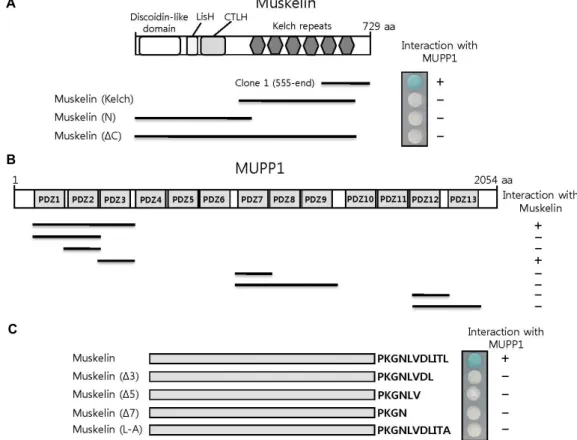
Fig. 1. Identification of the protein interacting with MUPP1 by yeast two-hybrid screening. (A) Schematic diagram of muskelin.
Muskelin contains the discoidin-like domain, LisH motif, CTLH motif, and six repeated kelch motifs. Clone 1 was isolated from the yeast two-hybrid screen and different truncations of muskelin were constructed by PCR. Several truncated forms of muskelin were tested in the yeast two-hybrid assay for interaction with MUPP1. +, interaction with MUPP1; -, no interaction with MUPP1. aa, the amino acid residue number. (B) Minimal muskelin binding region in MUPP1. Different truncations of MUPP1 were constructed by PCR. Several truncated forms of MUPP1 were tested in the yeast two-hybrid assay for inter- action with muskelin. +, interaction with muskelin; -, no interaction with muskelin. aa, the amino acid residue number.
(C) Specific interaction of MUPP1 with the C-terminus of muskelin. Several deletion and substitution mutants of muskelin were tested in the yeast two-hybrid assay for interaction with MUPP1. +, interaction with MUPP1; -, no interaction with MUPP1.
594-conjugated goat anti-rabbit IgG antibody (Jackson ImmunoResearch Labs, West Grove, PA, USA) diluted 1:800 for 40 min. After washing with PBS 3 times, the cells were mounted with Fluoromount (DAKO). Fluorescence images were acquired on Zeiss LSM510 META confocal laser scan- ning microscope (Carl Zeiss, Oberkochem, Germany).
Results
Identification of MUPP1 interacting proteins by yeast two-hybrid screening
To identify MUPP1-binding proteins, we screened a mouse brain cDNA library through the yeast two-hybrid as- says using the amino (N)-terminal region of MUPP1 contain- ing 1st-3rd PDZ domains as bait (Fig. 1B). From 6×10⁶ colonies
screened, we obtained one positive clone. The clone pos- sessed a cDNA fragment of muskelin (Fig. 1A). Muskelin is a cytoplasmic multi-domain protein comprised of dis- coidin-like domain, LisH motif, CTLH motif, and six re- peated kelch motifs [5]. To identify the domain of muskelin required for interaction with MUPP1, various fragments of muskelin were constructed and tested for interaction with MUPP1 using yeast two-hybrid system (Fig. 1A). Fig. 1A shows that the short C-terminal region of muskelin was crit- ically required for interaction with MUPP1. To determine the domain of MUPP1 that is required for the interaction with muskelin, we constructed various fragments of MUPP1.
Yeast two-hybrid assays with muskelin showed that the minimal domain required for binding was the 3rd PDZ do- main of MUPP1 (Fig. 1B). Muskelin contains a putative class
A
B
Fig. 2. MUPP1 and muskelin were co-immunoprecipitated from mammalian cells. (A) HEK-293T cells were transiently transfected with HA-muskelin plasmid (A) or HA-musk- elin (Δ3) plasmid (B) and either control vector or FLAG- MUPP1 plasmid as indicated. Cell lysates were incubated with monoclonal anti-FLAG M2 agarose beads to im- munoprecipitate MUPP1. Western blots were subse- quently probed with anti-HA and anti-MUPP1 antibodies.
Muskelin was specifically co-immunoprecipitated with MUPP1.
II PDZ-association motif (φXφ), where φ is a hydrophobic residue, at its C-terminus [7, 25, 26]. Next we investigated whether the C-terminal motif of muskelin mediates the inter- action with MUPP1. For this purpose, the C-terminal dele- tion and substitution mutants of muskelin were constructed (Fig. 1C), and co-transfected into yeast cells with pLexA- MUPP1. As shown in Fig. 1C, the MUPP1 and muskelin in- teraction was impaired by the C-terminal deletion and the substitution of the last C-terminal residue of muskelin. These results indicate that MUPP1 and muskelin interact each oth- er through their PDZ domain and PDZ-association motif, respectively, similar to the previously described class II PDZ interaction [16, 26].
MUPP1 is associated with muskelin in cells To assess the interaction between MUPP1 and muskelin in mammalian cells, HEK-293T cells were co-transfected with constructs expressing HA-muskelin and FLAG-MUPP1.
Cell lysates were immunoprecipitated with a monoclonal an- tibody against the FLAG epitope, followed by western blot analysis with anti-HA antibody. Fig. 2A shows that muskelin was co-precipitated with MUPP1. In contrast, HA-muskelin (Δ3) lacking the putative PDZ-association motif of muskelin failed to be co-precipitated with MUPP1 (Fig. 2B). These re-
sults further confirmed our yeast two-hybrid results, indicat- ing that MUPP1 specifically interacts with muskelin and the C-terminal motif of muskelin is essential for the interaction.
For the potential interaction between MUPP1 and muske- lin to be physiologically relevant, two proteins must co-local- ize at the same subcellular region in cells. To determine whether MUPP1 and muskelin co-localize, we generated the N-terminal EGFP-fused muskelin construct. MUPP1 was co-transfected with EGFP-muskelin into HEK-293T cells.
Confocal microscopic images of EGFP-muskelin (green chan- nel) and MUPP1 (red channel) showed that MUPP1 and muskelin co-localized at the same subcellular region in cells (Fig. 3A). Both proteins formed puncta along cytoplasmic membrane and extensively overlapped at the same sub- cellular region in cells (Fig. 3B). These findings indicate that MUPP1 and muskelin interact with each other in cells.
Discussion
In this study, we have shown that the scaffold protein MUPP1 associates with muskelin. Using the N-terminal PDZ domains of MUPP1 as bait, we identified muskelin in a yeast two-hybrid screen of a mouse brain cDNA library. When MUPP1 and muskelin were expressed in HEK-293 T cells, they co-immunoprecipitated and co-localized in cells
Specific protein-protein interactions are important for in- tracellular protein transport and biological signal trans- duction. The PDZ domain is one of the most abundant pro- tein interaction modules. Proteins containing PDZ domains usually form large multimeric protein complexes [10, 20, 25].
PDZ domains contain a conserved peptide-binding groove that associates with the extreme C-terminus of ligands [7, 26]. Interestingly, MUPP1 contains multiple PDZ domains and plays an important role as a multivalent scaffold protein that recruits various proteins [27]. In this study, we demon- strated through domain analysis that the 3rd PDZ domain of MUPP1 specifically mediates the interaction with the C-terminal region of muskelin.
The N-terminal region of muskelin containing the dis- coidin domain and LisH motif binds to the GABAAR and this interaction regulates the endocytosis and degradation of GABAAR [14]. In recent report, the LisH motif acts as a dimerization element of muskelin and the LisH-dependent dimerization is required to assemble a muskelin tetramer by intermolecular head-to-tail interaction [5]. Interestingly, the loss of the LisH-dependent dimerization leads to relocali-
A
B
Fig. 3. Co-localization of MUPP1 and muskelin at subcellular region. Twenty-four hours after transfection, cells were immunos- tained using anti-MUPP1 antibody. (A) EGFP-muskelin and MUPP1 co-localize largely in cells. (B) EGFP-muskelin and MUPP1 are seen at the same subcellular region in cells (arrow).
zation of muskelin from the cytoplasm to the nucleus and impairs the GABAAR transport [5].
What would the association between MUPP1 and muske- lin mean? First, the interaction may have a role in regulation of the cell surface expression level of GABAAR. The associa- tion with MUPP1 and muskelin possibly affects internal- ization of GABAAR from membrane surface. Protein-protein interactions not only determine the specific membrane sur- face expression of receptor proteins, but can also affect the membrane surface expression level by altering endocytic rates [15]. Direct interacting proteins of the receptor could serve as a tag that identifies receptor proteins to be in- ternalized [15, 21]. This might occur because the tag is in- dicative of a receptor protein in an appropriate conforma- tional state for internalization. Thus, like PSD-95 and GRIP, the interaction between MUPP1 and muskelin may indicate conformational state that determines GABAAR internal- ization from membrane surface [15]. Second, MUPP1-musk- elin complex may mediate subcellular targeting of GABAAR to appropriate subcellular localization. Several PDZ do- main-containing proteins, such as mLin-10 and GRIP1 act as targeting/scaffolding proteins that have potential to bring their interacting proteins to appropriate subcellular local- ization [23, 24]. Therefore, the association of muskelin with MUPP1 could target GABAAR to specific subcellular location for appropriate functions. Our findings provide insight into the possible regulation of GABAAR by MUPP1-muskelin complex through PDZ domain-mediated interaction. Further functional studies on the possibilities mentioned above and identification of other MUPP1 interacting proteins may help
to shed light on regulation of GABAAR.
Acknowledgment
The research was supported by the Basic Science Research Program through the National Research Foundation of Korea (NRF) by the Ministry of Science, ICT and Future Planning (NRF-2012R1A1A2020689).
References
1. Adachi, M., Hamazaki, Y., Kobayashi, Y., Itoh, M., Tsukita, S., Furuse, M. and Tsukita, S. 2009. Similar and distinct properties of MUPP1 and Patj, two homologous PDZ do- main-containing tight-junction proteins. Mol. Cell. Biol. 29, 2372-2389.
2. Ardura, J. A. and Friedman, P. A. 2011. Regulation of G protein-coupled receptor function by Na+/H+ exchange regulatory factors. Pharmacol. Rev. 63, 882-900.
3. Balasubramanian, S., Fam, S. R. and Hall, R. A. 2007.
GABAB receptor association with the PDZ scaffold Mupp1 alters receptor stability and function. J. Biol. Chem. 282, 4162-4171.
4. Becamel, C., Figge, A., Poliak, S., Dumuis, A., Peles, E., Bockaert, J., Lubbert, H. and Ullmer, C. 2001. Interaction of serotonin 5-hydroxytryptamine type 2C receptors with PDZ10 of the multi-PDZ domain protein MUPP1. J. Biol.
Chem. 276, 12974-12982.
5. Delto, C. F., Heisler, F. F., Kuper, J., Sander, B., Kneussel, M. and Schindelin, H. 2015. The LisH motif of muskelin is crucial for oligomerization and governs intracellular localization. Structure 23, 364-373.
6. Dooley, R., Baumgart, S., Rasche, S., Hatt, H. and Neuhaus, E. M. 2009. Olfactory receptor signaling is regulated by the
post-synaptic density 95, Drosophila discs large, zona-occlu- dens 1 (PDZ) scaffold multi-PDZ domain protein 1. FEBS J. 276, 7279-7290.
7. Doyle, D. A., Lee, A., Lewis, J., Kim, E., Sheng, M. and MacKinnon, R. 1996. Crystal structures of a complexed and peptide-free membrane protein-binding domain: molecular basis of peptide recognition by PDZ. Cell 85, 1067-1076.
8. Field, C. M. and Kellogg, D. 1999. Septins: cytoskeletal poly- mers or signaling GTPases? Trends Cell. Biol. 9, 387-394.
9. Garner, C. C., Nash, J. and Huganir, R. L. 2000. PDZ do- mains in synapse assembly and signalling. Trends Cell. Biol.
10, 274-280.
10. Gomperts, S. N. 1996. Clustering membrane proteins: It's all coming together with the PSD-95/SAP90 protein family.
Cell. 84, 659-662.
11. Guillaume, J. L., Daulat, A. M., Maurice, P., Levoye, A., Migaud, M., Brydon, L., Malpaux, B., Borg-Capra, C. and Jockers, R. 2008. The PDZ protein mupp1 promotes Gi cou- pling and signaling of the Mt1 melatonin receptor. J. Biol.
Chem. 283, 16762-16771.
12. Guillemot, L., Foglia, A., Paschoud, S., Pulimeno, P. and Citi, S. 2008. The cytoplasmic plaque of tight junctions: a scaffolding and signalling center. Biochim. Biophys. Acta.
1778, 601-613.
13. Hamazaki, Y., Itoh, M., Sasaki, H., Furuse, M. and Tsukita, S. 2002. Multi-PDZ domain protein 1 (MUPP1) is con- centrated at tight junctions through its possible interaction with claudin-1 and junctional adhesion molecule. J. Biol.
Chem. 277, 455-461.
14. Heisler, F. F., Loebrich, S., Pechmann, Y., Maier, N., Zivkovic, A. R., Tokito, M., Hausrat, T. J., Schweizer, M., Bähring, R., Holzbaur, E. L., Schmitz, D. and Kneussel, M.
2011. Muskelin regulates actin filament- and microtubule -based GABA(A) receptor transport in neurons. Neuron 70, 66-81.
15. Hirbec, H., Perestenko, O., Nishimune, A., Meyer, G., Nakanishi, S. and Henley, J, M. 2002. The PDZ proteins PICK1, GRIP and Syntenin bind multiple glutamate receptor subtypes. J. Biol. Chem. 277, 15221-15224.
16. Jang, W. H., Choi, S. H., Jeong, J. Y., Park, J. H., Kim, S.
J. and Seog, D. H. 2014. Neuronal cell-surface protein neu- rexin 1 interaction with multi-PDZ domain protein MUPP1.
Biosci. Biotechnol. Biochem. 78, 644-646.
17. Kimber, W. A., Trinkle-Mulcahy, L., Cheung, P., Deak, M., Marsden, L. J. and Kieloch, A. 2002. Evidence that the tan- dem-pleckstrin-homology-domain-containing protein TAPP1 interacts with Ptd(3,4)P2 and the multi-PDZ-domain-con- taining protein MUPP1 in vivo. Biochem. J. 361, 525-536.
18. Krapivinsky, G., Medina, I., Krapivinsky, L., Gapon, S. and Clapham, D. E. 2004. SynGAP-MUPP1-CaMKII synaptic complexes regulate p38 MAP kinase activity and NMDA receptor-dependent synaptic AMPA receptor potentiation.
Neuron 43, 563-574.
19. Pei, L., Teves, R. L., Wallace, M. C. and Gurd, J. W. 2001.
Transient cerebral ischemia increases tyrosine phosphor- ylation of the synaptic RAS-GTPase activating protein, SynGAP. J. Cereb. Blood Flow Metab. 21, 955-963.
20. Ponting, C. P., Phillips, C., Davies, K. E. and Blake, D. J.
1997. PDZ domains: targeting signalling molecules to sub-membranous sites. Bioessays 19, 469-479.
21. Roche, K. W., Standley, S., McCallum, J., Dune Ly, C., Ehlers, M. D. and Wenthold, R. J. 2001. Molecular determi- nants of NMDA receptor internalization. Nat. Neurosci. 4, 794-802.
22. Sambrook, J., Fritsch, E. F. and Maniatis, T. 1989. Molecular cloning: a laboratory manual. Cold Spring Habor Laboratory, Cold Spring Habor, New York.
23. Setou, M., Nakagawa, T., Seog, D. H. and Hirokawa, N.
2000. Kinesin superfamily motor protein KIF17 and mLin-10 in NMDA receptor-containing vesicle transport. Science. 288, 1796-1802.
24. Setou, M., Seog, D. H., Tanaka, Y., Kanai, Y., Takei, Y., Kawagishi, M. and Hirokawa, N. 2002. Glutamate-receptor- interacting protein GRIP1 directly steers kinesin to dendrites.
Nature. 417, 83-87.
25. Sheng, M. and Sala, C. 2001. PDZ domains and the organ- ization of supramolecular complexes. Annu. Rev. Neurosci.
24, 1-29.
26. Songyang, Z., Fanning, A. S., Fu, C., Xu, J., Marfatia, S. M.
and Chishti, A. H. 1997. Recognition of unique carboxyl-ter- minal motifs by distinct PDZ domains. Science 275, 73-77.
27. Ullmer, C., Schmuck, K., Figge, A. and Luëbbert, H. 1998.
Cloning and characterization of MUPP1, a novel PDZ do- main protein. FEBS Lett. 424, 63-68.
초록:Muskelin과 multi-PDZ domain protein 1 (MUPP1) 단백질의 PDZ 도메인을 통한 결합
장원희1․정영주1․최선희1․이원희2․김무성2․김상진3․엄상화4․문일수5․석대현1*
(1인제대학교 의과대학 생화학교실, 2인제대학교 의과대학 신경외과학교실, 3인제대학교 의과대학 신경과학교실,
4인제대학교 의과대학 예방의학교실, 5동국대학교 의과대학 해부학교실)
단백질-단백질 결합은 다양한 세포내 반응 조절에서 중요한 역할을 한다. Postsynaptic density-95/disks large/
zonula occludens-1 (PDZ) 도메인은 널리 알려진 단백질-단백질 결합 매개 도메인 중 하나이다. PDZ 도메인은 결 합 단백질의 카르복실(C)-말단의 특정 motif와 결합한다. Multi-PDZ domain protein 1 (MUPP1)은 13개 PDZ 도메 인을 가지는 단백질로서 다양한 구조단백질 및 신호단백질에 대한 scaffold로 작용한다고 알려져 있지만 MUPP1 의 세포 내 기능은 아직 명확히 밝혀지지 않았다. 본 연구에서 MUPP1의 PDZ 도메인과 결합하는 단백질을 규명하 기 위하여 효모 two-hybrid 방법을 이용하였고 muskelin이 MUPP1과 결합하는 것을 확인하였다. Muskelin은 GABAA 수용체(GABAAR)의 α1 subunit와 결합하며 수용체의 endocytosis와 분해에 관여하는 것으로 알려져 있다.
Muskelin은 MUPP1의 3번째 PDZ 도메인과 결합하지만, 다른 PDZ 도메인과는 결합하지 않았다. 또한 MUPP1과 의 결합에 muskelin의 C-말단부위가 필수적임을 효모 two-hybrid 방법으로 확인하였다. HEK-293T 세포에 MUPP1과 muskelin을 동시에 발현하여 면역 침강한 결과 두 단백질은 같이 면역 침강하였다. 반면에 C-말단 결손 muskelin은 MUPP1과 같이 면역 침강하지 않았다. 또한 muskelin과 MUPP1은 세포내의 같은 위치에서 발현하였
다. 이러한 결과들은, muskelin과의 결합을 통해, MUPP1 혹은 MUPP1과 결합하는 단백질이 GABAAR의 세포내
이동과 회전(turnover)을 조절할 가능성을 시사한다.