Printed in the Republic of Korea
http://dx.doi.org/10.5012/jkcs.2011.55.5.760
Synthesis of Novel Series of Various Substituted1-(5-(2-p-tolyloxyquinolin-3-yl)-2- (pyridin-4-yl)-1,3,4-oxadiazol-3(2H)-yl)ethanone and its Antibacterial Activity
Ratnadeep S. Joshi, Priyanka G. Mandhane, Asha V. Chate, Charansingh H. Gill* Department of Chemistry, Dr. Babasaheb Ambedkar Marathwada University, Aurangabad 431004, India
*E-mail: [email protected]
(Received February 1, 2011; Accepted July 8, 2011)
ABSTRACT. A new series of 1-(5-(2-tolyloxyquinoline-3-yl)-2-(pyridine-4-yl)-1,3,4-oxidiazol-3(2H)-yl)ethanones were synthe- sized from cyclisation of N’-((2-(p-tolyloxy)quinoline-3-yl)methylene) isonitonohydrazide in acetic unhydride at reflux con- dition for 3-4 hr. The structures of the new compounds were confirmed by elemental analyses as well as IR, 1H NMR and mass spectral data. All the synthesized compounds were screened for their antibacterial activities against various bacterial strains. Several of these compounds showed potential antibacterial activity.
Key words: 1,3,4 oxadiazole, Quinoline, Isoniazide, Cyclisation, Antibacterial activity
INTRODUCTION
Quinoline ring systems represent a major class of het- erocycles as they occur in various natural products espe- cially in alkaloids.1 It possesses diverse biological and physiological activities such as antimalarial,2 anti-inflam- matory,3 antitumor,4 DNA binding capacity,5 antibacterial properties.6 Recently, quinoline has been employed in the study of bio-organic and bio-organometallic processes.7 There are many quinoline-based compounds which are known to exhibit anti-TB properties. Compound TMC2078 bearing a bulky biaryl side chain at position C3, is a highly potent anti-TB agent and is currently in phase II clinical trials. In particular 2-chloroquinoline-3-carbaldehyde has been used as a key intermediate for the synthesis of vari- ety of medicinally valuable compounds.9
1,3,4-oxadiazole is widely exploited for various appli- cations. A number of therapeutic agents such as HIV-inte- grase inhibitor raltegravir, a nitrofuran antibacterial furamizole, a potent PDF inhibitor BB-83698, antihyper- tensive agents Tiodazosin and Nesapidil are based on 1,3,4-oxadiazole moiety. The 1,3,4-oxadiazole undergoes number of reactions including elctrophillic substitution, nucleophilic substitution, thermal and photochemical.
The substituted oxadiazoles are heterocyclic compounds, which serve both as biomimetic and reactive pharama- cophores and many are key elements with potential bio- logical activities10-12 such as pesticidal,13 antiperipheral vasomotility,14 CNS stimulant, anti-inflammatory, hyper- tensive,15 insecticidal,16 bactericidal,17 hypoglycemic,18-19
analgesic, anticonvulsive, antiemetic, diuretic,20 muscle relaxant,21-22 herbicidal 23-24 and fungicidal activity.25-26
Isoniazide (INH) is widely applied as first-line drugs for the treatment of tuberculosis, usually in combination with other drugs. Modifying either of these molecules has been a challenge taken up by several research groups.27 INH prevents a mycolic acid biosynthesis by inhibiting a 2- trans-enoyl-acyl carrier protein reductase (InhA) that belongs to the FAS-II (fatty acid synthetase II) system.28 In our continuous program in the search of new potent and safe synthesis of biologically active heterocycles,29-30 we have planned to synthesize some new series of various substituted 1-(5-(2-(p-tolyloxy)quinoline-3-yl)-2-(pyridine- 4-yl)-1,3,4-oxadiazol-3(2H)-yl)ethanones by oxidative cyclisation of N-((2-(p-tolyloxy)quinoline-3-yl)methyl- ene)isonitonohydrazide using by cyclisation using acetic anhydride under reflux condition and evaluating their anti- bacterial activity against the standard drug Streptomycin and Ampicillin.
RESULT AND DISCUSSION
Chemistry
The synthetic work was carried out beginning from 2- chloro-3-formylquinoline 1(a-j) according to Scheme 1.
The reaction of 2-chloro-3-formylquinoline 1(a-j) with p- Cresol in presence of K2CO3/DMF at 80-90oC for 4-5 hr gave substituted 2-(p-tolyoxy)quinoline-3-carbaldehyde 2(a-j). Further reaction of isonicotinohydrazide 3 with substituted 2-(p-tolyoxy)quinoline-3-carbaldehyde 2(a-j)
gave corresponding N’-((2-(p-tolyloxy)quinoline-3-yl) methylene)isonitonohydrazide 4(a-j) in acetic acid in eth- anol at room temperature. followed by cyclisation of N- ((2-(p-tolyloxy)quinoline-3-yl)methylene)isonitonohy- drazide using acetic anhydride to gave our targeted prod- uct i.e. 1-(5-(2-(p-tolyloxy)quinoline-3-yl)-2-(pyridine-4- yl)-1,3,4-oxadiazol-3(2H)-yl)ethanone 5(a-j). All the syn- thesized compounds were characterized by their physical and spectral data (IR, 1H-NMR, Mass).
Spectral analysis
The structures of the synthesized compounds were con- firmed by spectral analysis (IR, 1H NMR and Mass). The IR spectrum of compound 2a showed a peak at 1690 cm-1 due to C=O stretch. In 1H NMR spectrum it exhibited two singlets, one at δ 2.41 due to -CH3 protons and second at δ 10.65 due to -CHO proton. Mass spectrum was consis- tent with assigned structure showing M+1) peak at m/z = 264.1. The structure of 4a is interpreted from spectro- scopic data, IR spectra of compound 4a reveals absorp- tion band in the region 1560 cm-1 corresponding to -C=N stretching at 1640 cm-1. The 1H NMR spectra of 4a exhib- its a sharp singlet at δ 2.01 for -CH3 and one broad singlet at δ 10.50 of -NH. The pyridine ring protons appeared doublet at δ 8.92 and 8.75 respectively. C4- proton of quinoline nuclei appears as a singlet at δ 8.33. All other aromatic protons arise at respective position. The IR spec- trum of compound 5a showed absorption peak at 1510 cm-1 due to C=N stretching vibrations. The peak at 1665 cm-1 due to the N-COCH3 confirms the formation of N-acyl oxadiazole ring, its 1H NMR spectrum revealed a singlet at δ 4.61 due to CO-CH3 also one singlet appears at 6.95 ppm due -CH of oxadiazole ring and rest of the protons appears at repective position.
Antibacterial activity
The antibacterial activities of the synthesized compounds were determined by the well-diffusion method.31 In present work, two Gram positive bacteria, Bacillus subtilis (ATCC 6633), Staphylococcus aureus (ATCC 25923) and two Gram negative bacteria, Salmonella typhimurium (ATCC 23564), Pseudomonas aeruginosa (ATCC 27853) were used to investigate the antibacterial activities. The bacterial liquid cultures were prepared in fusion broth for their activity tests.
The compounds were dissolved in DMSO at concentra- tion of 1 mgmL-1. Antibacterial activity of DMSO against the test organisms was investigated, and was found to be nil. Molten nutrient agar (15 cm3) kept at 45 oC, was then poured into the Petri dishes and allowed to solidify. Ten millimeter diameter holes were then punched carefully using a sterile cork borer and completely filled with the test solutions. The plates were incubated for 24 hr at 37 oC.
After 24 hr, the inhibition zone that appeared around the holes in each plate was measured. Antibacterial activity was determined by measuring the diameter of inhibition zone and examining the minimal inhibitory concentration (MIC). Activity of each compound was compared with streptomycin and ampicillin as standards. The observed data of antibacterial activity of compounds and the stan- dard drugs is given in Table 2. The compounds 5e, 5f, 5i and 5j show excellent antibacterial activity against Gram positive bacterial strains. Likewise compounds 5a, 5c and 5g showed excellent activity against Gram negative bac- terial strains.
EXPERIMENTAL SECTION
Melting points were recorded in open capillaries in liq- uid paraffin bath and are uncorrected. The progress of reaction was monitored by thin layer chromatography using silica gel (Merck). IR spectra were recorded on a SHI- Scheme 1.
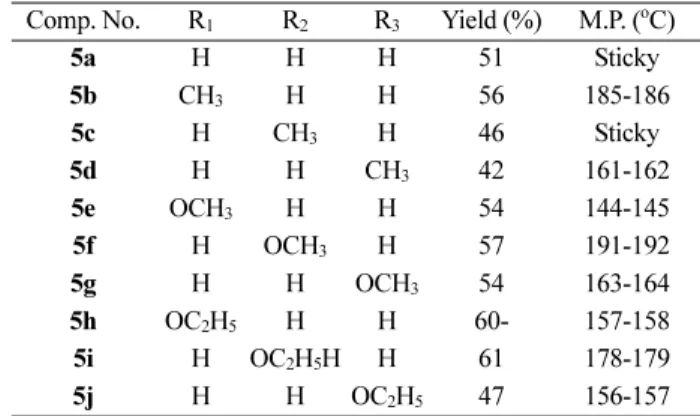
Table 1. Physical data of the compounds 5(a-j)
Comp. No. R1 R2 R3 Yield (%) M.P. (oC)
5a H H H 51 Sticky
5b CH3 H H 56 185-186
5c H CH3 H 46 Sticky
5d H H CH3 42 161-162
5e OCH3 H H 54 144-145
5f H OCH3 H 57 191-192
5g H H OCH3 54 163-164
5h OC2H5 H H 60- 157-158
5i H OC2H5H H 61 178-179
5j H H OC2H5 47 156-157
MADZU-FT-IR spectrophotometer in KBr disc. 1H NMR spectra were recorded on BRUKER ADVANCE-II 400 NMR spectrophotometer in DMSO-d6 as a solvent and TMS as an internal standard. Peak values are shown in d ppm. Mass spectra were recorded on a PEP-SCIUX-APIQ pulsar (electron pre-ionization) mass spectrometer. Ele- mental analyses were performed on Perkin-Elmer EAL- 240 elemental analyzers.
General procedure for the synthesis of 2-(p-toly- loxy)quinoline-3-carbaldehydes 2(a-j)
To the mixture of p-cresol (3.7 gm, 0.034 mol) and K2CO3 (12.8 gm, 0.093 mol) in DMF, compound 1a (6 gm, 0.031 mol) was added and the reaction mixture was stirred at 80-90oC for 4-5 hr. The completion of the reac- tion was monitored on TLC. After completion of the reac- tion, ice cold water (50 ml) was poured on the reaction mixture & the solid thus obtained was filtered off and washed with water, further the compound was recrystal- lized in ethyl acetate.
2-(p-tolyloxy)quinoline-3-carbaldehyde (2a) IR-(KBr, cm-1): 1690(C=O), 1610, 1525(C=C); 1H NMR- (400 Hz, DMSO-d6): δ 10.65(s, 1H, -CHO), 8.72(s, 1H, Ar-H), 7.89(d, J = 8 Hz, 1H, Ar-H), 7.73(d, J = 8 Hz, 1H, Ar-H), 7.70(t, 1H, Ar-H), 7.45(t, 1H, Ar-H), 7.27(d, J = 8 Hz, 2H, Ar-H), 7.18(d, J = 8 Hz, 2H, Ar-H), 2.41(s, 3H, -CH3); ES-MS (m/z): 264.4 (M+1).
General procedure for the synthesis of (E)-N’-((2-toly- loxy) quinoline-3-yl) methylene) isonicotinohydrazide 4(a-j)
An equimolar mixture of 2-chloro-3-formyl quinoline
1a (0.004 mol) and isonicotinohydrazide 3 (0.004 mol) in 10 mL ethanol containing few drops of glacial acetic acid was strired at room temperature. After completion of reac- tion (checked by TLC), the excess of solvent was removed on rotary evaporator to yield solid which was washed with petroleum ether followed by crystallization from ethanol.
(E)-N’-((2-tolyloxy) quinoline-3-yl) methylene)isoni- cotinohydrazide (4a)
IR (KBr, cm-1): 2980 (-NH), 1560 (C=N), 1513 (C=C);
1H NMR (400 Hz, DMSO-d6): δ 10.72 (s, 1H, -NH), 8.90 (s, 1H), 8.77 (d, J = 7.92 Hz, 3H, Ar-H), 7.75-7.80 (m, 4H, Ar-H), 7.26 (t, J = 10.94 Hz, 2H, Ar-H), 7.19 (dd, J = 8.21
& 4.24 Hz, 4H, Ar-H) 2.30 (s, 3H, Ar-CH3), ES-MS (m/z):
383(M+1); Anal. Calcd. C23H18N4O2 C, 72.24; H, 4.74; N, 14.65, found C,72.22; H, 4.80; N, 14.56%.
(E)-N’-((2-tolyloxy)-6-ethoxyquinoline-3-yl)methyl- ene)isonicotinohydrazide (4h)
IR (KBr, cm-1) : 3009 (-NH), 1577 (C=N), 1510 (C=C);
1H NMR (400 Hz, DMSO-d6): δ 10.79 (s, 1H, -NH), 8.92 (s, 1H), 8.73 (d, J = 8.21 Hz, 2H, Ar-H) 7.84-7.89 (dd, 4H, Ar-H), 7.21 (t, J = 11.30 Hz, 2H, Ar-H), 7.16 (dd, J = 8.44
& 4.66Hz, 4H, Ar-H), 2.67 (s, 3H, Ar-CH3), 1.41 (s, 3H, -CH3); ES-MS (m/z): 427 (M+1); Anal. Calcd. C25H22N4O3
C, 70.41; H, 5.20; N, 13.14, found C, 70.43; H, 5.30; N, 13.21%.
General Procedure for the Synthesis of Substituted 1- (5-(2-(p-tolyloxy)quinoline-3-yl)-2-(pyridine-4-yl)-1,3,4- oxadiazol-3(2H)-yl)ethanones 5(a-j)
N’-((2-(p-tolyloxy)quinoline-3-yl)methylene)isoniciti- nohydrazide (0.1 gm, 0.00028 mol) 4a was dissolved in Table 2. The Minimum Inhibitor concentrations of tested compounds 5(a-j) in µg/mL
Tested Compounds B. subtilis ZIa(MIC)b S. aureus ZIa(MIC)b S. typhi ZIa(MIC)b P. aeroginosa ZIa(MIC)b
5a 13.4(15) 13.7(15) 15.1(10) 14.8(10)
5b 13.1(15) 13.2(15) 11.1(20) 10.4(20)
5c 13.8(15) 13.3(15) 15.1(10) 14.9(10)
5d 14.3(10) 14.1(10) 12.8(15) 12.7(15)
5e 14.8(10) 14.6(10) 12.9(15) 12.8(15)
5f 15.1(10) 14.7(10) 13.5(15) 13.4(15)
5g 13.2(15) 13.5(15) 14.8(10) 14.5(10)
5h 14.1(10) 14.6(10) 12.2(15) 12.6(15)
5i 15.6(10) 15.3(10) 11.7(15) 11.2(15)
5j 15.1(10) 15.4(10) 11.2(15) 11.3(15)
Streptomycin 15.1(10) 14.9(10) 16.4(5) 16.1(5)
Ampicillin 14.3(10) 14.7(10) 16.3(5) 15.9(5)
aZone of inhibition, bMinimum inhibitory concentration in µg/mL
10 ml of acetic anhydride. The reaction mixture was heated in an oil bath for 3-4 h at 120oC and left for overnight.
10 ml cold water was slowly added to the flask and the separated product was filtered and washed with water, dried under vacuum and recrystallized from ethanol.
1-(5-(2-(p-tolyloxy)quinolin-3-yl)-2-(pyridin-4-yl)-1,3,4- oxadiazol-3(2H)-yl)ethanone (5a)
IR KBr: 1665 (N-CO-CH3); 1610 (C=N) cm-1; 1H NMR (400 MHz, CDCl3): δ 2.332 (s, 3H, Ar-CH3); 4.621 (s, 3H, N-CO-CH3); 6.956 (s; 1H, -CH); 7.115 (d, J=8.0 Hz, 2H, Ar-H); 7.244 (d, J=8.0 Hz, 2H, Ar-H); 7.623-7.851 (m, 6H, Ar-H); 8.151 (s, 1H, quinoline C4-H); 9.022 (s, 2H, pyridine); Mass(m/z): 425 (M+1).
1-(5-(2-(p-tolyloxy)-6-methylquinolin-3-yl)-2-(pyri- din-4-yl)-1,3,4-oxadiazol-3(2H)-yl) ethanone (5b)
IR KBr: 1688 (N-CO-CH3); 1593 (C=N) cm-1; 1H NMR (400 MHz, DMSO): δ 2.344 (s, 3H, Ar-CH3); 2.275 (s, 3H, Ar-CH3); 3.829 (s, 3H, NCOCH3); 6.945 (s, 1H, -CH);
7.107-7.166 (m, 3H, Ar-H); 7.275 (d, J=8.4 Hz, 2H, Ar-H);
7.861 (dd, J=4.6 & 6.0 Hz, 3H, Ar-H); 8.026 (d, J=8.8 Hz, 1H, Ar-H); 8.772-8.821(d, 2H, pyridine); 8.962(s, 1H, quinoline C4-H); Mass(m/z): 439.0(M+1).
1-(5-(2-(p-tolyloxy)-7-methylquinolin-3-yl)-2-(pyri- din-4-yl)-1,3,4-oxadiazol-3(2H)-yl)ethanone (5c)
IR KBr: 1649 (N-CO-CH3); 1556 (C=N) cm-1; 1H NMR (400 MHz, DMSO): δ 2.154 (s, 3H, Ar-CH3); 2.165 (s, 3H, Ar-CH3); 3.984 (s, 3H, NCOCH3); 6.546 (s, 1H, -CH);
7.166-7.245 (m, 4H, Ar-H); 7.315 (d, J=8.4 Hz, 1H, Ar- H); 7.748 (dd, J=3.4 & 7.2 Hz, 3H, Ar-H); 8.126 (d, J=7.8 Hz, 1H, Ar-H); 8.845-8.875 (d, 2H, pyridine); 8.987 (s, 1H, quinoline C4-H); Mass(m/z): 439.3(M+1).
1-(5-(2-(p-tolyloxy)-7-methoxyquinolin-3-yl)-2-(pyri- din-4-yl)-1,3,4-oxadiazol-3(2H)-yl)ethanone (5g)
IR KBr: 1687 (N-CO-CH3); 1510 (C=N) cm-1; 1H NMR (400 MHz, DMSO): δ 2.54 (s, 3H, Ar-CH3); 3.651 (s, 3H, Ar-OCH3); 3.914 (s, 3H, NCOCH3); 6.646 (s, 1H, -CH);
6.924-7.145 (m, 3H, Ar-H); 7.245 (d, J=8.4 Hz, 2H, Ar- H); 7.658 (dd, J=2.6 & 6.8 Hz, 3H, Ar-H); 8.646 (d, J=8.8 Hz, 1H, Ar-H); 8.845-8.895 (d, 2H, pyridine); 8.912 (s, 1H, quinoline C4-H); Mass(m/z): 455.1(M+1).
1-(5-(2-(p-tolyloxy)-7-ethoxyquinolin-3-yl)-2-(pyri- din-4-yl)-1,3,4-oxadiazol-3(2H)-yl)ethanone (5h)
IR KBr: 1667 (N-CO-CH3); 1556 (C=N) cm-1; 1H NMR (400 MHz, DMSO): δ 2.464 (s, 3H, Ar-CH3); 2.563 (t,
3H,CH2CH3); 3.456 (q, 2H, OCH2); 3.814 (s, 3H, NCOCH3);
6.512 (s, 1H, -CH); 6.958-7.165 (m, 3H, Ar-H); 7.145 (d, J=7.2 Hz, 2H, Ar-H); 7.456 (dd, J=4.2 & 7.6 Hz, 3H, Ar- H); 8.245 (d, J=8.2 Hz, 1H, Ar-H); 8.312 (s, 1H, quino- line C4-H); 8.614-8.814 (d, 2H, pyridine); Mass(m/z):
469.1 (M+1).
Acknowledgements. The authors are thankful to to The Head, Department of Chemistry, Dr. Babasaheb Ambed- kar Marathwada University, Aurangabad, for his valuable support and laboratory facilities. And RSJ is thankful to University Grants Commission, New Delhi, for awarding the fellowship.
REFERENCES
1. (a) MethCohn, O.; Narine, B.; Tarnowski, B.; Hayes, R.;
Keyzad, A.; Rhouti, S.; Robinson, A. J. Chem. Soc. Per- kin Trans. 1981, 1, 2509 (b) Bhaduri, A. P. Synlett. 1990, 557.
2. (a) Mccormick, J. L.; Mckee, T. C.; Cardellina, J. H.;
Boyd, M. R. J. Nat. Prod. 1996, 59, 469 (b) Chen, I. S.;
Chen, H. F.; Cheng, M. J.; Chang, Y. L.; Teng, C. M.;
Tsutomu, I.; Chen, J. J.; Tsai, I. L. J. Nat. Prod. 2001, 64, 1143 (c) Nadaraj, V.; Selvi, S. T.; Sasi, R. Arkivoc. 2006, x, 82.
3. Craig, J. C.; Person, P. E. J. Med. Chem. 1971, 14, 1221.
4. Dillard, R. D.; Pavey, D. E.; Benslay, D. N. J. Med Chem.
1973, 16, 251.
5. Sukhova, N. M.; Lidak, M.; Zidermane, A.; Pelevina, I.
S.; Voronia, S. S. Khim. Farm. Zh. 1989, 23, 1226.
6. Atwell, G. J.; Bangaley, B. C.; Denny, W. A. J. Med.
Chem. 1989, 32, 396.
7. Patel, H. V.; Vyas, K. V.; Fernandes, P. S. Ind. J. Chem.
1990, 29(B), 836.
8. Saito, I.; Sando, S.; Nakatani, K. Bioorg. Med. Chem. 2001, 9, 2381.
9. Andries, K.; Verhasselt, P.; Guillemont, J.; Goehlmann, H.
W. H.; Neefs, J. M.; Winkler, H.; Van Gestel, J.; Timmerman, P.; Zhu, M.; Lee, E.; Williams, P.; De Chaffoy, D.; Huitric, E.;
Hoffner, S.; Cambau, E.; Truffot-Pernot, C.; Lounis, N.;
Jarlier, V. A. Science, 2005, 307, 223.
10. Joseph, J. P.; Harry, L. Y. U.S.Patent 3,141,022, 1961; Chem.
Abstr. 1964, 61, 8317b.
11. Hokfelt, B.; Jonsson, A. J. Med. Chem. 1962, 5, 247.
12. Ansel, P. S. U.S.Patent 2,883,391, 1959. Chem. Abstr.
1959, 53, 16157g.
13. Hiroshi, K.; Isaq, H.; Shigeki, O.; Zassokenkyn 1969, 8, 46; Chem. Abstr. 1970, 73, 108544b.
14. Derappe, C.; Rips, R.; Albert, O. Aurousseau, M. Chim.
Ther. 1968, 3, 181; Chem. Abstr. 1968, 69, 106626y.
15. Deshmukh, A. A.; Sattur, P. B.; Sheth, U. K. Indian. J.
Exp. Biol. 1976, 4, 166.
16. SenGupta, A. K.; Garg, M.; Chandra, U. J. Indian Chem.
Soc. 1979, 56, 1230.
17. Chiyomaru, I.; Takita, K.; Ito, H.; Kumiai Chem. Ind. Co.
Ltd. Jap. Pat. 1972, 72 07, 549; Chem. Abstr. 1972, 77, 549.
18. O Neal, J. B.; Rosen, H.; Russel, P. B.; Adams, A. C.; Blu- menthal, A. J. Med. Pharm. Chem. 1962, 5, 617; Chem.
Abstr. 1962, 57, 9168c.
19. Kurzer, F. Org. Compd. Sulphur, Selenium, Tellurium, 1974, 4, 417.
20. Thomas, J. Ger. Pat. 2,403, 357/1974, Chem. Abstr. 1974, 81, 136153g.
21. Yale, H. L.; Losee, K. J. Med. Chem. 1966, 9, 478.
22. Turner, S. R. Colman Products Ltd. Ger. Pat. 1978, 2, 727, 146; Chem. Abstr. 1978, 88, 105357s.
23. Hodogaya, Chemical Co. Ltd., Jap. Pat. 1980, 80, 27024;
Chem. Abstr. 1980, 93, 232719q.
24. Hakko Chem. Ind. Co. Ltd., Brit. Pat. 1,266,542/1972;
Chem. Abstr. 1972, 77, 5474g.
25. Singh, H.; Yadav, L. D. S. Agric. Biol. Chem. 1976, 40, 759.
26. Misato, T.; Ko, K.; Honma, Y.; Konno, K.; Taniyama, E.
Inst. Phys. Chem. Res. Jap. Pat. 1977, 772508; Chem. Abstr.
1977, 87, 147054.
27. Imramovsky; S. Polanc; J. Vinsova; M. Kocevar; J. Jampýlek;
Z. Reckova; J. Kaustova; Bioorg. Med. Chem. 2007, 15, 2551.
28. H. Marrakchi; G. Laneelle; A. Quemard, Microbiology 2000, 146, 296.
29. (a) Joshi, R. S.; Mandhane, P. G.; Diwakar, S. D.; Gill, C.
H., Ultrason. Sonochem. 2010, 17, 298 (b) Joshi, R. S., Mandhane, P. G., Badadhe, P. V., Gill, C. H.; Ultrason.
Sonochem. 2011, 18, 735 (c) Mandhane, P. G.; Joshi, R.
S.; Nagargoje, D. R.; Gill, C. H.; Tett. Letts. 2010, 51, 1490 (d) Joshi, R. S.; Mandhane, P. G.; Dabhade S. K.;
Gill, C. H. J. Chin. Chem. Soc. 2010, 57, 1227 (e) Joshi, R. S.; Mandhane, P. G.; Shaikh, M. U.; Kale, R. P.; Gill, C. H. Chin. Chem. Lett. 2010, 21, 432.
30. (a) Joshi, R. S.; Mandhane, P. G.; Diwakar, S. D.; Dab- hade, S. K. Gill, C. H., Bioorg. Med. Chem. Letts. 2010, 20, 3721 (b) Joshi, R. S., Mandhane, P. G., Khan, W., Gill, C. H. Bull. Korean Chem. Soc. 2010, 31, 2341. (c) Joshi, R. S., Mandhane, P. G., Dabhade, S. K., Gill, C. H.; Green Chem. Lett. Rev. 2010, 3(3), 191 (d) Joshi, R. S.; Mandhane, P. G.; Khan, W.; Gill, C. H. J. Het. Chem. DOI 10.1002/
jhet.653.
31. Christine, H. F.; Michael, H. C. Antimicrob. Agents Chemother.
1986, 29, 386.