■
Chung-Sun Kim, PT, PhD; Jung-Won Kwon, PT
1■
Department of Physical Therapy, College of Rehabilitation Science, Daegu University;
1Department of Rehabilitation Science, Graduate School of Daegu University
Purpose: The aim of this study was to use fMRI and clinical prognosis criteria to evaluate therapeutic interventions in stroke patients with corona radiata infarct and acquire fundamental information about recovery mechanisms.
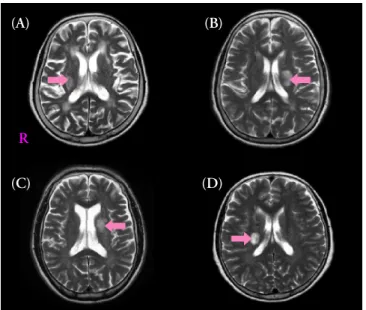
Methods: Four subjects (2 men, 2 women) who had strokes with corona radiata infarct were recruited. For all subjects, motor functions such as motricity index (MI), modified brunnstrom classification (MBC), functional ambulatory category (FAC), and bathel index (BI) were evaluated. Evaluations were done at least 4 times over a period of approximately 6~7 months from stroke onset. We compared the final evaluation with the first.
Results: All patients with corona radiata infarct showed improvement in motor outcomes with the passing of time. The strength of all patients improved from zero or trace levels to normal or good levels in the MI (Motricity Index) test. Other motor outcomes including the modified brunnstrom classification (MBC), the functional ambulatory category (FAC), and the bathel index (BI) also improved with the passing of time.
Conclusion: Stroke patients with corona radiata infarcts change for the better over time. Therefore, one can introduce clinical interventions by the aspect of progress in functional motor recovery.
Keywords: Corona radiata infarct, Motor recovery, Brain plasticity, Functional MRI, Stroke Received: May 7, 2010
Revised: June 11, 2010 Accepted: June 14, 2010
Corresponding author: Chung-Sun Kim, [email protected]
Infarct: 4 Case Studies
The Journal Korean Society of Physical Therapy