Journal of Forest and Environmental Science
Journal of Forest and Environmental Science Vol. 35, No. 4, pp. 240-247, December, 2019 https://doi.org/10.7747/JFES.2019.35.4.240
Carbon Reduction Services of Evergreen
Broadleaved Landscape Trees for Ilex rotunda and Machilus thunbergii in Southern Korea
Hyun-Kil Jo1, Jin-Young Kim2,* and Hye-Mi Park2
1Department of Ecological Landscape Architecture Design, Kangwon National University, Chuncheon 24341, Republic of Korea
2Department of Landscape Architecture, Graduate School, Kangwon National University, Chuncheon 24341, Republic of Korea
Abstract
This study quantified carbon reduction services through direct harvesting of Ilex rotunda and Machilus thunbergii, which are the typical urban landscape tree species in southern Korea. A total of 20 open-grown tree specimens (10 specimens for each species) were selected reflecting various sizes of stem diameter at breast height of 1.2 m (DBH) at a regular interval. The study measured biomass for each part of the tree specimens including roots to compute total carbon storage per tree. Annual carbon uptake per tree was also calculated analyzing the DBH growth rate of stem disk specimens. Quantitative models were developed using DBH as an independent variable to easily estimate storage and annual uptake of carbon by tree growth for each species. All the models had a high goodness-of-fit with R2=0.95-0.99. The difference in carbon reduction services between DBH sizes increased with increasing DBH. The storage and annual uptake of carbon from a tree with DBH of 10 cm were 13.5 kg and 2.4 kg/yr for I. rotunda, and 19.1 kg and 3.6 kg/yr for M. thunbergii, respectively. The tree of this size stored the amount of carbon equivalent to that emitted from a gasoline use of approximately 24 L for I. rotunda and 34 L for M. thunbergii, respectively. The study provides actual measurement data to quantify carbon reduction services of urban open-grown landscape trees for the warm-temperate species that have been little known until now.
Key Words: annual uptake, quantitative model, root digging, storage, urban open-grown
Received: July 30, 2019. Revised: October 27, 2019. Accepted: October 28, 2019.
Corresponding author: Jin-Young Kim
Department of Landscape Architecture, Graduate School, Kangwon National University, Chuncheon 24341, Republic of Korea Tel: 82-33-250-8345, Fax: 82-33-259-5618, E-mail: [email protected]
Introduction
Climate change from carbon emissions is one of world- wide environmental concerns. Landscape trees planted in urban lands such as gardens, parks, and streets contribute to carbon reduction through photosynthetic uptake and storage of atmospheric carbon (Piao and Jo 2018; Jo et al.
2018; 2019b; 2019c). There is internationally rising inter- est in planting of urban landscape trees as one of major car- bon offset activities. Based on the 2005 Kyoto Protocol and
the 2006 IPCC (Intergovernmental Panel on Climate Change) guideline (UNFCCC 2006; KFRI 2012), tree planting with a minimum area of 0.05 ha in urban settle- ments is recognized as an effective activity to enhance car- bon stocks.
Concern about increasing carbon concentrations in the atmosphere has generated diverse studies of exploring car- bon reduction effects of landscape trees at the urban scale (Nowak 1994; McPherson 1998; Jo 2002; Nowak and Crane 2002; Nowak et al. 2013; McGovern and Pasher
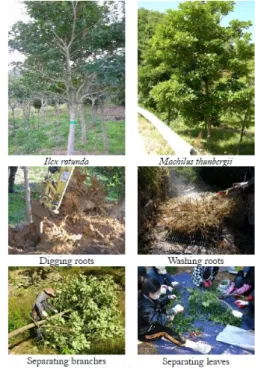
Fig. 1. Growing conditions and harvesting of study trees.
2016). However, there exists the limitation that the majority of the past studies substituted, in quantifying carbon reduc- tion by urban open-grown trees, data of carbon estimates from forest trees (especially below ground carbon). This limitation is attributed to the difficulty in cutting and root digging of landscape trees planted.
The substitution of carbon estimates from forest trees could cause a significant error in computing storage and annual sequestration of carbon by urban landscape trees, because of different growth environments including main- tenances and competing conditions (Jo and Park 2017).
Therefore, Jo and Ahn (2012) and Jo et al. (2013; 2014) measured, through a direct harvesting method, above ground and below ground biomass for open-grown land- scape tree species frequently planted in the temperate re- gion of the Republic of Korea. Based on the biomass meas- urement, they developed quantitative models to estimate storage and annual uptake of carbon by tree growth for each species.
However, there is no information on carbon reduction services of warm-temperate landscape tree species planted in urban settlements of the southern region such as Gyeongnam, Jeonnam, and Jeju provinces of the country, except Jo et al. (2019a)’s research for Camellia japonica and Quercus myrsinaefolia. The purpose of this study was to quantify storage and annual uptake of carbon for Ilex ro- tunda and Machilus thunbergii through direct harvesting including root digging, and to develop quantitative models to easily estimate their carbon reduction services. I. rotunda and M. thunbergii, which are evergreen broadleaved tree species, are the representative landscape plants growing in the southern region of the Korean Peninsula at 35° or lower North (KGLC 1979). This study could contribute to esti- mating carbon reduction of landscape trees planted in Korean southern cities and other countries for the same spe- cies or genera.
Materials and Methods
Selection of study species and trees
Of the tree species frequently planted as urban landscape trees in the warm-temperate southern region of the Republic of Korea, this study selected I. rotunda and M. thunbergii, based on the existing literature on the planting frequency of
landscape tree species (Park et al. 2015; Yoon et al. 2017).
A total of 20 tree specimens for digging (10 specimens for each species), which were normally open-grown with the typical form of the species, were chosen reflecting various stem diameter sizes at a regular interval from young trees to mature ones. The tree specimens were purchased at gar- dens in the city of Sacheon, Gyeongnam for I. rotunda and along streets in the county of Goseong, Gyeongnam for M.
thunbergii. The decision on the tree sample size was a com- promise between both conflicting concerns for the high cost and difficulty in tree purchase and the need for a sufficient number of specimens.
Tree digging and fresh weight measurement The tree specimens were dug in late October 2018, and fresh weights of each part such as stem, branch, leaf, and root were measured (Fig. 1). Digging and fresh weight measurement were conducted applying the KFRI (2007)’s and Jo et al. (2014)’s standard methods for biomass survey and analysis. When digging the trees, the size of each speci- men including stem diameter at breast height of 1.2 m (DBH), crown width, and tree height was measured with reference to Jo et al. (2014)’s methods. The soils under the
Table 1. Physical and chemical characteristics of soils for study trees
Species Soil texture pH OM
(%)
TN (%)
Ava. P (mg/kg)
EC (cmol+/kg) CEC
(cmol+/kg)
K+ Ca2+ Mg2+
Ilex rotunda Loam 6.6
(middle)
1.9 (low)
0.14 (high)
271.2 (high)
0.81 (middle)
6.49 (high)
1.57 (middle)
9.5 (middle) Machilus
thunbergii
Clay loam 4.8 (low)
2.8 (low)
0.20 (high)
185.3 (middle)
0.20 (low)
1.71 (low)
0.40 (low)
3.0 (low) OM, organic matter; TN, total nitrogen; Ava. P, Available P2O5; EC, exchangeable cation; CEC, cation exchange capacity; ( ), soil assess- ment rating based on KILA (2016)’s standards.
trees were sampled with a penta-repeat for each species, and physical and chemical characteristics of the soils were ana- lyzed using the NIAST (2000)’s soil analysis methods.
Dry weight specimens and measurement
To compute dry weight of the trees compared to fresh weight, this study collected specimens of each part to con- vert to dry weight and measured the fresh weight of the specimens on site to an accuracy of 10 g. The stem was sep- arated at 2 m intervals, and disks of 5-10 cm thickness were collected at the center of each separation. Branches of 1-2 kg were sampled with an even mixture of thick, medium, and thin branches. Roots were divided into stump and other parts, and 1-3 kg of these were collected. This study also randomly sampled 1 kg of leaf. The specimens for dry weight conversion were dried in an oven (US-1202 DH, Vision Scientific, Korea) at 85°C to constant weight, and the dry weight was measured to an accuracy of 0.01 g on an electronic scale (FX3200, AND, Japan). The ratio of dry weight to fresh weight of each specimen was computed to estimate the dry weight (hereafter referred to as biomass) for the part and tree total.
Development of quantitative models for carbon storage
Based on the biomass measurement of the tree speci- mens, quantitative models were developed to easily estimate carbon storage over the growth of a tree for the study species. That is, the above ground and below ground bio- mass of the trees was converted to carbon storage by multi- plying by 0.5, because mean carbon content of wood and leaf was approximately 50% of biomass (Pingrey 1976;
Chow and Rolfe 1989; Song et al. 1997; Jo 2002; Nowak
and Crane 2002). The most suitable quantitative models and variables to estimate carbon storage were derived from repetitive linear and nonlinear approaches with DBH and tree height as independent variables.
Development of quantitative models for annual carbon uptake
Stem disks of 5-10 cm thickness of the tree specimens were collected from a breast height of 1.2 m to analyze their ages and annual DBH growth rates. The stem disks were immediately put into a double vinyl bag, and carried to the laboratory. The disk thickness was determined reflecting grinding efficiency and crack prevention for each stem di- ameter size. The DBH growth rate was obtained averaging the measurements from the four directions of each disk.
Annual carbon uptake for each tree specimen was quanti- fied analyzing the annual increase in biomass based on the DBH growth rate and converting it to the amount of carbon. That is, the DBH growth rate was used to identify the previous year’s DBH, and this DBH variable was ap- plied to the biomass equation to estimate the previous year’s biomass. The previous year’s biomass was subtracted from the present year’s biomass to compute the annual biomass increment. Since leaf fall annually returns carbon to the at- mosphere through collection and decomposition, 25% of leaf biomass was deducted for the evergreen species assum- ing three-year leaf retention (Rowntree and Nowak 1991;
Dirr 2009). The most appropriate quantitative models were, through the above-mentioned linear and nonlinear approaches, developed to easily estimate annual carbon up- take according to the growth of a tree for the study species.
Table 2. Size and DBH growth of study trees for each species
Species Growth place Dbh (cm) Height (m) Crown width (m) Age (yr) Dbh growth (cm/yr)
Ilex rotunda Garden (Sacheon) 3.2-11.4 3.0-4.7 1.2-2.6 7-15 0.62±0.05
Machilus thunbergii Street (Goseong) 3.6-16.7 3.0-7.7 1.6-4.0 5-14 0.82±0.08
Fig. 2. Changes in biomass by DBH growth of study trees for each species.
Table 3. Biomass expansion factor (BEF) and ratio of below ground/above ground biomass (B/A) for study species*
Species BEF* B/A ratio
Ilex rotunda 1.73±0.08 0.45±0.05
Machilus thunbergii 2.34±0.08 0.53±0.04
*Ratio of above ground (stem, branch, and leaf)/stem biomass.
Results and Discussion
Growth environments of study trees
The city of Sacheon and the county of Goseong where the study trees grew are located in a warm-temperate zone in the southern inland (34°52′-35°09′North and 127°52- 128°30′East) of the Korean Peninsula. The average annual temperature and precipitation in the last 10 years (2009- 2018) were 13.9°C and 1,522.2 mm, respectively (KMA 2019). Soil texture was loam for I. rotunda and clay loam for M. thunbergii (Table 1). The chemical properties were as follows: pH 4.8-6.6, organic matter 1.9-2.8%, total nitro- gen 0.14-0.20%, available phosphate 185.3-271.2 mg/kg, exchangeable K+ 0.81-0.20 cmol+/kg, and cation exchange capacity 3.0-9.5 cmol+/kg. Based on the soil assessment standards provided by the KILA (2016), soil conditions for I. rotunda fell in the middle or high range in components other than organic matter, while those for M. thunbergii fell in the low range in most components except total nitrogen and available phosphate.
Growth rates and biomass changes
The DBH of the study trees ranged from 3.2-11.4 cm for I. rotunda and from 3.6-16.7 cm for M. thunbergii (Table 2). The age range of I. rotunda and M. thunbergii was 7-15 years and 5-14 years depending on the DBH sizes, respectively. Annual DBH growth rate of the trees aver- aged 0.62±0.05 cm/yr for I. rotunda and 0.82±0.08 cm/yr
for M. thunbergii greater than that for I. rotunda. The DBH growth rate is directly associated with annual changes in bi- omass and carbon uptake. Jo and Park (2017) reported that the mean annual DBH growth rate of open-grown land- scape trees in middle Korea was 0.72 cm/yr for deciduous broadleaved species and 0.83 cm/yr for evergreen con- iferous species, while that of forest trees was 0.57 cm/yr for evergreen coniferous species. Thus, the DBH growth rate of the study species was greater than that of forest trees due to better maintenance and less competition, but lower than or similar to the case of open-grown landscape trees in a temperate zone from Jo and Park’s study.
Total biomass of the trees tended to increase nonlinearly with DBH growth, and ranged from 1.4-37.0 kg/tree for I.
rotunda and from 3.6-137.9 kg/tree for M. thunbergii (Fig.
2). The biomass allocation ratio per tree part varied more or less between the species. I. rotunda showed the highest rate in stem with approximately 41%, followed by root with 30%, branch with 21%, and leaf with 8%, while M. thunber- gii showed the highest rate in root with 35%, followed by stem with 28%, branch with 19%, and leaf with 18%. The biomass expansion factor of the above ground parts (stem, branch, and leaf) compared to stem averaged 1.73±0.08 for I. rotunda and 2.34±0.08 for M. thunbergii (Table 3).
The ratio of below ground biomass/above ground biomass (B/A ratio) was 0.45±0.05 for I. rotunda and 0.53±0.04 for M. thunbergii. The B/A ratio of the study species was greater than 0.23 (evergreen coniferous species)-0.40
Table 4. Quantitative models to estimate storage and annual uptake of carbon per tree of study species
Species Carbona Quantitative modelb R2 p
Ilex rotunda Storage
Annual uptake
lnY=-3.4312+2.6207lnX lnY=-4.0651+2.1464lnX
0.9867 0.9510
<0.0001
Machilus thunbergii Storage Annual uptake
lnY=-2.6239+2.4213lnX lnY=-3.3291+2.0051lnX
0.9765 0.9730
aStorage: kg/tree, Annual uptake: kg/tree/yr.
bX: Dbh (cm).
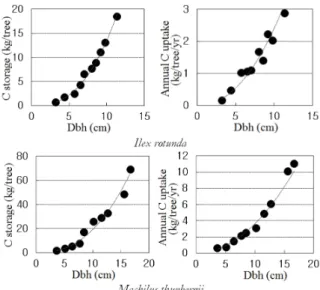
Fig. 3. Changes in storage and annual uptake of carbon per tree by DBH growth of study species.
(deciduous broadleaved species) reported for open-grown landscape trees in a temperate zone of middle Korea (Jo and Park 2017). Thus, the biomass allocation rate including the B/A ratio was variable with tree species and growth envi- ronments, and especially could be useful in understanding the root biomass allocation on which little is known.
Carbon storage and quantitative models
Changes in carbon storage per tree with varying DBH for the study species are shown in Fig. 3, and Table 4 in- cludes quantitative models developed to estimate carbon storage by DBH growth. The quantitative models for the study species were statistically significant (p<0.0001) through F test, and had a high goodness-of-fit with R2=0.98-0.99. The model coefficients were also significant at a 1% level. This study attempted to derive quantitative models including not only DBH but also tree height as in-
dependent variables. However, the R2 for tree height was 0.88-0.89 lower than that for DBH. Although the quantita- tive models for tree height were statistically significant, the difficulty of accurately measuring tree height in the field could cause the larger error of estimation than that for the models using only DBH (Whittaker and Marks 1975;
Park and Lee 1990). The quantitative models developed in this study can be easily used to estimate the carbon storage of the study species, as they require only DBH measurement.
Carbon storage by DBH estimated with the above-men- tioned quantitative models increased with increasing DBH growth for the DBH range studied (Table 5). As the DBH increased by 2 cm, carbon storage of the study species in- creased by 2.2 (M. thunbergii)-2.9 (I. rotunda) times on average. Carbon storage of M. thunbergii was greater than that of I. rotunda for the same DBH. For example, carbon storage for DBH of 10 cm was 13.5 kg for I. rotunda and 19.1 kg for M. thunbergii greater than that of I. rotunda by 1.4 times. Compared with other open-grown landscape trees for the same DBH (Table 5), carbon storage of the study species was lower than that of Q. myrsinaefolia planted in the warm-temperate southern region of the Republic of Korea (Jo et al. 2019a), and similar to or greater than that of evergreen coniferous species in the temperate middle re- gion of the country (Jo et al. 2013; 2014). A gasoline con- sumption of 10 L releases about 5.7 kg of carbon into the atmosphere (GIR 2019). I. rotunda and M. thunbergii with the DBH of 10 cm stored the amount of carbon equivalent to that emitted from a gasoline use of approximately 24 L and 34 L, respectively.
Annual carbon uptake and quantitative models Fig. 3 and Table 4 show changes in annual carbon uptake per tree by DBH growth for the study species and quantita-
Table 5. Differences in carbon storage (kg) per tree by DBH growth of study trees and other open-grown landscape trees
Species n Dbh range
(cm)
Dbh (cm)
2 4 6 8 10 12 14 16 18
Ilex rotunda 10 3.2-11.4 0.2 1.2 3.5 7.5 13.5 21.8 - - -
Machilus thunbergii 10 3.6-16.7 0.4 2.1 5.6 11.1 19.1 29.7 43.2 59.7 79.4
Quercus myrsinaefoliaa 10 3.1-16.6 0.5 2.5 6.8 13.9 24.0 37.6 54.9 76.2 101.8
Deciduous broadleavedb 51 3.1-23.0 0.4 2.0 5.5 11.7 19.8 29.4 40.9 55.3 70.7
Evergreen coniferousc 31 5.0-30.9 0.3 1.3 3.4 6.7 11.6 18.0 26.3 36.6 49.0
aPlanted in the warm-temperate southern region of Korea (Jo et al. 2019a, the same with Table 6).
bAveraged across Acer palmatum, Chionanthus retusus, Prunus armeniaca, Prunus yedoensis, and Zelkova serrata planted in the temperate middle region of Korea (Jo and Ahn 2012; Jo et al. 2014, the same with Table 6).
cAveraged across Abies holophylla, Pinus densiflora, and Pinus koraiensis planted in the temperate middle region of Korea (Jo et al. 2013;
2014, the same with Table 6).
Table 6. Differences in annual carbon uptake (kg/yr) per tree by DBH growth of study trees and other open-grown landscape trees
Species n Dbh range
(cm)
Dbh (cm)
2 4 6 8 10 12 14 16 18
Ilex rotunda 10 3.2-11.4 0.1 0.3 0.8 1.5 2.4 3.6 - - -
Machilus thunbergii 10 3.6-16.7 0.1 0.6 1.3 2.3 3.6 5.2 7.1 9.3 11.8
Quercus myrsinaefolia 10 3.1-16.6 0.2 0.8 1.8 3.0 4.5 6.3 8.4 10.7 13.3
Deciduous broadleaved 51 3.1-23.0 0.2 1.0 1.7 2.3 3.3 4.4 5.7 5.9 7.1
Evergreen coniferous 31 5.0-30.9 0.1 0.4 0.8 1.3 2.0 2.8 3.7 4.7 5.8
tive models developed to easily estimate the annual carbon uptake, respectively. The quantitative models for the study species were statistically significant (p<0.0001) through F test, and had a high goodness-of-fit with R2=0.95-0.97.
The model coefficients were also significant at a 1% level.
This study derived quantitative models including tree height as well as DBH as independent variables. However, the R2 for tree height was 0.74-0.83 much lower than that for DBH. As mentioned in the quantitative models for car- bon storage, using only DBH as an independent variable can be more desirable because it is possible to simplify field measurements and to reduce an estimation error from tree height.
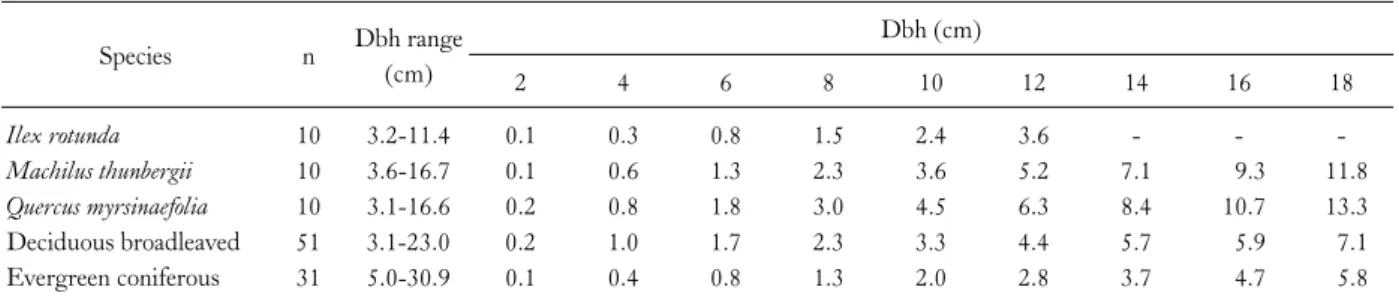
Annual carbon uptake by DBH estimated with the aforementioned quantitative models increased along with DBH growth, and the difference in annual carbon uptake between DBH sizes also tended to increase with increasing DBH (Table 6), similarly to carbon storage. As the DBH increased from 4 to 6 cm, the carbon uptake increased from
0.5 to 0.7 kg/yr and as the DBH increased from 10 to 12 cm, the carbon uptake increased from 1.2 to 1.6 kg/yr.
Annual carbon uptake of M. thunbergii was greater than that of I. rotunda for the same DBH. For example, the carbon uptake for DBH of 10 cm was 2.4 kg/yr for I. rotunda and 3.6 kg/yr for M. thunbergii 1.5 times greater than that of I.
rotunda. Compared with other open-grown landscape trees for the same DBH (Table 6), annual carbon uptake of the study species was lower than that of Q. myrsinaefolia planted in the warm-temperate southern region of the Republic of Korea (Jo et al. 2019a), and similar to or greater than that of evergreen coniferous species in the temperate middle re- gion of the country (Jo et al. 2013; 2014). Thus, the carbon uptake of tree species was variable with different biomass for each DBH size and annual growth rates. The study spe- cies with the DBH of 10 cm acted as a carbon sink annually offsetting carbon emissions from a gasoline consumption of 4.2 L for I. rotunda and 6.3 L for M. thunbergii.
Conclusion
Urban greenspace enlargement through landscape tree planting is one of effective ways to contribute to atmos- pheric carbon reduction. Carbon reduction services of ur- ban landscape trees are directly associated with their growth rates, sizes, and density. The information on storage and an- nual uptake of carbon by tree growth for each species is es- sential to not merely carbon estimation per unit area of ur- ban landscapes, but also planting design and policy includ- ing appropriate species selection and planting techniques.
However, little has been known regarding carbon reduction of urban landscape trees planted in the warm-temperate southern region of the Korean Peninsula. This study com- puted, through a direct harvesting method, storage and an- nual uptake of carbon for I. rotunda and M. thunbergii, which are the representative landscape tree species in the warm-temperate region.
Carbon reduction services of the study species increased with DBH growth, and the difference in carbon reduction between DBH sizes also increased with increasing DBH.
Storage and annual uptake of carbon from a tree with DBH of 10 cm were 13.5 kg and 2.4 kg/yr for I. rotunda, and 19.1 kg and 3.6 kg/yr for M. thunbergii, respectively. The tree of this size annually offset the amount of carbon equivalent to that emitted from a gasoline consumption of 4.2 L for I. ro- tunda and 6.3 L for M. thunbergii. Carbon reduction serv- ices of M. thunbergii were greater than those of I. rotunda for the same DBH. Carbon reduction of the study species was also compared with that of other landscape tree species planted in cities of middle and southern Korea. The com- parison revealed that carbon reduction services varied with different species and growth regions. Quantitative models for the study species were developed to easily estimate stor- age and annual uptake of carbon by tree growth by applying DBH as an independent variable. This study also acquired actual measurement data regarding growth characteristics of open-grown trees for the study species on which there has been little information, such as DBH growth rate, bio- mass expansion factor, and B/A ratio. The study findings could be useful in estimating carbon reduction services of open-grown landscape trees in the warm-temperate cities.
The major challenges in this study were the difficulty in purchasing tree specimens for logging, the digging of the
specimens and the fresh weight measurement of each part, and the long-term drying of various fresh weight specimens and the complexity in quantitative analysis. The difficulty and high cost in tree purchase limited the obtainment of larger tree specimens and the sample size for digging.
Additional experimental research on carbon reduction serv- ices of landscape tree species in the warm-temperate cities is required to verify the study findings and to build relevant data.
Acknowledgements
This study was carried out with the support of the ‘R&D Program for Forest Science Technology (Project No.
2017043B10-1919-BB01)’ provided by the Korea Forest Service (Korea Forestry Promotion Institute).
References
Chow P, Rolfe GL. 1989. Carbon and Hydrogen Contents of Short-Rotation Biomass of Five Hardwood Species. Wood and Fiber Sci 21: 30-36.
Dirr MA. 2009. Manual of Woody Landscape Plants: Their Identification, Ornamental Characteristics, Culture, Propaga- tion, and Uses. 6th ed. Stipes, Champaign, IL, pp xxxix-1325.
GIR (Greenhouse Gas Inventory and Research Center). 2019.
National Greenhouse Gas Inventory Report of Korea. http://
www.gir.go.kr/home/board/read.do?pagerOffset= 0&maxPageItems=
10&maxIndexPages=10&searchKey=&searchValue=&menu Id=36&boardId=45&boardMasterId=2&boardCategoryId=.
Accessed 6 Jul 2019.
Jo HK, Ahn TW. 2012. Carbon Storage and Uptake by Deciduous Tree Species for Urban Landscape. J Korean Inst Landsc Archit 40: 160-168.
Jo HK, Kil SH, Park HM, Kim JY. 2019a. Carbon Reduction by and Quantitative Models for Landscape Tree Species in Southern Region: - For Camellia japonica, Lagerstroemia indica, and Quercus myrsinaefolia. J Korean Inst Landsc Archit 47:
31-38.
Jo HK, Kim JY, Park HM. 2013. Carbon Storage and Uptake by Evergreen Trees for Urban Landscape - For Pinus densiflora and Pinus koraiensis. Korean J Environ Ecol 27: 571-578.
Jo HK, Kim JY, Park HM. 2014. Carbon Reduction Effects of Urban Landscape Trees and Development of Quantitative Models - For Five Native Species. J Korean Inst Landsc Archit 42: 13-21.
Jo HK, Kim JY, Park HM. 2018. Carbon Storage and Uptake by Street Trees in Seoul. J For Env Sci 34: 162-164.
Jo HK, Kim JY, Park HM. 2019b. Carbon Reduction and
Planning Strategies for Urban Parks in Seoul. Urban For Urban Green 41: 48-54.
Jo HK, Park HM, Kim JY. 2019c. Carbon Offset Service and Design Guideline of Tree Planting for Multifamily Residential Sites in Korea. Sustainability 11: 3543.
Jo HK, Park HM. 2017. Changes in Growth Rate and Carbon Sequestration by Age of Landscape Trees. J Korean Inst Landsc Archit 45: 97-104.
Jo HK. 2002. Impacts of Urban Greenspace on Offsetting Carbon Emissions for Middle Korea. J Environ Manage 64: 115-126.
KFRI (Korea Forest Research Institute). 2007. Survey Manual for Forest Biomass and Soil Carbon. KFRI, Seoul, 73 pp.
KFRI (Korea Forest Research Institute). 2012. A Role of Urban Forests as a Carbon Uptake Source. KFRI, Seoul, 20 pp.
KGLC (Korea General Landscape Corporation). 1979. Materials for Landscape Architecture: Trees, Herbaceous Plants, and Facilities. Korea General Landscape Corporation, Seoul.
KILA(Korean Institute of Landscape Architecture). 2016.
Landscape Design Standards. Korean Institute of Landscape Architecture, Seoul.
KMA (Korea Meteorological Administration). 2019. Weather Data. https://data.kma.go.kr/data/grnd/selectAwsRltmList.do.
Accessed 6 Jul 2019.
McGovern M, Pasher J. 2016. Canadian Urban Tree Canopy Cover and Carbon Sequestration Status and Change 1990-2012.
Urban For Urban Green 20: 227-232.
McPherson EG. 1998. Atmospheric Carbon Dioxide Reduction by Sacramento's Urban Forest. J Arboriculture 24: 215-223.
NIAST. 2000. Methods of Analysis of Soil and Plant. National Institute of Agricultural Science and Technology, Suwon, 203 pp.
Nowak DJ, Crane DE. 2002. Carbon Storage and Sequestration by Urban Trees in the USA. Environ Pollut 116: 381-389.
Nowak DJ, Greenfield EJ, Hoehn RE, Lapoint E. 2013. Carbon Storage and Sequestration by Trees in Urban and Community Areas of the United States. Environ Pollut 178: 229-236.
Nowak DJ. 1994. Atmospheric Carbon Dioxide Reduction by Chicago's Urban Forest. In: Chicago's Urban Forest Ecosys- tem: Results of the Chicago Urban Forest Climate Project (McPherson EG, Nowak DJ, Rowntree RA, eds). General Technical Report No. NE-186, U.S. Department of Agricul- ture, North-eastern Forest Experiment Station, Radnor, pp 83-94.
Park IH, Lee SM. 1990. Biomass and Net Primary Production of Pinus densiflora Natural Forests of Four Local Forms in Korea. J Korean For Soc 79: 196-204.
Park SG, Myeong YJ, Ju SG, Back GS. 2015. Range Analysis of Possible Planting of Evergreen Broad-leaved Trees for Landscaping in Korea. Korean Soc Environ Ecol Con 2015:
114-115.
Piao ZH, Jo HK. 2018. Impacts of Mt. Bongeui on Atmospheric Purification in Chuncheon. J For Environ Sci 34: 165-168.
Pingrey DW. 1976. Forest Products Energy Overview. In: Energy and the wood products industry (Forest Products Research Society ed). Forest Products Research Society, Madison, pp 1-14.
Rowntree RA, Nowak DJ. 1991. Quantifying the Role of Urban Forests in Removing Atmospheric Carbon Dioxide. J Arbori- culture 17: 269-275.
Song CY, Chang KS, Park KS, Lee SW. 1997. Analysis of Carbon Fixation in Natural Forests of Quercus mongolica and Quercus variabilis. J Korean For Soc 86: 35-45.
UNFCCC. 2006. Report of the Conference of the Parties Serving as the Meeting of the Parties to the Kyoto Protocol on its first- session held at Montreal from 28 November to 10 December 2005; Montreal, Canada. Geneva: UNFCCC.
Whittaker RH, Marks PL. 1975. Methods of assessing terrestrial productivity. In: Primary productivity of the biosphere (Lieth H, Whittaker RH, eds). Springer-Verlag, New York, pp 55-118.
Yoon EJ, Lee EY, Kim MN, Oh SB, Lee YJ. 2017. A preliminary Study on the Planting Condition Improvement by Climate Changes. Land and Housing Institute, Daejeon, 143 pp.