Environmental Science
Vol. 33, No. 1, pp. 1-7, February, 2017 https://doi.org/10.7747/JFES.2017.33.1.1
Perception on Impact of Climate Change on Forest Ecosystem in Protected Area of West Bengal, India
Tanusri Dey1, Nazir A. Pala1, Gopal Shukla1,*, Prabhat K. Pal2 and Sumit Chakravarty1
1Department of Forestry, Uttar Banga Krishi Viswavidyalaya, Pundibari-736165, Cooch Behar, West Bengal, India
2Department of Agricultural Extension, Uttar Banga Krishi Viswavidyalaya, Pundibari-736165, Cooch Behar, West Bengal, India
Abstract
In the present exploration we identified perception of forest dependent communities in relation to impact of climate change on forest ecosystem in and around Chilapatta reserve forest in northern part of West Bengal, India. Purposive sampling method was used for selection of area and random sampling method was used for selection of respondent.
The data collection in this study was through questionnaire based personal in-depth interviews. Almost all the respondents (94%) were farmers and rest had occupation other than farming. Almost all the respondents perceived negative impact of climate change on forest though the level of perception varies from very low to medium (0.23-0.52) based on average perception score after assigning score to individual statements. The level of perception on impact of climate change on forest ecology and forest flora of the community is low and very low as the average perception score is 0.39 and 0.23, respectively while, it is medium (0.52) for forest fauna. Alternately their perception on decreased stream/river flow and quick drying of seasonal streams or water bodies is based on their livelihood experience as they depend on these for their domestic and irrigation water use and fish catch for family diet.
Key Words: change, respondent, forest, ecosystem, livelihood
Received: December 17, 2015. Revised: September 5, 2016. Accepted: September 5, 2016.
Corresponding author: Gopal Shukla
Department of Forestry, Uttar Banga Krishi Viswavidyalaya, Pundibari-736165, Cooch Behar, West Bengal, India Tel: +913582-270588, Fax: +913582-270143, E-mail: [email protected]
Introduction
One of the greatest challenges to livelihoods in the 21st century, particularly in developing countries, is the threat from climate change that could potentially reverse decades of development gains, such as those focused on achieving the Millennium Development Goals (IPCC 2007a; UNDP 2010). Human interference with the climate system is pos- ing risks for human and natural systems (IPCC 2013;
IPCC 2014). It is expected to affect functioning of eco-sys- tem services (including forestry and agriculture) and also expected to exacerbate the vulnerability of communities
with adverse impacts on livelihood options (IPCC 2007b).
People and societies have perceived and even adapted to changes in the climate differently, given diverse values and goals which is posing a serious threat to their livelihoods (Byg and Salick 2009; Salau et al. 2012; Arbuckle et al.
2013; IPCC 2014). Forests are the only viable option against climate change is now understood widely among scientists and public as well (McDaniels et al. 1996).
Forest-dependent communities also describe a particular- ized social context in relation to global climate change be- cause of their potential to become the target of potential in- stitutional responses to climate change (Davidson et al.
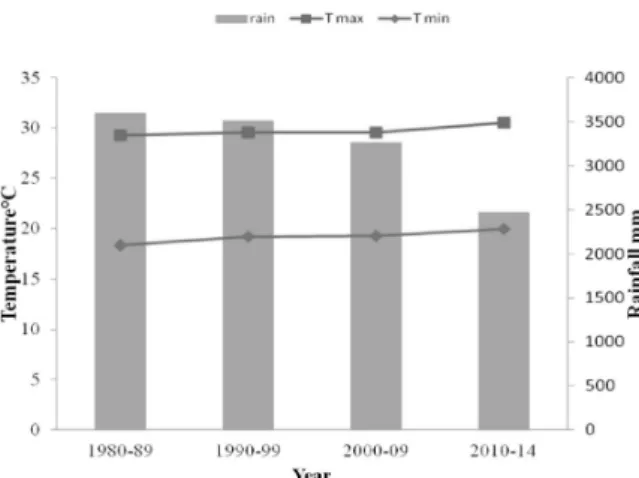
Fig. 1. Climatic data of Jalpaiguri district from 1980-2014.
2003).
Unfortunately, many people are still ignorant about the basic causal drivers of climate change and still remain un- clear of how particular actions connect to the issue despite broad public education campaigns (McDaniels et al. 1996;
Bord et al. 2000). The level of public knowledge on climate change needs to be clarified. Today it has become a major theme of research on public perceptions of climate change.
The lack of appreciation for personal exposure to climate impacts may be understood by the lack of survey research on climate-affected populations whose answers might re- flect more local concern (Vignola et al. 2012). Work on cli- mate perceptions needs to be carried out in specific region to better understand which policies are most likely to reso- nate with public support, and which might be most difficult to implement. Therefore, an attempt was made in this study to identify perception of forest dependent communities in relation to impact of climate change on forest ecosystem in and around Chillapatta reserve forest in northern part of West Bengal.
Materials and Methods
Study area
The study was conducted at the fringe villages in and around Chilapatta Reserve Forest in Terai region of West Bengal, India. Chilapatta Reserve Forest spreading over 41 km2 that lies within the forests of Cooch Behar Wildlife Division (Anon 2001) in Jalpaiguri district of West Bengal is located at northern fringe of the state in foothills of the sub-Himalayan mountain belts. Eight villages namely Kumar para, Uttar simlabari, Rawa basti, Chakwakheti, Baniya basti, Nepali basti, Andu and Dabri basti were se- lected to conduct the present study.
The forest is about 45 km away from Cooch Behar town, head quarter of Cooch Behar district well connected with National Highway no. 31C (highway cut across the forest).
The villages are also well connected with all weather roads.
The elevation of the working site as measured by GPS was latitude 26o 32.85’ N and longitude 89o 22.99’ E. Mean al- titude of the area was 47 m above MSL. The region is sub-tropical receiving average annual rainfall of 250-300 cm from south-west monsoon of which 80% is received from June to August. The summer and winter temperature
are mild with 34oC as the highest in the month of May while the lowest temperature is 7.5oC in the month of January (Fig. 1)
The total geographical area of Jalpaiguri district is 6,245 km2 and proportion under forest is 48.5% (FSI, 1995-2013).
The forests of the district are dominated by good quality Sal (Shorea robusta). Sal with associates like Schima wallichii, Michelia champaca and Chukrasia tabularis constitutes economically the most important component of these forests. These forests broadly fall into four categories, viz., riverain forests, plains forests, hill forests and Savannah forests. The plains forests have many distinct types, viz., scattered Sal and wet mixed forests, mature Sal forests, dry mixed type and wet mixed type. Near the streams and moist pockets, occur a type of evergreen forests known as North Bengal Tropical Evergreen Forests harbouring species like Aesculus assamica, Eugenia formosa, and Dillenia indica.
The district also has Gorumara, Chapramari and Buxa sanctuaries and Jaldapara National Park. The forest is in- habited by divergent communities with Indo-Mongoloid tribes consisting Raj Bangshis, Mech, Ravas, Totos, Limbus, Lepchas, Nageshias, Uraons and Mundas de- pendant directly or indirectly on its forest and are mainly agrarian subsistently growing paddy, jute and maize. All these various tribes have their distinct culture and beliefs (Government of West Bengal 2016).
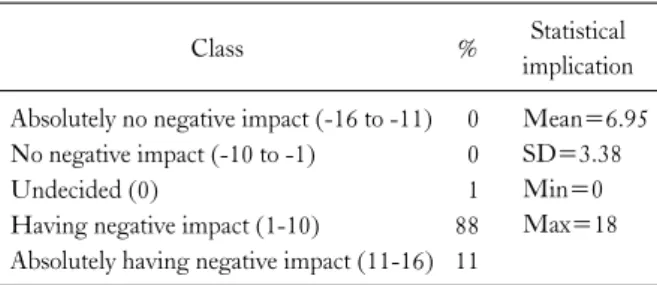
Table 1. Distribution of respondent according to perception of im- pact on forest ecology
Class % Statistical
implication Absolutely no negative impact (-16 to -11) 0 Mean=6.95
SD=3.38 Min=0 Max=18 No negative impact (-10 to -1) 0
Undecided (0) 1
Having negative impact (1-10) 88 Absolutely having negative impact (11-16) 11 N=100; SD, standard deviation.
Methodology
Sampling design
Purposive sampling method was used for selection of area and random sampling method was used for selection respondent. The sample size for the study was 100. The da- ta collection in this study was through questionnaire based personal in-depth interviews (Frechtling et al. 1997). After construction of schedule, the same was discussed with the expert in the field of forestry, agricultural extension, agri- cultural statistics of the concerned academic departments of Uttar Banga Krishi Viswavidyalaya, Pundibari West Bengal India. A relevancy test for the questions and opinion state- ments were done by the experts for validity of opinion scales. The statements having more than 75% relevancy were selected for final study. A reliability test was also taken by split-half method and it was seen that the correlation be- tween the odd and even numbered opinion statements were more than 0.80. Considering the experience of the pre-test- ing, necessary modification were made in the language of few questions. Thus the schedule was finalized. The knowl- edge questions were tested against the responses of ‘yes’ (1) and ‘no’ (0) indicating that the respondent having or not having awareness/knowledge on the specific question. The opinion statements were tested against a three point Likert scale (Kerlinger 1973) with responses of ‘agree’ (+1),
‘undecided’ (0) and ‘disagree’ (-1). Thus a list of 16 state- ments on perception on impact of climate change on forest ecology was selected for final study. Further, the change was perceived against a period prior to 30 years by spider dia- gram (Etwire et al. 2013; Pal et al. 2014). The level of change of climatic parameters and its impact before thirty years were regarded as standard perception in the present study.
Dependent variable
The sum of scores derived from each schedule was con- sidered as dependent variable. Knowledge and adoption of adaptive practices were assessed by a simple index (Knowledge-adoption Index) which is also regarded as a dependent variable. It is calculated as the ratio between the sum of scores obtained from knowledge and adoption of the adaptive practices and sum of maximum scores obtainable.
Independent variables
Respondents were classified into two groups of 40-50 years and more than 50 years. As climate change perception requires a long experience over time frame, so 40 years has been considered here as the discriminating age. The re- spondents were classified as illiterate (no schooling), pri- mary (up to four years of schooling) middle (up to nine years of schooling) and high (ten or more than ten years of schooling). On the basis of land holding respondent were classified into three groups having up to 100 decimal (1 decimal=33.33 m2), 100-200 decimal and >200 decimal with score assigned as 1, 2 and 3, respectively. The collected data were processed, classified and tabulated. Further, the statistical treatments were applied in the light of objectives to arrive at conclusion. The statistical tools used for the pre- cise and meaningful analysis and interpretation of the col- lected data are descriptive statistics (like frequency, per cent, mean, and standard deviation), correlation and student ‘t’
test following (Panse and Sukhatme 1967).
Results and Discussion
Profile of the respondents
Majority of the respondents were male (82%) and fewer female. Females generally felt shy to respond and mostly were comfortable to respond along with their male folk.
Females who responded independently were only consid- ered as who responded along with their male folk only re- peated their counterpart’s view. Respondent with 40 years of age or above were interviewed and majority of them were above 50 years of age (53%) while rest were below 50 years.
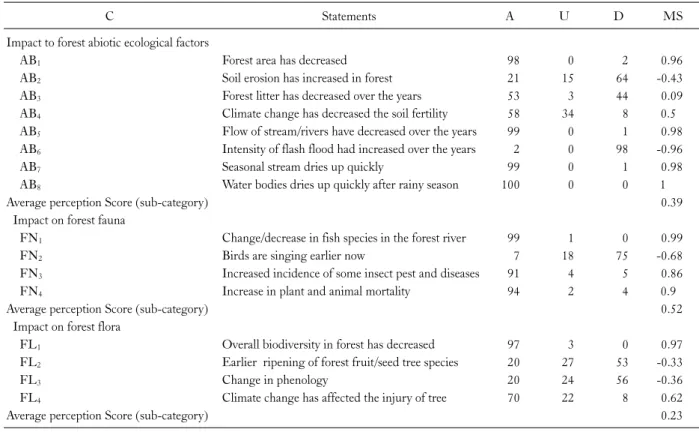
Table 2. Distribution of respondent according to perception statements on impact to forest ecology
C Statements A U D MS
Impact to forest abiotic ecological factors
AB1 Forest area has decreased 98 0 2 0.96
AB2 Soil erosion has increased in forest 21 15 64 -0.43
AB3 Forest litter has decreased over the years 53 3 44 0.09
AB4 Climate change has decreased the soil fertility 58 34 8 0.5
AB5 Flow of stream/rivers have decreased over the years 99 0 1 0.98
AB6 Intensity of flash flood had increased over the years 2 0 98 -0.96
AB7 Seasonal stream dries up quickly 99 0 1 0.98
AB8 Water bodies dries up quickly after rainy season 100 0 0 1
Average perception Score (sub-category) 0.39
Impact on forest fauna
FN1 Change/decrease in fish species in the forest river 99 1 0 0.99
FN2 Birds are singing earlier now 7 18 75 -0.68
FN3 Increased incidence of some insect pest and diseases 91 4 5 0.86
FN4 Increase in plant and animal mortality 94 2 4 0.9
Average perception Score (sub-category) 0.52
Impact on forest flora
FL1 Overall biodiversity in forest has decreased 97 3 0 0.97
FL2 Earlier ripening of forest fruit/seed tree species 20 27 53 -0.33
FL3 Change in phenology 20 24 56 -0.36
FL4 Climate change has affected the injury of tree 70 22 8 0.62
Average perception Score (sub-category) 0.23
N=100; C, statement code; figures are in per cent; A, agree; U, undecided; D, disagree; MS, mean score.
Majority of the respondents were literate (59%) i.e. have at- tended school up to primary level or more while rest of them were illiterate or not attended school at all. Almost all the respondents were farmers (94%) with land holding up to 100 decimal (83%), 100-200 decimal (11%) and rest with more than 200 decimal.
Perception on impact of climate change on forest ecology
Almost all the respondents perceived negative impact of climate change on forest (Table 1) though the level of per- ception varies from very low to medium (0.23-0.52) based on average perception score after assigning score to in- dividual statements (Table 2). General perception of the people about the climate change in Kullu district of Himachal Pradesh, India also indicated climate change is affecting significantly the forest and vegetations (Vidya et al. 2015). Ecological knowledge in relation to climate sci- ence held by the indigenous people has also been docu- mented from other parts of the world (King et al. 2008;
Berkes 2009).
In this case one out of 100 respondents remained undecided. It can be concluded from the table 1 that the class “absolutely having negative impact” and “undecided”
were inadequately represented while “absolutely no neg- ative impact” and “no negative impact” did not have any place as perception of the respondents. The level of percep- tion on impact of climate change on forest ecology and for- est flora of the community is low and very low as the aver- age perception score is 0.39 and 0.23, respectively while, it is medium (0.52) for forest fauna (Table 2; Fig. 3). However considering the specific impact statements on forest ecology (Table 2) related to decrease in area of Chilapatta Reserve Forest and decreased availability of water on water bodies in and around the forest almost all the respondents (98-100%) replied positively (statements AB1, AB5, AB7 and AB8).
Interestingly the perception of the respondents on de- crease of forest area does not match with the Forest Survey of India records (Fig. 2) as it was reported that the forest area in Jalpaiguri district of West Bengal is continuously in-
Fig. 2. Forest cover of Jalpaiguri district (1995-2013).
Fig. 3. Spider diagram of respon- dent according to perception of impact on forest ecology.
creasing since 1990s (FSI, 1995-2013). Alternately their perception on decreased stream/river flow and quick drying of seasonal streams or water bodies is based on their live- lihood experience as they depend on these for their domes- tic and irrigation water use and fish catch for family diet.
The scientific evidences from entire Himalayan regions that weather has become unpredictable and erratic, snow is melting rapidly and water sources are drying up (Chaudhary and Bawa 2011; Rawat 2013; Shukla et al. 2015) sub- stantiate the risk perception of the community in this study.
The perception that decrease access to water supplies poses risk to forest ecosystem and to livelihoods of forest based communities is also well validated by a recent study (Withana and Auch 2014).
Forest abiotic conditions (like increased soil erosion, in- creased intensity of flash flood and fertility) were not di- rectly related to their livelihood either were recorded with negative or very low scores indicating very low level of per- ception on impact of climate change on these factors/co- nditions. The Himalayas constitute one of the 34 global hotspots of biodiversity, and are the source of the 8 largest rivers in Asia. Being a watershed for the land masses of
China, India, Bangladesh, Bhutan, Nepal and Pakistan, the region constitutes the lifeline of billions of people. Thus the consequences of climate change on biodiversity, agriculture as well as on human well-being are likely to be severe (Chaudhary and Aryal 2009).
Perception relating to impact on forest fauna and flora (statements FN1, FN3, FN4 and FL1) are directly related to the livelihood of the respondents and their experience, were agreed upon to be impacted by climate change. This is because the respondents were victims of such situations and they agreed on these statements based on their past experiences. The respondents perceived decrease of fish population and decrease in catch over the past three decades based on their experience as they had been doing so from ages to fulfil their dietary requirements. The respondents also believed that the species they were catching over the years had changed. However they could not define the change as they were only concern with the fish catch but not the species they were catching. The perception on impacts of climate change on physiological growth and breeding be- haviour of plants and animals or biodiversity by the com- munity in the study is well supported by earlier scientific re- ports (Yu et al. 2010; Joshi and Joshi 2011).
They are also experiencing low crop yield or crop fail- ure/mortality and increased mortality of their domestic ani- mals on which they believe is due to increased incidences of insect pest and diseases and decreased fodder/diseases, respectively. Early ripening of crops observed by these peo- ple is consistent with early onset of flowering and growing season along with proliferation of weeds and pests observed in wild plants both by the local people and scientists (Supit et al. 2010; Joshi and Joshi 2011). Respondents also experi- enced scorching sun during summer along with deficiency of water due to lesser rains causing crop failure/mortality.
According to them if such situations occur nearby the forest where they live why not in the forest. Thus their perception of increased incidences of insect pest and diseases and mor- tality in the forest due to plant injury seems to be valid (Logan et al. 2003; Breshears et al. 2005). However, there are no scientific evidences reported from Chilapata Reserve Forest to validate their perception.
Additionally, now they are also not commonly sighting raptor birds like Kites, vultures and wild animals like fox, tiger, leopards, fox, wild boar, fishing cat, rhinoceros, bison and others which was a common sight over a past decade.
This decrease in sightings of wild animals along with their belief of decrease in forest area made them to perceive de- crease of overall faunal biodiversity in the forest. The sit- uations like earlier bird singing and change in phenology or earlier ripening was not a direct concern for the respondents or not directly influencing their livelihood and so were not agreed by majority of them. Forest dependent or in- digenous communities elsewhere also had experienced sim- ilar impacts of climate change on forest resources (Baul et al. 2013; Onyekuru and Marchant 2014; Kamruzzaman 2015). The spider diagram (Fig. 3) also clearly indicates low to medium perception level on impact of climate change (depending on various impact indicators) on forest ecology of forest dependent community inhabiting in and around Chilapatta Reserve Forest.
Conclusion
The forest dependent community of Chilapatta Reserve Forest have perceived the impact climate change on their surrounding forest. These perceptions are consistent and conform to the scientific findings generated by modern sci- ence in different parts of the world. Majority of these peo- ple perceived negative impact of climate change on forest biotic and abiotic environment along with risk on their live- lihood through increased misery, decreased income, in- crease susceptibility to serious diseases and decreased avail- ability of food and water. Majority of the respondents per- ceived that the impact of climate change on forest will influ- ence on their livelihood through decreased fish catch, de- creased NTFP collection and unhealthy unproductive cat- tle which will negatively influence their food and medicinal requirement. Given the perception of impact of climate
change on forest ecology it is obvious for the respondents to perceive their livelihood impacts through such indicators.
References
Aggarwal VRK, Mahajan PK, Negi YS, Bhardwaj SK. 2015.
Trend analysis of weather parameters and people perception in Kullu district of Western Himalayan region. Environment and Ecology Research 3: 24-33.
Anonymous. 2001. 4th Working Plan for the Forests of Cooch Behar district and Jalpaiguri district (Part) Comprising Cooch Behar Forest Division and Cooch Behar S. F. Division Volume - I, 2000-01 to 2009-10. Divisional Forest Officer, Working Plans (North) Division, Darjeeling.
Arbuckle Jr JG, Morton LW, Hobbs J. 2013. Farmer beliefs and concerns about climate change and attitudes toward adaptation and mitigation: evidence from Iowa. Climatic Change 118:
551-563.
Baul TK, Atique Ullah KM, Tiwari KR, McDonald MA. 2013.
People’s local Knowledge of climate change in the middle-hills of Nepal. Indian Journal of Traditional Knowledge 12: 585-595.
Berkes F. 2009. Evolution of co-management: role of knowledge generation, bridging organizations and social learning. J Environ Manage 90: 1692-1702.
Bord RJ, O’Connor RE, Fisher A. 2000. In what sense does the public need to understand global climate change? Public Under- standing of Science 9: 205-218.
Breshears DD, Cobb NS, Rich PM, Price KP, Allen CD, Balice RG, Romme WH, Kastens JH, Floyd ML, Belnap J, Ander- son JJ, Myers OB, Meyer CW. 2005. Regional vegetation die-off in response to global-change-type drought. PNAS 102:
15144-15148.
Byg A, Salick J. 2009. Local perspectives on a global phenomenon- climate change in eastern Tibetan villages. Global Environmental Change 19: 156-166.
Chaudhary P, Aryal KP. 2009. Global warming in Nepal: chal- lenges and policy imperatives. Journal of Forest and Livelihood 8: 4-13.
Chaudhary P, Bawa KS. 2011. Local perceptions of climate change validated by scientific evidence in the Himalayas. Biol Lett 7:
767-770.
Davidson DJ, Williamson T, Parkins JR. 2003. Understanding cli- mate change risk and vulnerability in northern forest-based communities. Canadian Journal of Forest Research 33: 2252-2261.
Etwire PM, Al-Hassan RM, Kuwornu JKM, Osei-Owusu Y.
2013. Application of livelihood vulnerability index in assessing vulnerability to climate change and variability in Northern Ghana. Journal of Environment and Earth Science 3: 157-170.
Frechtling J, Sharp L, Westat. 1997. User-friendly handbook for mixed method evaluations. National Science Foundation.
FSI. 1995-2013. State of forest report 1995, 1997, 1999, 2001, 2003, 2005, 2007, 2009, 2011, 2013. Forest survey of India,
ministry of environment and forests, government of India, New Delhi.
Government of West Bengal. 2016. Official Website of Jalpaiguri.
http://www.jalpaiguri.gov.in/html/culture.html. Assessed 19 Jul 2016.
IPCC. 2007a. Climate Change 2007: The Physical Science Basis.
Contribution of Working Group I to the Fourth Assessment Report of the Intergovernmental Panel on Climate Change (Solomon S, Qin D, Manning M, Chen Z, Marquis M, Averyt KB, Tignor M, Miller HL, eds). Cambridge University Press, Cambridge, United Kingdom and New York, NY, USA: 996 pp.
IPCC. 2007b. Climate Change 2007: Impacts, Adaptation and Vulnerability. Contribution of Working Group to the Fourth Assessment Report of the Intergovernmental Panel on Climate Change (Parry M, Canziani O, Palutikof J, van der Linden P, Hanson C, eds). Cambridge University Press, Cambridge, UK:
976 pp.
IPCC. 2013. Summary for Policymakers. In: Climate Change 2013: The Physical Science Basis. Working Group I Contribu- tion to the Fifth Assessment Report of the Intergovernmental Panel on Climate Change (Stocker TF, Qin D, Plattner GK, Tignor M, Allen SK, Boschung J, Nauels A, Xia Y, Bex V, Midgley PM, eds). Cambridge University Press, Cambridge, United Kingdom and New York, NY, USA.
IPCC. 2014. Summary for policymakers. In: Climate Change 2014: Impacts, Adaptation, and Vulnerability. Part A: Global and Sectoral Aspects. Contribution of Working Group II to the Fifth Assessment Report of the Intergovernmental Panel on Climate Change (Field CB, Barros VR, Dokken DJ, Mach KJ, Mastrandrea MD, Bilir TE, Chatterjee M, Ebi KL, Estrada YO, Genova RC, Girma B, Kissel ES, Levy AN, MacCracken S, Mastrandrea PR, White LL, eds). Cambridge University Press, Cambridge, United Kingdom and New York, NY, USA:
32 pp.
Joshi AK, Joshi PK. 2011. A rapid inventory of indicators of cli- mate change in the middle Himalaya. Current Science 100:
831-832.
Kamruzzaman M. 2015. Farmer’s perceptions on climate change:
a step toward climate change adaptation in Sylhet hilly region.
Universal Journal of Agricultural Research 3: 53-58.
Kerlinger FN. 1973. Foundations of behavioral research. Holt, Rinehart and Winston Inc., New York.
King DNT, Skipper A, Tawhai WB. 2008. Maori environmental knowledge of local weather and climate change in Aotearoa - New Zealand. Climate Change 90: 385-409.
Logan JA, Régnière J, Powell JA. 2003. Assessing the impacts of global warming on forest pest dynamics. Frontiers in Ecology and the Environment 1: 130-137.
McDaniels TL, Axelrod LJ, Slovic P. 1996. Perceived ecological risks of global change: a psychometric comparison of causes and consequences. Global Environmental Change 6: 159-171.
Onyekuru AN, Marchant R. 2014. Climate change impact and adaptation pathways for forest dependent livelihood systems in Nigeria. African Journal of Agricultural Research 9: 1819-1832.
Pal PK, Sarkar A, Gupta DS. 2014. Assessment of Panchayati Raj institution’s performance towards rural development in some se- lected backward villages of Cooch Behar district of West Bengal.
Journal of Agriculture and Technology 1: 95-100.
Panse VG, Sukhatme PV. 1967. Statistical methods for agricultural workers. Indian Council of Agricultural Research, New Delhi.
Rawat, V. S. 2013. People perception on climate change and their influence on various aspects around tones valley of Garhwal Himalaya. Environment and Ecology Research 1: 150-154.
Salau ES, Onuk EG, Ibrahim A. 2012. Knowledge, perception and adaptation strategies to climate change among farmers in Southern agricultural zone of Nasarawa state, Nigeria. Journal of Agricultural Extension 16: 199-211.
Shukla G, Kumar A, Pala NA, Chakravarty S. 2015. Farmer’s per- ception and awareness of climate change: a case study from Kanchandzonga biosphere reserve, India. Environ Dev Sustain doi:10.1007/s10668-015-9694-2.
Supit I, van Diepen CA, de Wit AJW, Kabat P, Baruth B, Ludwig F. 2010. Recent changes in the climatic yield potential of various crops in Europe. Agriculture System 103: 683-694.
UNDP. 2010. Climate change and poverty reduction. UNDP.
http://www.undp.org/content/undp/en/home/ourwork/environ- mentandenergy/strategic_themes/climate_change/focus_areas/
climate_change_andpovertyreduction.html.
Vignola R, Klinsky S, Tam J, McDaniels T. 2012. Public percep- tion, knowledge and policy support for mitigation and adaption to climate change in Costa Rica: comparisons with North American and European studies. Mitigation and Adaptation Strategies for Global Change 18: 303-323.
Withana NRP, Auch E. 2014. Perceptions of climate change risk to forest ecosystems: a case study of Patale community forestry user group, Nepal. International Journal of Environmental, Ecological, Geological and Geophysical Engineering 8: 599-606.
Yu H, Luedeling E, Xu J. 2010. Winter and spring warming result in delayed spring phenology on the Tibetan Plateau. Proc Natl Acad Sci U S A 107: 22151-22156.