Clinical Characteristics of Chronic Cough in Korea
Tai Joon An, M.D. 1 , Jin Woo Kim, M.D., Ph.D. 2 , Eun Young Choi, M.D., Ph.D. 3 , Seung Hun Jang, M.D., Ph.D. 4 , Hwa Young Lee, M.D., Ph.D. 5 , Hye Seon Kang, M.D., Ph.D. 6 , Hyeon-Kyoung Koo, M.D. 7 , Jong Min Lee, M.D. 5 , Sung-Kyung Kim, M.D. 8 , Jong-Wook Shin, M.D., Ph.D. 9 , So Young Park, M.D. 10 , Chin Kook Rhee, M.D., Ph.D. 5 , Ji-Yong Moon, M.D., Ph.D. 11 , Yee Hyung Kim, M.D., Ph.D. 12 , Hyun Lee, M.D., Ph.D. 13 , Yong Hyun Kim, M.D., Ph.D. 6 , Je Hyeong Kim, M.D., Ph.D. 14 , Sang Haak Lee, M.D., Ph.D. 15 , Deog Kyeom Kim, M.D., Ph.D. 16 , Kwang Ha Yoo, M.D., Ph.D. 17 , Dong-Gyu Kim, M.D., Ph.D. 18 , Ki-Suck Jung, M.D., Ph.D. 4 , Hui Jung Kim, M.D., Ph.D. 19 and Hyoung Kyu Yoon, M.D., Ph.D. 1 , on behalf of the Cough Study Group of the Korean Academy of Tuberculosis and Respiratory Diseases
*Author affiliations appear at the end of this article.
Background: Chronic cough is defined as a cough lasting more than 8 weeks and socio-economic burden of chronic cough is enormous. The characteristics of chronic cough in Korea are not well understood. The Korean Academy of Tuberculosis and Respiratory Diseases (KATRD) published guidelines on cough management in 2014. The current study evaluated the clinical characteristics of chronic cough in Korea and the efficacy of the KATRD guidelines.
Methods: This was a multi-center, retrospective observational study conducted in Korea. The participants were over 18 years of age. They had coughs lasting more than 8 weeks. Subjects with current pulmonary diseases, smokers, ex- smokers with more than 10 pack-years or who quit within the past 1 year, pregnant women, and users of cough-inducing medications were excluded. Evaluation and management of cough followed the KATRD cough-management guidelines.
Results: Participants with chronic cough in Korea showed age in the late forties and cough duration of more than 1 year.
Upper airway cough syndrome was the most common cause of cough, followed by cough-variant asthma (CVA). Gastro- esophageal reflux diseases and eosinophilic bronchitis were less frequently observed. Following the KATRD cough- management guidelines, 91.2% of the subjects improved after 4 weeks of treatment. Responders were younger, had a longer duration of cough, and an initial impression of CVA. In univariate and multivariate analyses, an initial impression of CVA was the only factor related to better treatment response.
Conclusion: The causes of chronic cough in Korea differed from those reported in other countries. The current Korean guidelines proved efficient for treating Korean patients with chronic cough.
Keywords: Cough; Cohort Studies; Epidemiology; Guideline; Diagnosis; Disease Management
Address for correspondence: Hyoung Kyu Yoon, M.D., Ph.D.
Division of Pulmonary, Allergy and Critical Care Medicine, Department of Internal Medicine, Yeouido St. Mary’s Hospital, College of Medicine, The Catholic University of Korea, 10 63-ro, Yeongdeungpo-gu, Seoul 07345, Korea
Phone: 82-2-3779-2213, Fax: 82-2-780-3132, E-mail: [email protected]
Received: May. 13, 2019, Revised: Jun. 25, 2019, Accepted: Jul. 18, 2019, Published online: Aug. 31, 2019
cc
It is identical to the Creative Commons Attribution Non-Commercial License (http://creativecommons.org/licenses/by-nc/4.0/).
Copyright © 2020
The Korean Academy of Tuberculosis and Respiratory Diseases.
Introduction
Cough is a basic airway defense mechanism and the most frequent cause of hospital visits
1. The economic burden of cough is enormous. The United States spends over 9 billion dollars annually on cough and the United Kingdom over 0.9 billion pounds annually
2. Chronic cough is defined as a cough lasting more than 8 weeks. The estimated overall adult preva- lence is approximately 10% worldwide but varies by region
3. The United States (11.0%) and Europe (12.7%) have higher prevalences than those of Asia (4.4%) and Africa (2.3%). There are no current data for Korea, although a survey reported the prevalence of chronic cough in the elderly to be 4.6%–9.3%
4.
Chronic cough has various etiologies. The major causes are gastro-esophageal reflux disease (GERD), asthma, and up- per respiratory diseases (e.g., rhinitis, sinusitis, and post-nasal drip)
5,6. Chronic respiratory diseases (e.g., chronic obstruc- tive pulmonary disease [COPD], bronchiectasis, lung cancer, and interstitial lung disease) and environmental factors (e.g., exposure to smoke, dust, and air pollution) also play roles
7. Recently, cough hypersensitivity, laryngeal dysfunction, and idiopathic cough have been identified as refractory causes of chronic cough
8,9. Because of its various etiologies, chronic cough is easily misdiagnosed and inappropriately treated.
Only approximately half of patients improve following treat- ment in general clinics, whereas nine out of 10 improve after being treated by cough specialists following various guide- lines
10-12. Many different guidelines have been developed
7. The Korean Academy of Tuberculosis and Respiratory Diseases (KATRD) developed cough-management guidelines in 2014, which reflected up-to-date guidelines and research data
6. In this study, we evaluated both the causes and the clinical char- acteristics of chronic cough in Korea and the efficacy of these KATRD cough-management guidelines.
Materials and Methods
1. Study design
This was a multi-center, retrospective observational study.
Patients who treated chronic cough from March 1, 2016, to February 28, 2018 were included. A total of 19 university hos- pitals participated nationwide.
The institutional review board of all hospital approved the study protocol, as did the Institutional Review Board of Catho- lic Medical Center (No. 2019-0810). Informed consent was waived due to the retrospective observational nature of the study.
2. Inclusion and exclusion criteria
Patients with a cough lasting more than 8 weeks and who
were over 18 years of age were included. Those with abnor- mal findings on chest X-ray or with a chronic respiratory disease, such as asthma, COPD, bronchiectasis, tuberculosis- destroyed lung, or lung cancer, were excluded. Current smok- ers, ex-smokers with more than 10 pack-years, and ex-smokers who quit smoking within the past 1 year were also excluded.
Patients taking cough-inducing medications (e.g., angiotensin- converting enzyme inhibitors) and pregnant women were also excluded.
3. Protocol for management of chronic cough
All researchers used the same chronic cough manage- ment protocol since 2014. All participants were managed and evaluated according to the 2014 KATRD cough-management guidelines
6. Evaluation tests were performed simultaneously or stepwise. The initial impression of chronic-cough etiology was based on the symptoms or positive evaluation tests. Ab- normal paranasal sinus (PNS) X-ray was defined by haziness, such as complete opacity, air-fluid level, loss of translucency of most of the maxillary sinus, and mucosal thickening. If the participant had an abnormal PNS X-ray, post-nasal drip, or rhi- nitis, upper airway cough syndrome (UACS) was suspected.
If UACS was suspected, an antihistamine was given alone or in combination with a nasal decongestant
13,14. Cough-variant asthma (CVA) was suspected when sole symptom of cough without dyspnea or wheezing was noted and when bronchial hyper-responsiveness was found based on the bronchodilator response (BDR) or provocation test. Eosinophilic bronchitis (EB) was suspected based on the symptoms or sputum eo- sinophil count
15. If the initial impression was CVA, an inhaled corticosteroid (ICS) was given alone or together with a long- acting β-agonist (LABA). Leukotriene receptor antagonists (LTRAs) and oral corticosteroids (OCSs) can be used as add- on medications. If EB was suspected, ICS was given. LABA or OCS can also be given, although LTRA is not recommended.
GERD was suspected if the patient had acid regurgitation and heartburn symptoms
16and was treated with a proton-pump inhibitor (PPI).
The abovementioned initial impressions of the chronic-
cough etiology were evaluated in order. First, UACS was evalu-
ated, followed by CVA and EB and finally GERD. Treatment of
the initial impression was maintained for 4 weeks if the cough
improved. In the case of no response to the initial treatment,
the second most likely cause was treated for up to 4 weeks,
while the initial treatment was maintained. A final diagnosis
of chronic cough was made if the cough improved. If none of
UACS, CVA, EB, and GERD was suspected, additional evalu-
ations were performed including chest computed tomogra-
phy, echocardiography, allergy skin tests, immunoglobulin E
measurement, and bronchoscopy. Other causes of refractory
cough, such as psychogenic cough, idiopathic cough, and
cough hypersensitivity, were considered after excluding other
suspected diseases after additional evaluations.
4. Treatment response evaluation
A cough numeric rating scale (NRS) is widely used as a subjective assessment of cough because it is simple and easy to perform
17. In this study, we evaluated cough status using a cough NRS consisting of a 10-cm line with marks positioned 1 cm apart. The leftmost mark was labeled “0” and represented
“no cough.” The rightmost mark was labeled “10” and indicat- ed “worst cough ever.” The treatment response was evaluated twice: first, after 1 week of treatment for UACS, CVA, and EB or 2 weeks for GERD and, second, after 4 weeks of treatment. Im- provement was defined as a decrease in the cough NRS score of more than 50% or more than four points.
5. Statistical analysis
We performed subgroup analyses using the independent- samples t-test for continuous variables and Pearson’s chi- square test for categorical variables. To evaluate the factors associated with treatment response, we performed binominal logistic regression analysis. The statistical analyses were per- formed using SPSS version 24.0 (IBM, Armonk, NY, USA).
Data are expressed as means±standard error of the mean or as numbers (%), and p<0.05 was considered statistically sig- nificant.
Results
1. Baseline clinical characteristics
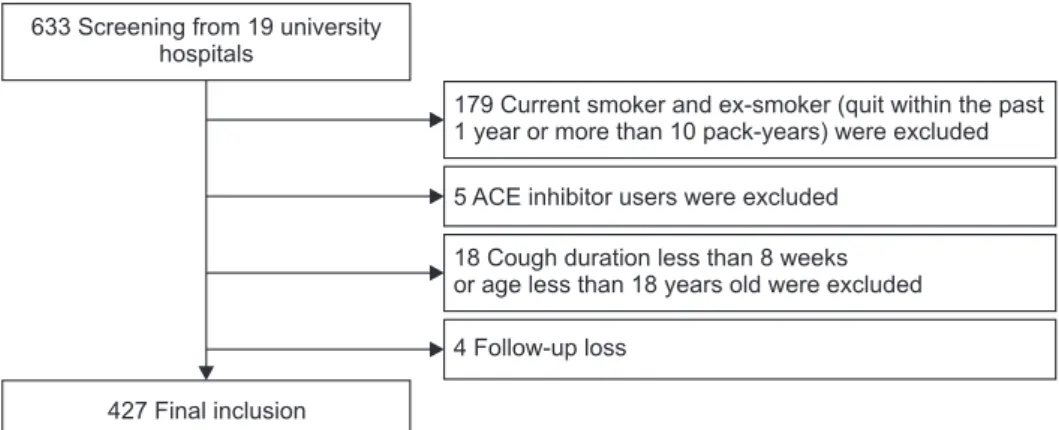
Ultimately, we analyzed 427 participants (Figure 1). Table 1 summarizes their baseline characteristics. The mean dura- tion of cough was 63.1±176.0 weeks. The cough NRS scores at baseline, after the initial treatment, and after 4 weeks of treat- ment were 5.3±1.6, 2.6±1.9, and 1.2±1.4, respectively. Among the initial impressions for cough etiology, UACS (52.2%) and
CVA (51.1%) were suspected most often, followed by GERD (13.1%) and EB (6.8%). In the final diagnosis, UACS (53.6%) was the most common cause, followed by CVA (46.8%), GERD
Figure 1. Flow diagram of study. Overall 633 patients were screened. Current smoker and ex-smoker (quit within the past 1 year or more than 10 pack-years) were excluded. Angiotensin-converting enzyme (ACE) inhibitor users were ex- cluded. Participants who were not more than 8 weeks of cough or 18 years old were excluded also. Four patients were lost during follow up. Finally, 427 partici- pants were included in this study.
Table 1. Baseline clinical characteristics of chronic cough in Korea
Characteristic Value (n=427)
Age, yr 49.6±15.3
Male sex 106 (24.8)
Cough duration, wk 63.1±176.0
Cough NRS
Baseline 5.3±1.6
After initial treatment 2.6±1.9 After 4 weeks treatment 1.2±1.4 Initial impression
UACS 223 (52.2)
CVA 218 (51.1)
EB 29 (6.8)
GERD 56 (13.1)
Final diagnosis
UACS 229 (53.6)
CVA 200 (46.8)
EB 34 (8.0)
GERD 63 (14.8)
Psychogenic cough 25 (5.9)
Others 12 (2.8)
Responder
Initial 235 (63.3)
Final 321 (91.2)
Values are presented as mean±SD or number (%).
NRS: numeric rating scale; UACS: upper airway cough syndrome;
CVA: cough-variant asthma; EB: eosinophilic bronchitis; GERD:
gastro-esophageal reflux disease; SD: standard deviation.
(14.8%), and EB (8.0%). Psychogenic cough (5.9%) and other causes (2.8%) were rare. Approximately 27.4% of the patients had two or more causes of chronic cough. Following the 2014 KATRD cough-management guidelines, 63.3% of the subjects improved after the initial treatment and 91.2% after 4 weeks of treatment. The female participants had an older mean age and higher prevalence of CVA compared with the male par- ticipants, whereas the other factors were not significantly dif- ferent between the sexes (Table 2).
2. Characteristics of treatment responders and non-responders
Table 3 shows the characteristics of the responders and non-responders to chronic-cough treatments among the participants. The responders were younger (48.9±15.0 years vs. 51.5±17.8 years, p<0.001) and had a longer cough duration (65.6±164.1 weeks vs. 31.4±37.2 weeks, p=0.003) compared with the non-responders. An initial impression of CVA was more common among the responders (57.9% vs. 35.5%, p=0.016). Other factors such as sex, baseline cough NRS score, initial impression other than CVA, and final diagnosis did not differ significantly between the treatment responders and
non-responders.
3. Subgroup analysis by diagnosis
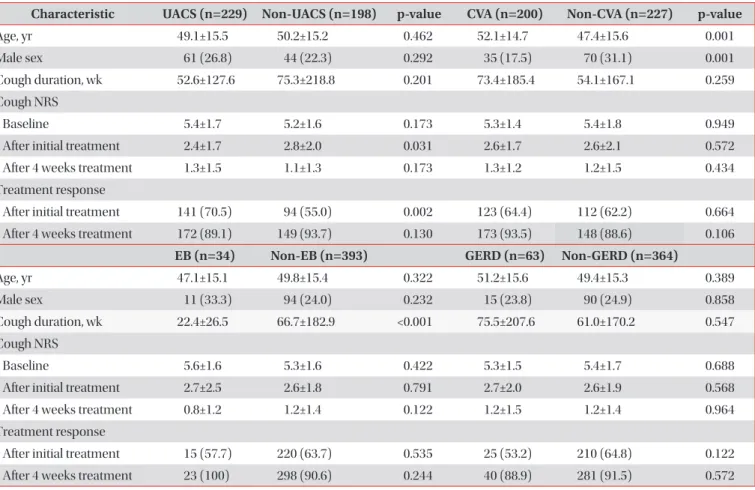
Table 4 summarize the results of subgroup analysis by diag- nosis. Tables 5 and 6 summarize the diagnostic methods used and their efficacy in the study participants. Table 7 and Figure 2 describe the treatments used and their outcomes.
1) UACS
UACS was the most common cause of chronic cough (53.6%). The mean age was 49.1±15.5 years and the mean cough duration was 52.6±127.6 weeks. The UACS group had a higher initial response to treatment than did the non-UACS group (70.5% vs. 55.0%, p=0.002). The response rates after the initial treatment and after 4 weeks of treatment were 70.5%
and 89.1%, respectively. A PNS X-ray was performed in most cases (93.9%), of which 29.9% showed abnormal findings.
UACS symptoms were found in 93.4% of the subjects. Those were the most highly sensitive marker of UACS. To manage UACS, an antihistamine alone was used most often (66.2%), and a nasal decongestant was combined with the antihista- mine in 29.5% of cases. Combination therapy showed a higher Table 2. Differences of chronic cough characteristics according to sex in Korea
Characteristic Male (n=105) Female (n=320) p-value
Age, yr 42.2±14.7 52.1±14.8 <0.001
Cough duration, wk 69.8±200.1 61.3±168.1 0.666
Cough NRS
Baseline 5.5±1.8 5.3±1.6 0.376
After initial treatment 2.5±1.8 2.6±1.9 0.762
After 4 weeks treatment 1.0±1.0 1.3±1.5 0.116
Initial impression
UACS 58 (55.2) 164 (51.3) 0.478
CVA 44 (41.9) 174 (54.4) 0.027
EB 7 (6.7) 21 (6.6) 0.970
GERD 15 (14.3) 41 (12.8) 0.699
Final diagnosis
UACS 61 (58.1) 167 (52.2) 0.292
CVA 35 (33.3) 165 (51.6) 0.001
EB 11 (10.5) 22 (6.9) 0.232
GERD 15 (14.3) 48 (15.0) 0.858
Responder
Initial 57 (65.5) 117 (62.8) 0.703
Final 79 (94.0) 241 (90.6) 0.380
Values are presented as mean±SD or number (%).
NRS: numeric rating scale; UACS: upper airway cough syndrome; CVA: cough-variant asthma; EB: eosinophilic bronchitis; GERD: gastro-
esophageal reflux disease; SD: standard deviation.
response than monotherapy (98.0% vs. 86.3%, p=0.027).
2) CVA
CVA (46.8%) was the second-most common cause of chronic cough. The mean age was 52.1±14.7 years and the mean cough duration was 73.4±185.4 weeks. Those with CVA group were older than those without CVA (52.1±14.7 years vs. 47.4±15.6 years, p=0.001) and showed a higher female predominance (82.5% vs. 68.9%, p=0.001). The response rates after the initial treatment and after 4 weeks of treatment were 64.4% and 93.5%, respectively. BDR tests and methacholine or mannitol bronchial provocation tests (MBPTs) were per- formed in 87.9% and 91.4% of cases, with positive results in 4%
and 47%, respectively. ICS/LABA (88.0%) was selected most often as the treatment and ICS (4.7%) rarely. LTRA (63.5%) and OCS (25.5%) were also used, but there was no clinical benefit of an inhaler combined with LTRA, OCS, or LTRA plus OCS.
3) EB
EB (8.0%) was an uncommon cause of chronic cough among the subjects. The mean age was 47.1±15.1 years. The cough duration was shorter in those with EB group than in those without EB (22.4±26.5 weeks vs. 66.7±182.9 weeks, p<0.001). An initial response to treatment was seen in 57.7%
of subjects, and all subjects showed clinical improvement after 4 weeks. Induced sputum test was performed in 61.8%
of subjects, and the mean sputum eosinophil percentage was 6.5±10.8%. BDR tests and MBPTs were performed in 44.1%
and 85.3% of subjects, respectively, but all results were normal.
ICS and ICS/LABA were each used as treatment in 50% of the patients.
4) GERD
GERD (14.8%) was the third most common cause of chronic cough. The mean age was 51.2±15.6 years, and the mean cough duration was 75.5±207.6 weeks. Other clinical characteristics did not differ between those with GERD and those without GERD. Of those with GERD, 53.2% improved after the initial treatment and 88.9% after 4 weeks. GERD was diagnosed based on symptoms in 88.9% of subjects. The treat- ment response to a low-dose (85.19%) or high-dose (88.89%) PPI did not differ significantly.
5) Other causes and additional evaluations of chronic cough
Overall, 8.7% of the subjects had rare causes of their chronic cough, including psychogenic cough (5.9%), cough hypersen- sitivity syndrome (0.7%), and idiopathic cough (0.9%). Ad- ditional studies were performed in 69.3% of the participants.
Table 3. Characteristics of the responders and non-responders to chronic cough treatment in Korea
Characteristic Responder (n=321) Non-responder (n=31) p-value
Age, yr 48.9±15.0 51.5±17.8 <0.001
Male sex 79 (24.7) 5 (16.7) 0.380
Cough duration, wk 65.6±164.1 31.4±37.2 0.003
Cough NRS
Baseline 5.3±1.5 5.3±1.7 0.896
After initial treatment 2.3±1.7 4.0±1.7 <0.001
After 4 weeks treatment 0.9±0.9 4.3±1.8 <0.001
Initial impression
UACS 161 (50.2) 20 (64.5) 0.127
CVA 186 (57.9) 11 (35.5) 0.016
EB 21 (6.5) 0 (0.0) 0.237
GERD 37 (11.5) 2 (6.5) 0.554
Final diagnosis
UACS 172 (53.6) 21 (67.7) 0.130
CVA 173 (53.9) 12 (38.7) 0.106
EB 23 (7.2) 0 (0.0) 0.244
GERD 40 (12.5) 5 (16.1) 0.572
Values are presented as mean±SD or number (%).
NRS: numeric rating scale; UACS: upper airway cough syndrome; CVA: cough-variant asthma; EB: eosinophilic bronchitis; GERD: gastro-
esophageal reflux disease; SD: standard deviation.
Allergy skin tests (71.1%) and measurement of immunoglobu- lin E levels (69.6%) were performed frequently, followed by computed tomography (31.6%). Echocardiography and bron- choscopy (both 0.8%) were performed rarely.
4. Consistency between the initial impression and final diagnosis
Figure 3 shows the consistencies between the initial im- pression and final diagnosis. The rates of a consistent initial impression and final diagnosis were high: 83.0%, 86.2%, 86.2%, and 76.8% for those with UACS, CVA, EB, and GERD, respec- Table 4 . The clinical characteristics of chronic cough in Korea according to etiology
Characteristic UACS (n=229) Non-UACS (n=198) p-value CVA (n=200) Non-CVA (n=227) p-value
Age, yr 49.1±15.5 50.2±15.2 0.462 52.1±14.7 47.4±15.6 0.001
Male sex 61 (26.8) 44 (22.3) 0.292 35 (17.5) 70 (31.1) 0.001
Cough duration, wk 52.6±127.6 75.3±218.8 0.201 73.4±185.4 54.1±167.1 0.259
Cough NRS
Baseline 5.4±1.7 5.2±1.6 0.173 5.3±1.4 5.4±1.8 0.949
After initial treatment 2.4±1.7 2.8±2.0 0.031 2.6±1.7 2.6±2.1 0.572
After 4 weeks treatment 1.3±1.5 1.1±1.3 0.173 1.3±1.2 1.2±1.5 0.434
Treatment response
After initial treatment 141 (70.5) 94 (55.0) 0.002 123 (64.4) 112 (62.2) 0.664
After 4 weeks treatment 172 (89.1) 149 (93.7) 0.130 173 (93.5) 148 (88.6) 0.106
EB (n=34) Non-EB (n=393) GERD (n=63) Non-GERD (n=364)
Age, yr 47.1±15.1 49.8±15.4 0.322 51.2±15.6 49.4±15.3 0.389
Male sex 11 (33.3) 94 (24.0) 0.232 15 (23.8) 90 (24.9) 0.858
Cough duration, wk 22.4±26.5 66.7±182.9 <0.001 75.5±207.6 61.0±170.2 0.547
Cough NRS
Baseline 5.6±1.6 5.3±1.6 0.422 5.3±1.5 5.4±1.7 0.688
After initial treatment 2.7±2.5 2.6±1.8 0.791 2.7±2.0 2.6±1.9 0.568
After 4 weeks treatment 0.8±1.2 1.2±1.4 0.122 1.2±1.5 1.2±1.4 0.964
Treatment response
After initial treatment 15 (57.7) 220 (63.7) 0.535 25 (53.2) 210 (64.8) 0.122
After 4 weeks treatment 23 (100) 298 (90.6) 0.244 40 (88.9) 281 (91.5) 0.572
Values are presented as mean±SD or number (%).
UACS: upper airway cough syndrome; CVA: cough-variant asthma; NRS: numeric rating scale; EB: eosinophilic bronchitis; GERD: gastro- esophageal reflux disease.
Table 5. The diagnostic methods used and their efficacies
UACS Percentage CVA Percentage EB Percentage GERD Percentage
Choice of diagnostic methods
PNS X-ray 93.9 BDR 87.9 Induced
sputum
61.8 Symptoms 100.0
MBPT 91.4
Positive findings Abnormal PNS X-ray
29.9 BDR (+) 4.0 Sputum
eosinophilia
38.1 Symptoms 88.9
Symptoms 93.4 MBPT (+) 47.0
UACS: upper airway cough syndrome; CVA: cough-variant asthma; EB: eosinophilic bronchitis; GERD: gastro-esophageal reflux disease;
PNS: paranasal sinus; BDR: bronchodilator response; MBPT: mannitol or methacholine provocation test.
tively. Unlike the other groups, 21.6% of those without an ini- tial impression of UACS were ultimately diagnosed as UACS, and 23.2% of those with an initial impression of GERD were not diagnosed with GERD.
5. Factors associated with treatment outcome
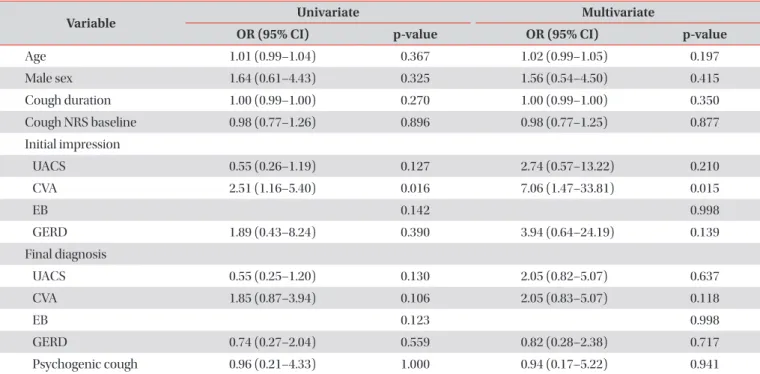
Table 8 presents the factors associated with the outcome of chronic cough treatment. In univariate logistic regression analyses, an initial impression of CVA was associated with the treatment response. Those with an initial CVA impres- sion had a 2.51-fold higher treatment response (odds ratio [OR], 2.51; 95% confidence interval [CI], 1.16–5.40), and this factor remained significant in the multivariate logistic regres- sion analysis (OR, 7.06; 95% CI, 1.47–33.81). Other factors including mean age, sex, cough duration, cough NRS baseline score, initial impressions other than CVA, and final diagnosis showed no significance in the univariate or multivariate logis- tic regression analyses.
Discussion
This retrospective observational study examined the clini- cal characteristics of chronic cough in Korean adults. Chronic cough in Korean adults was associated with an age in the late forties and a duration of more than 1 year. The mean cough NRS score at baseline was 5.3±1.6 points, which decreased to 1.2±1.4 points after 4 weeks of treatment. UACS and CVA were prevalent causes, whereas GERD and EB were relatively less common. Chronic cough had more than two simultaneous etiologies in 27.4% of the subjects. Following the 2014 KATRD cough-management guidelines, the treatment response was exceptional both after the initial treatment and after 4 weeks.
Younger age, longer cough duration, and an initial impression of CVA were factors associated with the treatment responders.
Regarding the diagnostic method for UACS, reporting the symptoms was the most sensitive and accurate method, so de- termining the precise symptom history is critical for diagnos- ing UACS. The most common treatment of UACS was an anti- histamine alone, but the combination of an antihistamine with Table 6. Sensitivity, specificity, PPV, NPV, and accuracy of the diagnostic methods
Diagnostic test Sensitivity (%) Specificity (%) PPV (%) NPV (%) Accuracy (%)
UACS Abnormal PNS X-ray 29.9 91.9 81.0 53.0 58.5
UACS symptoms 93.4 76.7 82.4 90.8 85.7
CVA BDR (+) 4.0 97.5 70.0 40.8 41.8
MBPT (+) 47.0 99.3 98.9 61.1 70.9
EB Sputum eosinophilia 36.8 94.3 63.6 84.6 82.0
GERD Symptoms 88.9 94.6 74.7 98.0 93.8
PPV: positive predictive value; NPV: negative predictive value; UACS: upper airway cough syndrome; PNS: paranasal sinus; CVA: cough- variant asthma; BDR: bronchodilator response; MBPT: mannitol or methacholine provocation test; EB: eosinophilic bronchitis; GERD: gastro- esophageal reflux disease.
Table 7. The medications used to treat chronic cough in Korea
UACS Percentage CVA Percentage EB Percentage GERD Percentage
Antihistamine 66.2 ICS 4.2 ICS 46.2 Low-dose PPI 64.0
Nasal decongestant 1.0 ICS+LTRA 0.5 ICS+OCS 3.8 High-dose PPI 36.0
Antihistamine+
nasal decongestant
29.5 ICS/LABA 27.8 ICS/LABA 50.0
Etc. 3.3 ICS/LABA+LTRA 38.7
ICS/LABA+OCS 2.1
ICS/LABA+LTRA+OCS 19.4
LTRA 3.1
OCS 2.1
OCS+LTRA 2.1
UACS: upper airway cough syndrome; CVA: cough-variant asthma; EB: eosinophilic bronchitis; GERD: gastro-esophageal reflux disease; ICS:
inhaled corticosteroid; LTRA: leukotriene receptor antagonist; LABA: long-acting β-agonist; OCS: oral corticosteroid; PPI: proton-pump in-
hibitor.
a nasal decongestant showed a higher treatment response.
Therefore, we should consider this combination for the initial treatment of UACS. Those with UACS showed a greater early treatment response after 1 week compared with those without UACS. The proper treatment duration for UACS needs to be evaluated in the future. Those with CVA were older and more likely to be female than those without CVA. MBPTs showed a higher sensitivity, specificity, and accuracy than those of the BDR test. ICS/LABA was prescribed for most cases, but there were no benefits to the combination of an inhaler with LTRA, OCS, or LTRA plus OCS. Therefore, combination of an inhaler with other treatments should be considered for select cases.
Those with EB had a shorter duration of cough, and the spu- tum eosinophil count did not show sufficient sensitivity or ac-
curacy for diagnosis. Treatment outcomes were not evaluated fully because insufficient cases of EB were enrolled, but all pa- tients with EB showed improvement eventually. The clinical characteristics of those with GERD and those without GERD did not differ significantly, and the treatment response was not affected by the PPI dose. In the univariate and multivariate logistic regression analyses, the only factor that was related to a better treatment response was an initial impression of CVA.
We conducted this study to enhance understanding of the clinical characteristics of chronic cough and the current management situation. In a previous study, chronic cough in Korea was related to male sex, asthma, and chronic rhi- nosinusitis
18. In another study, it was related to smoking, UACS, COPD, and asthma
19. Unlike the previous studies, our
Antihistamine 100
80
60
40
20
0
Antihistamine +nasal decongestant 86.3
%
98.0
Inhaler 100
80
60
40
20
0
Inhaler +OCS 92.5
%
89.2
Inhaler +LTRA
Inhaler +LTRA+OCS 94.6
100.0
ICS 100
80
60
40
20
0
ICS+OCS
%
100.0
ICS/LABA
100.0 100.0
Low dose PPI 100
80
60
40
20
0
High dose PPI 85.2
%
88.9
UACS CVA
EB GERD
*
Figure 2. Treatment outcomes according to medication. For the treatment of upper airway cough syndrome (UACS), the combination of an
antihistamine with a nasal decongestant had a better response than that by treatment with an antihistamine alone (p=0.03). For the treat-
ment of cough-variant asthma (CVA), there was no significant difference in treatment outcome between an inhaler alone, such as inhaled
corticosteroid (ICS) or ICS/long-acting β-agonist (LABA), and the combination of an inhaler with leukotriene receptor antagonist (LTRA) or
oral corticosteroid (OCS) or LTRA plus OCS. Cough improved in the overall eosinophilic bronchitis (EB) group. There was no significant dif-
ference in gastro-esophageal reflux disease (GERD) treatment according to the proton-pump inhibitor (PPI) dose. *Antihistamine vs. antihis-
tamine plus nasal decongestant (p<0.05).
Figure 3. Consistency between the initial impression and final diagnosis of chronic cough. All etiologies showed a high consistency between the initial impression and final diagnosis of chronic cough. Of those with and those without an initial impression of upper airway cough syn- drome (UACS), 83% and 21.6%, respectively, were ultimately diagnosed with UACS. The final diagnosis was the same (86.2%) between those with an initial impression of cough-variant asthma (CVA) and those with an initial impression of eosinophilic bronchitis (EB). In contrast, the final diagnosis was not gastro-esophageal reflux disease (GERD) in 23.2% of those with an initial impression of GERD.
Table 8. Factors associated with the response to treatment of chronic cough
Variable Univariate Multivariate
OR (95% CI) p-value OR (95% CI) p-value
Age 1.01 (0.99–1.04) 0.367 1.02 (0.99–1.05) 0.197
Male sex 1.64 (0.61–4.43) 0.325 1.56 (0.54–4.50) 0.415
Cough duration 1.00 (0.99–1.00) 0.270 1.00 (0.99–1.00) 0.350
Cough NRS baseline 0.98 (0.77–1.26) 0.896 0.98 (0.77–1.25) 0.877
Initial impression
UACS 0.55 (0.26–1.19) 0.127 2.74 (0.57–13.22) 0.210
CVA 2.51 (1.16–5.40) 0.016 7.06 (1.47–33.81) 0.015
EB 0.142 0.998
GERD 1.89 (0.43–8.24) 0.390 3.94 (0.64–24.19) 0.139
Final diagnosis
UACS 0.55 (0.25–1.20) 0.130 2.05 (0.82–5.07) 0.637
CVA 1.85 (0.87–3.94) 0.106 2.05 (0.83–5.07) 0.118
EB 0.123 0.998
GERD 0.74 (0.27–2.04) 0.559 0.82 (0.28–2.38) 0.717
Psychogenic cough 0.96 (0.21–4.33) 1.000 0.94 (0.17–5.22) 0.941
OR: odds ratio; CI: confidence interval; UACS: upper airway cough syndrome; CVA: cough-variant asthma; EB: eosinophilic bronchitis; GERD:
gastro-esophageal reflux disease.
study excluded smokers and patients with active pulmonary diseases. A strength of this study is that it demonstrated the real-world clinical characteristics of chronic cough in Korea.
We found that disease etiologies differ in Korea from other countries. GERD is less prevalent in Korea than in Western countries (10%–40%)
20. Asthma was not the most common cause of chronic cough, and GERD was more frequently the cause, in Korea than in Japan
21-23. These results suggest that regional differences should be considered in the management of chronic cough. We demonstrated the high efficiency of the 2014 KATRD cough-management guidelines in treating Ko- rean adults with chronic cough.
This study has some limitations. First, this study was evalu- ated retrospectively. However, retrospective nature of this study more truly reflected real-world data of chronic cough than prospective study. Retrospective approach included all patients of chronic cough without selection bias, such as dis- agreement of study enrollment in prospective setting. Second, the monitoring duration was only 4 weeks. However, patients improved after 4 weeks of treatment mostly (91.2%). This sug- gests that the proper observation duration is 4 weeks. How- ever, a longer observation study may be required to evaluate the characteristics of the treatment non-responders. Third, because of the study design, rare cases of chronic cough, such as psychogenic cough, cough hypersensitivity syndromes, and idiopathic cough, were diagnosed after 4 four weeks of treat- ment, and these patients were not monitored or evaluated.
However, we included most cases of chronic cough, and these rare cases should be evaluated in a future study of refractory chronic cough.
This was the first study to evaluate chronic cough itself af- ter excluding causes such as smoking or current pulmonary disease. The results provide a better understanding of the various clinical characteristics, diagnostic methods, treatment choices, and treatment outcomes, to aid the management and enhance satisfaction of patients with chronic cough.
*Author Affiliations
1
Division of Pulmonary, Allergy and Critical Care Medicine, Department of Internal Medicine, Yeouido St. Mary's Hospital, College of Medicine, The Catholic University of Korea, Seoul,
2Division of Pulmonology and Critical Care Medicine, Department of Internal Medicine, Uijeongbu St. Mary's Hospital, College of Medicine, The Catholic University of Korea, Uijeongbu,
3Division of Pulmonary and Allergy, Department of Internal Medicine, Regional Respiratory Center, Yeungnam University Hospital, Daegu,
4
Division of Pulmonary, Allergy, and Critical Care Medicine, Department of Medicine, Hallym University Sacred Heart Hospital, Hallym University College of Medicine, Anyang,
5
Division of Pulmonary, Allergy and Critical Care Medicine,
Department of Internal Medicine, Seoul St. Mary's Hospital, College of Medicine, The Catholic University of Korea, Seoul,
6Division of Pulmonary, Allergy and Critical Care Medicine, Department of Internal Medicine, Bucheon St. Mary's Hospital, College of Medicine, The Catholic University of Korea, Bucheon,
7Division of Pulmonary and Critical Care Medicine, Department of Internal Medicine, Ilsan Paik Hospital, Inje University College of Medicine, Goyang,
8Division of Pulmonology, Department of Internal Medicine, St. Vincent's Hospital, College of Medicine, The Catholic University of Korea, Suwon,
9Division of Pulmonary, Allergy, and Critical Care Medicine, Department of Internal Medicine, Chung-Ang University College of Medicine, Seoul,
10Division of Pulmonary and Critical Care Medicine, Chungnam University Medical Center, Daejeon,
11
Department of Internal Medicine, Hanyang University Guri Hospital, Hanyang University College of Medicine, Guri,
12
Department of Pulmonary and Critical Care Medicine, Kyung Hee University Hospital at Gangdong, Seoul,
13