• 검색 결과가 없습니다.

A Multicenter Study of Pertussis Infection in Adults with Coughing in Korea: PCR-Based Study

N/A
N/A
Protected

Academic year: 2022

Share "A Multicenter Study of Pertussis Infection in Adults with Coughing in Korea: PCR-Based Study"

Copied!
7
0
0

로드 중.... (전체 텍스트 보기)

전체 글

(1)

Tuberc Respir Dis 2012;73:266-272

CopyrightⒸ2012. The Korean Academy of Tuberculosis and Respiratory Diseases. All rights reserved.

A Multicenter Study of Pertussis Infection in Adults with Coughing in Korea: PCR-Based Study

Sunghoon Park, M.D.1, Myung-Gu Lee, M.D.2, Kwan Ho Lee, M.D.3, Yong Bum Park, M.D.4, Kwang Ha Yoo, M.D.5, Jeong-Woong Park, M.D.6, Changhwan Kim, M.D.7, Yong Chul Lee, M.D.8, Jae Seuk Park, M.D.9, Yong Soo Kwon, M.D.10, Ki-Hyun Seo, M.D.11, Hui Jung Kim, M.D.12, Seung Min Kwak, M.D.13, Ju-Ock Kim, M.D.14, Seong Yong Lim, M.D.15, Hwa-Young Sung, M.D.16, Sang-Oun Jung, M.S.16, Ki-Suck Jung, M.D.1

1Division of Pulmonary, Allergy and Critical Care Medicine, Hallym University Sacred Heart Hospital, Hallym University College of Medicine, Anyang, 2Division of Pulmonary, Allergy and Critical Care Medicine, Chuncheon Sacred Heart Hospital, Lung Research Institute of Hallym University College of Medicine, Chuncheon, 3Division of Pulmonary, Allergy and Critical Care Medicine, Yeungnam University Medical Center, Yeungnam University College of Medicine, Daegu, 4Division of Pulmonary, Allergy and Critical Care Medicine, Kangdong Sacred Heart Hospital, Hallym University College of Medicine, Seoul, 5Division of Pulmonary, Allergy and Critical Care Medicine, Konkuk University Hospital, Konkuk University School of Medicine, Seoul,

6Division of Pulmonary and Critical Care Medicine, Gachon University Gil Hospital, Gachon University of Medicine and Science, Incheon, 7Division of Pulmonary and Critical Care Medicine, Sejong General Hospital, Bucheon, 8Division of Pulmonary, Allergy and Critical Care Medicine, Chonbuk National University Hospital, Chonbuk National University Medical School, Jeonju, 9Division of Pulmonary, Allergy and Critical Care Medicine, Dankook University Hospital, Dankook University College of Medicine, Cheonan, 10Division of Pulmonary and Critical Care Medicine, Chonnam National University Hospital, Chonnam National University Medical School, Gwangju, 11Division of Pulmonary, Allergy and Critical Care Medicine, Soonchunhyang University Hospital, Soonchunhyang University College of Medicine, Cheonan, 12Division of Pulmonary and Critical Care Medicine, Wonkwnag University Sanbon Hospital, Wonkwang University School of Medicine, Gunpo, 13Division of Pulmonary and Critical Care Medicine, Inha University Hospital, Inha University School of Medicine, Incheon, 14Division of Pulmonary and Critical Care Medicine, Chungnam National University Hospital, Chungnam National University School of Medicine, Daejeon, 15Division of Pulmonary and Critical Care Medicine, Kangbuk Samsung Hospital, Sungkyunkwan University School of Medicine, Seoul,

16Division of Bacterial Respiratory Infection, Korea National Institute of Health, Korea Centers for Disease Control and Prevention, Seoul, Korea

Background: Limited data on the incidence and clinical characteristics of adult pertussis infections are available in Korea.

Methods: Thirty-one hospitals and the Korean Centers for Disease Control and Prevention collaborated to investigate the incidence and clinical characteristics of pertussis infections among adults with a bothersome cough in non-outbreak, ordinary outpatient settings. Nasopharyngeal aspirates or nasopharyngeal swabs were collected for polymerase chain reaction (PCR) and culture tests.

Results: The study enrolled 934 patients between September 2009 and April 2011. Five patients were diagnosed as confirmed cases, satisfying both clinical and laboratory criteria (five positive PCR and one concurrent positive culture). Among 607 patients with cough duration of at least 2 weeks, 504 satisfied the clinical criteria of the US Centers for Disease Control and Prevention (i.e., probable case). The clinical pertussis cases (i.e., both probable and confirmed cases) had a wide age distribution (45.7±15.5 years) and cough duration (median, 30 days;

interquartile range, 18.0~50.0 days). In addition, sputum, rhinorrhea, and myalgia were less common and dyspnea was more common in the clinical cases, compared to the others (p=0.037, p=0.006, p=0.005, and p=0.030, respectively).

Conclusion: The positive rate of pertussis infection may be low in non-outbreak, ordinary clinical settings if a PCR-based method is used. However, further prospective, well-designed, multicenter studies are needed.

Key Words: Adult; Cough; Incidence; Whooping Cough; Signs and Symptoms

Address for correspondence: Ki-Suck Jung, M.D.

Division of Pulmonary, Allergy and Critical Care Medicine, Department of Internal Medicine, Hallym University Sacred Heart Hospital, Hallym University College of Medicine, 22 Gwanpyeong-ro 170beon-gil, Dongan-gu, Anyang 431-796, Korea Phone: 82-31-380-3715, Fax: 82-31-380-3973, E-mail: [email protected]

Received: Mar. 19, 2012 Revised: Apr. 9, 2012 Accepted: Oct. 26, 2012

CCIt is identical to the Creative Commons Attribution Non-Commercial License (http://creativecommons.org/licenses/by-nc/3.0/).

(2)

Introduction

Pertussis infection is characterized by paroxysmal coughing, inspiratory whooping, and post-tussive vomit- ing and is also a bacterial cause of acute bronchitis re- quiring antibiotic treatment

1

. Although the incidence of pertussis infection in the United States has declined dra- matically since the introduction of the inactivated whole-cell pertussis vaccine in the 1940s, the number of reported cases is again increasing, with a striking in- crease in adolescents and adults since 1976

2

. This re- surgence has also been observed in countries such as Canada and Argentina since the 1980s

3-7

. In a large European study (1998∼2002), the incidence of pertus- sis infection did not decrease in children, but rather in- creased in adults

3

.

Multiple mechanisms may have caused this increase in the rate of pertussis infection: development of more sensitive diagnostic methods; changes in nationwide surveillance systems for communicable diseases; and waning immunity among adolescents and adults

2,8

. In particular, the clinical presentation of adults with pertus- sis infection is not typical, and symptoms are frequently less severe in this population. Therefore, pertussis can go undiagnosed in adults, and adults can be the primary source of pertussis infection in non-vaccinated infants, in whom infection is potentially fatal

2

.

In terms of vaccination schedule, a dose of tetanus and reduced dose of diphtheria and acellular pertussis (Tdap) is recommended for adolescents and adults by the US Advisory Committee on Immunization Practice and the Canada National Advisory Committee on Im- munization. Tdap was introduced recently in Korea.

However, contrary to the seriousness of adult pertussis infection in Western countries, data for Korea are lim- ited; most reported pertussis cases have been in child- ren. Therefore, a study of adult pertussis infection is ur- gently required to estimate the current burden of pertus- sis infection and facilitate a future booster vaccination program. This study investigated the incidence and clin- ical characteristics of adult pertussis infection in non- outbreak, ordinary clinical settings.

Materials and Methods 1. Sites and subjects

This study was conducted from September 2009 to April 2011 at 31 hospitals (14 primary care clinics, six secondary referral hospitals, and 11 tertiary referral hos- pitals) in eight South Korean provinces.

We enrolled only outpatients (≥18 years old) who presented with bothersome coughs. Exclusion criteria were a history of antibiotic treatment within 7 days; ac- tive lesions on the chest or paranasal sinus radiographs, if available; immunocompromised (e.g., acquired im- mune deficiency syndrome, leukemia, aplastic anemia, organ transplant, autoimmune diseases, or chemothera- py); or cough illness with a confirmed alternative cause (e.g., drugs [angiotensin-converting enzyme inhibitors], pneumonia, allergic rhinitis, sinusitis, or gastroesopha- geal reflux).

2. Clinical data and specimen collection

For all enrolled patients, the participating inves- tigators at outpatient departments collected clinical in- formation, including data on age, gender, chronic respi- ratory diseases, co-morbid illnesses, smoking status, cough duration, classic pertussis symptoms, other respi- ratory symptoms, history of diphtheria, tetanus, and per- tussis or diphtheria, tetanus, and acellular pertussis (DTP or DTaP) vaccination; and a history of hospital visits.

We collected laboratory specimens via nasophar-

yngeal aspiration (NPA, bulb aspiration kit prefilled with

saline, N-Pak; M-Pro, Annandale, MN, USA) or naso-

pharyngeal swabbing (NPS, liquid Amies medium on

flocked swabs; Copan Diagnostic, Murrieta, CA, USA),

and the specimens were transferred at room temper-

ature to the Department of Bacterial Respiratory Infec-

tion at the Korean Centers for Disease Control and

Prevention (KCDC) within 24 hours. To ensure con-

sistent specimen quality, independent personnel, usu-

ally a nurse, performed the sampling procedure in each

hospital during the study period, and all microbiological

tests were performed and validated by the KCDC.

(3)

Table 1. Baseline characteristics (n=934)

Characteristics No. (%)

Age, yr 45.9±15.2

Female/Male 623/311

Smoker, never/ex-/current 805/31/98

Diabetes 41 (4.4)

Hypertension 85 (9.1)

Bronchial asthma 70 (7.5)

COPD 4 (0.4)

Bronchiectasis 5 (0.5)

Interstitial lung disease 1 (0.1)

Heart disease 24 (2.6)

Renal disease 2 (0.2)

Liver disease 10 (1.1)

Cerebrovascular disease 4 (0.4)

History of DTaP vaccination 123 (13.2)

Prior hospital visit 362 (38.7)

Prior antibiotics 72 (7.7)

Cough duration (range), days 17 (9∼30) COPD: chronic obstructive pulmonary disease; DTaP: diph- theria, tetanus, and acellular pertussis.

3. Case definition

The US Centers for Disease Control and Prevention (CDC) clinical criteria for pertussis infection were de- fined as when patients presented with a cough illness for ≥2 weeks and had one of the following classical symptoms: 1) paroxysmal coughing, 2) inspiratory whooping, or 3) post-tussive vomiting

9

. The laboratory criteria for diagnosis were isolation of Bordetella pertus- sis or a positive polymerase chain reaction (PCR) assay.

A "confirmed case" was diagnosed when a patient sat- isfied both the clinical and laboratory criteria and a

"probable case" was diagnosed when a patient satisfied only the clinical criteria

9

.

4. Specimens and microbiologic tests

All specimens were subject to PCR and culture tests.

Regan and Lowe agar medium (charcoal agar supple- mented with 10% horse blood) with 40 mg/mL cepha- lexin was used for culture tests

10

. After inoculation, the plates were incubated for at least 7 days under humid conditions (35∼36

o

C). Identification was based on both biological characteristics and PCR

11

.

A portion of each specimen was boiled for 5 minutes for PCR. After centrifugation, 1∼2μL of the super- natant was used as the PCR template. Although no standard PCR method exists, the "repeated-insertion se- quence" and "pertussis toxin promoter region" have been used most frequently as target regions

12,13

. We used the repeated-insertion sequence and primers BP1 (5'-GATTCAATAGGTTGTATGCATGGTT-3') and BP2 (5'- TTCAGGCACACAAACTTGATGGGCG-3'). In-house PCR was performed using a commercial pre-mixed Taq poly- merase (AccuPower PCR PreMix; Bioneer, Daejeon, Korea).

The PCR conditions were 95

o

C for 5 minutes, fol- lowed by 40 cycles at 95

o

C for 5 seconds and 55

o

C for 10 seconds. The PCR products were resolved by electro- phoresis on 2% agarose gels, and identification of a 180-bp band was considered positive.

5. Data analyses

We investigated the incidence of confirmed cases and compared the clinical characteristics between the clin- ical cases of pertussis infection and other cases, among patients with a cough duration≥2 weeks. Data are ex- pressed as the mean±standard deviation (or median and interquartile range) for continuous variables and as percentages for categorical variables, unless otherwise indicated. Student's t-tests or Mann-Whitney U-tests were performed for continuous data; whereas chi- square or Fisher's exact tests were used for categorical data. A p<0.05 was considered statistically significant, and all analyses were conducted using SAS statistical software, EG version (SAS Institute, Cary, NC, USA).

Results

1. Demographics and clinical symptoms

In total, 938 patients were initially enrolled, and four

with incomplete clinical data were excluded (primary

care clinics, 157 patients; secondary referral hospitals,

214 patients; and tertiary referral hospitals, 563 pa-

(4)

Table 2. Symptoms and signs (n=934)

Symptoms No. (%)

Sputum 565 (60.4)

Rhinorrhea 329 (35.2)

Febrile sense 111 (11.9)

Chillness 84 (9.0)

Malaise 46 (4.9)

Myalgia 106 (11.3)

Chest pain 119 (12.7)

Dyspnea 134 (14.3)

Hemoptysis 27 (2.9)

Wheezing 72 (7.7)

Hemoptysis 16 (1.7)

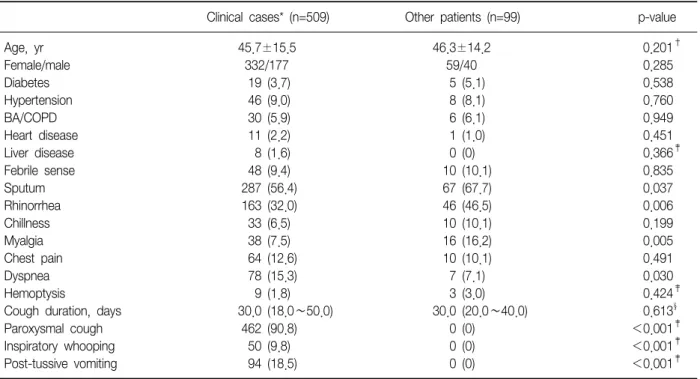
Table 3. Comparisons of the clinical characteristics between clinical cases and other patients

Clinical cases* (n=509) Other patients (n=99) p-value

Age, yr 45.7±15.5 46.3±14.2 0.201

Female/male 332/177 59/40 0.285

Diabetes 19 (3.7) 5 (5.1) 0.538

Hypertension 46 (9.0) 8 (8.1) 0.760

BA/COPD 30 (5.9) 6 (6.1) 0.949

Heart disease 11 (2.2) 1 (1.0) 0.451

Liver disease 8 (1.6) 0 (0) 0.366

Febrile sense 48 (9.4) 10 (10.1) 0.835

Sputum 287 (56.4) 67 (67.7) 0.037

Rhinorrhea 163 (32.0) 46 (46.5) 0.006

Chillness 33 (6.5) 10 (10.1) 0.199

Myalgia 38 (7.5) 16 (16.2) 0.005

Chest pain 64 (12.6) 10 (10.1) 0.491

Dyspnea 78 (15.3) 7 (7.1) 0.030

Hemoptysis 9 (1.8) 3 (3.0) 0.424

Cough duration, days 30.0 (18.0∼50.0) 30.0 (20.0∼40.0) 0.613§

Paroxysmal cough 462 (90.8) 0 (0) <0.001

Inspiratory whooping 50 (9.8) 0 (0) <0.001

Post-tussive vomiting 94 (18.5) 0 (0) <0.001

Values are represented as number (% or range).

*Confirmed (n=5) and probable (n=504) cases defined by the US Centers for Disease Control and Prevention's criteria. Student's t-tests. Fisher's exact test. §Mann-Whitney U-tests.

BA: bronchial asthma; COPD: chronic obstructive pulmonary disease.

tients). The mean age of the patients (n=934) was 45.9±15.2 years, and 66.7% were female (Table 1).

The patient's ages were distributed evenly, and 30∼39 years was the most frequent age group. The median cough duration was 17 days (range, 9∼30 days). Hy- pertension and bronchial asthma were the most com- mon co-morbid illnesses, and sputum and rhinorrhea

were the most frequent symptoms, except for coughing (Table 2). Only 13.2% (123/934) of the patients were able to recall if they had received the DTP (or DTaP) vaccine; the rest were uncertain.

In total, 607 patients presented with a cough duration

≥2 weeks: four (0.7%) were diagnosed as confirmed cases and 504 (83.0%) as probable cases. Another pa- tient with a cough duration of 8 days was also diag- nosed as a confirmed case because he was culture-pos- itive for B. pertussis . Therefore, there were 509 clinical cases of pertussis infection.

2. Microbiologic data

We collected 568 NPA and 366 NPS samples during

the study period. Five patients were PCR positive, and

one was also culture positive. NPS and NPA had pos-

itive rates of 1.1% (4/366) and 0.2% (1/568), respec-

tively.

(5)

3. Clinical characteristics

We investigated the clinical characteristics of 509 clin- ical cases (i.e., five confirmed and 504 probable cases).

Both the age distribution and cough duration of the clin- ical cases were diverse (45.7±15.5 years and 30 [18.0∼

50.0] days, respectively), and 462 (90.8%) patients com- plained of paroxysmal cough, 9.8% of inspiratory whooping, and 18.5% of post-tussive vomiting.

The characteristics of the clinical cases are compared to other cases in Table 3. No significant differences be- tween the two groups were observed among the co- morbid illnesses. In terms of clinical symptoms, sputum, rhinorrhea, and myalgia were less frequent and dyspnea was more frequent in the clinical cases compared to other cases (p=0.037, p=0.006, p=0.005, and p=0.030, respectively).

4. Close contacts

In terms of close contacts, we investigated only three contacts of one confirmed case. All had cough illness days before the confirmed patient, but none was PCR or culture positive. We could not investigate the close contacts of the remaining confirmed patients due to their refusal (n=2) or loss to follow-up (n=2).

Discussion

In this study, the positive PCR rate for B. pertussis among all enrolled patients in a non-outbreak, ordinary clinical setting was 0.5% (5/934), and it was 0.7%

among the patients with a cough duration≥2 weeks.

This low positive rate can be explained by several factors. First, we recruited patients complaining of cough of any duration, regardless of whether they pre- sented with classical pertussis symptoms. Therefore, many patients with upper respiratory viral infections may have been included. Second, we did not perform serologic testing. Third, false-positive PCR results were possible. Fourth, several other factors might have been possible causes, such as specimen quality, the time tak- en to transfer specimens to the central laboratory, and

prior antibiotic use. However, our objective was to de- termine the clinical features and incidence of pertussis infection in an ordinary outpatient setting; therefore, the threshold for seeking medical care and performing tests may have been different from that during outbreaks.

Culture has been considered the gold-standard meth- od of laboratory diagnosis. It is highly specific, but has varying sensitivity depending on factors such as age, vaccination status, and transfer time

14

. Culture is rarely useful for the prompt diagnosis and treatment of an adult pertussis infection due to the long turnaround time. However, serology has proven useful for diag- nosis in adolescents and adults, particularly in the late period (i.e., after 3∼4 weeks), when the results of both PCR and culture are frequently negative. Many studies have shown that 13∼32% of adolescents and adults with cough illness are serologically positive for pertussis infection

15-20

. Therefore, we may have underestimated the incidence of pertussis infection. Due to the high sensitivity of PCR (70∼99%)

14

, the US CDC and the World Health Organization include the test in the diag- nostic criteria for pertussis infection. We used a method similar to that used in Loeffelholz et al.

21

, in which the sensitivity and specificity of a PCR test were 93.5% and 97.1%, respectively. However, although PCR can detect patients with an atypical presentation, there is no stand- ardized PCR kit, and it still has the risk of false positives.

Despite the high vaccination coverage in many in- dustrialized countries, a worldwide resurgence of per- tussis infection has been reported in recent years

2,3

. This significant increase has led to much research on im- munity, leading to the revelation that neither vacci- nation nor natural infection guarantees life-long im- munity

22,23

. Contrary to the pre-vaccine era when the majority of pertussis infection occurred in children and adults could maintain their boosted immunity by re- current exposure, in the post-vaccine era the risk of per- tussis infection can increase among adolescents and adults when their vaccine-induced immunity diminishes.

Surveillance of pertussis infection in Korea relies

mostly on clinical notification systems, and most re-

(6)

ported cases are in children

24

. Adult patients often do not seek medical care until several weeks after the onset of their illness and frequently present with mild sym- ptoms. Therefore, disease surveillance and control may not be possible using only a clinical notification system.

In 2005, Park et al.

25

reported an incidence of 2.9%

among Korean adults with cough≥1 week. The me- dian age of patients in their study was 30 years, and 65.7% had a paroxysmal cough. However, theirs was a small study, including only two centers (n=102)

25

. Among patients with a cough duration≥2 weeks, 90.8% of patients had a paroxysmal cough, 88 (17.3%) presented with two classical symptoms, and 14 (2.8%) had all three classical symptoms, but none of those with three symptoms were both PCR and culture negative.

In a study of immunized children and adults in Israel, who were serologically confirmed to have pertussis in- fection, all patients had a cough (4±3.6 weeks), but only 6% had classical whooping. Most had atypical and mild symptoms

26

. Although several studies have demon- strated the high diagnostic sensitivity of paroxysmal cough, the diagnostic accuracy of the three classical symptoms remains questionable

25-27

. In this study, we also investigated other clinical symptoms, and found that sputum, rhinorrhea, and myalgia were less frequent and dyspnea was more frequent in clinical cases com- pared to those in other patients. Despite the small num- ber of laboratory-confirmed cases, we think that these are interesting findings worthy of reevaluation in a fu- ture study. Our results may assist in excluding patients who are less likely to have pertussis infection.

Many patients could not recall whether they had re- ceived a pertussis vaccine in their childhood. Therefore, we could not evaluate the clinical implication of prior vaccination on adult pertussis infection. However, since the DTP vaccine was introduced in 1958, the incidence of pertussis in South Korea has been low. The DTaP vaccination rate of infants and children in the early 2000s was over 98.0% in two metropolitan cities in South Korea

28

. In our study, four of five confirmed pa- tients were born after 1958 and had most likely received either the DTP or DTaP vaccine.

This study had several limitations including a lack of serologic testing. However, the study also had several strengths. This is the first large-scale, prospective study performed in non-outbreak, ordinary settings. This study encompassed primary care clinics and secondary and tertiary referral hospitals nationwide. Although the positivity rate was low, we think that our findings are important, because this is the first multicenter study of adult patients to tackle an important epidemic issue. As such, it represents the groundwork for a future study intended to provide evidence for a booster vaccination program.

In conclusion, the positive rate of pertussis infection may be low in non-outbreak, ordinary clinical settings if a PCR-based method is used. Further prospective, well-designed, multicenter studies should be performed to define precisely the incidence and clinical implicati- ons of adult pertussis infection.

Acknowledgements

The authors would like to thank Dong-Gyu Kim, Mi-Ok Kim, Seung Hun Jang, Yong-Il Hwang, Ji-Yong Choi, Jong-Wook Yun, Jong-Woo Lee, Jun-Wook Ha, Tae-Gyeong Lim, and Hee-Suck Jeon for their con- tribution to this nationwide surveillance.

References

1. Gonzales R, Sande MA. Uncomplicated acute bron- chitis. Ann Intern Med 2000;133:981-91.

2. Hewlett EL, Edwards KM. Clinical practice. Pertussis:

not just for kids. N Engl J Med 2005;352:1215-22.

3. Celentano LP, Massari M, Paramatti D, Salmaso S, Tozzi AE; EUVAC-NET Group. Resurgence of pertussis in Europe. Pediatr Infect Dis J 2005;24:761-5.

4. de Melker HE, Versteegh FG, Schellekens JF, Teunis PF, Kretzschmar M. The incidence of Bordetella pertus- sis infections estimated in the population from a com- bination of serological surveys. J Infect 2006;53:106-13.

5. Hozbor D, Mooi F, Flores D, Weltman G, Bottero D, Fossati S, et al. Pertussis epidemiology in Argentina:

trends over 2004-2007. J Infect 2009;59:225-31.

6. Mayet A, Brossier C, Haus-Cheymol R, Verret C,

(7)

Meynard JB, Migliani R, et al. Pertussis surveillance within the French armed forces: a new system showing increased incidence among young adults (2007-2009).

J Infect 2011;62:322-4.

7. Skowronski DM, De Serres G, MacDonald D, Wu W, Shaw C, Macnabb J, et al. The changing age and sea- sonal profile of pertussis in Canada. J Infect Dis 2002;

185:1448-53.

8. Cherry JD. The science and fiction of the "resurgence"

of pertussis. Pediatrics 2003;112:405-6.

9. Tiwari T, Murphy TV, Moran J; National Immunization Program, CDC. Recommended antimicrobial agents for the treatment and postexposure prophylaxis of pertus- sis: 2005 CDC Guidelines. MMWR Recomm Rep 2005;

54:1-16.

10. Regan J, Lowe F. Enrichment medium for the isolation of Bordetella. J Clin Microbiol 1977;6:303-9.

11. Lautrop H. Laboratory diagnosis of whooping-cough or Bordetella infections. Bull World Health Organ 1960;

23:15-35.

12. Glare EM, Paton JC, Premier RR, Lawrence AJ, Nisbet IT. Analysis of a repetitive DNA sequence from Bordetella pertussis and its application to the diagnosis of pertussis using the polymerase chain reaction. J Clin Microbiol 1990;28:1982-7.

13. Houard S, Hackel C, Herzog A, Bollen A. Specific iden- tification of Bordetella pertussis by the polymerase chain reaction. Res Microbiol 1989;140:477-87.

14. Zouari A, Smaoui H, Kechrid A. The diagnosis of per- tussis: which method to choose? Crit Rev Microbiol 2012;38:111-21.

15. Birkebaek NH, Kristiansen M, Seefeldt T, Degn J, Moller A, Heron I, et al. Bordetella pertussis and chronic cough in adults. Clin Infect Dis 1999;29:1239- 42.

16. Cattaneo LA, Reed GW, Haase DH, Wills MJ, Edwards KM. The seroepidemiology of Bordetella pertussis in- fections: a study of persons ages 1-65 years. J Infect Dis 1996;173:1256-9.

17. Miller E, Fleming DM, Ashworth LA, Mabbett DA, Vurdien JE, Elliott TS. Serological evidence of pertussis in patients presenting with cough in general practice in Birmingham. Commun Dis Public Health 2000;3:

132-4.

18. Mink CM, Cherry JD, Christenson P, Lewis K, Pineda

E, Shlian D, et al. A search for Bordetella pertussis in- fection in university students. Clin Infect Dis 1992;14:

464-71.

19. Nennig ME, Shinefield HR, Edwards KM, Black SB, Fireman BH. Prevalence and incidence of adult pertus- sis in an urban population. JAMA 1996;275:1672-4.

20. Wright SW, Edwards KM, Decker MD, Zeldin MH.

Pertussis infection in adults with persistent cough.

JAMA 1995;273:1044-6.

21. Loeffelholz MJ, Thompson CJ, Long KS, Gilchrist MJ.

Comparison of PCR, culture, and direct fluorescent-an- tibody testing for detection of Bordetella pertussis. J Clin Microbiol 1999;37:2872-6.

22. van Boven M, de Melker HE, Schellekens JF, Kretzschmar M. Waning immunity and sub-clinical in- fection in an epidemic model: implications for pertussis in The Netherlands. Math Biosci 2000;164:161-82.

23. Wendelboe AM, Van Rie A, Salmaso S, Englund JA.

Duration of immunity against pertussis after natural in- fection or vaccination. Pediatr Infect Dis J 2005;24(5 Suppl):S58-61.

24. Korean Centers for Disease Control and Prevention.

Sentinal surveillance systems for communicable in- fectious diseases [Internet]. Cheongwon: Korean Cen- ters for Disease Control and Prevention; [cited 2011 Oct 1]. Available from: http://www.cdc.go.kr.

25. Park WB, Park SW, Kim HB, Kim EC, Oh M, Choe KW.

Pertussis in adults with persistent cough in South Korea. Eur J Clin Microbiol Infect Dis 2005;24:156-8.

26. Yaari E, Yafe-Zimerman Y, Schwartz SB, Slater PE, Shvartzman P, Andoren N, et al. Clinical manifestations of Bordetella pertussis infection in immunized children and young adults. Chest 1999;115:1254-8.

27. Strebel P, Nordin J, Edwards K, Hunt J, Besser J, Burns S, et al. Population-based incidence of pertussis among adolescents and adults, Minnesota, 1995-1996. J Infect Dis 2001;183:1353-9.

28. Lee JJ, Yang JH, Hwang IS, Chun BY, Kam S, Lee KS, et al. The BCG, DTaP and IPV vaccination rate and the proportion of vaccination in the public health cen- ters: demonstration project for expansion of national immunization program coverage in Deagu Metropol- itan City. J Korean Soc Matern Child Health 2007;11:

33-43.

수치

Table  1.  Baseline  characteristics  (n=934) Characteristics No.  (%) Age,  yr 45.9±15.2  Female/Male   623/311 Smoker,  never/ex-/current 805/31/98 Diabetes   41  (4.4) Hypertension   85  (9.1) Bronchial  asthma   70  (7.5) COPD     4  (0.4) Bronchiectas
Table  3.  Comparisons  of  the  clinical  characteristics  between  clinical  cases  and  other  patients

참조

관련 문서

Division of Pulmonary, Allergy and Critical Care Medicine, Department of Internal Medicine, Busan Paik Hospital, Inje University College of Medicine, Korea 1 , Division

5 Division of Pulmonary and Critical Care Medicine, Asan Medical Center, University of Ulsan College of Medicine, Seoul, 6 Division of Pulmonology, Department of Internal

Mary's Hospital, College of Medicine, The Catholic University of Korea, Seoul, 6 Division of Pulmonary, Allergy and Critical Care Medicine, Department of Internal Medicine,

15 Division of Critical Care and Pulmonary Medicine, Department of Internal Medicine, Inje University Pusan Paik Hospital, Gimhae, South Korea.. 16 Division of Allergy

Correspondence to: Jae Hee Cho, Division of Gastroenterology, Department of Internal Medicine, Gachon University Gil Medical Center, 21 Namdong-daero 774beon- gil, Namdong-gu,

Division of Gastroenterology, Department of Internal Medicine, Gachon University Gil Medical Center, Incheon, Korea Article: Lanreotide in Metastatic Enteropancreatic

Division of Gastroenterology, Department of Internal Medicine, Gil Medical Center, Gachon University College of Medicine, Incheon, Korea Article: Effect of Cancer Awareness on

Department of Clinical Pathology, Jinju Health College, Jinju 660-757, Korea 4 , Department of Laboratory Medicine, Gachon University Gil Hospital, Incheon 405-760, Korea 5.. A total