Korean Circulation Journal Print ISSN 1738-5520 • On-line ISSN 1738-5555
The Korean Heart Rhythm Society’s 2014 Statement
on Antithrombotic Therapy for Patients with Nonvalvular
Atrial Fibrillation: Korean Heart Rhythm Society
Byung Chun Jung, MD
1, Nam Ho Kim, MD
2, Gi Byung Nam, MD
3, Hyung Wook Park, MD
4,
Young Keun On, MD
5, Young Soo Lee, MD
6, Hong Euy Lim, MD
7, Boyoung Joung, MD
8,
Tae Joon Cha, MD
9, Gyo Seung Hwang, MD
10, Seil Oh, MD
11, and June Soo Kim, MD
5 1Division of Cardiology, Department of Medicine, Daegu Fatima Hospital, Daegu,2Division of Cardiology, Department of Internal Medicine, Wonkwang University Hospital, Iksan, 3Division of Cardiology, Department of Internal Medicine, University of Ulsan College of Medicine, Seoul, 4Department of Cardiovascular Medicine, Chonnam National University Hospital, Gwangju,
5Division of Cardiology, Department of Medicine, Sungkyunkwan University School of Medicine, Samsung Medical Center, Seoul, 6Department of Cardiology, Internal Medicine, Catholic University of Daegu College of Medicine, Daegu,
7Division of Cardiology, Department of Medicine, Korea University Guro Hospital, Seoul, 8Division of Cardiology, Department of Medicine, Yonsei University Severance Hospital, Seoul, 9Division of Cardiology, Department of Internal Medicine, Kosin University Gospel Hospital, Busan, 10Division of Cardiology, Department of Medicine, Ajou University Hospital, Suwon,
11Department of Internal Medicine, Seoul National University Hospital, Seoul, Korea
In patients with nonvalvular atrial fibrillation (AF), the risk of stroke varies considerably according to individual clinical status. The CHA2DS2-VASc score is better than the CHADS2 score for identifying truly lower risk patients with AF. With the advent of novel oral
anti-coagulants (NOACs), the strategy for antithrombotic therapy has undergone significant changes due to its superior efficacy, safety and convenience compared with warfarin. Furthermore, new aspects of antithrombotic therapy and risk assessment of stroke have been re-vealed: the efficacy of stroke prevention with aspirin is weak, while the risk of major bleeding is not significantly different from that of oral anticoagulant (OAC) therapy, especially in the elderly. Reflecting these pivotal aspects, previous guidelines have been updated in re-cent years by overseas societies and associations. The Korean Heart Rhythm Society has summarized the new evidence and updated rec-ommendations for stroke prevention of patients with nonvalvular AF. First of all, antithrombotic therapy must be considered carefully and incorporate the clinical characteristics and circumstances of each individual patient, especially with regards to balancing the benefits of stroke prevention with the risk of bleeding, recommending the CHA2DS2-VASc score rather than the CHADS2 score for assessing the risk
of stroke, and employing the HAS-BLED score to validate bleeding risk. In patients with truly low risk (lone AF, CHA2DS2-VASc score of 0),
no antithrombotic therapy is recommended, whereas OAC therapy, including warfarin (international normalized ratio 2–3) or NOACs, is recommended for patients with a CHA2DS2-VASc score ≥2 unless contraindicated. In patients with a CHA2DS2-VASc score of 1, OAC
ther-apy should be preferentially considered, but depending on bleeding risk or patient preferences, antiplatelet therther-apy or no therther-apy could be permitted. (Korean Circ J 2015;45(1):9-19)
KEY WORDS: Atrial fibrillation; Antithrombotic agent; Anticoagulant.
Received: October 15, 2014 / Accepted: November 13, 2014
Correspondence: Byung Chun Jung, MD, Division of Cardiology, Department of Medicine, Daegu Fatima Hospital, 99 Ayang-ro, Dong-gu, Daegu 701-724, Korea
Tel: 82-53-940-7114, Fax: 82-53-954-7417, E-mail: [email protected] • The authors have no financial conflicts of interest.
This is an Open Access article distributed under the terms of the Creative Commons Attribution Non-Commercial License (http://creativecommons.org/licenses/ by-nc/3.0) which permits unrestricted non-commercial use, distribution, and reproduction in any medium, provided the original work is properly cited.
Introduction
The prevalence of atrial fibrillation (AF) is approximately 1.5–2% of the general population in the developed world, with a tendency to increase abruptly with age, and is estimated to be about 10% of the population over 80 years old. AF is accompanied by a five-fold risk of stroke and a three-fold incidence of congestive heart failure, as well as higher mortality.1) Especially in patients with AF, stroke
has a tendency to involve a larger territory, with brain infarction that results in more severe neurological disability than that by other causes. Hence, the importance of antithrombotic therapy on AF has been consistently emphasized.2)
Since 2003, pivotal results from randomized controlled trials have been sequentially released that detail the efficacy and safety of novel oral anticoagulants (NOACs) for the prevention of stroke in nonvalvular AF patients. Compared with conventional antithrom-botics such as aspirin, clopidogrel or warfarin, NOACs have differ-ent action mechanisms that are classified into two classes: oral di-rect thrombin inhibitor (ximelagatran, dabigatran) and oral didi-rect factor Xa inhibitor (rivaroxaban, apixaban, edoxaban).3-8) While
ximel-agatran was developed first and withdrawn in the middle of a clini-cal application due to severe liver toxicity, other NOACs developed afterward have had favorable risk-benefit profiles with non-inferi-or non-inferi-or superinon-inferi-or reductions in stroke, intracranial hemnon-inferi-orrhage (ICH), and mortality, and with similar incidence of major bleeding as war-farin. Due to these findings, NOACs have been recommended as anticoagulant therapy for nonvalvular AF patients in the updated guidelines of Asian and Western societies since 2010.
The authors have reviewed guidelines issued in recent years by Asian, European, and North American societies and organizations, and based on these guidelines, provide updated recommendations for the prevention of stroke in nonvavular AF patients.
Previous Recommendations for Antithrombotic
Therapies in Korea
In Korea, the clinical guideline for the prevention of stroke in pa-tients with AF was published in 2009, even before the introduction of NOACs in clinical practice. The summary of antithrombotic thera-pies for the prevention of stroke in nonvalvular AF patients was as follows:9)
1) Antithrombotic therapy (warfarin or aspirin) was recommended to prevent stroke in patients with nonvalvular AF according to as-sessment of their absolute stroke risk, estimated bleeding risk, pa-tient preferences, and access to high-quality anticoagulation moni-toring.
2) Warfarin {international normalized ratio (INR) 2.0 to 3.0} was
recommended for high-risk (4% annual risk of stroke) patients (and most moderate-risk patients according to an assessment of bleed-ing risk) with AF who had no clinically significant contraindications to oral anticoagulants (OACs).
3) Although not yet established by randomized studies, in patients over 75 years of age, warfarin (INR 2.0 to 3.0) may be used for the primary prevention of stroke in patients with AF.
Thereafter, due to the excellent anticoagulant efficacy of NOACs for nonvalvular AF patients and the revision of overseas recommen-dations, an update was issued in 2012 on the primary prevention of stroke in AF patients by the Korean Stroke Society.2)
However, in real clinical practice, aspirin is preferred for patients with low-risk of stroke, and overused for nonvavular AF patients without risk factors (lone AF, CHA2DS2-VASc score of 0) that
obvi-ously gain no benefit from antithrombotic therapy. On the other hand, despite the superior efficacy in stroke prevention compare to antiplatelets such as aspirin or clopidogrel, anticoagulation with warfarin (oral vitamin K antagonist) is inadequately underused be-cause of low compliance owing to frequent INR tests, concern about severe bleeding complications, and INR fluctuations due to interac-tion with concomitant medicainterac-tions, food, or herbal medicine.
Recently Updated Overseas Recommendation and
Evidences
Stroke and bleeding risk assessment with antithrombotic therapy in nonvalvular atrial fibrillation patients
The CHADS2 score, expressed as an acronym, has been widely used
to evaluate the risk of stroke in AF patients and assigns a single point for several factors, namely, Congestive Heart Failure, Hyperten-sion, Age (over 75 years old) and Diabetes Mellitus, and two points for Stroke or transient ischemic attack (TIA). However, it has been found to have a limitation with discriminating “ruly low-risk” pa-tients from low-risk (CHADS2 score=0) patients that have no need
for antithrombotic therapy. To overcome this issue, the European Society of Cardiology (ESC) 2010 guideline introduced the CHA2DS2
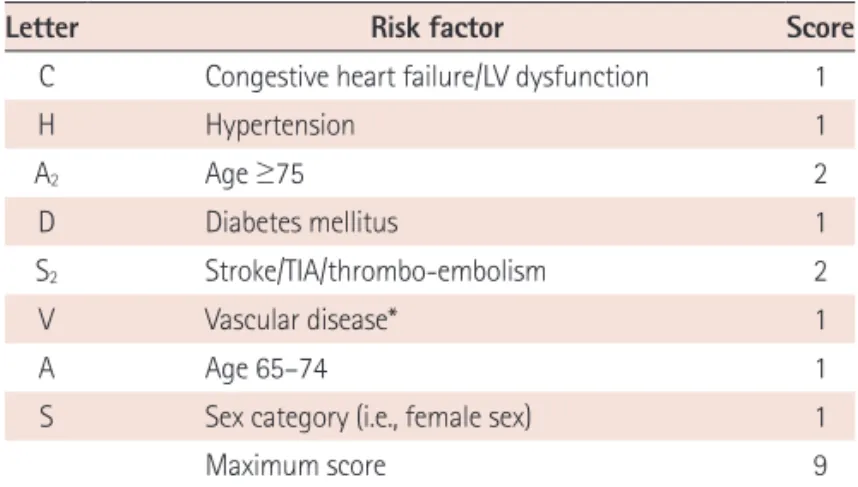
-VASc score, which incorporates additional weights for age (2 points for age over 75 year old, 1 point for 65–74), gender (1 point for fe-male) and vascular disease (1 point) (Table 1).10) Thereafter, the
Ca-nadian Cardiovascular Society (CCS) AF 2012 guideline, APHRS 2013 guideline, and American Heart Association (AHA)/American College of Cardiology (ACC)/Heart Rhythm Society (HRS) 2014 guideline were revised to prefer the CHA2DS2-VASc score for evaluating the
risk of stroke or to adopt CHA2DS2-VASc score instead of the CHADS2
score.11-13) However, antithrombotic therapy is not recommended for
female patients with no other risk factors of stroke.
factor for implementing antithrombotic therapy. Accumulating ev-idence suggest that the CHA2DS2-VASc score is better at identifying
“truly low-risk” patients in AF, and is as good as or possibly better than the CHADS2 score in predicting patients who will develop
stroke and thromboembolism.14) Hence the CHA
2DS2-VASc score
should be adopted in Korea to avoid unnecessary antithrombotic therapy among low-risk patients, and to more precisely refine the risk of stroke in AF patients.
Antithrombotic therapy for stroke prevention should be con-cerned with balancing the risk of stroke against the risk of major bleeding such as ICH, the most dangerous complication, and severe bleeding that require more than 2 pints of transfusion. Generally,
the risk of bleeding is proportionally increased with antithrombotic intensity in the following order: 1) aspirin (75–325 mg/day) or clopidogrel (75 mg/day), 2) a combination of aspirin and clopido-grel, and 3) low dose dabigatran (110 mg bid.), 4) high dose dabig-atran (150 mg bid.), rivaroxaban, apixaban and warfarin (INR: 2–3), which carry similar risks.11)
The ESC 2010 and CCS AF 2012 guidelines recommended the use of HAS-BLED bleeding risk score for the evaluation of bleeding risk in clinical practice (Table 2). The HAS-BLED bleeding risk score con-siders the following as bleeding risk factors; Hypertension, Abnormal renal/liver function, Stroke, Bleeding history or predisposition, La-bile INRs, Elderly (over 65 years old), and Drug/alcohol. According to this score system, the risk of major bleeding with a HAS-BLED score of 0–1 is about 1%, and about 12.5% annually with a HAS-BLED score of 5.15) In patients with a HAS-BLED score of 3, the risk of
ma-jor bleeding is about 3.74% and coincides with a high-risk of stroke in AF patients. Therefore, to minimize bleeding complications, vigi-lant caution and regular review are essential, as well as efforts to correct potentially reversible risk factors for bleeding in patients with HAS-BLED score ≥3. A high HAS-BLED score per se should not ex-clude patients from OAC therapy. NOACs can be recommended for patients with labile INRs because of its predictable effect without INR monitoring, and fewer food and drug interactions. Hyperten-sion, previous stroke, TIA and old age, which are known as risk fac-tors for stroke, overlap with the risk facfac-tors for concomitant bleed-ing. In daily clinical practice, caution should be taken because bleeding risk is often enhanced proportionally with increases in the CHA2DS2-VASc score.
Pivotal clinical trials using novel oral anticoagulants Dabigatran versus Warfarin: The Randomized Evaluation of Long-Term Anticoagulation Therapy (RE-LY)4)
The RE-LY clinical trial was a prospective, randomized, open-la-bel, phase III trial comparing two blinded doses of dabigatran etex-ilte {110 mg bid (D110) or 150 mg bid (D150)} with adjusted-dose warfarin (INR 2.0–3.0), in which the primary outcome was stroke or systemic embolism. Primary outcome rates were 1.69% per year in the warfarin group, as compared with 1.53% per year in the D110 group {relative risk (RR), 0.91; 95% CI, 0.74 to 1.11; p<0.001 for non-inferiority} and 1.11% per year in the D150 group {RR, 0.66; 95% confidence interval (CI), 0.53 to 0.82; p<0.001 for superiority}. The rate of major bleeding was 3.36% per year in the warfarin group, as compared with 2.71% per year in the D110 group (p=0.003) and 3.11% per year in the D150 group (p=0.31). The rate of hemorrhagic stroke was 0.38% per year in the warfarin group, as compared with 0.12% per year with the D110 group (p<0.001) and 0.10% per year
Table 1. The CHA2DS2-VASc score
Letter Risk factor Score
C Congestive heart failure/LV dysfunction 1
H Hypertension 1 A2 Age ≥75 2 D Diabetes mellitus 1 S2 Stroke/TIA/thrombo-embolism 2 V Vascular disease* 1 A Age 65–74 1
S Sex category (i.e., female sex) 1
Maximum score 9
Congestive heart failure/LV dysfunction means LV ejection fraction ≤40%. Hypertension includes the patients with current antihypertensive medica-tion. *Prior myocardial infarction, peripheral artery disease, aortic plaque. LV: left ventricular, TIA: transient ischemic attack
Table 2. The HAS-BLED bleeding risk score
Letter Risk factor Score
H Hypertension 1
A Abnormal renal and liver function (1 points each) 1 or 2
S Stroke 1
B Bleeding 1
L Labile INRs 1
E Elderly (e.g., age >65 years) 1
D Drugs or alcohol (1 point each) 1 or 2
Maximum score 9
Hypertension means systolic blood pressure >160 mm Hg. Abnormal renal function means the presence of chronic dialysis or renal transplantation or serum creatinine ≥200 µmol/L (about 2.262 mg/dL: 88.4 µmol/L=1.0 mg/dL). Abnormal liver function means chronic hepatic disease or biochemical evi-dence of significant liver dysfunction (e.g., bilirubin >two times of upper limit of normal, in association with aspartate aminotransferase/alanine amino-transferase/alkaline phosphatase >three times of upper limit normal, etc.). Bleeding means previous bleeding history and/or predisposition to bleeding, e.g., bleeding diathesis, anemia, etc. Labile INRs means unstable/high INRs or poor time in therapeutic range (e.g., <60%). Drugs/alcohol use means con-comitant use of drugs, such as antiplatelet agents, nonsteroidal anti-in-flammatory drugs, or alcohol abuse, etc. INR: international normalized ratio
with the D150 group (p<0.001). The mortality rate was 4.13% per year in the warfarin group, as compared with 3.75% per year with the D110 group (p=0.13) and 3.64% per year with the D150 group (p=0.051). Rates of hemorrhagic stroke and ICH were lower with both doses of dabigatran, but gastrointestinal bleeding was signifi-cantly higher in the D150 group.
In patients with AF, D110 was associated with rates of stroke and systemic embolism similar to those associated with warfarin, as well as lower rates of major hemorrhage. D150, as compared with warfa-rin, was associated with lower rates of stroke and systemic embo-lism but similar rates of major hemorrhage.
Rivaroxaban versus Warfarin: Rivaroxaban Once Daily Oral Direct Factor Xa Inhibition Compared with Vitamin K Antagonism for the Prevention of Stroke and Embolism Trial in Atrial Fibrillation (ROCKET AF)5)
The ROCKET AF clinical trial was a randomized, double-blind and double-dummy trial for either rivaroxaban 20 mg taken daily (15 mg daily for those with estimated creatinine clearance 30–49 mL/min) or dose-adjusted warfarin for patients with nonvalvular AF who were at considerably higher risk of stroke than those in other NOAC AF trials. The mean time in the therapeutic range (TTR) was 55%, which was lower than in other randomized trials. The primary end point, stroke or systemic embolism, occurred in 188 patients in the rivar-oxaban group (1.7% per year) and in 241 in the warfarin group (2.2% per year) {hazard ratio (HR), 0.79; 95% CI, 0.66 to 0.96; p<0.001 for noninferiority}. In the intention-to-treat analysis, the primary end point occurred in 269 patients in the rivaroxaban group (2.1% per year) and in 306 patients in the warfarin group (2.4% per year) (HR, 0.88; 95% CI, 0.74 to 1.03; p<0.001 for noninferiority; p=0.12 for superiority). Major and nonmajor clinically relevant bleeding oc-curred in 1475 patients in the rivaroxaban group (14.9% per year) and in 1449 in the warfarin group (14.5% per year) (HR, 1.03; 95% CI, 0.96 to 1.11; p=0.44), with significantly lower ICH (0.5% vs. 0.7%, p=0.02) and fatal bleeding (0.2% vs. 0.5%, p=0.003) in the rivarox-aban group. However, GI bleeding was higher in the rivaroxrivarox-aban group than in the warfarin group (3.3% vs. 2.2%, p<0.001).
In patients with AF, rivaroxaban was noninferior to warfarin for the prevention of stroke or systemic embolism. There was no sig-nificant difference between groups in the risk for major bleeding, although intracranial and fatal bleeding occurred less frequently in the rivaroxaban group.
Apixaban versus Aspirin: Apixaban versus Acetylsalicylic Acid to Prevent Stroke in Atrial Fibrillation Patients Who Have Failed or Are Unsuitable for Vitamin K Antagonist Treatment (AVERROES)6)
The AVERROES clinical trial was a randomized, double-blind and
double-dummy trial with AF patients who were unsuitable candi-dates for warfarin, comparing the efficacy of apixaban to that of as-pirin for the prevention of stroke or systemic embolism. There were 51 primary outcome events (1.6% per year) in the apixaban group and 113 (3.7% per year) in the aspirin group (HR, 0.45; 95% CI, 0.32 to 0.62; p<0.001). The mortality was 3.5% per year in the apixaban group and 4.4% per year in the aspirin group (HR, 0.79; 95% CI, 0.62 to 1.02; p=0.07). There were 44 cases of major bleeding (1.4% per year) in the apixaban group and 39 (1.2% per year) in the aspirin group (HR, 1.13; 95% CI, 0.74 to 1.75; p=0.57). Intracranial bleed-ing occurred in 11 cases with apixaban and 13 with aspirin. Apixa-ban reduced the risk of a first hospitalization for cardiovascular causes compared with aspirin (12.6% per year vs. 15.9% per year, p<0.001).
In patients with AF for whom vitamin K antagonist therapy was unsuitable, apixaban reduced the risk of stroke or systemic embolism without significantly increasing the risk of major bleeding or ICH.
Apixaban versus Warfarin: Apixaban for Reduction in Stroke and Other Thromboembolic Events in Atrial Fibrillation (ARISTOTLE)7)
The ARISTOTLE clinical trial was a randomized, double-blind, dou-ble-dummy, phase III trial comparing apixaban (5 mg twice daily, or a dose adjustment to 2.5 mg twice daily in patients who met two of the following factors: ≥80 years, weight ≤60 kg or a serum creatinine ≥1.5 mg/dL) with dose-adjusted warfarin (INR 2.0–3.0) in patients with nonvalvular AF. The primary outcome was ischemic or hemorrhagic stroke or systemic embolism. The rate of primary outcome was 1.27% per year in the apixaban group, as compared with 1.60% per year in the warfarin group (HR, 0.79; 95% CI, 0.66 to 0.95; p<0.001 for noninferiority; p=0.01 for superiority). The rate of major bleeding was 2.13% per year in the apixaban group, as compared with 3.09% per year in the warfarin group (HR, 0.69; 95% CI, 0.60 to 0.80; p<0.001), and the mortality from any cause was 3.52% and 3.94%, respectively (HR, 0.89; 95% CI, 0.80 to 0.99; p= 0.047). The rate of hemorrhagic stroke was 0.24% per year in the apixaban group, as compared with 0.47% per year in the warfarin group (HR, 0.51; 95% CI, 0.35 to 0.75; p<0.001), and the rate of isch-emic or uncertain type of stroke was 0.97% per year in the apixaban group and 1.05% per year in the warfarin group (HR, 0.92; 95% CI, 0.74 to 1.13; p=0.42). In patients with AF, apixaban was superior to warfarin in preventing stroke or systemic embolism, caused less bleeding, and resulted in lower mortality.
Edoxaban versus Warfarin: The Effective Anticoagulation with Factor Xa Next Generation in Atrial Fibrillation-Thrombolysis in Myocardial Infarction 48 (ENGAGE AF-TIMI 48)8)
double-blind, double-dummy trial comparing two once-daily regimens of edoxaban {high dose: 60 mg/day (E60), low dose: 30 mg/day (E30)} with warfarin. The primary end point was stroke or systemic embo-lism in patients with moderate to high risk AF. The annualized rate of the primary end point was 1.50% with warfarin, as compared with 1.18% with E60 (HR, 0.79; 97.5% CI, 0.63 to 0.99; p<0.001 for noninferiority) and 1.61% with E30 (HR, 1.07; 97.5% CI, 0.87 to 1.31; p=0.005 for noninferiority). In the intention-to-treat analysis, there was a trend favoring E60 versus warfarin (HR, 0.87; 97.5% CI, 0.73 to 1.04; p=0.08) and an unfavorable trend with E30 versus warfarin (HR, 1.13; 97.5% CI, 0.96 to 1.34; p=0.10). The rate of ma-jor bleeding was 3.43% per year with warfarin versus 2.75% per year with E60 (HR, 0.80; 95% CI, 0.71 to 0.91; p<0.001) and 1.61% with E30 (HR, 0.47; 95% CI, 0.41 to 0.55; p<0.001). The correspond-ing annual mortality from cardiovascular causes were 3.17% versus 2.74% (warfarin vs. E30; HR, 0.86; 95% CI, 0.77 to 0.97; p=0.01), and 2.71% (warfarin vs. E60; HR, 0.85; 95% CI, 0.76 to 0.96; p=0.008). The corresponding rates of the key secondary end point (a compos-ite of stroke, systemic embolism, or death from cardiovascular causes) were 4.43% versus 3.85% (warfarin vs. E30; HR, 0.87; 95% CI, 0.78 to 0.96; p=0.005), and 4.23% (warfarin vs. E60; HR, 0.95; 95% CI, 0.86 to 1.05; p=0.32).
Both once-daily regimens of edoxaban were noninferior to warfa-rin with respect to the prevention of stroke or systemic embolism, and were associated with significantly lower rates of bleeding and death from cardiovascular causes.
The summary of clinical trials with NOACs is as follows: in the prevention of stroke, NOACs are superior or noninferior to warfarin therapy with well controlled INR, and show similar or lower inci-dence of bleeding complications.16) Therefore NOACs can be
recom-mended for patients with uncontrolled labile INRs, history of bleed-ing complications or previous stroke for whom warfarin was previously prescribed for prevention.17)
Antiplatelet therapy in atrial fibrillation patients unsuitable for oral vitamin K antagonist therapy
Effect of Clopidogrel Added to Aspirin in Patients with Atrial Fibrillation: The Atrial Fibrillation Clopidogrel Trial with Irbesartan for Prevention of Vascular Events (ACTIVE A)18)
The ACTIVE A clinical trial compared the efficacy of aspirin mono-therapy (75–100 mg/day) to that of combination mono-therapy involving aspirin and clopidogrel (75 mg/day) in AF patients unsuitable for warfarin therapy with more than one risk factor for stroke. The pri-mary outcome was the composite of stroke, myocardial infarction, non-central nervous system systemic embolism, or death from vas-cular causes. Major vasvas-cular events occurred in 832 patients with
combination therapy (6.8% per year) and in 924 patients with mono-therapy (7.6% per year) (RR, 0.89; 95% CI, 0.81 to 0.98; p=0.01). The difference was primarily due to a reduction in the rate of stroke with combination therapy. Stroke occurred in 296 patients with combination therapy (2.4% per year) and 408 patients with mono-therapy (3.3% per year) (RR, 0.72; 95% CI, 0.62 to 0.83; p<0.001). Myocardial infarction occurred in 90 patients with combination therapy (0.7% per year) and in 115 with monotherapy (0.9% per year) (RR, 0.78; 95% CI, 0.59 to 1.03; p=0.08). Major bleeding oc-curred in 251 patients with combination therapy (2.0% per year) and in 162 patients with monotherapy (1.3% per year) (RR, 1.57; 95% CI, 1.29 to 1.92; p<0.001).
In patients with AF for whom vitamin K antagonist therapy was unsuitable, the addition of clopidogrel to aspirin reduced the risk of major vascular events, especially stroke, and increased the risk of major hemorrhage.
Clopidogrel Plus Aspirin versus Oral Anticoagulation for Atrial Fibrillation in the Atrial Fibrillation Clopidogrel Trial with Irbesartan for Prevention of Vascular Events (ACTIVE W): a randomized controlled trial19)
The ACTIVE W was a randomized, controlled, open-label trial com-paring the efficacy of combination therapy (aspirin 75–100 mg/day and clopidogrel 75 mg/day) to that of oral vitamin K antagonist (warfarin) therapy. The study was terminated early because of clear evidence of the superiority of warfarin therapy. There were 165 pri-mary events in patients on warfarin therapy (annual risk 3.93%) and 234 in those on combination therapy (annual risk 5.60%; RR 1.44; 95% CI, 1.18 to 1.76; p=0.0003).
Warfarin therapy was superior to the combination therapy for prevention of vascular events in patients with AF at high risk of stroke, especially in those already taking oral anticoagulation therapy.
In a meta-analysis of sixteen trials, adjusted-dose warfarin showed a remarkable reduction of stroke in AF patients by 62% whereas as-pirin reduced the risk of stroke by 22%, although major extracranial bleeding was increased by warfarin therapy.20) Compared with
as-pirin, warfarin significantly decreased the risk of all strokes, includ-ing ischemic strokes, and cardiovascular events for patients re-gardless of AF type.21) While advanced age (>75 years) is considered
a clear risk factor for both stroke and bleeding, anticoagulant thera-py should be regarded as the first-line of therathera-py rather than aspi-rin.22) However, in real clinical practice, antiplatelet agents are
ap-plied as alternatives when OAC therapy is unsuitable. Based on the results of the ACTIVE A trial, even with cases where it is hard to de-cide whether aspirin monotherapy and combination therapy is more beneficial, combination therapy should be considered when the risk of bleeding is low.
The Recommendation of Korean Heart Rhythm
Society for Patients with Nonvalvular Atrial
Fibrillation
(Table 3)1. Antithrombotic therapy selection should be considered using the same criteria, irrespective of the pattern of AF such as par-oxysmal, persistent, and permanent.
2. The CHA2DS2-VASc score is recommended for the assessment
of stroke risk.
2-1. The CHA2DS2-VASc score should be used for appropriate
antithrombotic therapy.
2-2. NOACs or anticoagulant therapy using warfarin should be recommended for antithrombotic therapy when the CHA2DS2-VASc score is 1 or greater.
2-3. Antithrombotic therapy is not recommended when the CHA2 DS2-VASc score is 0.
2-4. The CHA2DS2-VASc score is considered as 0 when being
fe-male is the only risk factor.
In the ESC 2012 guideline, NOACs are preferably recommended over warfarin for patients with a score of 1 or greater, while no anti-thrombotic therapy is recommended for patients with a score of 0. In the APHRS 2013 guideline, NOACs or warfarin are recommend-ed impartially for patients with a score ≥2. NOACs (dabigatrin or apixaban, excluding rivaroxaban) are preferably recommended for patients with a score of 1, whereas rivaroxaban or warfarin are con-sidered as alternatives. No antithrombotic therapy is recommended for patients with a score of 0. In the ROCKET AF clinical trial, rivarox-aban was administered to patients with CHADS2 score of 2 or
great-er. Hence, it is recommended as an alternative when the CHA2DS2
-VASc score is 1 (APHRS 2013). Meanwhile, in the 2014 AHA/ACC/ HRS guideline, the strategy for antithrombotic therapy for patients with CHA2DS2-VASc score of 1 seems to be diverse: no
antithrom-botic therapy or treatment with OAC or aspirin can be considered. 3. Warfarin is recommended in the following cases:
3-1. Patients with valve replacement or rheumatic valve dis-ease.
3-2. Patients with nonvalvular AF in whom INR is well con-trolled and no significant bleeding is present.
4. Optimal INR during warfarin treatment 4-1. Optimal INR range is 2–3.
4-2. Time in therapeutic range should be at least over 60% to maximize to the benefit of warfarin
In the APHRS 2013 guideline, the optimum range of INR is con-sidered to be 1.6–2.6 in Asian elderly (≥70 years old) to minimize ce-rebral hemorrhage and other severe bleeding complications as well as to effectively prevent ischemic stroke.
5. Aspirin monotherapy or combination therapy with aspirin and
clopidogrel can be considered when oral anticoagulation therapy is not suitable or patients refuse the use of OACs. 6. Oral anticoagulation therapy may be judiciously combined
with antiplatelet therapy in the following cases:
6-1. Recurrence of thromboembolism despite adequate oral anticoagulation therapy.
6-2. Concomitant antiplatelet therapy may be considered for the treatment of nonembolic cerebral infarction or TIA. 6-3. Presence of concomitant ischemic heart disease. 6-4. Coronary artery stenting.
7. Switch from warfarin to NOACs, and cautions for the admin-istration of NOACs.
7-1. NOACs may not be used in place of warfarin in patients with stable anticoagulation control without bleeding com-plications.
7-2. NOACs are recommended instead of warfarin for patients requiring anticoagulation therapy who have hypersensi-tivity or contraindication against warfarin, cannot maintain an INR within the optimal range, or have cerebral hemor-rhage despite adequate INR maintainance.
7-3. For the administration of dabigatran, 150 mg twice daily is recommended as a standard regimen. Dose reduction (110 mg twice daily) should be considered in the following cases:
- Elderly patients (≥80 years old), concomitant adminis-tration of interacting drugs (e.g., verapamil), high bleed-ing risk (HAS-BLED score ≥3), or moderate renal dysfunc-tion (CrCl 30–49 mL/min).
7-4. For the administration of rivaroxaban, 20 mg once daily is recommended as a standard regimen. Dose reduction (15 mg once daily) should be considered in the following cases: - High bleeding risk (HAS-BLED score ≥3) or moderate renal dysfunction (CrCl 30–49 mL/min).
7-5. For the administration of apixaban, 5 mg twice daily is rec-ommended as a standard regimen. Dose reduction (2.5 mg twice daily) should be considered for the following cases: - Renal dysfunction (CrCl 30–49 mL/min)
- Patients who have 2 or more of the following 3 factors: Elderly patients (≥80 years old), body weight ≤60 kg, or serum creatinine level ≥1.5 mg/dL.
7-6. Assessment of renal function should be carried out prior to the use of NOACs and annually monitored in patients with normal (CrCl ≥80 mL/min) or mild renal dysfunction (CrCl 50–79 mL/min). It should be monitored 2–3 times per year in patients with moderate renal dysfunction (CrCl 30–49 mL/min).
Table 3. The recommendation of the Korean Heart Rhythm Society for patients with nonvalvular AF
1. The selection of antithrombotic therapy should be considered using the same criteria irrespective of the pattern of AF such as paroxysmal, persistent, and permanent.
2. The CHA2DS2-VASc score is recommended for the assessment of stroke risk.
2-1. The CHA2DS2-VASc score should be used for the appropriate antithrombotic therapy.
2-2. NOACs or anticoagulant therapy using warfarin should be recommended for antithrombotic therapy when the CHA2DS2-VASc score is 1 or greater.
2-3. Antithrombotic therapy is not recommended when the CHA2DS2-VASc score is 0.
2-4. The CHA2DS2-VASc score is considered as 0 when being female is the only risk factor.
3. Warfarin is recommended in the following cases:
3-1. Patients with valve replacement or rheumatic valve disease.
3-2. Patients with nonvalvular AF in whom INR is well controlled and no significant bleeding is present. 4. Optimal INR during warfarin treatment
4-1. Optimal INR range is 2–3.
4-2. Time in therapeutic range should be at least over 60% to maximize the benefit of warfarin.
5. Aspirin monotherapy or combination therapy with aspirin and clopidogrel can be considered when oral anticoagulation therapy is not suitable or patients refuse the use of oral anticoagulants.
6. Oral anticoagulation therapy may be judiciously combined with antiplatelet therapy in the following cases: 6-1. Recurrence of thromboembolism despite adequate oral anticoagulation therapy.
6-2. Concomitant antiplatelet therapy may be considered for the treatment of nonembolic cerebral infarction or TIA. 6-3. Presence of concomitant ischemic heart disease.
6-4. Coronary artery stenting.
7. Switch from warfarin to NOACs, and cautions for the administration of NOACs.
7-1. NOACs may not be used in place of warfarin in patients with stable anticoagulation control without bleeding complications.
7-2. NOACs are recommended in place of warfarin for patients requiring anticoagulation therapy who have hypersensitivity or contraindication against warfarin, cannot maintain an INR within the optimal range, or have cerebral hemorrhage despite an INR that is adequately maintained.
7-3. For the administration of dabigatran, 150 mg twice daily is recommended as a standard regimen. Dose reduction (110 mg twice daily) should be considered in the following cases:
- Elderly patients (≥80 years old), concomitant administration of interacting drugs (e.g., verapamil), high bleeding risk (HAS-BLED score ≥3), or moderate renal dysfunction (CrCl 30–49 mL/min).
7-4. For the administration of rivaroxaban, 20 mg once daily is recommended as a standard regimen. Dose reduction (15 mg once daily) should be considered in the following cases:
- High bleeding risk (HAS-BLED score ≥3) or moderate renal dysfunction (CrCl 30–49 mL/min).
7-5. For the administration of apixaban, 5 mg twice daily is recommended as a standard regimen. Dose reduction (2.5 mg twice daily) should be considered for the following cases:
- Renal dysfunction (CrCl 30–49 mL/min)
- Patients who have 2 or more of the following 3 factors:
Elderly patients (≥80 years old), body weight ≤60 kg, or serum creatinine level ≥1.5 mg/dL.
7-6. The assessment of renal function should be carried out prior to the use of NOACs and annually monitored in patients with normal (CrCl ≥80 mL/min) or mild renal dysfunction (CrCl 50–79 mL/min). It should be monitored 2–3 times per year in patients with moderate renal dysfunction (CrCl 30–49 mL/min).
7-7. NOACs are not recommended in patients with severe renal dysfunction (CrCl <30 mL/min).
8. Anticoagulant therapy for patients who are scheduled for an invasive procedure or a surgery with the possibility of bleeding complications. 8-1. For patients with warfarin therapy, INR should be measured within 24 hours before an invasive procedure or a surgery, and an INR of ≤1.5 is
generally considered safe with regard to the risk of periprocedural or perioperative bleeding. Warfarin can be reintroduced 24 hours later when hemostasis is confirmed and the patient is under a stable condition.
8-2. For patients with CrCl ≥50 mL/min, dabigatran should be ceased 1 day prior to procedures with low bleeding risk, and 2–3 days for high bleeding risk procedures. For patients with CrCl 30–49 mL/min, dabigatran should be ceased 2 days prior to procedures with low bleeding risk, and 3–4 days prior to procedures with high bleeding risk.
8-3. For patients with CrCl ≥30 mL/min, rivaroxaban should be ceased 1 day prior to procedures with low bleeding risk, and 2 days prior to procedures with high bleeding risk. For patients with <30 mL/min, ribaroxaban should be ceased 2 days prior to procedures with low bleeding risk, and more than 2 days prior to procedures with high bleeding risk.
renal dysfunction (CrCl <30 mL/min).
8. Anticoagulant therapy for patients scheduled for an invasive procedure or surgery with the possibility of bleeding complications.
8-1. For patients on warfarin therapy, INR should be measured within 24 hours before an invasive procedure or a surgery, and an INR of ≤1.5 is generally considered safe with re-gard to the risk of periprocedural or perioperative bleed-ing. Warfarin can be reintroduced 24 hours later when hemostasis is confirmed and the patient is under a stable condition.
8-2. For patients with CrCl ≥50 mL/min, dabigatran should be ceased 1 day prior to procedures with low bleeding risk, and 2–3 days for high bleeding risk procedures. For patients with CrCl 30–49 mL/min, dabigatran should be ceased 2 days prior to procedures with low bleeding risk, and 3–4 days for high bleeding risk procedures.
8-3. For patients with CrCl ≥30 mL/min, rivaroxaban should be ceased 1 day prior to procedures with low bleeding risk, and 2 days prior to procedures with high bleeding risk. For patients with <30 mL/min, ribaroxaban should be ceased 2 days prior to procedures with low bleeding risk, and more than 2 days prior to procedures with high bleed-ing risk.
8-4. For patients with CrCl ≥30 mL/min, apixaban should be ceased 1 day prior to procedures with low bleeding risk, and 2 days prior to procedures with high bleeding risk. For patients with <30 mL/min, apixaban should be ceased 2 days prior to procedures with low bleeding risk, and more than 2 days prior to procedures with high bleeding risk. During the administration of warfarin, bridge therapy can be con-sidered for patients with high risk of thromboembolism. However, bridge therapy is not required with NOACs. Caution should be taken with NOACs, because there is no appropriate antagonist.
9. Anticoagulation therapy for conducting an elective cardiover-sion or radiofrequency catheter ablation
9-1. To conduct elective direct current cardioversion for pa-tients with AF of ≥48 hours duration or unknown time of occurrence, anticoagulant therapy with warfarin (INR 2.0– 3.0) is recommended for ≥3 weeks prior to and ≥4 weeks after cardioversion to reduce the risk of thromboembolism. 9-2. To conduct radiofrequency catheter ablation for patients
with AF of ≥48 hours duration or unknown time of occur-rence, anticoagulant therapy with warfarin (INR 2.0–3.0) is recommended for ≥3 weeks prior to and 2 months af-ter cardioversion to reduce the risk of thromboembolism. 9-3. For the application of NOACs prior to or after elective car-dioversion, supporting evidence is insufficient and limited. In the subgroup analysis of the RE-LY trial with dabigatran, the incidence of thromboembolism did not increase in the first 30 days after defibrillation, compared to the incidence with warfarin. Cur-rently, several studies investigating this issue are being conducted with NOACs, and the recommendation may be amended according to the study results.
10. For patients with atrial flutter, antithrombotic therapy is rec-ommended according to the same criteria applied for AF.
The Characteristics in Stroke and Bleeding
Complications When Treating with Warfarin or
Novel Oral Anticoagulants in Asian Population:
Ethnic Difference
Dabigatran versus Warfarin: Effects on Ischemic and Hemorrhagic Strokes and Bleeding in Asians and Non-Asians with Atrial Fibrillation23)
A post hoc analysis was conducted with 2782 subjects (15%) from 10 Asian countries and 15331 subjects from 34 other countries, for a total study population of 18113 subjects in the RE-LY clinical tri-al, to compare the incidence of cerebral hemorrhage and severe bleeding according to dabigatran or warfarin therapy. In the Asian population, the incidence of cerebral hemorrhage was significantly
Table 3. The recommendation of the Korean Heart Rhythm Society for patients with nonvalvular AF (continued)
8-4. For patients with CrCl ≥30mL/min, apixaban should be ceased 1 day prior to procedures with low bleeding risk, and 2 days prior to procedure with high bleeding risk. For patients with <30 mL/min, apixaban should be ceased 2 days prior to procedures with low bleeding risk, and more than 2 days prior to procedures with high bleeding risk.
9. Anticoagulation therapy for conducting an elective cardioversion or radiofrequency catheter ablation
9-1. To conduct elective direct current cardioversion for patients with AF of ≥48 hours duration or unknown time of occurrence, anticoagulant therapy with warfarin (INR 2.0–3.0) is recommended for ≥3 weeks prior to and ≥4 weeks after cardioversion to reduce the risk of thromboembolism. 9-2. To conduct radiofrequency catheter ablation for patients with AF of ≥48 hours duration or unknown time of occurrence, anticoagulant therapy
with warfarin (INR 2.0–3.0) is recommended for ≥3 weeks prior to and 2 months after cardioversion to reduce the risk of thromboembolism. 9-3. For the application of NOACs prior to or after elective cardioversion, supporting evidence is currently insufficient and limited.
10. For patients with atrial flutter, antithrombotic therapy is recommended according to the same criteria applied for AF. AF: atrial fibrillation, NOACs: novel oral anticoagulants, INR: international normalized ratio, TIA: transient ischemic attack
lower in both the dabigatran 110 mg (D110) and 150 mg (D150) groups than in the warfarin group (D110 versus warfarin HR, 0.15; 95% CI, 0.03–0.66 and D150 versus warfarin HR, 0.22; 95% CI, 0.06–0.77). Severe bleeding was also lower in both D110 and D150 groups com-pared to the warfarin group (D110 2.22% per year, D150 2.17% per year, and warfarin 3.82% per year). In the non-Asian population, there was no difference in the incidence of cerebral hemorrhage or se-vere bleeding.
Apixaban versus Warfarin: subgroup analysis on ARISTOTLE trial7)
There is no report published so far analyzing the incidence of bleeding complication in the Asian population according to the use of apixaban or warfarin. But from the results of subgroup analysis in the ARISTOTLE trial, the incidence of severe bleeding in the Asian population was lower in the apixaban group than in the warfarin group.
Rivaroxaban for stroke prevention in East Asian patients from the ROCKET atrial fibrillation trial24)
A total of 932 (6.5%) ROCKET AF participants resided in East Asia. Despite higher absolute event rates for efficacy and safety outcomes in East Asians, the relative efficacy of rivaroxaban versus warfarin with respect to the primary efficacy end point (stroke/systemic em-bolism) was consistent among East Asians and non-East Asians (in-teraction p=0.666). Relative event rates for major or nonmajor clini-cally relevant bleeding in patients treated with rivaroxaban and warfarin were consistent among East Asians and non-East Asians (interaction p=0.867). Observed relative efficacy and safety of riva-roxaban versus warfarin were similar in patients within and outside East Asia.
Nonwhite patients receiving warfarin had a significantly higher risk of ICH compared with whites, presenting a HR of 2.05 for blacks, 2.06 for Hispanics, and 4.1 for Asians. There was no difference in the incidence of ICH among racial groups not receiving warfarin.25)
Because the prevalence of hemorrhagic stroke is about 2.4 times higher in Asians than in other ethnic groups, the optimal INR rage in
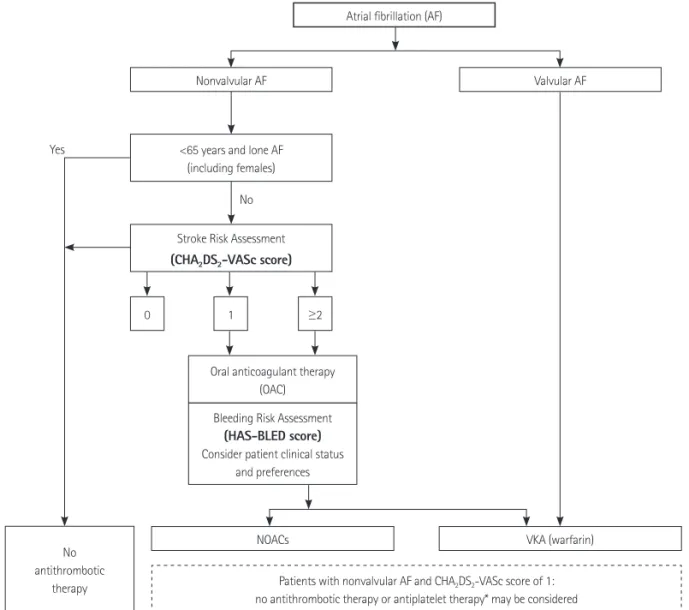
Fig. 1. The algorithm of antithrombotic therapy for patients with nonvalvular atrial fibirillation. *Aspirin, clopidogrel or both. Solid-line box: recommended
option, dotted-line box: alternative option. NOACs: new oral anticoagulants, VKA: vitamin K antagonist.
No antithrombotic therapy NOACs No Yes
Bleeding Risk Assessment
(HAS-BLED score)
Consider patient clinical status and preferences Oral anticoagulant therapy
(OAC) <65 years and lone AF
(including females) Nonvalvular AF
Atrial fibrillation (AF)
Valvular AF
VKA (warfarin) Patients with nonvalvular AF and CHA2DS2-VASc score of 1:
no antithrombotic therapy or antiplatelet therapy* may be considered 1
0 ≥2
Stroke Risk Assessment
Asians was recommended as INR 1.6–2.6 for patients over 70 years in the APHRS 2013 guideline. The recently published meta-analysis data for all four NOACs, using data collected during the pivotal phase 3 clinical trials for stroke prevention and bleeding complica-tion, presented a favorable risk-benefit profile with significant re-duction in stroke, ICH, and mortality, with similar major bleeding as for warfarin.16) Hence, with respect to ICH (including hemorrhagic
stroke), NOACs can be very beneficial for Asian patients with non-valvular AF, although additional supporting study results are re-quired.
Conclusion
Antithrombotic therapy plays a very important role in prevent-ing stroke and systemic thromboembolism in patients with nonva-vular AF. However, the clinical characteristics of each patient should be carefully considered to maximize the preventative effect and minimize bleeding complications from the drug. The CHA2DS2-VASc
score is recommended over the CHADS2 score for assessment of
stroke risk. To quantify bleeding risk, the HAS-BLED score is recom-mended. For patients with nonvalvualr AF and a CHA2DS2-VASc
score of 0, antithrombotic therapy is not recommended. OAC ther-apy is recommended when the CHA2DS2-VASc score is 2 or greater.
NOACs should be considered rather than warfarin if there is a pos-sibility of bleeding complications and based upon the results of past studies. For patients with nonvalvualr AF and a CHA2DS2-VASc score
of 1, OAC therapy is preferred, but no antithrombotic therapy or treatment with antiplatelet agents can be also considered (Fig. 1).
References
1. Camm AJ, Lip GY, De Caterina R, et al. 2012 focused update of the ESC Guidelines for the management of atrial fibrillation: an update of the 2010 ESC Guidelines for the management of atrial fibrillation. De-veloped with the special contribution of the European Heart Rhythm Association. Eur Heart J 2012;33:2719-47.
2. Park JM, Hong KS, Han SW, et al. Focused update on primary stroke prevention in patients with atrial fibrillation in Korean Clinical Prac-tice Guidelines for Stroke. Korean J Stroke 2012;14:106-15.
3. Albers GW, Diener HC, Frison L, et al. Ximelagatran vs warfarin for stroke prevention in patients with nonvalvular atrial fibrillation: a randomized trial. JAMA 2005;293:690-8.
4. Connolly SJ, Ezekowitz MD, Yusuf S, et al. Dabigatran versus warfarin in patients with atrial fibrillation. N Engl J Med 2009;361:1139-51.
5. Patel MR, Mahaffey KW, Garg J, et al. Rivaroxaban versus warfarin in nonvalvular atrial fibrillation. N Engl J Med 2011;365:883-91.
6. Connolly SJ, Eikelboom J, Joyner C, et al. Apixaban in patients with atrial fibrillation. N Engl J Med 2011;364:806-17.
7. Granger CB, Alexander JH, McMurray JJ, et al. Apixaban versus
warfa-rin in patients with atrial fibrillation. N Engl J Med 2011;365:981-92.
8. Giugliano RP, Ruff CT, Braunwald E, et al. Edoxaban versus warfarin in patients with atrial fibrillation. N Engl J Med 2013;369:2093-104.
9. Clinical Research Center for Stroke. Primary prevention of stroke. In:
Writing group of clinical practice guideline for stroke, editor. Clinical Practice Guideline for Stroke. 1st ed. Seoul: Clinical Research Center
for Stroke; 2009. p.34-5.
10. European Heart Rhythm Association; European Association for Cardio-Thoracic Surgery, Camm AJ, et al. Guidelines for the management of atrial fibrillation: the Task Force for the Management of Atrial Fibril-lation of the European Society of Cardiology (ESC). Eur Heart J 2010;
31:2369-429.
11. Skanes AC, Healey JS, Cairns JA, et al. Focused 2012 update of the Ca-nadian Cardiovascular Society atrial fibrillation guidelines: recommen-dations for stroke prevention and rate/rhythm control. Can J Cardiol
2012;28:125-36.
12. Ogawa S, Aonuma K, Tse HF, et al. The APHRS’s 2013 statement on an-tithrombotic therapy of patients with nonvalvular atrial fibrillation. The APHRS’s 2013 statement on antithrombotic therapy of patients with nonvalvular atrial fibrillation. J Arrhythm 2013;29:190-200.
13. January CT, Wann LS, Alpert JS, et al. 2014 AHA/ACC/HRS Guideline for the Management of Patients With Atrial Fibrillation: Executive Summary: A Report of the American College of Cardiology/American Heart Association Task Force on Practice Guidelines and the Heart Rhythm Society. Circulation 2014;130:2071-104.
14. Olesen JB, Lip GY, Hansen ML, et al. Validation of risk stratification schemes for predicting stroke and thromboembolism in patients with atrial fibrillation: nationwide cohort study. BMJ 2011;342:d124.
15. Pisters R, Lane DA, Nieuwlaat R, de Vos CB, Crijns HJ, Lip GY. A novel user-friendly score (HAS-BLED) to assess 1-year risk of major bleeding in patients with atrial fibrillation: the Euro Heart Survey. Chest 2010;
138:1093-100.
16. Ruff CT, Giugliano RP, Braunwald E, et al. Comparison of the efficacy and safety of new oral anticoagulants with warfarin in patients with atrial fibrillation: a meta-analysis of randomised trials. Lancet 2014;
383:955-62.
17. Bang OY, Hong KS, Heo JH, et al. New oral anticoagulants may be par-ticularly useful for Asian stroke patients. J Stroke 2014;16:73-80.
18. ACTIVE Investigators, Connolly SJ, Pogue J, et al. Effect of clopidogrel added to aspirin in patients with atrial fibrillation. N Engl J Med 2009;
360:2066-78.
19. ACTIVE Writing Group of the ACTIVE Investigators, Connolly S, Pogue J, et al. Clopidogrel plus aspirin versus oral anticoagulation for atrial fi-brillation in the Atrial fifi-brillation Clopidogrel Trial with Irbesartan for prevention of Vascular Events (ACTIVE W): a randomised controlled trial. Lancet 2006;367:1903-12.
20. Hart RG, Benavente O, McBride R, Pearce LA. Antithrombotic therapy to prevent stroke in patients with atrial fibrillation: a meta-analysis.
Ann Intern Med 1999;131:492-501.
21. van Walraven C, Hart RG, Singer DE, et al. Oral anticoagulants vs aspi-rin in nonvalvular atrial fibrillation: an individual patient meta-anal-ysis. JAMA 2002;288:2441-8.
prevention in an elderly community population with atrial fibrillation (the Birmingham Atrial Fibrillation Treatment of the Aged Study, BAFTA): a randomised controlled trial. Lancet 2007;370:493-503.
23. Hori M, Connolly SJ, Zhu J, et al. Dabigatran versus warfarin: effects on ischemic and hemorrhagic strokes and bleeding in Asians and non-Asians with atrial fibrillation. Stroke 2013;44:1891-6.
24. Wong KS, Hu DY, Oomman A, et al. Rivaroxaban for stroke prevention in East Asian patients from the ROCKET AF trial. Stroke 2014;45:
1739-47.
25. Shen AY, Yao JF, Brar SS, Jorgensen MB, Chen W. Racial/ethnic differ-ences in the risk of intracranial hemorrhage among patients with atrial fibrillation. J Am Coll Cardiol 2007;50:309-15.