Randomized Comparison of Actual and Ideal Body Weight for Size Selection of the Laryngeal Mask Airway Classic in
Overweight Patients
Size selection of the laryngeal mask airway (LMA) Classic based on actual body weight remains a common practice. However, ideal body weight might allow for a better size selection in obese patients. The purpose of our study was to compare the utility of ideal body weight and actual body weight when choosing the appropriate size of the LMA Classic by a randomized clinical trial. One hundred patients with age 20 to 70 yr, body mass index ≥ 25 kg/m2, and the difference between LMA sizes based on actual weight and ideal weight were allocated to insert the LMA Classic using either actual body weight or ideal body weight in a weight-based formula for size selection. After insertion of the device, several variables including insertion parameters, sealing function, fiberoptic imaging, and complications were investigated. The insertion success rate at the first attempt was lower in the actual weight group (82%) than in the ideal weight group (96%), even it did not show significant difference. The ideal weight group had significantly shorter insertion time and easier placement. However, fiberoptic views were significantly better in the actual weight group. Intraoperative complications, sore throat in the recovery room, and dysphonia at postoperative 24 hr occurred significantly less often in the ideal weight group than in the actual weight group. It is suggested that the ideal body weight may be beneficial to the size selection of the LMA Classic in overweight patients (Clinical Trial Registry, NCT 01843270).
Keywords: Airway Management; Laryngeal Masks; Body Weight; Complications Min-Soo Kim, Jong Seok Lee,
Sang Beom Nam, Hyo Jong Kang, and Ji Eun Kim
Department of Anesthesiology and Pain Medicine, Anesthesia and Pain Research Institute, Yonsei University College of Medicine, Seoul, Korea Received: 4 February 2015
Accepted: 9 April 2015 Address for Correspondence:
Ji Eun Kim, MD
Department of Anesthesiology and Pain Medicine, Anesthesia and Pain Research Institute, Yonsei University College of Medicine, 50 Yonsei-ro, Seodaemun-gu, Seoul 120-752, Korea Tel: +82.2-2227-4614, Fax: +82.2-2227-7897
E-mail: [email protected]
http://dx.doi.org/10.3346/jkms.2015.30.8.1197 • J Korean Med Sci 2015; 30: 1197-1202
INTRODUCTION
Adequate size selection is of utmost importance in ensuring the performance and safety of supraglottic airway devices (1). In clinical practice, the manufacturers’ guideline based on actual body weight is the most commonly used method for size selec- tion of supraglottic airway devices due to easy identification of the weight range printed on the airway tube (2). However, this weight-related size selection may not be satisfactory in many patients because of the wide range of weights for each device size and individual anatomical variation (2-4). To address this issue, various alternative strategies for size selection have been suggested to replace weight-based size selection (3-8). Despite these efforts, prediction of the optimal size of devices remains tenuous and size determination for most supraglottic airway devices still depends on guidelines based on actual body weight.
Obesity can influence pharyngeal structure and geometry (9). Previous articles have demonstrated that increased peri-pha- ryngeal fat disposition in obese patients results in a decreased upper airway size (10). As a result, in obsese patients, the supra- glottic airway device selected by standard guidelines on actual
body weight may be inadequately inserted in the much narro- wer upper airway.
The concept of ideal body weight was first introduced for bet- ter estimation of drug clearance in patients with obesity (11). In the field of anesthesia, ideal body weight has frequently been applied to determine drug dose and tidal volume in obese pa- tients (12, 13). Therefore, we hypothesized that the ideal body weight might allow for a better size selection of supraglottic air- way devices in obese patients. To validate our hypothesis, we compared the utility of ideal body weight and actual body weight in choosing the size of the laryngeal mask airway (LMA) Classic.
MATERIALS AND METHODS Participants and device preparation
This prospective, 2-arm, parallel group, single-center study, and randomized controlled trial was performed between Novem- ber 2013 and September 2014 at Severance Hospital, Seoul, Ko- rea. A total of 100 adult patients was included after obtaining written informed consent. Inclusion criteria were as follows:
age 20 to 70 yr, elective surgery under general anaesthesia using Anesthesiology & Pain
the LMA Classic, body mass index ≥ 25 kg/m2, and the presence of a difference between LMA sizes based on actual body weight and ideal body weight. Ideal body weight (in kg) was calculated by the formula 50 + 2.3 ([height in cm/2.54]-60) for men, and 45.5 + 2.3 ([height in cm/2.54]-60) for women (11, 13). Exclu- sion criteria were a predicted difficult airway, clinically signifi- cant upper airway infection, preexisting airway diseases, pres- ence of gastroesophageal reflux, or history of head and neck surgery.
The enrolled patients were randomly allocated into groups for use of either actual body weight or ideal body weight for size selection of LMA Classic according to the manufacturer’s weight- based formula (size 3 for weight < 50 kg, size 4 for weight 50-70 kg, and size 5 for weight > 70 kg). The random allocation code was generated without blocking by a website program (http://
www.random.org/) and was concealed in a sealed opaque en- velope. After group allocation and size selection, the cuff was fully deflated and its posterior surface was lubricated with a wa- ter-based lubricant. Group allocation and device preparation were carried out by a researcher who did not engage in anesthe- sia care or data collection. The patients and data analyzer were unaware of the group allocation.
Anesthesia and data measurement
Upon routine anesthetic monitoring, standardized induction and maintenance of anesthesia was established using propofol, remifentanil, and sevoflurane. Rocuronium 0.5 mg/kg was ad- ministered intravenously for neuromuscular blockade. Attend- ing anesthesiologists, who were sufficiently experienced in ma- naging supraglottic airway devices, inserted the prepared LMA Classic using the digital standard technique described by Brain (14). Once the LMA Classic was placed, the cuff was inflated using a cuff pressure manometer (Mallinckrodt, Athlone, Ire- land) until the intra-cuff pressure reached 60 cmH2O (7). Suc- cessful insertion was confirmed chest wall movement and nor- mal capnograph traces during manual ventilation using a res- ervoir bag. If adequate ventilation could not be obtained, the following manipulations were conducted and recorded: gentle modification of insertion depth, jaw thrust maneuver or adjust- ment of head/neck position. Time to successful insertion was measured from the moment the anesthesiologist picked up the device until successful insertion was confirmed. Ease of inser- tion was subjectively assessed using a grading score of 1-4 (1, no resistance; 2, mild resistance; 3, moderate resistance; 4, in- ability to insert the device) by the attending anesthesiologist who inserted the device (15). After two failed insertion attempts, the airway was secured adequately according to the decision of the anesthesiologist and the patient was withdrawn from this study.
After successful insertion and fixation of the device, oropha- ryngeal leak pressure was measured by closing the adjustable pressure-limiting (APL) valve to 30 cmH2O at a fresh gas flow of
3 L/min and recording the airway pressure while airway pres- sure equilibrium was attained (16). To detect gastric insufflation, auscultation over the epigastrium was carried out during assess- ing oropharyngeal leak pressure. A flexible fiberoptic broncho- scope (Olympus Optical Co., Tokyo, Japan) was inserted through the device to assess the anatomical alignment of the device in relation to the larynx. The view was evaluated using a grading score of 1-4 (1, vocal cords not visible; 2, vocal cords and anteri- or epiglottis visible; 3, vocal cords and posterior epiglottis visi- ble; 4, only vocal cords visible) (1).
During surgery, volume-controlled ventilation was commen- ced with a tidal volume of 8 mL/kg and the respiratory rate was controlled to maintain an end-tidal carbon dioxide (EtCO2) of 35-40 mmHg during the procedure. Peak inspiratory pressure was recorded. Events during the intraoperative period, includ- ing airway obstruction, air leak, hypoxia (SpO2< 90%), re-inser- tion of the device, and tracheal intubation, were noted. At the completion of surgery, the device was removed at the discre- tion of the attending anesthesiologist when sufficient recovery of spontaneous respiration and consciousness was confirmed.
The patient was then moved to the post-anesthesia care unit (PACU). During the emergence period, complications includ- ing breath holding, airway obstruction, cough, hypoxia (SpO2<
90%), vomiting, trauma of the lips, tongue or teeth, and blood staining on the removed device were recorded. To assess post- operative pharyngolaryngeal complications including sore throat, dysphagia, and dysphonia, a blinded researcher examined the patients in the PACU and performed a ward visit 24 hr after com- pletion of surgery.
Statistical analysis
In this study, the primary outcome measure was oropharyngeal leak pressure and the secondary outcome measures were in- sertion parameters, fiberoptic view, and complications. Sample size calculation was based on an earlier result of oropharyngeal leak pressure in the LMA Classic (17). Assuming a type I error of 0.05 and a power of 0.8, a sample size of 44 patients in each group was required to detect a difference of 15% in oropharyn- geal leak pressure between the actual weight group and the ide- al weight group. This study was designed to include 50 patents in each group to allow for a dropout rate of approximately 10%.
Statistical analyses were conducted with SPSS version 18 soft- ware (SPSS Inc., Chicago, IL, USA). For comparison of all con- tinuous variables, Student’s t-test or Mann-Whitney U test was used as appropriate. Frequency variables were tested with chi- squared test or Fisher’s exact test and variables on an ordinal scale were tested with the Mann-Whitney U test. A P value <
0.05 was considered statistically significant.
Ethics statement
This study protocol was approved by the institutional review
Fig. 1. CONSORT flow diagram to illustrate the study design.
Assessed for eligibility (n = 100)
Excluded (n = 0)
· Declined to participate (n = 0) Randomized (n = 100)
Enrollment
Allocated to the real body weight group (n = 50) · Received allocated intervention (n = 50) · Did not receive allocated intervention (n = 0)
Allocated to the ideal body weight group (n = 50) · Received allocated intervention (n = 50) · Did not receive allocated intervention (n = 0) Allocation
Lost to follow-up (n = 0)
Discontinued intervention (failed insertion, tracheal intubation due to air leakage and surgical requirement) (n = 3)
Lost to follow-up (n = 0) Discontinued intervention (n = 0) Follow-up
Analysed (n = 47)
· Excluded from analysis (n = 0) Analysed (n = 50)
· Excluded from analysis (n = 0) Analysis
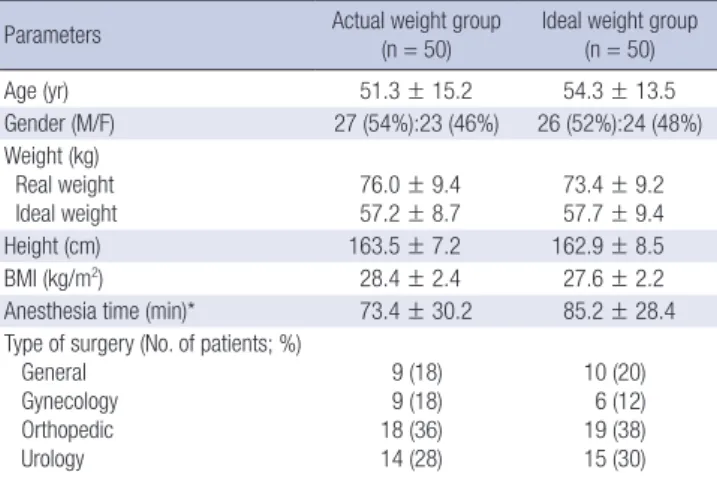
Table 1. Patient and surgical characteristics of the actual and ideal weight groups
Parameters Actual weight group
(n = 50)
Ideal weight group (n = 50)
Age (yr) 51.3 ± 15.2 54.3 ± 13.5
Gender (M/F) 27 (54%):23 (46%) 26 (52%):24 (48%)
Weight (kg) Real weight
Ideal weight 76.0 ± 9.4
57.2 ± 8.7 73.4 ± 9.2 57.7 ± 9.4
Height (cm) 163.5 ± 7.2 162.9 ± 8.5
BMI (kg/m2) 28.4 ± 2.4 27.6 ± 2.2
Anesthesia time (min)* 73.4 ± 30.2 85.2 ± 28.4
Type of surgery (No. of patients; %) General
Gynecology Orthopedic Urology
9 (18) 9 (18) 18 (36) 14 (28)
10 (20) 6 (12) 19 (38) 15 (30) Values are mean (SD) or number (proportion). *Anesthesia time in patients who com- pleted the study protocol was analysed (actual weight group, n = 47; ideal weight group, n = 50).
Table 2. Insertion characteristics and fiberoptic views of the actual and ideal weight groups
Insertion parameters Actual weight
group (n = 50) Ideal weight
group (n = 50) P value Successful insertion at first attempt 41 (82%) 48 (96%) 0.051 Overall insertion success 49 (98%) 50 (100%) 1.000 Device size
3 4 5
0 (0%) 12 (24%) 38 (76%)
20 (40%) 30 (60%) 0 (0%)
< 0.001
Ease of device insertion*
1 2 3 4
22 (44%) 19 (38%) 8 (16%) 1 (2%)
40 (80%) 8 (16%) 2 (5%) 0 (0%)
< 0.001
Insertion time (s)†
(95% confidence interval) 30.2 ± 11.8
(26.9-33.5) 20.4 ± 5.8
(18.8-21.9) < 0.001 Number of manipulations required† 6 (12%) 2 (4%) 0.160 Fiberoptic view through device†,‡
1 2 3 4
10 (21%) 6 (12%) 26 (53%) 7 (14%)
12 (24%) 21 (42%) 13 (26%) 4 (8%)
0.014
Values are mean (SD) or number (proportion). *Ease of insertion was graded as fol- lows: 1, no resistance; 2, mild resistance; 3, moderate resistance; 4, inability to place the device. †Data were presented and analysed using cases with successful supra- glottic airways (actual weight group, n = 49; ideal weight group, n = 50); ‡Fiberoptic view was graded as follows: 1, vocal cords not visible; 2, vocal cords with anterior epiglottis visible; 3, vocal cords with posterior epiglottis visible; 4, only vocal cords visible.
board of Severance Hospital, Yonsei University Health System (ref: 1-2013-0004), and was registered with ClinicalTrials.gov (ref: NCT01843270).
RESULTS
One hundred patients were initially enrolled without exclusion in our study and 97 patients finally completed the study proto- col (Fig. 1). The baseline characteristics of the enrolled patients were statistically comparable between the two groups (Table 1).
Variables related to device insertion are provided in Table 2. The overall insertion success rate was similar in both groups, but the success rate at the first insertion attempt was lower in the actual weight group than that in the ideal weight group without statistical significance (P = 0.051). In one case using a size-5
LMA Classic in the actual weight group, device insertion failed and tracheal intubation was performed. The ideal weight group had significantly shorter insertion time and easier placement compared to the actual weight group. There were no significant differences in the number of manipulations between the two groups, and jaw thrust maneuver was the most frequent type of manipulation. Significantly better fiberoptic views were observ-
ed in the actual weight group than in the ideal weight group.
Table 3 presents the results regarding airway sealing and venti- lation. Oropharyngeal leak pressure and peak airway pressure during mechanical ventilation were comparable between the two groups.
The incidence of complications during the intraoperative pe- riod was significantly higher in the actual weight group than in the ideal weight group (P = 0.029). Seven cases in the actual wei- ght group had air leakage or airway obstruction during the in- traoperative period. Among these cases, reinsertion of the LMA Classic was performed in two patients and tracheal intubation was performed in one patient. In addition, removal of the LMA Classic and tracheal intubation during surgery was performed due to gastric drainage tube insertion and surgical requirement in one patient from the actual weight group. Air leakage was observed in one patient from the ideal weight group during the intraoperative period and was resolved by reinsertion of the LMA Classic. After removal of the device, one patient from the ideal weight group exhibited breath holding, which was resolv- ed by assisted ventilation, and transient cough occurred in four patients (three from the actual weight group, one from the ideal weight group). Blood staining on the device was found in three cases (two from the actual weight group, one from the ideal wei- ght group). Postoperative pharyngolaryngeal complications are described in Table 4. The occurrence rates of sore throat in the recovery room and dysphonia at postoperative 24 hr were sig- nificantly lower in the ideal weight group compared to the ac- tual weight group.
DISCUSSION
Our study revealed that the use of ideal body weight for size se- lection of the LMA Classic provided better performance in terms of insertion, and lower frequencies of intraoperative and post- operative complications compared to the use of actual body wei- ght. However, improved fiberoptic views were observed in pa- tients using actual body weight for size selection.
Originally, the laryngeal mask airway was designed to place in the hypopharynx and the proximal portion of the cuff should be positioned under the level of rami of mandible and tonsils (18). Asai et al. demonstrated that the use of larger size masks
increased the risk of the cuff being located in the oral cavity, which could lead to a sore throat or nerve damage. For this rea- son, this aforementioned paper recommended replacing the larger mask with a mask one size smaller if the cuff of the larger mask is visible through the mouth (18). In functional aspects, we might anticipate a less effective sealing function when using the smaller mask (7, 18). Report of Asai et al. also commented that the use of a smaller mask could increase the incidence of air leak (18). However, as obese patients are more inclined to have the smaller upper airways, it is more likely the smaller mask will have a better sealing function due to the more adequate placement of its cuff. From our results, though improved seal- ing was not confirmed in the ideal weight group with mainly smaller devices, the frequency of air leak or obstruction was sig- nificantly lower during anesthesia maintenance in the ideal wei- ght group. Thus, the use of small devices in patients with obesity might result in similar sealing function and better stability when comparing to large devices.
A larger airway tube might provide lower airway pressure dur- ing controlled ventilation at the same tidal volume. Contrary to expectations, insertion of small masks according to ideal weight was not associated with higher peak airway pressure. The use of larger masks in the actual weight group provided better fiber- optic views than those achieved in the ideal weight group; how- ever, a superior fiberoptic image does not necessarily imply an adequate sealing function or improved airway patency (16). Re- cently, supraglottic airway devices have been intensively stud- ied and used as a conduit for placing tracheal tubes in clinical situations with difficult intubation (19). In larger size LMA Clas- sic, improved visualization of the glottic opening through the larger laryngeal inlet as well as the large calibre of the airway tube might result in easy passage of the tracheal tube.
In the current study, the success rate for insertion at the first attempt was 96% in the ideal weight group; this success rate was comparable or superior to earlier outcomes given that the suc- cess rate for insertion at first attempt in the LMA Classic has been reported to be between 77 and 97% (20, 21). In addition, device insertion was established more quickly and easily in the Table 3. Sealing function and ventilation in patients in the actual and ideal weight
groups with successful supraglottic airways Ventilation parameters Actual weight group
(n = 49)
Ideal weight group (n = 50) P value Oropharyngeal leak pressure;
cmH2O (95% CI for mean) 21.9 ± 4.5
(20.7-23.2) 20.5 ± 3.9 (19.4-21.5) 0.116 Number of gastric insufflations 1 (2%) 1 (2%) 1.000 Peak inspiratory pressure;
cmH2O (95% CI for mean)
13.6 ± 3.3 (12.8-14.7)
13.8 ± 3.3 (13.0-14.8)
0.802
Values are mean (SD) or number (proportion).
Table 4. Postoperative pharyngolaryngeal complications of the actual and ideal weight groups
Complications Actual weight group (n = 47)*
Ideal weight group
(n = 50) P value
Recovery room Sore throat Dysphagia Dysphonia
27 (57%) 0 (0%) 5 (11%)
13 (26%) 0 (0%) 3 (6%)
0.002 0.478 After 24 hr
Sore throat Dysphagia Dysphonia
16 (34%) 0 (0%) 7 (15%)
14 (28%) 0 (0%) 0 (0%)
0.520 0.005 Values are mean (SD) or number (proportion). *Three cases in the actual weight group were intubated because of insertion failure during induction period, surgical require- ment and severe air leakage during the intraoperative period.
ideal body weight group than in the actual weight group. As a decreased upper airway size could be expected in our enrolled patients who were overweight or obese, a smaller device might be placed more comfortably in these patients (9, 10). Moreover, supraglottic airway devices have recently been recommended and used for airway management by inexperienced physicians and paramedics in emergency situations such as cardiopulmo- nary resuscitation (22). For these reasons, rapid and easy inser- tion of the device is considered an important index in airway care with supraglottic airway devices. Use of the ideal body wei- ght could be added to the series of methods used for successful insertion of the LMA Classic in various clinical situations.
Postoperative pharyngolaryngeal morbidities are considered a major problem when using supraglottic airway devices (15).
From our results, size selection by actual weight was associated with a higher incidence of sore throat and dysphonia compared to the selection based on the ideal weight. As mentioned above, inadequate positioning of the cuff after insertion of the larger mask could be a cause of postoperative complications, includ- ing sore throat (18). The use of larger masks in obese patients with a smaller upper airway may inflict injury on the soft tissue of the upper airway during device insertion, reflecting the more difficult insertion seen in the actual weight group. Thus, use of the manufacturer’s formula based on the actual weight in obese patients or fixed size masks based on sex (size 4 for females; size 5 for males) may increase the incidence of adverse pharyngo- laryngeal events due to insertion of inadequately larger masks, especially in small and obese patients (8).
This study is limited by the following issues. First, there is con- troversy over whether our results for the LMA Classic are appli- cable to the new generation of supraglottic airway devices. Fur- ther studies are needed to validate the method based on ideal weight for other devices. However, most of the new supraglottic airway devices are modified versions of the LMA Classic or have structural similarity. Also, the ranges of weight for each size of the LMA Classic are identical to those of several types of devic- es, and new proposals related to the use of supraglottic airway devices have been validated preferentially in the LMA Classic (15). Thus, the use of ideal weight should be considered when choosing the size of other supraglottic airway devices. Second, the feasibility of the method based on ideal weight has to be as- sessed by comparison with the sex-related formula, which has been recommended for selection of an adequate size for the LMA Classic (1). The possible limitations of size selection accor- ding to patient sex have been raised for smaller patients. In this regard, strategies using the patient’s height (size 5 for ≥ 165 cm in height and size 4 for < 165 cm) were suggested to remedy the shortcomings of the sex-related formula (4, 8). Ideal body weight is calculated using both the patient’s sex and height (11) and may therefore allow for a size selection that better reflects the individual patient characteristics than a single factor such
as height or sex. Supporting this suggestion, the success rate of insertion at first attempt in the ideal weight group (96%) was higher than that reported (77%-91%) in several earlier papers using the sex-related formula (21, 23). Third, our results cannot apply to patients with the ideal body weight more than 70 kg because there is no difference between LMA sizes based on ac- tual body weight and ideal body weight. Finally, the current study involved an Asian population and similar studies may be warranted to validate these favorable results regarding the use of ideal weight in other ethnic groups.
In summary, size selection of the LMA Classic according to ideal body weight allows an easier and more rapid insertion, and fewer complications than selection based on actual body weight. Thus, ideal body weight calculated using sex and height could be a useful approach to selecting the appropriate size of the LMA Classic in overweight patients. Further evaluation should be carried out to determine the applicability of our findings to new-generation supraglottic airway devices.
DISCLOSURE
The authors have no conflicts of interest or financial ties to dis- close.
AUTHOR CONTRIBUTION
Conception and coordination of the study: Kim MS, Kim JE.
Design of ethical issues: all authors. Acquisition of data: Kim MS, Kang HJ, Kim JE. Data review: Lee JS, Nam SB. Statistical analysis: Kim MS, Lee JS. Manuscript preparation: Kim MS, Kim JE. Manuscript approval: all authors.
ORCID
Min-Soo Kim http://orcid.org/0000-0001-8760-4568 Jong Seok Lee http://orcid.org/0000-0002-7945-2530 Sang Beom Nam http://orcid.org/0000-0002-9704-1866 Hyo Jong Kang http://orcid.org/0000-0002-4952-5524 Ji Eun Kim http://orcid.org/0000-0002-1598-5936 REFERENCES
1. Brimacombe J, Keller C. Laryngeal mask airway size selection in males and females: ease of insertion, oropharyngeal leak pressure, pharyngeal mucosal pressures and anatomical position. Br J Anaesth 1999; 82: 703-7.
2. Zahoor A, Ahmad N, Sereche G, Riad W. A novel method for laryngeal mask airway size selection in paediatric patients. Eur J Anaesthesiol 2012;
29: 386-90.
3. Kim HJ, Park MJ, Kim JT, Kim CS, Kim SD, Kim HS. Appropriate laryn- geal mask airway size for overweight and underweight children. Anaes- thesia 2010; 65: 50-3.
4. Berry AM, Brimacombe JR, McManus KF, Goldblatt M. An evaluation of the factors influencing selection of the optimal size of laryngeal mask airway in normal adults. Anaesthesia 1998; 53: 565-70.
5. Voyagis GS, Batzioulis PG, Secha-Doussaitou PN. Selection of the prop- er size of laryngeal mask airway in adults. Anesth Analg 1996; 83: 663-4.
6. Asai T, Howell TK, Koga K, Morris S. Appropriate size and inflation of the laryngeal mask airway. Br J Anaesth 1998; 80: 470-4.
7. Kihara S, Brimacombe JR, Yaguchi Y, Taguchi N, Watanabe S. A com- parison of sex- and weight-based ProSeal laryngeal mask size selection criteria: a randomized study of healthy anesthetized, paralyzed adult patients. Anesthesiology 2004; 101: 340-3.
8. Asai T, Brimacombe J. Review article: cuff volume and size selection with the laryngeal mask. Anaesthesia 2000; 55: 1179-84.
9. Martin SE, Mathur R, Marshall I, Douglas NJ. The effect of age, sex, obe- sity and posture on upper airway size. Eur Respir J 1997; 10: 2087-90.
10. Busetto L, Calo E, Mazza M, De Stefano F, Costa G, Negrin V, Enzi G. Up- per airway size is related to obesity and body fat distribution in women.
Eur Arch Otorhinolaryngol 2009; 266: 559-63.
11. Pai MP, Paloucek FP. The origin of the “ideal” body weight equations. Ann Pharmacother 2000; 34: 1066-9.
12. Meyhoff CS, Lund J, Jenstrup MT, Claudius C, Sørensen AM, Viby-Mo- gensen J, Rasmussen LS. Should dosing of rocuronium in obese patients be based on ideal or corrected body weight? Anesth Analg 2009; 109: 787- 92.
13. Jaber S, Coisel Y, Chanques G, Futier E, Constantin JM, Michelet P, Beau- ssier M, Lefrant JY, Allaouchiche B, Capdevila X, et al. A multicentre ob- servational study of intra-operative ventilatory management during gen- eral anaesthesia: tidal volumes and relation to body weight. Anaesthesia 2012; 67: 999-1008.
14. Brain A. Proper technique for insertion of the laryngeal mask. Anesthesi-
ology 1990; 73: 1053-4.
15. Kim MS, Lee JR, Shin YS, Chung JW, Lee KH, Ahn KR. Comparison of 2 cuff inflation methods of laryngeal mask airway Classic for safe use with- out cuff manometer in adults. Am J Emerg Med 2014; 32: 237-42.
16. Inagawa G, Okuda K, Miwa T, Hiroki K. Higher airway seal does not im- ply adequate positioning of laryngeal mask airways in paediatric patients.
Paediatr Anaesth 2002; 12: 322-6.
17. Galvin EM, van Doorn M, Blazquez J, Ubben JF, Zijlstra FJ, Klein J, Ver- brugge SJ. A randomized prospective study comparing the Cobra Perila- ryngeal Airway and Laryngeal Mask Airway-Classic during controlled ventilation for gynecological laparoscopy. Anesth Analg 2007; 104: 102-5.
18. Asai T, Murao K, Yukawa H, Shingu K. Re-evaluation of appropriate size of the laryngeal mask airway. Br J Anaesth 1999; 83: 478-9.
19. Theiler L, Kleine-Brueggeney M, Urwyler N, Graf T, Luyet C, Greif R.
Randomized clinical trial of the i-gel™ and Magill tracheal tube or single- use ILMA™ and ILMA™ tracheal tube for blind intubation in anaesthe- tized patients with a predicted difficult airway. Br J Anaesth 2011; 107:
243-50.
20. Van Zundert AA, Fonck K, Al-Shaikh B, Mortier E. Comparison of the LMA-classic with the new disposable soft seal laryngeal mask in sponta- neously breathing adult patients. Anesthesiology 2003; 99: 1066-71.
21. Ali A, Canturk S, Turkmen A, Turgut N, Altan A. Comparison of the la- ryngeal mask airway Supreme and laryngeal mask airway Classic in adults. Eur J Anaesthesiol 2009; 26: 1010-4.
22. Lee CM, Yang HS. Case of difficult intubation overcome by the laryngeal mask airway. J Korean Med Sci 1993; 8: 290-2.
23. Brimacombe J, Keller C, Fullekrug B, Agrò F, Rosenblatt W, Dierdorf SF, Garcia de Lucas E, Capdevilla X, Brimacombe N. A multicenter study comparing the ProSeal and Classic laryngeal mask airway in anesthe- tized, nonparalyzed patients. Anesthesiology 2002; 96: 289-95.