Long-Term Survival Analysis of Intraperitoneal versus
Intravenous Chemotherapy for Primary Ovarian Cancer and Comparison between Carboplatin- and Cisplatin-based Intraperitoneal Chemotherapy
In epithelial ovarian cancer (EOC), intraperitoneal (IP) administration of chemotherapy is an effective first-line treatment and may improve outcomes, compared with intravenous (IV) chemotherapy. We used Kaplan-Meier survival analysis to compare long-term survival between propensity score-matched patients with advanced EOC receiving IP (n = 34) vs. IV (n = 68) chemotherapy. Additionally, clinical features associated with carboplatin-based (n = 21) and cisplatin-based (n = 16) IP chemotherapy were analyzed and compared with those associated with IV chemotherapy. The IP and IV chemotherapy groups had a median follow-up duration of 67 (range, 3–131) and 62 (range, 0–126) months, respectively, with no significant difference in progression-free survival (PFS) (P = 0.735) and overall survival (OS) (P = 0.776). A significantly higher proportion of patients in the IV (91.2%) than in the IP (67.6%) chemotherapy group (P = 0.004) received ≥ 6 cycles. However, the frequency of toxic events (anemia, granulocytopenia, nausea/vomiting, abdominal pain,
hepatotoxicity, neuromuscular effects) was significantly higher in the IP than in the IV group. Within the IP group, no significant differences were observed in PFS (P = 0.533) and OS (P = 0.210) between the cisplatin-based and carboplatin-based chemotherapy subgroups. The 10-year OS was 28.6% and 49.2% in carboplatin-based and cisplatin- based IP chemotherapy groups, respectively. Toxic events (granulocytopenia, leukopenia, nausea/vomiting, abdominal pain, hepatotoxicity, neuromuscular effects) were
significantly more common in the cisplatin-based subgroup. In patients with EOC, cisplatin-based IP chemotherapy may be an acceptable alternative to IV chemotherapy regarding long-term survival, but toxicity must be addressed.
Keywords: Intraperitoneal Chemotherapy; Carboplatin; Ovarian Cancer; Survival Kyung Jin Eoh, Jung-Yun Lee, Eun Ji Nam,
Sunghoon Kim, Young Tae Kim, and Sang Wun Kim
Department of Obstetrics and Gynecology, Institute of Women’s Life Medical Science, Women’s Cancer Center, Yonsei University College of Medicine, Seoul, Korea
Received: 23 June 2017 Accepted: 5 September 2017 Address for Correspondence:
Sang Wun Kim, MD, PhD
Department of Obstetrics and Gynecology, Institute of Women’s Life Medical Science, Women’s Cancer Center, Yonsei University College of Medicine, 50 Yonsei-ro, Seodaemun-gu, Seoul 03722, Korea
E-mail: [email protected]
https://doi.org/10.3346/jkms.2017.32.12.2021 • J Korean Med Sci 2017; 32: 2021-2028
INTRODUCTION
Epithelial ovarian cancer (EOC) is the most common cause of cancer-associated death among women with gynecologic can- cers (1,2). The current standard therapy for patients with ad- vanced stage EOC consists of cytoreductive surgery and adju- vant combination chemotherapy with platinum and a taxane (3,4). Intraperitoneal (IP) administration of chemotherapy for EOC is effective as first-line treatment. Compared with stan- dard IV treatment, IP chemotherapy was recently demonstrat- ed in three large randomized phase III trials (5-7) to improve outcomes; a Cochrane meta-analysis confirmed these findings (8).
Given the toxicity associated with cisplatin-based IP chemo- therapy and the emerging data on IP carboplatin administra-
tion from nonrandomized studies (9-12), we substituted carbo- platin for cisplatin in IP chemotherapy and investigated the fea- sibility of this regimen (13). Few studies supporting the long- term efficacy or oncologic outcomes of carboplatin-based IP chemotherapy have been conducted during the last decade (10,14), although randomized data to support the selection of an IP or IV regimen will soon be available from the GOG 252 (ClinicalTrials.gov identifier, NCT00951496) and OV21/PET- ROC (ClinicalTrials.gov identifier, NCT00993655) trials.
The purpose of this study was to compare the long-term sur- vival of propensity score-matched advanced EOC patients treat- ed with either IP or intravenous (IV) chemotherapy. Also, as a subgroup analysis, we compared the long-term outcomes among IP chemotherapy-treated patients according to chemotherapy regimens; carboplatin-based or cisplatin-based.
ORIGINAL ARTICLE
Obstetrics & Gynecology
2017-03-16 https://crossmark-cdn.crossref.org/widget/v2.0/logos/CROSSMARK_Color_square.svg
MATERIALS AND METHODS Study design
Patients diagnosed with EOC and treated with IV or IP chemo- therapy after cytoreductive surgery between January 2006 and December 2008, were included consecutively. Patients who re- ceived neoadjuvant chemotherapy before debulking surgery were excluded. A gynecologic oncology team at a single insti- tute conducted all of the procedures, and a dedicated radiolo- gist and pathologists at the same institute reviewed all data from the imaging studies and pathologic specimens, respectively. A retrospective chart review was performed to collect clinical and pathologic data. All patients were staged according to the Inter- national Federation of Gynecology and Obstetrics (FIGO) crite- ria for ovarian cancer.
The subjects in IP chemotherapy group received either 1) IP carboplatin area under curve (AUC) 5 on day 1, IV paclitaxel 175 mg/m2 on day 2, and IP paclitaxel 60 mg/m2 on day 8 or 2) IV paclitaxel 135 mg/m2 on day 1, IP cisplatin 100 mg/m2 on day 2, and IP paclitaxel 60 mg/m2 on day 8. Standard premedication was administered to prevent hypersensitivity reactions to pacli- taxel, and hydration and antiemetic agents were administered before the administration of carboplatin. Before the IP infusion of chemotherapeutic agents, 500 mL of warm normal saline was infused through the peritoneal port. For the IP infusion, carbo- platin or paclitaxel was reconstituted in 1 L of warm normal sa- line and infused as rapidly as possible through the port. After IP administration of the chemotherapeutic agents, 500 mL of warm normal saline was infused through the peritoneal port, followed by rolling the patient into 4 different positions every 15 minutes to disperse the drug throughout the peritoneal cavity. This series of treatments was performed every 3 weeks. For IP access, 31 BardPort catheters and 6 Tenckhoff catheters were used. Bard- Port implantable port is an access device designed to provide repeated access to IP infusion, and Tenckhoff catheter a cuffed silicone catheter that is permanently inserted into the abdomi- nal cavity for infusion of solution (15,16). Patients, who were de- termined to stop IP chemotherapy due to toxic effects, under- went sequential IV chemotherapy up to 6 to 8 cycles totally.
Routine follow-up was performed every 3 months, compris- ing a clinical examination and measurement of serum carbo- hydrate antigen 125 levels, and radiologic investigations when indicated. Recurrence and progression were evaluated using the Response Evaluation Criteria in Solid Tumors Committee (RECIST) (17). All toxicities were graded according to the Na- tional Cancer Institute’s Common Toxicity Criteria for Adverse Events (NCI CTCAE) version 4.0 (18). Specifically, grade 3 he- matologic toxic effects were defined as follows: anemia, hemo- globin < 8 g/dL; granulocytopenia, < 1,000 granulocytes/mm3; leukopenia, < 2,000 white cells/mm3; and thrombocytopenia,
< 50,000 platelets/mm3. Grade 2 toxic effects were defined as
follows: abdominal pain, pain relieved by oral opioids; fever, temperature > 38°C; tinnitus, moderate symptoms of tinnitus;
hearing loss, ability to hear normal levels of voice and sound but not whispered sounds; neuromuscular effects, absence of deep tendon reflexes, weakness, and peripheral nerve pain;
and pulmonary effects, transient dyspnea on mild exertion. IP port issues included infection, blockage, leakage, and peritone- al irritation by the catheter.
We used Kaplan-Meier survival analysis to compare long-term survival between 1:2 propensity score-matched patients with advanced EOC treated with either IP or IV chemotherapy. Ad- ditionally, clinical features associated with carboplatin-based or cisplatin-based IP chemotherapy were analyzed and com- pared with those associated with IV chemotherapy, during the whole course of chemotherapy.
Statistical analysis
IBM SPSS version 23 for Windows (IBM Corp., Armonk, NY, USA) was used for the statistical analysis. The Kolmogorov-Smirnov test was used to verify standard normal distribution assump- tions. Pearson’s chi-square, Fisher’s exact, and Mann-Whitney U tests were used in the univariate analysis. To reduce the effect of selection bias and potential confounding in this retrospective cohort study, estimated propensity scores were used to match the IP group to IV group. In our study, this was computed for each of the patients using a logistic regression model including the following variables: age, FIGO stage, tumor histology, tu- mor grade, and residual disease. The propensity score model was well-calibrated (Hosmer-Lemeshow goodness-of-fit test, P = 0.987). Based on the propensity scores, 34 patients who un- derwent IP chemotherapy were matched to 68 patients who underwent IV chemotherapy. Progression-free survival (PFS) and overall survival (OS) for patients with stage 3 or 4 cancer were compared between the chemotherapy regimens using Kaplan-Meier survival analyses. A P value < 0.05 was consid- ered statistically significant.
Ethics statement
The protocol received Institutional Review Board approval of the Yonsei University College of Medicine (IRB No. 4-2017-0031) and was performed in accordance with the ethical standards described in the Declaration of Helsinki. The requirement to obtain a written informed consent was waived by the Institu- tional Review Board of the Yonsei University College of Medi- cine because our study was retrospective research based on med- ical records, and this research presented no more than minimal risk of harm to subjects.
RESULTS
Flowchart of patient selection is presented in Fig. 1. The clinico-
Fig. 1. Flowchart of patient selection.
EOC = epithelial ovarian cancer, pts = patients, PDS = primary debulking surgery, NAC = neoadjuvant chemotherapy, CTx = chemotherapy, IP = intraperitoneal, IV = intravenous.
Consecutive 202 EOC pts (2006-2008)
158 EOC pts who received PDS
IP CTx : 37 pts
• Carboplatin-based : 21 pts
• Cisplatin-based : 16 pts
IP CTx : 34 pts
• Carboplatin-based : 18 pts
• Cisplatin-based : 16 pts
IV CTx : 121 pts
IV CTx : 68 pts
44 pts who received NAC were excluded
Route of CTx
Propensity score matching
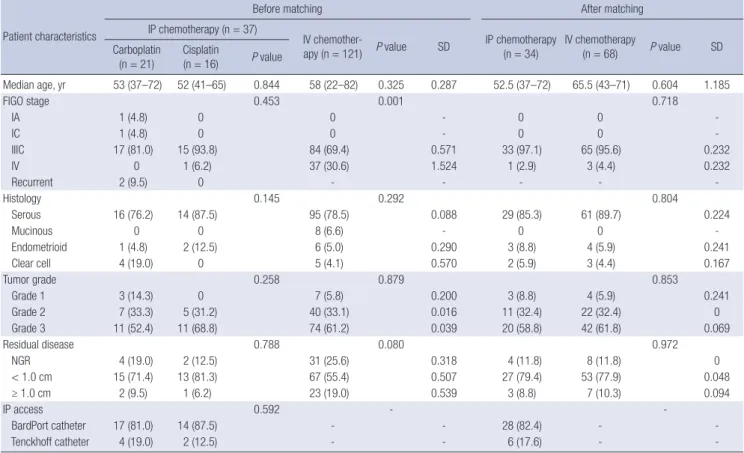
Table 1. Characteristics of patients in the IP and IV chemotherapy groups before and after propensity score matching
P atient characteristics
Before matching After matching
IP chemotherapy (n = 37)
IV chemother-
apy (n = 121) P value SD IP chemotherapy (n = 34)
IV chemotherapy
(n = 68) P value SD
Carboplatin
(n = 21) Cisplatin
(n = 16) P value
Median age, yr 53 (37–72) 52 (41–65) 0.844 58 (22–82) 0.325 0.287 52.5 (37–72) 65.5 (43–71) 0.604 1.185
FIGO stage 0.453 0.001 0.718
IA 1 (4.8) 0 0 - 0 0 -
IC 1 (4.8) 0 0 - 0 0 -
IIIC 17 (81.0) 15 (93.8) 84 (69.4) 0.571 33 (97.1) 65 (95.6) 0.232
IV 0 1 (6.2) 37 (30.6) 1.524 1 (2.9) 3 (4.4) 0.232
Recurrent 2 (9.5) 0 - - - - -
Histology 0.145 0.292 0.804
Serous 16 (76.2) 14 (87.5) 95 (78.5) 0.088 29 (85.3) 61 (89.7) 0.224
Mucinous 0 0 8 (6.6) - 0 0 -
Endometrioid 1 (4.8) 2 (12.5) 6 (5.0) 0.290 3 (8.8) 4 (5.9) 0.241
Clear cell 4 (19.0) 0 5 (4.1) 0.570 2 (5.9) 3 (4.4) 0.167
Tumor grade 0.258 0.879 0.853
Grade 1 3 (14.3) 0 7 (5.8) 0.200 3 (8.8) 4 (5.9) 0.241
Grade 2 7 (33.3) 5 (31.2) 40 (33.1) 0.016 11 (32.4) 22 (32.4) 0
Grade 3 11 (52.4) 11 (68.8) 74 (61.2) 0.039 20 (58.8) 42 (61.8) 0.069
Residual disease 0.788 0.080 0.972
NGR 4 (19.0) 2 (12.5) 31 (25.6) 0.318 4 (11.8) 8 (11.8) 0
< 1.0 cm 15 (71.4) 13 (81.3) 67 (55.4) 0.507 27 (79.4) 53 (77.9) 0.048
≥ 1.0 cm 2 (9.5) 1 (6.2) 23 (19.0) 0.539 3 (8.8) 7 (10.3) 0.094
IP access 0.592 - -
BardPort catheter 17 (81.0) 14 (87.5) - - 28 (82.4) - -
Tenckhoff catheter 4 (19.0) 2 (12.5) - - 6 (17.6) - -
Values are presented as median (range) or number (%).
IP = intraperitoneal, IV = intravenous, SD = standardized difference, FIGO = International Federation of Gynecology and Obstetrics, NGR = no gross residual disease.
pathologic characteristics of the IP (unmatched, n = 37; matched, n = 34) and IV (unmatched, n = 121; matched, n = 68) chemo- therapy groups are listed in Table 1. The median durations of follow-up were 67 (range, 3–131) and 62 (range, 0–126) months for patients receiving IP and IV chemotherapy, respectively.
Within the IP group, the median durations of follow-up were 52
(range, 16–131) and 96 (range, 3–126) months for carboplatin- and cisplatin-based IP chemotherapy subgroups, respectively.
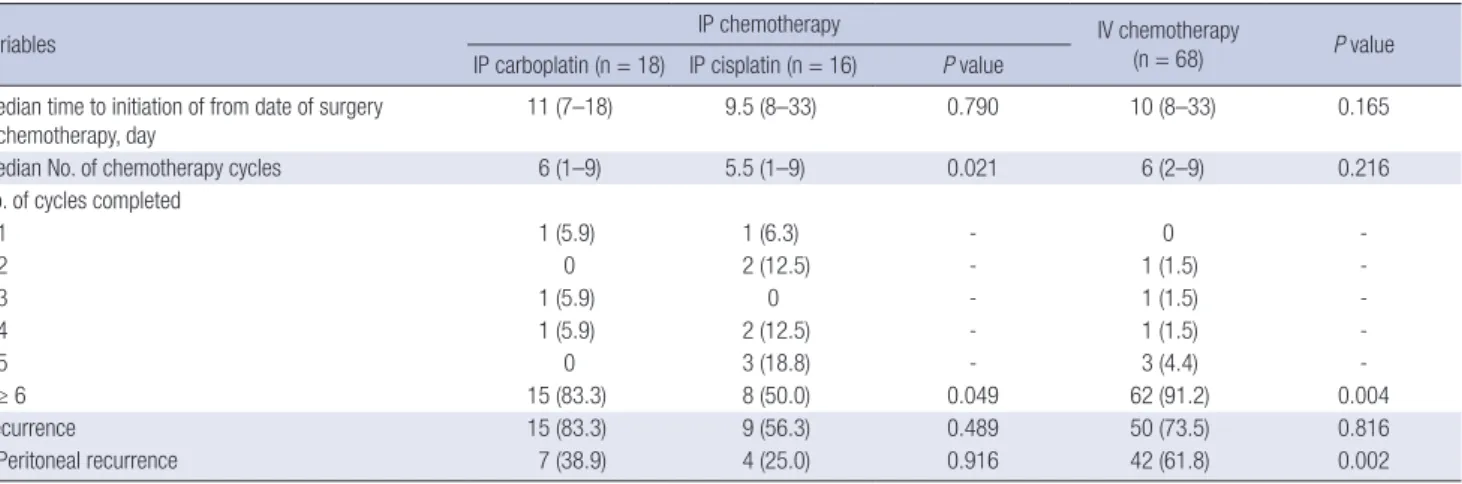
A description of the chemotherapy regimens is shown in Ta- ble 2. Adjuvant carboplatin- and cisplatin-based IP chemother- apy regimens were initiated 11.0 days and 9.5 days after prima- ry staging surgery, respectively (P = 0.790). Notably, the num- ber of total chemotherapy cycles was greater (P = 0.021) and the proportion of patients who received ≥ 6 cycles was higher in the carboplatin-based than in the cisplatin-based IP chemo- therapy subgroup (P = 0.049). Compared with the entire IP che- motherapy group, the IV chemotherapy group had a significant- ly higher proportion (91.2%) of patients who received ≥ 6 cy- cles of chemotherapy (P = 0.004). Peritoneal recurrence was less likely to occur in IP chemotherapy group, compared with IV chemotherapy group (P = 0.002), even though the overall re- current rate was not significantly different (P = 0.816).
The frequency of toxic events related to IP and IV chemother- apy are summarized in Table 3. Patients undergoing cisplatin- based IP chemotherapy experienced more non-hematogenous toxicities than those treated with carboplatin-based IP chemo- therapy: A significantly greater proportion of patients in the cis- platin-based IP chemotherapy group experienced grade 3 gran- ulocytopenia (56.2% vs. 23.8%, P = 0.044) and leukopenia (62.5%
vs. 23.8%, P = 0.018). Patients treated with cisplatin-based IP
chemotherapy were also more likely than those treated with car- boplatin-based IP chemotherapy to experience chemotherapy- related grade 2 or 3 nausea/vomiting (75.0% vs. 19.0%, P = 0.001), abdominal pain (62.5% vs. 23.8%, P = 0.018), hepatotoxicity (43.8% vs. 9.5%, P = 0.016), and neuromuscular effects (56.2%
vs. 19.0%, P = 0.019). One patient who received cisplatin-based IP chemotherapy died after completion of 5 cycles of chemo- therapy because of chemotherapy-related toxicity. Twelve pa- tients (32.4%) experienced IP port-related complications, pri- marily port malfunction/obstruction and 1 case of catheter-re- lated bowel irritation. Port-related complications necessitated discontinuation of IP chemotherapy in 4 patients. Compared to the entire IP chemotherapy group, the IV chemotherapy group had a significantly lower proportion of patients who experienced the following toxic events: anemia (P = 0.002), granulocytope- nia (P = 0.034), nausea/vomiting (P < 0.001), abdominal pain
(P < 0.001), hepatotoxicity (P < 0.001), and neuromuscular ef- fects (P < 0.001).
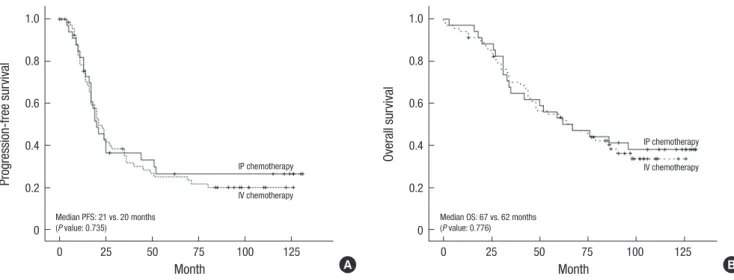
The Kaplan-Meier survival analysis showed no significant difference in PFS (P = 0.735, Fig. 2A) and OS (P = 0.776, Fig. 2B) between the IP and IV chemotherapy groups. The 10-year PFS was 26.4% and 20% in the IP and IV groups, respectively, while the 10-year OS was 38.0% and 33.5% in IP and IV groups, respec- tively. Moreover, within the IP chemotherapy group, there was no statistically significant difference in PFS (P = 0.533, Fig. 3A) and OS (P = 0.210, Fig. 3B) between the carboplatin-based and cisplatin-based IP chemotherapy subgroups: The 10-year PFS was 24.1% and 40.0% and the 10-year OS was 28.6% and 49.2% in carboplatin-based and cisplatin-based IP chemotherapy groups, respectively.
Table 2. Description of chemotherapy-related outcomes in propensity score-matched EOC patients by route of infusion, and by IP chemotherapy regimen
Variables IP chemotherapy IV chemotherapy
(n = 68) P value
IP carboplatin (n = 18) IP cisplatin (n = 16) P value Median time to initiation of from date of surgery
chemotherapy, day
11 (7–18) 9.5 (8–33) 0.790 10 (8–33) 0.165
Median No. of chemotherapy cycles 6 (1–9) 5.5 (1–9) 0.021 6 (2–9) 0.216
No. of cycles completed
1 1 (5.9) 1 (6.3) - 0 -
2 0 2 (12.5) - 1 (1.5) -
3 1 (5.9) 0 - 1 (1.5) -
4 1 (5.9) 2 (12.5) - 1 (1.5) -
5 0 3 (18.8) - 3 (4.4) -
≥ 6 15 (83.3) 8 (50.0) 0.049 62 (91.2) 0.004
Recurrence 15 (83.3) 9 (56.3) 0.489 50 (73.5) 0.816
Peritoneal recurrence 7 (38.9) 4 (25.0) 0.916 42 (61.8) 0.002
Values are presented as number (range) or number (%).
EOC = epithelial ovarian cancer, IP = intraperitoneal, IV = intravenous.
Table 3. Frequency of hematologic toxic effects ( ≥ grade 3) and other toxic effects (≥ grade 2) during any course of treatment in patients with FIGO stage IIIC or IV ovarian cancer, by chemotherapy regimen
Toxic effects IP chemotherapy IV chemotherapy
(n = 68) P value
IP carboplatin (n = 21) IP cisplatin (n = 16) P value Hematologic toxic effect
Anemia (hemoglobin < 8.0 g/dL) 8 (38.1) 10 (62.5) 0.141 15 (22.1) 0.002
Granulocytopenia ( < 1,000 granulocytes/mm3) 5 (23.8) 9 (56.2) 0.044 43 (63.2) 0.034
Leukopenia ( < 2,000 white cells/mm3) 5 (23.8) 10 (62.5) 0.018 29 (42.6) 0.888
Thrombocytopenia ( < 50,000 platelets/mm3) 4 (19.0) 5 (31.2) 0.391 17 (25.0) 0.872
Non-hematologic toxic effect
Nausea/vomiting 4 (19.0) 12 (75.0) 0.001 3 (4.4) < 0.001
Abdominal pain 5 (23.8) 10 (62.5) 0.018 5 (7.4) < 0.001
Hepatotoxicity 2 (9.5) 7 (43.8) 0.016 0 < 0.001
Fever 5 (23.8) 2 (12.5) 0.384 12 (17.6) 1.000
Neuromuscular effects 4 (19.0) 9 (56.2) 0.019 1 < 0.001
Tinnitus 0 1 (6.2) 0.245 0 0.155
Hearing loss 0 0 1 0 1.000
Pulmonary effects 0 0 1 0 1.000
IP port issues 8 (38.1) 4 (25.0) 0.399 - -
FIGO = International Federation of Gynecology and Obstetrics, IP = intraperitoneal, IV = intravenous.
DISCUSSION
The present study demonstrated that carboplatin-based IP che- motherapy may be an acceptable alternative to cisplatin-based IP chemotherapy or conventional IV chemotherapy for the man- agement of patients with advanced EOC in terms of long-term survival, although the toxicity of IP-based chemotherapy re- mains a problem. However, the lower frequency of toxic events observed with carboplatin-compared with cisplatin-based IP chemotherapy appears to be a key element allowing for com- pletion of the planned ≥ 6 cycles of chemotherapy; this is a pri- mary factor for a favorable long-term survival outcome (19).
The underlying principle of IP chemotherapy is the ability to deliver high concentrations of the appropriate chemotherapeu-
tic agent to the site where most recurrences are likely to devel- op, after performing complete cytoreduction. Despite the Na- tional Cancer Institute (NCI) Clinical Announcement that was based on multiple trials showing level-1 evidence for a survival benefit (20), IP chemotherapy has not been widely adopted in the management of ovarian cancer. A previous study reported that even after the NCI Clinical Announcement, < 50% of eligi- ble patients received IP chemotherapy (21), potentially because of various concerns including increased toxicity, multiday sche- duling, and lack of familiarity with catheter placement and IP drug administration. Although a question remains as to wheth- er a course of 6 IP treatments is optimal, only 42% of patients in the randomized GOG 172 trial, that compared IP and IV che- motherapy, received all 6 cycles of the assigned IP therapy due Fig. 2. Comparison of survival outcomes between IP and IV chemotherapy groups. (A) PFS according to treatment intention in patients with advanced EOC treated with IP or IV chemotherapy. (B) OS according to treatment intention in patients with advanced EOC treated with IP or IV chemotherapy.
IP = intraperitoneal, IV = intravenous, PFS = progression-free survival, EOC = epithelial ovarian cancer, OS = overall survival.
IP chemotherapy IV chemotherapy
IV chemotherapy IP chemotherapy
Median PFS: 21 vs 20 months
(P value: 0.735) Median OS: 67 vs 62 months
(P value: 0.776)
A B
Progression-free survival
Month
0 25 50 75 100 125 1.0
0.8
0.6
0.4
0.2
0
Median PFS: 21 vs. 20 months (P value: 0.735)
IP chemotherapy IV chemotherapy
A
IP chemotherapy IV chemotherapy
IV chemotherapy IP chemotherapy
Median PFS: 21 vs 20 months
(P value: 0.735) Median OS: 67 vs 62 months
(P value: 0.776)
A B
Overall survival
Month
0 25 50 75 100 125 1.0
0.8
0.6
0.4
0.2
0
Median OS: 67 vs. 62 months (P value: 0.776)
IP chemotherapy IV chemotherapy
B
Fig. 3. Comparison of survival outcomes between cisplatin-based and carboplatin-based IP chemotherapy subgroups. (A) PFS according to treatment intention in patients with advanced EOC treated with IP chemotherapy. (B) OS according to treatment intention in patients with advanced EOC treated with IP chemotherapy.
IP = intraperitoneal, IV = intravenous, PFS = progression-free survival, EOC = epithelial ovarian cancer, OS = overall survival.
IP cisplatin IP carboplatin
Median PFS of IP chemotherapy: 25 vs 21 months (P value: 0.533)
IV chemotherapy
IP cisplatin
IP carboplatin
Median OS of IP chemotherapy: 96 vs 52 months (P value: 0.210)
IV chemotherapy
A B
Progression-free survival
Month
0 25 50 75 100 125
1.0
0.8
0.6
0.4
0.2
0
Median PFS of IP chemotherapy: 25 vs. 21 months (P value: 0.533)
IP cisplatin
IP carboplatin IV chemotherapy
A
IP cisplatin IP carboplatin
Median PFS of IP chemotherapy: 25 vs 21 months (P value: 0.533)
IV chemotherapy
IP cisplatin
IP carboplatin
Median OS of IP chemotherapy: 96 vs 52 months (P value: 0.210)
IV chemotherapy
A B
Overall survival
Month
0 25 50 75 100 125
1.0
0.8
0.6
0.4
0.2
0
Median OS of IP chemotherapy: 96 vs. 52 months (P value: 0.210)
IP cisplatin
IV chemotherapy IP carboplatin
B
Table 4. Comparison of the present IP chemotherapy results with those of other randomized/non-randomized trials
Studies Chemotherapy regimen Completion rate of the
intended 6 cycles, % CR rate, % Negative sec-
ond look, % Median PFS Median OS Carboplatin-based IP chemotherapy
Present study IP carboplatin (AUC 5, D1), IV paclitaxel (175 mg/m2, D2), IP paclitaxel (60 mg/m2, D8)
82.4 90.5 NA 21 52
Fujiwara et al. (10) IP carboplatin (AUC 6, D1), IV paclitaxel (175 mg/m2, D1)
84.6 83.3 NA 25 NA
Bouchard-Fortier et al. (14) IP carboplatin (AUC 6, D1), IV paclitaxel (135 mg/m2, D1)
60.9 NA NA 25.5 85.3
Cisplatin-based IP chemotherapy
Present study IV paclitaxel (135 mg/m2, D1), IP cisplatin (100 mg/m2, D2), IP paclitaxel (60 mg/m2, D8)
50 81.3 NA 25 96
Alberts et al. (GOG 104) (5) IP cisplatin (100 mg/m2, D1), IV cyclophosphamide (600 mg/m2, D1)
58 NA 47 NA 49
Markman et al. (GOG 114) (6) 2 courses IV carboplatin (AUC 9) then:
IV paclitaxel (135 mg/m2, D1), IP cisplatin (100 mg/m2, D2)
71 NA NA 27.6 63.2
Armstrong et al. (GOG 172) (7) IV paclitaxel (135 mg/m2, D1), IP cisplatin (100 mg/m2, D2), IP paclitaxel (60 mg/m2, D8)
42 NA 57 24.3 65.6
IP = intraperitoneal, CR = clinical response, PFS = progression-free survival, OS = overall survival, IV = intravenous, AUC = area under curve, NA = not available, GOG = Gyn- ecologic Oncology Group.
to intolerable toxic effects such as catheter-related complica- tions; instead, a median of 3 cycles was delivered (7). Ultimate- ly, when making decisions about the type of adjuvant treatment, doctors and patients should be empowered to consider conve- nience, potential toxicities, and quality of life in addition to the possible survival benefit (22).
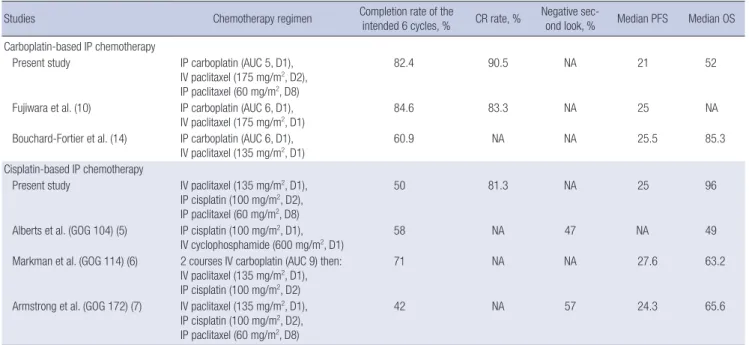
To reduce the toxicities associated with cisplatin-based IP chemotherapy, some centers have adopted carboplatin-based IP regimens. Table 4 lists the results of carboplatin- and cisplat- in-based IP chemotherapy in other randomized/non-random- ized trials. In the present study, 83.3% of patients who under- went carboplatin-based chemotherapy completed the intend- ed 6 cycles. Furthermore, 19 (90.5%) of the 21 patients had a complete response, and 2 had a partial response. Additionally, the median PFS was 20 months and the median OS was 52 mon- ths. In a previous study of IP carboplatin with IV paclitaxel in patients with suboptimal residual EOC, the response rate was 83.3% and the median PFS was 25 months; median OS had not been reached (12). A more favorable median OS was reported in another study of carboplatin-based IP chemotherapy, with smaller amounts of chemotherapeutic agent administered (14).
However, the reported survival was based on actuarial data, limiting comparisons. The relatively lower median PFS and OS in the present study are partially due to the inclusion of patients whose cytoreduction was suboptimal: Because an IP chemo- therapeutic agent penetrates to a depth of 2.0–2.5 mm, it is im- portant that no gross residual disease is present before admin- istration of IP chemotherapy (23).
The oncologic outcomes of 3 studies on IP chemotherapy by
the GOG, that compared IP with IV cisplatin administration, are also shown in Table 4. In the phase III GOG 104 trial that com- pared either 100 mg/m2 IP or IV cisplatin administered with IV cyclophosphamide (5), the median survival was significantly longer in the group treated with IP (49 months) than in the group treated with IV (41 months) cisplatin. The recently published phase III GOG 172 trial showed that IP therapy with cisplatin and paclitaxel was associated with longer survival in stage III patients who underwent optimal cytoreduction, compared with the IV chemotherapy group (median PFS of 18.3 and 28.3 months in the IV and IP chemotherapy groups, respectively, P = 0.050;
median OS of 65.6 and 49.7 months, respectively, P = 0.030) (7).
Although our data suggest the feasibility of carboplatin-based IP chemotherapy, without sacrificing patient survival, this in- terpretation should be approached with caution. The retrospec- tive nature of this study and small sample size might have re- sulted in selection bias regarding patient recruitment and may have limited the study’s statistical power; our study was not pow- ered to detect differences in survival. Moreover, the choice of carboplatin or cisplatin was not randomized or based on clear criteria but on the discretion of each gynecologic oncologist.
The therapeutic effects of carboplatin-based IP chemotherapy should be further evaluated through a large randomized com- parison study with cisplatin-based IP chemotherapy.
IP chemotherapy could gain widespread acceptance if the associated problems of drug-related toxicity are resolved. In ad- dition, it is reasonable to substitute carboplatin—a less toxic, better-tolerated platinum agent—for cisplatin, particularly in patients with severe cisplatin-associated toxicity. Given the po-
tential advantages of carboplatin-based IP chemotherapy, its use could positively impact the therapeutic strategy for patients with EOC. However, even though there was no statistical signif- icance in our cohort, the Kaplan-Meier curve seemed to indi- cate relatively better outcome in cisplatin-based IP chemother- apy group, compared with patients receiving carboplatin-based IP chemotherapy or IV chemotherapy. We deemed that if the size of the cohort is large enough, significant difference might be observed.
DISCLOSURE
The authors have no potential conflicts of interest to disclose.
AUTHOR CONTRIBUTION
Conceptualization: Eoh KJ, Lee JY, Nam EJ, Kim S, Kim YT, Kim SW. Resources: Lee JY, Nam EJ, Kim S, Kim YT, Kim SW. Data curation: Eoh KJ, Kim SW. Investigation: Eoh KJ, Kim SW. For- mal analysis: Eoh KJ. Writing - original draft: Eoh KJ, Kim YT, Kim SW. Writing – review & editing: Eoh KJ, Lee JY, Nam EJ, Kim S, Kim YT, Kim SW.
ORCID
Kyung Jin Eoh https://orcid.org/0000-0002-1684-2267 Jung-Yun Lee https://orcid.org/0000-0001-7948-1350 Eun Ji Nam https://orcid.org/0000-0003-0189-3560 Sunghoon Kim https://orcid.org/0000-0002-1645-7473 Young Tae Kim https://orcid.org/0000-0002-7347-1052 Sang Wun Kim https://orcid.org/0000-0002-8342-8701 REFERENCES
1. Kim SI, Lim MC, Lim J, Won YJ, Seo SS, Kang S, Park SY. Incidence of epi- thelial ovarian cancer according to histologic subtypes in Korea, 1999 to 2012. J Gynecol Oncol 2016; 27: e5.
2. Lee M, Chang MY, Yoo H, Lee KE, Chay DB, Cho H, Kim S, Kim YT, Kim JH. Clinical significance of CA125 level after the first cycle of chemother- apy on survival of patients with advanced ovarian cancer. Yonsei Med J 2016; 57: 580-7.
3. Ozols RF. Treatment of ovarian cancer: current status. Semin Oncol 1994;
21: 1-9.
4. Vaccarello L, Rubin SC, Vlamis V, Wong G, Jones WB, Lewis JL, Hoskins WJ. Cytoreductive surgery in ovarian carcinoma patients with a docu- mented previously complete surgical response. Gynecol Oncol 1995; 57:
61-5.
5. Alberts DS, Liu PY, Hannigan EV, O’Toole R, Williams SD, Young JA, Frank- lin EW, Clarke-Pearson DL, Malviya VK, DuBeshter B, et al. Intraperito- neal cisplatin plus intravenous cyclophosphamide versus intravenous cisplatin plus intravenous cyclophosphamide for stage III ovarian cancer.
N Engl J Med 1996; 335: 1950-5.
6. Markman M, Bundy BN, Alberts DS, Fowler JM, Clark-Pearson DL, Car- son LF, Wadler S, Sickel J. Phase III trial of standard-dose intravenous cis- platin plus paclitaxel versus moderately high-dose carboplatin followed by intravenous paclitaxel and intraperitoneal cisplatin in small-volume stage III ovarian carcinoma: an intergroup study of the Gynecologic On- cology Group, Southwestern Oncology Group, and Eastern Cooperative Oncology Group. J Clin Oncol 2001; 19: 1001-7.
7. Armstrong DK, Bundy B, Wenzel L, Huang HQ, Baergen R, Lele S, Cope- land LJ, Walker JL, Burger RA; Gynecologic Oncology Group. Intraperito- neal cisplatin and paclitaxel in ovarian cancer. N Engl J Med 2006; 354:
34-43.
8. Jaaback K, Johnson N. Intraperitoneal chemotherapy for the initial man- agement of primary epithelial ovarian cancer. Cochrane Database Syst Rev 2006: CD005340.
9. Miyagi Y, Fujiwara K, Kigawa J, Itamochi H, Nagao S, Aotani E, Terakawa N, Kohno I; Sankai Gynecology Study Group (SGSG). Intraperitoneal car- boplatin infusion may be a pharmacologically more reasonable route than intravenous administration as a systemic chemotherapy. A com- parative pharmacokinetic analysis of platinum using a new mathemati- cal model after intraperitoneal vs. intravenous infusion of carboplatin--a Sankai Gynecology Study Group (SGSG) study. Gynecol Oncol 2005; 99:
591-6.
10. Fujiwara K, Nagao S, Kigawa J, Noma J, Akamatsu N, Miyagi Y, Numa F, Okada M, Aotani E. Phase II study of intraperitoneal carboplatin with in- travenous paclitaxel in patients with suboptimal residual epithelial ovari- an or primary peritoneal cancer: a Sankai Gynecology Cancer Study Group Study. Int J Gynecol Cancer 2009; 19: 834-7.
11. Nagao S, Fujiwara K, Ohishi R, Nakanishi Y, Iwasa N, Shimizu M, Goto T, Shimoya K. Combination chemotherapy of intraperitoneal carboplatin and intravenous paclitaxel in suboptimally debulked epithelial ovarian cancer. Int J Gynecol Cancer 2008; 18: 1210-4.
12. Fujiwara K, Sakuragi N, Suzuki S, Yoshida N, Maehata K, Nishiya M, Ko- shida T, Sawai H, Aotani E, Kohno I. First-line intraperitoneal carboplatin- based chemotherapy for 165 patients with epithelial ovarian carcinoma:
results of long-term follow-up. Gynecol Oncol 2003; 90: 637-43.
13. Kim SW, Paek J, Nam EJ, Kim SH, Kim JH, Kim YT. The feasibility of car- boplatin-based intraperitoneal chemotherapy in ovarian cancer. Eur J Obstet Gynecol Reprod Biol 2010; 152: 195-9.
14. Bouchard-Fortier G, Rosen B, Vyarvelska I, Pasetka M, Covens A, Gien LT, Kupets R, Pulman K, Ferguson SE, Vicus D. A comparison of the toxicity and tolerability of two intraperitoneal chemotherapy regimens for advanced- stage epithelial ovarian cancer. Gynecol Oncol 2016; 140: 36-41.
15. Makhija S, Leitao M, Sabbatini P, Bellin N, Almadrones L, Leon L, Spriggs DR, Barakat R. Complications associated with intraperitoneal chemother- apy catheters. Gynecol Oncol 2001; 81: 77-81.
16. Crabtree JH, Chow KM. Peritoneal dialysis catheter insertion. Semin Neph
rol 2017; 37: 17-29.
17. Therasse P, Arbuck SG, Eisenhauer EA, Wanders J, Kaplan RS, Rubinstein L, Verweij J, Van Glabbeke M, van Oosterom AT, Christian MC, et al. New guidelines to evaluate the response to treatment in solid tumors. Europe- an Organization for Research and Treatment of Cancer, National Cancer Institute of the United States, National Cancer Institute of Canada. J Natl Cancer Inst 2000; 92: 205-16.
18. National Cancer Institute (US). Cancer therapy evaluation program: com- mon toxicity criteria [Internet]. Available at http://ctep.cancer.gov [access-
ed on 10 June 2017].
19. Tewari D, Java JJ, Salani R, Armstrong DK, Markman M, Herzog T, Monk BJ, Chan JK. Long-term survival advantage and prognostic factors associ- ated with intraperitoneal chemotherapy treatment in advanced ovarian cancer: a gynecologic oncology group study. J Clin Oncol 2015; 33: 1460-6.
20. Trimble EL, Alvarez RD. Intraperitoneal chemotherapy and the NCI clini- cal announcement. Gynecol Oncol 2006; 103: S18-9.
21. Wright AA, Cronin A, Milne DE, Bookman MA, Burger RA, Cohn DE, Cris- tea MC, Griggs JJ, Keating NL, Levenback CF, et al. Use and effectiveness
of intraperitoneal chemotherapy for treatment of ovarian cancer. J Clin Oncol 2015; 33: 2841-7.
22. Havrilesky LJ, Alvarez Secord A, Ehrisman JA, Berchuck A, Valea FA, Lee PS, Gaillard SL, Samsa GP, Cella D, Weinfurt KP, et al. Patient preferences in advanced or recurrent ovarian cancer. Cancer 2014; 120: 3651-9.
23. Van der Speeten K, Govaerts K, Stuart OA, Sugarbaker PH. Pharmacoki- netics of the perioperative use of cancer chemotherapy in peritoneal sur- face malignancy patients. Gastroenterol Res Pract 2012; 2012: 378064.