• 검색 결과가 없습니다.

Circulating Aneuploid Cells Detected in the Blood of Patients with Infectious Lung Diseases

N/A
N/A
Protected

Academic year: 2021

Share "Circulating Aneuploid Cells Detected in the Blood of Patients with Infectious Lung Diseases"

Copied!
4
0
0

로드 중.... (전체 텍스트 보기)

전체 글

(1)

ISSN: 2233-601X (Print) ISSN: 2093-6516 (Online)

− 126 −

Received: July 13, 2016, Revised: December 3, 2016, Accepted: December 13, 2016, Published online: April 5, 2017

Corresponding author: Jhingook Kim, Department of Thoracic and Cardiovascular Surgery, Samsung Medical Center, Sungkyunkwan University School of Medicine, 81 Irwon-ro, Gangnam-gu, Seoul 06351, Korea

(Tel) 82-2-3410-3483 (Fax) 82-2-3410-6986 (E-mail) [email protected]

© The Korean Society for Thoracic and Cardiovascular Surgery. 2017. All right reserved.

This is an open access article distributed under the terms of the Creative Commons Attribution Non-Commercial License (http://creativecommons.org/

licenses/by-nc/4.0) which permits unrestricted non-commercial use, distribution, and reproduction in any medium, provided the original work is properly cited.

Circulating Aneuploid Cells Detected in the Blood of Patients with Infectious Lung Diseases

Hongsun Kim, M.D. 1 , Jong Ho Cho, M.D., Ph.D. 1 , Chung-Hee Sonn, Ph.D. 2 , Jae-Won Kim, M.S. 2 , Yul Choi, P.N. 1 , Jinseon Lee, Ph.D. 2 , Jhingook Kim, M.D., Ph.D. 1,2

1

Department of Thoracic and Cardiovascular Surgery and

2

Samsung Biomedical Research Institute, Samsung Medical Center, Sungkyunkwan University School of Medicine

The identification of circulating tumor cells (CTCs) is clinically important for diagnosing cancer. We have pre- viously developed a size-based filtration platform followed by epithelial cell adhesion molecule immuno- fluorescence staining for detecting CTCs. To characterize CTCs independently of cell surface protein ex- pression, we incorporated a chromosomal fluorescence in situ hybridization (FISH) assay to detect abnormal copy numbers of chromosomes in cells collected from peripheral blood samples by the size-based filtration platform. Aneuploid cells were detected in the peripheral blood of patients with lung cancer. Unexpectedly, aneuploid cells were also detected in the control group, which consisted of peripheral blood samples from patients with benign lung diseases, such as empyema necessitatis and non-tuberculous mycobacterial lung disease. These findings suggest that chromosomal abnormalities are observed not only in tumor cells, but al- so in benign infectious diseases. Thus, our findings present new considerations and bring into light the pos- sibility of false positives when using FISH for cancer diagnosis.

Key words: 1. Circulating neoplastic cells 2. Fluorescent in situ hybridization 3. Lung neoplasms

Case report

The identification and characterization of circulat- ing tumor cells (CTCs) in the blood of cancer pa- tients can help to diagnose cancer more accurately.

Epithelial cell adhesion molecule (EpCAM)-based plat- forms are usually used to capture and identify CTCs [1-3]. CTCs can be successfully characterized by fluo- rescence in situ hybridization (FISH) following en- richment using the EpCAM-positive selection plat- forms [4]. However, as CTCs undergoing epithelial- mesenchymal transition frequently lose the expres- sion of EpCAM, technologies targeting only EpCAM-

positive cells may underestimate the actual number of CTCs [5,6]. Once CTCs are enumerated, they have to be properly characterized to ensure the sensitivity and reliability of the CTC enumeration platform used.

We have previously developed a highly sensitive method for detecting CTCs that employs size-based filtration and EpCAM immunofluorescence staining [7]. CTCs of epithelial origin were distinguished from blood cells as all 4',6-diamidino-2-phenylindole (DAPI)- positive, leukocyte common antigen (CD45)-negative, and EpCAM-positive cells. To characterize CTCs in- dependently of cell surface protein expression, we in- corporated a chromosomal FISH assay to detect ab-

Korean J Thorac Cardiovasc Surg 2017;50:126-129 □ CASE REPORT □

https://doi.org/10.5090/kjtcs.2017.50.2.126

(2)

Pitfalls of FISH for Cancer Diagnosis

− 127 −

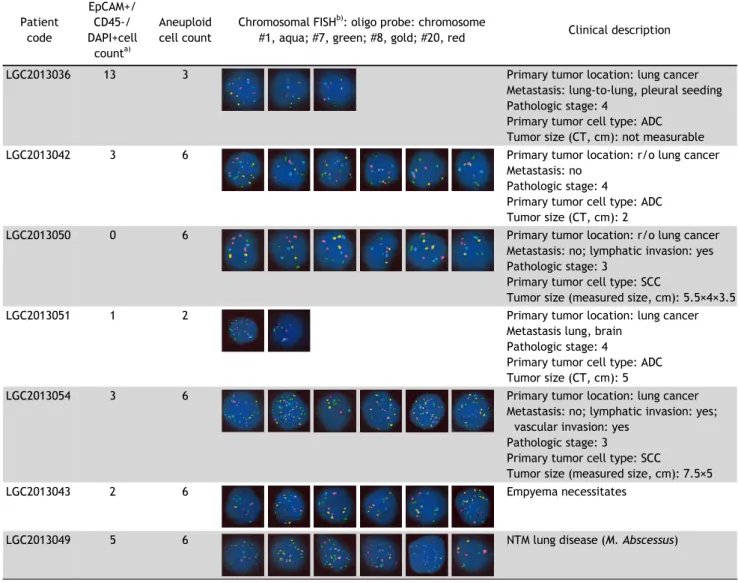
Table 1. Detection of aneuploid cells in the blood of patients with lung diseases

Patient code

EpCAM+/

CD45-/

DAPI+cell count

a)

Aneuploid cell count

Chromosomal FISH

b)

: oligo probe: chromosome

#1, aqua; #7, green; #8, gold; #20, red Clinical description

LGC2013036 13 3 Primary tumor location: lung cancer

Metastasis: lung-to-lung, pleural seeding Pathologic stage: 4

Primary tumor cell type: ADC Tumor size (CT, cm): not measurable

LGC2013042 3 6 Primary tumor location: r/o lung cancer

Metastasis: no Pathologic stage: 4

Primary tumor cell type: ADC Tumor size (CT, cm): 2

LGC2013050 0 6 Primary tumor location: r/o lung cancer

Metastasis: no; lymphatic invasion: yes Pathologic stage: 3

Primary tumor cell type: SCC

Tumor size (measured size, cm): 5.5×4×3.5

LGC2013051 1 2 Primary tumor location: lung cancer

Metastasis lung, brain Pathologic stage: 4

Primary tumor cell type: ADC Tumor size (CT, cm): 5

LGC2013054 3 6 Primary tumor location: lung cancer

Metastasis: no; lymphatic invasion: yes;

vascular invasion: yes Pathologic stage: 3

Primary tumor cell type: SCC

Tumor size (measured size, cm): 7.5×5

LGC2013043 2 6 Empyema necessitates

LGC2013049 5 6 NTM lung disease (M. Abscessus)

ADC, adenocarcinoma; CT, computed tomography; SCC, squamous cell carcinoma; NTM, non-tuberculous mycobacteria; CD45, leukocyte common antigen; mAb, monoclonal antibody; EpCAM, epithelial cell adhesion molecule; DAPI, 4',6-diamidino-2-phenylindole; FISH, fluorescence in situ hybridization.

a)
The collected cells were underwent immunofluorescence staining with anti-human-CD45 mAb, anti-human EpCAM mAb, and DAPI and then counted under a fluorescence microscope.

b)

Chromosomal FISH image magnification, ×1,000.

normal copy numbers of chromosomes in cells col- lected from peripheral blood samples using the size- based filtration platform. Abnormal copy numbers of chromosomes were detected not only in tumor cells, but also in certain benign cells, thus highlighting the limitations of the chromosomal FISH assay for cancer diagnosis.

Five patients with non-small cell lung cancer and 2 patients with benign lung diseases were enrolled in this study, and no patient was excluded. This study was approved by the institutional review board (No.

2011-12-024). A 10-mL blood draw was collected

from the patients and processed on a size-based fil-

tration platform. The collected cells were divided and

loaded onto 2 microscopic slides. On 1 slide, half of

the collected cells were immunofluorescently stained

with anti-human CD45 monoclonal antibody (mAb),

anti-human EpCAM mAb, and DAPI to check for

EpCAM+/CD45−/DAPI+ cells. The remaining cells on

the other slide were stained with 4-color fluorescent-

conjugated oligo-FISH probes specific to chromosomes

1 (aqua), 7 (green), 8 (gold), and 20 (red). The patient

(3)

Hongsun Kim, et al

− 128 −

Fig. 1. The positive and negative con- trols for chromosomal fluorescence in situ hybridization assay. (A) Posi- tive control. The cells from the SW380 cell line (the colon adeno- carcinoma cell line) were spiked into human blood from a healthy donor, and then filtrated. In the chromoso- mal FISH assay, aneuploidy was observed. (B) Negative control. The blood sample from the healthy donor was filtrated, and euploidy was ob- served in the FISH assay. FISH, fluo- rescence in situ hybridization.

characteristics, EpCAM+/CD45–/DAPI+ cell counts, and aneuploid cell counts of the collected cells are sum- marized in Table 1. Aneuploid cells were detected in the peripheral blood of patients with lung cancer.

Unexpectedly, aneuploid cells were also detected in the peripheral blood of patients with benign lung diseases, such as empyema necessitatis and non-tu- berculous mycobacterial lung disease, which served as negative controls.

Discussion

For better identification of CTCs in patients with lung cancer, we performed both immunofluorescent staining of EpCAM+/CD45−/DAPI+ cells and chro- mosomal FISH assays on the cells collected from the size-based filtration platform. The collected cells in the peripheral blood of patients with lung cancer showed aneuploidy. Unexpectedly, aneuploid cells were also detected in the peripheral blood of pa- tients with benign lung diseases, such as empyema necessitatis and non-tuberculous mycobacterial lung disease. Furthermore, the enumeration of aneuploid cells did not correlate with the immunofluorescence staining results. Pantel et al. [8] have shown that cir- culating epithelial cells in patients with benign colon diseases were detected as false positives using both CellSearch and epithelial immunospot assays. Positive events were detected most frequently in patients with benign colon diseases, such as diverticulosis and Crohn disease.

FISH is a highly reliable method for detecting aneuploidy in chromosomal assays. It has high sensi- tivity (>90%) and specificity (100%), and it also has a low false-negative rate (<10%) and false-positive rate (0%) [9]. Thus, FISH assays pose little potential for false positives in patients with benign lung disease.

The link between aneuploidy and inflammatory diseases has been highlighted by numerous studies, indicating that aneuploidy is not a unique feature of cancer [10,11]. According to Tsai et al. [10], the copy numbers of chromosomes in mouse embryo cells in- fected with mycoplasma were observed to change with each passage, indicating that mycoplasma in- fection can induce aneuploidy in infected cells. In ad- dition, Lay et al. [11] have shown that a high num- ber of nuclei were cells with aneuploidy induced by Mycobacterium tuberculosis infection. Furthermore, granulomas in inflamed tissues have been observed to form giant cells that block mitotic cell division that would inhibit the inflammatory response.

We report, for the first time, evidence that aneu- ploid cells can also be detected in the blood samples of patients with benign disease. However, the source of these cells is not clear. In future studies, compar- isons should be performed on peripheral blood and tumor tissue samples from patients with lung cancer as well as patients with infectious diseases to de- termine the actual origin of the aneuploid cells.

The specificity and sensitivity of CTC identification

are important for cancer diagnosis. Our platform can

detect CTCs, but the collected cells have to be char-

(4)

Pitfalls of FISH for Cancer Diagnosis

− 129 − acterized using other techniques to increase the ac-

curacy of cancer detection. Flaig et al. [12] have re- ported that FISH is a good prognostic marker for de- tecting CTCs, comparable to EpCAM-positive selection platforms in urothelial cancer patients. Counts of CTCs collected by either density gradient centrifuga- tion or filtration from the blood of prostate, ovarian, and colorectal cancer patients are correlated with the aneuploid cell counts from FISH in the same patients [13]. In our study, positive chromosomal abnormal- ities were not detected in healthy donor samples (Fig. 1), but they were detected in both patients with cancer and patients with benign infectious diseases.

Our report thus suggests the risk of false positives and raises concerns regarding the reliability of the FISH assay for cancer diagnosis.

In conclusion, we evaluated EpCAM+/CD45−/DAPI+

cells and aneuploid cells from the cells collected by a size-based filtration platform. Aneuploid cells were detected in the peripheral blood of patients with lung cancer and, unexpectedly, in the peripheral blood samples of patients with benign lung diseases, such as empyema necessitatis and non-tuberculous myco- bacterial lung disease, which served as the negative control group. We conclude that chromosomal abnor- malities can also be detected in patients with benign infectious diseases of the lung, thus indicating that they are not a unique property of tumor cells.

Conflict of interest

No potential conflict of interest relevant to this ar- ticle was reported.

References

1. Cristofanilli M, Budd GT, Ellis MJ, et al. Circulating tumor cells, disease progression, and survival in metastatic

breast cancer. N Engl J Med 2004;351:781-91.

2. Krebs MG, Sloane R, Priest L, et al. Evaluation and prog- nostic significance of circulating tumor cells in patients with non-small-cell lung cancer. J Clin Oncol 2011;29:

1556-63.

3. Truini A, Alama A, Dal Bello MG, et al. Clinical applications of circulating tumor cells in lung cancer patients by CellSearch system. Front Oncol 2014;4:242.

4. Punnoose EA, Atwal SK, Spoerke JM, et al. Molecular bio- marker analyses using circulating tumor cells. PLoS One 2010;5:e12517.

5. Yu M, Bardia A, Wittner BS, et al. Circulating breast tumor cells exhibit dynamic changes in epithelial and mesen- chymal composition. Science 2013;339:580-4.

6. Gorges TM, Tinhofer I, Drosch M, et al. Circulating tumour cells escape from EpCAM-based detection due to epi- thelial-to-mesenchymal transition. BMC Cancer 2012;12:

178.

7. Kim EH, Lee JK, Kim BC, et al. Enrichment of cancer cells from whole blood using a microfabricated porous filter.

Anal Biochem 2013;440:114-6.

8. Pantel K, Deneve E, Nocca D, et al. Circulating epithelial cells in patients with benign colon diseases. Clin Chem 2012;58:936-40.

9. Ward BE, Gersen SL, Carelli MP, et al. Rapid prenatal diag- nosis of chromosomal aneuploidies by fluorescence in situ hybridization: clinical experience with 4,500 specimens.

Am J Hum Genet 1993;52:854-65.

10. Tsai S, Wear DJ, Shih JW, Lo SC. Mycoplasmas and onco- genesis: persistent infection and multistage malignant transformation. Proc Natl Acad Sci U S A 1995;92:10197- 201.

11. Lay G, Poquet Y, Salek-Peyron P, et al. Langhans giant cells from M. tuberculosis-induced human granulomas cannot mediate mycobacterial uptake. J Pathol 2007;211:

76-85.

12. Flaig TW, Wilson S, van Bokhoven A, et al. Detection of cir- culating tumor cells in metastatic and clinically localized urothelial carcinoma. Urology 2011;78:863-7.

13. Ntouroupi TG, Ashraf SQ, McGregor SB, et al. Detection of

circulating tumour cells in peripheral blood with an auto-

mated scanning fluorescence microscope. Br J Cancer

2008;99:789-95.

수치

Table 1. Detection of aneuploid cells in the blood of patients with lung diseases
Fig. 1. The positive and negative con- con-trols for chromosomal fluorescence  in situ hybridization assay

참조

관련 문서

Stimulation of cell surface-expressed ENO1 induced faster repopulation of FLS in the scratch test assay, and increased PDGF-induced transwell migration.. Cytoplasmic

They also showed significantly improved cell migration and proliferation with respect to negative control in the scratch - wound healing assay using confluent monolayers

In this study, we developed a non-toxic titanium alloy with low elastic modulus in order to improve biocompatibility, and the surface characteristics of

To assess the clinical usefulness of performing Q-PCR in practice as a diagnostic technique, we compared blindly the Q-PCR results using blood samples of the

To investigate the comparative localization of protein kinase C (PKC) isoenzymes in the vomeronasal organ with sexual maturation of the horse, we

In a manner similar to that of the ISH protocol, by converting the area of a cell to square cells of area n/m each and setting the area of a routing cell to 2 log n and

□ The least-upper-bound property (sometimes called completeness or supremum property) is a fundamental property of the real number system. The least-upper-bound

□ The least-upper-bound property (sometimes called completeness or supremum property) is a fundamental property of the real number system. The least-upper-bound