비단백질성 항균물질을 생산하는 김치발효용 내산성 Hetero 발효형 유산균주 선발
김혜림, 이종훈*
경기대학교식품생물공학과
Received : November 20, 2012 / Revised : December 21, 2012 / Accepted : December 22, 2012
서 론
김치는소금에절인배추와무등에다양한부재료를혼 합하고일정기간발효, 숙성시킨한국의전통발효식품이다. 원·부재료내의토착미생물에의하여이루어지는김치발효 는소금농도, 발효온도등이동일한조건에서도발효미생 물의생육양상이달라균일한품질의김치생산은쉽지않
다[5]. 현재까지의연구에따르면김치발효초기및적숙기
에는 hetero 발효형 Leuconostoc 및 Weissella 속유산균의 우점에의해 만들어 지는 lactic acid, acetic acid, alcohol,
dextran, CO2등에의해특유의상쾌한맛과물성을가지게
되지만, 발효진행에따른환경변화와 homo 발효형유산균 Lactobacillus 속이주를이루게되면서산도가증가하고연 부현상이일어나풍미가떨어지는것으로보고되었다[5, 15, 27, 28, 32, 34, 41].
가정단위에서만들어지던김치는경제발전에따른주거 환경변화, 여성사회진출증가, 외식산업발달등의사회적 변화로인해상업적생산이계속적으로증가하고있다. 김치 는살균공정없이유통되기때문에유통과정에서도발효가 진행되어균일한품질의제품생산이어렵고, 유통중에산패 하는경우가발생한다. 따라서상업적김치생산의확대와 함께품질균일화및가식기간연장은김치의상품성및유 통기한과연관된가장큰문제점으로대두되었다[22]. 이에 김치발효에관여하는미생물을효과적으로제어하여품질 균일화를달성하고, 풍미를향상시키며, 유통기한을연장하 려는연구가진행되고있다. 미생물의생육을지연시킬수 있는저온저장은가장효과적인유통기한연장방법이지만, 저온유통설비가미흡한경우, 지속적인저온관리에문제점 이발생할수있다. 보존료첨가는사용량에따라김치풍미 에영향을줄수있고, 안전성에대한잠재적문제점을가지 고있으며, 소비자들의거부반응이예상되기때문에발효식 품에적용하기에는적합하지않다[19, 38, 39]. 원료의열처 리, 방사선조사를이용한김치즙살균, 고압처리등의물리 적방법이발효초기미생물의생육저해를통한발효지연에 Selection of Acid-tolerant and Hetero-fermentative Lactic Acid Bacteria Producing Non-proteinaceous Anti-bacterial Substances for Kimchi Fermentation. Kim, Hye-Rim and Jong-Hoon Lee*. Department of Food Science and Biotechnol- ogy, Kyonggi University, Suwon 443-760, Korea
Twenty-three strains of Leuconostoc species and 45 strains of Weissella species inhibiting the growth of Lactobacillus sakei, one of the most populous lactic acid bacteria in over-ripened kimchi, were isolated from kimchi in our previous study. Among these hetero-fermentative 68 strains, Leuconostoc mesenteroides CK0128, Weissella cibaria CK0633, and W. cibaria KK0797 exhibited a relatively high survival rate in MRS medium, which was adjusted to pH 4.3 using an acid mixture consisting of acetic and lactic acids, and produced a large amount of exopolysaccharides. The culture supernatants of 3 strains were fractionated by a molecular weight cutter and lyophilized. The fractions with a molecular weight smaller than 3,000 Da showed antagonistic activity against Staphylococcus aureus and Lb. sakei. The anti-bacterial substances were very stable to heat treatments (121oC, 15 min) and active at acidic conditions below pH 5. α-Amylase, lipase, and proteolytic enzymes (proteinase K and pep- sin) did not affect their activities. These non-proteinaceous anti-bacterial substances inhibited the growth of several food patho- gens.
Keywords: Leuconostoc, Weissella, Lactobacillus sakei, kimchi, acid-tolerance, anti-bacterial substance
*Corresponding author
Tel: +82-31-249-9656, Fax: +82-31-253-1165 E-mail: [email protected]
효과가있는것으로보고되었지만[3, 8, 37], 물리적방법은 김치제조법을과도하게변형해김치의품질저하및설비투 자에따른생산비용증가가발생할수있다. 최근에는이러
한문제점에대한대안으로종균(starter)을이용한김치발
효가활발하게연구되고있으며, 이미일부김치제조업체에 서는종균을사용한제품을출시하고있다[14, 25, 30, 35].
김치발효관련종균연구는품질균일화및가식기간연 장을목표로 1) 김치적숙기의우점종을종균으로적용한연
구, 2) 내산성균주를이용하여발효후기에우점하는산패
균의생장을억제하려는연구, 3) bacteriocin 생산균주를이 용하여발효후기우점균의생육을제어하려는연구를중심 으로진행되었고, 그외건강기능성부여, 관능성향상, 식품 위해균억제를목표로한연구가진행되었다[29].
본연구자들은 최근 김치발효후기 우점종으로 알려진 homo 발효형유산균 Lactobacillus sakei의생육을저해하 는 hetero 발효형 유산균 Leuconostoc 및 Weissella 속 68 균주를분리하였다[29]. Leuconostoc 및 Weissella 속은포도 당을 비롯한 당류를 기질로 생육하여 lactic acid, acetic acid, alcohol, CO2를생성함으로써김치의풍미를증진시키 고, Lb. sakei의생육을억제하는특성은산생성지연에따 른가식기간연장을기대할수있다. 하지만, hetero 발효형 유산균은 homo 발효형 Lactobacillus 속에비해내산성이약 해발효후기에는비중이줄어들고, Lactobacillus 속이우 점한다는사실은다수의연구를통해보고되었다[17, 25]. 따 라서, 이들이발효후기까지우점하면서종균으로써의기능 을발휘하기위해서는발효의진행에따라증가하는산에대 한 저항성이 필요하다. 따라서 선행연구[29]에서 분리한 Leuconostoc 및 Weissella 속 68균주중, 상대적으로내산성 이높은 3균주를선발하고, 이들이생산하는항균물질의특 성을검토하였다.
재료 및 방법
균주 및 배양
김치로부터분리한유산균주는 MRS broth (Difco, USA) 를사용하여 30oC 미호기적조건에서배양하였고, 고체배지 의제조에는한천을 1.6% (w/v) 첨가하였다. 항균활성평가 를 위한 공시균 Bacillus cereus KCCM11341, Listeria monocytogenes ATCC19111, Staphylococcus aureus ATCC12692, Salmonella typhimurium KCCM11862, Vibrio parahaemolyticus KTCT3603은 Korean Culture Center for Microorganisms (KCCM), Korean Collection for Type Culture (KCTC), ATCC the global bioresource center로부터구입하였고, Escherichia coli O157:H7 933 균 주는경원대학교식품생물공학과박종현교수로부터분양받
았다(Table 3). L. monocytogenes는 Brain Heart Infusion (BHI) broth (Difco), V. parahaemolyticus는 marine broth (Difco)에 배양하였고 나머지 공시균주는 nutrient broth (Difco)에각각 24시간배양하여사용하였다.
김치 유래 유산균주의 내산성 및 세포 외 다당류 생성 평가 Acetic acid와 lactic acid (2:1) 혼합액을첨가해 pH 4.3으 로조정한 MRS broth에전배양액을 2% 접종하여 30oC에서 배양하면서 24, 36, 48시간후의생균수를측정한다음, 접 종시측정한초기균수대비각배양시간에서의생존율을 계산하여내산성의지표로사용하였다[17].
세포외다당류(exopolysaccharides, EPS) 생성은 phenyl- ethyl alcohol agar (Difco)에 sucrose를 2% 첨가한 PES agar를이용하였고, 30oC 배양에서 colony 주변에생성되는 점질물질의지름을측정하여 EPS 생성능으로간주하였다 [31].
조항균물질의 분획 및 항균활성 측정
30oC 미호기조건, MRS broth에서 24시간배양한균주배 양액을원심분리(6,000×g, 20 min, 4oC)하여상등액을회수 하고, 0.45µm membrane filter (Gelman Science, USA)로 제균하여조항균물질을얻었다. 조항균물질을 Amicon Ultra- 15 centrifugal filter devices 3K (Millipore, USA)를이용하
여분자량 3,000 Da 이상과이하의분획으로나누고각각을
동결건조하였다(FD8512, Ilshinbio, Korea). 분자량에따라 분획한조항균물질은 agar disk diffusion method [44]에의 해항균활성을검토하였다. 지시균으로사용한 St. aureus ATCC12692 약 107CFU/ml 농도배양액 700µl를 nutrient agar (Difco)에도말후, 배양액이건조되면살균된 paper disk (Ø 6 mm, Whatman, UK)를올려놓았다. 분자량 3,000 Da을 기준으로분획하여동결건조한조항균물질을동결건조전부 피의 1/20에해당하는멸균수에녹여각각 paper disk에 20µl 첨가한다음, 30oC에서 24시간배양하여형성된생육저해환 (clear zone)의크기를활성으로평가하였다[29].
항균물질의 안정성 평가
항균물질의열, 효소 및 pH에대한 안정성은 agar disk diffusion method를이용하여평가하였고, 지시균 St. aureus 의생육저해환크기를활성으로간주하였다. 단 St. aureus의 생장범위를벗어나는 pH 4 이하의안정성실험조건에서는 비교적넓은 pH 범위에서생장하는 B. cereus KCCM11341을 지시균으로사용하였다. 안정성평가를위한지시균의배양에 는 nutrient broth 또는 nutrient agar를사용하였다.
열에대한안정성은분획하여동결건조한분자량 3,000 Da 이하의조항균물질을 0.01 g/ml 농도로물에녹여 4oC, 30oC,
50oC, 70oC에서 24시간, 100oC에서 5분및 30분, 121oC에서 15분간처리한후잔존하는항균활성을평가하였다.
효소처리에 따른 항균활성 변화의 측정을 위하여 α- amylase (EC 3.2.1.1 type VIII, Sigma, USA), lipase (EC 3.1.1.3 type VII, Sigma), proteinase K (EC 3.4.21.64, Sigma) 는 0.2 M sodium phosphate buffer (pH 7)에, pepsin (EC 3.4.23.1, Sigma)은 0.1 M citrate buffer (pH 4)에 20 mg/
ml 농도가되도록준비하였다. 5N NaOH를이용해중성으 로 pH를조절하여동결건조한조항균물질을최종농도 0.01 g/
ml가되도록멸균수에녹이고, 준비한각효소용액과동량 혼합하여 37oC에서 24시간반응시킨다음, 5N HCl을이용 해 pH를 4.5로재조정하여항균활성을평가하였다.
pH에따른항균물질의안정성평가를위하여선발균주의 배양상등액을 5N HCl과 5N NaOH를사용하여 pH를 4에 서 9까지단계적으로조절하고 4oC에서 24시간방치시킨다 음, 원심분리(6,000×g, 20 min, 4oC)하여회수한상등액을동 결건조하였다. 0.01 g/ml의농도로멸균수에녹인조항균물 질을 0.45µm membrane filter (Gelman Science)로제균하 여잔존하는항균활성을평가하였다.
항균물질에 의한 Lb. sakei 생육저해 평가
분자량 3,000 Da을기준으로분획하여동결건조한각균
주유래조항균물질을 0.01 g/ml 농도로첨가한 MRS broth 에 30oC에서 24시간전배양한김치유래 Lb. sakei CK0155 와 공시균 Lb. sakei subsp. sakei KCTC3603을 각각 1%
(v/v) 접종한다음, 30oC에서배양하면서시간에따른흡광 도(660 nm)를측정하여조항균물질에의한 Lb. sakei의생 육저해를측정하였다[29].
항균물질의 항균 스펙트럼 조사
선발된내산성균주가생산하는항균물질의각종식중독 균에대한항균활성을 agar disk diffusion method를이용하 여검토하였다. 약 107CFU/ml 농도의공시균배양액 700 µl 를 nutrient agar에도말한후, 공시균용액이건조되면살 균된 paper disk를올려놓았다. 동결건조하여 0.01 g/ml의농
도로멸균수에녹인분자량 3,000 Da 이하의조항균물질을
paper disk에 20µl 첨가한다음, 30oC에서 24시간배양하여 생육저해환을확인하였다.
결과 및 고찰
김치 유래 내산성 hetero 발효형 유산균주 선발
Lb. sakei 생육저해활성보유 김치 유래 Leuconostoc 및 Weissella 속 68 유산균주의산성조건(pH 4.3) 배지에서의생
Table 1. Acid-tolerance and exopolysaccharide production of Leuconostoc and Weissella isolates from kimchi.
Species Strain No.a Acid-tolerance (%)b EPS productivity
(mm)c
24 h 36 h 48 h
Lc. lactis KK0835 37 3 0 0.3
KK0943 46 1 0 0
Lc. citreum CK0496 5 0 0 0.6
KK0512 21 1 0 0
Lc. mesenteroides
KG6054 85 34 5 0.7
KM1211 66 33 11 0.6
CK0128 102 87 27 0.7
W. cibaria
CK0232 7 2 0 0.9
CK0235 4 1 0 0.5
CK0487 0 0 0 1
CK0633 100 70 36 0.9
KK0797 56 40 32 0.8
KK0798 46 23 7 0.8
W. confusa KK0631 0 0 0 0.4
KK0637 0 0 0 0.4
W. paramesenteroides KK0717 54 56 25 0
aThe isolates from kimchi are stocked in our research group.
bAcid-tolerance was determined by the survival rate (%) of strains cultured at 30oC in MRS medium adjusted to pH 4.3 using an acid mixture (acetic acid : lactic acid = 2 : 1).
cProductivity of exopolysaccharides (EPS) was indicated by the diameters of slime products around colonies.
The results are the average values of three replicates.
존율을검토하였고, Table 1에는일부균주의결과를나타 내었다. 산성조건배지에서모든균주는배양시간이길어짐
에 따라 생존율이 감소하는 것으로 나타났고, KG6054,
KM1211, CK0128, CK0633, KK0797, KK0798, KK0717 균주를제외한모든균주가 48시간배양에의해생존하지못 하는것으로나타났다. 이들균주들은생존율을결정한모든 배양시간에서높은생존율을나타내었고, 특히 48시간배양 에서 각각 27%, 36%, 32%의 생존율을 나타낸 CK0128, CK0633, KK0797 균주가 68균주중, 상대적으로높은내산 성을나타내었다.
내산성 유산균주의 세포 외 다당류(EPS) 생성
Bacteria가생산하는 EPS는구성당및연결구조의다양
성으로인해다양한물성을가지고있고, 자연계에서쉽게 분해될뿐만아니라, 배양액으로부터쉽게회수되기때문에 적은비용으로정제가가능하다. 이러한장점들로인해식품 산업에서의유화제, 안정제, 응집제등의용도뿐만아니라의 료용으로도주목을받고있다[20]. 특히사용이력에의해안 전성이검증된유산균이생산하는 EPS는발효유제품의물 성및점성개량을위한사용목적으로많은주목을받았으 나, 최근의연구에서유산균이가지고있는항암, 항염증, 면 역조절, 혈중콜레스테롤저하활성과같은기능성을보유한 EPS가보고되면서유산균의 EPS에대한관심이높아지고 있다[12, 40]. 또한건조, 식균작용, 파지감염, 항생물질및독 성물질, 삼투압과같은외부환경스트레스로부터자신을보 호하는기능과관련이있는것으로보고되었고[33, 40], 이 러한기능은유산균이사람의위에서분비되는강산과췌장 에서분비되는담즙산의환경을극복하고, 장에도달하여생 균제(probiotics)로써효과를나타내는데도움을주는것으로 알려지고있다[21, 26, 33]. 최근에는유산균의내산성및담
즙산내성이 EPS 생산과비례한다는보고에따라 EPS 생산
이생균제선발의지표로고려되고있다[1, 2]. EPS의생산은 내산성이높은균주일수록높다는보고에따라, 68균주에대 한 EPS 생산을확인한결과, Leuconostoc mesenteroides와 Weissella cibaria, Weissella confusa 균주는모두 EPS를 생산하였다(Table 1, Fig. 1). 그러나, Leuconostoc citreum 균주들중, CK0496 균주는 0.6 mm의높은 EPS 생성을보 였지만 KK0512 균주는생성을보이지않았고, 48시간배양 에서생존하지않는 W. cibaria CK0232, CK0235, CK0487
균주가 높은 EPS 생성능을 나타내었으며, Weissella
paramesenteroides는배양 48시간에 25%의높은생존율을 보였지만 EPS는생산하지않았다. 본연구에사용한균주들
의경우, 내산성과 EPS 생산과의비례관계가확인되지않
고, 동일한종(species) 내의균주들간에도내산성과 EPS 생
산이무관한것으로나타나, 내산성과 EPS 생산은균주특
이적인특성으로추정된다. 본연구의결과가기존의결과와
상이한이유로 EPS 생산을측정한실험법의차이를들수
있겠지만, 내산성과 EPS 생산과의비례관계에대한연구가
일부연구자들에의해제한적으로진행되었기때문에추가
적인연구가필요한것으로평가된다[1, 2].
내산성 유산균주가 생산하는 항균물질의 분자량
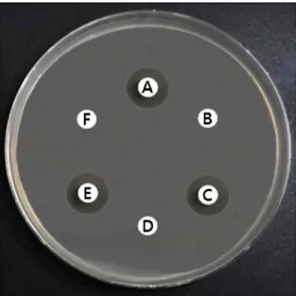
내산성및 EPS 생산이상대적으로우수하게나타난 CK0128, CK0633, KK0797 균주를김치발효용종균후보로선정하고, 이들이생산하는항균물질의대략적인분자량을추정하였 다. 균주들의배양액으로부터얻어진조항균물질을분자량 3,000 Da을기준으로분획하여지시균 St. aureus에대한생
육저해를확인한결과 3,000 Da 이상의분획에서는활성이
나타나지않았으나, 3000 Da 이하의분획에서는 3 균주모 두로부터활성이나타나, 항균물질의분자량이 3,000 Da 이 하인것으로확인되었다(Fig. 2).
내산성 유산균주가 생산하는 항균물질의 안정성
선발된내산성균주 CK0128, CK0633, KK0797이생산하 는항균물질의열, 효소, pH에대한안정성을조사하였다 (Table 2). 분획한 3,000 Da 이하의 조항균물질은 모두
121oC, 15분의열처리에도불구하고지시균에대한항균활
성을유지함으로써열에대한높은안정성을나타내었다. 또 Fig. 1. Production of exopolysaccharides by the hetero- fermentative lactic acid bacteria isolated from kimchi.
Isolates: a, KK0835; b, KK0943; c, CK0496; d, KK0512; e, KG0654; f, KM1211; g, CK0128; h, CK0232; i, CK0235; j, CK0487; k, CK0633; l, KK0797; m, KK0798; n, KK0631; o, KK0637; p, KK0717.
한, α-amylase, lipase, pepsin, proteinase K 처리가항균활 성에아무런영향을미치지않는것으로보아이들균주의 항균물질은탄수화물, 지질을포함하지않으며동시에비단 백질성물질로추정된다. B. cereus를지시균으로사용한 pH 에대한안정성은 pH를조정하지않은배양상등액(pH 4.5) 에서나타난항균활성을대조군으로평가하였다. pH를 5로 조정한경우, 활성이 50% 이하로감소하였으며, pH 6.0 이 상에서는활성이나타나지않았지만, pH가낮아질수록항균 활성이높아지는것으로나타났다. 이러한 pH 저하에따른 활성의증가는 pH에의한지시균의생육저해를배제할수 없지만, 균주에따른생육저해의차이가나타나는점으로보 아항균물질에의한생육저해가작용하고있는것으로추정 된다. 이상의결과로부터 CK0128, CK0633, KK0797이생 산하는항균물질은 pH 5 이하의산성조건에서활성을갖는 비단백질성물질로추정된다.
현재까지보고된발효식품유래의유산균이생산하는비 단백질성항균물질의분자량은 74-1,071 Da 정도로다양하 지만, 대체로 저분자물질이 주를 이루고있다. Reuterin, benzoic acid, caproic acid, macrolacton, reutericyclin, iturin 등이알려져있으며, 이들은 200 Da 미만의저분자화
합물로온도에대해안정하고, pH 3-5의산성영역에서항균
활성을가진다[7, 11, 18, 36, 43, 44]. 그중, 김치로부터분리 한 Lactobacillus plantarum AF-1이생산하는항진균활성 보유 3, 6-bis (2-metylpropyl)-2, 5-piperazinedion은 pH 3-
4에서안정하지만 5 이상의 pH에서는활성이급격히감소 하고, 높은 열 안정성을 갖고 있으며, α-amylase, lipase, pepsin, proteinase K 처리가활성에영향을미치지못하는 물질로본실험의항균물질과유사한특성을나타내었다[44, 45].
내산성 유산균주가 생산하는 항균물질의 Lb. sakei 생육저 해활성
지시균 St. aureus의생육저해실험을통하여항균활성을
나타내는물질은분자량 3,000 Da 이하의비단백질성으로
확인되었지만, 선발된내산성균주들이나타내는 Lb. sakei 생육저해활성의실체에대한규명이남아있다. 선발된 3균
주의분자량 3,000 Da 이상의분획은김치로부터분리동정
한 Lb. sakei CK0155 균주의생육에영향을미치지못하였 으나, 3,000 Da 이하의분획은 CK0155 균주의생육을저해 Fig. 2. Growth inhibition of St. aureus ATCC12692 by two
cell-free fractions from Lc. mesenteroides CK0128 (A and B), W. cibaria CK0633 (C and D), and W. cibaria KK0797 (E and F) separated by 3,000 Da molecular weight cutter.
A, C, and E are the growth inhibitions by the fractions with molecular weight below 3,000 Da. B, D, and F are the results of molecular weight over 3,000 Da fractions of those strains.
Table 2. Effects of heat treatments, enzymes, and pHs on the anti-bacterial activities present in the cell-free supernatants from Lc. mesenteroides CK0128, W. cibaria CK0633, and W. cibaria KK0797 cultures.
Treatment Relative activity (%) CK0128 CK0633 KK0797
Heat
4oC, 24 h (control) 100 100 100
30oC, 24 h 100 100 100
50oC, 24 h 100 100 100
70oC, 24 h 100 100 100
100oC, 5 min 100 100 100
100oC, 30 min 100 100 100
121oC, 15 min 100 100 100
Enzyme
No treatment (control) 100 100 100
α-Amylase 100 100 100
Lipase 100 100 100
Pepsin 100 100 100
Proteinase K 100 100 100
pH
pH 3 350 350 160
pH 4 200 250 120
pH 4.5 (control) 100 100 100
pH 5 50 40 40
pH 6 0 0 0
pH 7 0 0 0
pH 8 0 0 0
pH 9 0 0 0
Staphylococcus aureus ATCC12692 and Bacillus cereus KCCM11341 were used as the indicator strains. Anti-bacterial activity was measured by agar disk diffusion method and pre- sented as the relative activity against control. The results are the average values of three replicates.
하였고(Fig. 3), 공시균 Lb. sakei subsp. sakei KCTC3603 에대해서도동일한생육저해양상을나타내었다(data not
shown). 따라서 Lb. sakei의생육저해역시 3,000 Da 이하의 물질에의한것으로확인되었으며, 균주특이적인생육저해 가아닌종수준에서의생육저해로나타났다. 생육저해물질 이순수분리되지않아지시균 St. aureus와 Lb. sakei의생 육저해가동일물질에의한것이라는점이밝혀지지않았지 만, 높은가능성을제시한것으로판단된다.
내산성 유산균주가 생산하는 항균물질의 항균 스펙트럼
CK0128, CK0633, KK0797 균주가 생산하는항균물질
의항균범위확인을위하여우리나라식품공전 상에식품 위해균혹은식중독으로분류되고있는 B. cereus, E. coli, L. monocytogenes, Sal. typhimurium, St. aureus, V.
parahaemolyticus에대한생육저해활성을확인하였다(Table 3). CK0128, CK0633, KK0797 균주가 생산하는 분획한 3,000 Da 이하의조항균물질은 L. monocytogenesis에대해 다소낮은생육저해활성을보였으나본실험에서사용한그 람양성및음성균들에대하여폭넓은항균력을나타내었다.
김치발효용 종균 적용 가능성
지금까지진행된김치발효관련미생물연구에따르면바 람직한김치발효종균의조건은다음과같이정리된다. 1) hetero 발효형유산균은 homo 발효형에비해산생성이많 지않아김치의유통기한연장에도움이되고, CO2를생성 하여상큼한맛과좋은풍미를가진김치생산에기여할수 있다[6, 10, 15, 16]. 2) 발효의진행에따라계속적으로증가 하는산에대한내산성은종균의역할을발효후기까지유 지시켜주는데도움을줄수있다[17, 23, 24]. 3) 다량의유
기산을생성하는 homo 발효형유산균에대한생육억제는산
의생성을감소시켜가식기간연장에도움이된다[14]. 4) 상
업적으로생산된김치는모두저온에서유통되기때문에저 온에서의생장은종균이우점종으로정착하는데필요한특
성이다[42]. 5) 식중독균및식품위해세균에대한생육억제
능은김치의안전성확보에기여할수있다[4, 9, 13, 14, 35].
이러한특성들과함께, 김치의관능적우수성이종균에의해 확보되어야하며, 면역증진효과와같은건강기능성이입증 된다면발효식품용종균으로써뿐만아니라건강기능식품 소재로발전할수있을것이다.
본 연구에서 선발한 hetero 발효형 Lc. mesenteroides CK0128, W. cibaria CK0633, W. cibaria KK0797 균주는
homo 발효형유산균에비해산생성이적으며, 발효과정에서
생산되는산에대한내산성이우수하고, 발효후기에우점하
는 Lb. sakei와식중독균의생육을저해하는항균물질을생
산한다. 따라서발효가진행되어상당한양의유기산이생성 된발효후기김치에생존하면서 homo 발효형유산균의생 육억제를통한유기산의생산을지연하여가식기간및유통 Fig. 3. Growth inhibition of Lactobacillus sakei CK0155 by
two cell-free fractions from Lc. mesenteroides CK0128, W.
cibaria CK0633, and W. cibaria KK0797.
The growths of Lb. sakei were measured in MRS broth supple- mented with the cell-free fractions having molecular weights larger than 3,000 Da (▽) and smaller than 3,000 Da ( ■ ). The growth of Lb. sakei in MRS broth without cell-free fraction (○) was measured as the control. Growth inhibition test was repeated three times independently and the values of each absorbance are mean values of three replicates.
기한연장에기여할수있는효과적인김치발효종균으로써 의가능성을지니고있는것으로평가된다. 더불어이들균
주는 EPS 생성능을보유하고있어생성되는 EPS의건강기
능성이과학적으로규명된다면건강기능성발효균주로써이 용가치가높아질것으로예상된다.
요 약
선행연구에서김치발효후기의우점종으로알려진 Lacto- bacillus sakei의생육을저해하는 Leuconostoc 속 23균주와 Weissella 속 45 균주를김치로부터분리, 동정하였다. 발효 후기까지생존할수있는김치발효용 hetero 발효형종균선
발을위하여이들균주에대한 내산성을평가한결과, Lc.
mesenteroides CK0128, W. cibaria CK0633, W. cibaria KK0797 균주가 acetic acid와 lactic acid 혼합용액을이용하 여 pH를 4.3으로조정한 MRS broth에서상대적으로높은 생존율을보였고, 다량의세포외다당류를생산하였다. 세 균주가생산하는항균물질의분자량은 3,000 Da 이하로추 정되며 Staphylococcus aureus와 Lb. sakei에대한생육저해 를나타내었다. 분획한 3,000 Da 이하의조항균물질모두가
121oC, 15분의열처리에도항균활성을유지함으로써항균물
질의열에대한높은안정성이확인되었다. pH의감소에따 른항균활성의증가가 pH 5 이하의산성조건에서확인되어, 이들항균물질은 pH 5 이하의산성조건에서활성을갖는것 으로추정된다. α-amylase, lipase, pepsin, proteinase K 처 리가항균활성에아무런영향을미치지않는것으로보아이 들균주가생산하는항균물질은탄수화물, 지질을포함하지 않으며, 비단백질성물질로추정된다. 또한, 선발균주가생 산하는비단백질성항균물질은식중독균의생육을효과적으 로저해하였다.
Acknowledgement
This work was supported by Kyonggi University Research Grant 2011.
References
1. Alp, G. and B. Aslim. 2010. Relationship between the resis- tance to bile salts and low pH with exopolysaccharide (EPS) production of Bifidobacterium spp. isolated from infants feces and breast milk. Anaerobe 16: 101-105.
2. Boke, H., B. Aslim, and G. Alp. 2010. The role of resistance to bile salts and acid tolerance of exopolysaccharides (EPSS) produced by yogurt starter bacteria. Arch. Biol. Sci. 62: 323-328.
3. Byun, M. W., B. S. Cha, J. H. Kwon, H. O. Cho, and W. J. Kim.
1989. The combined effect of heat treatment and irradiation on the inactivation of major lactic aicd bacteria associated with Kimchi fermentation. Korean J. Food Sci. Technol. 21: 109- 119.
4. Chang, J. Y., H. J. Lee, and H. C. Chang. 2007. Identification of the agent from Lactobacillus plantarum KFRI464 that enhances bacteriocin production by Leuconostoc citreum GJ7. J. Appl.
Microbiol. 103: 2504-2515.
5. Chang, J. Y., I. C. Kim, and H. C. Chang. 2011. Effect of solar salt on the fermentation characteristics of kimchi. Korean J.
Food. Preserv. 18: 256-265.
6. Cho, J., D. Lee, C. Yang, J. Jeon, J. Kim, and H. Han. 2006.
Microbial population dynamics of kimchi, a fermented cab- bage product. FEMS Microbiol. Lett. 257: 262-267.
7. Cho, S. J. and H. D. Yun. 2005. Identification and molecular characterization of three isoforms of iturin produced by endo- phytic Bacillus sp. CY22. J. Life Sci. 15: 1005-1012.
8. Cho, Y. and H. Rhee. 1991. Effect of lactic acid bacteria and temperature on kimchi fermentation (II). Korean J. Soc. Food Sci. 7: 89-95.
Table 3. Anti-bacterial spectra of the fractionated cell-free supernatants from Lc. mesenteroides CK0128, W. cibaria CK0633, and W. cibaria KK0797 cultures.
Indicator strain Anti-bacterial activity
CK0128 CK0633 KK0797
Gram-positive bacteria
Bacillus cereus KCCM11341 ++ ++ ++
Listeria monocytogenes ATCC19111 + + +
Staphylococcus aureus ATCC12692 ++ ++ ++
Gram-negative bacteria
Escherichia coli O157:H7 933 ++ ++ ++
Salmonella typhimurium KCCM11862 ++ ++ ++
Vibrio parahaemolyticus KTCT3603 ++ ++ ++
Anti-bacterial activity was determined by agar disk diffusion method. Cell-free fraction with molecular weight smaller than 3,000 Da was used for anti-bacterial activity spectrum test. Anti-bacterial activity: ++, high positive; +, moderate positive.
9. Cleveland, J., T. J. Montville, I. F. Nes, and M. L. Chikindas.
2001. Bacteriocins: safe, natural antimicrobials for food pres- ervation. Int. J. Food Microbiol. 71: 1-20.
10. Eom, H. J., D. M. Seo, and N. S. Han. 2007. Selection of psy- chrotrophic Leuconostoc spp. producing highly active dextran- sucrase from lactate fermented vegetables. Int. J. Food Microbiol.
117: 61-67.
11. Gänzle, M. G., A. Höltzel, J. Walter, G. Jung, and W. P. Hammes.
2000. Characterization of reutericyclin produced by Lactoba- cillus reuteri LTH2584. Appl. Environ. Microbiol. 66: 4325-4333.
12. Grill, J. P., C. Manginot-Dürr, F. Schneider, and J. Ballongue.
1995. Bifidobacteria and probiotic effects: action of Bifidobac- terium species on conjugated bile salts. Curr. Microbiol. 31:
23-27.
13. Ha, D. and D. Cha. 1994. Novel starter culture for kimchi, using bacteriocin-producing Enterococcus faecium strain. Korean J.
Appl. Microbiol. Biotechnol. 22: 550-556.
14. Jin, H. S., J. B. Kim, Y. J. Yun, and K. J. Lee. 2008. Selection of kimchi starters based on the microbial composition of kim- chi and their effects. J. Korean Soc. Food Sci. Nutr. 37: 671- 675.
15. Jung, J. Y., S. H. Lee, J. M. Kim, M. S. Park, J. W. Bae, Y. Hahn, E. L. Madsen, and C. O. Jeon. 2011. Metagenomic analysis of kimchi, a traditional Korean fermented food. Appl. Environ.
Mcrobiol. 77: 2264-2274.
16. Kandler, O. 1983. Carbohydrate metabolism in lactic acid bac- teria. Antonie Van Leeuwenhoek 49: 209-224.
17. Kang, S., W. Yang, Y. Kim, E. Joung, and Y. Han. 1995. Strain improvement of Leuconostoc mesenteroides for Kimchi fer- mentation and effect of starter. Korean J. Appl. Microbiol. Bio- technol. 23: 461-471.
18. Kim, D. H., K. R. Kang, H. W. Kim, S. Y. Yoon, C. G. Kim, T.
Yamaguchi, J. K. Sohng, and J. S. Kang. 2010. Structure deter- mination of macrolactin compounds with antibacterial activi- ties isolated from Bacillus polyfermenticus KJS-2. J. Life Sci.
20: 1792-1800.
19. Kim, D.-H. and Y. S. Hahn. 2003. Effect of addition of ethanol and organic acids on the quality of Mul-kimchi. J. East Asian Soc. Dietary Life 13: 305-312.
20. Kim, D. J. and S. Y. Lee. 2001. Isolation of the exopolysaccha- ride producing Enterobacter sp. and physicochemical pro- perties of the polysaccharide produced by this strain. Korean J. Biotechnol. Bioeng. 16: 370-375.
21. Kim, H. J. and H. C. Chang. 2006. Isolation and characteriza- tion of the exopolysaccharide-producing lactic acid bacteria from kimchi. Korean J. Microbiol. Biotechnol. 34: 196-203.
22. Kim, S. 2001. Difficulty in Korean kimchi industry for modern- ization. Food Indus. Nutr. 6: 34-37.
23. Kim, Y. C., E. Y. Jung, E. H. Kim, D. H. Jung, T. B. Choe, T. J.
Kwon, and S. M. Kang. 1998. Acid tolerance of the acid resis- tant mutant of Leuconostoc paramesenteroides improved for kimchi starter. Korean J. Appl. Microbiol. Biotechnol. 26: 275- 282.
24. Kim, Y. C., E. Y. Jung, H. J. Kim, D. H. Jung, S. G. Hong, T. J.
Kwon, and S. M. Kang. 1999. Improvement of kimchi fermen- tation by using acid-tolerant mutant of Leuconostoc mesen- teroides and aromatic yeast Saccharomyces fermentati as starters. J. Microbiol. Biotechnol. 9: 22-31.
25. Kim, Y. H., H. Z. Kim, J. Y. Kim, T. B. Choi, and S. M. Kang.
2005. Strain improvement of Leuconostoc mesenteroides as a acid-resistant mutant and effect on Kimchi fermentation as a starter. Korean J. Appl. Microbiol. Biotechnol. 33: 41-50.
26. Kumar, C. G. and S. K. Anand. 1998. Significance of microbial biofilms in food industry: a review. Int. J. Food Microbiol. 42: 9- 27.
27. Lee, C., C. Ko, and D. Ha. 1992. Microfloral changes of the lactic acid bacteria during kimchi fermentation and identifica- tion of the isolates. Korean J. Appl. Microbiol. Biotechnol. 20:
102-109.
28. Lee, J. H. 2009. Current studies on the community of lactic acid bacteria in kimchi, a traditional korean fermented food.
Milk Sci. 58: 153-159.
29. Lee, K. and J. H. Lee. 2011. Isolation of Leuconostoc and Weissella species inhibiting the growth of Lactobacillus sakei from kimchi. Korean J. Microbiol. Biotechnol. 39: 175-181.
30. Lee, K. and Y. Lee. 2010. Effect of Lactobacillus plantarum as a starter on the food quality and microbiota of kimchi. Food Sci. Biotechnol. 19: 641-646.
31. Lee, M. and J. H. Lee. 2009. Detection of pediococci in kimchi using pediococci selective medium. Korean J. Microbiol. Bio- technol. 37: 238-242.
32. Lee, M., K. H. Cho, and J. H. Lee. 2010. Application of 16S rDNA PCR-RFLP analysis for the rapid identification of Weis- sella species. Korean J. Microbiol. Biotechnol. 38: 455-460.
33. Looijesteijn, P. J., L. Trapet, E. de Vries, T. Abee, and J. Hugen- holtz. 2001. Physiological function of exopolysaccharides pro- duced by Lactococcus lactis. Int. J. Food Microbiol. 64: 71-80.
34. Mheen, T. I. and T. W. Kwon. 1984. Effect of temperature and salt concentration on kimchi fermentation. Korean J. Food Sci.
Technol. 16: 443-450.
35. Moon, G. S., C. H. Kang, Y. R. Pyun, and W. J. Kim. 2004. Iso- lation, identification, and characterization of a bacteriocin-pro- ducing Enterococcus sp. from kimchi and its application to kimchi fermentation. J. Microbiol. Biotechnol. 14: 924-931.
36. Niku-Paavola, M. L., A. Laitila, T. Mattila-Sandholm, and A.
Haikara. 1999. New types of antimicrobial compounds pro- duced by Lactobacillus plantarum. J. Appl. Microbiol. 86: 29- 35.
37. Park, H., Y. Kim, and S. Yoon. 1994. The effect of blanching and lactic acid bacterial inoculation on the quality of kimchi.
Korean J. Soc. Food Sci. 9: 61-66.
38. Park, I. K., S. H. Kim, and S. D. Kim. 1996. Effect of organic acids addition during salting on the fermentation of Kimchi. J.
East Asian Soc. Dietary Life 6: 195-204.
39. Park, K. J. and S. J. Woo. 1988. Effect of Na-acetate, Na- malate and K-sorbate on the pH, acidity and sourness during
Kimchi fermentation. Korean J. Food Sci. Technol. 20: 40-44.
40. Ruas-Madiedo, P., J. Hugenholtz, and P. Zoon. 2002. An over- view of the functionality of exopolysaccharides produced by lactic acid bacteria. Int. Dairy J. 12: 163-171.
41. Shim, S. and J. H. Lee. 2008. Evaluation of lactic acid bacte- rial community in kimchi using terminal-restriction fragment length polymorphism analysis. Korean J. Microbiol. Biotech- nol. 36: 247-259.
42. So, M., M. Shin, and Y. Kim. 1996. Effects of psychrotrophic lactic acid bacterial starter on kimchi fermentation. Korean J.
Food Sci. Technol. 28: 806-813.
43. Talarico, T., I. Casas, T. C. Chung, and W. Dobrogosz. 1988.
Production and isolation of reuterin, a growth inhibitor produced by Lactobacillus reuteri. Antimicrob. Agents Chemother. 32:
1854-1858.
44. Yang, E. J. and H. C. Chang. 2008. Antifungal activity of Lac- tobacillus plantarum isolated from kimchi. Korean J. Microbiol.
Biotechnol. 36: 276-284.
45. Yang, E. J. and H. C. Chang. 2010. Purification of a new anti- fungal compound produced by Lactobacillus plantarum AF1 isolated from kimchi. Int. J. Food Microbiol. 139: 56-63.