Received 1 December 2013, Revised 20 December 2013 Accepted 20 December 2013
Corresponding Author: Seung Ae Yang (College of Nursing, Sungshin University)
Email: [email protected]
Ⓒ The Society of Digital Policy & Management. All rights reserved. This is an open-access article distributed under the terms of the Creative Commons Attribution Non-Commercial License (http://creativecommons.otg/licenses/by-nc/3.0), which permits unrestricted non-commercial use, distribution, and reproduction in any medium, provided the original work is properly cited.
ISSN: 1738-1916
Factors Affecting the Nursing Intention of Nurses for AIDS Patients
Seung Ae Yang
*College of Nursing, Sungshin University
AIDS 환자 간호의도에 영향을 미치는 요인
양승애*
성신여자대학교 간호학과
Abstract Purpose : This study aimed to examine the causal relationships among knowledge, stigma prejudice, attitude, social interaction which are factors affecting the Nursing Intention for AIDS patients. Method : Data were collected from June 20 to August 10, 2012, 268 nurses in general hospital located in and outside of Seoul, who were selected using convenience sampling. For hypothesis testing, the collected data were analyzed using AMOS 19. Results : Analysis of the path coefficients in this study showed that 41% of the variation in Nursing Intention could be explained by variation in the model. Social Interaction and Attitude directly affected the Nursing Intention. Social Interaction was found to be the most important predictive factor to explain Nursing Intention. Conclusion : This study found that there are need to increase possibility of social interaction and make positive changes in attitude toward AIDS patient care in order to improve Nursing Intention.
Key Words : AIDS, Nursing Intention, Social Interaction, Attitude, Stigma, Prejudice
요 약 본 연구는
AIDS
환자 간호의도에 영향을 미치는 요인들,
즉 지식,
낙인,
편견, AIDS
환자 간호에 대한 태도,
사회적 상호작용 간의 인과관계를 확인하고자 시도하였다.
대상자는 서울 및 경기도에 소재한300
병상 이상규모3
개 의 종합병원에 근무하고 있는 간호사268
명이었고 자료수집 기간은2012
년6
월20
일부터8
월10
일까지였다. AIDS
환자 간호의도 가설적 모형에 대한 경로분석을 위해 수집된 자료는SPSS Window18.0
과AMOS19.0
을 이용하여 전 산처리하였다.
본 연구에서 지식,
편견,
낙인, AIDS
환자간호에 대한 태도,
사회적 상호작용이AIDS
환자 간호의도41%
를 설명하였다.
간호의도에 직접적으로 영향을 주는 요인은 사회적 상호작용과AIDS
환자간호에 대한 태도로확인되었으며 그 중 사회적 상호작용이 가장 큰 직접효과를 주는 것으로 나타났다
.
이상의 결과를 종합하여 볼 때간호의도 제고를 위하여 사회적 상호작용 가능성을 높이고
AIDS
환자간호에 대한 태도를 긍정적으로 변화시키는 방안이 가장 효과적이라고 할 수 있다
.
주제어 : 에이즈
,
간호의도,
사회적 상호작용,
태도,
낙인,
편견1. Introduction
1.1 Necessity
Acquired immune deficiency syndrome (AIDS) is a viral and infectious disease that threatens human life as it incapacitates human immune system to lower immune function dramatically. The AIDS has been a health issue all over the world so that all of the countries have paid a keen attention to the AIDS and deliberated countermeasures. Currently, the number of people infected with HIV or AIDS patients who still survive is 35.3 million around the world [24]. As the first case of AIDS patient was confirmed in South Korea in 1985, the accumulated number of AIDS patients in Korea was 8,544 at the end of December 2011. Among such patients, 1,512 of them died, which brought the number of survivors to 7,032. In 2011, the number of newly infected people was 888, which was reported to increase by 14.9% year on year[23].
The Korea Centers for Disease Control and Prevention conducted the survey on knowledge, attitude, belief, and behavior related to AIDS [11].
According to the results of such survey, social representation of the AIDS was negative (89.2%) with vague fear of the disease mostly. The results of the study by Yoo (2002) also demonstrated that 74.7% of the participants in the study had the negative attitude toward patients infected with HIV/AIDS, which indicated recognition of the disease in society. Such negative awareness is not an exception among medical personnel. The negative attitude among medical personnel not only causes problems in establishment of relationship with patients and problems in medical ethics but also has influence on patient care [1][7].
Moreover, introduction of new therapies and development of new medicine have increased life expectancy of AIDS patients. As the disease has become chronic, nurses are likely to have more opportunities to care for AIDS patients. Since nurses have a direct contact with the patients, they tend to be
exposed to infection all the time. Therefore, they are included in risk group of nosocomical infection that is attributable to blood-borne disease [22]. HIV/AIDS- infected persons have the right to get medical assistance just as the case with patients of other diseases. They need support from their family and society and deserve respect for their dignity and value as human being. This is directly linked with ideology of nursing that puts emphasis on non-discrimination of nursing, which means equality of nursing among all of the persons regardless of age, sex, rank and class, and race[2].
Therefore, there should never be a case where HIV/AIDS patients are denied nursing care. If proper education is not provided for nursing care, this may cause not only a risk of being exposed to infection but also fear and dread for the disease and negative attitude toward patients, which results in being reluctant to take care of the patients. Therefore, quality of nursing can be influenced by nursing intention for patient or by how much voluntary nursing care is provided to patient.
Hence, this study intended to provide the basic data for AIDS education program that aimed at improving AIDS patient nursing intention among nurses as path analysis in the hypothetical model of AIDS patient nursing intention, which was established based on the previous study results, was analyzed to examine the degree and path of influence that factors had on nursing intention.
1.2 Purpose
The purpose of this study was to provide the basic data that was required to enhance AIDS patient nursing intention as this study examined the causal relationship between factors that influenced AIDS patient nursing intention. Details of the study purpose are as follow.
First, a hypothetical model is established for AIDS
patient nursing intention.
[Figure 1] Hypothetical Model
Second, variables that influence AIDS patient nursing intention are examined, and both direct and indirect paths between the variables are investigated.
Third, a model of AIDS patient nursing intention is finally established before validity of the model is verified.
1.3 Hypothetical Model
In this study, literature review was conducted to form a conceptual frame and establish a hypothetical model. Since there was no previous study that comprehensively investigated the relationship of multiple factors that influenced nursing intention, the hypothetical model in this study was established based on the analysis of relations between individual variables that were suggested in many studies conducted home and abroad (Figure 1).
2. Method
2.1 Design
This study is a cross-sectional research on path analysis, where a hypothetical model of AIDS patient nursing intention was established to investigate the causal relationship between factors.
2.2 Sample and ethical consideration A convenient sampling was to recruit 290 nurses from 3 general hospitals with 300 beds or more that were located in Seoul or Gyeonggi Province of South Korea.
As sample size for path analysis is generally considered small when less than 100, medium
when between 100 and 200, and large when over 200〔11〕, the sample size of current study can be interpreted as being on the large side.
For the ethical protection of the participants, this study was conducted with the approval of the Institutional Review Board(sswuirb2012-001). Prior to collection of data, candidates were apprised in writing of details pertaining to the study’s purpose and method, the guarantee of anonymity, consent, right to withdraw from the study, and the possible advantages and disadvantages of participation, after which they were asked to submit voluntary consent forms. Thus, all possible protection was afforded to the participants.
2.3 Data collection
The data were collected in the period from June 20
to August 10, 2012. Researcher visited nursing
departments of hospitals directly to explain the purpose
and necessity of the study. After obtaining the
approval, the researcher recruited nurses from each
ward who were willing to participate in the study.
Researcher obtained the written consent form for research participation that was signed by the study subjects who agreed to participate in the study. Then, researcher distributed self-administered questionnaires.
Even though the researcher handed out the questionnaires to 300 nurses in total, they collected the questionnaires filled out by 290 nurses in the process of data collection. After excluding the questionnaires with incomplete answers that were filled out by 22 nurses, the researchers used the questionnaires from 268 nurses to make analysis eventually.
2.4 Instrument
The questionnaire as a measurement tool for this study consisted of 6 questions on general characteristics, 22 questions on knowledge on HIV/AIDS, 16 questions on attitude toward HIV/AIDS patient nursing, 3 questions on AIDS stigma, 12 questions on prejudice against HIV/AIDS patients, 7 questions on social interaction related to HIV/AIDS patients, and 13 questions on patient nursing intention.
• Knowledge on HIV/AIDS
This study used the tool of 22 questions that was developed by Shin and Hong (1994). When the answer was correct, one point was scored. When the answer was incorrect or “do not know,” 0 point was scored.
The higher score means the higher level of knowledge on HIV/AIDS. The coefficient of reliability was .66 in the study by Shin and Hong (1994) and Cronbach's α
=.60 in this study.
• Attitude toward caring for a person with HIV/AIDS
For measurement, this study used the relevant parts of attitude toward HIV/AIDS and a person with HIV/AIDS that were developed by Held (1993) and were used by Suominen, Karanja-Pernu, Kylma, Houtsonen, and Valimaki (2011). The questionnaire was
translated into Korean and reverse translated into English by bilinguial professionals. In order to increase content validity of the tool, the questions were verified by two professors of nursing science and one nurse advisor on AIDS. The total of 16 questions was the tool for measurement of attitude toward caring for a person with HIV/AIDS. Answers were scored on the Likert scale, which ranged from one point for “strongly disagree” to five points for “strongly agree.” The higher score means the more negative attitude.
Reliability was Cronbach's α=.90 in this study.
• AIDS stigma
The tool in this study was the one used by Sohn, Mun, Shin, Chun, and Kim (2008). The measurement tool consisted of three questions. Answers were scored on the Likert scale, which ranged from one point for
“strongly disagree” to five points for “strongly agree.”
The higher score means the higher degree of stigma.
Reliability was Cronbach's α= .72 in the study by Sohn et al. (2008) and Cronbach's α=.75 in this study.
• Prejudice
The evaluation scale of prejudice that was developed by Kelly et al. (1988) and was revised by Oh and Kang (1995). The measurement tool consisted of 12 questions. Answers were scored in the range from one point for “strongly disagree” to five points for “strong agree.” Reverse questions were scored reversely. The higher score means the higher degree of prejudice.
Reliability was Cronbach's α= .75 in the study by Oh and Kang (1995) and Cronbach's α=.76 in this study.
• Social Interaction
This factor was considered to examine the
willingness to get involved in social situation related to
AIDS patients. The measurement tool that was
developed by Kelly et al. (1988) who targeted nurses
for such development and was revised by Oh and Kang
(1995). The tool consisted of eight questions in total.
Answers were scored on the Likert scale, which ranged from one point for “strongly disagree” to five points for
“strongly agree.” The higher score means the higher possibility of interaction. Reliability was Cronbach's α=
.75 in the study by Lee (2001) and Cronbach's α= .90 in this study.
• Nursing Intention
Nursing Intention means the willingness of how much voluntarily nursing is performed for AIDS patients. In this study, the nursing care willingness questionnaire that was developed by Kemppainen et al.
(1992) and was revised and modified by Lee (2001).
The questionnaire consisted of 13 questions including the ones related to various nursing services for AIDS patients. Answers were scored on the Likert scale, which ranged from one point for “will never do” to five points for “willing to do.” The higher score means the higher nursing intention. Reliability was Cronbach's α=
.93 in the study by Lee (2001) and Cronbach's α= .94 in this study.
2.5 Data Analysis
Collected data was analyzed using SPSS for Windows 18.0 and AMOS 19.0.
Details on analysis method are as follows.
First, descriptive statistics were used to analyze the demographic characteristics of the study subjects, and Cronbach's α was used to analyze the reliability of study tool.
Second, the fitness of AIDS patient nursing care intention path model was verified, and the direct and indirect effects of each variable were confirmed.
Third, the variance inflation factor (VIF) was examined to verify the multicollinearity between variables.
Fourth, goodness-of-fit index (GFI), comparative fit index (CFI), normed fit index (NFI), and root mean square error of approximation (RMSEA) were used to measure the suitability of the model. Ideal scores for
GFI, CFI and NFI were 〉.90〔6〕, and an RMSEA of
〈.10 was considerered good, .05-.08 was considered reasonable; and 〈 .05 was considered very good〔14〕.
3. Result
3.1. Sample characteristics
The study subjects by age included 65 persons aged less than 25 years (24.3%), 110 persons aged 25-29 years (41.0%), and 93 persons aged 30 years or older (34.7%), most of whom were women (97.8%).
According to marital status of the study subjects, 65 persons (24.3%) were married while 203 persons (75.7%) were single, which showed that the number of unmarried persons was higher than that of married persons. According to the number of years of work experience, 24 persons (9.0%) had work experience of less than one year, 79 persons (29.5%) 1 year or less than 3 years, 51 persons (19.0%) 3 years or less than 5 years, 52 persons (19.4%) 5 years or less than 10 years, and 62 persons (23.1%) 10 years or more. To sum up, 61.5% of the study subjects had work experience of 3 years or more. As the number of nurses who had the direct experience of nursing the patients diagnosed as HIV infectees/AIDS patients was 188 (70.1%), 67 nurses (25.2%) answered that "they had no experience of receiving the education on nursing of HIV infectees/AIDS patients," 124 nurses (46.3%) answered that "they received education but do not know much," and 77 nurses (28.7%) answered that
“they received education and fully understand.”
3.2. Knowledge on HIV/AIDS, attitude toward HIV/AIDS patient care, AIDS stigma, prejudice, social interaction, and nursing care intention
Knowledge on HIV/AIDS among the study subjects
was scored at 15.36±2.87 points on average out of the
Characteristic Categories n(%)
Age(year)
〈25 65(24.3)
25〜29 110(41.0)
≥30 93(34.7)
Gender Female 262(97.8)
Male 6(2.2)
Marital status Unmarried 203(75.7)
Married 65(24.3)
Nurse career(year)
〈1 24(9.0)
1~<3 79(29.5)
3~<5 51(19.0)
5~<10 52(19.4)
≥10 62(23.1)
Experiance of AIDS patients care Yes 188(70.1)
No 80(29.9)
Education
No 67(25.2)
Received education but do not know
much 124(46.3)
Received education and fully understand 77(28.7)
〈Table 1〉General Characteristic of the Subjects
Variables M(SD) Minimum Maximum
Knowledge 15.36(2.87) 5 22
Attitude 48.33(11.47) 16 78
Stigma 7.95(2.65) 3 15
Prejudice 30.25(6.27) 15 56
Social Interaction 26.85(6.14) 10 40
Nursing Intention 47.57(10.94) 13 65
〈Table 2〉Nurses's Knowledge, Attitude, Stigma, Prejudice, Social Interaction, Nursing Care Intention Score
total score of 22 points, which can be converted to 69.8 points on the 100-point scale. Attitude was scored at 48.33±11.47 points out of the total score of 80 points.
Stigma was scored at 7.95±2.65 points out of the total score of 15 points, which proved the slightly negative tendency. Prejudice was scored at 30.25±6.27 points out of the total score of 60 points, and social interaction was scored at 26.85±6.14 points out of the total score of 40 points, which demonstrated that possibility of social interaction was positive. Nursing intention was scored at 47.57±10.94 points out of the total score of 65 points.
3.3. Test of Multicollinearity between the Factors related to HIV/AIDS Patient Nursing Care Intention
Before testing of hypothesis, diagnostic coefficient of
multicollinearity between measurement variables was examined. VIF values were in the range of 1.022~1.618, all of which were less than 10.0. As a result, there was no problem involving multicollinearity.
3.4. Model fitness
The fitness of the hypothetical model, where all of the measurement indices were used, in this study were measured at GFI= .979, CFI= .966, NFI= .965, and RMSEA= .250. Among these indices, the RMSEA failed to reach the recommended level. As a result, the model was revised in consideration of modification index, which is one of the diagnostic indices of the AMOS, and theoretical background. Goodness-of-fit indexes of the modified model were measured at GFI= .972, CFI=
.966, NFI= .953, and RMSEA= .094, all of which
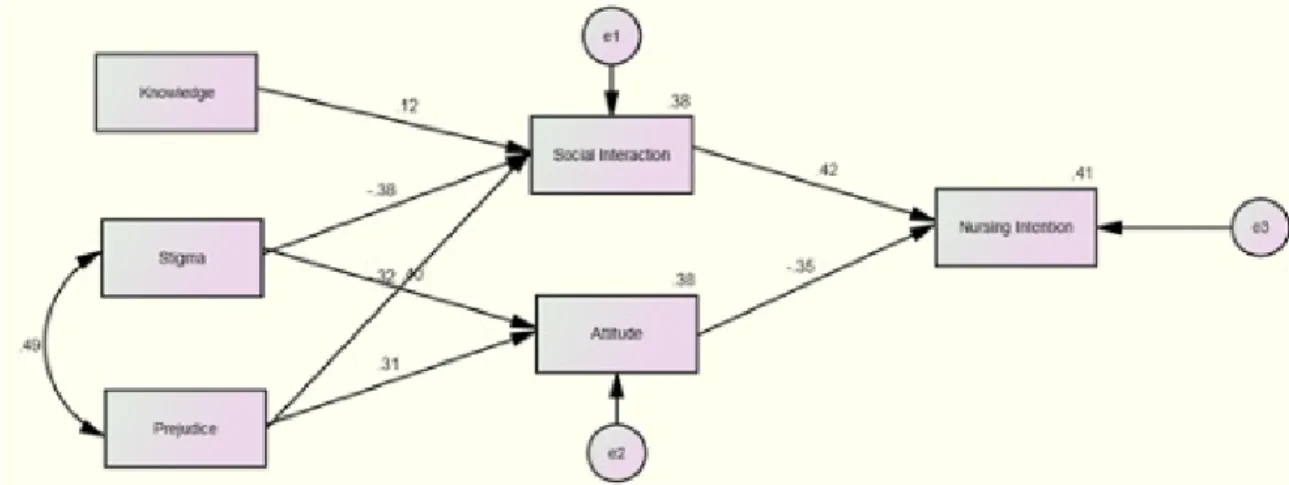
[Figure 2] Path diagram of the Modified Model
Predicting
variables Endogenous variables Standardized
estimates(β) CR p SMC
Knowledge → Social Interaction .12 2.38 〈.05 .38
Stigma → Social Interaction -.38 -6.89 〈.001
Prejudice → Social Interaction -.32 -5.75 〈.001
Stigma → Attitude .40 7.13 〈.001 .38
Prejudice → Attitude .31 5.63 〈.001
Social Interaction → Nursing Intention .42 8.28 〈.001 .41
Attitude → Nursing Intention -.35 -6.82 〈.001
CR=Critial ratio; SMC=Squared multiple correlation
〈Table 3〉Parameter Estimate and SMC Modified Structure Model (N=266)
satisfied the recommended level.
3.5. Test of Estimated Coefficient of Standardized Path in the Modified Model
Table 3 shows values of estimated coefficient of standardized path and significance level in the modified model. Figure 2 illustrates the modified model based on standardized path coefficient.
According to the results when standardized path coefficients in the modified model were examined, knowledge had the value of .12 against social interaction,
which showed the positive influence (CR=2.38).
Stigma had the value of -.38 against social interaction, which showed the negative influence (CR=-6.89), while prejudice had the value of -.32, which showed the
negative influence (CR=-5.75).
Stigma had the value of .40 against attitude, which showed the positive influence (CR=7.13), while prejudice had the value of .31, which showed the positive influence (CR=5.63).
Social interaction had the value of .42 against nursing intention with the positive influence (CR=8.28) while attitude had the value of -.35 with the negative influence (CR=-6.82).
3.6. Analysis of Effects of the Modified Model
Table 4 shows the results when direct effect,
indirect effect and the total effect were examined based
on endogenous variables in the modified model. The
factors that had influence on attitude included direct
effect of prejudice (.31) and direct effect of stigma (.40)
Predicting variables Endogenous variables Direct effects Indirect
effects Total effects SMC(%)
Prejudice Attitude .31*** .31*** .38
Stigma Attitude .40*** .40***
Prejudice Social Interaction -.32*** -.32*** .38
Stigma Social Interaction -.38*** -.38***
Knowledge Social Interaction .12* .12*
Prejudice Nursing Intention -.24*** -.24*** .41
Stigma Nursing Intention -.30*** -.30***
Knowledge Nursing Intention .05*** .05***
Attitude Nursing Intention -.35*** -.35***
Social Interaction Nursing Intention .42*** .42***
SMC=Squared multiple correlation
*p〈.05, ***〈.001
〈Table 4〉Effect of Predictor Variable in the Modified Model (N=266)