Multivariate EWMA control charts for monitoring the variance-covariance matrix
Jeong-Im Jeong 1 · Gyo-Young Cho 2
12 Department of Statistics, Kyungpook National University
Received 14 May 2012, revised 31 May 2012, accepted 5 June 2012
Abstract
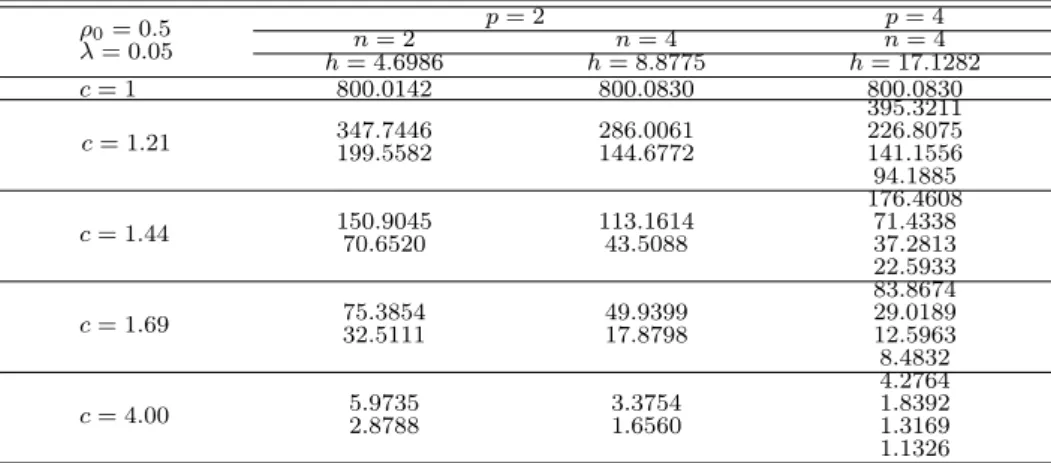
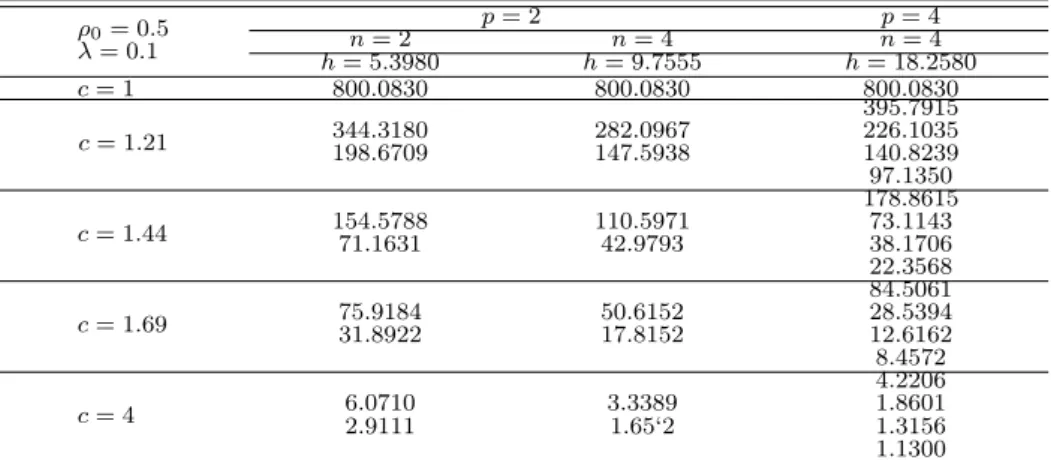
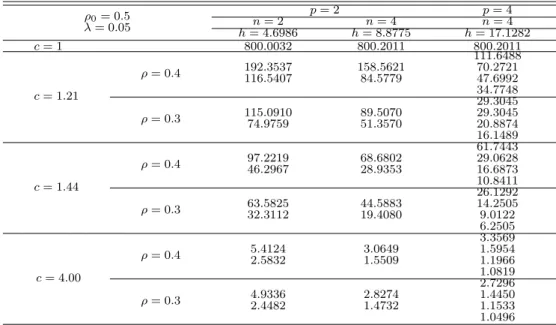
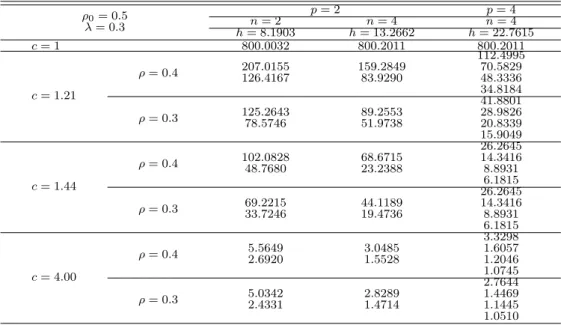
We know that the exponentially weighted moving average (EWMA) control charts are sensitive to detecting relatively small shifts. Multivariate EWMA control charts are considered for monitoring of variance-covariance matrix when the distribution of process variables is multivariate normal. The performances of the proposed EWMA control charts are evaluated in term of average run length (ARL). The performance is investigated in three types of shifts in the variance-covariance matrix, that is, the vari- ances, covariances, and variances and covariances are changed respectively. Numerical results show that all multivariate EWMA control charts considered in this paper are effective in detecting several kinds of shifts in the variance-covariance matrix.
Keywords: Average run length, multivariate exponentially weighted moving average control chart, variance-covariance matrix.
1. Introduction
A control chart is very useful in monitoring various production processes. There are many situations in which the simultaneous control of two or more related quality characteristics is necessary. To monitor the product quality in the multivariate production processes, it is more advantageous to use multivariate control charts rather than univariate control charts.
Multivariate control charts have been interested in new research and remain an important area of research in statistical quality control.
Control charts are continuously monitoring the production process to detect quickly the changes that may produce any deterioration in the quality of the product. Control charts are becoming increasingly common for the quality of processes to be characterized by multiple variables.
The multivariate control charts of the Shewhart type was introduced by Hotelling (1947).
This multivariate Shewhart chart was constructed based on Hotelling’s T 2 statistic. Jackson (1959), and Ghare and Torgersen (1968) presented a multivariate Shewhart chart based on Hotelling’s T 2 statistic. Other multivariate Shewhart charts are discussed by Alt (1984), Wierda (1994), and Lowry and Montgomery (1995).
1
Ph. D. student, Department of Statistics, Kyungpook National University, Daegu 702-701, Korea.
2