41(6), 733~738(2012) http://dx.doi.org/10.3746/jkfn.2012.41.6.733
수세미오이의 이화학적 특성과 항산화활성
이규옥1․유양희1,2․황권택3․이정민4․이호준5․전우진1,2†
1
전남대학교 식품영양학과,
2전남대학교 생활과학연구소
3
남부대학교 식품영양학과,
4경희대학교 식품영양학과,
5한국식품연구원
Physicochemical Characteristics and Antioxidant Activities of Luffa cylindrica (L.) Roem
Gyuok Lee1, Yanghee You1,2, Kwontack Hwang3, Jeongmin Lee4, Ho-Joon Lee5, and Woojin Jun1,2†
1Dept. Food and Nutrition and 2Human Ecology Research Institute, Chonnam National University, Gwangju 550-757, Korea
3Dept. of Food and Nutrition, Nambu University, Gwangju 506-824, Korea
4Research Institute of Medical Nutrition, Kyung Hee University, Gyeonggi 446-701, Korea
5Korea Food Research Institute, Gyeonggi 463-746, Korea
Abstract
Physiochemical characteristics of Luffa cylindrica (L.) Roem and antioxidant activities of its four extracts were analyzed. The chemical composition of L. Roem contained 93.69% moisture, 1.64% crude fiber, 0.52% crude protein, 0.27% crude fat, and 0.06% crude ash. The major minerals were potassium, phosphrous, and calcium.
We also analyzed the major organic acids, acetic acid and succinic acid. In free amino acids, β-aminoisobutyric acid showed the highest concentration (100.74 mg/100 g), followed by phosphoethanolamine, urea, asparagine, and valine. Glutamic acid was the highest hydrolyzed amino acid with 1,039.99 mg/100 g followed by aspartic acid, lysine, and arginine. Four extracts from L. Roam, hot-water (LCH), cold-water (LCC), 80% ethanol (LCE), and methanol (LCM), were prepared. Total phenolic and flavonoid levels of LCE exhibited higher than three extracts. The antioxidant potential of extracts from L. Roem were investigated using DPPH, ABTS, and NBT assays. Of the four extracts, LCE had relatively high antioxidant capability on DPPH and superoxide anion radical scavenging activities (12.13%, 16.88%, and 26.61%). Based on the above results, it is suggested that an 80% ethanolic extract from L. Roem was a natural antioxidant material for health food and should be a good ingredient for functional food.
Key words: Luffa cylindrica (L.) Roem, antioxidant, DPPH, ABTS, NBT
†
Corresponding author. E-mail: [email protected]
†
Phone: 82-62-530-1337, Fax: 82-62-530-0339
서 론
최근 건강에 대한 관심의 증가로 일반식품 이외에 건강기 능식품 및 건강식품의 섭취가 증가하고 있다. 항산화 기능을 갖는 생리활성 물질들은 생체 내 활성 산소종(reactive oxy- gen species, ROS)의 불균형을 조절하는 기능성 소재로써 다양한 연구가 이루어지고 있다(1). ROS는 체내 세포막의 지질과산화 및 단백질과 DNA의 산화적 손상을 초래하여 암, 심장병, 동맥경화증, 백내장과 같은 여러 퇴행성질환과 관련되어 있다(2,3). ROS에 의해 초래되는 여러 가지 퇴행성 질환을 예방하기 위해 식품을 통한 항산화 기능성 소재의 섭취와 이들을 함유한 건강기능식품의 보조적 섭취가 현대 인에게 필수적 요소가 되고 있다(4). 식물체에 함유량이 높
은 폴리페놀류는 생리, 약리학적 연구에서 강한 ROS를 제거 하는 효과가 보고되었고, 역학 연구에서도 polyphenol-rich 식이가 ROS에 의해 초래되는 질병을 예방하는 것으로 알려 지고 있다(5,6).
수세미오이(
Luffa cylindrica(L.) Roem)는 박과(Curcubi- taceae)의 덩굴성 초본으로써 열대 및 아열대 기후에서 성장 하며 전통적으로 중국, 일본, 한국에서 재배 이용되어 왔다.
수세미오이의 미성숙 과실은 과육이 스펀지의 구조 및 특성
을 갖으며 식용, 미용, 약용으로 애용되었고, 성숙 과실은
스펀지가 소실되고 망상의 그물 섬유 구조를 갖으며 약용,
주방용 세척기구, 유류의 오일 여과기 등으로 사용되어 왔
다. 수세미오이는 지혈, 이뇨, 소종, 해독, 거담, 진해, 치통,
혈행 부전 등에 민간요법으로 이용된 기록이 있다(7). 그러
나 80년대 이후 인공 수세미의 발달과 생물자원으로써의 수 세미오이에 대한 활용도가 감소하여 전국적 재배면적이나 건강 자원으로써의 연구가 미흡하였다. 최근 생명력이 강하 고, 재배가 용이하며, 시비와 농약의 사용이 적은 친환경작 물인 수세미가 경제적 작물로써 연구되고 있다. 특히 수세미 오이의 재배 방법에 관한 연구, 그물 섬유 처리 연구 등이 수행된 바 있다(8). 수세미오이의 항산화 구성성분으로 코마 릭에시드, 아피제닌, 루테올린 등이 보고된 바 있다(9). 본 연구에서 수세미오이의 이화학적 특성과 수세미오이의 잠 재적인 생리활성 물질을 추출하기 위해 용매 추출에 따른 항산화 활성을 검토하였다.
재료 및 방법
실험재료
본 연구에서는 2008년 전라남도 장성군에서 재배된 미성 숙 수세미오이를 구입하여 사용하였다. 수세미오이 건조분 말은 -70
oC에 보관한 수세미오이를 동결건조기(Ilshin Lab, Seoul, Korea)로 건조한 후 분쇄기(Hanil, Incheon, Korea) 로 분쇄하였다. 각 실험에 사용한 시약은 reagent-grade 이 상을 구입하여 사용하였다. 수세미오이 열수추출물(LCH), 80 % 에탄올추출물(LCE), 메탄올추출물(LCM)들은 수세미 오이 분말을 추출용기에 넣고 중량 20배(w/v)의 용매(물, 80% 에탄올, 100% 메탄올)를 첨가한 다음 250
oC에서 3시간 동안 환류 추출한 후 추출한 용액은 Whatman No. 6 여과지 (Whatman, Maidstone, UK)를 사용하여 흡입 여과하고, 감 압농축기로 농축한 후 동결건조 하여 얻었다. 수세미오이 냉수추출물(LCC)은 동량의 수세미오이 분말과 물을 사용하 여 실온에서 3시간 교반한 후 동일한 추출, 감압농축, 동결건 조의 과정을 거처 얻었다. 수세미오이 건조분말 및 각 추출 물들은 -20
oC에 보관하면서 본 연구의 시료로 사용하였다.
일반성분 분석
수세미오이의 일반성분은 AOAC법(10)에 따라 분석하였 다. 수분 함량은 105
oC 상압가열건조법, 조지방은 Soxhlet 추출법, 조단백질은 semi-micro Kjeldahl법, 조회분은 직접 회화법, 조섬유는 H
2SO
4-NaOH 분해법에 의하여 분석하였 다.
무기질 분석
무기질 함량은 AOAC법(10)에 의해 분석하였고, 그 조성 은 유도결합분광기(Jobin Yvon, Lille, France)로 측정하였 다. 수세미오이 건조분말 3 g을 550
oC로 12시간 회화하고 습식분해법으로 분해하여 탈 이온 증류수로 정용하여 검액 으로 이용하였다. 즉 마쇄한 시료 1 g에 진한 질산 10 mL를 가하여 처음에는 낮은 온도로 가열하고 점차 고온으로 가열 하면서 분해하였다. 분해액이 백색 투명하게 되면 냉각시키 고 분해액에 증류수를 가하고 100 mL로 정용 후 여과하여
여액을 분석시료로 사용하였다.
유기산 분석
유기산 분석은 Lin과 Huang의 방법(11)을 응용하여 분석 하였다. 수세미오이 건조분말 5 mg에 1 mL의 증류수를 가 하고 10,000 rpm에서 15분간 고속 원심분리(Hanil)한 후 상 등액을 HPLC용 증류수로 5배 희석하여 0.45 μm membrane filter(Milipore, Billerica, MA, USA)로 여과한 후 HPLC (Shimadzu, Kyoto, Japan)를 이용하여 분석하였다.
아미노산 조성 분석
아미노산 분석은 Spackman 등(12)의 방법을 응용하여 분 석하였다. 유리아미노산 분석은 수세미오이 건조분말 2 g을 취하여 70% ethanol을 50 mL 가하여 환류냉각장치에 연결 하여 100
oC에서 1시간 가열 환류 시킨 후 Whatman No.3로 흡입여과 하였다. 여액을 40
oC 이하에서 2~3 mL까지 감압 농축 시키고, diethyl ether 20 mL를 가해 2회 탈지시킨 하층 을 농축수기로 옮겨 농축, 건조시켰다. 건조시킨 시료용액을 lithium citrate 완충용액(pH 2.2)으로 용해하고 25 mL로 정 용한 것을 아미노산자동분석기(Amersham, Cambridge, UK) 를 이용하여 분석하였다. 구성아미노산 분석은 건조된 시료 0.1 g을 가수분해용 tube에 취하여 6 N HCl 10 mL을 가하고 질소가스로 치환한 다음 밀봉하여 110
oC에서 24시간 가수분 해하였다. 완전히 가수분해 후 약간의 순수로 튜브를 씻어 농축수기로 옮기고 산 냄새가 나지 않을 때까지 완전히 건조 되게 감압농축 하였다. 건조시킨 시료용액을 sodium citrate loading buffer(pH 2.2)로 25 mL 정용한 것을 아미노산자동 분석기(Amersham)로 분석하였다.
추출물의 총 polyphenol 함량 측정
총 폴리페놀 함량은 Folin-Ciocalteu's 비색법(13)으로 측 정하였다. 추출물 1 mL을 25 mL volumetric flask에 넣고 증류수 9 mL을 첨가한 후, 1 mL의 Folin-Ciocalteu's phenol reagent을 넣고 잘 섞어 상온에 5분간 방치하였다. 7%
Na
2CO
3를 10 mL 넣고 총량이 25 mL이 되도록 증류수를 첨가한 후 23
oC에서 90분간 방치하고 750 nm에서 흡광도를 측정하였다. 시료의 총 폴리페놀 함량은 gallic acid를 이용 한 표준곡선식으로 산출하였고 3회 반복 실험한 후 그 평균 값으로 제시하였다.
추출물의 총 flavonoid 함량 측정
총 플라보노이드 함량은 Zhishen 등의 비색법(14)으로 측 정하였다. 추출물 1 mL에 4 mL의 증류수를 첨가하고 5%
NaNO
20.3 mL을 넣어 잘 혼합하였다. 상온에 5분간 방치하
고 10% AlCl
30.3 mL을 첨가하였다. 상온에 6분간 방치한
후 1 M NaOH 2 mL을 넣고, 증류수를 2.4 mL 넣고 510 nm에
서 흡광도를 측정하였다. 시료의 총 플라보노이드 함량은
catechin hydrate로 작성된 표준곡선식을 이용하여 산출하
였고 3회 반복 실험한 후 그 평균값으로 하였다.
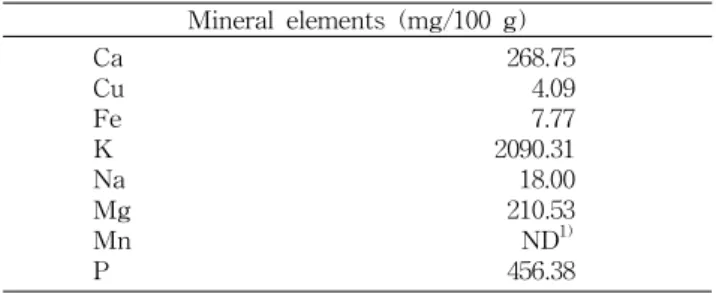
Table 1. Mineral elements of Luffa cylindrica (L.) Roem Mineral elements (mg/100 g)
Ca Cu Fe K Na Mg Mn P
268.75 4.09 7.77 2090.31 18.00 210.53 ND
1)456.38
1)
ND: Not detected.
Table 2. Organic acids from Luffa cylindrica (L.) Roem Organic acid (mg/100 g)
Acetic acid Citric acid Formic acid Lactic acid Malic acid Oxalic acid Succinic acid
25.77±1.11
1)0.55±0.04
ND
2)ND 3.27±0.07 1.54±0.09 7.19±3.95
1)
Data are presented as mean±SD.
2)
ND: Not detected.
DPPH radical 소거활성 측정
Brand-Williams 등의 방법(15)을 변형하여 측정하였다.
시료는 에탄올에 녹인 후 0.05 mL을 취하여 0.1 mM DPPH 0.95 mL을 혼합하였다. 상온에 30분간 방치한 후 517 nm에 서 흡광도를 측정하였다. 소거활성은 다음 식으로 계산하였 고 3회 반복 측정한 후 그 평균값으로 제시하였다. Scav- enging activity(%)=[(대조군의 흡광도-시료의 흡광도)/
대조군의 흡광도]×100
ABTS cation radical 소거활성 측정
Pellegrini 등의 방법(16)을 변형하여 7 mM ABTS 용액과 100 mM 황산칼륨(potassium persulphate)을 혼합하여 암소 에서 24시간 반응시킨 후 82:1로 희석하여 사용하였다. 희석 한 용액 390 μL에 농도별로 조제한 시료 10 μL를 첨가하여 vortex로 10초간 진탕하고 734 nm에서 흡광도를 측정하여 DPPH radical 소거활성 계산식을 이용하여 계산하였고 3회 반복 측정한 후 그 평균값을 제시하였다.
Superoxide anion radical 소거활성 측정
Nishikimi의 방법(17)을 변형하여 0.5 mM xanthine과 0.1 mM NBT 용액을 50 mM potassium phosphate buffer(pH 7.4)에 녹인 후 이 용액 0.98 mL과 시료 0.02 mL을 혼합하고 xanthine oxidase(0.05 unit)를 첨가한 후 37
oC에서 20분간 반응시킨 후 2 N HCl을 0.5 mL 첨가하여 반응을 종료시켰다.
560 nm에서 흡광도를 측정하여 DPPH radical 소거활성 계 산식으로 계산하였고 3회 반복 측정한 후 그 평균값을 제시 하였다.
통계처리
본 실험 결과는 평균±표준편차로 나타내었다. 추출물별 차이 유무를 one-way ANOVA로 분석한 뒤 Duncan의 다중 검정법(Duncan's multiple range test)를 이용하여 유의성 을 검정하였다(p<0.05).
결과 및 고찰
일반성분 및 무기질 분석
수세미오이의 일반성분인 수분, 조지방, 조단백질, 조섬 유, 조회분의 함량을 분석한 결과는 다음과 같다. 수세미오 이의 수분함량은 93.69±0.72%, 조섬유 1.64±0.01%, 조단백 0.52±0.03%, 조지방 0.27±0.01%, 조회분은 0.06±0.01%로 분석되었다. 식품성분표(18)에 제시된 박과식물인 여주와 비교했을 때 수분과 조섬유는 여주와 비슷하였고, 조지방은 2배 이상 높았으며, 조단백질은 2배 낮았고, 회분은 10배 낮 게 나타났다. 수세미오이 무기질 분석 결과는 Table 1에 나 타내었다. 8종의 무기질이 K, P, Ca, Mg, Na, Fe, Cu의 순으로 분석되었고, Mn은 검출되지 않았다. 채취시기에 따른 수세 미오이에 관한 Park 등(19)의 연구에서 본 연구와 달리 K이 다른 무기질보다 높게 분석되었고, 노지 수세미오이에서
Mn이 분석되지 않는 것은 동일하였다. 무기질의 분석에 차 이가 나타나는 것은 수세미오이의 채취지역의 차이로 판단 된다.
유기산 분석
수세미오이의 유기산 함량은 Table 2에 나타내었다. 수세 미오이의 유기산으로 acetic acid 25.77 mg%, succinic acid 7.19 mg%, malic acid 3.27 mg%, oxalic acid 1.54 mg%, citric acid 0.55 mg%로 나타났으며 formic acid와 lactic acid 는 분석되지 않았다. 유기산 중 초산의 함량이 높게 나타나 면
S.Typhimurium,
E. coliO157:H7,
L. monocytogenes의 성장저해에 효과적이라고 Dickson과 Anderson(20)이 보고 한 바가 있다. Chang 등(7)의 연구에서 수행된 미성숙 수세 미의 경우 malic acid와 citric acid의 함량이 높게 나타났으 나 본 연구에서는 acetic acid와 succinic acid가 높게 나타났 다. 이러한 유기산 함량의 차이는 수세미의 종과 분석방법의 차이 때문으로 판단된다.
아미노산 조성 분석
수세미오이의 유리아미노산 40종의 조성은 Table 3과 같
았다. 수세미오이의 주요 유리아미노산은 β-aminoisobuty-
ric acid, phosphoethanolamine, urea, asparagine, valine,
alanine, aspartic acid, arginine, citrulline 등이었다. 수세미
오이 18종 구성아미노산 조성은 Table 4와 같이 나타났는데
주요 구성아미노산은 glutamic acid, aspartic acid, lysine,
arginine, leucine 등이었다. Glutamic acid와 arginine이 가
장 많았고 methionine이 가장 적었다. 이는 Chung 등(21)에
의해 보고된 한국 재래박의 미성숙과의 구성아미노산 조성
과 유사했다.
Table 3. Free amino acid of Luffa cylindrica (L.) Roem No. Free amino acid (mg/100 g)
1 2 3 4 5 6 7 8 10 9 11 12 13 14 15 16 17 18 19 20 21 22 23 24 25 26 27 28 29 30 31 32 33 34 35 36 37 38 39 40
1-Methylhisdine 3-Methylhisdine α -Aminoadipic acid α -Aminobutyric acid Alanine
Ammonia Anserine Arginine Asparagine Aspartic acid β -Alanine
β -Aminoisobutyri acid Carnosine
Citrulline Cystine
DL+Allocystathionine DL+Allohydroxylysine Ethanolamine
Glutamic aicd Glycine Histidine Homocystine Hydroxyproline Isoleucine Leucine Lysine Methiomime Ornithine Phenylalanine Phosphoethanolamine Phosphoserine Proline
γ -Aminobutyric acid Sarcosine
Serine Taurine Threonine Tyrosine Urea Valine
19.70 10.05 2.97 57.98 4.74 15.21 45.24 1.91 69.10 49.80 12.74 100.74 42.49 2.03 6.88 3.77 20.76 1.39 11.14 13.24 9.39 6.14 14.66 0.00 20.23 19.70 12.49 16.13 4.41 73.87 17.47 39.85 16.04 4.07 34.72 10.77 16.18 18.08 76.95 62.08
948.16
Table 4. Hydrolyzed amino acid of Luffa cylindrica (L.) Roem No. Total amino acid (mg/100 g)
1 2 3 4 5 6 7 8 10 9 11 12 13 14 15 16 17 18
Alanine Ammonia Arginine Aspartic acid Cystine Glutamic acid Glycine Histidine Isoleucine Leucine Lysine Methionine Phenylalanine Proline Serine Threonine Tyrosine Valine
271.86 128.08 400.94 805.22 134.3 1,039.99
328.25 226.25 253.26 391.09 390.73 60.18 274.32 302.33 263.53 203.41 200.75 307.31
5,981.82
Table 5. Total phenolic and flavonoid contents in extracts
from Luffa cylindrica (L.) Roem (%)
Extracts Yield Total phenolic
content Total flavonoid content LCH
LCC LCE LCM
13.20 12.91 10.84 10.23
0.67±0.03
b1)0.63±0.03
d0.75±0.04
a0.65±0.04
c0.15±0.01
c0.11±0.01
d0.42±0.01
a0.34±0.01
b1)
Data are presented as mean±SD. Different letters in the col- umn are statistically different by Duncan's multiple range test (p<0.05).
LCH: Hot water extract from Luffa cylindrica (L.) Roem.
LCC: Cold water extract from Luffa cylindrica (L.) Roem.
LCE: 80% EtOH extract from Luffa cylindrica (L.) Roem.
LCM: MeOH extract from Luffa cylindrica (L.) Roem.
추출물의 수율 측정
수세미오이 추출물의 수율은 열수추출물(LCH) 13.2%, 냉수추출물(LCC) 12.9%, 에탄올추출물(LCE) 10.8%, 메탄 올추출물(LCM) 10.2%로 나타났다(Table 5). Cha 등(22)의 연구에서 건조여주분말을 이용한 70% 메탄올추출물의 수 율 16.35%에 비하여 본 연구의 메탄올추출물의 수율이 낮게 나타났으나 이는 여주와 수세미오이의 종간의 차이 외에 추 출 후 회수 시 이용한 여과지의 차이에 의한 결과로 판단된다.
총 polyphenol 및 총 flavonoid 함량
식품속의 생리활성물질 중 페놀류는 높은 항산화 활성을 가지고 있는 것으로 알려져 있으며(23), 최근 그 생리적인 기능성에 대한 연구가 활발하게 진행되고 있다(24). 수세미 오이 추출물들의 페놀성 화합물 함량을 측정한 결과 LCE가 0.75%의 함량을 나타냈고, LCH 0.67%, LCM 0.65%, LCC 0.63% 순으로 분석되었다. 플라보노이드는 담황색 등의 노 란색을 띠는 화합물로 항균․항암․항바이러스․항알레르 기 및 항염증 활성을 나타내며 독성은 거의 없는 것으로 알 려져 있다(25). 수세미오이 추출물의 플라보노이드 함량을 측정한 결과 LCE는 0.42%로 측정되었으며, LCM 0.34%, LCH 0.15%, LCC 0.11% 순으로 나타났다. 가장 높은 페놀성 화합물과 플라보노이드 함량을 보인 추출물 LCE는 다른 용 매추출물과 통계적 유의차이가 나타났다(Table 5).
DPPH radical 소거활성
시료의 DPPH radical 소거능력은 시료가 함유하고 있는
전자공여능(electron donating ability)에 의하여 측정되어진
다. DPPH는 매우 안정한 free radical로 517 nm에서 특징적
인 광흡수를 나타내는 보라색 화합물이며, 알코올 등의 유기
용매에서 매우 안정하고, 항산화 기작 중 proton-radical
scavenger에 의하여 탈색되기 때문에 항산화 활성을 육안으
로도 쉽게 관찰할 수 있는 장점이 있어, 다양한 천연소재로
부터 항산화 활성을 검색하는데 주로 이용되고 있다(24). 각
수세미오이 추출물의 DPPH 라디칼 소거능은 Fig. 1에 제시
하였다. LCE, LCH, LCC, LCM이 각각 12.13%, 8.70%,
6.80%, 5.02%로 측정되었고, 용매추출물 중 LCE가 DPPH
0 2 4 6 8 10 12 14
LCH LCC LCE LCM
D P P H R a d ic a l S c a v e n g in g a c ti v it y ( % )..
b
d a
c
Fig. 1. DPPH radical scavenging activities of extracts from Luffa cylindrica (L.) Roem. The final concentration was 500 μ g/mL. Data are presented as mean±SD. Different letters above the bar are statistically different by Duncan's multiple range test (p<0.05). LCH: hot water extract from Luffa cylindrica (L.) Roem, LCC: cold water extract from Luffa cylindrica (L.) Roem, LCE:
80% EtOH extract from Luffa cylindrica (L.) Roem, LCM: MeOH extract from Luffa cylindrica (L.) Roem.
0 2 4 6 8 10 12 14 16 18 20
LCH LCC LCE LCM
A B T S c a ti o n r a d ic a l s c a v e n g in g a c ti v it y ( % )..
ab
b b
a
Fig. 2. ABTS cation radical scavenging activites of extracts from Luffa cylindrica (L.) Roem. The final concentration was 250 μg/mL. Data are presented as mean±SD. Different letters above the bar are statistically different by Duncan's multiple range test (p<0.05). LCH: hot water extract from Luffa cylindrica (L.) Roem, LCC: cold water extract from Luffa cylindrica (L.) Roem, LCE: 80% EtOH extract from Luffa cylindrica (L.) Roem, LCM: MeOH extract from Luffa cylindrica (L.) Roem.
0 5 10 15 20 25 30 35
LCH LCC LCE LCM
S u p e ro x id e a n io n r a d ic a l .. s c a v e n g in g a c ti v it y ( % )..
b
c a
b
Fig. 3. Superoxide anion radical scavenging activities of ex- tracts from Luffa cylindrica (L.) Roem. The final concentration was 200 μg/mL. Data are presented as mean±SD. Different let- ters above the bar are statistically different by Duncan's multiple range test (p<0.05). LCH: hot water extract from Luffa cylindrica (L.) Roem, LCC: cold water extract from Luffa cylindrica (L.) Roem, LCE: 80% EtOH extract from Luffa cylindrica (L.) Roem, LCM: MeOH extract from Luffa cylindrica (L.) Roem.
라디칼 소거능이 높았고 다른 추출물과 통계적 유의차이가 나타났다.
ABTS cation radical 소거활성 측정
ABTS는 비교적 안정한 free radical로서 DPPH 방법과 함께 항산화활성을 검색하는데 많이 이용되고 있다(26). 또 한, lipophilic 또는 hydrophilic 항산화 물질의 측정에 적용 가능한 방법으로 이 방법에 의한 항산화활성은 ABTS radi- cal을 억제하거나 소거하는 것에 의해 이루어진다. 각 수세미 오이 추출물의 ABTS 라디칼 소거능은 Fig. 2와 같았다.
LCE가 16.88%로 높았으며 LCH, LCC, LCM 순으로 나타났 고, LCE와 LCH는 다른 추출물과 통계적 유의차가 나타났다.
Superoxide anion radical 소거활성 측정
Superoxide anion radical은 활성산소류에서 유래된 가장
대표적인 산소 라디칼로 dismutation 반응 후 과산화수소에 의해 반응성이 더 큰 hydroxyl radical로 전환되고, hydroxyl radical은 생체 거대분자를 손상시키게 되거나, 단백질 구조 에 직접적인 변형을 가하여 효소의 불활성을 유도하는 등 물질의 산화와 밀접한 관계를 갖고 있다(27). 이러한 super- oxide anion radical에 대한 각 추출물의 소거활성을 측정하 기 위하여 nitro blue tetrazolium(NBT) 환원법을 이용하였 다. LCE, LCH, LCC, LCM이 각각 26.61%, 18.16%, 14.71%, 7.74%로 측정되었고, 용매추출물 중 LCE의 superoxide anion radical 소거활성이 높았고 다른 추출물과 통계적 유 의차이가 나타났다(Fig. 3).
이상의 수세미오이의 성분함량은 수세미오이를 이용한 식품개발의 기초자료로 활용될 수 있으며 수세미오이 80%
에탄올추출물은 항산화활성을 갖는 기능성식품 소재로써 활용될 수 있을 것으로 판단된다.
요 약
본 연구는 수세미오이의 일반성분과 생리활성 평가를 위 한 추출방법에 따른 항산화활성을 분석하였다. 수세미오이 는 수분 93.69%, 조섬유 1.64%, 조단백 0.52%, 조지방 0.27%, 조회분 0.06%을 함유하고 있었다. 주요 무기질로 K, P, Ca, Mg 등이 분석되었고, 주요 유기산은 아세트산과 호박산으 로 나타났다. 유리아미노산으로 β-aminoisobutyric acid가 100.74 mg/100 g으로 가장 높게 나타났고 phosphoethanol- amine, urea, asparagine, valine의 순으로 분석되었다. 구성 아미노산으로 glutamic acid가 1,039.99 mg/100 g으로 가장 높았으며 aspartic acid, lysine, arginine 순으로 분석되었다.
수세미오이의 생리활성을 평가하기 위해 물, 80% 에탄올,
메탄올을 이용하여 열수추출물(LCH), 냉수추출물(LCC),
80% 에탄올추출물(LCE), 메탄올추출물(LCM)을 수득하고
각 추출물간 라디칼 소거활성에 기인한 항산화활성을 비교 하였다. 총 페놀성 화합물 및 플라보노이드 함량 측정에서는 LCE가 다른 추출물에 비하여 통계적으로 유의한 차이를 나 타내었다. 또한, DPPH radical 소거활성과 ABTS 라디칼 소거활성 및 superoxide anion radical 소거활성에서도 80%
에탄올추출물이 각각 12.13%, 16.88%, 26.61%로 다른 추출 물에 비해 높은 활성을 나타내었다. 이의 결과를 바탕으로 수세미오이 80% 에탄올추출물은 항산화활성을 갖는 기능 성식품 소재로써 활용될 수 있을 것이며 수세미오이의 성분 함량은 수세미오이를 이용한 식품개발의 기초자료로 활용 할 수 있을 것으로 판단된다.
감사의 글
본 연구는 2008년도 농림기술관리센터(ARPC) 연구비 지 원에 의해 수행되었으며, 이에 감사드립니다(과제번호:
108067-3).
문 헌