85
High-Dose Involved Field Radiotherapy and Concurrent Chemotherapy for Limited-Disease Small Cell Lung Cancer
Purpose: We evaluated the effect of high dose involved field radiotherapy and concurrent chemotherapy for treating patients with limited disease, small cell lung cancer. Materials and Methods: We reviewed the medical records of 37 patients who had a limited stage of small cell lung cancer. All the patients were treated with induction chemotherapy followed by definitive radiotherapy and concurrent chemotherapy. The radiation dose was 60 Gy for 31 patients and 50∼58 Gy for 6 patients with once-daily 2 Gy fractions. Elective nodal irradiation was not performed. The chemotherapy regimen was either combinations of etoposide and cisplatin or irinotecan and cisplatin.
Prophylactic cranial irradiation of 25 Gy at 2.5 Gy per fraction was administered to the patients who had a complete or near complete response. The median follow-up period was 17 months (range, 5∼57). Results: The 2-year overall survival and locoregional control rates were both 55%. A complete response was achieved in 17 patients (46%), a partial response was achieved in 19 patients (51%) and 1 patient (3%) had progressive disease. Seven patients experienced tumor recurrence in the radiation field and four of those recurrences were isolated local recurrences. There was only one isolated regional recurrence outside the radiation field. Grade 3 treatment- related esophageal toxicity occurred in 2 patients. Two patients died of treatment-related pulmonary complications. Conclusion: Involved field radio- therapy of 60 Gy can achieve favorable survival and a low rate of isolated nodal failure outside the radiation field. However, a considerable number of patients still experienced in-field failure. Further studies to establish the optimal radiation doses and fractionation are needed in the future. (J Lung Cancer 2010;9(2):85 90)
Key Words: Drug therapy, Radiotherapy, Small cell lung carcinoma
Na Young Jang, M.D.1 Jae-Sung Kim, M.D., Ph.D.1 Jong Seok Lee, M.D., Ph.D.2 and Chang Hoon Song, M.D.3 Departments of 1Radiation Oncology,
2Internal Medicine, Seoul National University Bundang Hospital, Seoul National University College of Medi- cine, Seongnam, 3Department of Radiation Oncology, Seoul National University Hospital, Seoul National University College of Medicine, Seoul, Korea
Received: October 20, 2010 Revised: November 13, 2010 Accepted: November 15, 2010
Address for correspondence Jae-Sung Kim, M.D., Ph.D.
Department of Radiation Oncology, Seoul National University Bundang Hospital, Seoul National University College of Medicine, 300, Gumi-dong, Bundang-gu, Seongnam 463-707, Korea
Tel: 82-31-787-7652 Fax: 82-31-787-4019 E-mail: [email protected]
INTRODUCTION
Lung cancer is the leading cause of cancer-related death in Korea. Small cell lung cancer (SCLC) makes up approximately 13% of all the cases of lung cancer (1). Approximately 30%
of patients have limited-stage disease (LD-SCLC) (2). Con- current chemoradiotherapy with an etoposide plus cisplatin regimen and early thoracic radiation therapy (TRT) has been the standard therapy for LD-SCLC since the early 1990s (2-6).
The substitution of irinotecan for etoposide has been evaluated in an effort to improve the results (7-11). With regard to the
specifics of TRT administration, modest doses of TRT (45∼50 Gy) have traditionally been used. However, the local control rate of a total dose of 45 Gy, as assessed by a prospective randomized trial, was not good enough (12). High-dose once-daily TRT could result in comparable or improved outcomes and toxicities (13-16). High radiation doses are correlated with improved local control (17). However, treatment-related pneumonitis is a common complication that can lead to respiratory insufficiency and sometimes death.
Reduction of the radiation fields by omitting routine elective nodal irradiation could allow dose escalation without a significant increase of the treatment related toxicities. We
Hospital, Republic of Korea. From this group, the following patients were excluded: 6 patients who were treated with a total radiation dose less than 45 Gy, 5 patients who were treated with 45 Gy in twice-daily 1.5 Gy fractions, 2 patients who underwent surgical resection and 1 patient who received sequential chemotherapy and radiotherapy. The remaining 37 patients were analyzed in this retrospective study.
All the patients had their tumor diagnosed with pathologic confirmation. All the patients were examined with physical examination and staging work-ups that included the complete blood cell count, blood chemistry, chest X-ray, chest computed tomography (CT), bone scan and brain magnetic resonance imaging (MRI). Whole body positron emission tomography (PET) was performed in 28 patients.
2) Treatments
All thirty-seven patients were treated with induction chemo- therapy is followed by definitive three-dimensional, conformal, involved field radiotherapy and concurrent chemotherapy.
Elective nodal irradiation was not performed. All the patients received a total of 6 cycles of chemotherapy. Thirty-two patients (86%) started radiotherapy with the third cycle of chemotherapy, 4 patients with the fourth cycle and 1 patient with the second cycle. The chemotherapy regimen was combinations of etoposide plus cisplatin (EP) or irinotecan plus cisplatin (IP). Each cycle of combination chemotherapy was administered at 3-week intervals. Etoposide 100 mg/m2 (Days 1 and 8) and cisplatin 75 mg/m2 (Day 1) or irinotecan 60 mg/m2 (Days 1 and 8) and cisplatin 60 mg/m2 (Day 1) were used. Twenty patients (54%) received EP, 10 patients (27%) received EP followed by IP, and 7 patients (19%) received IP followed by EP.
CT was performed in all the patients for planning the
patient (3%) and 50 Gy in 5 patients (13%). All the patients who showed a complete response (CR) or a good partial response (PR) received prophylactic cranial irradiation with 25 Gy at 2.5 Gy per fraction.
3) Evaluations and statistical analysis
The objective tumor responses were evaluated according to the Response Evaluation Criteria in Solid Tumors criteria (18,19). The toxicities were scored according to the National Cancer Institute Common Terminology Criteria for Adverse Events version 3.0 (20). All the durations were calculated from the day of starting the chemotherapy. The Kaplan-Meier method was used to estimate the overall survival rates (OS), the progression-free survival rates (PFS) and the locoregional control rates (LRC). Univariate analysis for evaluating the factors associated with OS and PFS was performed using the log-rank test. The factors identified as influencing survival on the univariate analysis were then analyzed using Cox proportional hazard regression analysis. Statistical significance was indicated by p values <0.05. The statistical analysis was performed with PASW version 17.0 (SPSS Inc., Chicago, IL, USA).
RESULTS
1) Demographic data
Twenty nine of the patients (78%) were men and the median age was 60 years (range, 34∼79 years). All the patients had an Eastern Cooperative Oncology Group performance status of 0 or 1. Using the 7th edition of the American Joint Commission Cancer staging system for lung cancer (21), 1 patient had Stage I disease, 4 patients had Stage II disease, 18 patients had Stage IIIA disease, 12 patients had Stage IIIB disease and 2 patients
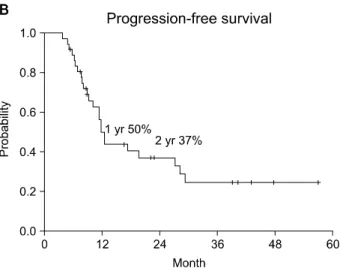
Fig. 1. Kaplan-Meier survival curves of (A) the overall survival, (B) the progression-free survival and (C) the locoregional control rates.
Fig. 2. Patterns of the first site of failure.
had stage IV disease (pleural nodules or effusion).
2) Tumor response, survival and patterns of failure The overall response rate was 97% for all the patients. A CR was achieved in 17 patients (46%), a PR was achieved in 19 patients (51%) and 1 patient (3%) had progressive disease.
The median follow-up time was 17 months (range, 5∼57). Fig.
1 showed the OS, PFS, and LRC rates. The 1- and 2-year OS was 83% and 55%, respectively. The 1- and 2-year PFS was 50% and 37%, respectively. The 2-year LRC and distant control rates were 50% and 49%, respectively. The most common sites of distant metastasis were bone and brain. The patterns of failure are shown in Fig. 2. There were 7 in-field locoregional failures. Four of those failures were isolated local failure. Only one patient experienced isolated, out of the field, regional failure at the contralateral supraclavicular fossa. The patients received salvage chemotherapy, and lung metastasis with
pleural seeding occurred 7 months later.
3) Toxicity
Grade 2 and 3 treatment-related esophageal toxicity occurred in 20 and 2 patients, respectively. Two patients, who showed
DISCUSSION AND CONCLUSION
SCLC is a radiosensitive tumor and so modest doses of once-daily TRT have been widely used to treat it. However, disappointing overall local control rates have led to investi- gating strategies to intensifying radiotherapy. Turrisi et al. (12) compared 45 Gy once-daily TRT (1.8 Gy qd over five weeks) with twice-daily TRT (1.5 Gy bid over 3 weeks). In both groups, TRT began concurrently with the first cycle of EP chemotherapy. Although both the fractionation strategies showed a high initial response rate, after five years of follow-up, the overall local failure rate, including both local failure only and simultaneous local and distant failure, was 75%
with the once-daily arm as compared with 42% for the patients who received twice-daily therapy. The median survival was 19 months with once daily TRT and 23 months with twice daily TRT (p=0.04). The rate of Grade 3 or higher esophagitis was 16% for the conventional 45 Gy TRT group and 32% for the accelerated 45 Gy TRT group (p<0.001). Despite the significant overall survival benefits in this Phase III trial, the schedule of twice-daily 45 Gy TRT has not been widely used because of concerns of acute toxicity, patient compliance and the belief that higher doses of once-daily TRT will yield similar outcomes with potentially less toxicity. A phase II trial (CALGB 39808) of once-daily 70 Gy TRT starting with the third cycle of chemotherapy reported a median survival of 22.4 months, which is comparable to the results of the twice-daily arm of the Intergroup study (12). Recent retrospective studies have also suggested the importance of a high dose of radiation when using the once-daily regimen (16,22).
Another issue of TRT for treating SCLC is the volume of the TRT. Irradiating the involved field only versus elective
involved field postchemotherapy volume TRT with concurrent chemotherapy. The survival rates were comparable to those of the other recent trials and only one patient (3%) experienced isolated out of field regional failure. However, despite that a relatively high dose of 60 Gy was used, the in-field local recurrence rate was higher than expected. Seven patients (19%) experienced in-field local recurrence and four (11%) of these patients experienced isolated local failure as their first site of failure. This isolated in-field local recurrence rate is higher than those of the recent Dutch phase II trial: that Dutch trial reported a 5% rate of in-field local recurrence and a 3% rate of isolated local recurrence (24). Although our study’s overall locoregional control rates are comparable to those of the Intergroup study (12), it is difficult to compare exact local control rates due to our shorter follow-up period. Further, other retrospective studies (16,22) that used ≥50 Gy or 54 Gy of once-daily TRT showed superior local control rates (3 year local control rates of 61∼
78%) than our study did.
Relatively high local recurrence rates might be due to a suboptimal radiation dose, a long overall treatment time or the timing of radiation. The Dutch phase II studies used a regimen pf 45 Gy in 30 fractions during 3 weeks (1.5 Gy bid) and the TRT started at a mean of 18-28 days after the beginning of chemotherapy (23,24). Roof et al. (22) reported a 3 year local control rate of 78% using ≥50 Gy (range, 50∼77 Gy) and 46% of the patients who received concurrent chemotherapy started TRT with the first cycle of chemotherapy. A recent Cochrane review defined early radiotherapy as starting within 30 days of the initiation of chemotherapy (25). De Ruysscher et al. (26) reported that with a time from the start of chemotherapy to completion of radiotherapy (SER) of less than 30 days, the 5 year overall survival rate was more than 20%
and it was significantly higher than that with a longer SER
(RR, 0.62; 95% CI, 0.49∼0.80; p=0.0003). Most of the LD-SCLC patients in our institution had bulky and advanced stage disease (stage IIIA/B). When we try to adequately cover these bulky tumors with appropriate radiation field and a relatively high dose, we are concerned about the inevitable accompanying treatment-related pulmonary toxicity so that 2 cycles of induction chemotherapy were adopted to reduce bulky tumor volume so as to avoid severe pulmonary toxicity. In this study, thirty-two patients (86%) started radiotherapy with the third cycle of chemotherapy, 4 with the fourth cycle and only one started radiotherapy with the second cycle. With 2 cycles of induction chemotherapy, we could reduce the radiation field using the postchemotherapy tumor volume, but the TRT started at a median of 52 days after the initiation of chemotherapy.
We can speculate that this delayed radiotherapy might be one of the reasons for the relatively high in-field local recurrences.
Treatment-related pneumonitis is a common complication that can lead to respiratory insufficiency and sometimes death.
Other studies using concurrent chemoradiotherapy have report- ed severe (≥ grade 3) treatment-related pneumonitis ranging from 4% to 9% and fatal pneumonitis ranging from 0 to 3%
(9,10,12,27). In our study, 6 patients experienced grade 2 treatment-related pneumonitis and 2 patients died of treatment- related pulmonary complications. One patient expired from respiratory failure due to combined treatment-related pneumoni- tis, atypical pneumonia and disease progression. The other patient had underlying severe emphysema and that patient experienced dyspnea at 3 months after radiotherapy. This dyspnea was temporarily improved with prednisolone, but he died of acute exacerbation of interstitial lung disease 4 weeks later.
In conclusion, once-daily 60 Gy TRT with concurrent chemotherapy and starting the TRT after two cycles of chemotherapy showed favorable survival outcomes and reason- able toxicities in patients with LD-SCLC. Postchemotherapy volume involved field radiotherapy was safe, yet a considerable number of patients still experienced in-field failure. Further prospective studies to establish the optimal radiation doses, fractionation and timing are needed in the future.
REFERENCES
1. Govindan R, Page N, Morgensztern D, et al. Changing
epidemiology of small-cell lung cancer in the United States over the last 30 years: analysis of the surveillance, epidemi- ologic, and end results database. J Clin Oncol 2006;24:
4539-4544.
2. Warde P, Payne D. Does thoracic irradiation improve survival and local control in limited-stage small-cell carcinoma of the lung? A meta-analysis. J Clin Oncol 1992;10:890-895.
3. Takada M, Fukuoka M, Kawahara M, et al. Phase III study of concurrent versus sequential thoracic radiotherapy in combination with cisplatin and etoposide for limited-stage small-cell lung cancer: results of the Japan Clinical Oncology Group Study 9104. J Clin Oncol 2002;20:3054-3060.
4. Pignon JP, Arriagada R, Ihde DC, et al. A meta-analysis of thoracic radiotherapy for small-cell lung cancer. N Engl J Med 1992;327:1618-1624.
5. Murray N, Coy P, Pater JL, et al. Importance of timing for thoracic irradiation in the combined modality treatment of limited-stage small-cell lung cancer. The National Cancer Institute of Canada Clinical Trials Group. J Clin Oncol 1993;11:336-344.
6. Bogart JA. Rationale for phase III trials of thoracic radiation therapy doses in limited-stage small-cell lung cancer. Clin Lung Cancer 2008;9:202-205.
7. Kubota K, Nishiwaki Y, Sugiura T, et al. Pilot study of concurrent etoposide and cisplatin plus accelerated hyper- fractionated thoracic radiotherapy followed by irinotecan and cisplatin for limited-stage small cell lung cancer: Japan Clinical Oncology Group 9903. Clin Cancer Res 2005;11:
5534-5538.
8. Noda K, Nishiwaki Y, Kawahara M, et al. Irinotecan plus cisplatin compared with etoposide plus cisplatin for extensive small-cell lung cancer. N Engl J Med 2002;346:85-91.
9. Sohn JH, Moon YW, Lee CG, et al. Phase II trial of irinotecan and cisplatin with early concurrent radiotherapy in limited- disease small-cell lung cancer. Cancer 2007;109:1845-1950.
10. Han JY, Cho KH, Lee DH, et al. Phase II study of irinotecan plus cisplatin induction followed by concurrent twice-daily thoracic irradiation with etoposide plus cisplatin chemotherapy for limited-disease small-cell lung cancer. J Clin Oncol 2005;23:3488-3494.
11. Xenidis N, Kotsakis A, Kalykaki A, et al. Etoposide plus cisplatin followed by concurrent chemo-radiotherapy and irinotecan plus cisplatin for patients with limited-stage small cell lung cancer: a multicenter phase II study. Lung Cancer 2010;68:450-454.
12. Turrisi AT 3rd, Kim K, Blum R, et al. Twice-daily compared with once-daily thoracic radiotherapy in limited small-cell lung cancer treated concurrently with cisplatin and etoposide. N Engl J Med 1999;340:265-271.
13. Choi NC, Herndon J, Rosenman J, et al. Long term survival data from CALGB 8837: radiation dose escalation and concurrent chemotherapy (CT) in limited stage small cell lung cancer (LD-SCLC). Possible radiation dose-survival relation- ship. Proc Am Soc Clin Oncol 2002;21:298a (abstr 1190).
14. Bogart JA, Herndon JE 2nd, Lyss AP, et al. 70 Gy thoracic
achieving improved loco-regional tumor control in limited stage small-cell lung carcinoma: an update. Int J Radiat Oncol Biol Phys 1989;17:307-310.
18. Therasse P, Arbuck SG, Eisenhauer EA, et al. New guidelines to evaluate the response to treatment in solid tumors. European Organization for Research and Treatment of Cancer, National Cancer Institute of the United States, National Cancer Institute of Canada. J Natl Cancer Inst 2000;92:205-216.
19. World Health Organization. WHO handbook for reporting results of cancer treatment. Geneva: World Health Organiza- tion; 1979.
20. Trotti A, Colevas AD, Setser A, et al. CTCAE v3.0:
development of a comprehensive grading system for the adverse effects of cancer treatment. Semin Radiat Oncol 2003;13:176-181.
25. Pijls-Johannesma M, De Ruysscher D, Vansteenkiste J, et al.
Timing of chest radiotherapy in patients with limited stage small cell lung cancer: a systematic review and meta-analysis of randomised controlled trials. Cancer Treat Rev 2007;33:
461-473.
26. De Ruysscher D, Pijls-Johannesma M, Bentzen SM, et al.
Time between the first day of chemotherapy and the last day of chest radiation is the most important predictor of survival in limited-disease small-cell lung cancer. J Clin Oncol 2006;
24:1057-1063.
27. Schild SE, Bonner JA, Shanahan TG, et al. Long-term results of a phase III trial comparing once-daily radiotherapy with twice-daily radiotherapy in limited-stage small-cell lung can- cer. Int J Radiat Oncol Biol Phys 2004;59:943-951.