therapy Followed by Concurrent Irinotecan + Cisplatin Plus Twice-Daily Thoracic Radiotherapy
1Department of Internal Medicine, 2Radiation Oncology, 3Radiology, and 4Pathology, College of Medicine, Chungnam National University Hospital & Cancer Research Institute, Daejeon, Korea
Jeong Eun Lee, M.D.1, Hee Sun Park, M.D.1, Sung Soo Jung, M.D.1, Ju Ock Kim, M.D.1,
Moon June Cho, M.D.2, Jin Hwan Kim, M.D.3, Choong Sik Lee, M.D.4, and Sun Young Kim, M.D.1
유제한성 병기의 소세포 폐암에서 3주 간격으로 시행된 irinotecan과 cisplatin을 이용한 과다분할 방사선 동시 요법
이정은1, 박희선1, 정성수1, 김주옥1, 조문준2, 김진환3, 이충식4, 김선영1
1충남대학교 의과대학 내과학교실, 2조직병리과교실, 3영상의학과교실, 4방사선 종양학과교실
배 경: Irinotecan hydrochloride는 topoisomerase I inhibitor로서 소세포 폐암에 효과적인 약제로 알려져 있 다. Irinotecan은 cisplatin과 더불어 방사선감작물질로 작용하기도 한다. 본 연구는 이전에 치료받은 경험이 없는 제한성 병기의 소세포 폐암 환자에서 irinotecan과 cisplatin(IP)의 방사선 동시화학요법의 효과를 평가하 기 위하여 시행되었다
방 법: 2002년 12월부터 2004년 11월까지 충남대학교 병원에서 새로이 제한성 병기의 소세포 폐암으로 진단 된 24명의 환자들을 대상으로 하였다. Irinotecan 60 mg/m2을 제 1일과 제 8일째 투여하였고 cisplatin 60
mg/m2을 제 1일째 투여하였으며 매 3주 간격으로 시행되었다. 제 3차 항암화학요법을 시작하는 날과 동시에
과다 분할방사선 치료(twice-daily thoracic irradiation; 45 Gy total)을 시작하였다. 예방적 전 뇌 방사선 조사 (Prophylactic cranial irradiation)가 방사선 동시화학요법이 끝난 후 완전반응(complete response)을 나타낸 환자에서 시행되었다. 제 2차 항암요법과 제 6차 항암요법이 끝난 후에 흉부 전산화 단층촬영과 기관지경 등을 통한 병기의 재평가가 이루어졌다.
결 과: 병기의 재평가는 19명의 환자에게 이루어졌다. 중앙 추적관찰기간은 12.5개월이고 전체 99회의 항암치 료가 시행되었다. 평균 한 환자당 5.2회의 항암치료가 시행되었다. 실제 용량강도는 cisplatin 19.6 mg/m2/week 과 irinotecan 38.2 mg/m2/week이었다. 9명의 환자가 완전반응을 보였고 10명의 환자가 부분반응(partial response)을 보여서 전체 반응률은 95%였다. 3에서 4도의 혈액학적 독성은 백혈구 감소증(35% of cycles), 빈혈 (7% of cycles), 혈소판 감소증(7% of cycles) 등으로 나타났다. 3에서 4도의 비 혈액학적 독성은 설사(5% of cycles)였다. 3에서 4도의 방사선 식도염(10% of patients)을 제외하고는 과다 분할 방사선 치료를 이용한 방사 선 동시 화학요법의 기존의 방법과 독성 면에서는 큰 차이가 없었다. 치료와 관련된 사망은 관찰되지 않았다.
평가가 가능한 환자들에서 1년 생존율과 2년 생존율은 각각 89% (16/18)와 47% (9/18)였다.
결 론: 3주 간격으로 시행된 irinotecan과 cisplatin을 이용한 과다분할 방사선 동시 요법은 제한성 병기의 소 세포 폐암 환자에서 부작용은 높지 않으면서 효과적인 치료법으로 고려될 수 있을 것이다.
(Tuberc Respir Dis 2007; 63: 154-164)
Key Words: Cisplatin, Irinotecan, Limited-disease, Small cell lung cancer, 3-week cycle, Chemotherapy-naïve, Twice-daily thoracic radiotherapy, Concurrent chemoradiotherapy.
Address for Correspondence: Sun Young Kim, M.D.
Department of Internal Medicine, Chungnam National University Medical School, 634-18 Daesadong, Daejeon 561-712, South Korea
Phone: 82-42-280-7154, Fax: 82-42-257-5753 E-mail: [email protected]
Received: Apr. 20. 2007 Accepted: May. 28. 2007
Introduction
Lung cancer is the most common cause of cancer death worldwide1,2. Small cell lung cancer (SCLC) accounts for approximately 13 to 20% of all lung cancers diagnosed3. Although SCLC is usually sensitive initially to chemotherapy and radiotherapy,
it has a poor prognosis characterized by an aggressive clinical course, rapid tumor growth, and metastasis, which is often present at the time of diagnosis4. Approximately one-third of patients with SCLC represent limited-stage disease (LD).
Combined modality treatment consisting of thoracic radiotherapy (TRT) and systemic chemotherapy is widely accepted as a standard for patients with LD-SCLC. A cisplatin or carboplatin plus etoposide (PE) regimen is the most frequently used che- motherapy regimen worldwide. Several new anti- cancer drugs have been shown to be active against SCLC. The most active of these drugs to date is irinotecan, a topoisomerase I inhibitor. A ran- domized phase III study of irinotecan plus cisplatin (IP) chemotherapy compared with PE reported a significant benefit in the survival of patients receiving IP for extensive-stage SCLC5.
Radiotherapy also has a central role in the treatment of LD-SCLC6,7. Two meta-analyses dealing with the role of thoracic radiotherapy (TRT) in addition to chemotherapy suggested a benefit in both local control and overall survival8,9; they showed significant increases in survival and major reduction in thoracic recurrence in the combined-therapy group. However, the optimal sequencing, dosing, and timing have not been clearly defined6,7. Several randomized studies have addressed the importance of the timing of TRT, but their results are conflicting10-13. One of the phase III trials, reported from the Japanese Clinical Oncology Group (JCOG), compared concurrent versus sequential chemoradiation in combination with PE in 231 patients with LD-SCLC10 and found that the median survival favored the concurrent approach (27.2 vs. 19.7 months, p = 0.097).
In the present study, we assumed that two cycles of induction chemotherapy of dose-intensified 3-week administrations of IP followed by an IP
regimen with concurrent twice-daily TRT would further improve the outcome of chemotherapy-naïve patients with LD-SCLC. We sought to validate the efficacy and toxicity of IP chemotherapy with concurrent hyperfractionated TRT in chemotherapy- naïve patients with LD-SCLC.
Patients and methods 1. Eligibility criteria
The diagnosis of SCLC was confirmed by histologic or cytologic findings in all cases. Limited stage (LS) was defined as disease confined to one hemithorax and regional lymph nodes (including mediastinal, contralateral hilar, and bilateral supra- clavicular nodes). Additional eligibility criteria were:
at least one bi-dimensionally measurable or assessable disease; age ≥18 years; Eastern Coo- perative Oncology Group performance status (PS)
≤2; leukocyte count ≥4,000/L; platelet count ≥ 100,000/L; bilirubin level ≤1.5 mg/dL; creatinine level ≤1.5 mg/100 mL and 24-h creatinine clearance >60 mL/min/m2; absence of active infec- tion; no prior chemotherapy or radiotherapy; no history of myocardial infarction in the last 6 months; no congestive heart failure or significant arrhythmia; and no prior second primary cancer.
Patients with malignant pleural effusions were excluded. In addition to the assessments described above, each patient underwent the following: chest radiography and computed tomography scan of the thorax, abdomen, and brain; radionuclide bone scan;
fiberoptic bronchoscopy; pulmonary function studies; and arterial blood gas measurements when signs or symptoms of respiratory insufficiency were present.
All patients provided written informed consent.
The study was approved by the institutional review
board of Chungnam National University Hospital and was conducted in compliance with institutional review board regulations.
2. Chemotherapy
Chemotherapy was given in a 21-day cycle, as shown in Figure 1. For induction chemotherapy, the treatment consisted of three cycles of cisplatin 60 mg/m2 on day 1 and irinotecan 60 mg/m2 on days 1 and 8. For patients who had not changed stage in response to induction chemotherapy, three cycles of IP chemotherapy were continued for concurrent chemoradiotherapy with the same schedule and doses. Cisplatin (60 mg/m2) was diluted in normal saline to 150 mL and administered as a 60-min intravenous infusion on day 1. Irinotecan (60 mg/m2) was diluted in 5% dextrose in water and administered as a 90-min intravenous infusion on days 1 and 8. Irinotecan was administered imme- diately after cisplatin on day 1. The dose of chemotherapy was reduced to 75% of the initial dosage for patients who experienced hematologic toxicity greater than grade 3 in the previous cycle.
If the leukocyte count was below 3,000/mm3, the absolute neutrophil count was below 1,000/mm3, the platelet count was below 100,000/mm3, or non- hematologic toxicities were greater than grade 2 on the first day of the next cycle, chemotherapy was withheld until the counts recovered.
Patients received standard intravenous hydration with 1,000 mL of 5% dextrose in normal saline or normal saline for 2 h before cisplatin administration.
A standard antiemetic regimen of dexamethasone 20 mg and ondansetron 8 mg was administered intravenously before the administration of cisplatin.
3. Thoracic radiotherapy (TRT)
Conventional radiotherapy techniques were used in all patients and the radiotherapy targets were defined in accordance with the International Commission on Radiation Units and Measurements Report (ICRU 50) as follows. Radiotherapy was administered to post-chemotherapy volumes. The radiation field included the primary tumor and ipsilateral hilum and bilateral mediastinal lymph nodes, with 1- to 2-cm margins. Radiation was administered to the supraclavicular lymph nodes only if they were involved. The gantry angles for oblique fields ranged from 30° to 45° from a line perpendicular to the treatment table and included the ipsilateral supraclavicular volume only if persistent disease was present in this region. Three coplanar isocentric fields were used to cover the target volumes in order to minimize doses to the lungs and other tissues (spinal cord, esophagus, great vessels, heart, etc.). Tissue inhomogeneity corrections were made. The prescribed dose of the clinical target volume was normalized by approxi- mately 90% of the isocenter dose. TRT was delivered with 6-10 MV photons using custom- made blocks. TRT was started on the first day of the 3rd cycle of the IP regimen. The total dose of TRT was 45.6 Gy in 38 fractions (120 cGy per fraction). Treatment was given twice daily on weekdays, at least 6 h apart.
4. Prophylactic cranial irradiation (PCI)
Four weeks after completion of the concurrent chemoradiotherapy, cancer clinical responses were evaluated by chest X-ray and computerized tomo- graphy, brain MRI, and bone scan. Patients who achieved a CR were given a PCI that consisted of 10 doses of 2.5 Gy to the midplane of the brain over a 2-week period for a total dose of 25 Gy.
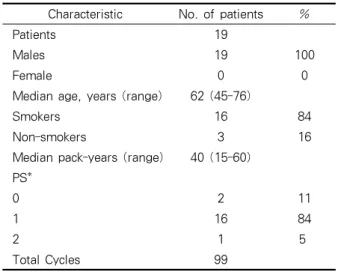
Characteristic No. of patients %
Patients 19
Males 19 100
Female 0 0
Median age, years (range) 62 (45-76)
Smokers 16 84
Non-smokers 3 16
Median pack-years (range) 40 (15-60) PS*
0 2 11
1 16 84
2 1 5
Total Cycles 99
* Eastern Cooperative Oncology Group performance status.
Table 1. Baseline characteristics of the patients
Result Induction IP chemotherapy
Concurrent chemoradiotherapy No. of patients % No. of patients % Response
Complete 8 27 9 47
Partial 15 68 10 53
Overall 23 95 19
Progression 1 5
1-year
survival rate 16/18 88
2-year
survival rate 9/18 47
Table 2. Objective tumor response 5. Response and toxicity criteria
Tumor response was evaluated according to the WHO criteria14 and was assessed by chest radio- graphy and chest CT after every two cycles of chemotherapy and at 1, 3, and 6 months after completion of thoracic radiation therapy. Acute toxicity and late toxicity were classified in accordance with the guidelines of the National Cancer Institute (NCI) Common Terminology Criteria for Adverse Events v3.015. Late toxicity was defined as that occurring more than 90 days after treatment initiation.
6. Data analysis and statistics
The duration of survival was measured from the first date of the initial treatment to the date of death or most recent follow-up.
Results 1. Patient characteristics
Twenty-four patients were enrolled in the study
from December 2002 to November 2004. Two patients dropped out after two cycles of chemo- therapy because of progressive liver cirrhosis and Eaton-Lambert syndrome. All patients were assessed for response and toxicity analysis. The regimen of one patient had been changed because of progressive disease. Two patients who had achieved complete response (CR) after induction chemotherapy opted to refuse further therapy.
Nineteen patients completed the chemoradiation.
The characteristics of the 19 eligible patients, all male, are listed in Table 1. The median age was 62 years (range, 45 to 71 years) for the limited-stage patients. Eighteen (95%) patients had an ECOG performance status of 0 or 1. The total numbers of cycles was 99.
2. Tumor response and survival
Tumor response estimated after two cycles of IP chemotherapy (Table 2) revealed six CRs (27%) and 15 partial responses (PRs) (68%), for an overall response rate of 95%; there was one progression.
After concurrent chemoradiotherapy, there were nine CRs (47%) and 10 PRs (53%), giving an overall response rate of 100%.
Follow-up was performed for all patients after 12
Toxicity Grade (n = 22)
0 1 2 3 4
No.* % No.* % No.* % No.* % No.* %
Hematologic
Neutropenia 11 32 5 14 7 20 7 20 5 14
Anemia 15 41 10 27 10 27 2 5 0 0
Thrombocytopenia 21 73 4 14 2 7 1 3 1 3
Fever in absence of infection 34 94 0 0 1 3 0 0 1 3
Non-hematologic
Diarrhea 30 81 0 0 3 8 3 8 1 3
Nausea/Vomiting 29 78 4 11 3 7 0 0 1 2
BUN 36 98 1 2 0 0 0 0 0 0
Cr 36 98 1 2 0 0 0 0 0 0
AST 34 93 2 5 1 2 0 0 0 0
ALT 33 92 3 8 0 0 0 0 0 0
TB 35 96 1 4 0 0 0 0 0 0
Pruritus 35 96 1 2 1 2 0 0 0 0
*number of events.
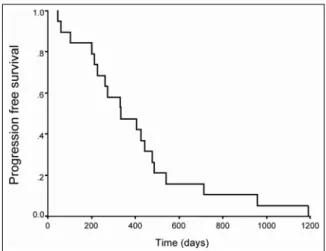
Table 3. Toxic effects during induction IP chemotherapy according to the NCI grade of toxicity Figure1. Progression-free survival curve for the
patients with two cycles of IP induction chemotherapy followed by concurrent chemoradiotherapy in LD-SCLC.
months (median follow-up time, 12.5 months). Four patients who did not receive TRT died of disease progression and one patient who did receive TRT died of uncontrolled seizure before 12 months.
Radiation therapy was discontinued in two patients owing, respectively, to heart failure and treatment refusal. A third patient, with Eaton-Lambert syndrome, became progressively debilitated as a
result of muscle weakness despite steroid therapy, and his performance status was poor. In a fourth patient, with liver cirrhosis, a very low platelet count after induction chemotherapy was slow to recover, and thus we decided that concurrent IP plus hyperfractionated thoracic radiotherapy was harmful to this patient. A fifth patient showed progressive disease after induction IP and consequently was not suitable for establishing the effectiveness of concurrent IP plus hyperfrac- tionated thoracic radiotherapy because he had already failed to respond to the IP regimen.
Therefore, we excluded five patients from the survival estimates. The 1- and 2-year survival rates of the eligible patients were 94% (17/18) and 47% (9/18), respectively (Table 2). The median progression-free survival was 12 months (95% CI:
5.2–18.7 months) (Figure 1).
3. Toxicity
The toxicities of induction chemotherapy are described in Table 3. Myelosuppression was the
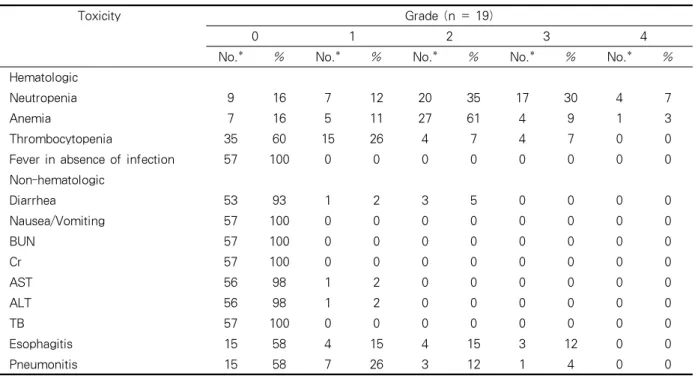
Toxicity Grade (n = 19)
0 1 2 3 4
No.* % No.* % No.* % No.* % No.* %
Hematologic
Neutropenia 9 16 7 12 20 35 17 30 4 7
Anemia 7 16 5 11 27 61 4 9 1 3
Thrombocytopenia 35 60 15 26 4 7 4 7 0 0
Fever in absence of infection 57 100 0 0 0 0 0 0 0 0
Non-hematologic
Diarrhea 53 93 1 2 3 5 0 0 0 0
Nausea/Vomiting 57 100 0 0 0 0 0 0 0 0
BUN 57 100 0 0 0 0 0 0 0 0
Cr 57 100 0 0 0 0 0 0 0 0
AST 56 98 1 2 0 0 0 0 0 0
ALT 56 98 1 2 0 0 0 0 0 0
TB 57 100 0 0 0 0 0 0 0 0
Esophagitis 15 58 4 15 4 15 3 12 0 0
Pneumonitis 15 58 7 26 3 12 1 4 0 0
*number of events.
Table 4. Toxic effects during concurrent chemoradiotherapy according to the NCI grade of toxicity
Treatment Planned DI Actual DI mg/m2/week (%)
Irinotecan 40 38.2 (95.5)
Cisplatin 20 19.6 (98)
Table 5. Dose Intensity (DI) most common of both the hematologic and
non-hematologic toxicities. Among the hematologic toxicities, neutropenia was the most common of grade 3/4 (19 cases, 35%), and anemia was the most frequent of grade 1/2 (30 cases, 55%). Fever in the absence of infection was reported in four cases (7%). There was one grade 4 case, in which further treatment was withheld. There were no treatment-related deaths. Hematopoietic growth factors were used only in the cases of neutropenic fever. Diarrhea was the most common grade 3/4 non-hematologic toxicity (5 cases, 9%).
The toxicities of concurrent chemoradiotherapy are described in Table 4. Among the grade 3/4 hematologic toxicities, neutropenia was most com- mon (16 cases, 37%); among the grade 1/2 hema- tologic toxicities, anemia occurred most frequently (34 cases, 79%). Fever in the absence of infection was reported in one case (2%) but did not delay the treatment schedule. No deaths occurred. Hemato- poietic growth factors were used only in the case of
neutropenic fever. Among the non-hematologic toxicities were radiation-related toxicities such as esophagitis (6/19), radiation pneumonitis (7/19), and vesicles, itching, or pain on related skin (1/19 each).
Late moderate to high-grade (≥grade 2) radiation- related toxicity was uncommon. Twelve patients experienced late low-grade (grade 1) radiation pneumonitis, and three experienced late low-grade (grade 1) radiation esophagitis.
4. Treatment delivery and dose-intensity
The median chemotherapy interval during the concurrent chemoradiotherapy was 21 days. The planned and actual dose intensities are shown in
Table 5. The actual dose intensity as a proportion of the planned dose intensity was greater than 95%, and 100% of the patients (19/19) completed thoracic radiotherapy at 45 Gy.
Discussion
Most patients with LD-SCLC receive combined modality therapy with TRT and PE (or another platinum-containing regimen), which is widely accepted as the standard treatment6. The goal of treatment is to achieve complete clinical regression of the tumor at the initial response, determined 6 to 12 weeks after the start of therapy, which predicts median and long-term survival, response to second-line therapy, and potential for a cure.
Patients who achieve complete clinical regression survive longer than those with a partial response, who in turn survive longer than those with no response. Complete remission is required for long-term survival. The IP regimen is significantly more effective than the PE regimen in ED-SCLC5, and thus irinotecan has been actively introduced to improve the treatment results in SCLC16-20. Some studies have demonstrated that combining cisplatin with topoisomerase I inhibitors has an exclusively synergistic effect21,22. However, Hanna et al have reported no significant differences in patient outcomes between those treated with PE and those treated with IP23, using an IP dose and schedule (cisplatin 30 mg/m2 i.v. and irinotecan 65 mg/m2 i.v. on days 1 and 8 every 21 days) that differed from those in Noda et al5. Even though dose intensification of cisplatin had not resulted in significant outcome differences in ED SCLC, Hanna et al changed the cisplatin dose from 60 to 30 mg/m223 based on a study by Ihde, which compared high-dose PE with standard-dose PE24. This trial was against to the positive results of Noda’s study.
They explained that differences in polymorphisms of UDP-glucuronosyltransferase (UGT1A1) between different in North American and Japanese may be related to pharmacogenomic differences. During concurrent IP chemotherapy with TRT in the treatment of LD-SCLC, irinotecan might act as a potential radiation sensitizer with cisplatin. Our data showed six CRs (27%) and 15 PRs (68%), for a 95% overall response, after two cycles of IP chemotherapy. After concurrent chemoradiotherapy, there were nine CRs (47%) and 10 PRs (53%), for an overall response rate of 100%.
Although we agree that the definition of local control in SCLC is ambiguous, if the definition of local control for NSCLC also applies for SCLC, the local control rate was 63%25. For the response status of CR after concurrent chemoradiotherapy, the local control rate was 89%. Local control was used to evaluate the effectiveness of TRT.
The 1-year survival rate of eligible patients was 88%, and many more CRs converted after con- current chemoradiotherapy resulting in a relatively higher 1-year survival rate. Recently, Han et al.
designed two cycles of IP induction chemotherapy followed by concurrent PE chemotherapy with twice-daily TRT for the treatment of LD-SCLC.
They reported three CRs (9%) and 31 PRs (88%), for an overall response rate of 97% after 2 cycles of IP induction; concurrent chemoradiotherapy resulted in 18 CRs (43%) and 16 PRs (57%), for an overall response rate of 100%. They also reported 1- and 2-year survival rates of 85.7 and 53.9%, respec- tively. Our data were similar, with 1- and 2-year survival rates of 88 and 47%, respectively. On the basis of our data and the results of many other studies, we suggest that irinotecan-containing regimens are feasible to one of the most promising strategies for improving the survival of LD-SCLC patients.
Despite controversy regarding the optimal timing of concurrent radiotherapy, a recent meta-analysis report recommended early (beginning within 9 weeks of the initiation of chemotherapy and before the third cycle of chemotherapy) chemoradiothe- rapy, which had a significant survival gain benefit at 2 years but not at 3 years7. Another meta- analysis concluded that early radiotherapy (beginning within 30 days of the initiation of chemotherapy, except concurrent chemoradiotherapy) was asso- ciated with better 5-year survival but not improved 2-year survival, especially when the overall treatment time of chest radiotherapy was less than 30 days26. A consensus conclusion of the two meta-analyses was that early chest radiotherapy could be more effective. We designed a concurrent IP chemotherapy with hyperfractionated early TRT7 after two cycles of induction IP treatment.
A total of 99 cycles were given, and the actual dose intensities were more than 95% of the planned dose intensities. Given the benefit of TRT in addition to chemotherapy for both local control and overall survival in LD-SCLC8,9,27,28, an optimal TRT fractionation scheme of twice-daily fractionation (hyperfractionation) is theoretically advantageous for SCLC characterized by a rapidly proliferating malignant tumor. Two studies have revealed that concurrent chemoradiotherapy with a radiation dose to 45 Gy delivered twice daily with the first cycle of cisplatin and etoposide significantly increased the 2- and 5-year overall survival rates compared with once-daily protocols7,29.
In contrast, another study failed to show a beneficial effect of hyperfractionated TRT in overall survival30. Early twice- daily radiotherapy with concurrent chemotherapy improved overall survival, but late twice-daily radiotherapy with early chemotherapy did not improve overall survival.
Twice-daily radiotherapy commonly resulted in
radiation esophagitis. Radiation-related toxicity such as esophagitis is worse with combination treatment, but can be minimized with appropriate patient selection. Patients should be selected to allow radiotherapy to be given in full doses and in a manner that does not sacrifice too much lung function or a patient’s quality of life.
In our study, myelosuppression was the most common toxic effect, and neutropenia (35% of cycles) was the most common grade 3/4 toxicity.
Almost all patients were able to continue the schedule. No treatment-related deaths occurred.
The prevalance of grade 3/4 diarrhea was quite acceptable (5 cases in 98 cycles, 5%). Esophagitis occurred often in the patients who received hyperfractionated TRT. However, only one patient skipped chemotherapy on day 8 and delayed the next chemotherapy scheme 3 days later. All patients tolerated concurrent chemoradiotherapy. In regard to radiation-induced pneumonitis, one patient suffered from dyspnea, received prednisolone (1 mg/kg of body weight, once daily for 2 weeks and then tapered), and was discharged with symptom improvement. In spite of a favorable 1-year survival rate and tolerable side effects, that eligible patients were small numbers and only male was weak point.
But, it is possible that two cycles of IP induction chemotherapy followed by concurrent chemora- diotherapy composed of hyperfractionated TRT with four cycles of an IP regimen is useful regimen in LD-SCLC.
Based on this study, we suggest that treatment with two cycles of IP induction chemotherapy followed by concurrent chemoradiotherapy composed of hyperfractionated TRT with four cycles of an IP regimen is useful effective in LD-SCLC, with a favorable 1-year survival rate and tolerable side effects. Concurrent twice-daily TRT with com- bination chemotherapy containing irinotecan and
cisplatin may be the most powerful treatment for LD-SCLC patients, given that the dose intensity of irinotecan can be reached close to the planned dosage with tolerable side effects. We expect that this protocol will improve the current long-term survival rate, but this needs to be studied further.
Summary
Background: Irinotecan hydrochloride, a topoi- somerase I inhibitor, is effective against small-cell lung cancer. Irinotecan also can act as a potential radiation sensitizer along with cisplatin. To evaluate efficacy and toxicity of irinotecan plus cisplatin (IP) with concurrent thoracic radiotherapy, we con- ducted a phase II study of IP followed by con- current IP plus hyperfractionated thoracic radio- therapy in patients with previously untreated limited-stage small-cell lung cancer.
Methods: Twenty-four patients with previously untreated small-cell lung cancer were enrolled onto the study since November 2004. Irinotecan 60 mg/m2 was administered intravenously on days 1 and 8 in combination with cisplatin 60 mg/m2 on day1 every 21 days. From the first day of third cycle, twice-daily thoracic irradiation (total 45 Gy) was given. Prophylactic cranial irradiation was given to the patients who showed complete remission after concurrent chemoradiotherapy.
Restaging was done after second and sixth cycle with chest CT and/or bronchosocpy.
Results: Up to November 2004, 19 patients were assessable. The median follow-up time was 12.5 months. A total of 99 cycles (median 5.2 cycles per patient) were administered. The actual dose intensity values were cisplatin 19.6 mg/m2/week and irinotecan 38.2 mg/m2/week. Among the 19 patients, the objective response rate was 95% (19 patients), with 9 patients (47%) having a complete
response (CR). The major grade 3/4 hematological toxicities were neutropenia (35% of cycles), anemia (7% of cycles), thrombocytopenia (7% of cycles).
Febrile neutropenia was 4% of cycles. The predominant grade 3/4 non-hematological toxicities was diarrhea (5% of cycles). Toxicities was not significantly different with concurrent adminis- tration of irinotecan and cisplatin with radiotherapy, except grade 3/4 radiation esophagitis (10% of patients). No treatment-related deaths were observed. The 1-year and 2-year survival rate of eligible patients was 89% (16/18) and 47% (9/18), respectively.
Conclusion: Three-week schedule of irinotecan plus cisplatin followed by concurrent IP plus hyper- fractionated thoracic radiotherapy is an effective treatment for limited disease small-cell lung cancer, with acceptable toxicity.
Conflict of interest: None declared References
1. Landis SH, Murray T, Bolden S, Wingo PA. Cancer statistics, 1998. CA Cancer J Clin 1998;48:6-29.
2. Jemal A, Tiwari RC, Murray T, Ghafoor A, Samuels A, Ward E, et al. Cancer statistics, 2004. CA Cancer J Clin 2004;54:8-29.
3. Elias AD. Small cell lung cancer: state-of-the-art therapy in 1996. Chest 1997;112:251S-8S.
4. Janssen-Heijnen ML, Coebergh JW. Trends in incidence and prognosis of the histological subtypes of lung cancer in North America, Australia, New Zealand and Europe. Lung Cancer 2001;31:123-37.
5. Noda K, Nishiwaki Y, Kawahara M, Negoro S, Sugiura T, Yokoyama A, et al. Irinotecan plus cisplatin compared with etoposide plus cisplatin for extensive small cell lung cancer. N Engl J Med 2002;346:85-91.
6. Chua YJ, Steer C, Yip D. Recent advances in management of small cell lung cancer. Cancer Treat Rev 2004;30:521-43.
7. Fried DB, Morris DE, Poole C, Rosenman JG, Halle JS, Detterbeck FC, et al. Systematic review
evaluating the timing of thoracic radiation therapy in combined modality therapy for limited-stage small cell lung cancer. J Clin Oncol 2004;22:4837-45.
8. Pignon JP, Arriagada R, Ihde DC, Johnson DH, Perry MC, Souhami RL, et al. A meta-analysis of thoracic radiotherapy for small cell lung cancer. N Engl J Med 1992;327:1618-24.
9. Warde P, Payne D. Does thoracic irradiation improve survival and local control in limited-stage small cell carcinoma of the lung? A meta-analysis. J Clin Oncol 1992;10:890-5.
10. Takada M, Fukuoka M, Kawahara M, Sugiura T, Yokoyama A, Yokota S, et al. Phase III study of concurrent versus sequential thoracic radiotherapy in combination with cisplatin and etoposide for limited- stage small cell lung cancer: results of the Japan Clinical Oncology Group Study 9104. J Clin Oncol 2002;20:3054-60.
11. Murray N, Coy P, Pater JL, Hodson I, Arnold A, Zee BC, et al. Importance of timing for thoracic irradiation in the combined modality treatment of limited-stage small cell lung cancer. The National Cancer Institute of Canada Clinical Trials Group. J Clin Oncol 1993;11:336-44.
12. Work E, Nielsen OS, Bentzen SM, Fode K, Palshof T.
Randomized study of initial versus late chest irradia- tion combined with chemotherapy in limited-stage small cell lung cancer. Aarhus Lung Cancer Group. J Clin Oncol 1997;15:3030-7.
13. Jeremic B, Shibamoto Y, Acimovic L, Milisavljevic S.
Initial versus delayed accelerated hyperfractionated radiation therapy and concurrent chemotherapy in limited small cell lung cancer: a randomized study. J Clin Oncol 1997;15:893-900.
14. World Health Organization. WHO handbook for reporting results of cancer treatment: WHO offset publication No. 48. Geneva, Switzerland: World Health Organization; 1979.
15. Trotti A, Colevas AD, Setser A, Rusch V, Jaques D, Budach V, et al. CTCAE v3.0: development of a comprehensive grading system for the adverse effects of cancer treatment. Semin Radiat Oncol 2003;13:
176-81.
16. Zheng T, Nathanson MH, Elias JA. Histamine augments cytokine-stimulated IL-11 production by human lung fibroblasts. J Immunol 1994;153:4742-52.
17. Kubota K, Nishiwaki Y, Sugiura T, Noda K, Mori K, Kawahara M, et al. Pilot study of concurrent etopo- side and cisplatin plus accelerated hyperfractionated thoracic radiotherapy followed by irinotecan and cisplatin for limited-stage small cell lung cancer:
Japan Clinical Oncology Group 9903. Clin Cancer Res
2005;11:5534-8.
18. Masuda N, Fukuoka M, Kudoh S, Kusunoki Y, Matsui K, Takifuji N, et al. Phase I and pharmacologic study of irinotecan in combination with cisplatin for advanced lung cancer. Br J Cancer 1993;68:777-82.
19. Sekine I, Nishiwaki Y, Noda K, Kudoh S, Fukuoka M, Mori K, et al. Randomized phase II study of cisplatin, irinotecan and etoposide combinations administered weekly or every 4 weeks for extensive small cell lung cancer (JCOG9902-DI). Ann Oncol 2003;14:709-14.
20. Negoro S, Fukuoka M, Niitani H, Suzuki A, Nakabayashi T, Kimura M, et al. [A phase II study of CPT-11, a camptothecin derivative, in patients with primary lung cancer. CPT-11 Cooperative Study Group]. Gan To Kagaku Ryoho 1991;18:1013-9.
21. Kanzawa F, Sugimoto Y, Minato K, Kasahara K, Bungo M, Nakagawa K, et al. Establishment of a camptothecin analogue (CPT-11)-resistant cell line of human non-small cell lung cancer: characterization and mechanism of resistance. Cancer Res 1990;50:
5919-24.
22. Fukuda M, Nishio K, Kanzawa F, Ogasawara H, Ishida T, Arioka H, et al. Synergism between cisplatin and topoisomerase I inhibitors, NB-506 and SN-38, in human small cell lung cancer cells. Cancer Res 1996;56:789-93.
23. Hanna N, Bunn PA Jr, Langer C, Einhorn L, Guthrie T Jr, Beck T, et al. Randomized phase III trial comparing irinotecan/cisplatin with etoposide/cisplatin in patients with previously untreated extensive-stage disease small cell lung cancer. J Clin Oncol 2006;
24:2038-43.
24. Ihde DC, Mulshine JL, Kramer BS, Steinberg SM, Linnoila RI, Gazdar AF, et al. Prospective randomized comparison of high-dose and standard-dose etoposide and cisplatin chemotherapy in patients with extensive stage small cell lung cancer. J Clin Oncol 1994;
12:2022-34.
25. Green MR, Cox JD, Ardizzoni A, Arriagada R, Bureau G, Darwish S, et al. Endpoints for multimodal clinical trials in Stage III non-small cell lung cancer (NSCLC): a consensus report. Lung Cancer 1994;11 Suppl 3:S11-3.
26. De Ruysscher D, Pijls-Johannesma M, Vansteenkiste J, Kester A, Rutten I, Lambin P. Systematic review and meta-analysis of randomised, controlled trials of the timing of chest radiotherapy in patients with limited-stage, small cell lung cancer. Ann Oncol 2006;17:543–52.
27. Albain KS, Crowley JJ, LeBlanc M, Livingston RB.
Determinants of improved outcome in small cell lung cancer: an analysis of the 2,580-patient Southwest
Oncology Group data base. J Clin Oncol 1990;8:
1563-74.
28. Bousquet J, Jeffery PK, Busse WW, Johnson M, Vignola AM. Asthma. From bronchoconstriction to airways inflammation and remodeling. Am J Respir Crit Care Med 2000;161:1720-45.
29. Turrisi AT 3rd, Kim K, Blum R, Sause WT, Livingston RB, Komaki R, et al. Twice-daily compared
with once-daily thoracic radiotherapy in limited small cell lung cancer treated concurrently with cisplatin and etoposide. N Engl J Med 1999;340:265-71.
30. Bonner JA, Sloan JA, Shanahan TG, Brooks BJ, Marks RS, Krook JE, et al. Phase III comparison of twice-daily split-course irradiation versus once-daily irradiation for patients with limited stage small cell lung carcinoma. J Clin Oncol 1999;17:2681-91.