Specific Activity Types at the Time of Event and Outcomes of Out-of-Hospital Cardiac Arrest: A Nationwide Observational Study
This study aimed to describe the characteristics of out-of-hospital cardiac arrest (OHCA) according to specific activity types at the time of event and to determine the association between activities and outcomes according to activity type at the time of event occurrence of OHCA. A nationwide OHCA cohort database, compiled from January 2008 to December 2010 and consisting of hospital chart reviews and ambulance run sheet data, was used.
Activity group was categorized as one of the following types: paid work activity (PWA), sports/leisure/education (SLE), routine life (RL), moving activity (MA), medical care (MC), other specific activity (OSA), and unknown activity. The main outcome was survival to discharge. Multivariate logistic analysis for outcomes was used adjusted for potential risk factors (reference = RL group). Of the 72,256 OHCAs, 44,537 cases were finally analyzed.
The activities were RL (63.7%), PWA (3.1%), SLE (2.7%), MA (2.0%), MC (4.3%), OSA (2.2%), and unknown (21.9%). Survival to discharge rate for total patients was 3.5%. For survival to discharge, the adjusted odds ratios (95% confidence intervals) were 1.42 (1.06- 1.90) in the SLE group and 1.62 (1.22-2.15) in PWA group compared with RL group. In conclusion, the SLE and PWA groups show higher survival to discharge rates than the routine life activity group.
Key Words: Heart Arrest; Resuscitation; Activity; Outcome Sang Hoon Na,1 Sang Do Shin,2
Young Sun Ro,3 Eui Jung Lee,4 Kyoung Jun Song,5 Chang Bae Park,2 and Joo Yeong Kim2
1Department of Emergency Medicine and Cardiology, Seoul National University Hospital, Seoul; 2Department of Emergency Medicine, Seoul National University College of Medicine, Seoul;
3Department of Public Health, Seoul National University Graduate School of Public Health, Seoul;
4Department of Emergency Medicine, Korea University College of Medicine, Seoul; 5Department of Emergency Medicine, Seoul City Municipal Boramae Medical Center, Seoul National University, Seoul, Korea
Received: 8 December 2012 Accepted: 26 December 2012 Address for Correspondence:
Sang Do Shin, MD
Department of Emergency Medicine, Seoul National University College of Medicine, 101 Daehak-ro, Jongno-gu, Seoul 110-744, Korea
Tel: +82.2-2072-0854, Fax: +82.2-741-7855 E-mail: [email protected]
This study was financially supported by the Korean Center for Disease Control and Prevention (2009-2011) (No.0720090210 and No.0720100440).
http://dx.doi.org/10.3346/jkms.2013.28.2.320 • J Korean Med Sci 2013; 28: 320-327 Emergency & Critical Care Medicine
INTRODUCTION
Out-of-hospital cardiac arrest (OHCA) is a global health concern with poor outcomes (1). To improve outcomes, strategies for planning, education and training and the response systems of emergency medical service (EMS) should be customized to spe- cific patient groups. Resuscitation efforts and outcomes may be significantly different according to the activity at the time that an OHCA occurs. For example, patients who collapse during marathon running can be saved by immediate cardiopulmo- nary resuscitation (CPR) by bystanders and by rapid response on the part of EMS (2).
Sudden death in athletes occurs approximately once every 3 days in the United States. Each school or venue should have an emergency action plan that is coordinated with local EMS (3). The estimated annual incidence of cardiac arrest was 0.18 per 100,000 person-years among students and 4.51 per 100,000 person-years for school faculty and staff in one report (4). An-
other study reported that school-based automated external de- fibrillator (AED) programs resulted in high survival rates for both student athletes and older nonstudents with cardiac arrest on school grounds (5). Working is one of the most important activ- ities of human beings and of economically active populations to earn money or to donate services, and many people dedi- cates much of their time to working. Adequate training in CPR and the use of an AED for workers are important components of workplace safety-training programs (6).
To improve the outcomes of OHCA occurring during specific activities, the activity related with the event of the OHCA should be investigated for its characteristics, and responsible persons should be encouraged to respond to the patients with custom- ized strategy. Specific activities have more specific risk popula- tions, characteristic bystanders, different accessibility to EMS and hospital care, and various outcomes. In particular, access to early bystander CPR, early defibrillation, and appropriate hos- pital care is critical. If we know the characteristics, we can pre-
pare more customized action plans for each specific activity.
This study aimed to describe the characteristics of OHCA ac- cording to specific activity types at the time of event and to de- termine the association between specific activity types and out- comes according to activity type at the time of OHCA.
MATERIALS AND METHODS Data source
We used a nationwide observational database of patients with confirmed OHCAs in the Republic of Korea. The database was a population-based emergency medical service (EMS)-assessed OHCA cohort. Cases were captured from ambulance run sheets on which OHCA was coded; data from January 2008 to Decem- ber 2010 were used for this study. Ambulance run sheets were electronically stored in each headquarters of Provincial Fire De- partments. Trained reviewers visited the study hospitals and reviewed the medical records to obtain information related to risks and outcomes according to demographics, time-related factor, Utstein risk factors, and hospital outcomes. All of the re- viewers were formally trained and were provided with an oper- ation manual to extract the data from the medical records cor- rectly and to transcribe the data onto case report forms. When the reviewers could not determine information (for example, the initial electrocardiogram [ECG]), an emergency physician, who participated in the quality control of this study, reviewed and confirmed the case using faxed records or ECG sheets (7, 8).
Information on specific activity was retrospectively captured from hospital medical record by trained reviewer. There was no test for reliability among reviewers. If there was no information in medical record, the case was categorized with unknown group.
Setting
In the Republic of Korea, population is approximately 50 mil- lion. Ambulance services are provided by 16 Provincial Fire De- partments. Their highest service level is equivalent to the inter- mediate service level in the United States, which includes CPR, AED use, intravenous fluid resuscitation, and endotracheal in- tubation or laryngeal mask airway application under direct med- ical control. Most advanced cardiac life support using drugs is limited in EMS. Two or three emergency medical technicians (EMTs) ride along and give CPR in the field and during ambu- lance transport. The protocol does not allow EMTs to pronounce the death of patients or to transport patients to EDs without pro- viding CPR (9).
Emergency departments are created by the national govern- ment based on the EMS Act. In the countryside, level 1 EDs (n = 16), level 2 EDs (n = 113), and level 3 EDs (n = 330) were desig- nated in 2011. Of these, certified emergency physicians cover 24-hr and 365-day services in level 1 and 2 EDs. Level 3 EDs are usually served by general physicians.
Study population
The eligible patients were all OHCA patients with presumed car- diac etiologies confirmed by medical record reviews and hav- ing final outcomes on record during the study period. We ex- cluded patients younger than 20 yr old and with non-cardiac etiologies (trauma, poisoning, asphyxia, hanging, drowning, and burn).
Risk factors
Major risk factors, such as sex, age, address, date and time, and place of the event, witnesses, bystander CPR, response time from call to arrival at the scene, and first ECG rhythm, were collected.
The activities at the event were categorized on the basis of defi- nition of World Health Organization and were re-categorized as routine life (RL), paid work activity (PWA), sports/leisure/edu- cation (SLE), moving activity (MA), medical care (MC), other specific activity (OSA), and unknown activity (Appendix 1). “OSA”
included unpaid work, drinking, and other activities such as walking, wandering, running, stopping, creeping, sitting, reli- gious acts, violent actions, and non-specific (10). These activi- ties were collected from medical records made by physicians or discharge summary.
Outcome measurements
The primary end point was the proportion of subjects receiving bystander CPR and response time of EMS defined as the time interval from call to arrival at the scene. The secondary end points were survival to hospital discharge. The response time was re-categorized into early and delayed response groups ac- cording to cut-off values obtained from the medians.
Statistical analysis
We used the chi-square test for categorical variables and the in- dependent t test for continuous variables. We compared the out- comes between the specific activity groups. We estimated the effect size of activity categories (SLE, PAW, MA, MC, OSA, and unknown group) compared with RL group for the outcomes.
Odds ratios (ORs) with 95% confidence intervals (95% CIs) using multivariate logistic regression models were calculated;
ORs and 95% CIS were adjusted for potential risk factors regard- ing bystander CPR group and response time groups (sex, age, place, week, time, season, urbanization, and witnesses) and for survival to discharge (sex, age, place, week, time, season, urban- ization, witnesses, bystander CPR, initial ECG, time from call to arrival at scene, EMS defibrillation, and ED level).
Ethics statement
The study was approved by the institutional review board at Seoul National University Hospital (H-1103-153-357). Informed con- sent was waived by the board.
RESULTS
Demographic findings
Of 72,256 patients with EMS-assessed OHCAs, 44,537 cases were finally analyzed, excluding subjects with unavailable med- ical records (n = 5,201), subjects with unknown outcomes (n = 2,900), subjects who were younger than 20 yr old (n = 2,288), and subjects with non-cardiac causes (n = 17,330). The survival to admission and discharge rates were 10.1% and 3.5%, respec- tively (Fig. 1).
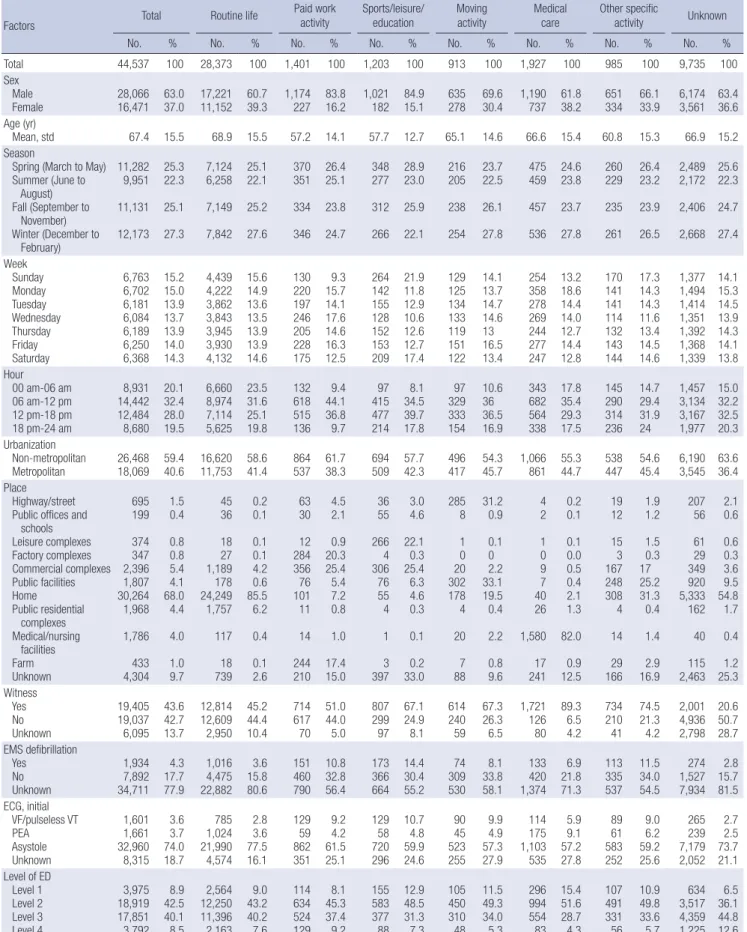
Table 1 shows the demographic findings according to specif- ic activity type. A total of 1,401 cases occurred during paid work, while most of the subjects collapsed during non-paid activities.
The PWA group showed higher proportions of cases involving men, during summer, Monday to Wednesday, during daytime, in non-metropolitan areas, factory and commercial complexes, receiving EMS defibrillation, and with shockable rhythms than the RL group. The SLE group showed higher proportions in by- stander CPR, male sex, younger age, occurrence in the spring, occurrence on Sunday and Saturday, occurrence during day- time, occurrence at leisure and commercial complexes, shock- able rhythms, and EMS defibrillation than the RL group.
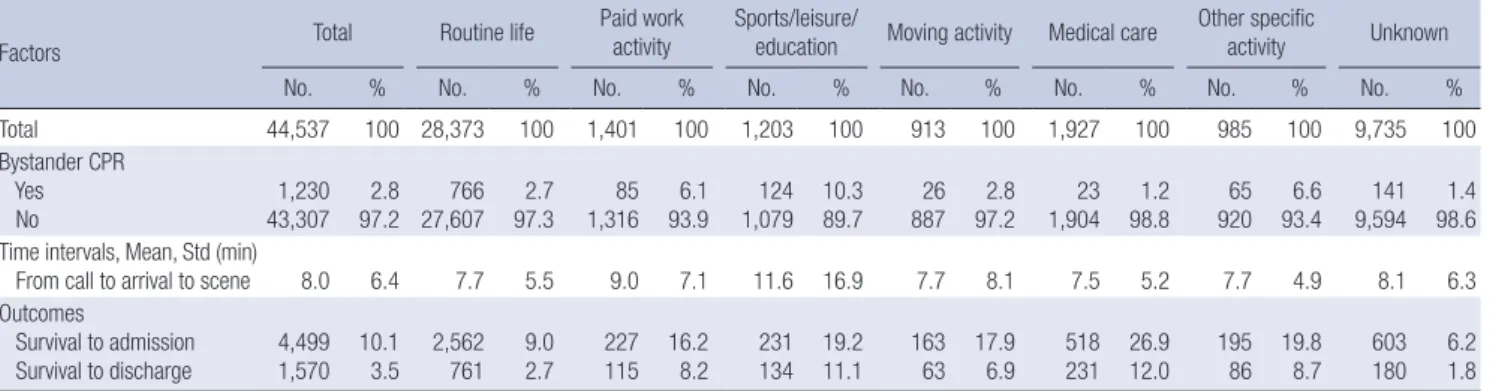
Overall bystander CPR was higher in the PWA group (6.1%) and in the SLE group (10.3%), while it was 1.2% in the MC group and 2.7% in the RL group. For ambulance response time (from call to arrival at scene), the intervals of the PWA and SLE groups were 9.0 ± 7.1 min and 11.6 ± 16.9 min, respectively, while the interval was 7.7 ± 5.5 min in the RL group. Finally, the outcomes by activity type showed wide variation. Survival to discharge was the highest in the SLE group (11.1% in overall SLE, 27.5% in
sports only, and 8.9% in leisure only), followed by a rate of 8.2%
in the PWA and 2.7% in the RL group (Table 2).
Main results
The adjusted ORs (95% CIs) for bystander CPR for each activity, compared with the RL group, were 1.93 (1.47-2.53) in the SLE group, 1.51 (1.13-2.03) in the PWA group, and 0.41 (0.21-0.79) in the MC group. The adjusted ORs (95% CI) for early response time were 0.83 (0.72-0.95) in the PWA group and 0.76 (0.66-0.88) in the SLE group, respectively. The MA group and OSA group showed no significant differences between them (Table 3).
For survival to discharge, the adjusted ORs (95% CI) were 1.62 (1.22-2.15) in the PWA group and 1.42 (1.06-1.90) in the SLE group. The MA and OSA group showed no significantly differ- ent outcomes, while the MC group showed better outcomes than the reference group (Table 3).
DISCUSSION
The most common activity in our study was routine life, followed by medical care, PWA, SLE, OSA, and MA group. Routine life included eating, drinking in home, putting on clothes, sleeping, intercourse, resting, washing, bathing, baby care, and family care (Appendix 1). The PWA and SLE groups showed similar characteristics, while the RL and MC groups shared similarities.
Male sex was more common in the PWA and SLE groups, while it was less common in the RL and MC groups. The mean age was older in the RL and MC groups, while it was younger in the PWA and SLE groups.
Accessibility to resuscitation efforts and outcomes varied ac-
Fig. 1. Illustration of study population. EMS, Emergency medical service; OHCA, Out-of-hospital cardiac arrest.
Not available medical record (n = 5,201) Unknown outcome (n = 2,900)
Younger than 20 yr old (n = 2,288) Non-cardiac (n = 17,330)
Routine life (n = 28,373)
(63.7%)
Paid work activity (n = 1,401)
(3.1%)
Sports/leisure/
education (n = 1,203) (2.7%)
Moving activity (n = 913) (2.0%)
Medical care (n = 1,927)
(4.3%)
Other specific activity
(n = 985) (2.2%)
Unknown activity (n = 9,735)
(21.9%) EMS-assessed OHCA (n = 72,256)
Known outcome (n = 64,155)
Eligible OHCA (n = 44,537, 100%)
Table 1. Demographic findings of study participants by activity type
Factors Total Routine life Paid work
activity Sports/leisure/
education Moving
activity Medical
care Other specific
activity Unknown
No. % No. % No. % No. % No. % No. % No. % No. %
Total 44,537 100 28,373 100 1,401 100 1,203 100 913 100 1,927 100 985 100 9,735 100 Sex Male
Female
28,066 16,471
63.0 37.0
17,221 11,152
60.7 39.3
1,174 227
83.8 16.2
1,021 182
84.9 15.1
635 278
69.6 30.4
1,190 737
61.8 38.2
651 334
66.1 33.9
6,174 3,561
63.4 36.6 Age (yr)
Mean, std
67.4
15.5
68.9
15.5
57.2
14.1
57.7
12.7
65.1
14.6
66.6
15.4
60.8
15.3
66.9 15.2 Season
Spring (March to May) Summer (June to August) Fall (September to November) Winter (December to February)
11,282 9,951 11,131 12,173
25.3 22.3 25.1 27.3
7,124 6,258 7,149 7,842
25.1 22.1 25.2 27.6
370 351 334 346
26.4 25.1 23.8 24.7
348 277 312 266
28.9 23.0 25.9 22.1
216 205 238 254
23.7 22.5 26.1 27.8
475 459 457 536
24.6 23.8 23.7 27.8
260 229 235 261
26.4 23.2 23.9 26.5
2,489 2,172 2,406 2,668
25.6 22.3 24.7 27.4 Week Sunday
Monday Tuesday Wednesday Thursday Friday Saturday
6,763 6,702 6,181 6,084 6,189 6,250 6,368
15.2 15.013.9 13.713.9 14.014.3
4,439 4,222 3,862 3,843 3,945 3,930 4,132
15.6 14.913.6 13.513.9 13.914.6
130 220197 246205 228175
9.3 15.714.1 17.614.6 16.312.5
264 142155 128152 153209
21.9 11.812.9 10.612.6 12.717.4
129 125134 133119 151122
14.1 13.714.7 14.613 16.513.4
254 358278 269244 277247
13.2 18.614.4 14.012.7 14.412.8
170 141141 114132 143144
17.3 14.314.3 11.613.4 14.514.6
1,377 1,494 1,414 1,351 1,392 1,368 1,339
14.1 15.314.5 13.914.3 14.113.8 Hour
00 am-06 am 06 am-12 pm 12 pm-18 pm 18 pm-24 am
8,931 14,442 12,484 8,680
20.132.4 28.019.5
6,660 8,974 7,114 5,625
23.531.6 25.119.8
132618 515136
44.19.4 36.89.7
41597 477214
34.58.1 39.717.8
32997 333154
10.636 36.516.9
343682 564338
17.835.4 29.317.5
145290 314236
14.729.4 31.924
1,457 3,134 3,167 1,977
15.032.2 32.520.3 Urbanization
Non-metropolitan
Metropolitan 26,468 18,069 59.4
40.6 16,620 11,753 58.6
41.4 864
537 61.7
38.3 694
509 57.7
42.3 496
417 54.3 45.7 1,066
861 55.3
44.7 538
447 54.6 45.4 6,190
3,545 63.6 36.4 Place
Highway/street Public offices and schools Leisure complexes Factory complexes Commercial complexes Public facilities Home
Public residential complexes Medical/nursing facilities Farm Unknown
695 199 374347 2,396 1,807 30,264 1,968 1,786 433 4,304
1.5 0.4 0.80.8 5.44.1 68.04.4
4.0 1.0 9.7
45 36 1827 1,189 178 24,249 1,757 117 18 739
0.2 0.1 0.10.1 4.20.6 85.56.2
0.4 0.1 2.6
63 30 28412 35676 10111
14 244 210
4.5 2.1 20.30.9 25.45.4 7.20.8
1.0 17.4 15.0
36 55 2664 30676 554
1 3 397
3.0 4.6 22.10.3 25.46.3 4.60.3
0.1 0.2 33.0
285 8 10 30220 1784
20 7 88
31.2 0.9 0.10 33.12.2 19.50.4
2.2 0.8 9.6
4 2 10 97 4026
1,580 17 241
0.2 0.1 0.10.0 0.50.4 2.11.3
82.0 0.9 12.5
19 12 153 167248 3084
14 29 166
1.9 1.2 1.50.3 1725.2 31.30.4
1.4 2.9 16.9
207 56 6129 349920 5,333 162 40 115 2,463
2.1 0.6 0.60.3 3.69.5 54.81.7
0.4 1.2 25.3 Witness
Yes No Unknown
19,405 19,037 6,095
43.642.7 13.7
12,814 12,609 2,950
45.244.4 10.4
714617 70
51.044.0 5.0
807299 97
67.124.9 8.1
614240 59
67.326.3 6.5
1,721 126 80
89.36.5 4.2
734210 41
74.521.3 4.2
2,001 4,936 2,798
20.650.7 28.7 EMS defibrillation
Yes No Unknown
1,934 7,892 34,711
4.3 17.777.9
1,016 4,475 22,882
3.6 15.880.6
151 460790
10.8 32.856.4
173 366664
14.4 30.455.2
74 309530
8.1 33.858.1
133 1,374420
6.9 21.871.3
113 335537
11.5 34.054.5
274 1,527 7,934
2.8 15.781.5 ECG, initial
VF/pulseless VT PEA Asystole Unknown
1,601 1,661 32,960 8,315
3.6 74.03.7 18.7
785 1,024 21,990 4,574
2.8 77.53.6 16.1
129 86259 351
9.2 61.54.2 25.1
129 72058 296
10.7 59.94.8 24.6
90 52345 255
9.9 57.34.9 27.9
114 1,103175 535
5.9 57.29.1 27.8
89 58361 252
9.0 59.26.2 25.6
265 7,179239 2,052
2.7 73.72.5 21.1 Level of ED
Level 1 Level 2 Level 3 Level 4
3,975 18,919 17,851 3,792
8.9 42.540.1 8.5
2,564 12,250 11,396 2,163
9.0 43.240.2 7.6
114 634524 129
8.1 45.337.4 9.2
155 583377 88
12.9 48.531.3 7.3
105 450310 48
11.5 49.334.0 5.3
296 994554 83
15.4 51.628.7 4.3
107 491331 56
10.9 49.833.6 5.7
634 3,517 4,359 1,225
6.5 36.144.8 12.6 CPR, cardiopulmonary resuscitation; EMS, emergency medical service; VF, ventricular fibrillation; VT, pulseless ventricular tachycardia; PEA, pulseless electrical activity; ED, emer- gency department.
cording to activity. The SLE and PWA groups had similar char- acteristics and similar associations with bystander CPR and with outcomes. We found a higher chance of receiving bystander CPR (adjusted OR = 1.51 in the SLE group and 1.93 in the PWA group) than in the RL group. However, the response times and prehospital times of the SLE and PWA groups were longer than
in the RL group. The SLE and PWA groups showed significant better survival to discharge rates than the RL group in the ad- justed model. From these findings, the chances of survival will be increased if early access to ambulance services and hospital care are provided for the SLE and PWA groups, because the pa- tients in the SLE and PWA groups are younger and perhaps Table 2. Resuscitation efforts and outcomes by activity type
Factors Total Routine life Paid work
activity Sports/leisure/
education Moving activity Medical care Other specific
activity Unknown
No. % No. % No. % No. % No. % No. % No. % No. %
Total 44,537 100 28,373 100 1,401 100 1,203 100 913 100 1,927 100 985 100 9,735 100
Bystander CPR Yes No
1,230 43,307
2.8 97.2
766 27,607
2.7 97.3
85 1,316
6.1 93.9
124 1,079
10.3 89.7
26 887
2.8 97.2
23 1,904
1.2 98.8
65 920
6.6 93.4
141 9,594
1.4 98.6 Time intervals, Mean, Std (min)
From call to arrival to scene 8.0 6.4 7.7 5.5 9.0 7.1 11.6 16.9 7.7 8.1 7.5 5.2 7.7 4.9 8.1 6.3
Outcomes
Survival to admission
Survival to discharge 4,499 1,570 10.1
3.5 2,562
761 9.0
2.7 227
115 16.2
8.2 231
134 19.2
11.1 163
63 17.9
6.9 518
231 26.9
12.0 195
86 19.8
8.7 603
180 6.2
1.8 CPR, cardiopulmonary resuscitation; ED, emergency department; SLE, sports/leisure/education; Std, standard deviation.
Table 3. The effect of activity type on the resuscitation efforts and outcomes of out-of-hospital cardiac arrest in the multivariate logistic regression analysis
Variables Unadjusted Adjusted
OR 95% CI OR 95% CI
Resuscitation efforts*
Bystander CPR Routine Life
Sports/leisure/education Paid work activity Moving activity Medical care Other specific activity Unknown
Early response vs delayed response time† Routine Life
Sports/leisure/education Paid work activity Moving activity Medical care Other specific activity Unknown
1.00 4.14 2.33 1.06 0.44 2.55 0.53 1.00 0.82 0.75 1.10 1.08 1.01 0.92
3.39 1.85 0.71 0.29 1.96 0.44
0.73 0.68 0.96 0.98 0.89 0.87
5.06 2.93 1.57 0.66 3.31 0.64
0.92 0.84 1.25 1.18 1.15 0.96
1.00 1.93 1.51 0.69 0.41 1.32 0.60 1.00 0.76 0.83 1.11 0.96 0.96 1.00
1.47 1.13 0.44 0.21 0.98 0.49
0.66 0.72 0.96 0.80 0.84 0.94
2.53 2.03 1.08 0.79 1.77 0.73
0.88 0.95 1.30 1.15 1.10 1.05 Outcomes‡
Survival to admission Routine Life
Sports/leisure/education Paid work activity Moving activity Medical care Other specific activity Unknown
Survival to discharge Routine Life
Sports/leisure/education Paid work activity Moving activity Medical care Other specific activity Unknown
1.00 2.39 1.95 2.19 3.70 2.49 0.67 1.00 4.55 3.25 2.69 4.94 3.47 0.68
2.06 1.68 1.84 3.32 2.12 0.61
3.75 2.65 2.06 4.23 2.75 0.58
2.78 2.26 2.61 4.13 2.92 0.73
5.52 3.98 3.51 5.77 4.38 0.81
1.00 0.91 1.04 1.04 2.09 0.98 0.77 1.00 1.42 1.62 1.01 1.63 1.14 0.78
0.74 0.84 0.83 1.62 0.81 0.69
1.06 1.22 0.72 1.12 0.85 0.64
1.13 1.27 1.31 2.69 1.20 0.86
1.90 2.15 1.44 2.37 1.52 0.95
*Adjusted for sex, age, place, week, time, season, urbanization, and witnesses. †Early and delayed response group were categorized by median value of response time (from call to arrival to the scene time). ‡Adjusted for sex, age, place, week, time, season, urbanization, witnesses, and bystander CPR, initial ECG, time from call to arrival scene, EMS de- fibrillation, and ED level. CPR, cardiopulmonary resuscitation; ED, emergency department; OR, adds ratio; 95% CI, 95% confidence interval.
healthy enough to perform those activities. Our findings, signif- icant variations of resuscitation efforts and outcomes, suggest that a priority for target population for CPR education, EMS de- ployment strategy, and hospital accessibility should be consid- ered to achieve better outcomes. In particular, RL group showed major portion but lower CPR rate and low outcome. We should consider a specific intervention strategy for this group.
The mean response time in the SLE group was the longest among all activities. The total mean prehospital time was also much longer in the SLE group than in the PWA and RL groups.
These results indicate that the accessibility to ambulances or to hospital services in the SLE group were relatively worse than in the RL group. Many sports and leisure complexes are far from downtown, where the ambulance stations and hospital EDs are located. Preparation for events is very important for SLE activity.
A prospective and comprehensive national survey on sports- related sudden cardiac deaths in France showed a high preva- lence of witnessed cases (93%) and a relatively low bystander CPR rate (30.7%). Bystander CPR increases the chances of sur- vival (odds ratio 3.73, 95% CI 2.19-6.39) (11). Sports-related sud- den cardiac deaths are potentially preventable, which has fu- elled an ongoing scientific debate on the merits and timeliness of pre-participation screening of competitive athletes (12). Our study found a very low bystander CPR rate (10.3%), although it was the highest among other activity groups. 67.1% of the pa- tients was witnessed. Our data included sports, leisure, and ed- ucational activities, while above study subjects were only partic- ipating in sports with all age groups. It is difficult to compare the proportions directly. Previous studies have reported on sudden cardiac deaths in young athletes. However, according to the in- crease in the aging population, older people are more common- ly enjoying themselves with sports, leisure, recreation, and edu- cation. This new trend in lifestyle has resulted in a large number of sports/leisure/education-related OHCAs (2.7%).
Workplace has been regarded as one of the most important public sites for the potential prevention of deaths from OHCAs, although there have been few studies on work-related OHCAs (13, 14). From a small retrospective study, workplace was not associated with better outcomes (13). These authors compared inside-workplace to outside-workplace OHCAs for demograph- ics and Utstein factors. There were no significant differences in this small sample. The Occupational Safety and Health Admin- istration of the United States reported that from 1991 to 1993, 15% of workplace deaths were due to sudden cardiac arrests (14). The American College of Occupational and Environmen- tal Medicine (ACOEM) has supported the establishment of pro- grams on the part of employers to use AEDs to manage sudden cardiac arrests in workplace settings. However, there have been few studies of work-related OHCAs. In this study, we found that 3.1% of the cases were paid work-related OHCAs, defined as the patient collapsing during the activity with economic benefit (10).
In contrast to the SLE group, the PWA group showed a peak in daytime and weekday events, while the SLE group peaked in daytime events, during the weekend. Commercial and factory complexes were the most common sites for the PWA group (55.7%). The proportion of bystander CPR was 6.1%, and the re- sponse and prehospital times were not shorter than in the SLE group, but they were faster than in the RL group. In this study setting, public access defibrillator programs began in 2010, and therefore, there were no cases that received PAD shocks (15).
There is another important activity for the potential preven- tion of deaths due to OHCAs. Medical care facilities such as re- habilitation clinics, hemodialysis clinics, and general practice clinics, have high-risk populations, but they lack sufficient re- sources for resuscitation. Therefore, these facilities usually call EMS when there is an OHCA. We found that 4.3% of cases with OHCAs occurred while receiving medical care. Most of these patients collapsed in medical or nursing facilities (82.0%), 89.3%
of the cases were witnessed, and the response time was rela- tively shorter, while the bystander CPR rate was very low (1.2%).
Most of these patients might be long-term inpatients in medical and nursing facilities. Medical or nursing caregivers would not have initiated CPR because the patients had chronic and long- term disabilities but had no do-not-resuscitate (DNR) order card. In the Korea, DNR has not been culturally accepted for chronic patients. However, the survival to admission and dis- charge rates were very high.
Regarding medical care-related sudden cardiac deaths, chron- ic renal disease and hemodialysis were investigated. A retrospec- tive cohort study reported on 363 patients who experienced a sudden cardiac death in the US outpatient dialysis clinics, of which 70.8% were witnessed (16). Another study reported that there were 4.5 sudden cardiac arrest events per 100,000 dialysis treatments during the 3-yr study period (17). The other study reported that the cardiac arrest rate was 400 of 5,744,708, corre- sponding to a rate of 7 per 100,000 hemodialysis sessions. Cardiac arrest was more frequent during Monday dialysis sessions than on other days of a week (18). However, our data cannot be clas- sified among these specific medical care groups, so we cannot compare the incidence rates according to hemodialysis directly.
This study has several limitations. First, the main limitation of this study was that activity at the time of cardiac arrest was not known to be a major determinant of OHCA outcomes. Rath- er, other determinants like age of patients, presenting rhythm, whether witnessed, location of collapse, response time, bystand- er CPR, and defibrillation were different according to activity types and maybe linked with different outcomes. In particular, co-morbidities might be potential risks for outcome but were not available in many cases. Second, eligible OHCA patients with presumed cardiac etiologies and who were older than 20 yr old numbered 44,537. Of these, 21.9% had no information about their activities at the occurrence of the event. These huge un-
classified patients might be confounders. Third, retrospective medical record reviews had also limitations due to unclear in- formation regarding bystander CPR rates. Fourth, we did not measure activity with a quantitative method. We classified ac- tivities according to WHO guidelines (10). Routine life can be divided into more precise activities, such as eating, playing, talk- ing, and sleeping, using more quantitative measurement. Meta- bolic equivalent of task (MET) is a quantitative measurement example used to identify the physical activity load for real phys- ical stress (18). Fifth, our study setting studied basic to interme- diate EMS service levels, and hospital EDs provide advanced life support for OHCA victims. Therefore, the study results have limitations in being generalized to other EMS settings with ad- vance prehospital care protocol. Finally, places and activities were not analyzed for their interaction for outcomes due to lack of detail information on places.
From a nationwide observational study, we found that the SLE and PWA groups had higher bystander CPR rates and lon- ger response times to the scene than those in routine life activi- ty. Survival to discharge was significantly higher in the SLE and PWA groups than in the RL group. We should consider and pre- pare more rapid access to bystander CPR and ambulance ser- vices for these specific activities.
ACKNOWLEDGMENTS
The authors have no conflicts of interest to disclose.
REFERENCES
1. Nichol G, Thomas E, Callaway CW, Hedges J, Powell JL, Aufderheide TP, Rea T, Lowe R, Brown T, Dreyer J, et al. Regional variation in out-of- hospital cardiac arrest incidence and outcome. JAMA 2008; 300: 1423-31.
2. Kim JH, Malhotra R, Chiampas G, d’Hemecourt P, Troyanos C, Cianca J, Smith RN, Wang TJ, Roberts WO, Thompson PD, et al. Cardiac arrest during long-distance running races. N Engl J Med 2012; 366: 130-40.
3. Harmon KG, Drezner JA. Update on sideline and event preparation for management of sudden cardiac arrest in athletes. Curr Sports Med Rep 2007; 6: 170-6.
4. Lotfi K, White L, Rea T, Cobb L, Copass M, Yin L, Becker L, Eisenberg M.
Cardiac arrest in schools. Circulation 2007; 116: 1374-9.
5. Drezner JA, Rao AL, Heistand J, Bloomingdale MK, Harmon KG. Effec- tiveness of emergency response planning for sudden cardiac arrest in United States high schools with automated external defibrillators. Circu- lation 2009; 120: 518-25.
6. Mancini ME, Cazzell M, Kardong-Edgren S, Cason CL. Improving work- place safety training using a self-directed CPR-AED learning program.
AAOHN J 2009; 57: 159-67.
7. Ahn KO, Shin SD, Suh GJ, Cha WC, Song KJ, Kim SJ, Lee EJ, Ong ME.
Epidemiology and outcomes from non-traumatic out-of-hospital cardi- ac arrest in Korea: A nationwide observational study. Resuscitation 2010;
81: 974-81.
8. Ahn KO, Shin SD, Hwang SS, Oh J, Kawachi I, Kim YT, Kong KA, Hong SO. Association between deprivation status at community level and out- comes from out-of-hospital cardiac arrest: a nationwide observational study. Resuscitation 2011; 82: 270-6.
9. Shin SD, Suh GJ, Ahn KO, Song KJ. Cardiopulmonary resuscitation out- come of out-of-hospital cardiac arrest in low-volume versus high-volume emergency departments: an observational study and propensity score matching analysis. Resuscitation 2011; 82: 32-9.
10. World Health Organization, International Classification of External Causes of Injuries. Available at http://www.who.int/classifications/icd/
adaptations/iceci/en/. [accessed on 16 June 2012].
11. Marijon E, Tafflet M, Celermajer DS, Dumas F, Perier MC, Mustafic H, Toussaint JF, Desnos M, Rieu M, Benameur N, et al. Sports-related sud- den death in the general population. Circulation 2011; 124: 672-81.
12. Holst AG, Winkel BG, Theilade J, Kristensen IB, Thomsen JL, Ottesen GL, Svendsen JH, Haunsø S, Prescott E, Tfelt-Hansen J. Incidence and etiology of sports-related sudden cardiac death in Denmark: implica- tions for preparticipation screening. Heart Rhythm 2010; 7: 1365-71.
13. Descatha A, Frederic M, Devere C, Dolveck F, Goddet S, Baer M, Chauvin M, Fletcher D, Templier F. Details of the initial management of cardiac arrest occurring in the workplace in a French urban area. Resuscitation 2005; 65: 301-7.
14. Starr LM; American College of Occupational and Environmental Medi- cine. Automated external defibrillation in the occupational setting. J Oc- cup Environ Med 2002; 44: 2-7.
15. Bae H. Legal aspects of the application of the lay rescuer automatic ex- ternal defibrillator (AED) program in South Korea. J Emerg Med 2008;
34: 299-303.
16. Pun PH, Herzog CA, Middleton JP. Improving ascertainment of sudden cardiac death in patients with end stage renal disease. Clin J Am Soc Nephrol 2012; 7: 116-22.
17. Pun PH, Lehrich RW, Honeycutt EF, Herzog CA, Middleton JP. Modifi- able risk factors associated with sudden cardiac arrest within hemodial- ysis clinics. Kidney Int 2011; 79: 218-27.
18. Nelson ME, Rejeski WJ, Blair SN, Duncan PW, Judge JO, King AC, Macera CA, Castaneda-Sceppa C. Physical activity and public health in older adults: recommendation from the American College of Sports Medicine and the American Heart Association. Med Sci Sports Exerc 2007; 39:
1435-45.
Appendix 1. Inclusion and exclusion criteria of activity during occurrence of out-of-hospital cardiac arrest
Category Definition
1. Sports Inclusive A game with a goal of competition, such as golf, water skiing, swimming, horse riding, jogging, track, car racing, basketball, baseball, football, etc.
2. Recreation Inclusive Exclusive
Exercise without a goal of competition, such as playing, hobbies, recreation, climbing, watching movies, dancing, parties, group meetings, moving, walking, etc.
Sports (1. Sports), driving for working (3. Paid work) 3. Paid work Inclusive
Exclusive
Working to make money, job-related travel, job-related education, agriculture, physical working and mental working, job-related moving, employment as a driver (taxi, truck, transportation), professional cooking, professional athletics, babysitting Work without payment (4. Unpaid work)
4. Unpaid work Inclusive Helping with household work, preparing food, shopping for food, making furniture or curtains, working for family affairs, volunteer work at a hospital, church, job-related drinking, gardening, fishing, shooting, farming vegetables, baby care, family care without payment
5. Education Inclusive
Exclusive Participating in classes and lectures, competitive play with other schools, camping or tours with school Individual studying or teaching (3. Paid work or 4. Unpaid work)
6. Moving activity Inclusive
Exclusive Moving for exercise or sports during relaxation time, moving for recreation or school
Employed driving or job-related moving (3. Paid work), shopping or volunteer work (4. Unpaid work), moving on a school bus (5. Education), traveling (2. Recreation), moving on an ambulance (8. Care)
7. Routine life Inclusive
Exclusive Eating, drinking, putting on clothes, sleeping, intercourse, resting, washing, bathing, baby care, family care Cooking, cleaning (4. Unpaid work), selling sex (3. Paid work)
8. Medical care Inclusive Hospitalized condition in a nursing home, undergoing dialysis, washed by a health professional, home nursing by nurse, transported on an ambulance, operation in a hospital, managed for another disease
9. Drinking Exclusive Drinking alcohol or suicide during drinking
10. Others Inclusive Walking, wandering, running, stopping, creeping, sitting, religious acts, violent actions, non-specific
This table was made on the basis of definition of World Health Organization. We categorized above activities with six activities as follows: 1) sports/recreation/education (SLE); 2) paid work activity (PWA); 3) routine life (RL); 4) moving activity (MA); 5) medical care (MC); and 6) other specific activity (OSA) (unpaid work, drinking, and other activities).