636 http://dx.doi.org/10.9713/kcer.2016.54.5.636
PISSN 0304-128X, EISSN 2233-9558
Immobilization of the Thenoyltrifluoroacetone on Sodium Dodecyl Sulfate Modified Magnetite Nanoparticles for Magnetic Solid Phase Extraction of Pb (II) from Water Samples
Meysam Sadeghi*,†, Sina Yekta** and Esmaeil Babanezhad***
*Young Researchers and Elite Club, Ahvaz Branch, Islamic Azad University, Ahvaz, Iran
**Department of Chemistry, Faculty of Basic Sciences, Islamic Azad University, Qaemshahr Branch, Qaemshahr, Iran
***Department of Applied Chemistry, Faculty of Pharmaceutical Chemistry, Pharmaceutical Sciences Branch, Islamic Azad University, Tehran, Iran (Received 22 April 2016; Received in revised form 26 July 2016; accepted 2 August 2016)
Abstract − Magnetite nanoparticles (Fe3O4 NPs) were synthesized by co-precipitating method under optimized con- dition. The Fe3O4 NPs coated with sodium dodecyl sulfate-thenoyltrifluoroacetone (Fe3O4 NPs-SDS-TTFA) were then exerted as the magnetic solid phase extraction (MSPE) adsorbent for the extraction process prior to introducing to a flame atomic adsorption spectrometry (FAAS). The synthesized Fe3O4 NPs-SDS-TTFA were applied for the extraction of Pb(II) ions from different water samples. The characterization studies of nanoparticles were performed via scanning electron microscopy-energy dispersive micro-analysis (SEM-EDAX), X-ray diffraction (XRD) and vibrating sample magnetometer (VSM) techniques. The substantial parameters affecting the extraction efficiency were surveyed and opti- mized. A dynamic linear range (DLR) of 10–400 µg L-1 was obtained and the limit of detection (LOD, n=7) and relative standard deviation (RSD%, n= 6, C=20 µg L-1) were found to be 2.3 µg L-1 and 1.9%, respectively. According to the results, the proposed method successfully applied for the extraction of Pb(II) ions from different environmental water samples and satisfactory results achieved.
Key words: Magnetite (Fe3O4) NPs, Sodium dodecyl sulfate (SDS), Thenoyltrifluoroacetone (TTFA), Extraction, Pb(II), Water sample
1. INTRODUCTION
For decades it has been a great challenge to protect the environ- ment against hazardous elements, especially heavy metals such as Cr, Hg, Pb, Ni and Cd. Water resources are known as one of the most common path ways of heavy metals into the environment and subse- quently the human body, which makes it a great concern for environ- mental protection agencies and also researchers to monitor the natural resources and prevent those mentioned heavy metals entrance into the environment. The presence of above-mentioned pollutants and their relatives in the district of living creatures, most considering human being, can be a cause of many serious risks and various mal- functions, mostly cancers [1,2]. Lead is one of the most jeopardous elements that is toxic even at rare concentrations and can occur in the environment and living organs. The usual sources that can be men- tioned for its existence are entirely related to human beings’ artificial activities, such as smelting, mining, metal plating, tanneries, batteries, alloy, paper and fertilizer industries, pesticides, coating, lead paints, electroplating, petrochemical units and photographic materials pro- duction [3,4]. The waste water resulting from those mentioned indus- tries includes different levels of varied elements and heavy metals especially lead as noted before. Therefore, lead ions can be absorbed
and accumulate in the plants, dairy cattle and other animals’ tissues and enter the human food chain as result [5,6]. This metallic ion revokes biosynthesis and has very disastrous effects on the kidneys, brain cells and liver-membrane permeability, disorganizing these organ’s functions. Plus, its accumulation in the body can lead to dis- turbances such as vomiting, nausea, sweating, diarrhea, and in some cases, convulsions, coma and death. Thus, continuous exposure to even very low amounts of Pb can be adverse, especially to infants and children. Hence it is very urgent to monitor the trace levels of mentioned element in the environment [7,8-13]. The lower limit of Pb(II) concentration in natural water systems according to the World Health Organization (WHO) is enunciated as 10 mg L-1. The drink- ing water and wastewater standard set and declared by the Environ- mental Protection Agency (EPA) for lead is 0.05 and 0.5 mg L-1, respectively [14,15]. Because of the low concentrations of lead ions in samples gathered from the industrial or environmental zones, commonly below the detection limit of conventional techniques, a pre-concentration/enrichment step is required for overcoming this difficulty. Some of these common pre-concentration separation meth- ods for enrichment include dispersive liquid-liquid microextraction (DLLME) [16], membrane filtration [17], liquid-liquid extraction (LLE) [18], cloud point extraction (CPE) [19], liquid phase micro extraction (LPME) [20] and solid-phase extraction (SPE) [21-27].
Those above-mentioned systems enhance the sensitivity and also selectivity of the determination techniques. Also, in the past two decades, nanosized materials have been synthesized and used for a wide scope of scientific studies and elicited great interest
†To whom correspondence should be addressed.
E-mail: [email protected]
This is an Open-Access article distributed under the terms of the Creative Com- mons Attribution Non-Commercial License (http://creativecommons.org/licenses/by- nc/3.0) which permits unrestricted non-commercial use, distribution, and reproduc- tion in any medium, provided the original work is properly cited.
because of their unique physical and chemical characteristics [28].
The surface atoms are unsaturated and have high chemical activity and adsorption capacity to different substances [29]. Nanoscale materials divided into two major inorganic and organic groups have specific adsorptive, electronic, optical, magnetic and cata- lytic properties that make them suitable for various sorts of scien- tific researches and goals [30-32].
One of the most significant approaches that has been considered in recent years is using magnetic solid phase extraction (MSPE) as a high-yield and applicable method for pre-concentration process, which uses magnetic adsorbents such as iron oxide nanoparticles, cobalt ferrite (Fe2CoO4) and chromium dioxide (CrO2) [33,34] and also outward magnetic field for separation of indicated analyte.
Magnetite (FeO·Fe2O3) with characteristics of black color, spheri- cal shape, large surface area, biocompatibility with different com- plex matrices and overcoming the difficulties of conventional classic solid phase extraction (SPE) like column packing and time consuming issues, is recognized as one of the most significant magnetic materials [35,36]. The magnetite NPs in exposure of open air at room temperature gradually turn to other forms of iron oxides and lose their magnetic properties, dispersion capability and finally undergo biodegradation [37]. Therefore, the optimization of MNPs surface area is an important factor which can ensure the purity and stability of Fe3O4 NPs and prevent their aggregation pertaining to surface high energies reduction [38-40]. Thus, in order to protect MNPs from possible damages during and after syn- thesis process and make them more selective to certain considered analyte, they must be coated with appropriate modifying agents to fulfill complexation with analyte and high yield extraction.
Recently, various studies have represented the utilization of coat- ing agents such as tetraethyl orthosilicate-(3-aminopropyl)trime- thoxysilane (TEOS-APTMS) [41], dithizone-sodium dodecyl sulfate (DTZ/SDS) [42], 3-(trimethoxysilyl)-1-propanethiol-eth- ylene glycol bis-mercaptoacetate (TMSPT-EGBMA) [43], cetyl- trimethylammonium bromide (CTAB) [44], polydopamine [45]
and amino group (NH2) [46] to imprint functional groups of thiol, carboxylic and amino on the surface of MNPs for the pre-concen- tration process of trace metal ions.
In this study, a Fe3O4 NPs-assisted MSPE procedure was applied and optimized based on the co-precipitation of FeCl3· 6H2O and FeCl2·4H2O as precursors and also SDS-TTFA exter- nal functionalization for the extraction and subsequent determi- nation of Pb(II) ions in several water samples. To gain the most effective extraction process, different parameters including pH, adsorbent and coating agents amount, and contact time were investigated and optimized. Moreover, for the recovery process of Pb(II), desorption parameters such as type, concentration and least amount of eluent were surveyed and optimized. In the pres- ent research, for the first time the application of sodium dodecyl sulfate-thenoyltrifluoroacetone (SDS-TTFA) coated on magne- tite nanoparticles (Fe3O4 NPs-SDS-TTFA) for the extraction of
trace amounts of Pb(II) from different water samples has been investigated and reported.
2. Experimental
2-1. Chemicals
Ferrous chloride tetrahydrate (FeCl2·4H2O), ferric chloride hexa- hydrate (FeCl3·6H2O), Lead (II) nitrate (Pb(NO3)2), sodium dodecyl sulfate (SDS, NaC12H25SO4), sodium hydroxide (NaOH), ethanol (C2H5OH), methanol (CH3OH), acetic acid (CH3CO2H), phosphoric acid (H3PO4), sulfuric acid (H2SO4), hydrochloric acid (HCl), and nitric acid (HNO3) were all purchased from Merck (Merck, Darm- stadt, Germany). The thenoyltrifluoroacetone (TTFA, C8H5F3O2S) was purchased from Sigma-Aldrich (Germany). A stock solution of lead (1000 mg L-1) was prepared by dissolving 1.6 g of Pb(NO3)2 in 1000 mL of deionized water containing 0.5 mL of concentrated HNO3 and was diluted daily to prepare required standard and working solu- tions. All of the solutions were stored in appropriate and cleaned polypropylene containers. Also, the stock solutions of different coexis- tent ions (1000 mg L-1-acidified) were prepared from their nitrate or chloride. All of the chemicals and reagents used in the present research were of analytical grade without any further purification. Also, the chelating solution was prepared by dissolving of 0.0865 g of the- noyltrifluoroacetone (TTFA) solution in 50 mL of methanol as the solvent. The pHs of the solutions were adjusted by addition of suit- able volumes of HCl or NaOH.
2-2. Apparatus
The ultrasonic related experiments were accomplished by a Euro- sonic 4D model (Euronda, Italy) for complete dissolving of coating agents and synthesis process of magnetic adsorbent. Various tech- niques and methods applied for clear characterization of pre-synthe- sized magnetic nanoparticles. The properties like morphology and size of nanoparticles were determined via SEM micrographs utilizing scanning electron microscopy-energy dispersive micro-analysis (SEM- EDAX, VEGA/TESCAN-LMU). The determination of chemical struc- ture and average size of the magnetic nanoparticles were recorded by powder X-ray diffraction (XRD) patterns at room temperature using a Philips-X’Pert Pro diffractometer-MPD (Netherlands) equipped with a high-power Cu-Kα radionuclide source (λ=1.54060 nm) at 40 kV and 30 mA. Data were collected over the range 4–90° in 2θ with a scattering speed of 2° min-1. A LDJ9600 model vibrating sample magnetometer (VSM, Electronics Inc Troy, MI, USA) was use for determination of magnetic properties of Fe3O4 NPs. A strong neo- dymium-iron-boron (Nd2Fe12B) magnet (10×5×4 cm, 1.4 Tesla) provided a desirable magnetic field for subsequent separations ste- pes. The pH measurements were performed with a Metrohm Model 774 pH meter.
2-3. Synthesis of Fe3O4 NPs
In a typical procedure, 8.59 g of FeCl3·6H2O and 3.17 g of
FeCl2·4H2O with a molar ratio of 2:1 were added to a beaker and dis- solved in 200 mL of deionized water comprising 1mL of HCl 10 mol L-1 collectively. Then, the solution was heated to 80oC under vigorous stirring using a hand-crafted mechanical stirrer along with the injec- tion of nitrogen gas for protection against oxidation and maintained at mentioned temperature for 30 min. Next, 100 mL of NaOH 2 mol L-1 was added into the solution gradually through a titration column under nitrogen atmosphere during time scope of 30 min. After 1 h, a black precipitate magnetite was formed. During the ongoing synthe- sis procedure, in order to prevent Fe3O4 NPs transforming to the other sorts of iron oxides, nitrogen gas injected through the solution continuously to degas the solution and maintain the Fe3O4 NPs safe against air exposure. The Fe3O4 precipitates were then separated from the solution via a magnetic field provided by a 1.4 T magnet and
washed three times with deionized water and ethanol. Consequently, the black precipitates of Fe3O4 NPs were dried in a vacuum oven at 80oC [47]. The synthesis of magnetite nanoparticles is represented by the overall reaction equation given below (1):
2Fe3+ + Fe2+ + 8OH-1 ® Fe3O4 + 4H2O (1) 2-4. Modification of Fe3O4 NPs
To approach high yield and selective extraction and subsequent recovery, the pre-synthesized magnetic nanoparticles surfaces had to be modified with substantial functional groups originating from chemicals and coating materials. To gain this goal, at first 1g of syn- thesized Fe3O4 NPs was added to a 250 mL beaker containing 100 mL of HNO3 5 mol L-1 and stirred in ultrasonic bath container for 10 min to charge the Fe3O4 NPs surface before starting the coating pro-
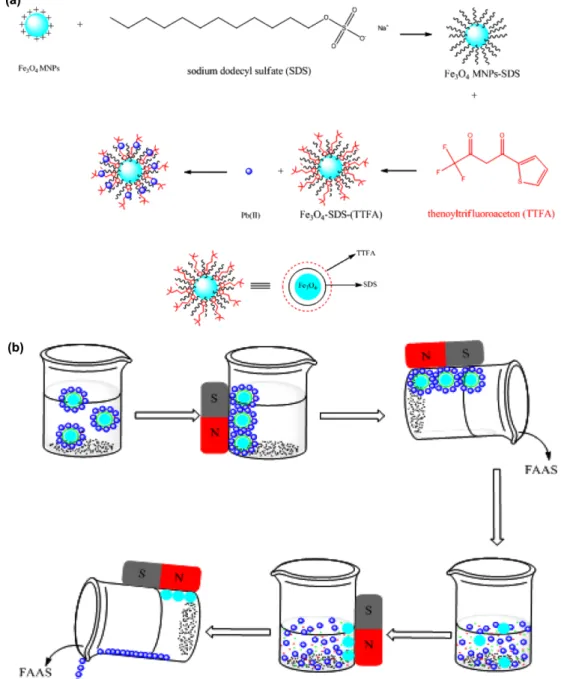
Fig. 1. (a) A schematic illustration of the Fe3O4 NPs modification with SDS and TTFA groups, and adsorption of Pb(II) ions, (b) application of Fe3O4 NPs-SDS-TTFA for separation and preconcentration of Pb(II) ions in water samples based on MSPE.
cess. The charged magnetite NPs was separated from solution by magnet and washed three times with distillated water. Then, 0.09 g of sodium dodecyl sulfate (SDS) in addition of 100 mL distillated water was introduced to 1g above-mentioned charged Fe3O4 NPs.
The suspension remained at optimized pH:5 by adding HNO3 (1 mol L-1) and stirred for 15 min in ultrasonic bath. In the next step, 400 µL of thenoyltrifluoroacetone (TTFA) 0.01 mol L-1 was added to the above suspension and pH value remained at 8 utilizing NaOH 1 mol L-1 with stirring for 15 min. Finally, the coated Fe3O4 NPs-SDS- TTFA was isolated by a strong magnet and the supernatant was poured away. The precipitate was washed with high purity deion- ized water then dried at 70°C in an autoclave for 2 h and saved in a desiccator.
2-5. MSPE procedure
The adsorption procedure was accomplished in a 250 mL beaker containing 400 μg L-1 of Pb(II) ions. The pH of solution was adjusted to 6 via addition of 1 mol L−1 of NaOH and 1 mol L-1 of HNO3. 0.1 g of Fe3O4 NPs-SDS-TTFA was added to the container containing 400 µg L-1 of analyte solution and the mixture was shaken for 5 min to facilitate the adsorption of Pb(II) ions on the Fe3O4 NPs. Then, the Fe3O4 NPs-SDS-TTFA was separated from supernatant solution via Nd-Fe-B strong magnet. 1 mL of HNO3 1 mol L-1 used as eluent to recover Pb(II) ions from the precipitate. The mixture of nano adsor- bents and eluent acid was shaken for 5 min and the Fe3O4 NPs of Fe3O4 NPs-SDS-TTFA were again separated by Nd-Fe-B strong magnet and the eluent was injected to the FAAS to measure the con- centration of desorbed Pb(II). Afterwards, the variations related to Pb(II) ions concentration in the solution and the value of adsorbed Pb(II) ions were measured and determined via FAAS analysis and monitored with certain standard solutions of Pb. Also, a blank (not containing the targeted Pb2+ ion) sample was applied and treated by synthesized Fe3O4 NPs-SDS-TTFA for each stage of experiments with similar conditions used for the other test solutions. The follow- ing equation was also utilized to calculate the extraction percentage of extracted Pb(II) ions (2):
Extraction Percentage (E%) = (2)
where Ci and Cf refer to the Pb(II) ions concentration before and after extraction process, respectively. Schematic illustration of the modification procedure of Fe3O4 NPs with sodium dodecyl sulfate (SDS) and thenoyltrifluoroacetone (TTFA) groups and subsequent adsorption of Pb(II) ions is shown in Fig. 1.
2-6. Preparation of real world water samples
Different water samples, including drinking water, seawater, river water, spring water, well water, mineral water, steam water, and waste water, all gathered from various regions of Iran (indicated in Table 3) were prepared by filtration and pH adjused to 6 to perform the extraction process. Plus, 1 mL of Pb(II) solution 100 µg mL was diluted up to 250 mL by the addition of those above noted water samples in 500 mL volumetric flasks for each case separately. The changes in the concentration of Pb(II) ions in the solution and also the adsorp- tion amounts of Pb(II) ions on the Fe3O4 NPs-SDS-TTFA were mea- sured by FAAS analysis and checked with known Pb(II) standard solutions.
3. Results and Discussion
3-1. SEM-EDAX
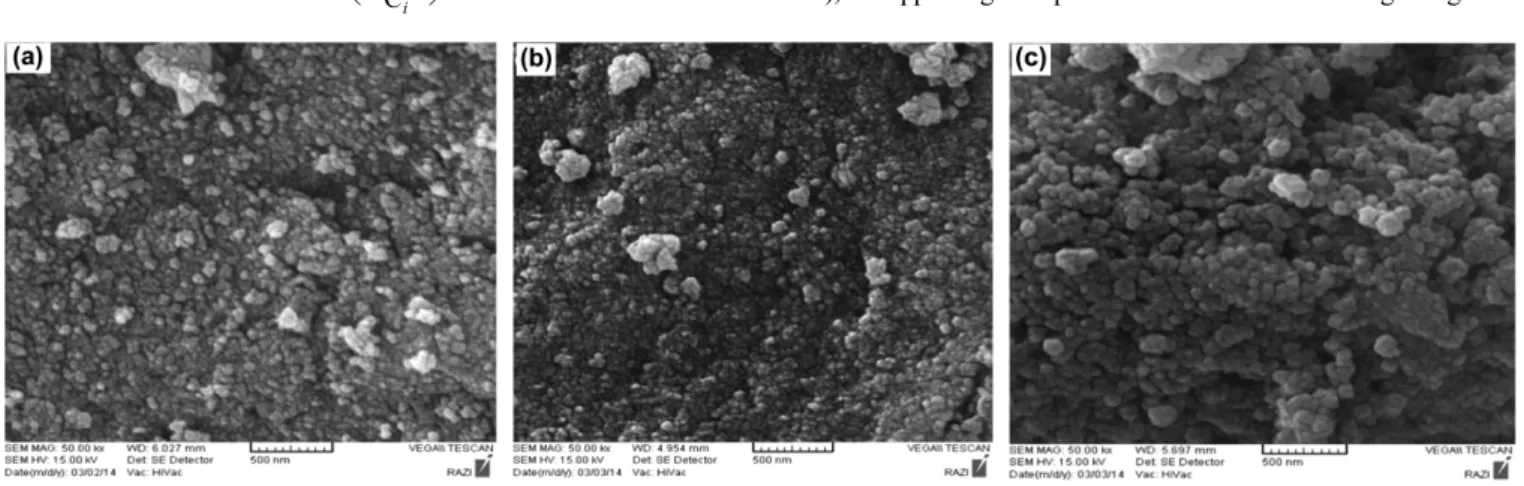
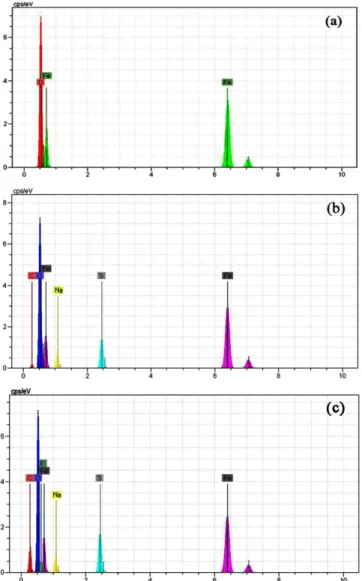
The size and morphology identification of the synthesized Fe3O4 NPs were investigated through magnification via scanning electron microscopy (SEM) as presented in Fig. 2. The SEM study shows the Fe3O4 NPs with homogeneous morphology, porous structure, approximately quasi-spherical shape and also unveils that the coating process with SDS-TTFA has no destructive effect on the morphol- ogy and crystallinity characteristics of synthesized Fe3O4 NPs. The SEM images of (a) and (b) in Fig. 2 depicts the Fe3O4 NPs and Fe3O4 NPs-SDS-TTFA, respectively. Moreover, the average crystalline sizes of synthesized Fe3O4 NPs indicated their nanometric dimen- sions (less than 100 nm). Fig. 3 gives the composition elements pres- ent in the synthesized Fe3O4 NPs samples that were investigated by Energy dispersive micro-analysis (EDAX) analysis. In the EDAX spectra, the appeared peaks of oxygen (O) and iron (Fe) are corre- sponded to the Fe3O4 NPs. On the other hand, in the spectrum (Fig.
3b), the appearing four peaks are related to the binding energies of Ci–Cf
Ci ---
⎝ ⎠
⎛ ⎞ 100×
Fig. 2. SEM images of (a) Fe3O4 NPs, (b) Fe3O4 NPs-SDS and (c) Fe3O4 NPs-SDS-TTFA.
sulfur (S), sodium (Na), Fluor (F) and carbon (C) which reveal the presence of SDS and TTFA in the synthesized adsorbent.
3-2. XRD
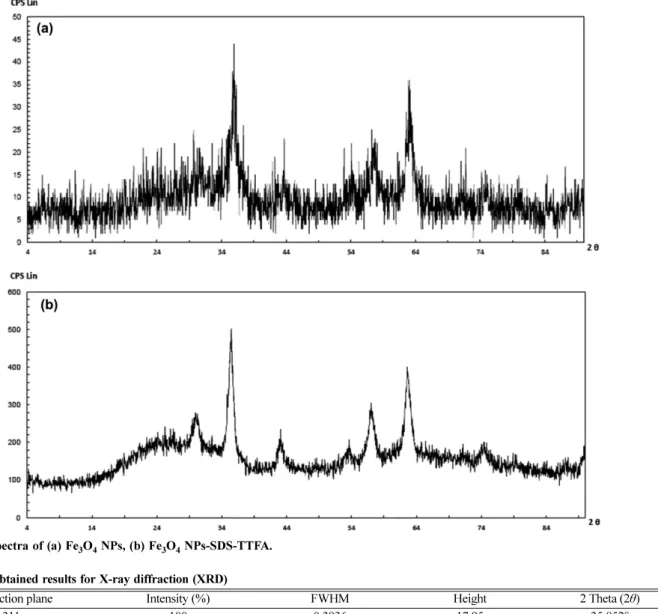
To elucidate the crystalline structure and phase purity of synthe- sized Fe3O4 NPs samples, the X-ray diffraction (XRD) was exerted as described in Fig. 4. Besides, the peaks related to Fe3O4 NPs observed at scattering angles (2θ) of 30.440°, 35.852°, 42.995°, 54.369°, 63.225°, 71.350° and 79.210° corresponding to diffraction planes of (220), (311), (222), (400), (422), (622) and (444), respectively, with refer- ence code (ICSD card#86-2267). No characteristic peaks referring to the existence of impurities occurred in the pattern during synthe- sis process. There is a certain line broadening of the scattering patterns in Figs. 4(a) and 4(b), which is a sensible proof for the syn- thesized Fe3O4 NPs and Fe3O4 NPs-SDS-TTFA particles to be in nano range. Furthermore, the size of the prepared Fe3O4 NPs and Fe3O4 NPs-SDS-TTFA were surveyed via XRD measurement and line broadening of the peak at 2θ=4°−90° by Debye-Scherrer equa- tion (3) [16]:
(3) where d represents the crystalline size, λ is the wavelength of X- ray source, β is the full width at half maximum (FWHM) and θ is Bragg diffraction angle. According to this equation, the average crystalline size in diffraction plane of (311) for the Fe3O4 NPs and Fe3O4 NPs-SDS-TTFA were calculated about 21.2 nm and 35.3 nm, respectively and obtained data are given in Table 1. The crystalline sizes obtained from XRD measurement are consistent with those of the SEM study.
3-3. VSM
The magnetic specifications of bare Fe3O4 NPs, Fe3O4 NPs-SDS and Fe3O4 NPs-SDS-TTFA were illustrated and compared via vibrat- ing sample magnetometer (VSM) magnetization curves at room temperature and represented in Fig. 5. The characteristic feature of super paramagnetism or ferromagnetism can be clearly explained and distinguished via VSM curves. Besides, the maximum magnetic strength under the term-saturation magnetization could be derived that its magnitude determines the power of the utilized magnet. The three curves show a similar shape and symmetry about the origin.
Two naked and functionalized Fe3O4 NPs exhibit typical superpara- magnetic behavior since no hysteresis or remanence is observed. The saturation magnetization of naked Fe3O4 NPs was 50 emu g-1 (Fig.
5a), while as predicted Fe3O4 NPs-SDS (Fig. 5b) and Fe3O4 NPs- SDS-TTFA (Fig. 5c) groups over nanoparticles declined the quantity to 45 and 40 emu g-1, respectively. However, the noted variation was not significant and the superparamagnetic characteristic of the syn- thesized nano adsorbent was sufficient for MSPE with a conven- tional magnet.
3-4. The optimization of extraction process parameters The extraction procedure is highly dependent on different factors which affect the process and should be optimized to reach the best level for a high yield extraction/recovery. In the present research, the affected parameters included pH for various steps, amount of sor- bent, amount of surfactant, volume/concentration of ligand, charac- teristics of eluent and contact time were surveyed and discussed.
Note that a concentration of 400 µg L-1 of Pb(II) was considered for all optimization steps.
3-5. Effect of pH
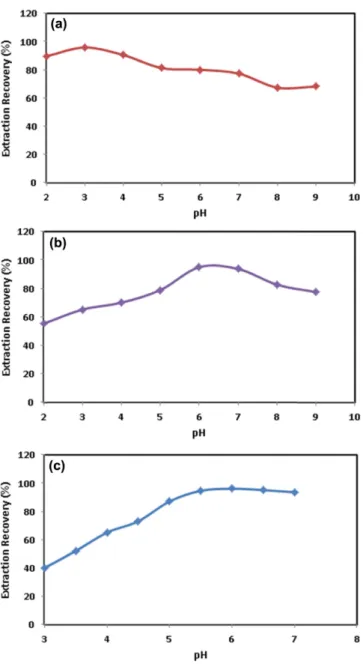
The optimization of pH in the sample solution was one of the most noticeable parameters which directly affect the extraction efficiency and adsorption capacity of Fe3O4 NPs-SDS-TTFA. The acidity of sample solution has two notable effects on metal sorption. First, pro- tons in acid solution can protonate binding sites of the chelating mol- ecules. Second, hydroxide in basic solution may complex and precipitate many metals. Therefore, pH of a solution is the first parameter to be optimized [48]. In this work, the optimization of pH was investigated upon three steps: (a) SDS addition, (b) TTFA addition and eventually
d 0.94λ βcosθ ---
=
Fig. 3. EDAX spectra of (a) Fe3O4 NPs, (b) Fe3O4 NPs-SDS and (c) Fe3O4 NPs-SDS-TTFA.
(c) MSPE process. As illustrated in Fig. 6, the adsorption/extraction of Pb(II) ions was surveyed at pH ranges of 2∼9 for steps a and b and 3∼7 for step c. As referred to before, the metal chemistry in the solu- tion and ionization state of coating agents, which results in the avail- ability of adsorption active sites, thoroughly depend on pH. The Pb (II) retention that progressively decreased at low pH ranges pertains to the intense interaction of H+ ions with the adsorptive active sites of Fe3O4 NPs-SDS-TTFA than that of Pb(II) ions. The protonation of SDS and TTFA in highly acidic solutions decreases the available ionized groups and has reverse feedback on the adsorption proce- dure. Furthermore, at high pH ranges, the concentration of negative charge density on the adsorbent surface leads to a decrease in the SDS adsorption, which along with the emerging of lead hydroxide (due to excess of OH ions in basic media) causes a reduction in Pb (II) adsorption procedure. Therefore, to achieve the best selectivity and high yield extraction, pHs of 3, 6 were considered for surface
modification of adsorbent by the SDS and TTFA, respectively, and also the pH of 6 was selected for extraction process of Pb(II) via Fe3O4 NPs-SDS-TTFA.
3-6. Effect of SDS and adsorbent amounts
The selection of appropriate amounts of modifying agents has an influential effect on the entire extraction and recovery process and must not be overlooked. Fe3O4 NPs tolerate particular values of modification agents. The over-loading by modifying agents might be cause of their disruption from the surface of the nano adsorbent into the media and eventually formation of lead complexes within sam- ple solution instead of Fe3O4 NPs surfaces. On the other hand, due the amphiphilic characteristics induced by both head and tail parts of the organosulfate, SDS represents a micellar behavior in aqueous media depending on its critical micelle concentration (CMC, 8×10⁻³ mol L-1). Above CMC the surface tension remains relatively con- Fig. 4. XRD spectra of (a) Fe3O4 NPs, (b) Fe3O4 NPs-SDS-TTFA.
Table 1. The obtained results for X-ray diffraction (XRD)
Diffraction plane Intensity (%) FWHM Height 2 Theta (2θ)
311 100 0.3936 17.95 35.852°
222 16.97 0.7872 3.95 42.995°
400 53.35 0.6298 9.57 54.369°
422 84.10 0.5760 15.09 63.225°
stant. Thus, SDS forms micelles and would not adsorbed on the sur- face of Fe3O4 NPs as expected. As depicted in Fig. 7, with increasing the amount of SDS, extraction percentage of Pb(II) was enhanced and nailed to a maximum. When the SDS amount approached 0.09 g in 100 mL (0.0031 mol L-1) of deionized water, a decreasing trend occurred. Thereupon, 0.09 g of SDS was selected for further experi- ments.
Also, the amount of adsorbent was studied as depicted in Fig. 8, where it can be obviously observed that the extraction recoveries gradually decreased as the Fe3O4 NPs mass increased. This could be
explained by the fact that with sufficiently high surface area and low diffusional resistance of nanoparticles, less amount of adsorbent would provide satisfactory results in extraction efficiency. On the other hand, the higher the amount of nanoparticles, the weaker the capability of eluent to recover all Pb(II) ions from adsorptive sites.
Hence, the mass range of 10∼300 mg of adsorbent was investigated to select the most significant amount. Thus, 100 mg was selected as the suitable mass for Fe3O4 NPs-SDS-TTFA to perform the pre- mentioned high yield extraction.
3-7. Effect of ligand and eluent various characteristics (volume, concentration and type) on the extraction process
The effects of the volume and concentration of TTFA on the extraction/recovery of Pb(II) from samples solutions are of great Fig. 5. VSM magnetization curves of (a) Fe3O4 NPs, (b) Fe3O4 NPs-
SDS and (c) Fe3O4 NPs-SDS-TTFA.
Fig. 6. Effect of pH of (a) SDS, (b) TTFA and (c) Fe3O4 NPs-SDS-TTFA on the extraction efficiency Pb(II) ions using the proposed MSPE procedure.
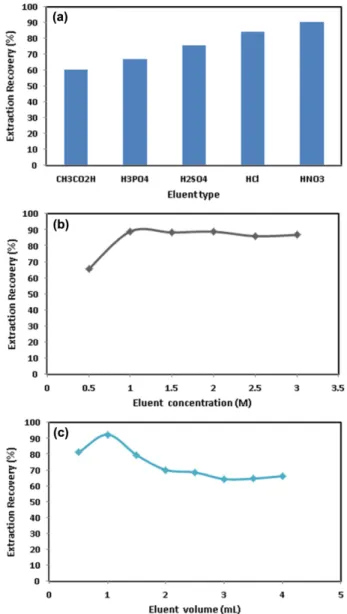
importance and were evaluated in the scope of 0.1~0.6 mL and 0.001~0.02 mol L-1 respectively. The extraction recovery increases up to 0.4 mL of TTFA 0.01 mol L-1 and remains constant for subse- quent values. Therefore, 0.4 mL of TTFA 0.01 mol L-1 was consid- ered as an optimized value as depicted in Fig. 9. As, the optimization of adsorption process has a key role in extraction experiments, desorption study and selection of the most appropriate eluent is also a substantial factor and can increase the recovery percentage of desired analyte. The type, concentration and least-amount of the elu- ent was surveyed to establish conditions for significant desorption of
Pb(II) ions from Fe3O4 NPs-SDS-TTFA. Various eluents such as HCl, HNO3, H2SO4 H3PO4, and CH3CO2H at different concentrations and volumes were examined and the results have been represented in Fig. 10. It should be seriously noted that desorption acid must not decompose the Fe3O4 NPs. From this aspect, concentrations and vol- umes higher than 3 mol L-1 and 3.5 mL were observed to have reverse effects on Fe3O4 NPs. On the other hand, the less volume of eluent acid for desorption will lead to higher enrichment factor. Thus, 1 mL of HNO3 1 mol L-1 was recognized as optimized volume of eluent which is highly effective for quantitative recovery of adsorbed Pb(II) ions and excrete them from Fe3O4 NPs-SDS-TTFA.
3-8. Effect of contact time and co-existing ions
Many researches tend to develop less time consuming analytical procedures which lead them to the results in shorter period of time, and this point is interpreted as an advantage for a proposed method.
Applying Fe3O4 NPs as sorbent for analytical experiments such as Fig. 7. Effect of amount of SDS on the extraction efficiency of Pb(II)
ions using the proposed MSPE procedure.
Fig. 8. Effect of amount of Fe3O4 NPs-SDS-TTFA on the extraction efficiency of Pb(II) ions using the proposed MSPE procedure.
Fig. 9. Effect of volume and concentration of ligand on the extraction efficiency of Pb(II) ions using the proposed MSPE procedure.
Fig. 10. Effect of (a) type, (b) concentration and (c) volume of eluent (HNO3) on the desorption characteristics of Pb(II) ions from Fe3O4 NPs-SDS-TTFA using the proposed MSPE procedure.
extraction methods has beneficial advantages, for instance, lack of internal resistance, high surface to volume ratio, shorter diffusion route and the ease of separation procedure via MSPE proposed for less time even for larger volumes of samples. The extraction time was investigated in the time range of 1~15 min, and according to FAAS analysis, the extraction recovery first increased up to 5 min and then maintained constant (Fig. 11). Thereupon, to attain a shorter analysis time, 5 min was considered as optimum value.
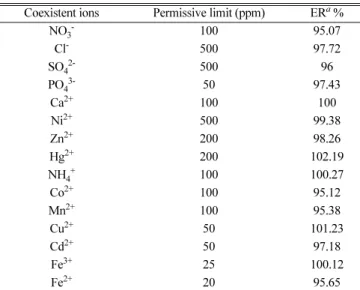
Matrix-like environmental water samples are likely to contain a wide range of anions and cations as constituents that may react with modifying chemical agents and induce interference via reduction of the adsorption efficiency of the target analyte. To survey this effect, solutions (250 mL) containing 1 mg L-1 of Pb(II) ions with different amounts of coexisting ions were prepared and extracted according to the procedure described in the experimental section. Interference
was interpreted as the deviation of ±5% from the recovery of the standard solution. The results depicted in the Table 2 refer to good selectivity of the presented procedure toward Pb(II) ions.
3-9. Effect of sample solutions volume
To investigate the volume of sample solutions on the adsorption and recovery processes, different volumes of high purified water samples in the range of 50~1000 mL, containing 400 μg L-1 of Pb(II) prepared and the adsorption procedure performed using 0.1 g of pre- synthesized Fe3O4 NPs-SDS-TTFA under optimized conditions for each sample. After the desorption of absorbed Pb(II) ions from men- tioned nano adsorbent via 1 mL of HNO3 1 mol L-1, the sample was subjected to FAAS instrument. Based on experimental observations, it can be inferred that in the volumes less than 250 mL no sensible changes on adsorption/recovery value occurred. Furthermore, increas- ing the volume above the 250 mL shows a clear decrease in extraction recovery. Thereupon, the sample volume of 250 mL was selected as optimized amount.
3-10. Analytical Figure of merit and analytical application- validation
The linear calibration range for the extraction of Pb(II) ions under optimized experimental conditions was gained between 10 to 400 μgL-1 (R2=0.9981) for 250 mL of solution. The limit of detection (LOD) of the extraction procedure for subsequent lead analysis was deter- mined as 2.3 μg L-1 using LOD=3(σ) blank/m, where σ is the standard deviation of seven replicate measurements of blank solution and m is the slope of the calibration curve. The precision and repeatability of the proposed method was assigned via six adsorption/elution cycles within 250 mL sample solution containing 20 μg of Pb(II). The recovery percentage of lead as a function of sample volume was quantitative and calculated at >95%. A relative standard deviation (RSD) of 1.9% was achieved for a concentration of 20 μg L-1. Further, an enrichment factor of 250 was attained using 250 mL sample vol- ume and 1 mL eluent. The characteristics corresponding to the ana- lytical results are summarized in Table 3.
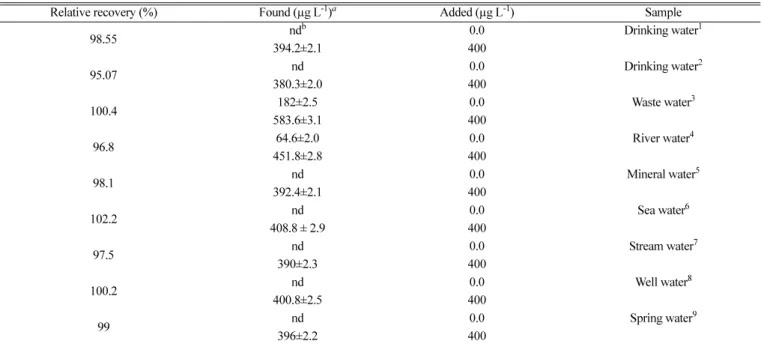
The validity and applicability of the present proposed MSPE pro- cedure were distinguished through real-world sample analysis. Table 4 represents the mean values (n=3) of founded amounts of Pb(II) ions and mean recoveries of certain values of spiked Pb (II) ions from var- ious water samples previously adjusted pH and subjected to recom- mended optimizations with external calibration method. Eventually, the proposed method has been compared with the other similar methods applied for Pb (II) extraction and the results that are exhib- ited in Table 5 clarify the applicability of the present method for extraction of Pb (II) ions from different aqueous media.
Fig. 11. Effect of contact time on the extraction efficiency of Pb(II) ions using the proposed MSPE procedure.
Table 2. Effect of different co-existent on Pb(II) extraction Coexistent ions Permissive limit (ppm) ERa %
NO3- 100 95.07
Cl- 500 97.72
SO42- 500 96
PO43- 50 97.43
Ca2+ 100 100
Ni2+ 500 99.38
Zn2+ 200 98.26
Hg2+ 200 102.19
NH4+ 100 100.27
Co2+ 100 95.12
Mn2+ 100 95.38
Cu2+ 50 101.23
Cd2+ 50 97.18
Fe3+ 25 100.12
Fe2+ 20 95.65
aExtraction recovery
Table 3. Figures of merit of the presented method for the extraction procedure of Pb(II) ions
DLRa (μg L-1) R2 LOD (μg L-1) RSD% (n = 6, C = 20 μg L-1) EFb Calibration equation
10~400 0.9981 2.3 1.9 250 y = 0.5805x + 0.0224
aDynamic linear range
bEnrichment factor
Conclusions
MSPE method based on magnetite nanoparticles (Fe3O4 NPs) was successfully employed for sufficient and fast lead adsorption through complexation of Pb(II) ions by SDS-TTFA coating/modifying groups under pre-optimized conditions. Different techniques, including SEM- EDAX, XRD and VSM, were applied for the identification and char- acterization of synthesized nano adsorbent, and the extraction pro- cess followed by FAAS analysis. The high surface area of nanoparticles and rapid magnetic separation led to high extraction capacity and enrichment factor. The recoveries of Pb(II) ions were almost quanti- tative (>95%). Also, the represented method is simple and proposes for sensitivity and time saving adsorption for large volumes of sam- ple solutions. The synthesized adsorbent was utilized for effective removal of Pb(II) ions from different natural and industrial water media. According to obtained results, Fe3O4 NPs-SDS-TTFA is suf-
ficiently suitable for extraction processes of Pb(II) ions from various aqueous media.
Acknowledgments
The authors are sincerely thankful to the Department of Chemistry of Islamic Azad University, Ahvaz branch and Department of Chem- istry of Islamic Azad University, Qaemshahr branch, Iran for all their supports provided.
References
1. Ansell, R. J. and Mosbach, K., “Magnetic Molecularly Imprinted Polymer Beads for Drug Radioligand Binding Assay,” Analyst., 123(1), 1611-1616(1998).
2. Jeon, C., Park, J. Y. and Yoo, Y. J., “Removal of Heavy Metals in Plating Wastewater Using Carboxylated Alginic Acid,” Korean Table 4. Data for the determination of Pb(II) ions in different water samples
Relative recovery (%) Found (µg L-1)a Added (µg L-1) Sample
98.55 ndb 0.0 Drinking water1
394.2±2.1 400
95.07 nd 0.0 Drinking water2
380.3±2.0 400
100.4 182±2.5 0.0 Waste water3
583.6±3.1 400
96.8 64.6±2.0 0.0 River water4
451.8±2.8 400
98.1 nd 0.0 Mineral water5
392.4±2.1 400
102.2 nd 0.0 Sea water6
408.8 ± 2.9 400
97.5 nd 0.0 Stream water7
390±2.3 400
100.2 nd 0.0 Well water8
400.8±2.5 400
99 nd 0.0 Spring water9
396±2.2 400
aRSD% of three replicate experiments (n=3), bNot detected, 1Tehran city, 2,7,8,9Andimeshk city, 3,4Dezful city, 5kouhrang mineral water, 6Caspian sea
Table 5. Comparison of the proposed method with some methods reported in the literature for extraction and determination of Pb(II) ions
Adsorbent Method EF LOD (μg L-1) RSD% References
Teewn 80 FAAS 10 7.2 - [49]
2-pyridyliminosalicylcellulose FAAS - 0.0038 2.52-3.50 [50]
Triketone/ethyle2-(4-methoxybenzoyl)-3-(4-methoxyphenyl)-3-oxo-propanoylcarbamat (EMPC)
FAAS 40 0.3~0.7 ≤4 [51]
Nano polyacrylonitril modified ethylendiamins FAAS 200 0.167 0.81 [52]
1-(2-pyridylazo)-2-naphthole FAAS 50 1.3 5 [53]
Z-furan-2-carbaldehyde thiosemicarbazone/alumina FAAS 100 0.0055 - [54]
Cellulose nitrate FAAS 60 0.02~7.8 <10 [55]
Solid sulfur FAAS 250 3.2 5.1 [35]
Methylthiosalicylate-silica gel ICP-AES 41.0 15.3 0.9 [56]
poly(aminophosphonic acid) FAAS 14.0 6.3 2.1 [57]
Multiwall carbon nanotubes FAAS 44.2 2.6 1.4 [3]
3-(trimethoxysilyl)-1-propanethiol-ethylene glycol bis-mercaptoacetate-Fe3O4NPs ICP-OES 236 0.08 4.0 [58]
Fe3O4 NPs-SDS-TTFA FAAS 250 2.3 1.9 This work
J. Chem. Eng., 18(6), 955-960(2001).
3. Shao, W., Chen, L., Lu, L. and Luo, F., “Removal of Lead (II) from Aqueous Solution by a New Biosorption Material By Immobiliz- ing Cyanex272 in Cornstalks,” Desalination., 265(1-3), 177-183 (2011).
4. Rahman, I., Furusho, Y., Begum, Z. A., Izatt, N., Bruening, R., Sabarudin, A. and Hasegawa, H., “Separation of Lead from High Matrix Electroless Nickel Plating Waste Solution Using an Ion- Selective Immobilized Macrocycle,” Microchem. J., 98(1), 103- 108(2011).
5. Baytak, S. and Turker, A. R., “Determination of Lead and Nickel in Environmental Samples by Flame Atomic Absorption Spectrome- try after Column Solid-Phase Extraction on Ambersorb-572 with EDTA,” J. Hazard. Mater., 129(1-3), 130-136(2006).
6. Wang, Z. Y., Su, Y. D. and Li, S., “A Flow Injection On-Line Unequal Flow Complexation Preconcentration Procedure Cou- pled with Flame Atomic Absorption Spectrometry for Determina- tion of Lead in Tap Water,” Spectrosc. Spect. Anal., 28(11), 2695- 2698(2008).
7. Tavallali1, H., Asrari, E., Attaran, A. and Tabandeh, M., “Sensitive Determination of Lead in Soil and Water Samples by Cloud Point Extraction-Flame Atomic Absorption Spectrometry Method,” Int.
J. Chem. Tech. Res., 2(3), 1731-1737(2010).
8. Panda, L., Das, B. and Srinivas Rao, D., “Studies on Removal of Lead Ions from Aqueous Solutions Using Iron Ore Slimes as Adsorbent,” Korean J. Chem. Eng., 28(10), 2024-2032(2011).
9. Mahmoud, M. E., Yakout, A. A., A. Abdel, H. and Osman, M. M.,
“High Performance SiO2-Nanoparticles-Immobilized-Penicillium Funiculosum for Bioaccumulation and Solid Phase Extraction of Lead,” Bioresour. Technol., 106(1), 125-132(2012).
10. Bouranene, S., Fievet, P., Szymczyk, A., Hadi, S. M. and Vidonne, A., “Influence of Operating Conditions on the Rejection of Cobalt and Lead Ions in Aqueous Solutions by a Nanofiltration Polyamide Membrane,” J. Membr. Sci., 325(1), 150-157(2008).
11. Ghaedi, M., Shokrollahi, A., Niknam, K., Niknam, E., Najibi, A.
and Soylak, M., “Cloud Point Extraction and Flame Atomic Absorption Spectrometric Determination of Cadmium(II), Lead(II), Palladium(II) and Silver(I) in Environmental Samples,” J. Haz- ard. Mater., 168(2-3), 1022-1027(2009).
12. Citak, D. and Tuzen, M., “A Novel Preconcentration Procedure Using Cloud Point Extraction for Determination of Lead, Cobalt and Copper in Water and Food Samples Using Flame Atomic Absorption Spectrometry,” Food. Chem. Toxicol., 48(5), 1399- 1404(2010).
13. Comitre, A. L. D. and Reis, B. F., “Automatic Flow Procedure Based on Multicommutation Exploiting Liquid-Liquid Extraction for Spectrophotometric Lead Determination in Plant Material,”
Talanta., 65(4), 846-852(2005).
14. Liang, P. and Sang, H., Determination of Trace Lead in Biolog- ical and Water Samples with Dispersive Liquid-Liquid Microex- traction Preconcentration,” Anal. Biochem., 380(1), 21-25(2008).
15. Rivas, R. E., Lopez, G. I. and Hernandez, C. M., “Determination of Traces of Lead and Cadmium Using Dispersive Liquid-Liquid Microextraction Followed by Electrothermal Atomic Absorption Spectrometry,” Microchim. Acta., 166(3), 355-361(2009).
16. Zhang, L., Chang, X., Li, Z. and He, Q., “Selective Solid-Phase Extraction Using Oxidized Activated Carbon Modified with Tri-
ethylenetetramine for Preconcentration of Metal Ions,” J. Mol.
Struct., 964(1-3), 58-62(2010).
17. Bai, H., Zhou, Q., Xie, G. and Xiao, J., “Temperature-Controlled Ionic Liquid–Liquid-Phase Microextraction for the Pre-Concentra- tion of Lead from Environmental Samples Prior to Flame Atomic Absorption Spectrometry,” Talanta., 80(5), 1638-1642(2010).
18. Baysal, A., Kahraman, M. and Akman, S., “The Solid Phase Extraction of Lead Using Silver Nanoparticles - Attached to Silica Gel Prior to its Determination by FAAS,” Curr. Anal. Chem., 5(4), 352-357(2009).
19. Parham, H., Pourreza, N. and Rahbar, N., “Solid Phase Extraction of Lead and Cadmium Using Solid Sulfur as a New Metal Extractor Prior to Determination by Flame Atomic Absorption Spectrom- etry,” J. Hazard. Mater., 163(2-3), 588-592(2009).
20. Qiu, G., Wang, Q., Wang, C., Lau, W. and Guo, Y., “Polystyrene/
Fe3O4 Magnetic Emulsion and Nanocomposite Prepared by Ultrasonically Initiated Miniemulsion Polymerization,” Ultra- son. Sonochem., 14(1), 55-61(2007).
21. Bhaumik, M., Maity, A., Srinivasu, V. V. and Onyango, M. S.,
“Enhanced Removal of Cr(VI) from Aqueous Solution Using Polypyrrole/Fe3O4 Magnetic Nanocomposite,” J. Hazard. Mater., 190(1-3), 381-390(2011).
22. Tataru, G., Popa, M. and Desbrieres, J., “Magnetic Microparticles Based on Natural Polymers,” Int. J. Pharm., 404(1-2), 83-93(2011).
23. Kalfa, O. M., Yalcinkaya, O. and Turker, A. R., “Synthesis of Nano B2O3/TiO2 Composite Material as a New Solid Phase Extractor and Its Application to Preconcentration and Separation of Cad- mium,” J. Hazard. Mater., 166(1), 455-461(2009).
24. Singh, S., Barick, K.C. and Bahadur, D., “Surface Engineered Magnetic Nanoparticles for Removal of Toxic Metal Ions and Bacterial Pathogens,” J. Hazard. Mater., 192(3), 1539-1547(2011).
25. Izatt, R. M., Bradshaw, J. S. and Bruening R. L., “Nondestructive Separation of Metal Ions from Wastewater Containing Excess Aminopolycarboxylate Chelant in Solution with an Ion-Selec- tive Immobilized Macrocyclic,” Pure. Appl. Chem., 68(1), 1237- 1242(1996).
26. Suh, Y. J., Do, T. M., Kil, D. S., Jang, H. D. and Cho, K., “Produc- tion of High-purity Magnetite Nanoparticles from a Low-grade Iron Ore via Solvent Extraction,” Korean Chem. Eng. Res., 53(1), 39- 45(2015).
27. Akama, Y., Ito, M. and Tanaka, S., “Selective Separation of Cad- mium from Cobalt, Zn, Iron (III) and Zinc by Water-Based Two- Phase System of Tetrabutylammonium Bromide,” Talanta., 53(3), 645-650(2000).
28. Khajeh, M., Laurent, S. and Dastafkan, K., “Nanoadsorbents:
Classification, Preparation, and Applications (with Emphasis on Aqueous Media),” Chem. Rev., 113(10), 7728-7768(2013).
29. Acar, H. Y. C., Garaas, R. S., Syud, F., Bonitatebus, P. and Kulkarni, A. M., “Superparamagnetic Nanoparticles Stabilized by Polym- erized PEGylated Coatings,” J. Magn. Magn. Mater., 293(1), 1-7 (2005).
30. Jeng, H. T. and Guo, G. Y., “First-Principles Investigations of the Electronic Structure and Magnetocrystalline Anisotropy in Strained Magnetite Fe3O4,” Phys. Rev B., 65(9), 094429-1-9(2002).
31. Tartaj, P., del Puerto, M. M., Veintemillas-Verdaguer, S., Gonza- lez-Carreno, T. and Serna, C., “The Preparation of Magnetic Nanopar- ticles for Applications in Biomedicine,” J. Phys D Appl. Phys.,
36(13), 182(2003).
32. Cornell, R. M. and Schwertmann, U., Iron oxides: Structure, Proper- ties, Reactions, Occurrence, and Uses, 2nd ed.,Wiley-VCH, Wein- heim(2003).
33. Muller, R., Dutz, S., Habisreuther, T. and Zeisberger, M., “Inves- tigations on Magnetic Particles Prepared by Cyclic Growth,” J.
Magn. Mater., 323(10), 1223-1227(2011).
34. Kassaee, M. Z., Motamedi, E. and Majidi, M. M., “Magnetic Fe3O4-Graphene Oxide/Polystyrene: Fabrication and Characteriza- tion of a Promising Nanocomposite,” Chem. Eng. J., 172(1), 540-549(2011).
35. Zhang, J., Zhai, S., Li, S., Xiao, Z., Song, Y., Qingda, A. and Tian, G., “Pb(II) Removal of Fe3O4@SiO2-NH2 Core-Shell Nanomateri- als Prepared via a Controllable Sol-Gel Process,” Chem. Eng. J., 215-216(1), 461-471(2013).
36. Sun, Z. X., Su, F. W., Forsling, W. and Samskog, P. O., “Surface Characteristics of Magnetite in Aqueous Suspension,” J. Colloid.
Interface. Sci., 197(1), 151-159(1998).
37. Tan, Y., Chen, M. and Hao, Y., “High Efficient Removal of Pb (II) by Amino-Functionalized Fe3O4 Magnetic Nano-Particles,”
Chem. Eng. J., 191(1), 104-111(2012).
38. Karimi, M. A., Hatefi-Mehrjardi, A., Mohammadi, S. Z., Mohadesi, A., Mazloum-Ardakani, M., Hormozi Nezhad, M. R. and Askarpour Kabir, A., “Solid Phase Extraction of Trace Amounts of Pb(II) in Opium, Heroin, Lipstick, Plants and Water Samples Using Modified Magnetite Nanoparticles Prior to Its Atomic Absorption Deter- mination,” J. Iran. Chem. Soc., 9(2), 171-181(2012).
39. Mashhadizadeh, M. H., Amoli-Diva, M., Shapouri, M. R. and Afruzi, H., “Solid Phase Extraction of Trace Amounts of Silver, Cadmium, Copper, Mercury, and Lead in Various Food Samples Based on Ethylene Glycol Bis-Mercaptoacetate Modified 3-(Tri- methoxysilyl)-1-Propanethiol Coated Fe3O4 Nanoparticles,” Food.
Chem., 151(1), 300-305(2014).
40. Buendia, S., Cabanas, G., Alvarez-Lucio, G., Montiel-Sanchez, H., Navarro-Clemente, M.E., Corea, M., “Preparation of Magnetic Polymer Particles with Nanoparticles of Fe(0),” J. Colloid. Inter- face. Sci., 354(1), 139-143(2011).
41. Tarley, C. R. T., Ferreira, S. L. C. and Arruda, M. A. Z., “Use of Modified Rice Husks as a Natural Solid Adsorbent of Trace Metals:
Characterisation and Development of an On-Line Preconcentration System for Cadmium and Lead Determination by FAAS,” Micro- chem. J., 77(2), 163-175(2004).
42. Patterson, A., “The Scherrer Formula for X-Ray Particle Size Determination,” Phys. Rev., 56(10), 978(1939).
43. Ngomsik, A. F., Bee, A., Siaugue, J. M., Talbot, D., Cabuil, V.
and Cote, G., “Co(II) Removal by Magnetic Alginate Beads Contain- ing Cyanex 272,” J. Hazard. Mater., 166(2-3), 1043-1049(2009).
44. Saracoglu, S. and Elçi, L., “Column Solid-Phase Extraction with Chromosorb-102 Resin and Determination of Trace Elements in Water and Sediment Samples by Flame Atomic Absorption Spec- trometry,” Anal. Chim. Acta., 452(1), 77-83(2002).
45. Ferreira, S. L. C., lemos, V. A., Santelli, R. E., Ganzarolli, E.
and Curtius, A. J., “An Automated On-Line Flow System for the Pre-Concentration and Determination of Lead by Flame Atomic Absorption Spectrometry,” Microchem. J., 68(1), 41-46(2001).
46. Costa, A. C. S., Lopesa, L., Korn, M. G. A. and Portela, J. G.,
“Separation and Pre-Concentration of Cadmium, Copper, Lead, Nickel and Zinc by Solid-Liquid Extraction of Their Cocrystallized Naphthalene Dithizone Chelate in Saline Matrices,” J. Braz. Chem.
Soc., 13(5), 674-678(2002).
47. Ozmen, M., Can, K., Arslan, G., Tor, A., Cengeloglu, Y. and Ersoz, M., “Adsorption of Cu(II) from Aqueous Solution by Using Modi- fied Fe3O4 Magnetic Nanoparticles,” Desalination., 254(1-3), 162- 169(2010).
48. Zhu, X., Chang, X., Cui, Y., Zou, X., Yang, D. and Hu, Z., “Solid- Phase Extraction of Trace Cu(II) Fe(III) and Zn(II) with Silica Gel Modified with Curcumin from Biological and Natural Water Samples by ICP-OES,” Microchem. J., 86(2), 189-194(2007).
49. Candir, S., Narin, I. and Soylak, M., “Ligandless Cloud Point Extraction of Cr(III), Pb(II), Cu(II), Ni(II), Bi(III), and Cd(II) Ions in Environmental Samples with Tween 80 and Flame Atomic Absorption Spectrometric Determination,” Talanta., 77(1), 289- 293(2008).
50. Kumar Singh, B., Nandan Kumar, D. and Garg, B. S., “Solid Phase Extraction of Lead Using Modified Cellulose in Natural, Wastewater and Egg Samples,” Indian J. Chem. Technol., 12(4), 413-418(2005).
51. Saçmacı, Ş., Kartal, Ş. and Saçmacı, M., “Determination of Cr(III), Fe(III), Ni(II), Pb(II) and Zn(II) Ions by Faas in Environmental Samples After Separation and Preconcentration by Solvent Extraction Using a Triketone Reagent,” Fresen. Environ. Bull., 21(6a), 1563- 1570(2012).
52. Moghimi, A. and Hashemi-Moghaddam, H., “Extraction and Separation of Trace Amounts Lead (П) in Water Samples Using Nano Polyacrylonitril Modified Ethylendiamins,” J. Chem. Health Risks., 5(2), 105-115(2015).
53. Rahnama, R. and Ghadiri, R., “Separation and Preconcentration of Trace Amounts of Lead from Water Samples Using Solvent- Assisted Dispersive Solid Phase Extraction,” J. Braz. Chem., 26(8), 1642-1647(2015).
54. Moghimi, A., Ghiasi, R. and Behrouzinia, S., “Extraction Pb(II) by (Z)-Furan-2-Carbaldehyde Thiosemicarbazone Adsorbed on Surfactant Coated Alumina Before Determination by FAAS,”
IJFPS., 1(4), 74-78(2011).
55. Divrikli, U., Kartal, A. A., Soylak, M. and Elci, L., “Preconcen- tration of Pb(II), Cr(III), Cu(II), Ni(II) and Cd(II) Ions in Envi- ronmental Samples by Membrane Filtration Prior to Their Flame Atomic Absorption Spectrometric Determinations,” J. Hazard.
Mater., 145(3), 459-464(2007).
56. Barbosa, A. F., Segatelli, M. G., Pereira, A. C., Santos, A. S., Kubota, L. T., Luccas, P. O. and Tarley, C. R., “Solid-Phase Extraction System for Pb (II) Ions Enrichment Based on Multiwall Carbon Nanotubes Coupled On-Line to Flame Atomic Absorption Spec- trometry,” Talanta., 71(4), 1512-1519(2007).
57. Venkatesh, G., Singh, A. K., Venkataramani, B., “Silica Gel Loaded with o-Dihydroxybenzene: Design, Metal Sorption Equilibrium Studies and Application to Metal Enrichment Prior to Determi- nation by Flame Atomic Absorption Spectrometry,” Microchim.
Acta., 144(4), 233-241(2004).
58. Mansour, S. F., “Structural and Magnetic Investigations of Sub- Nano Mn-Mg Ferrite Prepared by Wet Method,” J. Magn. Mater., 323(13), 1735-1740(2011).