Microbial community analysis of an eco-friendly recirculating
aquaculture system for olive flounder ( Paralichthys olivaceus) using complex microbial probiotics
Chaeyoung Rhee
1†, Haham Kim
2†, S. Aalfin Emmanuel
1, Hong-Gi Kim
3, Seonghun Won
2, Jinho Bae
2, Sungchul C. Bai
2*, and Sung-Cheol Koh
1*
1
Department of Environmental Engineering, Korea Maritime and Ocean University, Busan 49112, Republic of Korea
2
Department of Marine Bio-materials and Aquaculture/Feeds and Foods Nutrition Research Center, Pukyong National University, Busan 48513, Republic of Korea
3
Bayo, Inc., Jinju 52841, Republic of Korea
복합미생물 프로바이오틱을 이용한 환경친화적 넙치 순환여과양식시스템에서의 미생물군집 분석
이채영
1†・ 김하함
2†・ 알핀이마뉴엘
1・ 김홍기
3・ 원성훈
2・ 배진호
2・ 배승철
2* ・ 고성철
1*
1
한국해양대학교 환경공학과,
2국립부경대학교 해양바이오신소재학과/사료영양연구소,
3㈜바요
(Received November 16, 2018; Revised December 11, 2018; Accepted December 19, 2018)
†
These authors contributed equally to this work.
*For correspondence. (S.C. Koh) E-mail: [email protected];
Tel.: +82-51-410-4418; Fax: +82-51-410-4415/
(S.C. Bai) E-mail: [email protected];
Tel.: +82-51-629-7061; Fax: +82-51-629-7063
This study was conducted to evaluate effects of dietary microbial probiotics on the growth and disease resistance of olive flounder (Paralichthys olivaceus) in a recirculating aquaculture system (RAS), and the effects of the probiotic bioaugmentation on the microbial community structure and water quality. For the analysis, 80 juvenile fish (average weight, 25.7 ± 7.6 g; average length, 15.2 ± 1.7 cm) were fed a basal diet containing a com- mercial microbial product CES-AQ1 (CES; 1 × 10
9CFU/kg diet) in an RAS for 8 weeks. Weight gain, the specific growth rate, feed efficiency, and protein efficiency ratio of the fish fed the CES diet in the RAS were 1.5~2.5 times higher than those of fish fed the basal diet alone, or the basal diet containing oxytetracycline (OTC), yeast plus bacterium, or Bacillus subtilis in a still water system. There was no significant difference in the pathogen challenge test between fish fed the OTC diet and fish fed the CES diet in the RAS, suggesting the CES-AQ1 pro-
biotic used in the RAS as a potential replacement for antibiotics.
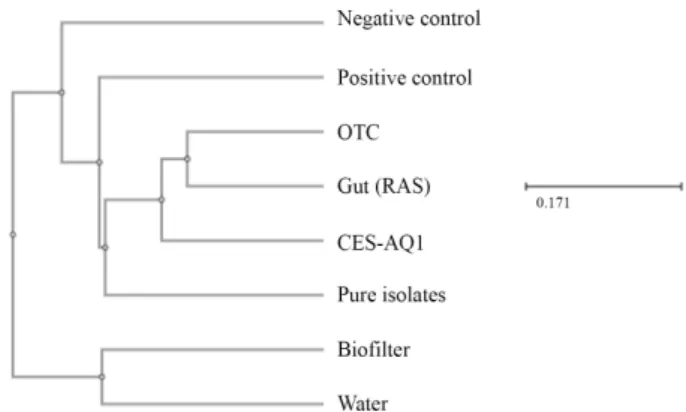
The RAS biofilter maintained the highest microbial diversity and appeared to harbor microbial communities with ammonium oxidation, denitrification, and fish pathogen suppression func- tions. Ammonia, which is hazardous to fish, was significantly decreased to < 0.5 mg/L in 19 days, indicating the effectiveness of probiotic supplementation to maintain good water quality in RAS. These results suggest that the intestinal microbial communities of fish are stabilized by a probiotic-containing diet (CES) and that bioaugmentation with probiotics may be an eco-friendly and economical supplement for aquaculture of olive flounder, promoting both good water quality and fish health in an RAS.
Keywords: disease resistance, microbial community, microbial consortium, olive flounder, probiotics, recirculating aquaculture system (RAS)
Because conventional catches have reached their maximum
capacity, the current demand for good seafood is high, and the
consumption trend is rising, the aquaculture industry has become one of the fastest growing animal production sectors in the world (Tacon and Metian, 2015; FAO, 2016; Awad and Awaad, 2017). The high demand for high-quality seafood in a short time period is a challenge for the global aquaculture industry.
Most large-scale aquaculture systems use excessive feed and antibiotics to increase fish yield and control disease outbreaks, which can significantly degrade water quality (Lin et al., 2017).
Therefore, on many such farms, more frequent water exchanges are necessary, and contaminated water is continuously released without proper treatment (Cho et al., 2013). Thus, intensive aquaculture systems can cause environmental problems and disease outbreaks (Ramirez and Romero, 2017).
In most East Asian countries, including Korea, Japan, and China, olive flounder (Paralichthys olivaceus) is one of the most important aquaculture species in terms of economy and food security (Cho et al., 2013). In Korea, olive flounder production in 2017 was 41,207 tons (KOSTAT, 2018), which is the highest production for all species produced by marine aquaculture.
Large-scale aquaculture has increased the production rate in a short period of time by increasing the density of the fish and over feeding, resulting in a variety of diseases due to stress and poor water quality (FAO, 2016). Antibiotics, which are effective for disease control, have been used extensively in aquaculture to reduce mortality, despite their adverse effects on the fish. The use of antibiotics in aquaculture has been shown to promote the emergence of fish pathogens and bacteria carrying antibiotic resistance genes (Lin et al., 2017). Furthermore, plasmids carrying antibiotic resistance genes can be transferred to bacteria of different genera that could threaten fish health (Jang et al., 2018).
Excessive feeding in high-density culture systems quickly reduces water quality, requiring more frequent water exchanges and consuming large amounts of water (Chambel et al., 2015;
Banerjee and Ray, 2017). Untreated aquaculture wastewater carrying feed, fish meal, feces, and antibiotic residues is released into the environment, and its impact on the ecosystem could be significant. Then, polluted water from the environment is likely to be reintroduced into most typical flow-through aquaculture systems, in a vicious cycle (Jang et al., 2018). As the demand for eco-friendly farming has increased, so has the use of pro- biotics to control pathogens as a sustainable alternative to anti-
biotics (Gatesoupe, 1999; Balcázar et al., 2006). Previous studies showed that the use of probiotics increases survival rates and improves the immune system of fish (Goncalves et al., 2017; Srisapoome and Areechon, 2017). Fish fed diets with probiotics showed better nutritional status and energy use than fish fed a control diet (Zhou et al., 2009; Yamashita et al., 2017). In addition, the recirculating aquaculture system (RAS) is an alternative system that should enable sustainable global seafood production (Midilli et al., 2012). In recent years, a variety of aquatic species, including marine species, have been cultivated by using small and large RAS (Buřič et al., 2016).
In this study, an RAS was used to test the possible appli- cation of probiotics for olive flounder culture to achieve higher diet efficiency and maintain good water quality. The microbial community was analyzed to understand the effects of dietary probiotics on growth and disease resistance in olive flounder and to address roles of probiotic bioaugmentation in an eco- friendly RAS.
Materials and Methods
Consortium culture
A commercial microbial consortium culture obtained from Bayo, Inc. (Jinju, South Korea) (CES-AQ1; KCTC13483BP, Korean Collection for Type Cultures, Korea Research Institute of Bioscience and Biotechnology, Daejeon, South Korea) was used for aquaculture. The microbial community structure of the consortium was analyzed by pyrosequencing of the 16S rRNA genes in the total DNA. Based on the NCBI BLAST analysis (National Center for Biotechnology Information, NIH) and a search of the EzbioCloud database (ChunLab, Inc.), the following bacteria were dominant in CES-AQ1: Gluconacetobacter (25.3%), Frateuria (24.7%), Dyella (12.7%), Asaia (11.1%), Novosphingobium (3.0%), Acidisoma (4.1%), Acetobacter (1.9%), Massilia (1.3%), and Sphingomonas (0.6%). The experimental culture was usually obtained as a fresh product in a bulk con- tainer (20 L) from Bayo, Inc.
Preparation of experimental diets
A commercial feed (Flatfish No. 7S; National Federation of
Fisheries Cooperatives Feed, South Korea) was used as a basal
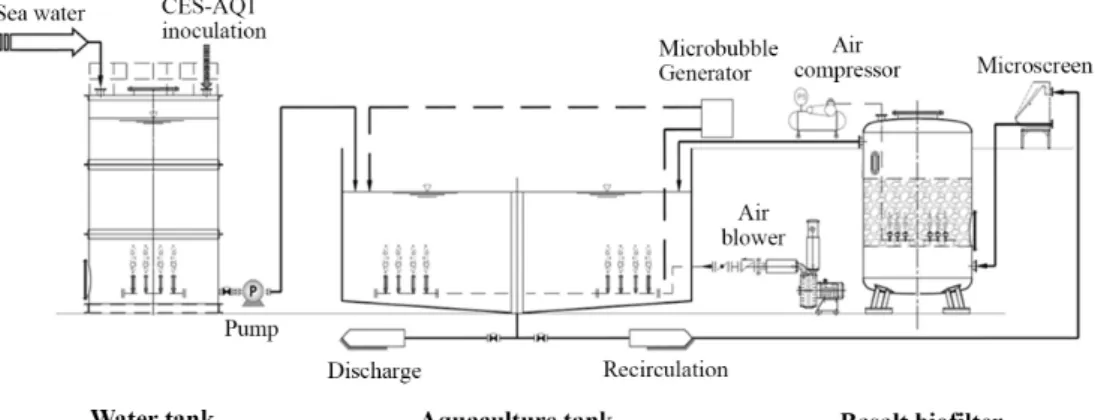
Fig. 1. Schematic of the recirculating aquaculture system (RAS) used in this study.
diet and to make the experimental diets. Basal diet without probiotic supplementation was used as the negative control (CON). Basal diet mixed with oxytetracycline (OTC), which was called the OTC diet (5 g/kg diet), was also included. Three other diets were formulated, each of which contained one the following three cultures at 1 × 10
9CFU/kg of basal diet:
Bacillus subtilis (BS, positive control; Lee et al., 2017), the commercial microbial product CES-AQ1 (CES), and a mixture of the yeast Groenewaldozyma salmanticensis and the bacterium Gluconacetobacter liquefaciens (PI; pure isolates), discovered in this study. The diets were prepared and stored as previously described (Kim et al., 2016). To make diets with the same volume, 5 g of cellulose was added to all diets except for the OTC diet. After thoroughly mixing the dry ingredients with fish oil and 30% filtered tap water, experimental diets were pelleted with a laboratory pelleting machine using a 2-mm diameter module (Baokyong Commercial) without heating and air dried at room temperature.
Construction and operation of the recirculating aqua- culture system (RAS)
The RAS consisted of a cylindrical fish culture tank (∅
1,500 mm × H 1,000 mm), a water supply tank (1,500 L), and a filtration system containing basalt medium inoculated with the microbial consortium (CES-AQ1; Fig. 1). The recirculating system was housed inside the aquarium room, which was maintained at 20~25°C. In the filtration system, a 20-cm thick layer of the basalt medium was used as substratum for the growth of the microbial biofilm carrying indigenous microorganisms
as well as CES-AQ1. The medium was porous in nature, with a large surface area, which facilitated microbial growth. Circulation was continuous, and the flow rate was maintained at 26 L/min.
The water temperature in the growth tank and filter bed were maintained at ~21 ± 2°C with an automatic temperature controller and heating system. Dissolved oxygen (DO; 7–9 mg/L) was maintained with an aerator. Residual fish feed was filtered out through the biofilter system and removed every 3 days. Water loss was monitored during operation, and 10% of the water in the growth tank was replaced with fresh water every week, and all the water was changed once 30 days after starting the ex- periment. The growth tank and water storage tank were inoculated daily with the CES-AQ1 microbial consortium (0.02% v/v).
Feeding trial and monitoring of the RAS
The feeding trial was carried out in an aquarium building at Korea Maritime and Ocean University (Busan, South Korea).
Olive flounder were obtained from Uljin Aquaculture (South
Korea). For the experiment, 80 juvenile olive flounder (initial
average weight and length, 25.7 ± 7.6 g and 15.2 ± 1.7 cm,
respectively) were introduced into the RAS tank (working
volume, 500 L). All fish were fed the basal diet during a 1-week
acclimation period. Prior to the start of the feeding trial, all fish
were assessed and fasted for 24 h. Fish were fed the CES diet
(CES-AQ1) once a day for 8 weeks at a rate of 2.0% of wet body
weight per day. The total fish weight in the growth tank was
measured after 4 weeks, and the feeding rate was adjusted
accordingly.
The environmental conditions in the RAS, including the temperature, pH, DO, and oxidation/reduction potential (ORP), were monitored throughout the experiment. Temperature and pH were measured with a pH and temperature sensor (YSI550) and DO was measured with a DO meter (YSI63; both from YSI, Inc.). ORP was measured with an ORP meter (Model Orion Star™ A211; ThermoFisher Scientific Korea). Chemical para- meters, including COD, total nitrogen (T-N), ammonia (NH
3-N), Nitrate (NO
3--N), and total phosphorus (T-P), were also measured daily using a comprehensive water quality analyzer (HS-3300), preprocessor (HS-R200), and corresponding measurement kits [HS-COD(Mn)-L, HS-TN-L, HS-NH
3(N)-L, HS-NO
3(N)-L, and HS-TP-L, respectively; all from Humas, Ltd.).
Fish sample collection and growth analysis
At the end of the feeding trial, the total number and weight of the fish in the RAS tank were measured to calculate weight gain (WG), feed efficiency (FE), the specific growth rate (SGR), protein efficiency ratio (PER), and survival rate. In addition, three fish were randomly selected, and their hepatosomatic index (HSI, %), viscerosomatic index (VSI, %), and condition factor (CF) were determined. These parameters were calculated by using the following equations: weight gain (WG, %) = (final weight - initial weight) × 100/initial weight; specific growth rate (SGR, %/day) = (log
efinal weight - log
einitial weight) × 100/days; feed efficiency (FE, %) = (wet weight gain/dry feed intake) × 100; protein efficiency ratio (PER) = (wet weight gain/protein intake); survival rate (SR, %) = (total no. of fish - no. of dead fish)/total no. of fish × 100; hepatosomatic index (HSI, %) = liver weight × 100/body weight; and viscerosomatic index (VSI, %) = (viscera weight/body weight) × 100; condition factor (CF) = (fish weight/fish length
3) × 100.
Challenge test
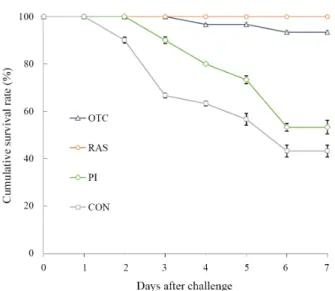
At the end of the growth experiment in the RAS or still water tank, fish were redistributed in an aquarium for the challenge test. The aquarium tank (100 L; 685 × 485 × 415 mm) was equipped with an aerator and a thermostat and filled with 70 L of seawater, which was maintained at 19 ± 0.5°C under a 12-h light/dark period during the experiment. The fish pathogen Edwardsiella tarda (ATCC 15947), was obtained from the Department of Biotechnology, Pukyong National University
(Busan, Republic of Korea). The bacterial strain originated from a diseased brook flounder. E. tarda was grown in tryptic soy broth (TSB; Merck KGaA) at 26°C for 24 h. Ten fish per aquarium were injected intraperitoneally with 0.1 ml (2 × 10
7CFU/ml) of E. tarda. The mortality rate of the fish in each aquarium was recorded for 15 days.
DNA extraction from fish guts, water, and biofilter media, and microbial community analysis by pyrosequencing
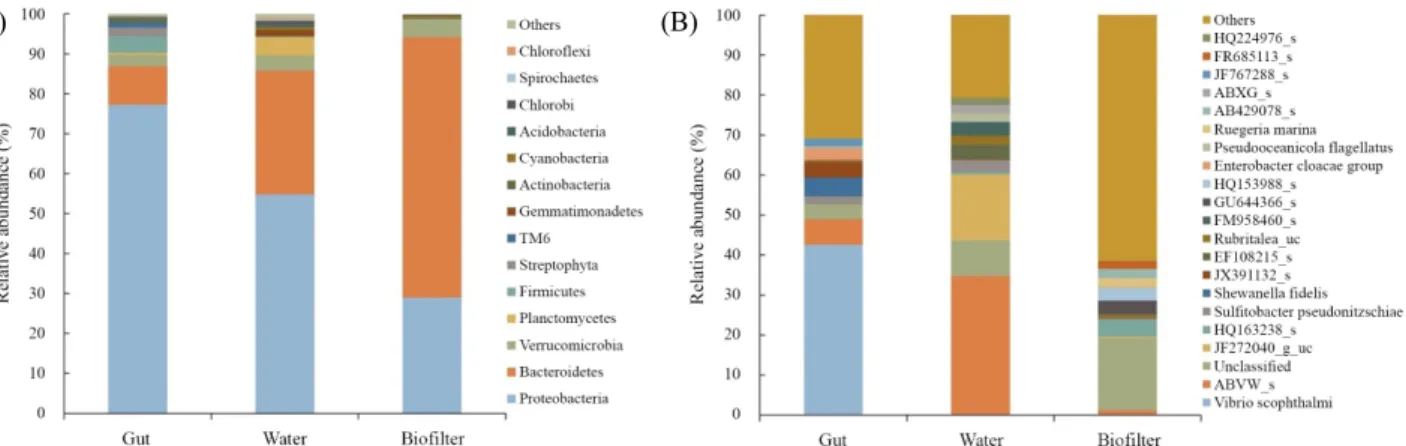
After termination of the experiment, the guts of three randomly selected fish from the RAS tank were extracted under aseptic conditions and stored at -80°C until extraction, and samples of the water and biofilter media were collected and stored at -20°C. Genomic DNA was extracted from three replicates of each sample using the MO BIO PowerSoil ® DNA Isolation Kit (Mo Bio Laboratories). DNA isolation and puri- fication were performed according to the manufacturer’s protocol.
The DNA from the three replicates of each sample was pooled, and the pooled DNA was used for the microbial community analysis. All DNA samples were stored at -20°C. For microbial community analysis based on pyrosequencing, the bacterial 16S rRNA gene was first amplified from the isolated genomic DNA. Then, library construction, sequencing, and sequencing analyses were performed using a 454 GS FLX Junior Sequencing System (Roche), according to the manufacturer’s protocols.
Statistical analyses of the microbial communities were performed with Mothur, using a 3% difference cut-off value (Schloss et al., 2009). To compare the microbial communities, α-diversity and β-diversity indices were analyzed using BioPLUG (ChunLab).
Results and Discussion
Physical and chemical analysis of the water quality in the recirculating aquaculture system
Water quality was monitored by measuring physical and
chemical parameters (Fig. 2). The temperature in the aqua-
culture room was maintained at 19°C. However, the temperature
decreased to 15°C for several days during a temperature control
failure in the winter. The pH was maintained at 6.6~7.7, but it
could have been affected by the regular addition of feed and the
CES-AQ1 consortium. Dissolved oxygen gradually decreased
Fig. 2. Chemical analysis of water quality in terms of chemical oxygen demand (COD), total nitrogen (T-N), ammonia (NH
3-N), Nitrate (NO
3--N), and total phosphorus (T-P) in the RAS.
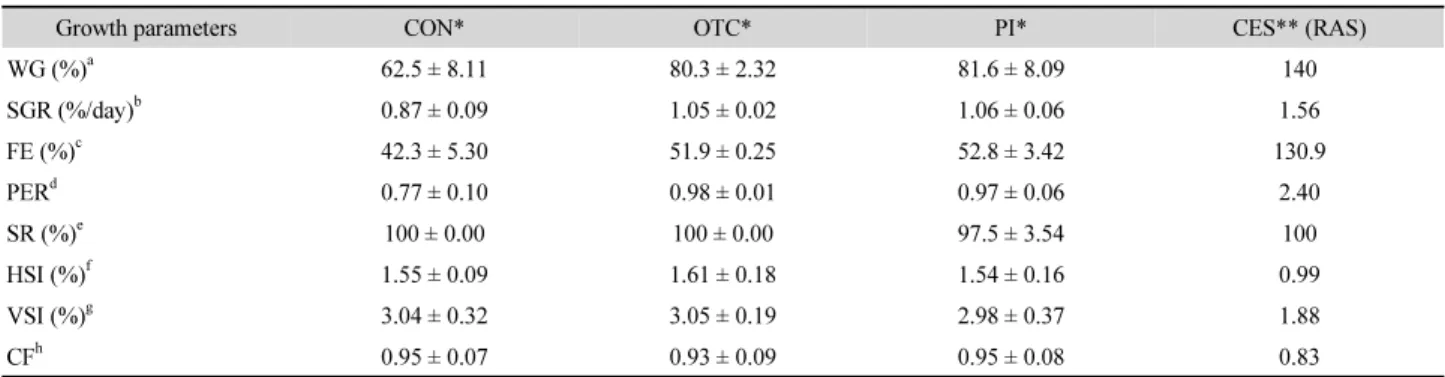
Table 1. Growth performance of juvenile olive flounder fed experimental diets and grown in a recirculating aquaculture system (RAS) or still water tanks for 8 weeks
Growth parameters CON* OTC* PI* CES** (RAS)
WG (%)
a62.5 ± 8.11 80.3 ± 2.32 81.6 ± 8.09 140
SGR (%/day)
b0.87 ± 0.09 1.05 ± 0.02 1.06 ± 0.06 1.56
FE (%)
c42.3 ± 5.30 51.9 ± 0.25 52.8 ± 3.42 130.9
PER
d0.77 ± 0.10 0.98 ± 0.01 0.97 ± 0.06 2.40
SR (%)
e100 ± 0.00 100 ± 0.00 97.5 ± 3.54 100
HSI (%)
f1.55 ± 0.09 1.61 ± 0.18 1.54 ± 0.16 0.99
VSI (%)
g3.04 ± 0.32 3.05 ± 0.19 2.98 ± 0.37 1.88
CF
h0.95 ± 0.07 0.93 ± 0.09 0.95 ± 0.08 0.83
* Cultured in still water tanks (70 L) in triplicate
** Cultured in a RAS (500 L) without replicate
a
Weight gain (WG, %) = (final weight - initial weight) × 100/initial weight
b
Specific growth rate (SGR, %/day) = (log
efinal wt. - log
einitial wt.) × 100/days
c
Feed efficiency (FE, %) = (wet weight gain/dry feed intake) × 100
d
Protein efficiency ratio (PER) = (wet weight gain/protein intake)
e
Survival rate (SR, %) = (total no. of fish - no. of dead fish)/total no. of fish × 100
f
Hepatosomatic index (HSI, %) = liver weight × 100/body weight.
g
Viscerosomatic index (VSI, %) = (viscera weight/body weight) × 100
h
Condition factor (CF) = (fish weight/fish length
3) × 100
for the first 30 days, from 9.31 mg/L to 8.5 mg/L, and then further decreased to 7.4 mg/L at the end of the experiment. The ORP was maintained between 136 mV and 183 mV. The highest ORP was observed in 31 days, after the total water change occurred and all chemical pollutants from fish discharge and leftover feed were removed.
The lowest COD (1.05 mg/L) was observed at the beginning of the experiment, while the highest COD (4.13 mg/L) was observed at 19 days (Fig. 2). COD levels were maintained at 3~4 mg/L throughout most of the experimental period. The
highest concentration of T-N (2.97 mg/L) was observed in 16 days and was maintained at 1~3 mg/L. The concentrations of NO
3--N, NH
3-N, and T-P were 1~3 mg/L during the first 13 days of the experiment, and then significantly decreased to less than 0.5 mg/L at 19 days, during which all other water quality parameters were stably maintained. In fact, the average ratios of COD/T-N, NH
3/T-N, and NO
3-/T-N on days 19~64 were 2.26, 0.09, and 0.67, respectively. A previous report (Fernandes et al., 2017) showed that ammonia and nitrite were maintained at concentrations below 0.20 mg/L, while nitrate levels ranged between 40 and 44 mg/L under constant feed loading (1 kg feed/m
3of make-up water). The average ratio of COD:N during the last 4 weeks of the RAS experiment was 2.54:1, which is less than the previous reported optimal value (5:1) for efficient nitrogen removal (Pungrasmi et al., 2013). Therefore, nitrogen removal through denitrification in the RAS could be more effective at a COD:N of 5:1.
Growth performance of olive flounder fed the experimental diets
The growth performance and FE of olive flounder fed different
experimental diets were shown in Table 1. At the end of the
8-week feeding trial, WG, the SGR, FE, and PER of fish fed the
OTC and PI diets (in the still water system) were higher than
Table 2. Diversity indices of the microbial communities in samples from the water and biofilter of the RAS and the guts of fish grown in the RAS based on pyrosequencing analysis
aSample name Target reads OTUs ACE Chao1 NPShannon Shannon Simpson
Gut 63,631 631 646 644 3.1 3.1 0.21
Water 62,887 1,678 1,716 1,687 3.7 3.7 0.14
Biofilter 51,172 2,166 2,218 2,177 5.8 5.8 0.009
a