Journal of Marine Bioscience and Biotechnology 2007, p. 234-237 Vol. 2, No. 4
* Corresponding author
Phone: +82-51-720-2453, Fax: +82-51-720-2456 E-mail: [email protected]
Calmodulin of Olive Flounder Paralichthys olivaceus : Cloning and Expression Analysis
Gyeong-Eun Hong
1, Hee Jeong Kong
1*, Bo-Hye Nam
1, Young-Ok Kim
1, Woo-Jin Kim
1, Sang-Jun Lee
1, Tae-Jin Choi
1,21
Biotechnology Research Institute, National Fisheries Research and Development Institute, Busan, Korea
2
Dept. of Microbiology, Pukyong National University, Busan, Korea
Abstract Calmodulin (CaM) is a Ca2+-binding protein essential for biological functions medi- ated through Ca2+-dependent mechanism. A cDNA clone for CaM was isolated from a cDNA library of olive flounder Paralichthys olivaceus. The CaM cDNA concists of 782 bp and encodes a polypeptide of 149 amino acids with four Ca2+-binding motifs EF-hands (EF-I, EF-II, EF-III, and EF-IV). The deduced amino acid sequence of CaM shows 97-100% amino acid sequence identity to other CaM sequences. Semi-quantitative PCR analysis revealed that the CaM tran- scription was began during early development and the CaM mRNA is expressed highly in brain and intestine, and moderately in kidney, gill, and eye of healthy olive flounder. Taken together, CaM may be necessary for early olive flounder development and that it may have a part in homeostasis.
Key words : Calmodulin, Ca2+-binding motif, olive flounder, Paralichthys olivaceus
Introduction
Calmodulin (CaM), a Ca2+-binding protein ex- pressed in all eukaryotic cells, serves as a major intra- celluar Ca
2+sensor and signal transducer in living cells.
The amino acid sequence of calmodulins has been high- ly conserved from protozoans through vertebrates [9,10, 16,19]. CaM binds to and regulates a number of differ- ent protein targets, thereby affecting many different cel- lular functions. CaM mediates processes such as in- flammation, metabolism, apoptosis, muscle contraction, intracellular movement, short-term and long-term mem- ory, nerve growth and host defense [2,4,5,12,18,21].
Line of evidence also demonstrates that CaM plays an important role in regulating the function of mature os- teoalsts and osteoalsogenesis, a bone biomeneralization related process [22].
CaM is expressed in many cell types and has differ- ent subcellular locations, including the cytoplasm, within organelles, or associated with the plasma or or- ganelle membranes. CaM also makes use of the cal-
cium stores in the endoplasmic reticulum, and the sar- coplasmic reticulum. The molecular structure of CaM is characterized by the presence of four Ca
2+-binding motifs known as the helix-loop-helix EF-hands [20].
Upon Ca
2+binding, CaM undergoes a conformational change upon binding to calcium, which enables it to bind to Ca
2+-sensitive target proteins for a specific re- sponse [13].
From non-mammalian vertebrates, two CaM cDNAs were isolated from frog Xenopus laevis and four dis- tinct CaM-encoding DNAs were cloned from medaka Oryzias latipes [3,11]. Six CaM genes coding for a 100% identical CaM protein molecule present in the zebrafish genome (alpha, alpha2, beta, beta2, gamma and gamma 2) [6]. Moreover, several EST clones from olive flounder Paralichthys olivaceus leukocyte cDNA library showed high identity to human CaM, but those contain a part of the homologous region. In the present study, we isolated and characterized the full-length cDNA of CaM from olive flounder P.
olivaceus.
Calmodulin of Olive Flounder Paralichthys olivaceus 235
Materials and Methods
Sequencing and sequence analysis
A clone from the cDNA library of olive flounder was isolated using Plasmid Miniprep Kit (Qiagen), and was thoroughly sequenced using both the T7 forward and SP6 reverse primers (Promega) in Automatic sequencer ABI3730xl (Applied Biosystems Inc.). Analysis of po- tential open reading frame (ORFs) and comparison of amino acid sequences (or nucleotide sequences) were performed with the ORF finder and BLAST programs on National Center for Biotechnology Information website.
Multiple alignmenst
The multiple sequence alignment was created by us- ing the CLUSTAL W [8], and the same software was used to analyze similarity of the aligned sequences us- ing a neighbor joining (NJ) algorithm. Putative phos- phorylation sites were predicted by NetPhos 2.0 Server with high scores [1].
RNA extraction
Total RNA was extracted from tissues of healthy olive flounder using TRIzol reagent (Invitrogen) using a homogenizer. First-strand cDNA was synthesized us- ing the Advantage RT-for-PCR kit (BD Biosciences).
The total RNA was quantitatively determined to the same concentration, and a sample of total RNA at 1 μg was used for reverse transcription.
Semi-quantitative RT-PCR analysis
The first strand cDNA was synthesized using the Advantage RT-for-PCR kit (BD sciences). The gene specific primers CaM-F (5′-TGATGACAGCGAAGTG AAGG-3′) and CaM-R (5′-TCCACGAGCATCTGGTT GTA-3′) were used to amplify the CaM transcript. The primers GAPDH-F (5′-TCCCATGTTCGTCATGGGC GTGA-3′) and GAPDH-R (5′-ATTGAGCTCAGGGAT GACCTTG-3′) were used to amplify the GAPDH frag- ment as an internal control. CaM cDNAs were ampli- fied by PCR under the following conditions: denaturing at 94°C for 5 min followed by 30 cycles of amplifica- tion at 94℃ for 30 sec, 60℃ for 30 sec, and 72℃
for 30 sec in a thermal cycler. For GAPDH: denaturing at 94℃ for 5 min followed by 25 cycles of at 94℃
for 30 sec, 60℃ for 30 sec, and 72℃ for 30 sec. The
PCR products were examined by electrophoresis on a 1.5% agarose gel.
Results and Discussion
Cloning analysis of olive flounder calmodulin (CaM) cDNA
Previously, we constructed a cDNA library of the olive flounder P. olivaceus and carried out expressed sequence tag (EST) analysis (data not shown). We iso- lated the one clone, FLDS-2-B9, whose deduced amino acid sequence showed very high homology to those of CaM proteins from various biological sources. The full-length Calmodulin (CaM) cDNA is 782 bp long and consists of a 5' UTR of 81bp, an open reading frame of 450 bp that encoding a 149-amino acid protein and a 3' UTR of 251 bp (GenBank accession number EU519228) (Fig. 1).
Sequence analysis of olive flounder CaM cDNA
The deduced amino acid sequence of CaM cDNA shared 100% amino acid identity with the those of Rattus norvegicus (GenBank accession no. NP_1 14175), Homo sapiens (NP_008819), Danio rerio (NP_998516) and Xenopus laevis (NP_001080864). It also shared 97 and 99% amino acid identity with those of Strongylocentrotus purpuratus (XP_780862) and Pan troglodytes (BAF62378), respectively.
GCTCTGGTCTCTGCGCGGATTCTGTGCTGGCCCCGCTTCTTACGGATTTTGTCGTGAATC 60 AGCCGCTGCACCCACATCGAAATGGCTGATCAGCTTACAGAAGAGCAGATTGCTGAGTTC 120
M A D Q L T E E Q I A E F AAAGAGGCATTTTCGCTCTTTGACAAGGATGGAGATGGCACCATCACCACCAAAGAGCTG 180 K E A F S L F D K D G D G T I T T K E L GGCACAGTCATGCGCTCTCTTGGCCAGAACCCCACAGAGGCAGAGCTGCAGGATATGATC 240 G T V M R S L G Q N P T E A E L Q D M I AATGAAGTGGATGCTGATGGAAATGGGACGATAGACTTCCCAGAGTTCCTGACCATGATG 300 N E V D A D G N G T I D F P E F L T M M GCCAGGAAGATGAAGGACACAGACAGCGAGGAAGAGATCAGAGAAGCATTCCGTGTCTTT 360 A R K M K D T D S E E E I R E A F R V F GACAAGGATGGCAATGGATACATCAGTGCTGCTGAGCTGCGCCATGTGATGACAAACCTT 420 D K D G N G Y I S A A E L R H V M T N L GGAGAGAAGCTGACTGATGAGGAAGTGGACGAGATGATCAGAGAAGCAGACATTGACGGG 480 G E K L T D E E V D E M I R E A D I D G GATGGCCAGGTCAACTATGAAGAGTTCGTACAAATGATGACAGCGAAGTGAAGGCCTTGT 540 D G Q V N Y E E F V Q M M T A K *
ACAGATTTCGTATATAAATAATTTGCCTTTTTTCTTTGTGTAATTTATCTGTAAAATCTT 600 AATAGCCCCCCTTGGTCCCTGCTCCTTCTGCTGTCCAAAGGAACTGCATGTAAACTGCAT 660 AGGCTCTTGTCCCCATGTCCCTTTCTTTTGCTGTCATGGTGTTTTGGAGTGACGGAACGG 720 TCGTACAACCAGATGCTCGTGGAGGCCCCTGGGAGCCGGAGAACTTCGAATCTTCCTGTC 780 TT 782 GCTCTGGTCTCTGCGCGGATTCTGTGCTGGCCCCGCTTCTTACGGATTTTGTCGTGAATC 60 AGCCGCTGCACCCACATCGAAATGGCTGATCAGCTTACAGAAGAGCAGATTGCTGAGTTC 120
M A D Q L T E E Q I A E F AAAGAGGCATTTTCGCTCTTTGACAAGGATGGAGATGGCACCATCACCACCAAAGAGCTG 180 K E A F S L F D K D G D G T I T T K E L GGCACAGTCATGCGCTCTCTTGGCCAGAACCCCACAGAGGCAGAGCTGCAGGATATGATC 240 G T V M R S L G Q N P T E A E L Q D M I AATGAAGTGGATGCTGATGGAAATGGGACGATAGACTTCCCAGAGTTCCTGACCATGATG 300 N E V D A D G N G T I D F P E F L T M M GCCAGGAAGATGAAGGACACAGACAGCGAGGAAGAGATCAGAGAAGCATTCCGTGTCTTT 360 A R K M K D T D S E E E I R E A F R V F GACAAGGATGGCAATGGATACATCAGTGCTGCTGAGCTGCGCCATGTGATGACAAACCTT 420 D K D G N G Y I S A A E L R H V M T N L GGAGAGAAGCTGACTGATGAGGAAGTGGACGAGATGATCAGAGAAGCAGACATTGACGGG 480 G E K L T D E E V D E M I R E A D I D G GATGGCCAGGTCAACTATGAAGAGTTCGTACAAATGATGACAGCGAAGTGAAGGCCTTGT 540 D G Q V N Y E E F V Q M M T A K *
ACAGATTTCGTATATAAATAATTTGCCTTTTTTCTTTGTGTAATTTATCTGTAAAATCTT 600 AATAGCCCCCCTTGGTCCCTGCTCCTTCTGCTGTCCAAAGGAACTGCATGTAAACTGCAT 660 AGGCTCTTGTCCCCATGTCCCTTTCTTTTGCTGTCATGGTGTTTTGGAGTGACGGAACGG 720 TCGTACAACCAGATGCTCGTGGAGGCCCCTGGGAGCCGGAGAACTTCGAATCTTCCTGTC 780 TT 782
Fig. 1. Complete nucleotide (782 bp) and deduced amino acid (149 amino acids) sequences of the Calmodulin from the olive flounder Paralichthys olivaceus. The predicted ORF is from 82 to 531 bp (start and stop codons are shown in bold).
The four Ca2+-binding motifs (EF-I, -II, -III, and -IV) are
shown in the box.
236 H
ONGet al.
A computer search using BLSTP revealed that the deduced primary sequence of CaM cDNA contains four Ca2+-binding motifs known as the helix-loop-helix EF-hands (EF-I, EF-II, EF-III, and EF-IV). Alignment analysis revealed that the amino acid sequence in the second, third, and fourth EF-hands are more conserved than that in the first EF-hand domain compared with others (Fig. 2). It has been reported that phosphocalmo- dulin is found in cells and tissues and the activity of calmodulin is altered by mitogen-mediated phosphor- ylation [17]. Olive flounder CaM also possesses several putative phosphorylation sites predicted by NetPhos 2.0 Server [1], which include three serine (Ser18, Ser82 and Ser102), three threonine (Thr29, Thr80 and Thr118) and one tyrosine (Tyr100) residues. These potential phos- horylated residues may affect the interaction of CaM with target proteins. Moreover, Thr80 and Ser82 are located in the central α-helix of CaM, a region im- portant for its interaction with CaM-dependent protein targets.
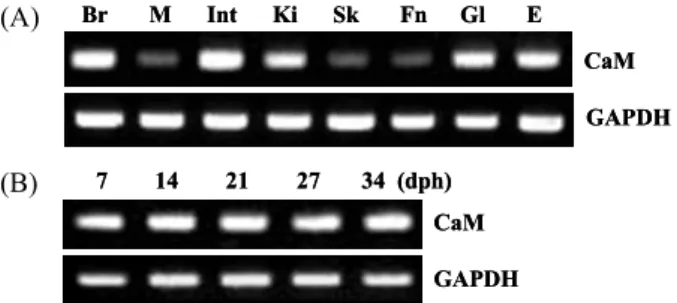
Expression analysis of olive flounder CaM To examine the tissue distribution profile of the CaM gene, total RNA was extracted from the brain, muscle, intestine, kidney, skin, fin, gill and eye of normal olive flounder.
Semi-quantitative PCR analysis revealed that the CaM mRNA is expressed highly in brain and intestine, and moderately in kidney, gill, and eye of healthy olive
Paralichthys MADQLTEEQIAEFKEAFSLFDKDGDGTITTKELGTVMRSLGQNPTEAELQDM INEVDADG 60 Homo MADQLTEEQIAEFKEAFSLFDKDGDGTITTKELGTVMRSL GQNPTEAELQDMINEVDADG 60 Xenopus MADQLTEEQIAEFKEAFSLFDKDGDGTITTKELGTVMRSLGQNPTEA ELQDMINEVDADG 60 Danio MADQLTEEQIAEFKEAFSLFDKDGDGTITTKELGTVMRSLGQNPT EAELQDMINEVDADG 60 Rattus MADQLTEEQIAEFKEAFSLFDKDGDGTITTKELGTVMRSLGQNPTE AELQDMINEVDADG 60 Pan MADQLTEEQIAEFKEAFSLFDKDGDGTITTEELGTVMRSL GQNPTEAELQDMINEVDADG 60 Strongylocentrotus MADQLTEEQIAEFKEAFSLFDKDGDGTITTKELGTVMRSLGQNPTEAELQDMINEVDA DG 60
******************************:********* ********************
Paralichthys NGTIDFPEFLTMMARKMKDTDSEEEIREAFRVFDKDGNGYISAAELRHVMTN LGEKLTDE 120 Homo NGTIDFPEFLTMMARKMKDTDSEEEIREAFRVFDKDGNGY ISAAELRHVMTNLGEKLTDE 120 Xenopus NGTIDFPEFLTMMARKMKDTDSEEEIREAFRVFDKDGNGYISAAELR HVMTNLGEKLTDE 120 Danio NGTIDFPEFLTMMARKMKDTDSEEEIREAFRVFDKDGNGYISAAE LRHVMTNLGEKLTDE 120 Rattus NGTIDFPEFLTMMARKMKDTDSEEEIREAFRVFDKDGNGYISAAEL RHVMTNLGEKLTDE 120 Pan NGTIDFPEFLTMMARKMKDTDSEEEIREAFRVFDKDGNGY ISAAELRHVMTNLGEKLTDE 120 Strongylocentrotus NGTIDFPEFLTMMARKMKETDSEEEIREAFRVFDKDGNGYISAAELRHVMTNLGEKLT DE 120
******************:********************* ********************
Paralichthys EVDEMIREADIDGDGQVNYEEFVQMMTAK 149 Homo EVDEMIREADIDGDGQVNYEEFVQMMTAK 149 Xenopus EVDEMIREADIDGDGQVNYEEFVQMMTAK 149 Danio EVDEMIREADIDGDGQVNYEEFVQMMTAK 149 Rattus EVDEMIREADIDGDGQVNYEEFVQMMTAK 149 Pan EVDEMIREADIDGDGQVNYEEFVQMMTAK 149 Strongylocentrotus EVDEMIREADIDGDGQVNYEEFVTMMTSK 149
*********************** ***:*
EF-I EF-II
EF-III
EF-IV
S S S S S S S
S S S S S S S
S S S S S S S T
T T T T T T
T T T T T T T
T T T T T T T Y
Y Y Y Y Y Y
Paralichthys MADQLTEEQIAEFKEAFSLFDKDGDGTITTKELGTVMRSLGQNPTEAELQDM INEVDADG 60 Homo MADQLTEEQIAEFKEAFSLFDKDGDGTITTKELGTVMRSL GQNPTEAELQDMINEVDADG 60 Xenopus MADQLTEEQIAEFKEAFSLFDKDGDGTITTKELGTVMRSLGQNPTEA ELQDMINEVDADG 60 Danio MADQLTEEQIAEFKEAFSLFDKDGDGTITTKELGTVMRSLGQNPT EAELQDMINEVDADG 60 Rattus MADQLTEEQIAEFKEAFSLFDKDGDGTITTKELGTVMRSLGQNPTE AELQDMINEVDADG 60 Pan MADQLTEEQIAEFKEAFSLFDKDGDGTITTEELGTVMRSL GQNPTEAELQDMINEVDADG 60 Strongylocentrotus MADQLTEEQIAEFKEAFSLFDKDGDGTITTKELGTVMRSLGQNPTEAELQDMINEVDA DG 60
******************************:********* ********************
Paralichthys NGTIDFPEFLTMMARKMKDTDSEEEIREAFRVFDKDGNGYISAAELRHVMTN LGEKLTDE 120 Homo NGTIDFPEFLTMMARKMKDTDSEEEIREAFRVFDKDGNGY ISAAELRHVMTNLGEKLTDE 120 Xenopus NGTIDFPEFLTMMARKMKDTDSEEEIREAFRVFDKDGNGYISAAELR HVMTNLGEKLTDE 120 Danio NGTIDFPEFLTMMARKMKDTDSEEEIREAFRVFDKDGNGYISAAE LRHVMTNLGEKLTDE 120 Rattus NGTIDFPEFLTMMARKMKDTDSEEEIREAFRVFDKDGNGYISAAEL RHVMTNLGEKLTDE 120 Pan NGTIDFPEFLTMMARKMKDTDSEEEIREAFRVFDKDGNGY ISAAELRHVMTNLGEKLTDE 120 Strongylocentrotus NGTIDFPEFLTMMARKMKETDSEEEIREAFRVFDKDGNGYISAAELRHVMTNLGEKLT DE 120
******************:********************* ********************
Paralichthys EVDEMIREADIDGDGQVNYEEFVQMMTAK 149 Homo EVDEMIREADIDGDGQVNYEEFVQMMTAK 149 Xenopus EVDEMIREADIDGDGQVNYEEFVQMMTAK 149 Danio EVDEMIREADIDGDGQVNYEEFVQMMTAK 149 Rattus EVDEMIREADIDGDGQVNYEEFVQMMTAK 149 Pan EVDEMIREADIDGDGQVNYEEFVQMMTAK 149 Strongylocentrotus EVDEMIREADIDGDGQVNYEEFVTMMTSK 149
*********************** ***:*
EF-I EF-II
EF-III
EF-IV
S S S S S S S S S S S S S S
S S S S S S S
S S S S S S S S S S S S S S T
T T T T T T T T T T T T T
T T T T T T T T T T T T T T
T T T T T T T T T T T T T T Y
Y Y Y Y Y Y Y Y Y Y Y Y Y