Received: May 6, 2013 Revised: August 22, 2013 Accepted: December 11, 2013
Correspondence: Gunn Hee Kim, Department of Anesthe- siology and Pain Medicine, National Medical Center, 245, Euljiro, Jung-gu, Seoul 100-799, Korea
Tel: 02-2260-7374, Fax: 02-2262-7258 E-mail: [email protected]
국내 한 병원에서 경험한 HIV 감염환자의 수술동향
권미영ㆍ김미름ㆍ김지은ㆍ김건희
국립중앙의료원 마취통증의학과
Trends of HIV-infected Patients Operated at Single Hospital
Mi Young Kwon, Mi Rum Kim, Jieun Kim, Gunn Hee Kim
Department of Anesthesiology and Pain Medicine, National Medical Center, Seoul, Korea
Background: As anti-retroviral therapy has improved and the life expectancy of patients’ with HIV in Korea has increased, an increased number of surgical procedures have been performed in this population. Therefore, in the current study, we investigated the trend in surgery conducted on patients with HIV in our hospital over the last 5 years.
Methods: We retrospectively reviewed the medical records of HIV-infected patients who underwent surgery under general or local anesthesia at our hospital between 2005 and 2010.
Results: The total number of surgeries performed in HIV-infected patients in the 5-year period was 95. Of these, 23 (24%) were performed under general anesthesia and 72 (76%) under spinal anesthesia. Anorectal surgery was the most commonly performed surgery (71 cases, 76%). The postoperative complication rate was 5.3% (3 cases of pneumonia and 2 of wound infection), with general anesthesia and time to discharge being identified as contributory factors.
Preoperative CD4+ T cell count was not significantly associated with complications.
Conclusion: This study was the first to analyze the trends in surgical procedures performed in HIV-infected patients in Korea. Our study may be beneficial as a reference for clinicians who manage patients with HIV.
Keywords: Acquired immunodeficiency syndrome, HIV, Operation
Introduction
Since the first case of human immunodeficiency virus (HIV) infection in the Republic of Korea was detected in 1985, the cumulative number of HIV-in- fected patients have been increasing. According to Korean Ministry of Health and Welfare, 7,656 HIV- infected patients have been reported, as of December
2010. Among these, 1,364 (18%) expired and 6,292 (82%) have survived. The number of survived pa- tients has been increasing every year. This is attrib- utable both to the increasing number of new diag- noses and improved efficacy of advancing medical therapy. Now, it is thought that HIV infection has changed from a fatal condition to a chronic disease [1]. As numbers of HIV infected individuals con- tinue to increase, the anesthesiologist is ever more likely to encounter HIV-infected patients in the op- erating room. Our hospital has one of the largest HIV cohort in the country, with a total patient num- ber of 540. At this institution, management of HIV-positive patients has become a part of routine surgical practice. Although there are a lot of studies of Korean HIV-positive patients [2-4], to our knowl-
Fig. 1. Surgery incidences according to age and sex in 95 HIV-infected patients.
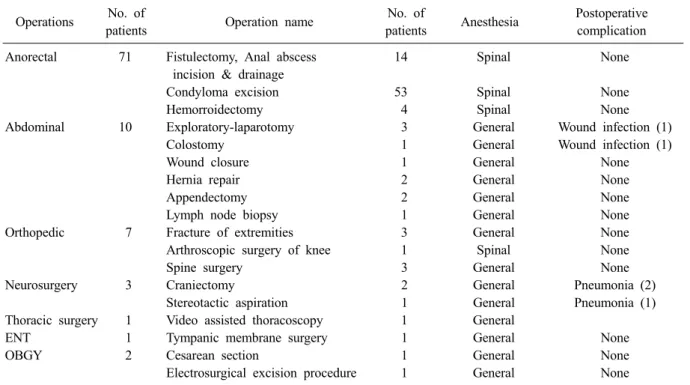
Table 1. The nature of operation Operations No. of
patients Operation name No. of
patients Anesthesia Postoperative complication
Anorectal 71 Fistulectomy, Anal abscess 14 Spinal None
incision & drainage
Condyloma excision 53 Spinal None
Hemorroidectomy 4 Spinal None
Abdominal 10 Exploratory-laparotomy 3 General Wound infection (1)
Colostomy 1 General Wound infection (1)
Wound closure 1 General None
Hernia repair 2 General None
Appendectomy 2 General None
Lymph node biopsy 1 General None
Orthopedic 7 Fracture of extremities 3 General None
Arthroscopic surgery of knee 1 Spinal None
Spine surgery 3 General None
Neurosurgery 3 Craniectomy 2 General Pneumonia (2)
Stereotactic aspiration 1 General Pneumonia (1)
Thoracic surgery 1 Video assisted thoracoscopy 1 General
ENT 1 Tympanic membrane surgery 1 General None
OBGY 2 Cesarean section 1 General None
Electrosurgical excision procedure 1 General None
Abbreviations: ENT, ear-nose-throat department surgery; OBGY, obstetric and gynecological department surgery.
edge, there are no papers investigating the trend of surgery performed under general or regional anes- thesia in Korea.
The purpose of this study is to explore the nature and frequency of surgery performed in this hospital.
Materials and Methods
We retrospectively investigated the medical re- cords of HIV-infected patients who underwent sur- gery under general or regional anesthesia at our hospital between September 2005 and September 2010. The study protocol was approved by the Institutional Review Board of our hospital.
Basic patient’s characteristics of age, sex, diag- nosis, operation name and operation date were recorded. Preoperative data of CD4+ T cell count (recorded within the 3 months prior to each surgical intervention), anesthetic method, the relationship of the operation with the HIV, time to hospital dis- charge and postoperative complication were recorded.
Statistical analyses were performed using SPSS software (SPSS 16.0, Chicago, Illinois, US). The
data are reported as means±SDs. For evaluating the factors related to postoperative complication, Fisher’s exact test and Wilcoxon’s rank sum test were used.
Results
A cohort of 83 patients underwent a total number of 95 operations during 5 years. Of these, the num- ber of patients who underwent surgery twice or more were 9. Seventy nine patients (95%) were male and 4 patients (5%) were female. The incidence of surgery classified by sex and age was highest (34.1%)
Table 2. The nature of anesthesia
Type of anesthesia General Spinal P-value
No. of patients 23 72
No. of complications/
total (%)
CD4+<200 2/6 (33.3) 0/11 (0) <0.001 CD4+≥200 3/17 (17.6) 0/61 (0) <0.001 Duration of discharge 21.8±23.2 2.7±5.8 <0.001 (days, means±SD)
Abbreviations: CD4+<200, CD4+ T cell count <200 cells/
mm3; CD4+≥200, CD4+ T cell count ≥200 cells/mm3. in their twenties, followed by 23.1% in their thirties and 20.8% in their forties (Fig. 1).
The operations directly related to HIV-infection were 79 cases. Table 1 shows the operation names and incidences. Condyloma excision (53 cases) was the operation most frequently performed. Anal fistu- lectomy, anal abscess incision and drainage were the second frequent operation.
The cases of CD4+ T cell count below 200 cells/
mm3 were 17 cases (20%), between 200 and 500 cells/mm3 were 42 cases (49%), and above 500 cells/mm3 were 26 cases (30%). Ten cases had no records. The average number of CD4+ T cell count was 366.4 cells/mm3. Twenty three (24%) cases were performed under general anesthesia and 72 (76%) cases were performed under spinal anesthesia.
Postoperative complication occurred in five of the patients under general anesthesia, but did not occur in the patients under spinal anesthesia. The cases of complication were divided to three cases of pneu- monia and two cases of wound infection. The dura- tion of admission in the hospital after operation var- ied with the type of operation. The duration of hos- pital stay was 2.7 days for anorectal surgeries, 36 days for abdominal surgeries, 16.2 days for orthope- dic surgeries and 28 days for neurosurgeries.
Table 2 showed the relationship between anes- thesia and CD4+T cell count. The factors which re- late to postoperative complication were the type of anesthesia and the duration of hospitalization (P=
0.001, P<0.001), but the association with CD4+ T
cell count was not statistically significant.
Discussion
In the present study, anorectal surgery was the majority of the operation performed to HIV-infected patients. Most of the anorectal surgeries were per- formed under spinal anesthesia. This study has shown that there is no correlation between the pre- operative CD4+ T cell count and the postoperative complications.
The incidence of surgery was highest in the twen- ties and 74.7% of patients were between twenties to forties. The incidence was higher in male than female. They were parallel with the HIV occurrence trend of Korea. As of December 2010, male pa- tients with HIV in their twenties to forties ac- counted for 77.7%. Separated by gender, males ac- counted for 91.7%, compared to 8.3% in females.
All of the three patients who underwent neuro- surgery developed pneumonia and two of them expired. In the expired patients, HIV infection was detected during the preoperative evaluation and the CD4+ T cell count was noticed to be 31.4, 16.6 respectively. Therefore postoperative complication may be more related to the preoperative condition of patients rather than the general anesthesia itself.
In the present study, anorectal surgery was the most commonly performed surgery in the HIV-in- fected patients. This is in accord with a study pub- lished in the United Kingdom [5]. However, the study did not mention about the type of anesthesia.
In our hospital, regional anesthesia was performed more than general anesthesia (72 cases of regional anesthesia vs. 23 cases of general anesthesia).
According to Maehara et al. [6], a survey for anes- thesiologists from a Japanese teaching hospital, gen- eral anesthesia was performed more than regional anesthesia (26% of regional anesthesia vs. 74% of general anesthesia). Anesthetic managements may differ depending on the anesthesiologist’s preference and the severity of operation in Japan and South
Korea. Therefore, it requires further studies for ma- jor hospitals in this country.
In the present study, we compared the type of anesthesia without considering the severity of the operation. Further study is needed for this subject.
According to the CD4+ T cell count, the extent of the infection of HIV-infected patients is classi- fied into mild, moderate and severe. Generally, more than 500 is classified into mild, between 200 and 500 is moderate and less than 200 is severe.
These numbers can be expressed in terms of per- centage, which are more than 24%, between 14 and 24% and less than 14% [7].
In the present study, CD4+ T cell count was not associated with postoperative complications. However, several studies show that low CD4+ T cell counts are associated with poor clinical outcomes in HIV patients [8,9]. Lin et al. [8] reported that low CD4+
T cell counts and hypoalbuminemia were associated with poor clinical outcomes in HIV infected pa- tients undergoing abdominal aortic reconstruction.
Furthermore, decrement in percent of CD4+ T cell proved to be the independent predictors of post- operative complications [9]. In the present study, there might be no statistical significance since mi- nor surgery accounted for most of the surgery or the surgical cases of complication were too small.
A number of studies have shown that regional anesthesia can be safely used to immunocompro- mised patients regardless of the occurrence of post- operative neuraxial complications [10-12]. Periopera- tive complication did not occur after spinal anes- thesia in our hospital. Thus, when regional anes- thesia is indicated to HIV-infected patients and there are no absolute or relative contraindications (eg, coagulopathy, infection at the site of block placement), it can be used safely.
In our hospital, anesthesia management of HIV- infected patients is performed with the same proto- col with blood-transmitted disease such as hepatitis B or C viral infection.
Infection control guidelines of our hospital has
been established according to the infection control guidelines of American CDC and Korean CDC.
Also, the same guideline is applied to all operations performed in the operating room whether the patient is infected with tuberculosis, methicillin-resistant Staphylococcus aureus and other bacteria, including HIV infection.
As for the anesthesia of infected patients, it is important to select the simplest method of anes- thesia and minimize use of the equipment. Extreme care is required when using the spinal needle be- cause the main method of anesthesia is spinal anes- thesia. Specifically, health professionals with hand injury are prevented from performing the procedure, and operators are recommended to wear double gloves and safety glasses. Also, throwing away used needles in the designated container prevents nee- dle-stick injuries.
In conclusion, in HIV-infected patients, the most frequently performed surgery under anesthesia was anorectal surgery. They were mostly done by spinal anesthesia with no development of postoperative neuraxial complication.
Summary
배경: HIV 감염환자의 치료효과가 좋아지고 환자의 기대수명이 증가함에 따라 수술실에서 환자를 접할 기회가 많아지게 되었다. 이에 본 병원에서 지난 5년간 HIV환자들에서 어떠한 수 술이 행하여졌는지 알아보고자 한다.
방법: HIV 감염환자 중 2005년부터 2010년 까 지 본 병원에서 전신마취나 부위마취하에 수술 한 환자의 기록을 후향적으로 검토하였다.
결과: 5년 동안 95건의 수술이 행하여졌으며 이 중 항문직장관련 수술이 가장 많았다(71건, 75%). 23건은 전신마취로, 나머지 72건은 척추마 취로 진행되었다. 수술 합병증 발생비율은 5.3%
였으며 폐렴 3건, 상처감염이 2건 이었다. 합병증 발생과 전신마취, 입원기간은 통계적인 연관성이 있었으나 수술 전 CD4+ T cell 수는 합병증 발생 과는 연관이 없었다.
결론: 본 연구는 국내에서 HIV 감염환자의 수 술동향을 분석한 최초의 연구이다. 이번 연구결 과는 앞으로 수술실에서 HIV 감염환자를 접하는 의료진들에게 유익한 참고자료가 될 것이다.
References
1. Hignett R and Fernando R. Anesthesia for the pregnant HIV patient. Anesthesiol Clin 2008;26:
127-43.
2. Choe PG, Park WB, Song JS, Song KH, Jeon JH, Park SW, et al. Spectrum of intracranial pa- renchymal lesions in patients with human im- munodeficiency virus infection in the Republic of Korea. J Korean Med Sci 2010;25:1005-10.
3. Chang KH and Kim JM. Characteristics of HIV infection/AIDS in Korea. Korean J Intern Med 2001;16:1-7.
4. Oh MD and Choe K. Epidemiology of HIV in- fection in the Republic of Korea. J Korean Med Sci 1999;14:469-74.
5. Dua RS, Wajed SA, Winslet MC. Impact of HIV and AIDS on surgical practice. Ann R Coll Surg Engl 2007;89:354-8.
6. Maehara Y, Matsuya A, Kawachi S, Osaki Y, Suzuki Y, Sato M, et al. Current status of HIV/
AIDS anesthetic experiences in Japan-question- naire for anesthesia teaching hospitals. Masui 2008;57:1287-92.
7. 1993 revised classification system for HIV in- fection and expanded surveillance case defi- nition for AIDS among adolescents and adults.
MMWR Recomm Rep 1992;41:1-19.
8. Lin PH, Bush RL, Yao Q, Lam R, Paladugu R, Zhou W, et al. Abdominal aortic surgery in pa- tients with human immunodeficiency virus infection. Am J Surg 2004;188:690-7.
9. Tran HS, Moncure M, Tarnoff M, Goodman M, Puc MM, Kroon D, et al. Predictors of oper- ative outcome in patients with human immuno- deficiency virus infection and acquired immuno- deficiency syndrome. Am J Surg 2000;180:228- 33.
10. Gershon RY and Manning-Williams D. Anes- thesia and the HIV infected parturient: a retro- spective study. Int J Obstet Anesth 1997;6:76- 81.
11. Hughes SC, Dailey PA, Landers D, Dattel BJ, Crombleholme WR, Johnson JL. Parturients in- fected with human immunodeficiency virus and regional anesthesia. Clinical and immunologic response. Anesthesiology 1995;82:32-7.
12. Avidan MS, Groves P, Blott M, Welch J, Leung T, Pozniak A, et al. Low complication rate as- sociated with cesarean section under spinal an- esthesia for HIV-1-infected women on antiretro- viral therapy. Anesthesiology 2002;97:320-4.