Ethanol Extracts of Mori Folium Inhibit Adipogenesis Through Activation of AMPK Signaling Pathway in 3T3-L1 Preadipocytes
Seon Young Ji1, Keong Yoon Jeon1, Jin Woo Jeong2, Su Hyun Hong2, Man Kyu Huh1, Yung Hyun Choi2,3 and Cheol Park1*
1Department of Molecular Biology, College of Natural Sciences and Human Ecology, Dongeui University, Busan 614-714, Korea
2Department of Biochemistry, Dongeui University College of Korean Medicine, Busan 614-052, Korea
3Anti-Aging Research Center & Blue-Bio Industry RIC, Dongeui University, Busan 614-714, Korea Received November 28, 2016 /Revised January 26, 2017 /Accepted February 1, 2017
Mori Folium, the leaf of Morus alba, is a traditional medicinal herb that shows various pharmaco- logical activities such as antiinflammatory, antidiabetic, antimelanogenesis, antioxidant, antibacterial, antiallergic, and immunomodulatory activities. However, the mechanisms of their inhibitory effects on adipocyte differentiation and adipogenesis remain poorly understood. In the present study, we inves- tigated the inhibition of adipocyte differentiation and adipogenesis by ethanol extracts of Mori Folium (EEMF) in 3T3-L1 preadipocytes. Treatment with EEMF suppressed the terminal differentiation of 3T3- L1 preadipocytes in a dose-dependent manner, as confirmed by a decrease in the lipid droplet number and lipid content through Oil Red O staining. EEMF significantly reduced the accumulation of cellular triglyceride, which is associated with a significant inhibition of pro-adipogenic transcription factors, including sterol regulatory element-binding protein-1c (SREBP-1c), peroxisome proliferator-activated receptor-γ (PPARγ), and CCAAT/enhancer-binding proteins α (C/EBPα) and β (C/EBPβ). In addition, EEMF poten- tially downregulated the expression of adipocyte-specific genes, including adipocyte fatty acid binding protein (aP2) and leptin. Furthermore, EEMF treatment effectively increased the phosphorylation of the AMP-activated protein kinase (AMPK) and acetyl CoA carboxylase (ACC); however, treatment with a po- tent inhibitor of AMPK, compound C, significantly restored the EEMF-induced inhibition of pro-adi- pogenic transcription factors and adipocyte-specific genes. These results together indicate that EEMF has preeminent effects on the inhibition of adipogenesis through the AMPK signaling pathway, and further studies will be needed to identify the active compounds in Mori Folium.
Key words : 3T3-L1 preadipocytes, adipogenesis, AMPK, Mori Folium
*Corresponding author
*Tel : +82-51-890-1530, Fax : +82-505-182-6870
*E-mail : [email protected]
This is an Open-Access article distributed under the terms of the Creative Commons Attribution Non-Commercial License (http://creativecommons.org/licenses/by-nc/3.0) which permits unrestricted non-commercial use, distribution, and reproduction in any medium, provided the original work is properly cited.
Journal of Life Science 2017 Vol. 27. No. 2. 155~163 DOI : https://doi.org/10.5352/JLS.2017.27.2.155
서 론
비만(obesity)은 장기간 에너지 섭취량이 소비량을 초과함 으로서 과잉의 에너지가 지방으로 전환되어 피하와 복부에 축적되는 비정상적인 체내 에너지대사 조절에 의하여 유발되 는 대사성 질환이다. 특히 지방세포에서 생산되어 분비되는 adipokine은 당뇨병, 심혈관계 질환, 파킨슨 및 알츠하이머와 같은 신경퇴행성 질환 뿐 만 아니라 유방암, 자궁 내막암, 위 암, 대장암, 식도암 등을 포함한 다양한 종류의 암의 발생 가능 성을 증가시키는 위험 인자로 알려져 있다[1, 9, 27]. 세계보건 기구(WHO) 조사에 따르면 2014년 비만율이 39%로 전세계적 으로 1980년 이후 두 배로 증가하였으며, 우리나라의 경우에
도 식생활의 서구화 및 생활환경의 변화 등으로 인하여 2001 년 전체 평균 29.2%에 비해 2014년 32.9%로 점점 증가하고 있는 것으로 보고되어 중요한 건강문제로 대두되고 있다[24, 29]. 이러한 비만의 치료는 일반적으로 식이조절과 운동 등과 같은 생활습관의 개선과 함께 약물투여 및 외과적 수술 등의 방법이 수행되고 있다. 그러나 비만 치료를 위해 사용되고 있 는 대표적인 의약품인 Sibutramine 및 Osristat은 심혈관계 및 소화기 장애 등의 부작용을 유발할 뿐만 아니라 두통, 심한 갈증, 변비, 불면증 및 심계항진 등과 같은 여러 가지 부작용이 나타나고 있으므로 안전성과 유효성이 입증된 치료제 개발의 필요성이 시급한 실정이다[4, 6]. 따라서 안전성이 확보된 천연 물로부터 항비만 효능을 보유한 소재의 발굴과 함께 이에 대 한 연구가 활발하게 진행되고 있다.
일반적으로 비만은 adipogenesis 과정에 의하여 유발되는 triglyceride 축적에 따른 지방세포의 비대 및 지방세포의 증식 및 분화에 따른 지방세포의 과형성이 중요한 요인으로 알려져 있다[10]. Adipogenesis는 지방세포가 만들어지는 분화과정으 로서 세포형태, 유전자 발현 및 호르몬 민감성 등의 변화를 동반한다. 이러한 adipogenesis 과정에는 sterol response ele-
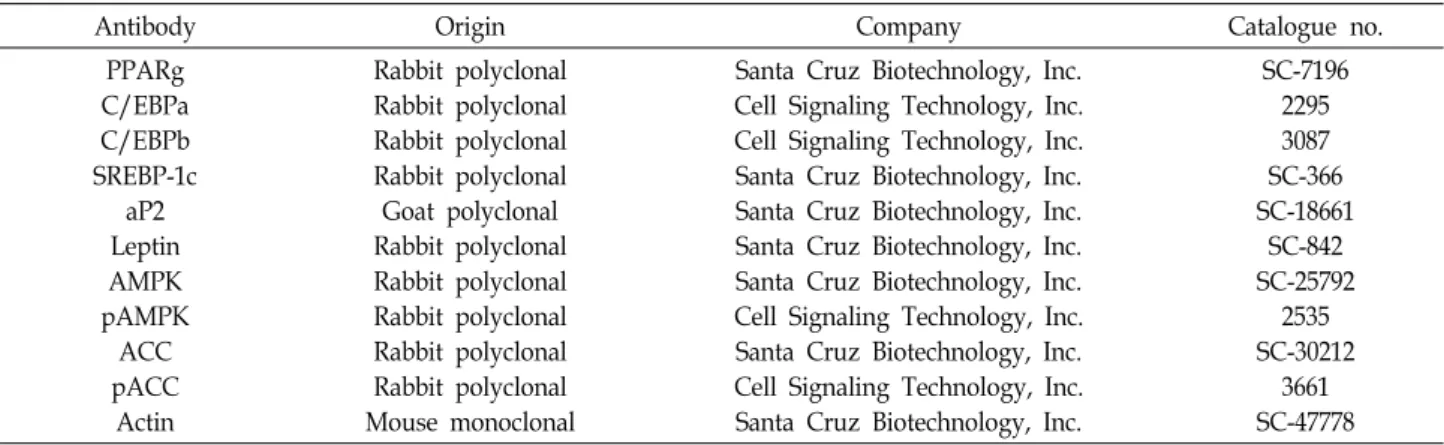
Table 1. List of antibodies used in the present study
Antibody Origin Company Catalogue no.
PPARg C/EBPa C/EBPb SREBP-1c
aP2 Leptin AMPK pAMPK
ACC pACC
Actin
Rabbit polyclonal Rabbit polyclonal Rabbit polyclonal Rabbit polyclonal Goat polyclonal Rabbit polyclonal Rabbit polyclonal Rabbit polyclonal Rabbit polyclonal Rabbit polyclonal Mouse monoclonal
Santa Cruz Biotechnology, Inc.
Cell Signaling Technology, Inc.
Cell Signaling Technology, Inc.
Santa Cruz Biotechnology, Inc.
Santa Cruz Biotechnology, Inc.
Santa Cruz Biotechnology, Inc.
Santa Cruz Biotechnology, Inc.
Cell Signaling Technology, Inc.
Santa Cruz Biotechnology, Inc.
Cell Signaling Technology, Inc.
Santa Cruz Biotechnology, Inc.
SC-7196 2295 3087 SC-366 SC-18661
SC-842 SC-25792
2535 SC-30212
3661 SC-47778 ment binding protein 1c (SREBP1c), peroxisome proliferator-acti-
vated receptor γ (PPARγ) 및 cytidine-cytidine-adenosine-adeno- sine-thymidine (CCAAT)/enhancer binding proteins (C/EBPs) 등 과 같은 adipogenic transcription factors가 단계적으로 작용 하는 것으로 알려져 있다[26, 28]. 또한 adipogenesis 과정에 의하여 지방세포가 형성되면 백색지방세포에서 나타나는 tri- glyceride의 축적 등과 같은 형태적 특징과 더불어 adipo- cyte-specific lipid binding protein (aP2) 및 Leptin 등과 같은 adi- pocyte-specific genes의 발현이 유발되는 것으로 알려져 있다 [15]. 특히 에너지 균형을 조절하는 중요한 조절자인 AMP-ac- tivated protein kinase (AMPK)는 지방세포의 adipogenesis 과 정을 조절하는 것으로 알려져 있으므로 비만예방 및 치료를 위한 약물 타겟으로 많은 연구가 이루어지고 있다[32]. 따라서 이러한 adipogenesis 과정의 조절은 지방생성기전을 조절하 는 중요한 방법 중 하나로서 비만억제를 위한 중요한 표적으 로 활용될 수 있다.
상엽(桑葉, Mori Folium)은 뽕나무과에 속한 낙엽교목인 뽕 나무(Morus alba L.)의 잎을 건조한 것으로서 각기병과 몸이 붓는 증세, 베인 상처, 식은땀, 중풍 등에 효과가 있어 예로부 터 한약재로 많이 사용되어져 왔다[14]. 최근 연구에 따르면 상엽에는 rutin, quercetin, isoquerctin, moracetin, deoxy- nojirimycin, calistegin, GABA, morusin, umbelliferone 등 다 양한 flavonoid 성분을 함유하고 있어 혈당 및 혈압강하, 소염 작용, 항균작용, 항염증 등과 같은 효능이 있는 것으로 보고되 고 있다[17]. 특히 상엽에 함유되어 있는 quercetin과 kaemp- ferol은 lymphocytes에서 H2O2에 의한 DNA 손상의 감소 및 human aortic endothelial 세포에서 세포부착과 염증반응을 억제시키는 것으로 알려져 있으며, rutin은 중성지방 억제 및 혈중 콜레스테롤 저하 효능이 있을 뿐 만 아니라 1-deoxynojir- imycin (1-DNJ)는 α-glucosidase 저해를 통한 혈당상승을 억 제를 하는 것으로도 알려져 있다[2, 13, 16]. 현재까지의 다양한 연구에서 볼 수 있듯이 상엽은 다양한 약리작용을 가지는 기능 성 물질이지만 비만억제 작용 및 그에 따른 직접적인 분자생 물학적 기전에 대한 연구는 상대적으로 매우 미비한 실정이다.
따라서 본 연구에서는 상엽의 항비만 효과와 그에 따른 분 자생물학적 기전의 해석을 위하여 3T3-L1 preadipocytes를 대 상으로 상엽 에탄올 추출물(Ethanol Extracts of Mori Folium, EEMF)이 유발하는 adipogenesis 억제 및 이와 관련된 유전자 발현을 비교 분석하여 유의적인 결과를 얻었기에 이를 보고하 는 바이다.
재료 및 방법
실험재료
본 실험에서 3T3-L1 지방전구세포의 분화를 위하여 사용된 insulin, dexamethasone 및 IBMX와 지방세포 내 triglyceride 생성을 확인하기 위하여 사용된 Oil Red O 및 AMPK의 활성 을 억제하기 위하여 사용된 compound C는 Sigma-Aldrich (St. Louis, MO, USA) 제품을 구입하여 사용하였다. 단백질 분석을 위하여 사용된 여러 종류의 1차 항체는 Santa Cruz Biotechnology Inc. (Santa Cruz, CA, USA) 및 Cell Signaling Technology (Beverly, MA, USA)에서 구입하였으며(Table 1), immunoblotting을 위해 2차 항체로 사용된 peroxidase-la- beled donkey anti-rabbit 및 peroxidase-labeled sheep an- ti-mouse immunoglobulin은 Amersham Life Science Corp.
(Arlington Heights, IL, USA)에서 구입하였다.
상엽 에탄올 추출물 제조
실험에 사용된 상엽은 대한생약식품(주)에서 구입하였으 며, 상엽 에탄올 추출물인 EEMF를 얻기 위하여 흐르는 물로 충분히 세척하고 건조시킨 후 잘게 분쇄하였다. 상엽 100 g 당 에탄올 1 l를 첨가하여 60℃, 150 rpm으로 3일간 교반 후 이를 3,000 rpm에서 20분간 원심분리하여 상층액만 분리하였 다. 분리된 상층액을 Whatman 필터(No.2)로 여과하고 감압농 축과정을 통하여 고형성분을 얻어내고 막자사발로 잘게 마쇄 하고 밀봉시켜 -70℃ 초저온 냉동고에 보관하였다. 실험 시에 는 dimethyl sulfoxide (DMSO)를 이용하여 100 mg/ml의 농도 로 만든 다음 이를 적정 농도로 배지에 희석하여 처리하였다.
세포배양
실험에 사용된 세포주인 mouse fibroblast인 3T3-L1 pre- adipocytes는 American Type Culture Collection (ATCC, Manassas, VA, USA)에서 분양받았다. 3T3-L1 preadipocytes 는 90% Dulbecco's Modified Eagle’s Medium (DMEM, Gibco BRL, Grand Island, NY, USA), 10% bovine calf serum (BCS, Gibco BRL, Grand Island, NY, USA) 및 1% penicillin 및 streptomycin (Gibco BRL, Grand Island, NY, USA)이 포함된 성장배지를 사용하여 37℃, 5% CO₂조건 하에서 배양하였다.
세포수의 증식에 따른 과밀도 현상을 해소하기 위하여 성장배 지의 교환을 매 48시간마다 실시하여 적정수의 세포를 유지하 였다.
3T3-L1 preadipocytes의 분화유도 및 형태관찰
3T3-L1 preadipocytes를 adipocytes로 분화시키기 위하여 10% BCS와 1%의 penicillin 및 streptomycin이 포함된 성장배 지를 사용하여 confluent 상태까지 배양하였다. Confluent 상 태에서 10% fetal bovine serum (FBS, Gibco BRL, Grand Island, NY, USA) 및 1%의 penicillin 및 streptomycin이 포함 된 분화배지를 사용하여 2일간 더 배양한 후 10 μg/ml insulin, 0.1 μM dexamethasone 및 0.5 mM IBMX (MDI)가 포함된 분 화배지로 교환하여 2일간 배양하였으며, 그 후 매 2일마다 10 μg/ml insulin이 포함된 분화배지로 교환하였다. 또한 3T3-L1 preadipocytes의 분화억제 정도를 확인하기 위하여 MDI 및 insulin이 포함된 분화배지로 교환할 때 적정 농도의 EEMF를 처리하였다. 상기와 같이 분화를 유도한 3T3-L1 preadipo- cytes는 다양한 실험적 분석을 위하여 사용하였다.
또한 3T3-L1 preadipocytes가 adipocytes로의 분화에 따른 형태변화에 EEMF가 어떠한 영향을 미치는 지를 확인하기 위 하여 상기와 동일한 방법으로 분화 및 EEMF를 처리한 후 도립 현미경(inverted microscope, Carl Zeiss, Gottingen, Ger- many)을 이용하여 200배의 배율로 관찰한 다음 Axio Vision 프로그램을 이용하여 사진 촬영을 하였다.
세포 생존율 측정
EEMF가 3T3-L1 preadipocytes의 생존율에 미치는 영향을 조사하기 위하여 세포 배양용 6 well plate에 3T3-L1 pre- adipocytes를 분주하여 confluent 상태까지 배양한 후 EEMF 를 적정 농도로 처리하였다. 72시간 경과 후 상층액을 제거하 고 0.05% trypsin-EDTA를 처리하여 세포를 부유시킨 다음 phosphate-buffered saline (PBS)와 0.5% trypan blue solution (Gibco BRL, Grand Island, NY, USA)을 각 well 당 첨가하였 다. 약 2분 후 sample 을 hemocytometer에 적용한 후 도립 현미경을 이용하여 살아있는 세포를 계수하여 상대적 수치로 비교하였다. 세포 생존율을 측정하기 위한 또 다른 방법으로 상기와 동일한 방법으로 준비된 세포를 대상으로 배지를 제거
하고 0.5 mg/ml 농도의 tetrazolium bromide salt (MTT, Amresco, Solon, OH, USA)를 분주하고 빛을 차단한 다음 CO2 incubator에서 배양시켰다. 3시간 경과 후 MTT 시약을 제거하고 DMSO를 적정량 분주하여 well에 생성된 formazin 을 모두 녹인 다음 96 well plate에 200 μl씩 옮겨서 ELISA reader (Molecular Devices, Sunnyvale, CA, USA)로 540 nm 에서 흡광도를 측정하였다.
Oil Red O 염색 및 triglyceride 정량
Oil red O 염색법은 총 지질을 정량할 때 쓰이는 색소결합 법으로서 지질에만 특이적으로 결합하므로 adipocytes에 생 성된 지방 빈도를 파악할 수 있다. 따라서 분화가 유발된 3T3-L1 adipocytes 내에 생성되는 lipid droplet에 EEMF가 어 떠한 영향을 미치는 지를 확인하기 위하여 Oil Red O 염색을 실시하였다. 대조군과 각기 다른 농도의 EEMF가 처리된 3T3-L1 adipocytes를 대상으로 배지를 제거하고 PBS로 세척 한 다음 3.7% formalin으로 1시간 동안 고정하였다. 고정이 끝난 후 60% isopropanol을 이용하여 세포를 세척한 다음 Oil Red O solution을 처리하여 실온에서 20분 간 염색을 실시하 였다. 염색 후 Oil Red O solution을 제거하고 증류수로 3회 세척한 다음 염색된 세포를 도립 현미경을 이용하여 관찰하고 Axio Vision 프로그램을 이용하여 사진 촬영을 하였다. 또한 EEMF가 유발하는 triglyceride의 생성억제 정도의 정량적 분 석을 위하여 100% isopropanol을 이용하여 세포에 염색된 Oil Red O solution을 녹여낸 다음 96 well plate에 200 μl씩 옮겨 서 ELISA reader로 500 nm에서 흡광도를 측정하였다.
Western blot analysis
Adipogenic transcription factors 및 adipocyte-specific genes의 발현에 EEMF가 어떠한 영향을 미치는 지를 확인하 기 위하여 Western blot 분석을 실시하였다. 먼저 상기와 동일 한 방법으로 준비된 세포를 대상으로 적당량의 lysis buffer [25 mM Tris-Cl (pH 7.5), 250 mM NaCl, 5 mM EDTA, 1%
NP-40, 1 mM phenymethylsulfonyl fluoride (PMSF), 5 mM dithiothreitol (DTT)]를 첨가하여 4℃에서 1시간 동안 반응시 킨 후, 14,000 rpm으로 30분간 원심분리하여 상층액에 있는 총 단백질을 분리하였다. 상층액의 단백질 농도는 Bio-Rad 단 백질 정량 시약(Bio-Rad, Hercules, CA, USA)과 그 사용방법 에 따라 정량 한 다음 동량의 Laemmli sample buffer (Bio- Rad)를 섞어서 protein sample을 만들었다. 이렇게 만들어진 protein sample을 sodium dodecyl sulphate (SDS)-polyacryl- amide gel을 이용하여 전기영동으로 분자량에 따라 분리한 후, electroblotting을 실시하여 분리된 단백질을 nitrocellulose membrane (Schleicher and Schuell, Keene, NH, USA)으로 전이시켰다. 단백질이 전이된 nitrocellulose membrane을 5%
skim milk를 처리하여 비특이적인 단백질들에 대한 blocking
A B
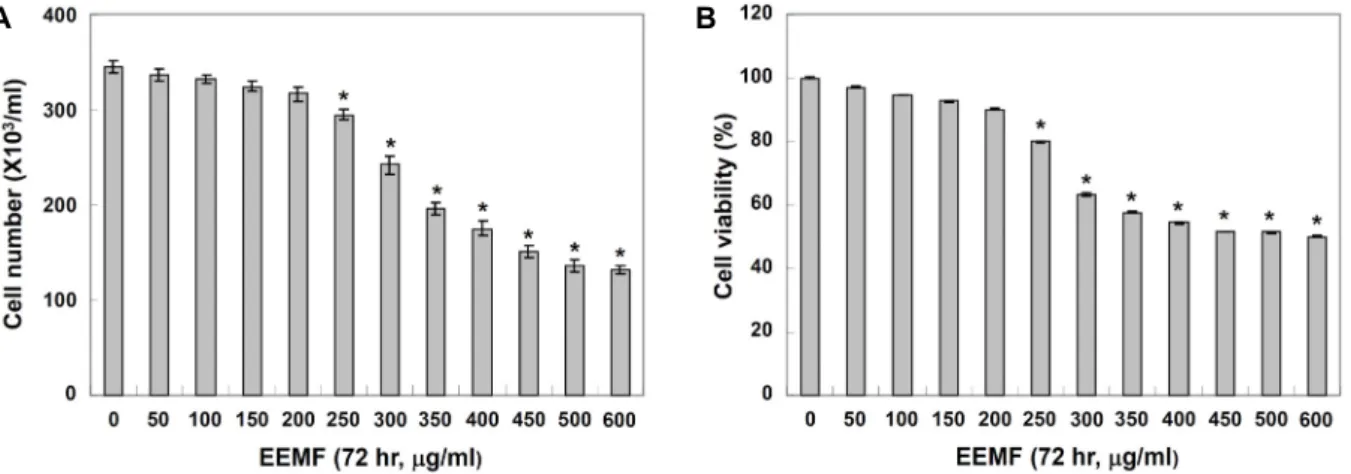
Fig. 1. Effects of EEMF on the cell growth in 3T3-L1 mouse preadipocytes. Cells were treated with the indicated concentrations of EEMF for 72 hr. Cell number (A) and viability (B) were determined by hemocytometer counts of trypan blue excluding cells and MTT assay, respectively. The data are expressed as the mean ± SD of three independent experiments. The significance was determined by the Student’s t-test (*p<0.05 vs. untreated control).
을 실시하고 각각의 1차 항체를 처리하여 4℃에서 12시간 이 상 반응시킨 다음 PBS-T로 세척하고 처리된 1차 항체에 따른 2차 항체를 처리하여 상온에서 1시간 동안 반응시켰다. 반응 이 끝난 후 암실에서 Enhanced Chemiluminoesence (ECL) solution (Amersham Life Science Corp., Arlington Heights, IL, USA)을 적용시킨 다음 X-ray film에 감광시켜 특정 단백질 의 발현 양을 분석하였다.
통계분석
모든 실험 결과는 SPSS ver. 18.0 (SPSS Inc., Chicago, IL, USA) 통계 프로그램을 이용하여 평균(mean) ± 표준편차(SD) 로 나타냈다. 각 실험군의 분석 항목별 통계의 유의성 검증은 분산분석(Analysis of Vatiance, ANOVA)을 한 후, Student t-test를 이용하여 *p<0.05 수준에서 검증하였다.
결과 및 고찰
EEMF가 3T3-L1 preadipocyte 성장에 미치는 영향 EEMF가 3T3-L1 preadipocytes의 세포독성에 어떠한 영향 을 미치는 지를 확인하기 위하여 EEMF 처리에 따른 3T3-L1 preadipocytes의 성장억제 및 생존율 정도를 조사하였다. 먼 저 EEMF가 유발하는 성장억제 정도를 확인하기 위하여 다양 한 농도의 EEMF를 72시간 동안 처리한 다음 hemocytometer 를 이용하여 살아있는 세포의 수를 계수하여 비교한 결과는 Fig. 1A에 나타낸 바와 같다. 결과에서 나타난 바와 같이 200 μg/ml 처리군까지는 성장억제 현상이 크게 나타나지 않았지 만 250 μg/ml 처리군에서부터는 처리농도 증가에 따른 성장 억제가 증가되는 것으로 관찰되었다. 상기와 동일한 조건에서 EEMF가 3T3-L1 preadipocytes의 생존율에 어떠한 영향을 미 치는 지 알아보기 위하여 MTT assay를 실시한 결과는 Fig.
1B에 나타내었다. EEMF가 유발하는 생존율 억제의 경우에도 200 μg/ml 처리군까지는 유의적인 변화가 거의 나타나지 않 았지만 250 μg/ml 처리군에서부터 생존율이 강하게 억제된다 는 것을 알 수 있었다. 이상의 결과를 살펴볼 때 EEMF 200 μg/ml 처리군까지는 3T3-L1 preadipocytes에 대한 세포독성 이 거의 없는 것으로 판단되어 이후의 실험들은 200 μg/ml의 농도범위에서 실시하였다.
EEMF가 lipid droplet 생성에 미치는 영향
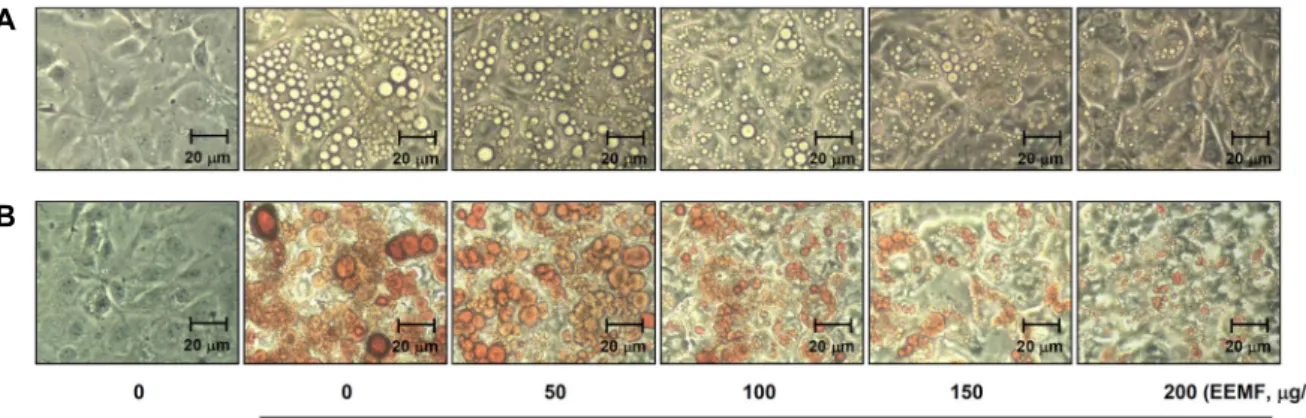
지방세포로의 분화되는 과정에 생성되는 과정에 생성되는 lipid droplet은 phospholipid monolayer에 의하여 둘러싸여 있는 비활성 소낭으로서 소포체의 이중막 사이에 triglyceride 와 cholesterol ester가 축적되어 층이 나누어지기 시작하면서 만들어진다[22]. 성숙한 지방세포에서의 lipid droplet은 LPL 에 의한 triglyceride 유입과 adipose triglyceride lipase (ATGL) 및 hormone sensitive lipase (HSL)에 의한 trigly- ceride 유출에 의하여 조절되는 것으로 알려져 있으며, 이러한 lipid droplet은 비만유발 뿐 만 아니라 암, 동맥경화 및 제2형 당뇨병 등과 같은 대사성 질환의 유발에도 관여하는 것으로 보고되고 있다[18, 30]. 따라서 EEMF가 3T3-L1 preadipocytes 의 adipogenesis 과정에서 나타나는 lipid droplet 생성에 어떠 한 영향을 미치는 지를 확인하기 위하여 분화유도 시 EEMF를 적정농도로 처리한 다음 Oil red O 염색 전과 후로 구분하여 세포 내 lipid droplet의 생성 정도를 도립 현미경으로 관찰하 였다. Fig. 2의 결과에서 알 수 있듯이 분화를 유도하지 않았을 경우에는 lipid droplet의 형성이 유발되지 않았지만 MDI 처 리를 통하여 분화를 유도하였을 경우에는 세포질 내 lipid droplet의 형성이 활발하게 유발되는 것으로 관찰되었으며, 이렇게 형성된 lipid droplet은 EEMF 처리에 의하여 농도 의 존적으로 lipid droplet의 형성이 현저하게 억제되는 것으로
A
B
Fig. 2. Effects of EEMF on the microscopic morphological changes and lipid droplet accumulation of differentiated 3T3-L1 mouse preadipocytes. Differentiation of confluent 3T3-L1 mouse preadipocytes was initiated with MDI (0.5 mmol/l 3-isobytyl-1- methylxanthine, 0.5 μmol/l dexamethasone, and 5 μg/ml insulin) and maintained DMEM-5% FBS medium (maintenance differentiation medium) in the absence or presence of EEMF for 8 days. (A) Differentiating 3T3-L1 cells were visualized by light microscopy. Magnification, ×200. (B) Cells were fixed and stained with Oil Red O to visualize lipid droplets by light microscopy. Magnification, ×200.
Fig. 3. Inhibitory effects of EEMF on triglyceride accumulation of differentiated 3T3-L1 mouse preadipocytes. Triglyceride contents were determined by Oil Red O staining after treatment of the absence or presence of EEMF. The rates of triglyceride contents were measured at λ=500 nm wavelength by the ELISA reader. The data are expressed as the mean ± SD of three independent experiments. The significance was determined by the Student’s t-test (*p<0.05 vs. untreated control).
나타났다. 따라서 EEMF는 3T3-L1 preadipocytes에서 adipo- cytes로의 분화를 억제한다는 것을 알 수 있었다.
EEMF가 triglyceride 생성에 미치는 영향
중성지방으로 알려진 triglyceride는 glycerol 1분자와 fatty acid 3분자가 ester 결합에 의하여 연결된 형태를 가지고 있으 며, 음식물로 섭취하는 지방의 95% 이상을 차지하며 포도당과 함께 세포의 중요 에너지원으로 사용된다[3]. 하지만 여분의 triglyceride는 지방세포에 흡수되고 저장되어 비만의 원인으 로 작용함으로서 다양한 질환의 원인이 되는 것으로 알려져 있다[11]. 이러한 지방세포에서의 triglyceride의 저장은 tri- glyceride-rich lipoprotein인 chylomicron 및 very low den- sity lipoprotein (VLDL) 등에 의하여 유발되는 것으로 알려져 있다[31]. 따라서 triglyceride의 생성에 EEMF가 어떠한 영향 을 미치는 지를 확인하기 위하여 Oil Red O로 염색된 lipid droplet을 isopropanol로 추출한 후 triglyceride의 함량을 측 정한 결과는 Fig. 3에 나타난 바와 같다. 결과에서 알 수 있듯이 MDI 처리에 의해 지방세포로 분화됨에 따라 triglyceride의 생성이 현저하게 증가되었으나 EEMF 처리에 의하여 증가하 였던 triglyceride의 생성 정도가 점차적으로 감소되었으며, 최 고 농도인 200 μg/ml 처리군에서는 약 60% 정도의 trigly- ceride 생성 억제효과가 있는 것으로 나타났다. 이상의 결과를 살펴보면 EEMF는 triglyceride 생성 억제효과가 있는 것으로 나타났으며, 이러한 효과는 lipid droplet의 형성억제와 연관 이 있는 것으로 생각된다.
EEMF가 adipogenic transcription factors 및 adipocyte- specific genes의 발현에 미치는 영향
Adipogenesis 과정에는 각 단계별로 많은 종류의 adipo-
genic transcription factors가 관여하는 것으로 알려져 있다.
먼저 분화초기에 발현되는 C/EBPβ는 또 다른 adipogenic transcription factors인 C/EBPα 및 PPARγ의 발현을 촉진함으 로서 insulin-sensitive glucose uptake와 같은 성숙한 비만세 포의 특징을 증가시키는데 관여하며, SREBP1c의 경우에는 in- sulin에 의하여 발현되어 PPARγ의 발현에 직접적으로 관여하 는 것으로 알려져 있다[19, 20]. 분화초기 adipogenic tran- scription factors에 의하여 활성화된 C/EBPα 및 PPARγ는 adi- pogenesis의 핵심 조절자로 알려져 있으며, 두 유전자의 상호
A B
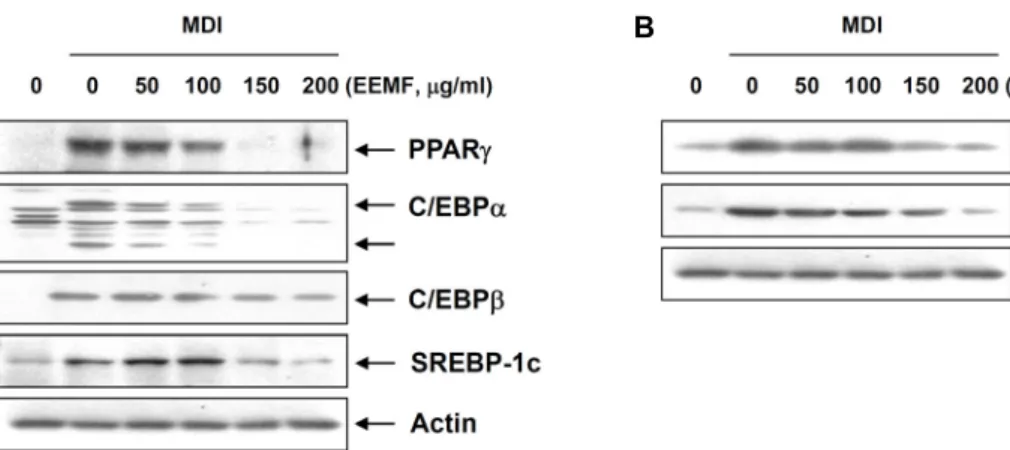
Fig. 4. Effects of EEMF on the levels of adipogenic transcription factors (A) and adipocyte-specific genes (B) expression in differentiated 3T3-L1 mouse preadipocytes. Differentiation of confluent 3T3-L1 mouse preadipocytes was incubated with the absence or presence of EEMF for 8 days after initiated with MDI. Cells were lysed and cellular proteins were separated by SDS-poly- acrylamide gels and transferred onto nitrocellulose membranes. The membranes were probed with the indicated antibodies.
Proteins were visualized using an ECL detection system. Actin was used as an internal control.
A B
Fig. 5. Roles of AMPK signaling pathway on the EEMF-induced inhibition of adipogenesis in differentiated 3T3-L1 mouse preadipocytes. (A) Effects of EEMF on AMPK and ACC phosphorylation in 3T3-L1 cells. Confluent cells were treated with various concentrations of EEMF. (B) Effects of AMPK inhibitor, Compound C, on the levels of adipogenic transcription factors in 3T3-L1 cells. Cells were pre-treated with compound C for 1 hr, and then treated with 200 μg/ml of EEMF. On day 8, completely differentiated cells were lysed and cellular proteins were separated by SDS-polyacrylamide gels and trans- ferred onto nitrocellulose membranes. The membranes were probed with the indicated antibodies. Proteins were visualized using an ECL detection system. Actin was used as an internal control.
작용을 통한 상승효과를 일으킴으로서 lipid droplet 생성 및 세포의 크기 증가 등과 같은 형태적 특징을 완성하고 aP2 및 Leptin 등과 같은 adipocyte-specific genes 발현을 통한 지방세 포의 특징을 유발하는 것으로 알려져 있다[5, 7]. 따라서 본 연구에서는 EEMF가 유발하는 adipogenesis 억제와 관련하여 adipogenic transcription factors 및 adipocyte-specific genes
의 발현에 어떠한 영향을 미치는지 단백질 수준에서 확인하였 다. 먼저 EEMF 처리에 따른 adipogenic transcription factors 의 발현 정도를 확인한 결과 Fig. 4A에 나타난 바와 같이 EEMF를 처리하지 않고 분화를 유발하였을 경우 PPARγ, C/EBPα, C/EBPβ 및 SREBP1c의 발현이 현저하게 증가하였지 만 EEMF 처리에 의하여 농도 의존적인 감소가 유발되었다.
또한 adipocyte-specific genes인 aP2 및 Leptin 경우에도 Fig.
4B에서와 같이 EEMF 처리에 의하여 현저하게 감소되는 것으 로 나타났다. 이상의 결과를 종합해 보면 EEMF는 adipogenic transcription factors 발현 억제를 통한 adipogenesis의 억제를 유발함으로서 lipid droplet 및 triglyceride 생성 감소를 유발 하고 adipocyte-specific genes의 발현을 감소시킨다는 것을 알 수 있었다.
EEMF가 AMPK 경로를 통한 adipogegesis 억제에 미치 는 영향
AMPK는 에너지 균형을 조절하는 중요한 조절자 및 에너 지 센서로서 에너지 소모에 의하여 증가된 세포 내 AMP에 의한 AMP/ATP ratio 증가에 따른 AMPK의 인산화, serine/
threonine protein kinase로서 종양억제인자로 알려진 LKB1 및 세포질 내의 Ca2+ level의 변화에 의한 CaMKKβ의 활성화 에 의하여 활성화되는 것으로 알려져 있다[8, 25]. 활성화된 AMPK는 근육세포의 GLUT4 양을 증가시켜 근육으로 포도당 이동을 증가시키는 작용을 할 뿐만 아니라 지방산 합성 효소 인 fatty acid synthase (FAS) 및 acetyl CoA carboxylase (ACC)와 콜레스테롤 생합성 제한효소인 HMG-CoA reduc- tase의 억제를 통한 체내 지질 생성을 증가시킴으로서 adipo- genesis 과정을 촉진하는 것으로 알려져 있다[12, 21. 23]. 따라 서 EEMF에 의한 adipogenesis 억제과정에서 AMPK signal- ing pathway가 관여하는 지를 확인하였다. 먼저 AMPK 및 AMPK의 하위단계에서 작용하는 ACC의 발현 변화를 확인한 결과 Fig. 5A에 나타난 바와 같이 AMPK 및 ACC의 인산화가 현저하게 증가되는 것으로 나타났으며, 이러한 결과를 통하여 EEMF에 의한 adipogenesis 억제에 있어서 AMPK의 활성화 가 관여한다는 것을 예상할 수 있었다. 다음으로 AMPK 억제 제인 compound C를 선처리하여 AMPK 경로를 억제하였을 경우 Fig. 5B에 나타난 바와 같이 EEMF에 의한 AMPK 및 ACC 의 인산화가 억제되었으며, adipogenic transcription factors 인 PPARγ, C/EBPα, C/EBPβ 및 SREBP1c의 발현이 다시 증가 되는 것으로 나타났다. 이상의 결과를 살펴볼 때 EEMF에 의하 여 유발되는 adipogegesis 억제는 AMPK의 활성화를 통한 adipogenic transcription factors의 발현감소가 중요한 역할을 한다는 것을 알 수 있었다. 본 연구 결과는 상엽이 비만억제제 또는 치료제의 소재로 사용될 수 있는 가능성을 제시하는 것 으로서 지속적인 연구를 위한 귀중한 자료로서의 그 가치가 매우 높을 것으로 생각되지만 추가적으로 에너지 대사 및 신 호전달계 등과 연관된 항비만 기전에 대한 생화학적 해석과 함께 상엽에 포함되어 있는 유효성분에 대한 분석이 필요할 것으로 판단된다.
감사의 글
이 논문은 2014년도 정부(미래창조과학부)의 재원으로 한
국연구재단의 지원을 받아 수행된 기초연구사업임(No. 2014 R1A1A1008460).
References
1. Attie, A. D. and Scherer, P. E. 2009. Adipocyte metabolism and obesity. J. Lipid. Res. 50, S395-399.
2. Chao, P. Y., Lin, K. H., Chiu, C. C., Yang, Y. Y., Huang, M. Y. and Yang, C. M. 2013. Inhibitive effects of mulberry leaf-related extracts on cell adhesion and inflammatory re- sponse in human aortic endothelial cells. Evid. Based Complement Alternat. Med. 2013, 267217.
3. Chen, H. C. and Farese, R. V. Jr. 2000. DGAT and trigly- ceride synthesis: a new target for obesity treatment? Trends Cardiovasc. Med. 10, 188-192.
4. Derosa, G., Cicero, A. F., Murdolo, G., Piccinni, M. N., Fogari, E., Bertone, G., Ciccarelli, L. and Fogari, R. 2005.
Efficacy and safety comparative evaluation of orlistat and sibutramine treatment in hypertensive obese patients.
Diabetes Obes. Metab. 7, 47-55.
5. Dong, J., Ishimori, N., Paigen, B., Tsutsui, H. and Fujii, S.
2008. Role of modulator recognition factor 2 in adipogenesis and leptin expression in 3T3-L1 cells. Biochem. Biophys. Res.
Commun. 366, 551-555.
6. Esposito, P., Rampino, T., Gregorini, M., Soccio, G., Piotti, G., Bedino, G., Balenzano, C. T., Roscini, E., Cosmai, L., Portalupi, V., Libetta, C. and Dal Canton, A. 2008. Severe symptomatic hyponatremia during sibutramine therapy: a case report. Am. J. Kidney Dis. 52, 137-139.
7. Evans, M., Park, Y., Pariza, M., Curtis, L., Kuebler, B. and McIntosh, M. 2001. Trans-10,cis-12 conjugated linoleic acid reduces triglyceride content while differentially affecting peroxisome proliferator activated receptor gamma2 and aP2 expression in 3T3-L1 preadipocytes. Lipids 36, 1223-1232.
8. Fisslthaler, B. and Fleming, I. 2009. Activation and signaling by the AMP-activated protein kinase in endothelial cells.
Circ. Res. 105, 114-127.
9. Furukawa, S., Fujita, T., Shimabukuro, M., Iwaki, M., Yamada, Y., Nakajima, Y., Nakayama, O., Makishima, M., Matsuda, M. and Shimomura, I. 2004. Increased oxidative stress in obesity and its impact on metabolic syndrome. J.
Clin. Invest. 114, 1752-1761.
10. Gesta, S., Tseng, Y. H. and Kahn, C. R. 2007. Developmental origin of fat: tracking obesity to its source. Cell 131, 242-256.
11. Goldberg, I. J. 2012. Triglyceride: one molecule at the center of health and disease. Biochim. Biophys. Acta. 1821, 719-720.
12. He, Y., Li, Y., Zhao, T., Wang, Y. and Sun, C. 2013. Ursolic acid inhibits adipogenesis in 3T3-L1 adipocytes through LKB1/AMPK pathway. PLoS One 8, e70135.
13. Huang, S. S., Yan, Y. H., Ko, C. H., Chen, K. M., Lee, S.
C. and Liu, C. T. 2014. A Comparison of Food-grade Folium mori (Sāng Yè) Extract and 1-Deoxynojirimycin for Glycemic Control and Renal Function in Streptozotocin-in- duced Diabetic Rats. J. Tradit. Complement Med. 4, 162-170.
14. Jeon, Y. S. and Kim, M. W. 2011. The antioxidative effects
and isolation and characterization of the extracts from Morus alba L.. Kor. J. Food Nutr. 24, 94-100.
15. Ji, S., Doumit, M. E. and Hill, R. A. 2015. Regulation of adi- pogenesis and key adipogenic gene expression by 1, 25-dihydroxyvitamin D in 3T3-L1 cells. PLoS One 10, e0126142.
16. Jiang, L. D., Xuan, G. D., Zhao, L., Zhu, Y. F. and Lou, X.
F. 2011. Study on determination and pharmacokinetics of metabolites from Folium Mori extract in rats. Zhejiang Da Xue Xue Bao Yi Xue Ban 40, 395-401.
17. Kim, H. G., Jeong, H. U., Park, G., Kim, H., Lim, Y. and Oh, M. S. 2015. Mori folium and mori fructus mixture at- tenuates high-fat diet-induced cognitive deficits in mice.
Evid. Based Complement Alternat. Med. 2015, 379418.
18. Le Lay, S. and Dugail, I. 2009. Connecting lipid droplet biol- ogy and the metabolic syndrome. Prog. Lipid Res. 48, 191- 195.
19. Lee, I., Kim, J., Ryoo, I., Kim, Y., Choo, S., Yoo, I., Min, B., Na, M., Hattori, M. and Bae, K. 2010. Lanostane tri- terpenes from Ganoderma lucidum suppress the adipo- genesis in 3T3-L1 cells through down-regulation of SREBP- 1c. Bioorg. Med. Chem. Lett. 20, 5577-5581.
20. Liang, Y. C., Yang, M. T., Lin, C. J., Chang, C. L. and Yang, W. C. 2016. Bidens pilosa and its active compound inhibit adipogenesis and lipid accumulation via down-modulation of the C/EBP and PPARγ pathways. Sci. Rep. 6, 24285.
21. Mitsuhashi, K., Senmaru, T., Fukuda, T., Yamazaki, M., Shinomiya, K., Ueno, M., Kinoshita, S., Kitawaki, J., Katsuyama, M., Tsujikawa, M., Obayashi, H., Nakamura, N.
and Fukui, M. 2016. Testosterone stimulates glucose uptake and GLUT4 translocation through LKB1/AMPK signaling in 3T3-L1 adipocytes. Endocrine 51, 174-184.
22. Padilla-Benavides, T., Velez-delValle, C., Marsch-Moreno, M., Castro-Muñozledo, F. and Kuri-Harcuch, W. 2016.
Lipogenic enzymes complexes and cytoplasmic lipid droplet formation during adipogenesis. J. Cell Biochem. 117, 2315-2326.
23. Pang, J., Choi, Y. and Park, T. 2008. Ilex paraguariensis ex-
tract ameliorates obesity induced by high-fat diet: potential role of AMPK in the visceral adipose tissue. Arch. Biochem.
Biophys. 476, 178-185.
24. Popkin, B. M., Adair, L. S. and Ng, S. W. 2012. Global nu- trition transition and the pandemic of obesity in developing countries. Nutr. Rev. 70, 3-21.
25. Shen, Q. W., Zhu, M. J., Tong, J., Ren, J. and Du, M. 2007.
Ca2+/calmodulin-dependent protein kinase kinase is in- volved in AMP-activated protein kinase activation by al- pha-lipoic acid in C2C12 myotubes. Am. J. Physiol. Cell Physiol. 293, C1395-1403.
26. Siersbæk, R., Baek, S., Rabiee, A., Nielsen, R., Traynor, S., Clark, N., Sandelin, A., Jensen, O. N., Sung, M. H., Hager, G. L. and Mandrup, S. 2014. Molecular architecture of tran- scription factor hotspots in early adipogenesis. Cell Rep. 7, 1434-1442.
27. Spiegelman, B. M. and Flier, J. S. 2001. Obesity and the regu- lation of energy balance. Cell 104, 531-543.
28. White, U. A. and Stephens, J. M. 2010. Transcriptional fac- tors that promote formation of white adipose tissue. Mol.
Cell Endocrinol. 318, 10-14.
29. Williams, E. P., Mesidor, M., Winters, K., Dubbert, P. M.
and Wyatt, S. B. 2015. Overweight and obesity: prevalence, consequences, and causes of a growing public health prob- lem. Curr. Obes. Rep. 4, 363-370.
30. Yang, X., Heckmann, B. L., Zhang, X., Smas, C. M. and Liu, J. 2013. Distinct mechanisms regulate ATGL-mediated adi- pocyte lipolysis by lipid droplet coat proteins. Mol. Endocri- nol. 27, 116-126.
31. Yano, T., Kobori, S., Sakai, M., Anami, Y., Matsumura, T., Matsuda, H., Kasho, M. and Shichiri, M. 1997. Beta-very low density lipoprotein induces triglyceride accumulation through receptor mediated endocytotic pathway in 3T3-L1 adipocytes. Atherosclerosis 135, 57-64.
32. Yuan, H. D. and Piao, G. C. 2011. An active part of Artemisia sacrorum Ledeb. inhibits adipogenesis via the AMPK signaling pathway in 3T3-L1 adipocytes. Int. J. Mol.
Med. 27, 531-536.
초록:3T3-L1 세포에서 상엽이 유발하는 AMPK signaling pathway를 통한 adipogenesis 억제에 관한 연구
지선영1․전경윤1․정진우2․홍수현2․허만규1․최영현2,3․박철1*
(1동의대학교 자연생활과학대학 분자생물학과, 2동의대학교 한의과대학 생화학교실, 3동의대학교 항노화연구소
및 Blue-Bio 소재개발센터)
상엽은 뽕나무 잎을 건조한 약재로서 항염증, 항당뇨, 미백, 항산화, 항박테리아, 항알러지 및 면역조절 등과 같은 여러 가지 약리작용을 하는 것으로 알려져 있으나 항비만 효능에 대한 연구는 부족한 실정이다. 본 연구에서 는 상엽 에탄올 추출물(ethanol extracts of Mori Folium, EEMF)이 유발하는 항비만 효능을 확인하기 위하여 3T3-L1 지방전구세포가 지방세포로 분화되는 과정에서 EEMF가 어떠한 영향을 미치는 지를 조사하였다. 3T3-L1 지방전구세포의 분화유도 시 EEMF를 처리하였을 경우 지방세포의 특징인 지방방울의 수 및 지방함량이 농도의 존적으로 감소하였으며, triglyceride의 생성도 억제되는 것으로 나타났다. 또한 EEMF는 pro-adipogenic tran- scription factors인 SREBP-1c, PPARγ, C/EBPα 및 C/EBPβ 의 발현억제와 함께 adipocyte-specific genes인 aP2 및 Leptin의 발현억제도 유발하는 것으로 조사되었다. 특히 EEMF는 AMPK 및 ACC의 인산화를 억제하는 것으로 나 타났지만 AMPK 억제제인 compound C를 이용하여 AMPK의 활성을 억제하였을 경우 EEMF에 의하여 유발되는 pro-adipogenic transcription factors 및 adipocyte-specific genes의 억제현상이 회복되었다. 이상의 결과에서 EEMF가 유발하는 adipogenesis의 억제는 AMPK signaling pathway의 활성화를 통하여 유발된다는 것을 알 수 있었으며, 추가적인 연구를 통하여 상엽에 함유되어 있는 유효성분에 대한 분석이 필요할 것으로 생각된다.