• 검색 결과가 없습니다.

Hepatoprotective effect of Bifidobacterium adolescentis SPM0212 on carbon tetrachloride induced hepatotoxicity

N/A
N/A
Protected

Academic year: 2021

Share "Hepatoprotective effect of Bifidobacterium adolescentis SPM0212 on carbon tetrachloride induced hepatotoxicity"

Copied!
8
0
0

로드 중.... (전체 텍스트 보기)

전체 글

(1)

보 문

Hepatoprotective effect of Bifidobacterium adolescentis SPM0212 on carbon tetrachloride induced hepatotoxicity

Dokyung Lee 1 , Jaeeun Park 1 , Minji Kim 1 , Youngjoo Lee 1 , Jaegoo Seo 2 , Namjoo Ha 1 , and Kyungjae Kim 1 *

1

College of Pharmacy, Sahmyook University, Seoul 139-742, Republic of Korea

2

R&D Center, Cellbiotech Co. Ltd., Kimpo 157-030, Republic of Korea

사염화탄소로 유도된 간 손상에 대한 비피도박테리움 어돌레센티스 SPM0212의 보호효과

이도경 1 ・ 박재은 1 ・ 김민지 1 ・ 이영주 1 ・ 서재구 2 ・ 하남주 1 ・ 김경제 1 *

1

삼육대학교 약학과,

2

㈜쎌바이오텍 세포공학연구소

(Received August 3, 2015; Accepted September 22, 2015)

ABSTRACT: Probiotics are microbial food supplements or components of bacteria which have traditionally been added to dairy foods for extra health boost. Our aim was to evaluate the hepatoprotective effect of Bifidobacterium adolescentis SPM0212 as probiotics, which we previously found has potential anti-hepatitis B virus activity. The study was conducted using Wistar albino rats and probiotics were treated orally for 9 days consecutively and acute liver injury was induced by administration of carbon tetrachloride (CCl

4

) on the 7th and 8th days. Liver damage was assessed by quantifying serum activities of glutamate oxaloacetate transaminase (SGOT) and glutamate pyruvate transaminase (SGPT), as well as by histopathological examination. B. adolescentis SPM0212 significantly prevented the elevation of SGOT and SGPT levels, and reduced the negative effect of CCl

4

on body and organ weights. Histopathological study revealed the livers of the carbon tetrachloride treated rats showed almost complete loss of normal hepatocyte architecture, but that rats treated with B. adolescentis SPM0212 showed minimal damage and normal hepatocyte architecture. Our results suggest that B. adolescentis SPM0212 be considered useful probiotics for protecting the liver from xenobiotics and hepatitis B virus, and as well as useful as a functional food for maintaining human health.

Key words: Bifidobacterium adolescentis, carbon tetrachloride, hepatoprotective effect, probiotics

*For correspondence. E-mail: [email protected];

Tel.: +82-2-3399-1601; Fax: +82-2-3399-1617

The liver is a vital metabolic organ that eliminates and detoxifies exogenous drugs and chemicals (Samal and Dangi, 2014). However, the metabolism of toxic chemicals, drugs, and virus infections in liver results in hepatic damage, gross cellular changes, and cell death causing hepatotoxicity or liver damage (Jain et al., 2011). Hepatitis is the leading cause of acute liver failure (Wang et al., 2009), and hepatic problems are responsible for a significant numbers of liver transplantations and deaths (Samal and Dangi, 2014). Worldwide the mortality and morbidity associated with liver diseases continue to increase and nearly 20,000 deaths and 2,500,000 new cases were recorded in each

year (Nallamilli et al., 2013). Liver damage and failure are always associated with hepatocytes necrosis, lipid peroxidation, and elevated serum levels of biochemical parameters like the serum levels of the liver enzymes such as glutamic oxaloacetic transaminase (SGOT) and glutamate pyruvate transaminase (SGPT) (Nallamilli et al., 2013).

Despite the tremendous advances made by modern medicine,

there are few reliable drugs that protect the liver from damage

and/or aid the regeneration of hepatic cells, and thus, there is an

urgent need to develop new effective drugs without notable side

effects. Accordingly, explorations of novel and alternative

approaches are being sought for the treatment of liver disease

(Samal and Dangi, 2014).

(2)

Recently, studies on beneficial health effects of probiotics or substances they produce have been actively progressing in various fields. Probiotics are specific microbes that when consumed, contribute to the management of disease or reduce the risk of disease (Reid, 2005). The most commonly used probiotics are lactic-acid producing bacteria, such as, lactobacilli and bifidobacteria (Parvez et al., 2006). These bacteria have been shown to have multiple beneficial health effects including the establishment of intestinal microbiota, the promotion of mucosal barrier functions, the blockage and elimination of pathogens, the prevention of certain cancers, and the maturation of the innate and adaptive immune systems (Parvez et al., 2006).

Additionally, these bacteria are being used in fermented foods in several centuries without adverse effects, and are classified as Generally Recognized as Safe (GRSA) because of their histories of safe use (Wang et al., 2009).

Over past decades, studies on probiotics have mainly focused on intestinal diseases (e.g., diarrhea, constipation, ulcerative colitis, and colon cancer) since these bacteria are normal flora in gastrointestinal tract (GIT) of humans and are expected to have beneficial effects on intestinal diseases. Moreover, recent several studies have shown that specific strains of probiotics are effective at inhibiting the liver injury, or hepatic encephalopathy (HE) (Nanji et al., 1994; Kim et al., 2003; Solga, 2003; Zhao et al., 2004; Han et al., 2005a; Osman et al., 2007; Yun et al., 2007;

Zedan, 2011; Ou et al., 2012; Wang et al., 2013). In addition, in a previous study, we found B. adolescentis SPM0212 has potential anti-hepatitis B virus activity (Lee et al., 2013).

Carbon tetrachloride (CCl 4 ) administration to rats provides a useful experimental model for studying the hepatoprotective effects of drugs or compounds, because CCl 4 -induced hepato- toxicity is regarded to be similar to that of hepatotoxins in man (Muriel, 2007). Therefore, this study was performed to investigate the hepatoprotective effect of orally administered B.

adolescentis SPM0212 against CCl 4 -induced hepatotoxicity in male Wistar albino rats.

Materials and Methods

Probiotic strains

To isolate bifidobacteria, fecal samples were collected from

healthy Koreans. Fecal samples were diluted and seeded onto selective blood liver agar (Nissui Pharm.) containing 5% sheep blood. After 48 h of incubation under anaerobic conditions (90% N 2 , 5% H 2 , 5% CO 2 ) in a Bactron Anaerobic Chamber (Sheldon Manufacturing Inc.) at 37°C, brown or reddish-brown colonies 2-3 mm in diameter were selected for further identifi- cation. A fructose-6-phosphate phosphoketolase (F6PPK) test was performed to ensure that the colonies selected were bifidobacteria (Kim et al., 2008). To identify the isolated Bifidobacterium sp. at the species level, 16S rRNA sequencing was performed by Bio Leaders, and the isolated strain was identified as Bifidobacterium adolescentis SPM0212 (KCTC 18120P). B. adolescentis was cultured at 37°C for 48 h in general anaerobic medium (GAM) broth (Nissui Pharm.) under anaerobic conditions. To prepare live and cell extract of probiotic supplements, cells were harvested during the exponential growth phase by centrifugation at 4,000 × g for 10 min, washed with PBS, and resuspended in the same buffer.

These bacterial suspensions were then adjusted to a final concentration of 9.0 log CFU/ml. To prepare the cell extract of probiotic supplement, the suspension was also sonicated for 6 min (amplitude 100%) and filtered (0.45 μm). Written informed consent was obtained from all volunteers who provided samples, and the protocol was approved by the Institution Review Board of the Office of Research Development, Sahmyook University.

Experimental animals

Studies were carried out using male Wistar albino rats purchased from Orient Bio Inc.. Animals were housed in polyacrylic cages at ambient temperature (25 ± 2°C) at an RH of 50 ± 5% under a 12 h light/dark cycle with free access to food and water. After a week of acclimatization the 30 animals were divided into 5 groups of 6 namely as described below.

Experimental procedures involving animals were carried out in strict compliance with the Principles of Laboratory Animal Care (NIH) and the Animal Care and Use Guidelines of Sahmyook University (Registered no. SYUIACUC 2014-001).

Experimental design

Thirty healthy Wistar albino rats were divided equally into

(3)

Fig. 1. Reductions in CCl

4

-induced increases in the serum levels of biochemical markers of liver damage by B. adolescentis SPM0212. (A) SGOT: serum glutamic oxaloacetic transaminase, (B) SGPT: serum glutamic pyruvic transaminase. Results are the means of six determinations

± SD. Group I, normal control; Group II, CCl

4

control; Group III, Silymarin standard+CCl

4

; Group IV, live B. adolescentis SPM0212+CCl

4

; Group V, cell extract of B. adolescentis SPM0212+CCl

4

.

#

P < 0.05 vs Group I.

*

P < 0.05 vs Group II.

the 5 groups as follows: Group I served as normal controls as received only PBS, Group II served as CCl 4 controls and received PBS and carbon tetrachloride (1 ml/kg BW p.o), Group III served as Standard group and received silymarin (100 mg/kg BW p.o) and carbon tetrachloride (1 ml/kg BW p.o), Group IV served as a test group and received live probiotic supplement (9 log CFU/kg BW p.o) and carbon tetrachloride (1 ml/kg BW p.o), Group V served as test group and received cell extract of probiotic supplement (9 log CFU/kg BW p.o) and carbon tetrachloride (1 ml/kg BW p.o). All treatments were administered by oral gavage continuously for 9 days and CCl 4 was also administered on the 7th and 8th days. During the study period rats were maintained on a standard diet and water was supplied ad libitum. On the 10th day, all animals were anesthetized under mild ether anesthesia and blood was collected by cardiac puncture. Biochemical parameters were determined in serum.

Livers, spleens, and kidneys were carefully excised and washed in ice cold normal saline solution and pressed between filter paper pads and weighed. Liver tissues were stored in 10%

formalin solution for histopathological studies.

Biochemical analysis

Blood samples were allowed to clot for 45 min at room temperature. Serum was separated by centrifugation at 2,500 × g for 15 min and used to determine biochemical parameters.

SGOT and SGPT levels were measured using commercial assay kits (BioVision Inc.). Briefly, 100 μl of reaction mixture was added to each well containing serum samples in 96-well microplates (NunC), and mixtures were incubated at 37°C for 60 min SGOT and SGPT levels were then measured at 450 nm and 570 nm, respectively, using an ELISA reader (Molecular Devices). All the estimations were calculated using standard curve.

Histopathological studies

Livers were processed for histopathological study using the Modified Luna’s method and staining was carried out using Hematoxylin and Eosin, as previously described (Luna, 1968).

Statistical analysis

Results were analyzed by using one way ANOVA followed

by Dunnett’s t-test for multiple comparisons, and are expressed as means ± standard deviations (SD). The analysis was conducted using SPSS for Windows V.15.0.2 (SPSS). P values of < 0.05 were considered statistically significant.

Results

CCl 4 administration significantly elevated the serum levels of

SGOT and SGPT (174.4 IU/L, 19.1 IU/L) as compared with

normal controls (109.4 IU/L, 9.3 IU/L). However, the oral

administration of live B. adolescentis SPM0212 significantly

inhibited the elevations of SGOT and SGPT levels towards the

respective normal range (107.4 IU/L, 10.6 IU/L). Interestingly,

the SGOT and SGPT reductions by live B. adolescentis

SPM0212 were greater than those obtained by silymarin, a

standard hepatoprotective agent (Fig. 1). The effects of live and

cell extract of B. adolescentis SPM0212 were not significantly

(4)

Fig. 2. Changes in the body weights of CCl

4

administered rats. The treatments were administered by oral gavage daily for 9 days and CCl

4

was administered on the 7th and 8th days. Results are the means of six determinations ± SD. Group I, normal control; Group II, CCl

4

control;

Group III, Silymarin standard+CCl

4

; Group IV, live B. adolescentis SPM0212+CCl

4

; Group V, cell extract of B. adolescentis SPM0212+CCl

4

.

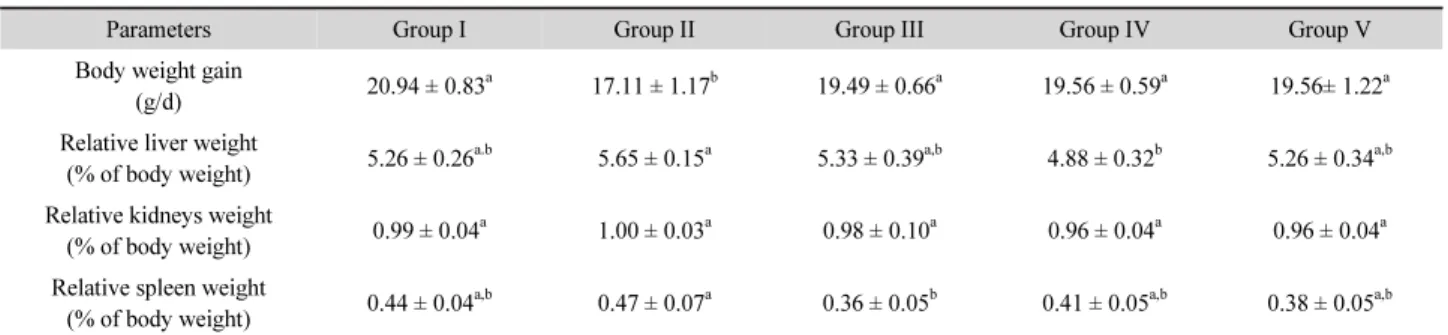
Table 1. Effect of B. adolescentis SPM0212 on body and organ weights in carbon tetrachloride treated rats

Parameters Group I Group II Group III Group IV Group V

Body weight gain

(g/d) 20.94 ± 0.83

a

17.11 ± 1.17

b

19.49 ± 0.66

a

19.56 ± 0.59

a

19.56± 1.22

a

Relative liver weight

(% of body weight) 5.26 ± 0.26

a.b

5.65 ± 0.15

a

5.33 ± 0.39

a,b

4.88 ± 0.32

b

5.26 ± 0.34

a,b

Relative kidneys weight

(% of body weight) 0.99 ± 0.04

a

1.00 ± 0.03

a

0.98 ± 0.10

a

0.96 ± 0.04

a

0.96 ± 0.04

a

Relative spleen weight

(% of body weight) 0.44 ± 0.04

a,b

0.47 ± 0.07

a

0.36 ± 0.05

b

0.41 ± 0.05

a,b

0.38 ± 0.05

a,b

Values are the means of six determinations ± SD.

Means on same lines with different superscripts are significantly different (P < 0.05).

Group I, normal control; Group II, CCl

4

control; Group III, silymarin standard+CCl

4

; Group IV, live B. adolescentis SPM0212+CCl

4

; Group V, cell extract of B. adolescentis SPM0212+CCl

4

.

different.

In addition, oral B. adolescentis SPM0212 affected CCl 4 induced changes in body and organ weights. After CCl 4

administration, the body weights in rats treated with CCl 4 alone significantly decreased from 157.0 g on day 7 to 145.2 g on day 8, but both live and cell extract of B. adolescentis SPM0212 treatment reduced this reduction in body weight to a level almost comparable to that of silymarin (Fig. 2). Significant differences in liver, kidney, and spleen weights were also observed.

Relative weights of livers, kidneys and spleens were higher in rats treated with CCl 4 alone than in normal controls. However, both live and cell extract of B. adolescentis SPM0212 treatment maintained organ weights at close to normal values. Liver weights (% of body weights) of the live B. adolescentis SPM0212 treated group were even lower than those of normal

control group, but significant difference was not observed (Table 1).

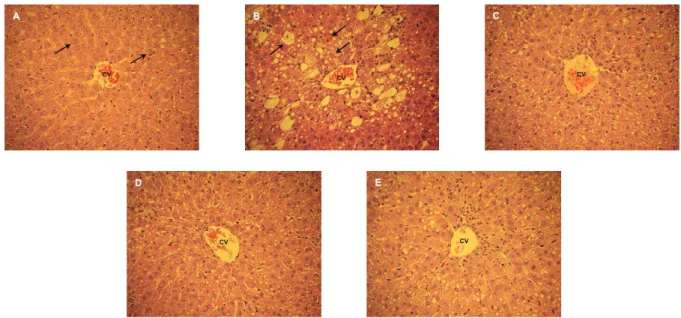
Histopathological examination of livers in live and cell extract of B. adolescentis SPM0212 treated animals revealed hepatoprotective effect. Representative photographs of histopa- thological changes are shown in Fig. 3. Liver sections of normal controls revealed a normal histological structure with hepatic lobules (Fig. 3A), whereas sections of CCl 4 controls showed a high degree of hepatic damage characterized by cytoplasmic vacuolization and necrosis of centrolobular hepatocytes, hepatocellular ballooning, pyknotic and degenerated nuclei, and near complete loss of normal hepatocyte architecture (Fig.

3B). Sections of silymarin and live and cell extract of B.

adolescentis SPM0212 treated animals revealed some histo- pathologic changes (Fig. 3C, D, and E). In these groups, the proportion of hepatocytes with a normal nucleus was greater and proportions of cells with a pyknotic nucleus or vacuolation in cytoplasm were lower than in CCl 4 controls. Furthermore, the protective effects of live and cell extract of B. adolescentis SPM0212 were similar to those of silymarin.

Discussion

Carbon tetrachloride is extensively used to induce lipid

peroxidation and hepatotoxicity. Carbon tetrachloride is

metabolized by cytochrome P4502E1 (CYP2E1) to trichloro-

methyl radical (CCl 3 ), which initiates free radical-mediated

lipid peroxidation leading to the accumulation of lipid-derived

oxidative products that cause liver injury (Recknagel, 1989;

(5)

Fig. 3. Representative photographs of histopathological changes in the livers of rats. (A) Hematoxylin-Eosin stained liver section of a normal control, normal hepatocytes had round central nucleus and homogeneous cytoplasm (arrows); (B) Liver of a CCl

4

control showing hepatocellular ballooning and pyknosis of hepatocytes (arrows); (C) Liver of a rat treated with silymarin+CCl

4

; (D) Liver of a rat treated with live B. adolescentis SPM0212+CCl

4

; (E) Liver of a rat treated with cell extract of B. adolescentis SPM0212+CCl

4

[maginification: 400×(A-E)].

Nurrochmad, 2013). Elevated levels of serum enzymes, such as SGOT and SGPT, are indicative of cellular leakages and loss of the functional integrity of the membranes of hepatocytes.

Membrane damage and necrosis cause the release of liver enzymes into the circulation (Martin and Fiedman, 2012), and as was expected, in the present study, CCl 4 significantly increased the serum levels of SGOT and SGPT. On the other hand, the oral administration of B. adolescentis SPM0212 significantly reduced increases in SGOT and SGPT levels. A similar result was reported for L. plantarum, which reduced hepatocellular necrosis, inflammatory cell infiltration, and serum liver enzyme levels in liver-injured rats (Adawi et al., 1997). Interestingly, the protective effect of B. adolescentis SPM0212 on liver injury induced by CCl 4 was found to be more potent than that of silymarin, which is used clinically as a hepatoprotective agent. Hepatotoxicity was also characterized by increased relative liver weight and decreased body weight (Uemitsu and Nakayoshi, 1984; Low et al., 1995). As expected, the present study shows exposure to CCl 4 induced a body weight loss and an increase in relative liver weight, and that B.

adolescentis SPM0212 administration reduced these negative effects and maintained body weights and organ to body weight ratios at almost normal values. Relative liver weights of the live B. adolescentis SPM0212 treated group were even lower than

those of normal control group, but the difference between them was not significant statistically. These results are not fully elucidated. However, according to recent study, the admini- stration of probiotics may help diminish the accumulation of lipid in the liver (Plaza-Diaz et al., 2014).

Most of the studies performed with probiotics have been focused mainly on the beneficial effects of live bacterial strains and suggested most of the beneficial effects are dependent on the bacterial strains being alive. There is also almost no comparative study assessing dead forms of probiotics such as heat-killed, ultraviolet-inactivated, and even their components against live probiotic strains (Kataria et al., 2009). Although many studies have proposed that the viability of probiotics is essential for displaying the beneficial effects, our results showed that both live and cell extract of B. adolescentis SPM0212 had a fairly comparable hepatoprotective activity.

Hepatoprotective activity of B. adolescentis SPM0212 was further confirmed by histopathological examination. The livers of CCl 4 controls showed almost complete loss of normal hepatocyte architecture, whereas this damage was observed at much lower levels in the livers of rats treated live or cell extract of B. adolescentis SPM0212, and in those of rats treated with the silymarin standard.

Numerous pharmacological benefits have been claimed for

(6)

probiotics, such as, improved immune function, improved liver function, maintenance of intestinal microbial ecosystems, reduced bacterial translocation, and decreased ammonia and endotoxin concentrations in blood (Xing et al., 2006). However, to date, little work has been undertaken to explore the hepatoprotective activities of probiotics, and in fact, the molecular mechanisms involved remain to be elucidated.

Although data are limited, it has been suggested that the hepatoprotective effects have an antioxidant mechanistic basis, and that CCl 4 toxicity, particular hepatotoxicity, is due to the inhibition of lipid peroxidation (Teselkin et al., 2000), the suppression of SGOT and SGPT (Lin and Huang, 2000), and the augmentation of antioxidant enzymes (Kumaravelu et al., 1995). Several researches have reported that probiotics and their fermented products possess antioxidative activities and free radical scavenging properties in vitro and in vivo (Osman et al., 2007; Nurrochmad et al., 2013). In addition, some authors have suggested that mechanism responsible for hepatoprotection by probiotics might be due to the production of polyamines, which are important mediators of cell growth and differentiation and prevent lipid peroxidation in liver microsomes (Kitada et al., 1979; McCormack and Johanson, 1991). Furthermore, several reports have demonstrated relationships between serum β- glucuronidase levels and hepatic diseases. For example, increases in β-glucuronidase levels in blood causes liver damage possibly leading to liver cancer (Han et al., 2005b). In a previous study, we showed that B. adolescentis SPM0212 inhibited β-glucuronidase production in rat intestine (Kim et al., 2008), and thus, based on current knowledge the hepatoprotective effect of B. adolescentis SPM0212 may due to reduced oxidative stress, the production of polyamines, or the inhibition of β-glucuronidase.

In conclusion, administration of the probiotic, B. adolescentis SPM0212, was found to ameliorate the toxic effects of CCl 4

exposure. This hepatoprotection was evidenced by our histopa- thological findings of liver sections, which revealed liver architecture was disrupted by CCl 4 , but substantially normal in rats treated with B. adolescentis SPM0212 (live or cell extract) and CCl 4 . Our findings suggest that B. adolescentis SPM0212 should be considered a potential hepatoprotective in the contexts of exposure to xenobiotics and hepatitis B virus. However, further studies are required to clarify the molecular mechanism

responsible for effect and clinical trials are needed to confirm the efficacy of B. adolescentis SPM0212 supplementation.

적 요

프로바이오틱스는 미생물 식품 보조제 또는 건강증진을 위 해 전통적으로 유제품에 첨가되어온 세균의 구성요소이다.

본 연구에서는 프로바이오틱스로 이용되는 Bifidobacterium adolescentis SPM0212 균주의 간 보호효과를 평가하였으며, 이전 연구에서는 B형 간염 바이러스에 항 바이러스 활성을 나 타내는 균주로 확인되었다. 본 연구는 Wistar albino 랫드를 이 용하여 수행되었으며 프로바이오틱스를 연속해서 9일 동안 경구로 투여하고 7일째와 8일째에는 사염화탄소를 투여하여 급성 간 손상을 유도하였다. 간 손상 정도는 혈중 glutamate oxaloacetate transaminase (SGOT) 와 glutamate pyruvate transaminase (SGPT) 의 수치와 병리조직학적 시험을 통해 평 가하였다. 그 결과, B. adolescentis SPM0212는 SGOT와 SGPT 수치의 증가를 유의적으로 억제하였으며, 사염화탄소가 체중 과 장기무게에 미치는 부정적인 영향을 감소시켰다. 또한 병 리조직학적 시험결과, 사염화탄소만 투여한 랫드의 간은 정상 적인 간세포의 구조가 거의 소실된 반면에 사염화탄소와 B.

adolescentis SPM0212를 투여한 랫드의 간은 아주 적은 손상 과 정상적인 간세포의 구조를 가지고 있었다. 따라서 본 연구 결과 B. adolescentis SPM0212 균주는 건강 유지를 위한 기능 성 식품뿐만 아니라 제노바이오틱스나 B형 간염 바이러스로 부터 간을 보호하기위한 프로바이오틱스로 유용하게 사용될 수 있음을 시사한다.

Acknowledgements

This study was funded by the Sahmyook University Research Fund (2014).

References

Adawi, D., Kasravi, F.B., Molin, G., and Jeppsson, B. 1997. Effect of Lactobacillus supplementation with and without arginine on liver damage and bacterial translocation in an acute liver injury model in the Rat. Hepatology 25, 642 –647.

Han, S.Y., Huh, C.S., Ahn, Y.T., Lim, K.S., Baek, Y.J., and Kim, D.H.

2005a. Hepatoprotective effect of lactic acid bacteria. J.

(7)

Microbiol. Biotechnol. 15, 887 –890.

Han, S.Y., Huh, C.S., Ahn, Y.T., Lim, K.S., Baek, Y.J., and Kim, D.H.

2005b. Hepatoprotective effect of lactic acid bacteria, inhibitors of β-glucuronidase production against intestinal microflora.

Arch. Pharm. Res. 28, 325 –329.

Jain, M., Kapadia, R., Jadeja, N.R., Thounaojam, C.M., Ranjitsinh, V.D., and Mishra, S.H. 2011. Cytotoxicity evaluation and hepatoprotective potential of bioassay guided fractions from Feronia limmonia Linn leaf. Asian Pac. J. Trop. Biomed. 10, 443–

447.

Kataria, J., Li, N., Wynn, J.L., and Neu, J. 2009. Probiotic microbes: do they need to be alive to be beneficial?. Nutr. Rev. 67, 546 –550.

Kim, J.H., Kim, H.J., Son, J.H., Chun, H.N., Yang, J.O., Choi, S.J., Paek, N.S., Choi, G.H., and Kim, S.K. 2003. Effect of Lactobacillus fermentum MG590 on alcohol metabolism and liver function in rats. J. Microbiol. Biotechnol. 13, 919–925.

Kim, Y., Lee, D., Kim, D., Cho, J., Yang, J., and Chung, M. 2008.

Inhibition of proliferation in colon cancer cell lines and harmful enzyme activity of colon bacteria by Bifidobacterium adolescentis SPM0212. Arch. Pharm. Res. 31, 468–473.

Kitada, M., Igarashi, K., Hirose, S., and Kitagawa, H. 1979. Inhibition by polyamines of lipid peroxide formation in rat liver microsomes.

Biochem. Biophys. Res. Commun. 87, 388 –394.

Kumaravelu, P., Dakshinamoorthy, D.P., Subramaniam, S., Devaraj, H., and Devaraj, N.S. 1995. Effect of eugenol on drug- metabolizing enzymes of carbon tetrachloride-intoxicated rat liver. Biochem. Pharmacol. 49, 1703–1707.

Lee, D.K., Kang, J.Y., Shin, H.S., Park, I.H., and Ha, N.J. 2013.

Antiviral activity of Bifidobacterium adolescentis SPM0212 against Hepatitis B virus. Arch. Pharm. Res. 36, 1525 –1532.

Lin, C.C. and Huang, P.C. 2000. Antioxidant and hepatoprotective effects of Acathopanax senticosus. Phytother. Res. 14, 489 –494.

Low, D., Thomas, N.W., and Fry, J.R. 1995. Lobar variation of carbon tetrachloride hepatotoxicity in the rat. Toxicol. Lett. 81, 1 –4.

Luna, L.G. 1968. Manual histology staining methods of armed forces institute of pathology, pp. 1–31. 3rd ed. McGraw-Hill, New York, USA.

Martin, P. and Fiedman, L.S. 2012. Assessment of liver function and diagnostic studies, pp. 1 –19. In Fiedman, L.S. and Keefe, E.B.

(eds.), Handbook of liver diseases, 3rd ed. Churchill Livingstone, Philadelphia, USA.

McCormack, S.A. and Johnson, L.R. 1991. Role of polyamines in gastrointestinal mucosal growth. Am. J. Physiol. 260, 795 –806.

Muriel, P. 2007. Some experimental models of liver damage, pp. 119 – 130. In Sahu, S.C. (ed.), Hepatotoxicity: from genomics to in vitro and in vivo models. John Wiley & Sons Ltd., Chichester, UK.

Nallamilli, B.R., Kumar, C.P., Reddy, K.V., Prasanna, M.L., Maruthi, V., and Sucharita, P. 2013. Hepatoprotective activity of Cichorium intybus (Linn.) root extract against carbon tetrachloride induced hepatotoxicity in albino Wistar rats. Drug Invent. Today 5, 311 – 314.

Nanji, A.A., Khettry, U., and Sadrzadeh, S.M.H. 1994. Lactobacillus feeding reduces endotoxemia and severity of experimental alcoholic liver (disease). Proc. Soc. Exp. Bio. Med. 205, 243 –247.

Nurrochmad, A., Margono, S.A., Sardjiman, Hakim, A.R., Ernawati, Kurniawati, E., and Fatmawati, E. 2013. Hepatoprotective and antioxidant activity of pentagamavunon-0 against carbon tetrachloride-induced hepatic injury in rats. Asian Pac. J. Trop.

Biomed. 6, 438 –442.

Osman, N., Adawi, D., Ahrné, S., Jeppsson, B., and Molin, G. 2007.

Endotoxin- and D-galactosamine induced liver injury improved by the administration of Lactobacillus, Bifidobacterium and blueberry. Dig. Liver Dis. 39, 849 –856.

Ou, C., Chiu, Y., Lin, S., Chang, Y., Huang, H., and Lin, M. 2012.

Hepatoprotective effect of lactic acid bacteria in the attenuation of oxidative stress from tert-butyl hydroperoxide. J. Food Drug Anal. 20, 101–110.

Parvez, S., Malik, K.A., Ah Kang, S., and Kim, H.Y. 2006. Probiotics and their fermented food products are beneficial for health. J.

Appl. Microbiol. 100, 1171 –1185.

Plaza-Diaz, J., Gomez-Llorente, C., Abadia-Molina, F., Saez-Lara, M.J., Cpmpana-Martin, L., Munoz-Quezada, S., Romero, F., Gil, A., and Fontana, L. 2014. Effects of Lactobacillus paracasei CNCM I-4034, Bifidobacterium breve CNCm I-4035 and Lactobacillus rhamnosus CNCM I-4036 on hepatic steatosis in Zucker rats. PLoS One 9, e98401.

Recknagel, R.O., Glende Jr., E.A., Dolak, J.A., and Waller, R.L. 1989.

Mechanisms of carbon tetrachloride toxicity. Pharmacal. Ther.

43, 139 –154.

Reid, G. 2005. The importance of guidelines in the development and application of probiotics. Curr. Pharm. Des. 11, 11 –16.

Samal, P.K. and Dangi, J.S. 2014. Isolation, preliminary characterization and hepatoprotective activity of polysaccharides from Tamarindus indica L. Carbohydr. Polym. 102, 1 –7.

Solga, S.F. 2003. Probiotics can treat hepatic encephalopathy. Med.

Hypotheses 61, 307 –313.

Teselkin, Y.O., Babenkova, I.V., Kolhir, V.K., Baginskaya, A.I., Tjukavkina, N.A., Kolesnik, Y.A., Selivanova, I.A., and Eichholz, A.A. 2000. Dihydroquercetin as a means of antioxidative defence in rats with tetrachloromethane hepatitis. Phytother. Res. 14, 160 – 162.

Uemitsu, N. and Nakayoshi, H. 1984. Evaluation of liver weight changes following a single oral administration of carbon tetrachloride in rats. Toxicol. Appl. Pharmacol. 75, 1 –7.

Wang, G.F., Shi, L.P., Ren, Y.D., Liu, Q.F., Liu, H.F., Zhang, R.J., Li, Z., Zhu, F.H., He, P.L., Tang, W., et al. 2009. Anti-hepatitis B virus activity of chlorogenic acid, quinic acid and caffeic acid in vivo and in vitro. Antiviral Res. 83, 186–190.

Wang, Y., Li, Y., Xie, J., Zhang, Y., Wang, J., Sun, X., and Zhang, H.

2013. Protective effects of probiotic Lactobacillus casei Zhang against endotoxin- and D-galactosamine-induced liver injury in rats via anti-oxidative and anti-inflammatory capacities. Int.

Immunopharmacol. 15, 30 –37.

(8)

Xing, H.C., Li, L.J., Xu, K.J., Shen, T., Chen, Y.B., Sheng, J.F., Chen, Y., Fu, S.Z., Chen, C.L., Wang, J.G., et al. 2006. Protective role of supplement with foreign Bifidobacterium and Lactobacillus in experimental hepatic ischemia-reperfusion injury. J. Gastroenterol.

Hepatol. 21, 647 –656.

Yun, J.H., Kim, Y.A., Chung, M.J., Kang, B.Y., and Ha, N.J. 2007.

Hepatoprotective and anti-fatigue effects of lactic acid bacteria

(Lactobacillus acidophilus, Bifidobacterium bifidum and Strep- tococcus thermophilus). J. Toxicol. Pub. Health 23, 11 –17.

Zedan, Z.K. 2011. Hepatoprotective effect of Lactobacillus plantarum against Salmonella typhimurium in mice. J. Al-Nahrain Univ. 14, 126 –131.

Zhao, H.Y., Wang, H.J., Lu, Z., and Xu, S.Z. 2004. Intestinal microflora

in patients with liver cirrhosis. Chin. J. Dig. Dis. 5, 64–67.

수치

Fig. 1. Reductions in CCl 4 -induced increases in the serum levels of  biochemical markers of liver damage by B
Table 1. Effect of B. adolescentis SPM0212 on body and organ weights in carbon tetrachloride treated rats
Fig. 3. Representative photographs of histopathological changes in the livers of rats

참조

관련 문서

과발현시킨 CYP2E1은 western blot으로 그 발현을 확인하였다(Fig.. 1) Control: non-treated mice, EtOH: ethanol-treated mice, EtOH-AK20: ethanol mice supplied with 20

Amelioration of hepatic necrosis in CCl 4 - intoxicated rats pretreated with 50 mg/kg EFIO was evident in the liver (Fig.. Liver tissues were further analyzed to assess

Yun SH, Kim DH, Hyun SH, Lee SK, Jeon TW, Jeong TC(2006) Protective effects of the water extract of Protaetia brevitarsis larva against carbon tetrachloride-induced toxicity in

The aspartate aminotransferase and alanine aminotransferase levels were signifi- cantly decreased (p &lt; 0.001) and the superoxide dismutase and catalase activities

The levels of TNF-a, iNOS and COX-2 mRNA expression were measured by using RT- PCR as described in Materials and Methods.. Also, p-actin was used as

Table II — Serum ALT activity in Sprague-Dawley rats treated with pyridine (50mg/kg.. Data were analyzed with one-way analysis of variance followed by

We evaluated the hepatoprotective activity of crude hot-water extracts of the traditional Korean medicinal herb, Phellodendri Cortex (PC; Bark of Phellodendron amurense RUPR.), in

민들레는 한방에서는 포공영이라 하며 임상에서는 청열해 독, 소염, 이뇨의 목적으로 사용하는 자원으로 산화적 스트레스 에 미치는 영향을 관찰하고자 사염화탄소를 실험동물에