Introduction
Venous thromboembolism is a significant disorder with a reported incidence of from 16 to 100 per 100,000 population per individuals in many countries.1,2 Overall incidence of first venous thromboem- bolism was similar between men and women.1,3 However, the inci- dence of first venous thromboembolism in men is higher than wom- en without reproductive risk factors.4
Risk of venous thromboembolism is higher among women who had reproductive risk factor like prescribed oral contraceptives and pregnancy in same age group.5 In recurrent venous thromboembo- lism, men had about a 50% higher risk than women when anticoag- ulation was discontinued.6 Including sex difference in venous throm- boembolism, the risk factor of venous embolism was focused on in- creasing age, malignant neoplasm, surgery, immobilization, cardio- respiratory failure, the presence of central venous line, estrogen and inherited hematologic condition.7
Chronic lung diseases including chronic obstructive lung disease, interstitial lung disease, bronchiectasis were 1.23-fold higher risk of developing a pulmonary embolism (PE) or deep vein thrombosis (DVT) than without chronic lung diseases.8 Additionally, the sex difference in susceptibility to the lung damage in chronic obstructive lung disease and to the influence of severity of some lung disease
was identified.9,10 However, in patients of with chronic lung diseas- es, the sex difference in the occurrence of venous thromboembolism is uncertain.
Identification of risk scale for venous thromboembolism among men and women with specific diseases can help to identify those who will need treatment or prevention of thromboembolism.
Sex with the specific respiratory disease may have an influence on the prevalence of venous thromboembolism (VTE). We aimed to explore the role of sex in relation to the prevalence of PE and DVT in patients with chronic obstructive pulmonary disease (COPD), in- terstitial lung disease (ILD), and rheumatoid arthritis (RA).
Methods
Study subjects
This was a retrospective cohort study based on data collected from the national database of the Korean Health Insurance Review and Assessment Service (HIRA). HIRA is a government-affiliated orga- nization that builds an accurate claims review and is a quality as- sessment system for the National Health Insurance (NHI). The NHI is the only public medical insurance system operated by the Ministry of Health and Welfare, in Korea.11,12
Patients with RA, ILD, or COPD were identified based on the In- http://dx.doi.org/10.14345/ceth.17006
Sex Difference of Venous Thromboembolism Risk in Chronic Obstructive Pulmonary Disease and Interstitial Lung Disease
Yong Shik Kwon,1 Won-Il Choi,1* Choong Won Lee,2 Junshik Hong,3 Juhyun Lee,4 Soo-Mee Bang4
1Department of Internal Medicine, Keimyung University Dongsan Medical Center, Daegu, Korea
2Department of Occupational & Environmental Medicine, Sungso Hospital, Andong, Korea
3Department of Internal Medicine, Seoul National University College of Medicine, Seoul National University Hospital, Seoul, Korea
4Department of Internal Medicine, Seoul National University College of Medicine, Seoul National University Bundang Hospital, Seongnam, Korea
Received: 4 September 2017 Revised: 25 November 2017 Accepted: 27 November 2017
*Corresponding author:
Won-Il Choi, MD
Department of Internal Medicine, Keimyung University School of Medicine, 56 Dalseong-ro, Jung-gu, Daegu 41931, Korea
Tel: +82-53-250-7572 Fax: +82-53-250-7434 E-mail: [email protected] Source of funding: This work was supported by a grant (KSTH 2016-002) from the Korean Society on Thrombosis and Hemostasis.
Purpose: Sex may have an influence on the prevalence of venous thromboembolism (VTE) as well as
chronic lung disease. We aimed to explore the role of sex in relation to the prevalence of pulmonary em- bolism (PE) and deep vein thrombosis (DVT) in patients with chronic obstructive pulmonary disease (COPD), interstitial lung disease (ILD), and rheumatoid arthritis (RA).
Methods: We evaluated the VTE prevalence associated with COPD, ILD, and RA, using data from the Ko-
rean Health Insurance Review and Assessment Service, from January 2013 to December 2013, which in- cluded 40,593,174 (≥ 20 years), Korean residents. The number of patients with COPD, ILD, and RA was 222,130, 20,946, and 89,280, respectively. The patients were identified as having COPD, ILD, or RA based on the International Classification of Disease-10 diagnostic codes.
Results: Risk of DVT in women had a 0.71-fold (95% confidence interval [CI], 0.40-1.25) lower than men
with RA. Risk of DVT in women had a 2.41 (95% CI, 1.93-2.99), 2.75-fold (95% CI, 1.08-6.99) higher men with COPD and ILD, respectively. Risk of PE in women had a 0.70-fold (95% CI, 0.39-1.25) lower than men with RA. Risk of PE in women had a 2.57 (95% CI, 2.25-2.93), 1.85 (95% CI, 1.24-2.75)-fold higher than men with COPD and ILD, respectively.
Conclusion: A significantly higher prevalence of PE and DVT was observed in women, than men, with
COPD and ILD. No significant difference was found in the prevalence of PE and DVT in the case of RA, between men and women.
Keywords: Chronic obstructive pulmonary disease, Interstitial lung disease, Rheumatoid arthritis, Pulmo-
nary embolism, Deep vein thrombosis, Prevalence
Copyright © Korean Society on Thrombosis and Hemostasis. All rights reserved.
ternational Classification of Disease-10 (ICD-10) diagnostic codes.
This study adhered to the Declaration of Helsinki and was appro- ved by the institutional review board of Dongsan Hospital, Keimy- ung University School of Medicine. Informed consent was not ob- tained because the patients’ data were anonymized.
Case identification
According to the National Statistical Office of Korea, the mid-year population size of people aged ≥20 years, in 2013, was 40,593,174.
Patients were included in the study based on the ICD-10 diagnostic code for ILD (J84). ICD-10 diagnostic codes are used as a reference
for the medical diagnosis of diseases and within the health insur- ance system. We used J44 for the identification of obstructive pul- monary disease, and M05 for RA. We excluded patients who fit the definitions of two or more codes, from among RA, ILD, and COPD.
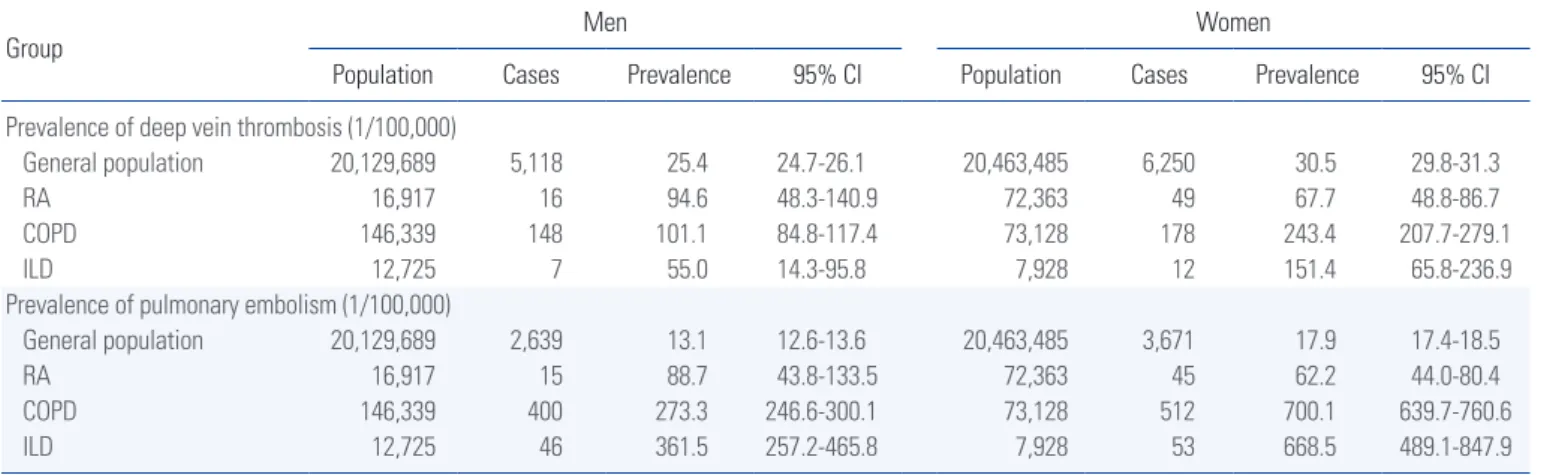
The codes used for the identification of DVT included I80.2 (DVT, not otherwise specified [NOS]) and I80.3 (embolism or thrombosis of the lower extremity, NOS). The codes used for PE included I26 (pulmonary thromboembolism), I26.0 (PE with mention of acute cor pulmonale), and I26.9 (PE, NOS). I82 was used for the identifi- cation of other forms of venous embolism or thrombosis. Cases that Table 1. Sex distribution of pulmonary embolism and deep vein thrombosis prevalence in the Korean national population
Group Men Women
Population Cases Prevalence 95% CI Population Cases Prevalence 95% CI Prevalence of deep vein thrombosis (1/100,000)
General population 20,129,689 5,118 25.4 24.7-26.1 20,463,485 6,250 30.5 29.8-31.3
RA 16,917 16 94.6 48.3-140.9 72,363 49 67.7 48.8-86.7
COPD 146,339 148 101.1 84.8-117.4 73,128 178 243.4 207.7-279.1
ILD 12,725 7 55.0 14.3-95.8 7,928 12 151.4 65.8-236.9
Prevalence of pulmonary embolism (1/100,000)
General population 20,129,689 2,639 13.1 12.6-13.6 20,463,485 3,671 17.9 17.4-18.5
RA 16,917 15 88.7 43.8-133.5 72,363 45 62.2 44.0-80.4
COPD 146,339 400 273.3 246.6-300.1 73,128 512 700.1 639.7-760.6
ILD 12,725 46 361.5 257.2-465.8 7,928 53 668.5 489.1-847.9
Between January 2013 and December 2013. Summarized based on the diagnosis at the top of the list of the International Statistical Classification of Diseases and Related Health Problems, 10th edition (ICD-10) codes of respiratory diseases.
ILD, interstitial lung disease; COPD, chronic obstructive pulmonary disease; RA, rheumatoid arthritis.
Table 2. Risk of sex in deep vein thrombosis and pulmonary embolism in the Korean national population in general population and patients with interstitial lung disease, chronic obstructive pulmonary disease, and rheumatoid arthritis
Group Women (n) Men (n) OR 95% CI χ2 P-value
Deep vein thrombosis
General population Yes 6,250 5,118
No 20,457,235 20,124,571 1.20 1.15-1.24 94.90 < 0.01
RA Yes 49 16
No 72,314 16,901 0.71 0.40-1.25 1.36 0.24
COPD Yes 178 148
No 72,950 146,191 2.41 1.93-2.99 66.54 < 0.01
ILD Yes 12 7
No 7,916 12,718 2.75 1.08-6.99 4.91 0.02
Pulmonary embolism
General population Yes 3,671 2,639
No 20,459,814 20,127,050 1.36 1.30-1.43 152.27 < 0.01
RA Yes 45 15
No 72,318 16,902 0.70 0.39-1.25 1.43 0.23
COPD Yes 512 400
Table 3. Risk of age and sex in deep vein thrombosis prevalence in the Korean national population and patients with interstitial lung disease, chronic obstructive pulmonary disease, and rheumatoid arthritis
Group Women (n) Men (n) OR 95% CI χ2 P-value
General population
20-29 Yes 75 99
No 3,209,306 3,557,137 0.83 0.62-1.13 1.30 0.25
30-39 Yes 205 238
No 3,969,304 4,177,929 0.90 0.75-1.09 1.05 0.30
40-49 Yes 401 458
No 4,399,717 4,554,054 0.90 0.79-1.03 2.07 0.14
50-59 Yes 743 952
No 3,995,189 4,044,882 0.79 0.71-0.86 23.24 < 0.01
60-69 Yes 1,352 1,281
No 2,304,387 2,159,459 0.98 0.91-1.06 0.07 0.77
70-79 Yes 2,185 1,477
No 1,763,515 1,289,234 1.08 1.01-1.15 5.40 0.02
80+ Yes 1,289 613
No 815,817 341,876 0.88 0.80-0.97 6.64 < 0.01
RA
20-29 Yes 2 0
No 1,597 292
30-39 Yes 1 1
No 6,190 976 0.15 0.00-2.52 2.24 0.13
40-49 Yes 8 1
No 14,062 2,419 1.37 0.17-11.00 0.09 0.76
50-59 Yes 29 7
No 23,415 4,729 0.83 0.36-1.91 0.17 0.67
60-69 Yes 34 16
No 18,121 5,224 0.61 0.33-1.11 2.65 0.10
70-79 Yes 53 11
No 11,298 3,619 1.54 0.80-2.95 1.73 0.18
80+ Yes 13 7
No 2,144 585 0.50 0.20-1.27 2.16 0.14
COPD
20-29 Yes 1 1
No 1,015 993 0.97 0.06-15.66 0.00 0.98
30-39 Yes 4 5
No 1,970 2,237 0.90 0.24-3.38 0.02 0.88
40-49 Yes 5 9
No 4,116 5,505 0.74 0.24-2.21 0.28 0.59
50-59 Yes 30 67
No 10,918 18,849 0.77 0.50-1.18 1.37 0.24
60-69 Yes 108 196
No 15,839 41,839 1.45 1.15-1.84 9.86 < 0.01
70-79 Yes 274 409
No 24,883 57,689 1.55 1.33-1.81 32.01 < 0.01
≥ 80 Yes 205 168
No 15,228 22,985 1.84 1.50-2.26 35.13 < 0.01
ILD
20-29 Yes 0 0
No 108 83
30-39 Yes 0 0
No 254 271
(Continued to the next page)
Group Women (n) Men (n) OR 95% CI χ2 P-value
40-49 Yes 2 2
No 653 271 0.41 0.05-2.96 0.81 0.36
50-59 Yes 6 7
No 1,542 1,918 1.06 0.35-3.17 0.01 0.90
60-69 Yes 12 24
No 1,941 3,974 1.02 0.51-2.05 0.00 0.94
70-79 Yes 30 37
No 2,450 4,684 1.55 0.95-2.51 3.20 0.07
80+ Yes 11 19
No 1,128 1,446 0.74 0.35-1.56 0.61 0.43
Between January 2013 and December 2013. Summarized based on the diagnosis at the top of the list of the International Statistical Classification of Diseases and Related Health Problems, 10th edition (ICD-10) codes of respiratory diseases.
PE, pulmonary embolism; OR, odds ratio; CI, confidence intervals; ILD, interstitial lung disease; COPD, chronic obstructive pulmonary disease; RA, rheumatoid arthritis.
Table 3. Continued
were recorded as having both DVT and PE were regarded as PE cases. The presence of VTE was validated based on simultaneous anticoagulation at the time of the diagnosis.
Analysis
We calculated the prevalence rates based on the number of patients diagnosed with RA, ILD or COPD, in 2013. The 95% confidence intervals (CIs) were calculated using the normal approximation to the binomial distribution. A χ2 test was used to compare frequencies of DVT and PE between men and women. P<0.05 was considered statistically significant. All the analyses were conducted using SAS version 9 (SAS Institute, Cary, NC, USA).
Results
Prevalence of DVT and PE
DVT was detected in 11,368 (0.028%) of the cases, among those aged ≥20 years. The prevalence of DVT was found to be 28.0 per 100,000 individuals in the general population, while in men with RA, it was 94.6 per 100,000 individuals; this is approximately 3.7 times higher than the prevalence in the general population. In addi- tion, the prevalence rates of DVT in men with COPD and ILD were about 4 and 2.1 times, respectively, higher than those observed in men in the general population.
The prevalence of DVT in women with RA was found to be 67.7 per 100,000 individuals, which is approximately 2.2 times higher than the incidences observed in the general population. The preva- lence rates of the same, in women with COPD and ILD, were about 8 and 5 times, respectively, higher than those in women in the gen- eral population (Table 1).
PE was detected in 11,368 (0.015%) of the cases, among those aged ≥20 years. The prevalence of PE was found to be 15.5 per 100,000 individuals in the general population, while that of men with RA was 88.7 per 100,000 individuals; this is approximately 6.7
than the incidence observed in the general population. The preva- lence rates of PE in women with COPD and ILD were about 39 and 37 times, respectively, higher than those observed in women in the general population (Table 1).
Risk of DVT and PE, between men and women
The prevalence of DVT was not statistically different between wom- en and men with RA. However, the prevalence of DVT in women with COPD, ILD, or general population was 2.4, 2.7, 1.2 times sig- nificantly higher than those observed in men, respectively (Table 2).
The prevalence of PE in women with RA was lower than the corre- sponding prevalence in men. However, the prevalence of PE in wom- en with COPD, ILD, or general population was 2.5, 1.8, 1.3 times, significantly higher than those observed in men, respectively (Table 2).
Risk of DVT and PE, stratified by age
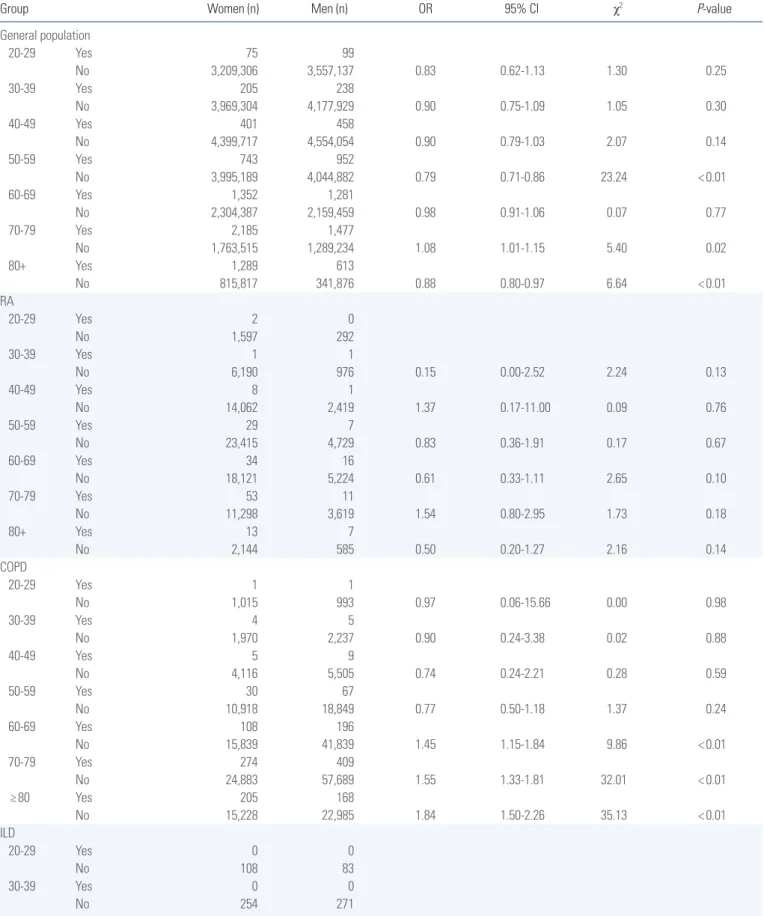
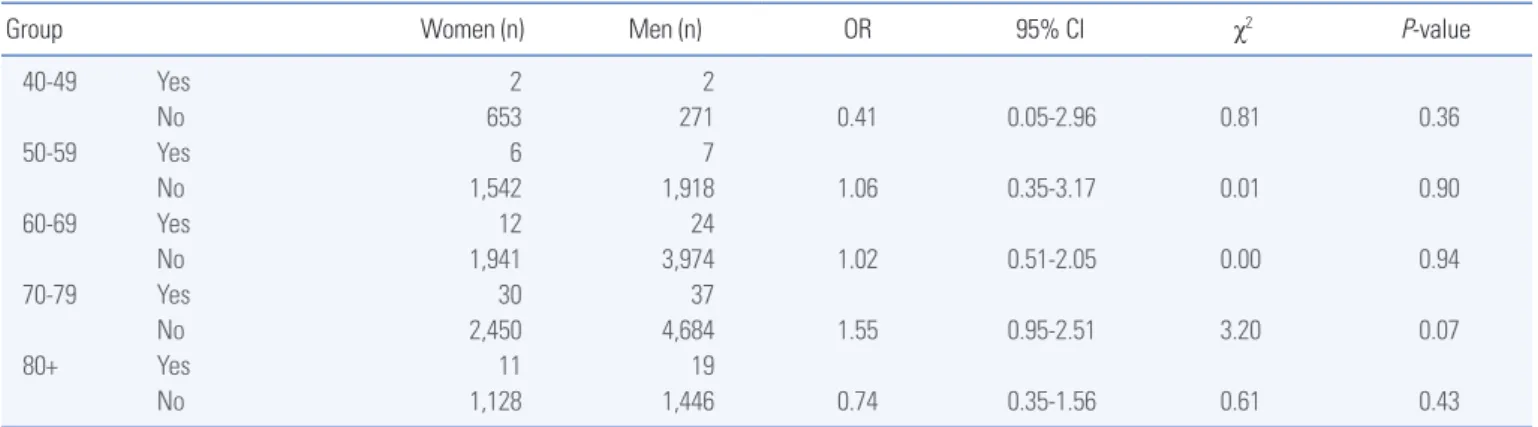
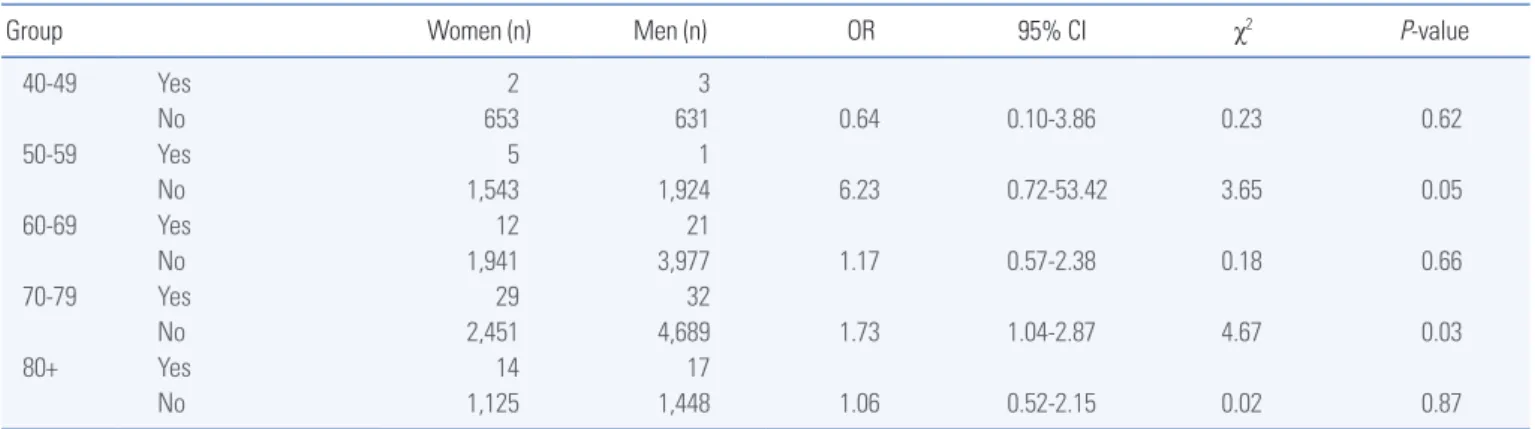
The prevalence of DVT in women with general population was sig- nificantly higher than men at the age between 50 and 79 years (Ta- ble 3). Among COPD, women were significantly higher than men the age above 50’s, while significance was observed only in 70’s patients with ILD.
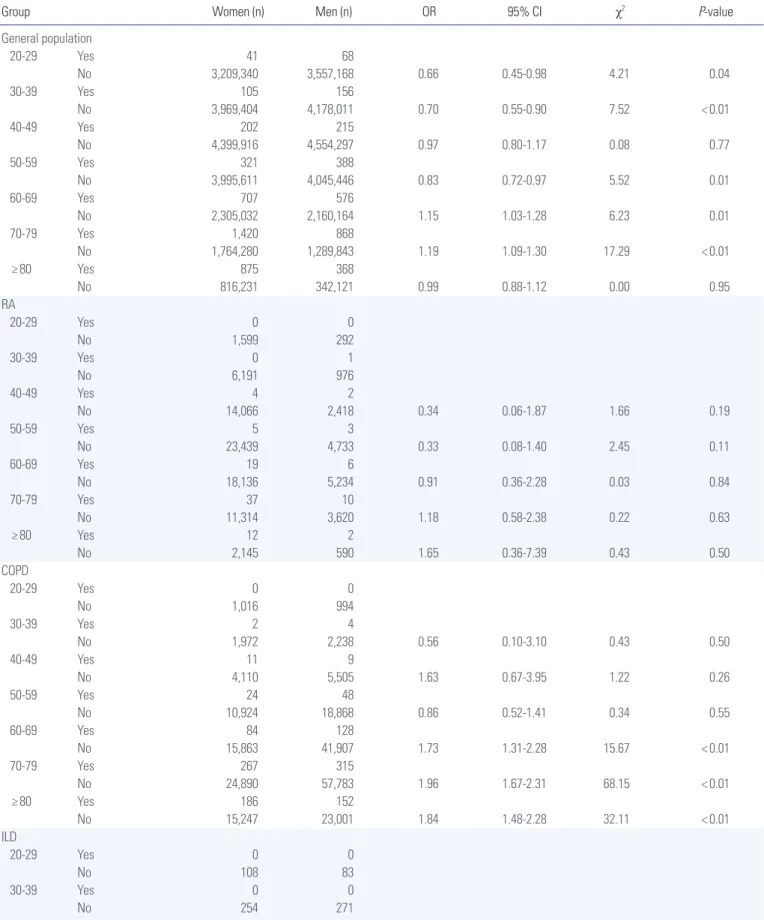
The prevalence of PE in women with general population was sig- nificantly higher than men at the age between 60 and 79 years (Ta- ble 4). However, the prevalence of PE in women with general popu- lation was significantly lower than men at the age of 30’s and 50’s (Table 4). Among COPD, women were significantly higher than men the age above 60’s, while significance was observed only in 70’s patients with ILD.
Discussion
The present population-based study provides new data which sup- ports the association between chronic lung diseases and sex in the prevalence of VTE. Risk of DVT in women had a 0.71-fold lower
Table 4. Risk of age and sex in pulmonary embolism prevalence in the Korean national population in general population and patients with interstitial lung dis- ease, chronic obstructive pulmonary disease, and rheumatoid arthritis
Group Women (n) Men (n) OR 95% CI χ2 P-value
General population
20-29 Yes 41 68
No 3,209,340 3,557,168 0.66 0.45-0.98 4.21 0.04
30-39 Yes 105 156
No 3,969,404 4,178,011 0.70 0.55-0.90 7.52 < 0.01
40-49 Yes 202 215
No 4,399,916 4,554,297 0.97 0.80-1.17 0.08 0.77
50-59 Yes 321 388
No 3,995,611 4,045,446 0.83 0.72-0.97 5.52 0.01
60-69 Yes 707 576
No 2,305,032 2,160,164 1.15 1.03-1.28 6.23 0.01
70-79 Yes 1,420 868
No 1,764,280 1,289,843 1.19 1.09-1.30 17.29 < 0.01
≥ 80 Yes 875 368
No 816,231 342,121 0.99 0.88-1.12 0.00 0.95
RA
20-29 Yes 0 0
No 1,599 292
30-39 Yes 0 1
No 6,191 976
40-49 Yes 4 2
No 14,066 2,418 0.34 0.06-1.87 1.66 0.19
50-59 Yes 5 3
No 23,439 4,733 0.33 0.08-1.40 2.45 0.11
60-69 Yes 19 6
No 18,136 5,234 0.91 0.36-2.28 0.03 0.84
70-79 Yes 37 10
No 11,314 3,620 1.18 0.58-2.38 0.22 0.63
≥ 80 Yes 12 2
No 2,145 590 1.65 0.36-7.39 0.43 0.50
COPD
20-29 Yes 0 0
No 1,016 994
30-39 Yes 2 4
No 1,972 2,238 0.56 0.10-3.10 0.43 0.50
40-49 Yes 11 9
No 4,110 5,505 1.63 0.67-3.95 1.22 0.26
50-59 Yes 24 48
No 10,924 18,868 0.86 0.52-1.41 0.34 0.55
60-69 Yes 84 128
No 15,863 41,907 1.73 1.31-2.28 15.67 < 0.01
70-79 Yes 267 315
No 24,890 57,783 1.96 1.67-2.31 68.15 < 0.01
≥ 80 Yes 186 152
No 15,247 23,001 1.84 1.48-2.28 32.11 < 0.01
ILD
20-29 Yes 0 0
No 108 83
30-39 Yes 0 0
No 254 271
(Continued to the next page)
Group Women (n) Men (n) OR 95% CI χ2 P-value
40-49 Yes 2 3
No 653 631 0.64 0.10-3.86 0.23 0.62
50-59 Yes 5 1
No 1,543 1,924 6.23 0.72-53.42 3.65 0.05
60-69 Yes 12 21
No 1,941 3,977 1.17 0.57-2.38 0.18 0.66
70-79 Yes 29 32
No 2,451 4,689 1.73 1.04-2.87 4.67 0.03
80+ Yes 14 17
No 1,125 1,448 1.06 0.52-2.15 0.02 0.87
Between January 2013 and December 2013. Summarized based on the diagnosis at the top of the list of the International Statistical Classification of Diseases and Related Health Problems, 10th edition (ICD-10) codes of respiratory diseases.
OR, odds ratio; CI, confidence intervals; ILD, interstitial lung disease; COPD, chronic obstructive pulmonary disease; RA, rheumatoid arthritis.
Table 4. Continued
disease.
The previous study suggested the incidence of first PE and DVT between men and women was similar, but recurrence of PE and DVT in men was higher than women.1,4,13 However, women was a higher prevalence of VTE than men in general population in Korea.
In DVT, except at the age of 70’s, DVT prevalence of women was lower than men (Table 3). The prevalence of PE was higher in wom- en than men between 60 and 79 years (Table 3). Until the age of 60’s, the prevalence of DVT and PE was lower in women than men in general population in Korea. This study showed aged population between 60 to 79 years mainly contribute to sex difference preva- lence of VTE in Korea.
The prevalence of DVT in COPD was significantly higher in wom- en than men above 60 years. It was found that women with COPD who were in the low smoking exposure group were associated with lower lung function than men with COPD.14 This may partially ex- plain why women with COPD are more susceptible to developing PE than men. However, it is not well-explained risk DVT of women is higher than men in COPD. We may pay attention to VTE devel- opment in aged women with COPD.
ILD is more prevalent in men than women in the present study.
ILD is also considered more susceptible in men than women. Wom- en with ILD was a higher prevalence of PE than men at the age of 70’s. Although there is no significant difference between men and women in the prevalence of DVT in the age of 70’s, tendency to high- er prevalence in women than men. The previous study also showed men (odds ratio 0.96, 95% CI 0.96-0.99) was lower risk of VTE than women in patients with pulmonary fibrosis.15
In contrast to COPD and ILD, sex may not influence on the prev- alence of DVT or PE between women and men in all age groups in this study. The previous study also showed rate VTE was similar between men and women with rheumatoid arthritis.16
The HIRA database provided only limited patient data pertaining to age, sex, year, diagnostic codes, and medication codes. Therefore, we were unable to validate patients through the identification or ex- clusion of the definition, through a review of the source medical re- cords. According to the definition of COPD defined by the Health Insurance Review and Assessment Agency, some COPD ICD-10 codes in the present study are missing and the number of COPD pa- tients is considered to be reduced. Another limitation was that we could not investigate the risk factors associated with taking female hormones or menopause. The severity of the condition of patients with VTE was not evaluated due to limited access to individual medi- cal records. However, this large-scale data may provide new insights into the prevalence of PE in men and women with COPD and ILD.
In conclusion, our study suggests that the prevalence rates of PE and DVT in women were significantly higher than those in men, among patients with COPD and ILD, while the prevalence rates of PE and DVT in the cases of RA were not significantly different, be- tween men and women. Therefore, attention should be paid to the development of PE and DVT, especially in women with COPD or ILD.
Conflicts of interest
The authors have no conflicts of interest to declare.
References
1. Spencer FA, Emery C, Lessard D, Anderson F, Emani S, Aragam J, et al. The Worcester Venous Thromboembo-
3. Nordstrom M, Lindblad B, Bergqvist D, Kjellstrom T.
A prospective study of the incidence of deep-vein throm- bosis within a defined urban population. Journal of In- ternal Medicine 1992;232:155-60.
4. Roach RE, Lijfering WM, Rosendaal FR, Cannegieter
6. McRae S, Tran H, Schulman S, Ginsberg J, Kearon C.
Effect of patient’s sex on risk of recurrent venous throm- boembolism: a meta-analysis. Lancet (London, England).
2006;368:371-8.
7. Anderson FA, Jr., Spencer FA. Risk factors for venous
verman EK, DeMeo DL. Gender differences in COPD:
are women more susceptible to smoking effects than men? Thorax 2010;65:480-5.
10. Carey MA, Card JW, Voltz JW, Arbes SJ Jr, Germolec DR, Korach KS, et al. It’s all about sex: gender, lung development and lung disease. Trends in endocrinolo- gy and metabolism: TEM 2007;18:308-13.
11. Kim DS. Introduction: health of the health care system in Korea. Soc Work Public Health 2010;25:127-41.
12. Kim DS. Special issue on the national health care sys-
tem of South Korea. Soc Work Public Health 2010;25:
125-6.
13. Kyrle PA, Minar E, Bialonczyk C, Hirschl M, Welter- mann A, Eichinger S. The risk of recurrent venous throm- boembolism in men and women. The New England Journal of Medicine 2004;350:2558-63.
14. Sørheim IC, Johannessen A, Gulsvik A, Bakke PS, Sil- verman EK, DeMeo DL. Gender differences in COPD:
are women more susceptible to smoking effects than men? Thorax 2010;65:480-5.
15. Sprunger DB, Olson AL, Huie TJ, Fernandez-Perez ER, Fischer A, Solomon JJ, et al. Pulmonary fibrosis is associated with an elevated risk of thromboembolic disease. The European Respiratory Journal 2012;39:
125-32.
16. Holmqvist ME, Neovius M, Eriksson J, Mantel A, Wall- berg-Jonsson S, Jacobsson LT, et al. Risk of venous thromboembolism in patients with rheumatoid arthritis and association with disease duration and hospitaliza- tion. JAMA 2012;308:1350-6.