
Copyrights © 2016 by The Korean Gastric Cancer Association www.jgc-online.org This is an open-access article distributed under the terms of the Creative Commons Attribution Non-Commercial License (http://creativecommons.org/
licenses/by-nc/4.0) which permits unrestricted noncommercial use, distribution, and reproduction in any medium, provided the original work is properly cited.
Introduction
As the average life expectancy for elderly persons is increas- ing dramatically in many parts of the world,1,2 many countries are expected to develop what is known as super-aged societies in the near future. This increase in the elderly population parallels the proportional increase in geriatric patients with cancer.3 Therefore, the average age at cancer diagnosis is also expected to increase in most countries with aging populations. Following this trend, the
results of geriatric assessments were introduced to provide infor- mation about risk evaluation in the surgical treatment of elderly cancer patients.4,5
The impact of old age on the early surgical outcomes of gastric cancer surgery is controversial. Several studies have sug- gested that old age is an independent risk factor of postopera- tive morbidity and mortality due to decreased reserve capacity.6,7 Most elderly patients have multiple morbidities that may lead to severe postoperative complications and mortality. In particular, super-elderly patients (≥75 years of age) have increasing num- bers of comorbidities and functional disorders.8,9 Another study documented that having multiple morbidities increases the risk of postoperative complications in patients who undergo elective surgery.10 Therefore, the risk assessment of elderly persons has become an important issue in the field of gastric cancer surgery.
Correspondence to: Min Gyu Kim
Department of Surgery, Hanyang University Guri Hospital, 153 Gyeongchun-ro, Guri 11923, Korea
Tel: +82-31-560-2294, Fax: +82-31-566-4409 E-mail: [email protected]
Received February 24, 2016 Revised March 21, 2016 Accepted March 21, 2016
Low Serum Albumin Level, Male Sex, and Total Gastrectomy Are Risk Factors of Severe Postoperative Complications in
Elderly Gastric Cancer Patients
Sung Chan Kang, Hyun Il Kim, and Min Gyu Kim
Department of Surgery, Hanyang University Guri Hospital, Hanyang University College of Medicine, Guri, Korea
Purpose: It is well known that old age is a risk factor for postoperative complications. Therefore, this study aimed to explore the risk fac- tors for poor postoperative surgical outcomes in elderly gastric cancer patients.
Materials and Methods: Between January 2006 and December 2015, 247 elderly gastric cancer patients who underwent curative gas- trectomy were reviewed. In this study, an elderly patient was defined as a patient aged ≥65 years. All possible variables were used to explore the risk factors for poor early surgical outcomes in elderly gastric cancer patients.
Results: Based on multivariate analyses of preoperative risk factors, preoperative low serum albumin level (<3.5 g/dl) and male sex showed statistical significance in predicting severe postoperative complications. Additionally, in an analysis of surgery-related risk factors, total gastrectomy was a risk factor for severe postoperative complications.
Conclusions: Our study findings suggest that low serum albumin level, male sex, and total gastrectomy could be risk factors of severe postoperative complications in elderly gastric cancer patients. Therefore, surgeons should work carefully in cases of elderly gastric cancer patients with low preoperative serum albumin level and male sex. We believe that efforts should be made to avoid total gastrectomy in elderly gastric cancer patients.
Key Words: Stomach neoplasms; Aged; Risk factors; Postoperative complications
Several investigators recently suggested that old age is an impor- tant predictive risk factor of gastric cancer surgery.11-13
On the other hand, other studies suggested that open gastrec- tomy can also be safely performed in elderly patients because of improvements in surgical techniques and perioperative man- agement.14,15 Some recent studies in particular have shown that laparoscopic gastrectomy can be safely performed in elderly pa- tients.16,17
Therefore, this study planned to explore the risk factors of minimal invasive surgeries such as laparoscopic gastrectomy.
Materials and Methods
1. Patients
We retrospectively reviewed data that were prospectively col- lected for 247 elderly gastric cancer patients who underwent cu- rative gastrectomy with lymph node dissection between January 2006 and December 2015 at Hanyang University Guri Hospital.
In this study, an elderly patient was defined as a patient aged 65 years or older according to World Health Organization guide- lines.18 According to this criterion, some studies showed that el- derly patients had poor surgical outcomes including hospital stay length and days of inpatient care.19
2. Surgical techniques
Laparoscopic gastrectomy was performed in elderly gastric cancer patients with serosa-negative and perigastric lymph node metastasis according to preoperative clinical staging results. Clini- cal staging was determined by preoperative gastrofiberoscopy, computed tomography, and endoscopic ultrasonography. D1 plus beta lymphadenectomy was performed in all gastric cancer patients. In laparoscopic gastrectomy, total omentectomy was performed in patients with advanced gastric cancer. The extent of gastrectomy was dictated based on tumor location.
3. Clinical analysis
Clinical data obtained from medical records included patient age, sex, body mass index (BMI; kg/m2), American Society of Anesthesiologist (ASA) score, and others (Table 1). The opera- tive characteristics and early surgical outcomes reviewed included operation method (laparoscopic vs. open surgery), extent of gastrectomy (total vs. subtotal gastrectomy), omentectomy (total vs. partial), combined resection of other organs, operation time, postoperative complications, postoperative mortality, and length
of postoperative hospital stay. Pathologic results were analyzed for tumor size, number of retrieved lymph nodes, and 7th American Joint Committee on Cancer staging system score.20
The classification of underweight was defined as a BMI<18.5 kg/m2. The ASA classification was determined by anesthesiolo- gists 1 day before the surgery. The preoperative serum albumin and hemoglobin levels were measured when the patient was admitted to the hospital. Hypoalbuminemia was defined as se- rum albumin levels below the normal range (<3.5 g/dl). The Prognostic Nutrition Index (PNI) was used as risk factor of post-
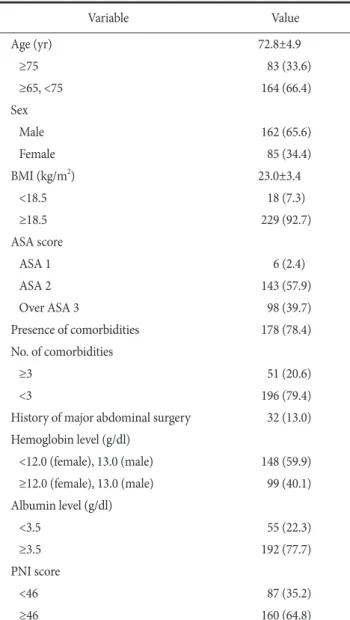
Table 1. Clinical characteristics of elderly patients who underwent gastrectomy
Variable Value
Age (yr) 72.8±4.9
≥75 83 (33.6)
≥65, <75 164 (66.4)
Sex
Male 162 (65.6)
Female 85 (34.4)
BMI (kg/m2) 23.0±3.4
<18.5 18 (7.3)
≥18.5 229 (92.7)
ASA score
ASA 1 6 (2.4)
ASA 2 143 (57.9)
Over ASA 3 98 (39.7)
Presence of comorbidities 178 (78.4)
No. of comorbidities
≥3 51 (20.6)
<3 196 (79.4)
History of major abdominal surgery 32 (13.0) Hemoglobin level (g/dl)
<12.0 (female), 13.0 (male) 148 (59.9) ≥12.0 (female), 13.0 (male) 99 (40.1) Albumin level (g/dl)
<3.5 55 (22.3)
≥3.5 192 (77.7)
PNI score
<46 87 (35.2)
≥46 160 (64.8)
Values are presented as mean±standard deviation or number (%). BMI
= body mass index; ASA = American Society of Anesthesiologists;
PNI = Prognostic Nutritional Index.
operative complication.21,22 Anemia was defined as a decreased hemoglobin level (female<12.0; male<13.0 g/dl).
Postoperative complications were defined as any condition requiring conservative or surgical treatment. Severe postoperative complications were defined as those that required management by an endoscopic or interventional procedure or re-operation (ex- panded classification>level 3).23 Thirty-day mortality was used for postoperative mortality and defined as death within 30 days of surgery.
In this study, a soft diet was started when patients felt com- fortable enough to consume a liquid diet twice at consecutive meal times. Patients were discharged if they had no problems eating a soft diet, showed an absence of inflammatory conditions including leukocytosis, unstable vital signs, or abrupt-onset ab- dominal pain, and if they were generally comfortable. The final decision regarding discharge was left up to each patient.
4. Statistical analysis
Statistical analysis was performed using IBM SPSS Statistics ver. 21 (IBM Co., Armonk, NY, USA). All values are expressed as means±standard deviation. Categorical variables were ana- lyzed using the chi-square test and all continuous variables were analyzed with Student’s t-test depending on the data. A multi- variate analysis was performed to identify risk factors associated with early surgical outcomes. Factors with relatively small P- values (P<0.1) on univariate analysis were selected as variables for multivariate analysis. A multivariate analysis was performed using multiple logistic regression analysis. Hazard ratios with 95%
confidence intervals were estimated for each variable in the mul- tivariate analysis. A P-value <0.05 was considered statistically significant.
Results
1. Clinical characteristics
The clinical characteristics of the 247 patients are shown in Table 1. The mean patient age was 72.8 years. Eighty-three pa- tients (33.6%) were 75 years of age or older. Men outnumbered women in this study population. The majority of patients (78.4%) had one or more comorbid conditions, while 51 patients had three or more comorbidities. Anemia was seen in 148 patients (59.9%).
A low serum albumin level was measured in 55 patients (22.3%).
A low PNI score was seen in 87 patients.
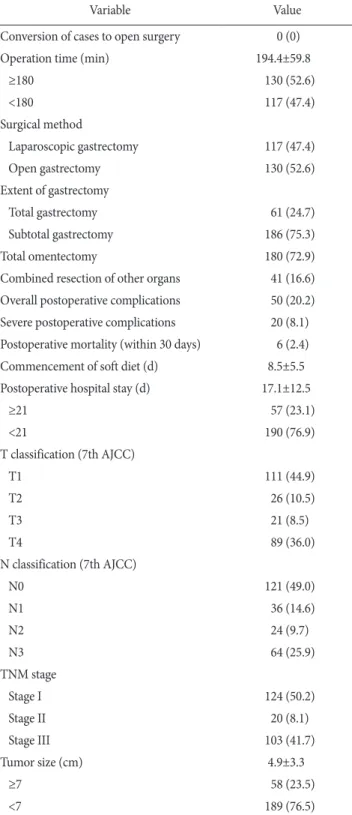
Table 2. Surgery-related characteristics of elderly patients who underwent gastrectomy
Variable Value
Conversion of cases to open surgery 0 (0)
Operation time (min) 194.4±59.8
≥180 130 (52.6)
<180 117 (47.4)
Surgical method
Laparoscopic gastrectomy 117 (47.4)
Open gastrectomy 130 (52.6)
Extent of gastrectomy
Total gastrectomy 61 (24.7)
Subtotal gastrectomy 186 (75.3)
Total omentectomy 180 (72.9)
Combined resection of other organs 41 (16.6) Overall postoperative complications 50 (20.2) Severe postoperative complications 20 (8.1) Postoperative mortality (within 30 days) 6 (2.4)
Commencement of soft diet (d) 8.5±5.5
Postoperative hospital stay (d) 17.1±12.5
≥21 57 (23.1)
<21 190 (76.9)
T classification (7th AJCC)
T1 111 (44.9)
T2 26 (10.5)
T3 21 (8.5)
T4 89 (36.0)
N classification (7th AJCC)
N0 121 (49.0)
N1 36 (14.6)
N2 24 (9.7)
N3 64 (25.9)
TNM stage
Stage I 124 (50.2)
Stage II 20 (8.1)
Stage III 103 (41.7)
Tumor size (cm) 4.9±3.3
≥7 58 (23.5)
<7 189 (76.5)
Values are presented as number (%) or mean±standard deviation.
AJCC = American Joint Committee on Cancer; TNM = tumor, node, metastasis.
2. Surgery-related characteristics
Table 2 shows the early surgical outcomes and pathologic results of elderly gastric cancer patients. None of these patients required conversion to open surgery. The mean operation time was 194.4 minutes. A little more than half of the operations (52.6%) lasted longer than 3 hours. Laparoscopic gastrectomy was performed in 117 patients (47.4%). The percentage of patients who underwent total gastrectomy was 24.7%. Forty-one patients (16.6%) underwent combined resection of another organ. Postop- erative complications occurred in 50 patients (20.2%). A total of 20 patients (8.1%) experienced severe postoperative complications.
Postoperative mortality occurred in six patients (2.4%). The mean
postoperative hospital stay was 17.1 days. Fifty-seven patients (23.1%) were hospitalized for >3 weeks after their operations.
One hundred and eleven patients had early gastric cancer. Nega- tive lymph node metastasis occurred in 121 patients. Fifty-eight patients had large tumors (≥7 cm).
3. Univariate analyses of risk factors for early surgical outcomes
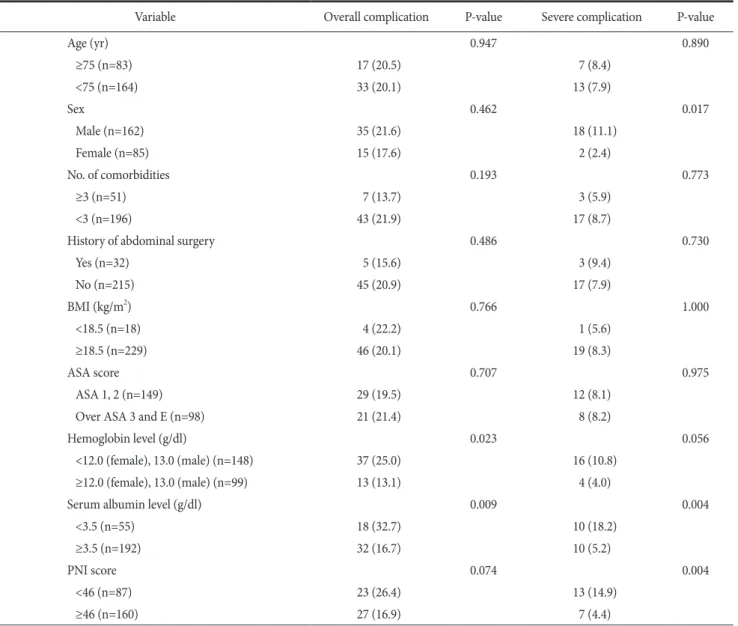
Table 3 and 4 list the risk factors for early surgical outcomes.
More patients who developed overall postoperative complications were found in the anemia, low serum albumin level, long opera- tion time, total omentectomy, and large size tumor groups. Severe
Table 3. Univariate analysis of preoperative risk factors for early surgical outcomes
Variable Overall complication P-value Severe complication P-value
Age (yr) 0.947 0.890
≥75 (n=83) 17 (20.5) 7 (8.4)
<75 (n=164) 33 (20.1) 13 (7.9)
Sex 0.462 0.017
Male (n=162) 35 (21.6) 18 (11.1)
Female (n=85) 15 (17.6) 2 (2.4)
No. of comorbidities 0.193 0.773
≥3 (n=51) 7 (13.7) 3 (5.9)
<3 (n=196) 43 (21.9) 17 (8.7)
History of abdominal surgery 0.486 0.730
Yes (n=32) 5 (15.6) 3 (9.4)
No (n=215) 45 (20.9) 17 (7.9)
BMI (kg/m2) 0.766 1.000
<18.5 (n=18) 4 (22.2) 1 (5.6)
≥18.5 (n=229) 46 (20.1) 19 (8.3)
ASA score 0.707 0.975
ASA 1, 2 (n=149) 29 (19.5) 12 (8.1)
Over ASA 3 and E (n=98) 21 (21.4) 8 (8.2)
Hemoglobin level (g/dl) 0.023 0.056
<12.0 (female), 13.0 (male) (n=148) 37 (25.0) 16 (10.8)
≥12.0 (female), 13.0 (male) (n=99) 13 (13.1) 4 (4.0)
Serum albumin level (g/dl) 0.009 0.004
<3.5 (n=55) 18 (32.7) 10 (18.2)
≥3.5 (n=192) 32 (16.7) 10 (5.2)
PNI score 0.074 0.004
<46 (n=87) 23 (26.4) 13 (14.9)
≥46 (n=160) 27 (16.9) 7 (4.4)
Values are presented as number (%). BMI = body mass index; ASA = American Society of Anesthesiologists; E = emergency; PNI = Prognostic Nutritional Index.
postoperative complications were significantly different in the male sex, low serum albumin level, low PNI score, long operation time, total gastrectomy, N3 stage, and large size tumor groups.
4. Multivariate analyses of risk factors for early surgical outcomes
Table 5 shows the preoperative risk factors. Low serum al- bumin level was an overall risk factor (odds ratio [OR], 7.451;
95% confidence interval [CI], 1.327~41.831; P=0.023) and severe
postoperative complications (OR, 5.543; 95% CI, 2.076~14.797;
P=0.001) of elderly gastric cancer patients.
In surgery-related risk factors, large tumor size (>7 cm; OR, 2.111; 95% CI, 1.022~4.359; P=0.044) and long operation time (>3 hours; OR, 4.317; 95% CI, 2.012~9.265; P<0.001) were risk factors of overall postoperative complications, while total gastrec- tomy (OR, 3.062; 95% CI, 1.146~8.177; P=0.026) was a risk fac- tor of severe postoperative complications (Table 6).
Table 4. Univariate analysis of surgery-related risk factors for early surgical outcomes
Variable Overall complication P-value Severe complication P-value
Operation time (min) <0.001 0.011
≥180 (n=130) 39 (30.0) 16 (12.3)
<180 (n=117) 11 (9.4) 4 (3.4)
Type of surgery 0.243 0.037
Laparoscopy (n=117) 20 (17.1) 5 (4.3)
Open (n=130) 30 (23.1) 15 (11.5)
Extent of gastrectomy 0.088 0.002
Total (n=61) 17 (27.9) 11 (18.0)
Subtotal (n=186) 33 (17.7) 9 (4.8)
Total omentectomy 0.048 0.455
Yes (n=180) 42 (23.3) 16 (8.9)
No (n=67) 8 (11.9) 4 (6.0)
Other organ resection 0.899 0.292
Yes (n=41) 8 (19.5) 5 (12.2)
No (n=206) 42 (20.4) 15 (7.3)
Tumor depth (7th AJCC) 0.100 0.065
T1, 2, 3 (n=158) 27 (17.1) 9 (5.7)
T4 (n=89) 23 (25.8) 11 (12.4)
Nodal status (7th AJCC) 0.762 0.048
N0, 1, 2 (n=182) 36 (19.8) 11 (6.0)
N3 (n=65) 14 (21.5) 0.098 9 (13.8) 0.083
TNM Stage (7th AJCC)
Stage I and II (n=144) 24 (16.7) 8 (5.6)
Stage III (n=103) 26 (25.2) 12 (11.7)
Tumor size (cm) 0.019 0.026
≥7 (n=58) 18 (31.0) 9 (15.5)
<7 (n=189) 32 (16.9) 11 (5.8)
Retrieved lymph nodes 0.458 0.083
≥30 (n=167) 36 (21.6) 17 (10.2)
<30 (n=80) 14 (17.5) 3 (3.8)
Values are presented as number (%). AJCC = American Joint Committee on Cancer; TNM = tumor, node, metastasis.
Discussion
Biological age is a key factor in determining surgical success.
Consequently, a comprehensive geriatric assessment was recently instituted to assess the components of an elderly person’s physi- cal, mental, and social status.4,5 However, determining how this overarching method should be applied in practice for surgical patients remains challenging.24 Furthermore, there has been no consensus with respect to the best tool for predicting postopera- tive outcomes.25,26
Our multivariate analyses showed that three variables (serum albumin level, sex, and extent of gastrectomy) can be risk factors for poor early surgical outcomes in elderly gastric cancer patients.
In particular, our study showed that elderly age (≥75 years) is not a significant risk factor for early surgical outcomes of conven- tional gastric cancer surgery.
Several authors have reported that postoperative mortality rates are higher in elderly patients because of pre-existing comorbidi- ties.14,27 Meanwhile, recent studies have suggested that elderly gastric cancer patients can be safely operated on using improved surgical techniques and perioperative management.14-17 Our study also obtained a similar result in that we found no difference in early surgical outcomes between elderly patients aged ≥65 years and those ≥75 years. Despite this, we are not arguing that old age is not a risk factor for early surgical outcomes of gastric can- cer. We previously reported that early surgical outcomes of totally
laparoscopic distal gastrectomy were also affected by old age.28 It is well known that low preoperative serum albumin is a strong predictor of postoperative morbidity and mortality.29,30 Our study also showed that hypoalbuminemia can be an independent risk factor of postoperative complications. The important thing to note is that initial hypoalbuminemia can affect early surgical out- comes irrespective of the replacement of albumin. It is assumed that initial hypoalbuminemia reflects a state of malnutrition.
Therefore, this serum albumin test could be a reasonably simple and cost-effective method for identifying at-risk patients. On the other hand, our study did not show the significance of PNI as a predictive risk factor for early surgical outcomes.
Several recent studies have suggested that male sex is a risk factor of postoperative complication in bowel surgery.31-33 In particular, our results showed that male sex is an independent risk factor for severe postoperative complications in multivariate analysis.
Total gastrectomy is a known risk factor of postoperative complications.33,34 One report stated that total gastrectomy should be performed in patients >80 years of age only if absolutely necessary.35 Our multivariate analysis also showed that total gas- trectomy is an independent risk factor of severe postoperative complication in elderly gastric cancer patients.
This study had several limitations. First, it was a retrospective study with possible selection bias. Second, only a small number of patients had severe postoperative complications. Therefore, fur- Table 5. Multivariate analysis of preoperative risk factors for early surgical outcomes
Variable Overall complications Severe complications
RR 95% CI P-value RR 95% CI P-value
Serum albumin level (<3.5 g/dl) 7.451 1.327~41.831 0.023 5.543 2.076~14.797 0.001
Male sex 7.406 1.605~34.175 0.010
RR = relative risk; CI = confidence interval.
Table 6.Multivariate analysis of surgery-related risk factors for early surgical outcomes
Variable Overall complications Severe complications
RR 95% CI P-value RR 95% CI P-value
Tumor size (>7 cm) 2.111 1.022~4.359 0.044
Operation time (>3 h) 4.317 2.012~9.265 <0.001
Total gastrectomy (vs. subtotal) 3.062 1.146~8.177 0.026
RR = relative risk; CI = confidence interval.
ther large randomized controlled trials are needed to evaluate the risk factors.
In clinical practice, most surgeons believe that, based on their experience, they can predict the physiological reserve of an el- derly person who plans to undergo cancer surgery. On the other hand, most surgeons are aware that their methods for deter- mining this status are fairly subjective. As a result, some elderly persons miss the opportunity to undergo surgery. In contrast, the overestimation of patient reserve can also lead to postoperative death. Therefore, despite the study limitations, we believe that our identification of poor risk factors will help physicians predict postoperative surgical outcomes in elderly gastric cancer patients.
In summary, we found that the poor risk factors for early surgical outcomes of gastric cancer surgery in elderly patients in- cluded low serum albumin level, male sex, and total gastrectomy.
In particular, we suggest that surgeons should operate carefully in elderly male patients with gastric cancer as well as in those with low serum albumin levels to decrease severe postoperative com- plications. We believe that efforts should be made to avoid total gastrectomy in elderly gastric cancer patients.
Conflicts of Interest
No potential conflict of interest relevant to this article was re- ported.
References
1. McKenna RJ Sr. Clinical aspects of cancer in the elderly. Treat- ment decisions, treatment choices, and follow-up. Cancer 1994;74(7 Suppl):2107-2117.
2. World Health Organization (WHO). World health statis- tics 2014 [Internet]. Geneva: WHO; 2014 [cited 2014 May].
Available from: http://www.who.int/gho/publications/world_
health_statistics/2014/en/.
3. Yancik R, Ries LA. Aging and cancer in America. Demograph- ic and epidemiologic perspectives. Hematol Oncol Clin North Am 2000;14:17-23.
4. Balducci L, Extermann M. Management of cancer in the older person: a practical approach. Oncologist 2000;5:224-237.
5. Feng MA, McMillan DT, Crowell K, Muss H, Nielsen ME, Smith AB. Geriatric assessment in surgical oncology: a system- atic review. J Surg Res 2015;193:265-272.
6. Polanczyk CA, Marcantonio E, Goldman L, Rohde LE, Orav
J, Mangione CM, et al. Impact of age on perioperative compli- cations and length of stay in patients undergoing noncardiac surgery. Ann Intern Med 2001;134:637-643.
7. Evers BM, Townsend CM, Jr, Thompson JC. Organ physiology of aging. Surg Clin North Am 1994;74:23-39.
8. Salive ME. Multimorbidity in older adults. Epidemiol Rev 2013;35:75-83.
9. From the centers for disease control and prevention. Public health and aging: trends in aging: United States and worldwide.
JAMA 2003;289:1371-1373.
10. Kim KI, Park KH, Koo KH, Han HS, Kim CH. Comprehensive geriatric assessment can predict postoperative morbidity and mortality in elderly patients undergoing elective surgery. Arch Gerontol Geriatr 2013;56:507-512.
11. Seo SH, Hur H, An CW, Yi X, Kim JY, Han SU, et al. Operative risk factors in gastric cancer surgery for elderly patients. J Gas- tric Cancer 2011;11:116-121.
12. Otsuji E, Fujiyama J, Takagi T, Ito T, Kuriu Y, Toma A, et al.
Results of total gastrectomy with extended lymphadenectomy for gastric cancer in elderly patients. J Surg Oncol 2005;91:232- 236.
13. Kitamura K, Yamaguchi T, Taniguchi H, Hagiwara A, Yamane T, Sawai K, et al. Clinicopathological characteristics of gastric cancer in the elderly. Br J Cancer 1996;73:798-802.
14. Gretschel S, Estevez-Schwarz L, Hunerbein M, Schneider U, Schlag PM. Gastric cancer surgery in elderly patients. World J Surg 2006;30:1468-1474.
15. Kunisaki C, Akiyama H, Nomura M, Matsuda G, Otsuka Y, Ono HA, et al. Comparison of surgical outcomes of gas- tric cancer in elderly and middle-aged patients. Am J Surg 2006;191:216-224.
16. Mohri Y, Yasuda H, Ohi M, Tanaka K, Saigusa S, Okigami M.
Short- and long-term outcomes of laparoscopic gastrectomy in elderly patients with gastric cancer. Surg Endosc 2015;29:1627- 1635.
17. Kunisaki C, Makino H, Takagawa R, Oshima T, Nagano Y, Ono HA, et al. Efficacy of laparoscopy-assisted distal gastrec- tomy for gastric cancer in the elderly 2009;23:377-383.
18. Statistics Korea. Korean Statistical Information Service [Inter- net]. Daejeon: Statistics Korea; [cited 2011 May 1]. Available from: http://kosis.kr/.
19. Popovic JR. 1999 National hospital discharge survey: annual summary with detailed diagnosis and procedure data. Vital Health Stat 2001:1-206.
20. Washington K. 7th edition of the AJCC cancer staging manual:
stomach. Ann Surg Oncol 2010;17:3077-3079.
21. Jiang N, Deng JY, Ding XW, Ke B, Liu N, Zhang RP, et al. Prog- nostic nutritional index predicts postoperative complications and long-term outcomes of gastric cancer. World J Gastroen- terol 2014;20:10537-10544.
22. Onodera T, Goseki N, Kosaki G. Prognostic nutritional index in gastrointestinal surgery of malnourished cancer patients.
Nihon Geka Gakkai Zasshi 1984;85:1001-1005.
23. Strasberg SM, Linehan DC, Hawkins WG. The accordion severity grading system of surgical complications. Ann Surg 2009;250:177-186.
24. Kothari A, Phillips S, Bretl T, Block K, Weigel T. Components of geriatric assessments predict thoracic surgery outcomes. J Surg Res 2011;166:5-13.
25. Puts MT, Hardt J, Monette J, Girre V, Springall E, Alibhai SM.
Use of geriatric assessment for older adults in the oncology setting: a systematic review. J Natl Cancer Inst 2012;104:1133- 1163.
26. Hamaker ME, Jonker JM, de Rooij SE, Vos AG, Smorenburg CH, van Munster BC. Frailty screening methods for predict- ing outcome of a comprehensive geriatric assessment in el- derly patients with cancer: a systematic review. Lancet Oncol 2012;13:e437-e444.
27. Wu CW, Lo SS, Shen KH, Hsieh MC, Lui WY, P'Eng F K. Sur- gical mortality, survival, and quality of life after resection for gastric cancer in the elderly. World J Surg 2000;24:465-472.
28. Kim MG, Kim HS, Kim BS, Kwon SJ. The impact of old age on
surgical outcomes of totally laparoscopic gastrectomy for gas- tric cancer. Surg Endosc 2013;27:3990-3997.
29. Gibbs J, Cull W, Henderson W, Daley J, Hur K, Khuri SF.
Preoperative serum albumin level as a predictor of operative mortality and morbidity: results from the National VA Surgical Risk Study. Arch Surg 1999;134:36-42.
30. Moghadamyeghaneh Z, Hwang G, Hanna MH, Phelan MJ, Carmichael JC, Mills SD, et al. Even modest hypoalbuminemia affects outcomes of colorectal surgery patients. Am J Surg 2015;210:276-284.
31. Kirchhoff P, Dincler S, Buchmann P. A multivariate analysis of potential risk factors for intra- and postoperative complications in 1316 elective laparoscopic colorectal procedures. Ann Surg 2008;248:259-265.
32. Lipska MA, Bissett IP, Parry BR, Merrie AE. Anastomotic leakage after lower gastrointestinal anastomosis: men are at a higher risk. ANZ J Surg 2006;76:579-585.
33. Sasako M. Risk factors for surgical treatment in the Dutch Gas- tric Cancer Trial. Br J Surg 1997;84:1567-1571.
34. Launois B, Cardin JL, Bardaxoglou E, Bourdonnec P, de Cha- teaubriant P, Buard JL, et al. Management of cancer of the stomach: total gastrectomy versus sub-total gastrectomy. Hepa- togastroenterology 1991;38:45-52.
35. Korenaga D, Moriguchi S, Baba H, Kakeji Y, Orita H, Hara- guchi M, et al. Surgery for gastric carcinoma is feasible for patients over 80 years of age. World J Surg 1991;15:642-647;
discussion 647-648.
![Table 5 shows the preoperative risk factors. Low serum al- al-bumin level was an overall risk factor (odds ratio [OR], 7.451;](https://thumb-ap.123doks.com/thumbv2/123dokinfo/5271482.142556/5.943.101.843.180.875/table-shows-preoperative-factors-serum-overall-factor-ratio.webp)

