심부전 환자의 나트륨 섭취와 건강관련 삶의 질
송은경
울산대학교 간호학과
Dietary Sodium Intake and Health-Related Quality of Life in Patients with Stable Heart Failure
Eun Kyeung Song
Department of Nursing, University of Ulsan College of Medicine, Ulsan, Korea
Background: Dietary sodium restriction is an essential component of self-care behavior for improved health-re- lated quality of life (HRQoL) in patients with heart failure (HF). However, there is little direct evidence about the impact of dietary sodium restriction on HRQoL. The purpose of this study was to determine the impact of dietary sodium intake on HRQoL in HF patients with no cardiac events over 1-year of follow-up.
Methods: A total of 106 patients with HF completed a 3-day food diary to estimate daily sodium intake. Patients were divided into 4 groups (<2 g, 2-3 g, 3-4 g, and >4 g). The Minnesota Living with Heart Failure Questionnaire was used to assess HRQoL at baseline and one year later. Hierarchical linear and logistic re- gressions were used to determine the relationship between dietary sodium intake and HRQoL.
Results: Thirty-seven (35%) patients had a daily sodium intake >3 g. Greater than 4 g of daily sodium intake was independently associated with a worse HRQoL at baseline and one year later (F=3.15, P=0.028; F=4.33,
P=0.006) and an almost 5.2 times higher risk of a worsening HRQoL at one year follow-up (P=0.040) after con-trolling for age, gender, etiology, body mass index, New York Heart Association class, ejection fraction, total co- morbidity score, and use of beta blockers.
Conclusions: This finding provides additional evidence that greater than 4 g of daily sodium intake is associated with worsening HRQoL in stable HF patients who are free from cardiac events.
Korean J Health Promot 2013;13(1):8-16
Keywords: Sodium-restricted diet, Quality of life, Heart failure
■ Received:January 4, 2013 ■ Accepted:January 24, 2013
■ Corresponding author:Eun Kyeung Song, PhD
Department of Nursing, University of Ulsan College of Medicine, 93 Daehak-ro, Nam-gu, Ulsan 680-749, Korea
Tel: +82-52-259-1233, Fax: +82-52-259-1236 E-mail: [email protected]
■ This work was supported by the Research Fund of University of Ulsan (No. 2010-0129).
INTRODUCTION
Recently, prospective follow-up studies
1-3)have demon- strated convincing evidence that excessive sodium intake is associated with shorter cardiac event-free survival in pa- tients with heart failure (HF). Fluid retention or volume overload secondary to excessive dietary sodium intake is
primarily responsible for acute decompensated HF,
4,5)which is a common reason for unnecessary hospitalization or death.
6,7)Furthermore, cardiac events including cardiac hospitalization or death have been used to determine the impact of dietary sodium restriction on health outcomes in a systematic review.
8)Therefore, most health care pro- viders try to recommend dietary sodium restriction for pa- tients with HF to prevent cardiac events as a standard component of HF management.
Less than 30% of patients with HF are rehospitalized
within 90 days for recurrent HF.
9,10)Almost one-third of
these patients are readmitted more than once due to acute
decompensated HF with an overall annual mortality rate
of 10%.
9,11)Although patients with chronic HF can easily
decompensate acutely, they, especially those receiving sta- ble medication therapies, are symptom-free with a rela- tively low cardiac event rate.
12,13)Accordingly, an ultimate desirable health outcome in HF management is to improve health-related quality of life (HRQoL) among patients with stable HF who are free from cardiac events. However, there is little direct evidence about the impact of dietary sodium intake on HRQoL in stable HF patients.
The purpose of this study was to determine whether di- etary sodium intake is independently associated with HRQoL and a change in HRQoL in stable HF patients with no cardiac events over a one-year follow-up period.
METHODS
1. Design and setting
This was a prospective cohort study with one-year fol- low-up from the baseline measurement of HRQoL be- tween July 1, 2010, and June 30, 2011. Patients were re- cruited from outpatient HF clinics in one regional tertiary medical center located in Seoul, Korea. All patients re- ceived instructions on dietary sodium restriction as part of the usual care given by their clinicians.
2. Participants
Eligibility criteria included: (1) having a confirmed di- agnosis of chronic HF for at least two years, (2) having de- pressed left ventricular systolic function with left ven- tricular ejection fraction (LVEF) less than 40%, (3) taking stable dosages of HF medications for at least three months, and (4) the ability to read and speak Korean.
Exclusion criteria were: (1) referred for heart trans- plantation; (2) history of recent myocardial infarction within the previous six months; (3) any hospitalizations or emergency room visits in the six months prior to this study; (4) any obvious cognitive impairment, defined as a diagnosis of stroke, dementia, or head trauma; and (5) his- tory of cancer, severe thyroid disease, hepatic failure, or renal failure.
The required sample size for this study was estimated using a power analysis program.
14)Considering a medium effect size (f
2=0.18), an alpha value of .05, 80% power (1- β), and a total of 11 independent variables, a sample size of
at least 104 patients was required.
A total of 153 patients were eligible for this study. Five patients declined to participate and four patients withdrew.
Three patients had incomplete responses to the questionnaires.
3. Measures
1) Dietary sodium restriction
Patients completed a weighted three-day food diary that included two weekdays and one weekend day.
Patients were provided instructions on how to complete the three-day food diary. A food diary is considered to be a more objective indicator of dietary sodium intake com- pared to measuring 24-hour urinary sodium excretion in stable HF patients.
15)Daily dietary sodium intake was de- fined as the averaged three-day intake. The Computer Aided Nutrition Analysis Program for Professionals (CAN-Pro 4.0, APAC intelligence, Seoul, South Korea) software
16)was used to analyze the food diaries and de- termine dietary sodium intake. Currently, the most up- dated American College of Cardiology/American Heart Association (ACC/AHA)
17)guidelines and the Korean Society of Heart Failure
18)guidelines state a nonspecific recommendation for daily sodium intake, and both guide- lines recommend less than 2 g for patients with decom- pensated HF. The Heart Failure Society of America guide- lines recommend 3 to 4 g.
19)The recommended limit in the former ACC/AHA guideline was 2 to 3 g per day.
20)Accordingly, patients were divided into four groups by their average daily sodium intake: <2 g, 2-3 g, 3-4 g, or >4 g.
2) Health-related quality of life (HRQoL)
HRQoL was assessed using the Minnesota Living with Heart Failure Questionnaire (LHFQ), which is a 21-item disease-specific measure.
21)This instrument as one of the most widely used instruments for measuring quality of life demonstrating better validity and responsiveness in pa- tients with HF than the generic HRQoL tools.
22)Each item is rated on a scale from 0 (no impact on HRQoL) to 5 (most negative impact on HRQoL). The total score of HRQoL is the sum of the ratings of the 21 items with a possible range of 0 to 105, with higher scores indicating a worse HRQoL.
Reliability was previously established with a Cronbach’s α
coefficient of 0.88 to 0.93.
21)The Cronbach’s alpha co-
efficient for the Korean version of the LHFQ was 0.96.
23)In this study, the Cronbach’s α coefficient was 0.92.
3) Other clinical variables
Other clinical variables including age, gender, body mass index (BMI), underlying etiology of HF, New York Heart Association (NYHA) functional class, LVEF, total comorbidity score as assessed by the Charlson’s co- morbidity index, and prescribed medications were col- lected from interview records and confirmed through a re- view of the patients’ medical records. These clinical varia- bles were identified in previous investigations as greater risk factors for impaired quality of life in patients with HF.
24,25)4. Procedures
The research proposal was approved by the Institutional Review Board at the enrollment site to ensure that the rights of human subjects were protected. Prior to data col- lection, the primary investigator explained the purpose and procedures for this study, and written informed con- sent was obtained from each patient. Cardiologists at out- patient HF clinics referred eligible patients to the primary investigator and a trained research assistant.
A research assistant provided digital scales to the patients.
All patients were instructed to measure the weight of each food item and to record all food consumed during the three-day food diary collection period. Patients were also instructed to record the amount of soy sauce added to their food when soy sauce was used during eating or cooking. A research assistant called patients on the first day to answer any questions they might have. The morning after com- pletion, patients brought their three-day food diary to the outpatient HF clinic and then completed a series of questionnaires. The primary investigator reviewed the completed diaries to verify serving sizes, obtain missing information, and clarify food preparation techniques.
These reviews lasted approximately 20-30 minutes. One year after the baseline measurements, patients received the LHFQ to assess HRQoL through telephone interviews.
5. Statistical analysis
All patients were followed up by review of their medical records for one year to determine cardiac events (i.e., car- diac hospitalization or cardiac death). Of the 141 patients,
32 were hospitalized and 3 died due to cardiac-related problems during the one-year follow-up period. Patients who had any cardiac events during this period were ex- cluded from the final analysis. Thus, data from 106 pa- tients were included in the final analysis.
Data were analyzed using SPSS for Windows 18.0 (SPSS, Inc., Chicago, IL, USA). Descriptive statistics, including frequencies with percentages and the mean scores with standard deviations, were used to describe the patient characteristics. A one-way analysis of variance with the Scheffe post-hoc test was used to compare differences in HRQoL at baseline and one-year after baseline among the 4 groups categorized by daily sodium intake.
The total LHFQ score at baseline and one-year later were almost normally distributed. The skewness of the to- tal LHFQ score at baseline and one year later were 0.14 and 0.37, respectively, while the kurtoses of the total LHFQ score at baseline and one-year later were –0.72 and
−0.70, respectively. To examine possible multicollinearity issues, a collinearity analysis including tolerance value, variance inflation factor (VIF), and condition index, was conducted before performing the multiple linear regressions.
The multicollinearity assumption was not violated in this study with a Durbin Watson statistic of 1.731 and 1.840, a tolerance value of 0.711-0.988 (0.5), and a VIF of 1.036-1.632 (close to 1-2). A hierarchical multiple linear regression was used to determine whether dietary sodium intake was in- dependently associated with HRQoL at baseline and one year later after controlling for age, gender, BMI, NYHA class, etiology of HF, LVEF, total comorbidity score, and prescribed medications. The adjusted R
2was calculated to explain how well dietary sodium intake predicted HRQoL at baseline and one-year later in HF patients after controlling for other clinical variables.
The change in HRQoL was calculated by subtracting the total LHFQ score at baseline from the total LHFQ score one year later. Patients were divided into two groups: a group with worsening HRQoL (change in HRQoL equal or greater than 5) and a group with improv- ing HRQoL (change in HRQoL less than 5).
26)A hier- archical multiple logistic regression was used to determine whether dietary sodium intake was independently asso- ciated with a higher risk of worsening HRQoL in stable HF patients after controlling for the same clinical variables.
An odds ratio (OR) for worsening HRQoL was obtained
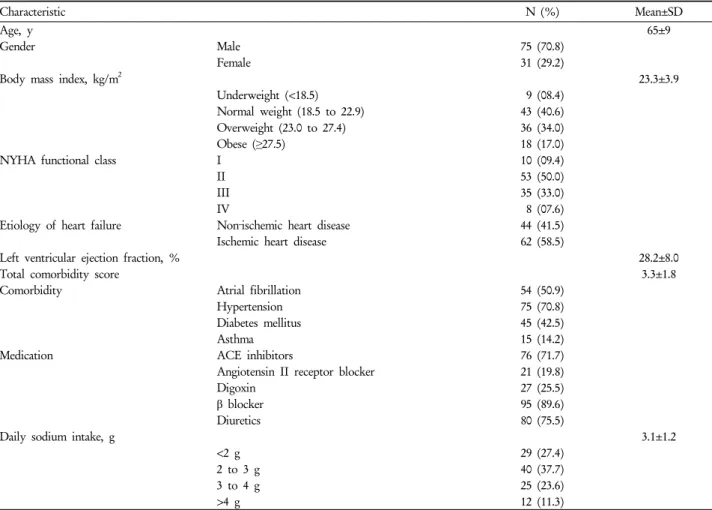
Table 1. Characteristics of study subjects at baseline (n=106)
Characteristic N (%) Mean±SD
Age, y 65±9
Gender Male 75 (70.8)
Female 31 (29.2)
Body mass index, kg/m2 23.3±3.9
Underweight (<18.5) 9 (08.4)
Normal weight (18.5 to 22.9) 43 (40.6)
Overweight (23.0 to 27.4) 36 (34.0)
Obese (≥27.5) 18 (17.0)
NYHA functional class I 10 (09.4)
II 53 (50.0)
III 35 (33.0)
IV 8 (07.6)
Etiology of heart failure Non‐ischemic heart disease 44 (41.5)
Ischemic heart disease 62 (58.5)
Left ventricular ejection fraction, % 28.2±8.0
Total comorbidity score 3.3±1.8
Comorbidity Atrial fibrillation 54 (50.9)
Hypertension 75 (70.8)
Diabetes mellitus 45 (42.5)
Asthma 15 (14.2)
Medication ACE inhibitors 76 (71.7)
Angiotensin II receptor blocker 21 (19.8)
Digoxin 27 (25.5)
β blocker 95 (89.6)
Diuretics 80 (75.5)
Daily sodium intake, g 3.1±1.2
<2 g 29 (27.4)
2 to 3 g 40 (37.7)
3 to 4 g 25 (23.6)
>4 g 12 (11.3)
Abbreviations: NYHA, New York Heart Association; ACE, angiotensin-converting enzyme.
for all independent variables along with 95% confidence intervals (CIs).
RESULTS
1. Sample characteristics
The characteristics of the study subjects are shown in Table 1. Almost 30% were females ranging in age from 50 to 85 years. Over half of the patients were overweight or obese. The majority of patients were NYHA functional class II and III. Approximately, one in five patients had at least two co-morbidities including hypertension and diabetes. Most patients were prescribed beta-blockers, di- uretics, and angiotensin-converting enzyme (ACE) in- hibitors or angiotensin II receptor blockers (ARB II). The average daily sodium intake was 3.1 g (range 1.0 to 6.2 g), and 29 patients had daily sodium intake less than 2 g.
2. Differences in HRQoL among 4 groups categorized by level of dietary sodium restriction
The total score of the LHFQ was 40.1±21.9 at baseline and 41.0±25.2 at one-year follow-up. Overall, participants had lower scores in HRQoL at baseline and one-year later with a range of 0 to 101. Figure 1 shows the differences in HRQoL scores at baseline and at one-year follow-up of the 4 groups (F=3.15, df=3, P=0.028; F=4.33, df=3, P=0.006) categorized by the level of dietary sodium restriction.
On univariate analyses, patients with >4 g of daily so-
dium intake had the highest LHFQ scores at baseline and
one-year later, whereas patients with <2 g of daily sodium
intake had the lowest LHFQ scores at baseline and
one-year later. Scheffe post-hoc comparisons indicated
that patients with >4 g of daily sodium intake had worse
HRQoL compared to those with <2 g at baseline
(P=0.034). In addition, patients with >4 g of daily sodium
Figure 1. Differences in health-related quality of life at baseline and at one-year of the 4 groups by level of dietary sodium restriction (n=106)
HRQoL (mean±SD)=(40.1±21.9) HRQoL (mean±SD)=(41.0±25.2) F =3.15, df=3, P =0.028 F =4.33, df=3, P =0.006
(A)
<2 g (B) 2 to 3 g
(C) 3 to 4 g
(D)
> 4 g
Daily sodium intake
(A)<2 g (B) 2 to 3 g
(C) 3 to 4 g
(D)
> 4 g
A<B p=0.784 p=0.918 A<C p=0.516 p=0.851 A<D p=0.034 p=0.009 B<C p=0.940 p=0.995 B<D p=0.140 p=0.024 C<D p=0.382 p=0.064
HRQoL indicates health-related quality of life.
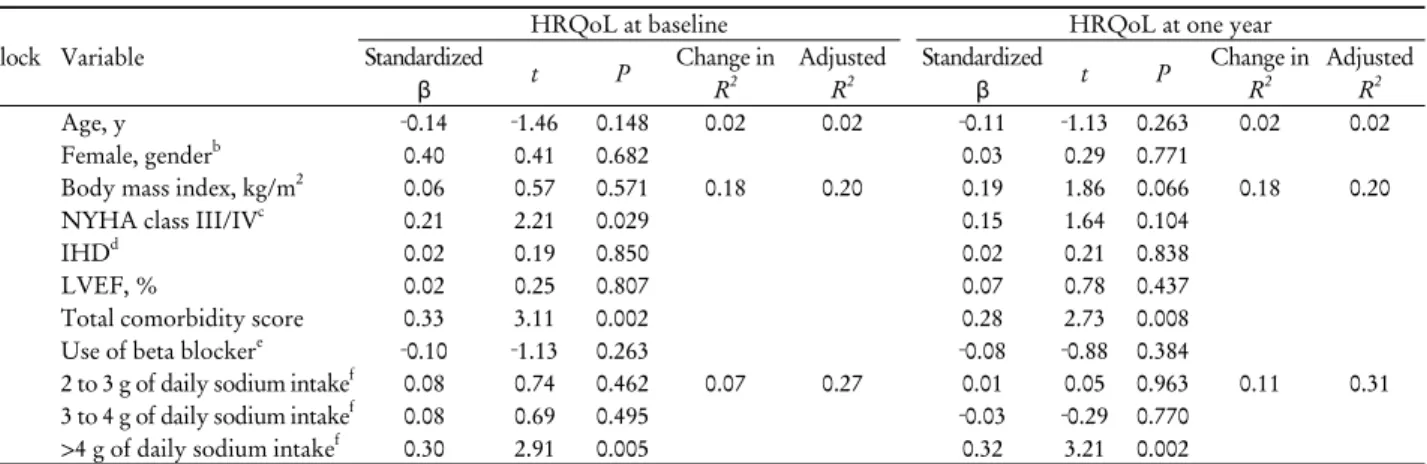
Table 2. Associations between level of daily sodium intake and health-related quality of life at baseline and at one-year (n=106)
aBlock Variable
HRQoL at baseline HRQoL at one year
Standardized
β t P Change in
R2
Adjusted R2
Standardized
β t P Change in
R2
Adjusted R2
1 Age, y ‐0.14 ‐1.46 0.148 0.02 0.02 ‐0.11 ‐1.13 0.263 0.02 0.02
Female, genderb 0.40 0.41 0.682 0.03 0.29 0.771
2 Body mass index, kg/m2 0.06 0.57 0.571 0.18 0.20 0.19 1.86 0.066 0.18 0.20
NYHA class III/IVc 0.21 2.21 0.029 0.15 1.64 0.104
IHDd 0.02 0.19 0.850 0.02 0.21 0.838
LVEF, % 0.02 0.25 0.807 0.07 0.78 0.437
Total comorbidity score 0.33 3.11 0.002 0.28 2.73 0.008
Use of beta blockere ‐0.10 ‐1.13 0.263 ‐0.08 ‐0.88 0.384
3 2 to 3 g of daily sodium intakef 0.08 0.74 0.462 0.07 0.27 0.01 0.05 0.963 0.11 0.31
3 to 4 g of daily sodium intakef 0.08 0.69 0.495 ‐0.03 ‐0.29 0.770
>4 g of daily sodium intakef 0.30 2.91 0.005 0.32 3.21 0.002
Abbreviations: HRQoL, health-related quality of life; NYHA, New York Heart Association; IHD, ischemic heart disease; LVEF, left ventricular ejection fraction.
aAssessed by hierarchical linear regression analysis.
bReference group for comparison was the male group.
cReference group for comparison was the NYHA class I/II group.
dReference group for comparison was the group with non-ischemic heart disease.
eReference group for comparison was the group with no use of beta blocker.
fReference group for comparison was the group whose daily sodium intake was <2g.
had worse HRQoL at one-year follow-up compared to those with <2 g (P=0.009) and those with 2-3 g (P=0.024).
3. Dietary sodium restriction and health-related quality of life
For daily sodium intake, patients were assigned a dum-
my variable ranked from lowest to highest: (0) <2 g of dai- ly sodium intake, (1), 2-3 g of daily sodium intake, (2) 3-4 g of daily sodium intake, or (3) >4 g of daily sodium intake.
In the hierarchical multiple linear regression, >4 g of
daily sodium intake was independently associated with
worse HRQoL at baseline in patients with HF (β=0.30,
P=0.005) after adjusting for age, gender, BMI, NYHA
Figure 2. Change in health-related quality of life from baseline and one-year of the 4 groups by level of dietary sodium restriction (n=106)
Values are presented as mean±SD.
LHFQ indicates The Minnesota Living with Heart Failure Questionnaire.
Table 3. Risk for worsening of health-related quality of life
aat one year in patients with heart failure (n=106)
bCharacteristic Adjusted odds ratio 95% CI P
Age, y 1.04 0.98-1.09 0.188
Gender Male 1.00
Female 0.80 0.30-2.13 0.655
Body mass index, kg/m2 0.98 0.86-1.10 0.702
NYHA functional class I/II 1.00
III/IV 1.30 0.55-3.61 0.551
Etiology of heart failure Non-IHD 1.00
IHD 1.47 0.55-3.91 0.442
Left ventricular ejection fraction, % 0.96 0.91-1.02 0.189
Total comorbidity score 0.85 0.64-1.12 0.247
Use of beta blocker 0.83 0.19-3.54 0.800
Daily sodium intake <2 g 1.00
2 to 3 g 2.22 0.49-10.09 0.302
3 to 4 g 3.77 0.89-16.00 0.072
>4 g 5.18 1.08-23.94 0.040
Abbreviations: CI, confidence interval; NYHA, New York Heart Association; IHD, ischemic heart disease.
aWorsening of health-related quality of life (HRQoL) indicates 5 or more score change in the total scores of the Minnesota Living with Heart Failure Questionnaire (LHFQ) measured at baseline and at one year.
bAssessed by hierarchical logistic regression analysis.
class, etiology of HF, LVEF, total comorbidity scores, and use of beta-blockers (Table 2). Greater than 4 g of daily so- dium intake was an independent predictor (t=2.91, P=0.005) for a worse HRQoL at baseline and explained 7% of the variance in worse HRQoL at baseline.
At one-year follow-up, >4 g of daily sodium intake in- dependently predicted worse HRQoL in patients with HF (β=0.32, P=0.002), after controlling for the same clinical
variables (Table 2). The model explained 31% of the var- iance in HRQoL one year after baseline measurement: >4 g of daily sodium intake by itself explained 11% of the variance. An increased total comorbidity score was also a significant predictor of worse HRQoL at one-year.
However, >4 g of daily sodium intake had the largest
standardized beta value (β=0.32), indicating that this
amount of sodium intake was the strongest predictor of
worse HRQoL after controlling for other clinical varia- bles in the model.
4. Three gram daily sodium intake and change in HRQoL over one-year
During the one-year follow-up period, a change in the total LHFQ score ranged from –46 to 55. Forty patients (38%) had worsening HRQoL as indicated by a change in the total LHFQ score equal to or greater than 5 between the measurements at baseline and at one-year. Figure 2 shows the average change in the LHFQ scores of the 4 groups categorized by level of sodium restriction.
In the hierarchical multivariate logistic regression, >4 g of daily sodium intake was independently associated with an almost 5.2 times higher risk for worsening HRQoL at one year after controlling for the same clinical variables (95% CI, 1.08-23.94; P, 0.040) (Table 3).
DISCUSSION
Although dietary sodium restriction is an essential com- ponent of self-care behavior for improved HRQoL in pa- tients with HF, there has been limited direct evidence about the impact of dietary sodium restriction on HRQoL. Our study has advanced the knowledge on this topic by demonstrating that dietary sodium intake in- dependently predicts HRQoL and change in HRQoL over time. We found that patients with HF who consumed
>4 g of daily sodium had a worse HRQoL at baseline and, subsequently, a worsening HRQoL at one-year when compared to those with <2 g.
This study is one of a few to examine the impact of diet- ary sodium restriction on health outcomes in patients with HF.
1-3)Prior investigators
1-3)reported that >3 g of daily sodium intake independently predicted a shorter cardiac event-free survival in patients with HF. Similar to our study, <75% of patients did not have hospitalization or death due to cardiac problems during the one-year fol- low-up period in these prior studies.
1-3)In our study, 25%
of patients had cardiac hospitalization or cardiac death during the one-year follow-up period. This may indicate that most clinicians focused less on HRQoL as a health outcome than cardiac events. Unlike their clinicians, pa- tients with HF indeed prefer a better HRQoL over longer
survival.
27,28)HRQoL is also comparable to other health outcomes as an indicator for determining health status in patients with HF.
29,30)Therefore, HRQoL has received growing interest as an important patient-centered out- come, which refers to how health status affects a person’s total well-being, including physical, emotional, and social dimensions.
31,32)Given the importance of HRQoL as a health outcome, and combined with findings from prior research, dietary sodium restriction plays an important role in determining health status. Furthermore, these find- ings supported that patients with HF can improve their HRQoL in the future by adhering to daily sodium intake of <2 g. Patient educators can use these findings to show the link between dietary sodium intake and HRQoL as an additional rationale for why patients with HF should fol- low their dietary sodium restriction. It could be empha- sized in patient education that dietary sodium restriction is vitally important in maintaining a stable health status for HF patients.
When the dietary sodium restriction is <2 g daily, the adherence rate was almost 33% as assessed by the three-day food diaries.
2)In addition, at least 15% of pa- tients consumed a daily sodium intake <2 g based on their 24-hour urinary sodium excretion.
1,3)Congruent with these findings, our study reported that 27% of patients consumed <2 g of daily sodium with an average intake of 3.1 g. Likewise, to date, patients with HF did not follow dietary sodium restriction guidelines well, even though they received instructions as part of routine care. On the other hand, this finding indicates that it is difficult for pa- tients with HF to adhere to dietary sodium restrictions. It could be proposed that current patient education is in- adequately prepared to help patients with HF follow so- dium restrictions. Therefore, specific strategies with de- tailed instructions should be developed so that patients with HF understand how to follow and actively engage in dietary sodium restriction. Self-motivation or self-efficacy is also required to improve sodium restrictions before pro- viding education. Health care providers should establish hands-on strategies that promote self-efficacy so that pa- tients can be confident in their ability to follow sodium restrictions.
This study has a number of limitations. These include
limited generalizability. The sample in this study, which
was relatively small and recruited from outpatient HF
clinics in one regional tertiary medical center located in Korea, makes it difficult to draw inferences across differ- ent HF populations. The three-day food diary was used only one time, reflecting sodium intake for the specified three-day period only. In addition, sodium intake assessed by the food diary depended on the participants to accu- rately record all foods consumed during that period. It is possible that patients underreport intentionally or unintentionally. To reduce this limitation, the primary re- search investigators reviewed the completed food diary in-depth. Further investigation is needed to determine the impact of the trajectory or pattern in dietary sodium in- take on health outcomes among patients with HF through repeated measurements. The impact of other self-care be- haviors such as medication adherence or symptom mon- itoring on HRQoL were not controlled for in this study.
Future research on the link between dietary sodium re- striction and other health outcomes should address the ef- fects of other self-care behaviors that may affect the health status.
In conclusion, the findings of this study provide insight into the important role of dietary sodium intake in de- termining the health status of patients with HF who were clinically stable. This is the first prospective cohort study to show that greater than 4 g of daily sodium intake neg- atively impacts HRQoL and independently predicts wor- sening HRQoL during a one-year follow-up period in pa- tients with HF who were free from cardiac events. It is rec- ommended that health care providers convince HF pa- tients of their ability to adhere to dietary sodium re- striction to control their health status. Clinicians should also stress the importance of dietary sodium restriction be- fore they initiate patient education on this subject. Further investigation is suggested to build on evidence-based guidelines about dietary sodium restriction, which may lead to improved HRQoL for patients with HF.
요 약
배경: 삶의 질 향상을 위해 나트륨 제한 식이는 심부전 환자의 자가간호 행위로 강조되고 있지만, 심부전 환자의 나트륨 섭취량이 삶의 질에 미치는 영향을 살펴본 연구는 드물다.
방법: 본 연구는 서울소재 일 대학병원에서 실시된 전향 적 조사연구로서, 1년의 추적관찰기간 동안 재입원하거나
사망하지 않은 심부전 환자들을 대상으로 , 기초조사 시 3
일간의 식이일지를 분석하여 하루 나트륨 섭취량을 측정하 였으며, Minnesota Living with Heart Failure Questionnaire 를 이용하여 삶의 질을 기초조사 시점과 1년 후, 2회 측정 하였다 .
결과: 총 106명의 대상자 중 37명(35%)이 하루 3 g 이상
의 나트륨을 섭취하고 있었다 . 위계적 선형 회귀분석 결과,
하루 4 g을 넘는 나트륨 섭취는 기초조사 시점과 1년 후 가장 낮은 삶의 질을 예측하고 있었다 (F=3.15, P=0.028;
F=4.33, P=0.006). 위계적 다중 로지스틱 회귀분석 결과, 나 트륨을 하루 4 g 이상 섭취하는 심부전 환자는 하루 2 g 미 만을 섭취하는 환자보다 1년 후 삶의 질이 더 낮아질 가능 성이 약 5.2배 증가하는 것으로 나타났다(P=0.040).
결론: 본 연구결과, 하루 4 g 이상의 나트륨 섭취는 심부 전 환자의 삶의 질에 부정적인 영향을 미치고 있음을 확인 하였다 .
중심단어: 염분제한 식이, 삶의 질, 심부전
REFERENCES
1. Lennie TA, Song EK, Wu JR, Chung ML, Dunbar SB, Pressler SJ, et al. Three gram sodium intake is associated with longer event-free survival only in patients with advanced heart failure. J Card Fail 2011;17(4):325-30.
2. Arcand J, Ivanov J, Sasson A, Floras V, Al-Hesayen A, Azevedo ER, et al. A high-sodium diet is associated with acute decom- pensated heart failure in ambulatory heart failure patients: a pro- spective follow-up study. Am J Clin Nutr 2011;93(2):332-7.
3. Son YJ, Lee Y, Song EK. Adherence to a sodium-restricted diet is associated with lower symptom burden and longer cardiac event-free survival in patients with heart failure. J Clin Nurs 2011;20(21-22):3029-38.
4. Stewart S, Moser DK, Thompson DR. Caring for the heart fail- ure patient : a textbook for the health care professional. London:
Martin Dunitz; 2004. p.1-15.
5. Jessup M, Abraham WT, Casey DE, Feldman AM, Francis GS, Ganiats TG, et al. 2009 focused update: ACCF/AHA Guidelines for the Diagnosis and Management of Heart Failure in Adults: a report of the American College of Cardiology Foundation/
American Heart Association Task Force on Practice Guidelines:
developed in collaboration with the International Society for Heart and Lung Transplantation. Circulation 2009;119(14):
1977-2016.
6. Patel H, Shafazand M, Schaufelberger M, Ekman I. Reasons for seeking acute care in chronic heart failure. Eur J Heart Fail 2007;9(6-7):702-8.
7. Ekman I, Cleland JG, Swedberg K, Charlesworth A, Metra M, Poole-Wilson PA. Symptoms in patients with heart failure are prognostic predictors: insights from COMET. J Card Fail 2005;
11(4):288-92.
8. Gupta D, Georgiopoulou VV, Kalogeropoulos AP, Dunbar SB, Reilly CM, Sands JM, et al. Dietary sodium intake in heart
failure. Circulation 2012;126(4):479-85.
9. Miller LW, Missov ED. Epidemiology of heart failure. Cardiol Clin 2001;19(4):547-55.
10. Jencks SF, Williams MV, Coleman EA. Rehospitalizations among patients in the Medicare fee-for-service program. N Engl J Med 2009;360(14):1418-28.
11. Neubauer S. The failing heart--an engine out of fuel. N Engl J Med 2007;356(11):1140-51.
12. Ambrosy A, Wilcox J, Nodari S, Gheorghiade M. Acute heart failure syndromes: assessment and reconstructing the heart. J Cardiovasc Med (Hagerstown) 2011;12(4):258-63.
13. Gheorghiade M, Ambrosy A. Heart failure in 2010: one step forward, two steps back. Nat Rev Cardiol 2011;8(2):72-3.
14. Faul F, Erdfelder E, Lang AG, Buchner A. G*Power 3: a flexible statistical power analysis program for the social, behavioral, and biomedical sciences. Behav Res Methods 2007;39(2):175-91.
15. Arcand J, Floras JS, Azevedo E, Mak S, Newton GE, Allard JP.
Evaluation of 2 methods for sodium intake assessment in cardiac patients with and without heart failure: the confounding effect of loop diuretics. Am J Clin Nutr 2011;93(3):535-41.
16. The Korean Nutrition Society. Computer Aided Nutritional Analysis Program 4.0 for Professionals. Seoul, Korea: The Korean Nutrition Society; 2011.
17. Hunt SA, Abraham WT, Chin MH, Feldman AM, Francis GS, Ganiats TG, et al. 2009 focused update incorporated into the ACC/AHA 2005 Guidelines for the Diagnosis and Management of Heart Failure in Adults: a report of the American College of Cardiology Foundation/American Heart Association Task Force on Practice Guidelines: developed in collaboration with the International Society for Heart and Lung Transplantation.
Circulation 2009;119(14):e391-479.
18. The Korean Society of Heart Failure. The manual of heart failure. Seoul, Korea: The Korean Society of Circulation; 2007.
p.157-64.
19. Heart Failure Society Of America. HFSA 2006 Comprehensive Heart Failure Practice Guideline. J Card Fail 2006;12(1):e1-2.
20. Hunt SA, Abraham WT, Chin MH, Feldman AM, Francis GS, Ganiats TG, et al. ACC/AHA 2005 Guideline Update for the Diagnosis and Management of Chronic Heart Failure in the Adult: a report of the American College of Cardiology/American Heart Association Task Force on Practice Guidelines (Writing Committee to Update the 2001 Guidelines for the Evaluation and Management of Heart Failure): developed in collaboration with the American College of Chest Physicians and the International Society for Heart and Lung Transplantation: en-
dorsed by the Heart Rhythm Society. Circulation 2005;112(12):
e154-235.
21. Rector TS, Cohn JN. Assessment of patient outcome with the Minnesota Living with Heart Failure questionnaire: reliability and validity during a randomized, double-blind, placebo-con- trolled trial of pimobendan. Pimobendan Multicenter Research Group. Am Heart J 1992;124(4):1017-25.
22. Eurich DT, Johnson JA, Reid KJ, Spertus JA. Assessing re- sponsiveness of generic and specific health related quality of life measures in heart failure. Health Qual Life Outcomes 2006;
4:89.
23. Moon JR, Jung YY, Jeon ES, Choi JO, Hwang JM, Lee SC.
Reliability and validity of the Korean version of the Minnesota Living with Heart Failure Questionnaire. Heart Lung 2012;
41(1):57-66.
24. Franzén K, Saveman BI, Blomqvist K. Predictors for health re- lated quality of life in persons 65 years or older with chronic heart failure. Eur J Cardiovasc Nurs 2007;6(2):112-20.
25. Volz A, Schmid JP, Zwahlen M, Kohls S, Saner H, Barth J.
Predictors of readmission and health related quality of life in pa- tients with chronic heart failure: a comparison of different psy- chosocial aspects. J Behav Med 2011;34(1):13-22.
26. Riegel B, Moser DK, Glaser D, Carlson B, Deaton C, Armola R, et al. The Minnesota Living With Heart Failure Questionnaire:
sensitivity to differences and responsiveness to intervention in- tensity in a clinical population. Nurs Res 2002;51(4):209-18.
27. Spertus JA. Evolving applications for patient-centered health status measures. Circulation 2008;118(20):2103-10.
28. Lewis EF, Johnson PA, Johnson W, Collins C, Griffin L, Stevenson LW. Preferences for quality of life or survival ex- pressed by patients with heart failure. J Heart Lung Transplant 2001;20(9):1016-24.
29. Moser DK, Yamokoski L, Sun JL, Conway GA, Hartman KA, Graziano JA, et al. Improvement in health-related quality of life after hospitalization predicts event-free survival in patients with advanced heart failure. J Card Fail 2009;15(9):763-9.
30. Mommersteeg PM, Denollet J, Spertus JA, Pedersen SS. Health status as a risk factor in cardiovascular disease: a systematic re- view of current evidence. Am Heart J 2009;157(2):208-18.
31. Westlake C, Dracup K, Creaser J, Livingston N, Heywood JT, Huiskes BL, et al. Correlates of health-related quality of life in patients with heart failure. Heart Lung 2002;31(2):85-93.
32. Scott LD. Caregiving and care receiving among a technologi- cally dependent heart failure population. ANS Adv Nurs Sci 2000;23(2):82-97.